
Journalist

Topher L. McDougal
-
 Coway Launches Virex Suite Hotel Frame to Target Premium Sleep Market Recent trends show an increasing demand for bedrooms that serve not just as sleep spaces but as premium areas for relaxation and recovery. As interest in sleep quality rises, more consumers are looking to create a hotel-like atmosphere in their homes. In response to this trend, Coway announced on May 21 the launch of its 'Virex Suite Hotel Frame' aimed at the premium sleep market. The new product features hotel-style wall panels and a dual mattress structure designed for stability and support. The Virex Suite Hotel Frame is designed with a box spring foundation that supports the top mattress. This structure distributes weight more evenly than using a mattress alone, providing a more stable sleep environment. The design elements have also been enhanced. The wall panels can be combined in single, dual, or triple configurations, allowing for customization based on bedroom layout and personal taste. Arranging them beside the bed or between twin beds can create an ambiance reminiscent of a hotel suite. The multi-panel system includes shelving and lighting features. The wooden panels offer drawer storage, and both panels are equipped with adjustable three-level brightness lighting and a lower charging port for convenient use of electronic devices like smartphones. The product also reflects the trend of couples valuing their individual sleep patterns. By placing two super single frames side by side and unifying them with wall panels, users can achieve both personalized sleep experiences and cohesive interior design. A Coway representative stated, "The Virex Suite Hotel Frame offers a combination of hotel-inspired decor and a comfortable sleep environment. We will continue to introduce sleep care solutions tailored to our customers' lifestyles."* This article has been translated by AI. 2026-05-21 21:36:19
 -
 Automakers Compete in Software-Defined Vehicle OS Race with Upcoming Models Automakers are intensifying their competition for dominance in the Software-Defined Vehicle (SDV) sector, evolving into a race for proprietary operating systems (OS). With the launch of the first models featuring in-house platforms expected in the second half of this year, the scalability of software has become increasingly critical. As the transition to SDVs accelerates, the level of vehicle control implementation is anticipated to be a key factor in determining market position.According to industry sources, automakers have begun to expedite the integration of proprietary platforms for the transition to SDVs. SDVs operate and control vehicles based on software, allowing for wireless functionality updates. The key features include an integrated OS that consolidates major vehicle functions and an infotainment system that enhances convenience.The competition for SDV transition is expected to intensify starting this fall, as major brands are poised to launch their first models equipped with proprietary OS systems, aiming to secure early market leadership.Mercedes-Benz plans to introduce several models in the Korean market this year, including the new Mercedes-Benz S-Class and the new Mercedes-Maybach S-Class, both equipped with the proprietary 'MB.OS'. The all-new CLA will also make its debut. The fourth-generation infotainment system, 'MBUX', which incorporates artificial intelligence, is also drawing attention.BMW is similarly positioning its proprietary OS as a core element of its new vehicle competitiveness. The new BMW iX3, set to launch in the third quarter of this year, will feature the 'BMW Operating System X'. Additionally, the 'BMW Panoramic iDrive' aims to enhance the driver-centric infotainment experience.However, disparities in the level of development among companies are becoming more pronounced. While brands like Mercedes-Benz and BMW are integrating vehicle control into their proprietary OS, some companies have only just begun implementing next-generation infotainment systems or have yet to establish a concrete roadmap for SDV transition.Hyundai Motor Company recently launched its first model featuring the next-generation infotainment system 'Pleos Connect', the new Grandeur, on May 14. However, the vehicle control operating system 'Pleos Vehicle OS', which was also announced at the developer conference last March, does not yet have a specific deployment schedule.Most domestic small and medium-sized automakers are relatively behind in the SDV transition. Renault Korea plans to release a fully functional SDV by 2027, while KG Mobility has yet to announce detailed plans for its SDV transition.Given the varying speeds of SDV transition among companies, there is currently no clear standard for defining a 'complete SDV' in the market. The focus is shifting from whether a proprietary OS is implemented to how far vehicle control and update capabilities can be expanded. An industry insider noted, "We are currently at the initial stage of the SDV transition. Moving forward, the key will be how well we can integrate vehicle control."* This article has been translated by AI. 2026-05-21 21:34:05
 -
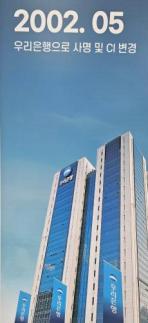 Woori Bank: A 127-Year Legacy in South Korean Finance Woori Bank, which began as Daehan Cheonil Bank 127 years ago, has played a significant role in the evolution of South Korea's financial landscape through industrialization, economic crises, digital transformation, and global expansion. More than just the oldest bank, it represents a living financial heritage intertwined with the growth of the South Korean financial industry. According to the financial sector, Woori Bank recently designated 15 branches that have been operational for over a century as "century-old branches." The oldest branch is the Incheon branch, which opened in 1899. Other notable branches include the Pyeongtaek Financial Center (1907), Seoul Station Financial Center (1908), Gupo branch (1912), Jinhae branch (1913), Seoul City Hall Financial Center (1915), and Jongno 4-ga Financial Center (1916). The Jongno Financial Center, Yongsan Financial Center, Cheongju Financial Center, and Iksan branch have also maintained their presence since their openings in 1924. While the banking industry is rapidly consolidating branches and shifting towards non-face-to-face services, Woori Bank emphasizes its "accumulation of time" as a competitive advantage. The bank positions itself not merely as a service point but as a space that has supported customers' livelihoods and the regional economy, reflecting the trajectory of South Korea's industrialization. Woori Bank's history is closely linked to the history of South Korea's financial industry. It began with the establishment of Daehan Cheonil Bank in 1899, the first bank founded with domestic capital during the Korean Empire, symbolizing a shift from foreign capital dominance in the financial market. In 1911, it changed its name to Chosun Commercial Bank, helping to establish a modern financial system. The main building, constructed in 1909, is now the Jongno Financial Center, symbolizing the bank's historical significance. After Korea's liberation, Woori Bank continued to lead changes in the domestic financial industry. It was listed among the first companies on the stock exchange in 1956 and opened the country's first female-only safe deposit box in 1959. In 1961, it became the first financial institution to establish a service center, expanding its role beyond simple deposits and loans to provide comprehensive financial services including finance, investment, real estate, and legal consultations. The bank also quickly embraced digital transformation. In 1977, it became the first commercial bank to start online operations between Seoul and Busan, and in 1980, it introduced the country's first bank loan system. In 1989, in collaboration with Samsung Electronics, it launched the first corporate banking system, allowing businesses to handle import letters of credit without visiting the bank, essentially laying the groundwork for modern corporate internet banking and digital finance. Since the 1990s, Woori Bank has introduced a series of innovations in non-face-to-face banking. It started ATM services in 1993 as the first Korean bank and launched home banking-based overseas remittance services in 1996, enabling customers to send money abroad from home or the office during the early spread of the internet and PC communication. In 1997, it implemented an image system that allowed exporters to be notified on the same day of opening a letter of credit, accelerating the digitization of trade finance. The restructuring of the financial sector following the 1997 Asian financial crisis marked another turning point in Woori Bank's history. In 1999, Korea Commercial Bank and Hanil Bank merged to form Hanbit Bank, and in 2001, the first financial holding company system was established in the country. In 2002, the bank changed its name to Woori Bank, establishing the brand that exists today. Recently, Woori Bank has been transforming from a traditional financial institution into a digital platform company. In 2022, it launched the first digital supply chain platform in the financial sector, "WonBiz Plaza," and in 2024, it introduced an AI-based service called "AI Banker." This evolution underscores Woori Bank's position as a symbolic financial institution that showcases the past, present, and future of South Korean finance, built on 127 years of accumulated financial DNA.* This article has been translated by AI. 2026-05-21 21:28:32
 -
 South Korea's CPTPP Membership Talks Gain Momentum Amid Regional Cooperation In light of the unstable international situation, establishing a Korea-Japan economic community has become more crucial than ever. Discussions regarding South Korea's potential membership in the Comprehensive and Progressive Agreement for Trans-Pacific Partnership (CPTPP) are seen as a concrete way to achieve this goal.Kazuhisa Shibuya, a professor at Kansai Gakuin University and former chief policy coordinator for Japan's TPP negotiations, stated at the Korea-Japan Business Conference on May 20 that "the CPTPP is an evolving agreement that becomes denser in norms as more countries join." He added that if South Korea participates in the CPTPP, it could lead to deeper economic cooperation between South Korea and Japan through a multilateral partnership system.Business leaders from both countries agree that South Korea's CPTPP membership is the most realistic way to realize the economic community. Professor Shibuya noted that direct discussions on a bilateral economic community are politically sensitive for both nations. He suggested that discussions within the multilateral framework of the CPTPP, which Japan is already part of and South Korea wishes to join, could naturally deepen cooperation.At the 58th Korea-Japan Business Conference, attended by over 250 business leaders, a joint statement was adopted emphasizing the urgent need for progress in discussions regarding South Korea's CPTPP membership. The statement highlighted that the CPTPP is a vital framework for global multilateral economic ties and expressed strong support for Japan's assistance in advancing concrete reviews for South Korea's membership.During a joint press conference, Gu Ja-yeol, chairman of the Korea Economic Association, remarked, "In a world increasingly characterized by economic blocs, with no free trade agreement (FTA) in place with Japan, I understand that the South Korean government is positively reviewing CPTPP membership." Japanese chairman Koji Akiyoshi also stated, "If South Korea officially applies, the Japanese political and economic sectors will actively support it."There are also expectations that CPTPP membership could strengthen the 'venture-startup alliance' between the two countries. Recent exchanges between South Korean and Japanese startups have been active, with companies like MakinaRocks and Pebblesquare collaborating with major Japanese construction and automotive firms. Additionally, large South Korean corporations such as Samsung and Hyundai are actively seeking promising Japanese tech startups.Analysts suggest that if South Korean startups, strong in platforms, collaborate with Japanese tech ventures, which excel in materials and components, they could enhance their capacity to compete against global capital through the investment and intellectual property protection norms of the CPTPP.However, discussions regarding this matter were not addressed during the Korea-Japan summit held on May 19, which focused on economic security issues such as supply chains, artificial intelligence, and energy. The CPTPP involves sensitive topics like agricultural market access and food regulations related to Fukushima, requiring unanimous consent from member countries. It appears that the South Korean government chose to concentrate on more easily agreeable topics during this meeting, given the complex interests between the industrial and agricultural sectors.* This article has been translated by AI. 2026-05-21 21:25:40
 -
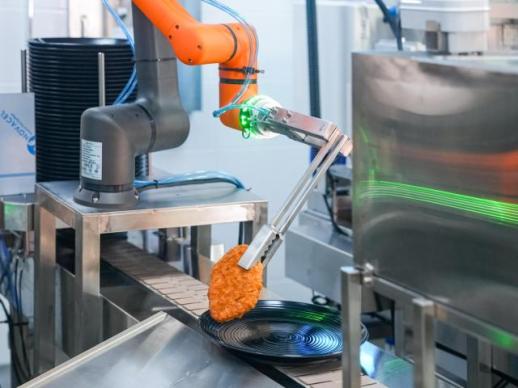 Hanwha Robotics Accelerates Its Entry into the Physical AI Market Hanwha Group is making a bold move into the physical artificial intelligence (AI) market with Hanwha Robotics. As competitors like Doosan Robotics and Rainbow Robotics dominate the domestic collaborative robot sector, Hanwha Robotics aims to leverage synergies with its distribution and service subsidiaries and its AI technology to overcome the challenges of being a latecomer. According to industry sources, Hanwha Robotics is led by Vice President Kim Dong-sun, the third son of Hanwha Group Chairman Kim Seung-yeon, who is overseeing strategic planning and business expansion. Kim plans to broaden the connections between Hanwha Robotics and the group's distribution and service subsidiaries, including Hanwha Galleria, Hanwha Hotels & Resorts, and Hanwha Food Tech, positioning Hanwha Robotics not just as an automation equipment provider but as a key driver of future growth for the group. Established in October 2023 as a spin-off from Hanwha's Momentum division, Hanwha Robotics specializes in collaborative robots designed to work alongside humans in various settings. The company is expanding its applications beyond industrial robots focused on manufacturing to include food and beverage, distribution, and service sectors. Notably, its sommelier and cooking robots exemplify its differentiation in line with Hanwha Group's distribution and food tech initiatives. While competitors Doosan Robotics and Rainbow Robotics have established their presence through market leadership and technological prowess, Hanwha Robotics is focusing on collaboration with group affiliates, leveraging Hanwha Vision's AI technology, and conducting field demonstrations. The ability of Hanwha to transform robotics from a mere future business into a comprehensive automation and service innovation platform for the entire group will be crucial for its competitiveness going forward. Hanwha Robotics emphasizes its practical demonstration capabilities using group affiliates. Locations such as Hanwha Galleria and its hotels and food tech businesses are suitable for deploying service robots. This allows for the accumulation of robot application cases across various environments, including food and beverage, distribution, and hospitality. For instance, Hanwha Robotics' collaborative robots are currently deployed in the production facility of the premium ice cream brand 'Benson,' which operates with only 50-60% of the workforce compared to typical factories, significantly aiding in quality standardization and efficiency improvements. The technological synergy with Hanwha Vision is also noteworthy. For robots to operate more precisely in real-world industrial settings, they must possess the ability to recognize and assess their surroundings beyond simple motion control. By integrating Hanwha Vision's video AI and camera technology, Hanwha Robotics can enhance the sensory and decision-making capabilities of its robots. Hanwha Vision is currently piloting AI cameras that detect anomalies in cooking environments. The key challenge lies in how quickly Hanwha Robotics can close the gap as a latecomer in a fiercely competitive collaborative robot market. Chinese companies are expanding their market share through price competitiveness, while major players like Hyundai Motor Group and Tesla continue to invest heavily in humanoid and physical AI technologies. Analysts suggest that rather than directly competing with these giants, Hanwha Robotics should focus on practical robot solutions that combine field applications with AI technology within the group. However, challenges remain. Since its inception in 2023, Hanwha Robotics has continued to operate at a loss. Last year, the company received approximately 30 billion won in financial support from its parent company, Hanwha Corporation, and Hanwha Hotels & Resorts to mitigate performance deterioration, but it has recently entered a phase of capital erosion. Ultimately, Vice President Kim's ongoing commitment to investment is expected to have a direct impact on the growth of Hanwha Robotics. He envisions utilizing robots as a means to transform customer experiences in the sectors he oversees, including distribution, hospitality, and food tech. An industry insider remarked, "The robotics industry is viewed as a sector with sustainable growth potential. Given the current focus on humanoids, it is crucial for Hanwha Robotics to concentrate its efforts on collaborative and logistics robots, which have high applicability in real-world settings."* This article has been translated by AI. 2026-05-21 21:24:31
 -
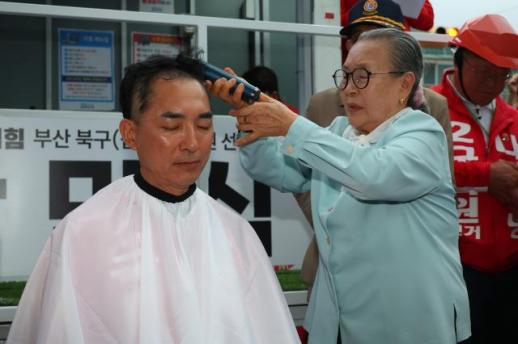 Park Min-sik Rules Out Alliance with Han Dong-hoon in Election Campaign Park Min-sik, the People Power Party candidate for the Busan Buk-gap parliamentary by-election, dismissed the possibility of an alliance with other conservative candidates on the first day of his official campaign on May 21. "There will be no alliance. I will go all the way and win for sure," he declared, expressing his determination to complete the race.At the campaign launch held at Ssamji Park in Gupo Market, Park shaved his head and stated, "I will end Han Dong-hoon's predatory and parasitic politics and bring the Democratic Party's Lee Jae-myung government to its knees." His mother was the one who cut his hair.He emphasized, "This fight is a struggle to end arrogant betrayal politics and to defeat the hypocritical candidates like Ha Jeong-woo and the Lee Jae-myung government. I pledge to the residents that I will win in this critical battle."Targeting independent candidate Han Dong-hoon, he questioned, "Who is this intruder suddenly coming to our Buk-gu to act like the owner? Isn’t he the cruel traitor who imprisoned former President Lee Myung-bak, put former President Park Geun-hye in front of the judicial blade, and turned his back on President Yoon Suk-yeol to bring down the government?"He added, "He has not only driven three conservative presidents to the brink but was also the one who, during the 22nd National Assembly elections, blamed the president and others while leading the party and comrades to a crushing defeat. What did he use to escape from his incompetence and irresponsibility? It was the party members' bulletin board," he pointed out.Regarding the emergency martial law on December 3, he criticized, "He treated party members, who were in despair at the risk of the conservative collapse, as criminals while acting like a savior and treating our party as his trophy. How can such a person now talk about returning to the party? That itself is a disgrace to our conservatism and a deception that leads to its destruction."He warned, "The moment we tolerate Han Dong-hoon, we complete the path of Han Dong-hoon-style conservative devastation, Buk-gu plunder, and Democratic Party parasitism. That is not an alliance but a self-destructive act that hands Buk-gu over to the Democratic Party's Ha Jeong-woo and the Lee Jae-myung government."He concluded, "I, Park Min-sik, will surely win this battle. With my shaved head, filled with my mother's tears and determination, I will walk through the storm without faltering for a moment. I ask for your support."* This article has been translated by AI. 2026-05-21 21:21:20
 -
 Seoul Police Investigate Starbucks 'Tank Day' Incident Involving Shinsegae Chairman On May 18, the 46th anniversary of the May 18 Democratic Movement, Jeong Yong-jin, chairman of Shinsegae Group, was reported to the police over the controversy surrounding Starbucks' 'Tank Day' promotion. According to police on May 21, the Seoul Metropolitan Police Agency initially assigned the case involving Jeong and former Starbucks Korea CEO Son Jeong-hyun to the Gangnam Police Station but later reassigned it to the Public Crime Investigation Unit. The Seoul police had originally designated the case to the Gangnam Police Station's Investigation Division 2, but due to the seriousness of the matter, they transferred it to the special unit within half a day. The special unit is known for its expertise in investigations, comparable to that of the prosecution's special department, and is set to begin a thorough investigation starting with a witness interrogation on May 29. Previously, the civic group People's Livelihood Countermeasures Committee filed a complaint against Jeong, Son, and other Starbucks Korea executives, claiming that the company's promotion of the 'Tank Tumbler Series' and phrases like 'Tank Day' and 'Tap on the Desk' on its event page were insulting and defamatory to the families of the May 18 victims and the citizens of Gwangju. In response, a boycott of Starbucks has been launched across the country, including in Gwangju, and President Lee Jae-myung and the ruling party have criticized Starbucks repeatedly. The incident has gained international attention, escalating the situation further. Additionally, Jeong's past remarks and far-right actions have come under scrutiny, leading to a decline in the stock prices of E-Mart and Shinsegae Group.* This article has been translated by AI. 2026-05-21 21:18:22
 -
 Cloudy Weather Expected Nationwide with Rain in Jeju On Friday, May 22, cloudy weather is expected across the country, with conditions becoming increasingly overcast in the evening. According to the Korea Meteorological Administration on May 21, rain is anticipated in Jeju starting late in the day, with expected precipitation of less than 5 millimeters. Morning low temperatures are forecasted to range from 12 to 17 degrees Celsius, while daytime highs are expected to be between 17 and 27 degrees Celsius. Although the weather will be relatively mild during the day, significant temperature differences may occur between regions. Expected temperatures in major areas include: △Seoul 15-26 degrees Celsius △Incheon 15-27 degrees Celsius △Suwon 14-26 degrees Celsius △Chuncheon 12-24 degrees Celsius △Gangneung 13-19 degrees Celsius △Cheongju 15-26 degrees Celsius △Daejeon 15-25 degrees Celsius △Sejong 14-25 degrees Celsius △Jeonju 16-27 degrees Celsius △Gwangju 16-26 degrees Celsius △Daegu 15-23 degrees Celsius △Busan 16-23 degrees Celsius △Ulsan 14-21 degrees Celsius △Changwon 16-23 degrees Celsius △Jeju 16-22 degrees Celsius. Air quality is expected to be at a 'good' level in most regions across the country. Wave heights are forecasted to reach 1.0 to 4.0 meters in the East Sea, 0.5 to 1.0 meters in the West Sea, and 0.5 to 3.0 meters in the South Sea. Offshore wave heights are expected to be 1.0 to 4.0 meters in the East Sea, 0.5 to 2.0 meters in the West Sea, and 1.0 to 3.5 meters in the South Sea.* This article has been translated by AI. 2026-05-21 21:16:01
 -
 Prime Minister Kim Min-seok Launches Global AI Hub to Tackle Global Challenges "International organizations, governments, academia, industry, and civil society must come together to innovate towards 'AI for All' and 'human-centered inclusive AI.'" Prime Minister Kim Min-seok made this statement during his opening remarks at the 'Global AI Hub Vision Declaration Ceremony' held on May 21 at the Grand Hyatt Seoul. He introduced the vision of 'AI for All, AI to Solve Global Challenges.' The Global AI Hub is a global AI cooperation platform being established in South Korea. It aims to create a collaborative framework for addressing global issues by jointly utilizing AI technology and infrastructure among international organizations, governments, academia, research institutions, and non-profit organizations. Kim announced that the South Korean government will pursue three initiatives centered around the Global AI Hub. He stated, "We will work with the international community to establish safe and reliable AI norms and standards. The hub will lead in developing technical standards and guidelines, as well as control mechanisms for human safety and protection, clear ethical boundaries, and human accountability regarding AI norms." He emphasized that humanity is facing multifaceted and complex crises, such as infectious diseases, climate change, and food security, which cannot be resolved by individual countries or institutions alone, and that the AI Hub will take the lead in addressing these global challenges. Kim expressed hope that various stakeholders, including the United Nations, multilateral development banks, governments, businesses, and universities, will gather at the AI Hub to solve global problems. He also pledged to work towards bridging the AI divide, stating, "We will strengthen the capabilities of various organizations and countries through AI policy, technical advice, education, and training, creating inclusive cooperation pathways to ensure that the benefits of technology reach developing countries and vulnerable populations." The event was attended by representatives from nine international organizations, including the International Labour Organization (ILO), International Organization for Migration (IOM), International Telecommunication Union (ITU), United Nations Development Programme (UNDP), United Nations Environment Programme (UNEP), United Nations High Commissioner for Refugees (UNHCR), United Nations Children's Fund (UNICEF), World Food Programme (WFP), and World Health Organization (WHO). The South Korean government and these organizations issued a joint statement expressing their commitment to advancing the Global AI Hub. * This article has been translated by AI. 2026-05-21 21:13:27
 -
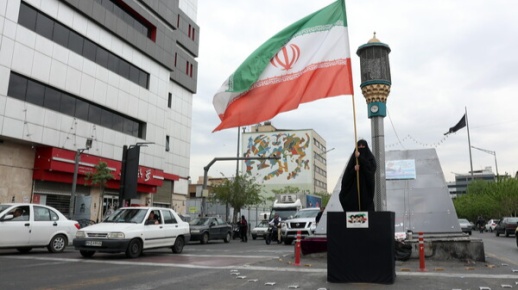 Iran's Internet Shutdown Hits Economy, Leaving Over 1 Million Jobless The ongoing internet shutdown in Iran, now in its third month, is exacerbating the country's already strained economy, which has been affected by war and sanctions. More than 1 million people have lost their jobs as online sales, international transactions, and remote work have come to a standstill. According to the Wall Street Journal on May 20, Iran's internet connectivity has remained at just 1-2% of its total capacity in recent weeks, a stark decline from 90-100% before anti-government protests erupted last year. Alp Toker, founder of the internet monitoring group NetBlocks, described the situation as “the most extensive and prolonged shutdown in modern internet history.” The Iranian government began imposing access restrictions on January 8, eased them on January 23, but then tightened them again after the U.S. and Israel launched attacks against Iran on February 28. The impact is particularly severe for businesses and freelancers. Merchants who relied on international clients have lost contact, while online retailers have lost both orders and marketing channels. Software developers and freelancers are also struggling to continue their remote work. The employment crisis could worsen. Mohammad Reza Farzanegan, a Middle East economic expert at Philipps-Marburg University in Germany, estimates that around 10 million jobs are directly or indirectly linked to Iran's digital economy. He noted that large-scale connectivity restrictions diminish productivity and weaken business confidence. The Iranian government defends the measures as necessary due to wartime conditions. Iran's Minister of Communications, Sattar Hashemi, stated earlier this month through state media that the internet restrictions are a response to the war situation. However, the government is also expanding selective access systems alongside the full shutdown. The so-called 'Internet Pro' system allows some users to regain limited access. The state-owned Iran Mobile Communications Company has been providing partial internet access and international IP connectivity through 'white SIM cards' since March. Experts warn that these restrictions could leave a lasting burden on Iran's economy even after the conflict ends, as countries with potentially restricted internet access are viewed as high-risk markets for investment and trade.* This article has been translated by AI. 2026-05-21 21:12:00