
Journalist

Tthe Embassy of Uzbekistan in the Republic of Korea
-
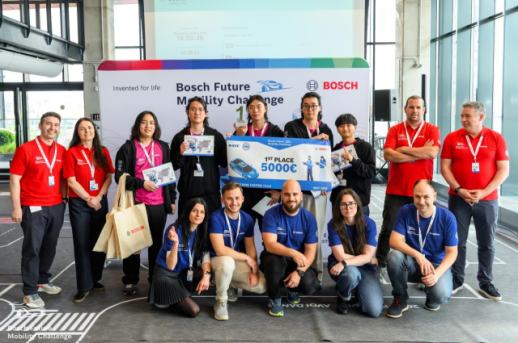 South Korean joint university team wins Bosch Future Mobility Challenge 2026 SEOUL, May 27 (AJP) - A joint student team from Kookmin University and other prominent institutes won the top prize at the Bosch Future Mobility Challenge 2026, an international autonomous driving competition held in Cluj-Napoca, Romania. The team outperformed dozens of international competitors during the five-day event, the university said Wednesday. The competition, which ran from May 16 to May 20, 2026, invited undergraduate and master's degree students to develop autonomous driving algorithms for 1:10-scale model cars. The vehicles were tested for their ability to navigate real-world traffic scenarios on a miniature smart-city track. A total of 57 teams from around the world participated in the event. The winning team comprised students participating in the fourth cohort of SEA:ME, a mobility software training program jointly operated by KMU and the Volkswagen Group Woori Foundation (VGWF). The roster included Kim Ki-hoon and Oh Young-kyo from KMU, Jang Dong-min and Choi Min-hyuk from Inha University (IU), and Kang Ju-heon from Ajou University (AU), under the guidance of Professor Kim Jong-chan. The team earned high marks for developing a custom localization algorithm that maintained precise and stable driving performance even when local network and GPS signals became unstable. The SEA:ME program operates under the Convergence and Open Sharing System (COSS) future automobile consortium to provide selected students with specialized mobility software education and training opportunities in Germany. The victory builds on previous achievements by earlier cohorts, which included a third-place finish in 2024 and the Best Newcomers Award in 2025. "We have gained the confidence and conviction that future talents who will take responsibility for South Korea's autonomous driving technology can lead the world," said Professor Shin Sung-hwan, the director of the COSS Future Automobile Consortium. KMU students Kim and Oh noted that collaboration was key to their performance. "The effort and cooperation of team members who challenged themselves to the end amidst fierce competition became the driving force of our victory," the students said. "We were able to learn and grow a lot through the competition." 2026-05-27 14:22:10
 -
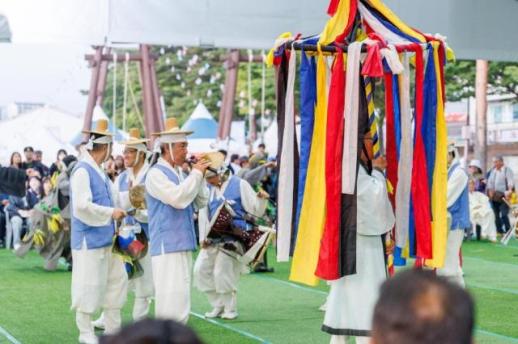 Historic folk festival set to return in Gangneung next month SEOUL, May 27 (AJP) - A folk festival with over 1,000 years of history, is set to return in Gangneng, Gangwon Province next month with eight days of ritual, performance and communal celebration along Namdaecheon, a stream running through the heart of the city. The festival, known as Gangneung Danoje, recognized as both a UNESCO Intangible Cultural Heritage of Humanity and a national intangible heritage of South Korea, runs from June 15 to 22 in the eastern coastal city. One of Korea's largest folk festivals, it draws around one million visitors each year. The weeklong festival centers on Dano, a traditional Korean holiday observed on the fifth day of the fifth lunar month, marking the height of spring. This year's theme is "Pulrini, Dano-da," a Korean phrase built around the idea of release and renewal during Dano. The concept reflects the festival's spirit of healing, with visitors traditionally letting go of sorrow and misfortune through shamanic rites and washing away bad luck with water infused with changpo or sweet flag, a plant traditionally believed to ward off evil spirits and bring good health. This year's program features over 70 events including ritual ceremonies, folk games and performances. A centerpiece is a silent mask play known as the "Gwanno mask drama," performed entirely through movement and gesture, with no spoken dialogue. The five-act performance tells the story of a masked nobleman and a young woman known as "Somaegaksi." Another highlight is a street parade on June 17, the third day of the fifth lunar month. The procession retraces the ritual journey of the festival's tutelary deity, moving through the central streets of Gangneung. Visitors are encouraged to wear hanbok, traditional South Korean gown, as this year’s official dress code. Those who do will receive a 10 percent discount at food courts and a commemorative badge. Gangneung Danoje traces its origins to harvest rituals and communal ceremonies of early Korean tribal states. Historical records including the Goryeosa chronicle and the collected writings of Joseon-era scholar Heo Gyun, document its more than 1,000-year history. The festival survived both the Japanese colonial period and the Korean War, preserving a layered tradition that blends Confucian rites, Buddhist elements and shamanic beliefs. In recognition of its historical depth and cultural value, Gangneung Danoje was inscribed on UNESCO's Representative List of the Intangible Cultural Heritage of Humanity in November 2005. 2026-05-27 13:55:09
 -
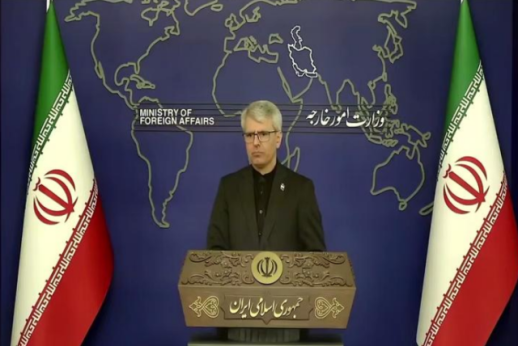 Iran denies seeking transit tolls in Strait of Hormuz SEOUL, May 27 (AJP) - The Iranian government rejected allegations that it plans to impose transit tolls on commercial vessels navigating the Strait of Hormuz, announcing a joint maritime security mechanism with Oman, the Embassy of Iran in Seoul said Monday. Any financial or logistical shifts in the strait directly impact South Korea, which faces a deepening energy security crisis. Thanks to the country's effort to diversify its sources for crude oil, South Korea's reliance on Middle Eastern crude oil recently fell below 50 percent for the first time, dropping from 69.1 percent last year to 48.5 percent, as the ongoing blockade and military risks force importers to seek alternative routes. The Embassy of Iran in the Republic of Korea said in a statement that the Iranian Ministry of Foreign Affairs spokesperson Esmaeel Baghaei explained that potential charges would only cover operational costs for services related to maritime navigation, environmental protection, and shipping safety, stressing that these measures should not be interpreted as passage fees or restrictions on international shipping. Baghaei rejected recent claims by United States officials accusing Iran of attempting to nationalize the critical energy corridor, describing the accusations as misleading and inconsistent with international law. The diplomatic exchange occurred during an ongoing war between the U.S. and Iran, which officially began on February 28. The conflict has severely restricted navigation in the region, culminating in a May 4 attack on the South Korean-operated bulk carrier HMM NAMU. The newly built 38,314-ton vessel was struck by unidentified airborne objects while anchored near the United Arab Emirates, rendering the ship inoperable but resulting in no casualties among the 24 crew members. Following the attack, U.S. President Donald Trump accused Iran of executing the strike, an allegation Tehran formally denied. In response to the incident, the South Korean government dispatched a special investigation team to Dubai, where the disabled vessel was towed for inspection. The proposed security mechanism being developed by Iran and Oman aims to preserve freedom of international trade and prevent military misuse of the waterway. "Iran is not seeking to impose transit tolls in the Strait of Hormuz," Baghaei said. 2026-05-27 13:41:49
 -
 USFK chief calls Korea a 'dagger' in Asia from China's strategic view SEOUL, May 27 (AJP) - Gen. Xavier Brunson, commander of U.S. Forces Korea, has described South Korea as a “dagger” in the heart of Asia from China’s strategic perspective, underscoring the peninsula’s growing role in Washington’s broader efforts to counter Beijing. According to the U.S. Army War College website on Tuesday, Brunson made the remarks during a podcast hosted by the school on May 22. “When they look out from the East Coast of China, what they see is there’s Korea, the dagger in the heart of Asia. There’s Japan, again, sort of the shield or the blocking wall as they have ambitions to get beyond the South China Sea,” Brunson said. His description of Korea as a “dagger” appears to reflect both South Korea’s strategic value to the U.S. in countering China and Beijing’s wariness over the presence of a U.S. ally and American troops so close to its territory. China has long opposed the deployment of the U.S. Terminal High Altitude Area Defense system, or THAAD, in South Korea, arguing that the system serves as a military tool aimed at containing Beijing. Brunson’s remarks can be seen as highlighting the need to maintain the Korea-U.S. alliance and U.S. troop presence on the peninsula. At the same time, they also suggest his willingness to expand the role of the alliance and USFK beyond deterring North Korea to include a broader focus on China. The comments may indicate that while the Trump administration continues to value the Korea-U.S. alliance and USFK, it is placing greater emphasis on their utility in countering China rather than solely defending South Korea from North Korean threats. Brunson has repeatedly stressed the alliance’s role in checking China, in line with the concept of “alliance modernization,” which has become a key phrase for the Korea-U.S. alliance under the second Trump administration. In May last year, he also described South Korea’s geographic position as strategically important, comparing it to “an island or like a fixed aircraft carrier” between Japan and mainland China. Brunson also said USFK is working with Samsung to develop advanced cloud infrastructure that would allow the U.S. and its regional allies to maintain communications even if networks are cut off or disabled. 2026-05-27 13:34:47
 -
 Suspect arrested after stabbing two LG Electronics employees in Seoul SEOUL, May 27 (AJP) - A subcontractor employee was arrested after stabbing two LG Electronics workers in the Magok district of Seoul, police and company officials said. The suspect, who is not a direct employee of LG, turned himself in to police shortly after the attack and was placed under emergency arrest. The two injured LG employees were transported to a local hospital. An LG spokesperson confirmed that their injuries are non-life-threatening. Authorities have taken the suspect into custody and are currently investigating the motive behind the stabbing. 2026-05-27 13:30:49
 -
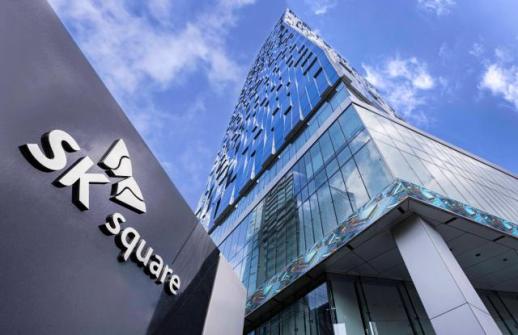 SK Square breaks clear of Hyundai as AI rally reshuffles Korea's top-five SEOUL, May 27 (AJP) - SK Square, SK Group's investment intermediate holding company, has surged past Hyundai Motor to become South Korea's third-most-valuable listed company, as a rally in artificial-intelligence shares reshapes the upper tier of the market beneath the two dominant chipmakers and rewards firms tied, directly or indirectly, to the semiconductor boom. As of Monday's close, SK Square ranked third at a market capitalization of 155.8 trillion won ($103.8 billion), Hyundai Motor fourth at 141.08 trillion won and Samsung Electro-Mechanics fifth at 117.42 trillion won, according to Korea Exchange data excluding preferred shares. Two months earlier the order was reversed: on April 1, Hyundai Motor held third at 99.92 trillion won, while SK Square sat seventh and Samsung Electro-Mechanics around twentieth. SK Square has since more than doubled in value and Samsung Electro-Mechanics more than tripled, leaving Samsung Electronics and SK hynix entrenched at first and second on the AI memory boom. The two climbers have risen for different reasons rooted in the same trade. SK Square's gain is largely a re-rating of its stake in SK hynix — and, increasingly, a regulatory side-effect: with domestic equity funds capped at holding 10 percent in any single stock, those unable to buy more SK hynix directly have turned to SK Square as an indirect route into the chipmaker. Samsung Electro-Mechanics, by contrast, has been lifted by earnings expectations, as demand for its multilayer ceramic capacitors and semiconductor substrates rises alongside AI server build-outs. On SK Square, Kim Hee-jae, an analyst at Daishin Securities, said SK hynix accounts for a large share of the holding company's net asset value, and that under the single-stock ceiling, SK Square effectively functions as an "alternative investment" in SK hynix for funds that have reached their limit. On Samsung Electro-Mechanics, Yang Seung-soo, an analyst at Meritz Securities, said market interest is spreading beyond substrates for memory and AI servers into passive components, including the capacitors known as MLCCs. "A move to raise prices is spreading, centered on general-purpose products, and there is growing consensus across the supply chain about the possibility of further MLCC price increases," he added, noting that Samsung Electro-Mechanics appears to have recently raised distribution-channel prices, with room for more depending on supply and demand. Hyundai Motor, though overtaken, has held a steady course on brisk electric-vehicle and hybrid sales and a strengthened shareholder-return policy, and the market is watching whether robotics can drive its next leg higher. Ha Neul, an analyst at NH Investment & Securities, called the automaker a front-runner in physical AI, including robotics and autonomous driving. The reshuffling has come almost entirely through price rather than reported fundamentals, leaving the newly elevated names exposed to the same profit-taking question shadowing the broader market's record run. With the gaps between third, fourth and fifth still measured in tens of trillions of won, the order below the two chipmakers is likely to keep shifting in the sessions ahead. 2026-05-27 12:50:19
 -
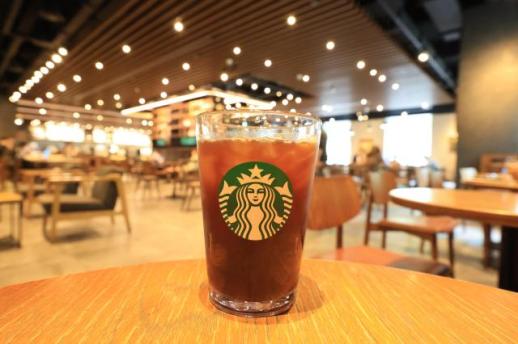 Starbucks Korea boycott hits sales after "Tank Day" backlash SEOUL, May 27 (AJP)-Starbucks Korea under Shinsegae Group suffers commercial fallout on top of reputational damage from its “Tank Day” controversy, with payment volumes and new app installations dropping sharply in the week following the backlash over marketing tied to South Korea’s May 18 democratization movement. According to data released Wednesday by AI analytics firm IGAWorks’ Mobile Index, Starbucks Korea’s weekly payment volume fell to 23.69 billion won ($17.3 million) between May 18 and 24, down 26.3 percent from 32.16 billion won the previous week. The figure was also roughly 25 percent lower than the May 4-10 period. The U.S. coffee brand is South Korea’s largest coffee franchise, with annual sales exceeding 3 trillion won. New installations of the Starbucks app also dropped 23.6 percent over the same period to 36,994, with the brand falling from second to fifth place among food-and-beverage apps in weekly downloads. The data added to signs that the controversy has begun affecting consumer sentiment and brand trust, even as overall app users increased temporarily amid heightened public attention and customers checking notices, coupons and rewards balances. Executives also acknowledged the financial impact. Jeon Sang-jin, executive vice president overseeing corporate management, said sales had fallen “considerably” since the controversy, although the company declined to disclose specific figures. He said restoring public trust remained the priority. Amid deepening criticism, Shinsegae Group Chairman Chung Yong-jin on Tuesday delivered a second public apology in a nationally televised appearance, repeatedly bowing and pledging to rebuild trust “through actions, not words” following what the group described as a serious lapse in historical awareness. “I will not make any excuses. This is my fault,” Chung said during the five-minute apology. “We will regain the public’s trust not through words, but through actions.” The controversy erupted after Starbucks Korea promoted tumblers branded with the word “Tank” on May 18, the anniversary of the 1980 Gwangju Democratization Movement. Critics also condemned the use of the phrase “Tak! on the desk,” saying it evoked the infamous explanation once used to conceal the 1987 torture death of student activist Park Jong-chul. As public anger intensified, Starbucks Korea also temporarily eased refund rules for its prepaid Starbucks cards. The company said customers will be allowed to request full refunds on card balances regardless of usage conditions for two weeks from June 1 through June 14. Under existing terms, customers could only receive refunds after using at least 60 percent of the balance. Starbucks Korea said the temporary exception was introduced in response to growing refund demands following the controversy. The company added that some card-related convenience functions and recharge limits would be temporarily restricted to prevent abuse such as so-called “card cashing,” in which users load prepaid cards with credit cards and convert them back into cash. The backlash has also spread to online gift-card platforms. Starbucks gift certificates, long among the most popular products on KakaoTalk Gift, fell from the top two spots to sixth place in the platform’s exchange-voucher rankings over the weekend amid boycott campaigns linked to the controversy. Delivery app vouchers, Shinsegae gift certificates and Olive Young gift cards overtook Starbucks in the rankings. Starbucks products, however, still held the top three positions within KakaoTalk’s separate “cafe” category, indicating the brand retained substantial core demand despite the controversy. What initially appeared to be a marketing blunder rapidly escalated into one of the most serious reputational crises in Shinsegae Group’s recent history, triggering boycott campaigns, police complaints and criticism from political leaders, including President Lee Jae Myung. 2026-05-27 11:54:06
 -
 KOSPI outshines as Seoul hosts 2 $1 trillion stocks, Nikkei also at record highs SEOUL, May 27 (AJP) - South Korean and Japanese equities surged Wednesday while most other Asian markets moved sideways, highlighting the widening divergence in the region’s AI-driven rally. The KOSPI emerged as the standout performer, briefly topping the 8,400 level a day after entering the new four-digit era, as South Korea became home to two $1 trillion listed companies. As of 11:08 a.m., Seoul’s benchmark index was up 4.29 percent at 8,391.53, while the junior KOSDAQ slipped 0.87 percent to 1,162.36. Japan’s Nikkei 225 climbed 1.34 percent to 65,866.82 as semiconductor and AI-related shares tracked overnight gains on Wall Street. In contrast, Chinese and Hong Kong equities were little changed. Hong Kong’s Hang Seng Index fell 0.11 percent to 25,571.09, while China’s Shanghai Composite edged down 0.03 percent to 4,144.06. Overnight in the United States, Micron Technology surged nearly 20 percent, briefly pushing its market capitalization above the $1 trillion mark, while the Philadelphia Semiconductor Index jumped 5.53 percent as gains spread broadly across chipmakers. UBS also sharply raised its target price on Micron, citing a strengthening memory-chip cycle. U.S. equities were additionally supported by easing Treasury yields and lower oil prices. The S&P 500 rose 0.61 percent and the Nasdaq advanced 1.19 percent to fresh record highs, while the Dow Jones Industrial Average slipped 0.23 percent. In Seoul, memory giants Samsung Electronics and SK hynix powered the KOSPI higher even as declining issues outnumbered gainers 803 to 97. Investor sentiment toward Samsung Electronics improved after 73.7 percent of union members voted to approve the company’s tentative wage agreement, with turnout reaching 95.5 percent. Shares in Samsung Electronics rose 7.02 percent to 320,000 won. SK hynix surged 10.38 percent to 2,265,000 won, lifting the chipmaker above the $1 trillion market-cap threshold for the first time. The company became the third Asian firm after TSMC and Samsung Electronics to join the trillion-dollar club. At current prices, SK hynix ranks 12th globally with a market capitalization of roughly 1,598 trillion won ($1.06 trillion), surpassing Berkshire Hathaway, Micron and Eli Lilly. SK hynix and Samsung Electronics are now the only two Korean firms among the world’s 14 listed companies valued above $1 trillion. SK Square also jumped 9.82 percent as investors continued pouring into AI-linked semiconductor plays. Samsung affiliates advanced broadly, with Samsung Electro-Mechanics rising 4.45 percent, Samsung C&T gaining 4.50 percent and Samsung Life Insurance adding 4.60 percent. Defense and aerospace shares were mixed. Hanwha Aerospace rose 0.80 percent, while shipbuilder HD Hyundai Heavy Industries slipped 1.74 percent. By contrast, several automaker, battery and biotech shares underperformed. Hyundai Motor fell 1.45 percent, Kia lost 1.86 percent and LG Energy Solution declined 1.50 percent. Samsung Biologics also dropped 1.75 percent. The weaker showing on the KOSDAQ reflected mixed trading across biotech, battery and semiconductor-equipment shares despite gains in select pharmaceutical names. EcoPro BM rose 1.59 percent and EcoPro gained 2.45 percent, while biotech heavyweight Alteogen surged 7.66 percent. Peptreon climbed 6.84 percent and LigaChem Biosciences jumped 10.12 percent. Other biotech and equipment shares also advanced, with Koh Young Technology rising 4.31 percent, Sam Chun Dang Pharm gaining 0.97 percent, HLB adding 0.95 percent and Abeona Bio climbing 4.68 percent. Ju Sung Engineering edged up 0.85 percent. Meanwhile, robotics and chip-equipment stocks weakened. Rainbow Robotics fell 1.94 percent, EO Technics declined 3.47 percent, Wonik IPS dropped 5.66 percent and Leeno Industrial slid 7.31 percent. The rally remained heavily concentrated in semiconductor and AI-related heavyweights, underscoring the market’s continued dependence on a narrow group of AI beneficiaries. The Korean won traded little changed in early trading, with the dollar quoted at 1,504.60 won versus the previous session’s close of 1,504.30 won. 2026-05-27 11:24:53
 -
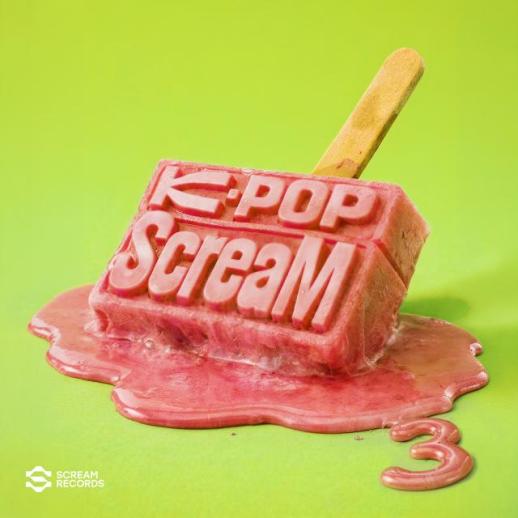 SM Entertainment's sub-label releases compilation album ahead of Europe tour SEOUL, May 27 (AJP) - ScreaM Records, a dance music label under talent behemoth SM Entertainment, released a compilation album on Wednesday ahead of a U.K. and Europe tour scheduled for next month. "K-POP ScreaM 3" reinterprets K-pop songs by SM Entertainment artists including RIIZE and NCT WISH into electronic dance music styles such as jungle, tech house, hard house, bass music and Jersey club. Jersey club is a percussion-driven genre that originated in New Jersey and gained wider popularity through club and online music communities. "K-POP ScreaM 3" is the third installment in the label's remix compilation series, which connects K-pop with club-oriented dance music. The latest release serves as a kickoff project for its planned tour of Europe. The album features four artists who will take part in the tour: ScreaM Records DJs IMLAY, 2Spade and Arkins, along with guest DJ yunji. According to SM Entertainment, the tracks serve as a kind of sneak teaser of the DJs' live mix sets in Europe. The tour will begin on June 2 with a showcase at XOYO, a London club, as part of SXSW London, the U.K. version of the annual South by Southwest music festival. The tour will then continue in the U.K. including stops in Sheffield and Brighton, before moving on to other European cities such as Barcelona in Spain and Cologne in Germany. ScreaM Records will also take part in live DJ mix broadcasts on U.K.-based independent radio stations including Planet Wax, Loose FM and MOT Radio during the tour. The label is also scheduled to join a session with electronic music label Anjunabeats and visit Armada Music Group as it seeks to build ties with the European dance music industry. 2026-05-27 11:18:02
 -
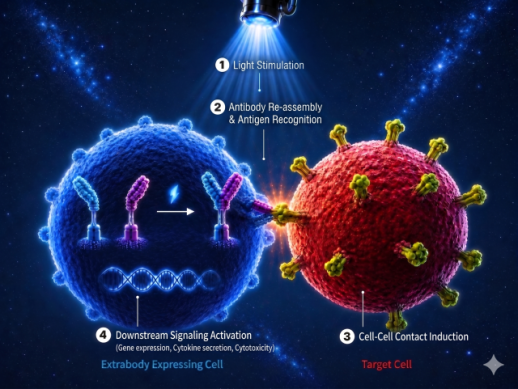 KAIST researchers develop smart antibody to control cancer treatment with light SEOUL, May 27 (AJP) - Researchers at the Korea Advanced Institute of Science and Technology (KAIST) in South Korea have developed an antibody platform that allows immune cells to target and attack cancer cells only when activated by specific light or chemical signals, KAIST said Wednesday. Current cellular therapies, such as CAR-T treatments, can cause severe side effects because engineered immune cells begin attacking immediately upon recognizing cancer, sometimes damaging healthy tissue in the process. The new platform, named Extrabody, addresses this by splitting an antibody into two inactive fragments. These pieces only recombine and bind to tumor targets when exposed to external triggers. The research team confirmed the system works against common cancer proteins, including EGFR and HER2. By integrating this light-activated switch into existing immune therapy models, they created a double-lock safety mechanism. The immune cells only activate and release chemicals to kill the target when both the cancer protein and the light stimulus are present at the exact same time. This precision prevents immune cells from accidentally attacking healthy cells outside the intended treatment area. The study was led by Professor Heo Won-do from the biological sciences department, alongside co-first authors Dr. Kwon Yu-ri and Dr. Yoo Da-seul-i. The findings were published online in Cell Chemical Biology on May 7, 2026. "This research is a new platform technology that can precisely control cell target recognition at the desired time and location using external stimuli," Heo said. "It can be utilized as a core foundational technology to improve the safety and precision of next-generation immunotherapy and cell-based treatment technologies in the future." (Reference Information) Journal/Source: Cell Chemical Biology Title: An extracellular, optogenetic antibody platform for stimulus-gated antigen recognition and modulation of cell behavior Link/DOI: https://doi.org/10.1016/j.chembiol.2026.04.006 2026-05-27 11:04:52