
Journalist

Wolfgang Preiser, Cheryl Baxter, Jean Nachega
-
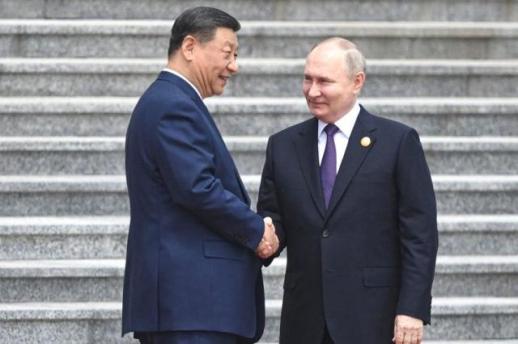 Putin to Visit China for Talks with Xi Following Trump's Trip Russian President Vladimir Putin is set to visit China for a state visit and hold talks with Chinese President Xi Jinping. This meeting follows U.S. President Donald Trump's recent trip to China, highlighting the ongoing diplomatic engagement among the U.S., China, and Russia. According to the Chinese Foreign Ministry and the Kremlin, President Putin will be in China for two days starting today, at the invitation of President Xi. The two leaders are scheduled to meet on May 20 in Beijing to discuss strategic cooperation, economic collaboration, and key international and regional issues. This summit coincides with the 25th anniversary of the signing of the China-Russia Treaty of Good-Neighborliness and Friendly Cooperation. The Kremlin stated that a joint declaration and several agreements are expected to be signed following the talks. President Putin will also meet with Chinese Premier Li Qiang to discuss trade and economic cooperation. Putin's visit is noteworthy as it comes immediately after Trump's trip to China. This indicates China's strategy of maintaining a balance between improving relations with the U.S. while also strengthening its strategic partnership with Russia. Analysts view this as an effort to expand diplomatic options in the face of Western pressures. The backdrop to this meeting is the ongoing war in Ukraine. Russia has increasingly relied on economic and diplomatic cooperation with China amid the protracted conflict and Western sanctions. While China has publicly maintained a neutral stance, it has continued to foster its strategic relationship with Russia. This summit is likely to reaffirm their cooperative stance against Western pressure. Energy cooperation is also a significant agenda item. Following Western sanctions, Russia has heightened its dependence on energy exports to China. The Kremlin noted that the discussions will cover a broad range of economic topics, including the potential for the 'Power of Siberia 2' gas pipeline, which would connect Russian Arctic gas fields to China via Mongolia. The Taiwan issue and U.S.-China relations also play a role in this context. President Xi recently highlighted the Taiwan issue as a major risk factor in U.S.-China relations during his talks with President Trump. China is navigating the need to manage tensions with the U.S. while maintaining its partnership with Russia. This summit is more about solidifying the existing China-Russia cooperation framework rather than declaring a new alliance. The sequence of meetings, first with Trump and then with Putin, underscores China's emerging role as a key player in the diplomatic landscape involving the U.S., China, and Russia, signaling its intent to manage U.S.-China relations while maintaining its anti-Western collaboration with Russia.* This article has been translated by AI. 2026-05-19 06:54:55
 -
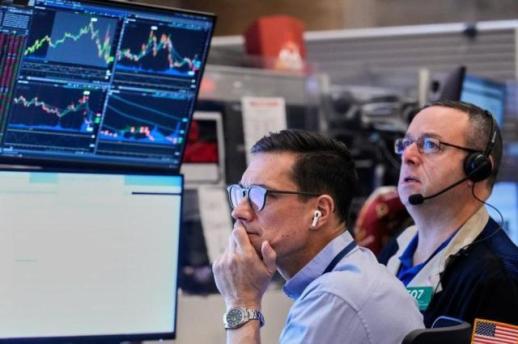 Mixed Results on Wall Street as Tech Stocks Retreat; Nasdaq Falls 0.51% Wall Street closed mixed as rising oil prices and U.S. Treasury yields weighed on the market, leading to profit-taking in technology stocks. The Nasdaq and the S&P 500 both declined, while the Dow Jones Industrial Average posted a slight gain. On May 18, the Dow Jones Industrial Average rose by 159.95 points, or 0.32%, to close at 49,686.12. The S&P 500 fell by 5.45 points, or 0.07%, to finish at 7,403.05, while the Nasdaq Composite dropped 134.41 points, or 0.51%, to end at 26,090.73. The weakness in technology stocks contributed to the declines. The information technology sector within the S&P 500 fell by 0.97%, and the Philadelphia Semiconductor Index dropped by 3.3%. Nvidia saw a 1.3% decrease ahead of its earnings report this week, as profit-taking pressure increased following a recent surge in AI semiconductor stocks. Rising oil prices and interest rates also posed challenges for growth stocks. West Texas Intermediate (WTI) crude oil closed at $108.66 per barrel, while Brent crude finished at $112.10. Concerns over disruptions to oil shipments through the Strait of Hormuz due to tensions with Iran have pushed prices higher. The yield on the 10-year U.S. Treasury note reached a high of 4.659% during the day, marking its highest level since February 2025, before settling at around 4.591%. High oil prices are contributing to inflationary pressures, while elevated interest rates are increasing valuation concerns for technology stocks. However, news that President Donald Trump has postponed military action against Iran, leaving room for negotiations, helped to mitigate some of the market's losses. Despite this, uncertainty remains as the possibility of military response in the event of failed negotiations lingers. Sector performance was mixed. The S&P 500 energy sector rose by 1.8%, marking the highest gain among major sectors, while the information technology sector experienced the largest decline. In individual stocks, Dominion Energy surged by 9.4% following NextEra Energy's announcement of its acquisition, while NextEra Energy fell by 4.6%. Regeneron Pharmaceuticals dropped by 9.8% after disappointing clinical results for its skin cancer treatment. This week, the market's focus will be on Nvidia's earnings report. Given that AI-related stocks have recently led the rally, Nvidia's performance and guidance are expected to be key indicators for a potential rebound in technology stocks. Earnings reports from major retailers, including Walmart, will also provide insights into consumer trends amid rising oil prices and inflationary pressures.* This article has been translated by AI. 2026-05-19 06:46:05
 -
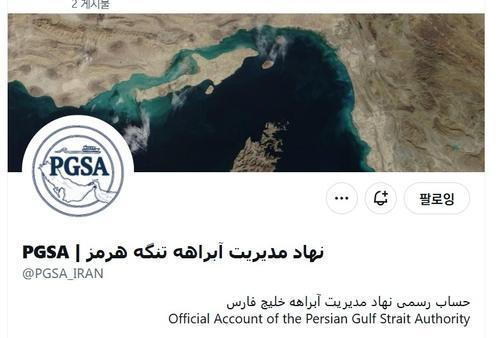 Iran Launches 'Persian Gulf Shipping Authority' Account to Manage Hormuz Strait Navigation Iran has launched an X account under the name of the Persian Gulf Shipping Authority (PGSA), which aims to manage navigation in the Hormuz Strait. This move is seen as an effort by Iran to publicly announce its navigation management system for the strait. On May 18, the Times of Israel reported, citing AFP, that Iran's Supreme National Security Council shared PGSA posts through its official X account. An account linked to the Iranian Revolutionary Guard Corps Navy also shared the same posts. The PGSA is positioned by Iran as the organization responsible for managing navigation in the Hormuz Strait. Maritime Executive reported that Iran has established a channel through PGSA to connect the Revolutionary Guard Corps Navy with shipowners. The posts indicate that PGSA will provide real-time information on the operational status and latest developments in the Hormuz Strait. However, it remains unclear whether this account is officially operated by the Iranian government or military. Vessels are required to receive guidance on navigation regulations and procedures through an email provided by PGSA, adjust their operational plans, and obtain navigation permits. Iran claims authority over navigation management, citing that the shipping lanes in the Hormuz Strait overlap with its territorial waters and those of Oman. The Guardian reported, citing Western diplomats, that the U.S. and European officials view Iran's initiative as a legally questionable action. The potential for imposing navigation fees or selectively allowing passage based on nationality and ownership structure raises concerns. The Hormuz Strait is a critical route through which approximately one-fifth of the world's maritime oil trade passes. The distribution of information through the PGSA account may be interpreted as Iran's attempt to institutionalize its control over the strait. With the U.S. and Europe advocating for the principle of free navigation, the controversies surrounding navigation permits and fees are likely to escalate tensions in the region.* This article has been translated by AI. 2026-05-19 06:33:49
 -
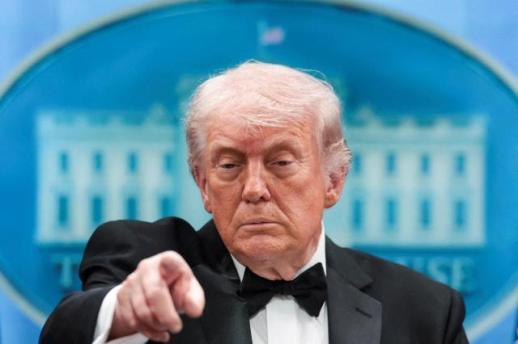 Trump Announces Delay of Military Action Against Iran Amid Negotiations President Donald Trump announced that he will postpone military action against Iran. This decision comes after Iran submitted a revised proposal to the U.S., and key Middle Eastern nations requested additional time for negotiations. On May 18, Trump stated on his social media platform Truth Social, "We will not be attacking Iran tomorrow." He explained that leaders from Qatar, Saudi Arabia, and the United Arab Emirates (UAE) are engaged in "very serious negotiations" with Iran, requesting a delay in military action due to the potential for an agreement to prevent Iran from acquiring nuclear weapons. Trump indicated that he accepted this request, noting that these countries informed him that negotiations with Iran could progress quickly. "I agreed to give them time," he wrote. This announcement followed the delivery of Iran's revised proposal to the U.S. Reuters reported that Pakistan conveyed Iran's proposal, which the Iranian Foreign Ministry confirmed was communicated through Pakistan. The proposal reportedly focuses on ending the conflict and normalizing navigation through the Strait of Hormuz. However, the U.S. does not view Iran's proposal as sufficient for an agreement. Axios cited a senior U.S. official stating that the White House does not consider Iran's revised proposal a "meaningful improvement" and believes it is inadequate for a deal. The U.S. insists that specific concessions are needed regarding Iran's nuclear program and uranium enrichment. In a phone interview with the New York Post, Trump stated that there are currently no concessions on the table for Iran, saying, "Nothing is open right now." Trump also maintained military pressure, instructing Defense Secretary Pete Hegseth and Chairman of the Joint Chiefs of Staff Dan Cain to prepare for a large-scale attack if a satisfactory agreement does not emerge. He had previously intensified pressure on Iran, warning on Truth Social that "the clock is ticking" and that if they do not act quickly, there will be nothing left for them.* This article has been translated by AI. 2026-05-19 06:24:48
 -
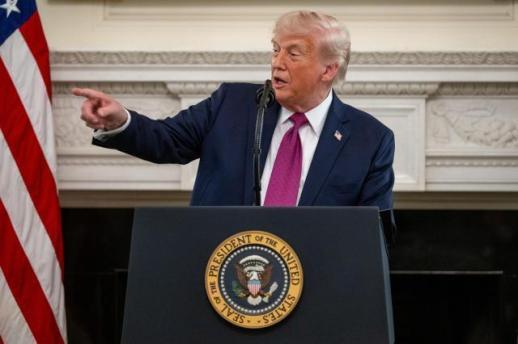 Trump Rejects Iran's Proposal, Signals No Concessions Donald Trump, the President of the United States, expressed strong dissatisfaction with Iran's recent proposal for a ceasefire, indicating that he sees no room for further concessions. In a phone interview with the New York Post on May 18, Trump stated, "Nothing is open right now" regarding potential concessions to Iran. Internal assessments within the U.S. government also reflect a negative outlook. Axios reported, citing a senior U.S. official, that the White House does not view Iran's revised proposal as a "meaningful improvement" and believes it is insufficient for an agreement. The core issue remains Iran's nuclear program. According to Reuters, Iran's recent proposal focuses on ending hostilities and reopening the Strait of Hormuz, suggesting that discussions on its nuclear program and uranium enrichment should be addressed in subsequent negotiations. Trump also mentioned military options, claiming he had postponed an attack on Iran at the request of leaders from Qatar, Saudi Arabia, and the United Arab Emirates. However, he instructed that U.S. forces should be prepared for a large-scale attack if an "acceptable agreement" is not reached. Mediation efforts through Pakistan are ongoing. Iran's Foreign Ministry confirmed that its proposal was conveyed to the U.S. through Pakistan. Sources from Pakistan indicated that "both sides are continually changing their demands" and noted that "time is running out."* This article has been translated by AI. 2026-05-19 06:16:33
 -
 Implications of Japan's Defense Industry Opening for South Korea The recent revision of Japan's "Three Principles on Transfer of Defense Equipment" marks a significant turning point in the country's post-war security policy, which has long been constrained by restrictions on arms exports. While the limitations are not entirely lifted, institutional constraints have been significantly eased, broadening the scope for defense exports. This change is not merely a shift in export policy; it is part of a structural transformation linked to increased defense spending, the acquisition of counter-strike capabilities, the development of long-range missiles, the strengthening of the U.S.-Japan alliance, and Japan's expanding role in the Indo-Pacific strategy. One area that South Korea should particularly focus on is submarines. Submarines are strategic platforms that combine shipbuilding technology, batteries, acoustic detection, combat systems, weapon integration, and operational experience. If a country like Japan, which has strengths in shipbuilding, electronics, materials, and batteries, enters the submarine market in earnest, its technological prowess and industrial base could become significant competitive factors. The Japan Maritime Self-Defense Force has operated conventional submarines such as the Oyashio, Soryu, and Taigei classes for an extended period, accumulating low noise levels, underwater mobility, and long operational capabilities. The later Soryu-class submarines have introduced lithium-ion batteries, and the latest Taigei-class is regarded as a submarine that fully applies this technology. However, the revision of Japan's defense export principles does not immediately imply an expansion of submarine exports. Given the strategic nature and sensitivity of submarines, actual exports will depend on various factors, including political considerations, technology protection, security relations with the operating country, and post-sale support capabilities. Nevertheless, the easing of institutional constraints increases the likelihood of Japan entering the high-performance conventional submarine market in the future, which South Korea should recognize as a medium- to long-term competitive variable. South Korea's submarine technology has also accumulated significant competitiveness through an independent development path. From the Changbogo-I and Changbogo-II to the Changbogo-III class, South Korea has rapidly advanced its independent design and construction capabilities, combat system integration, weapon integration, and domestic production capabilities. Notably, the Changbogo-III Batch-I, represented by the Dosan Ahn Chang-ho class, is equipped with vertical launch systems, and the subsequent Batch-II is being developed to further enhance vertical launch capabilities and operational sustainability. This indicates that South Korean submarines are evolving into stealthy, strategically precise strike platforms beyond just anti-submarine and anti-ship capabilities. It is important to note that the competitive landscape between the two countries in the international defense market may become more pronounced. South Korea has grown by emphasizing price competitiveness, quick delivery, local production, industrial cooperation, and tailored support for operating countries. In contrast, despite Japan's high technological capabilities, its presence in the international defense market has been limited due to export regulations and political constraints. However, if Japan actively enters the market, it is likely to leverage its advanced technology, quality reliability, close U.S.-Japan security cooperation, and long operational experience as strengths. While the situations of each country differ, a competitive dynamic may emerge in countries interested in high-performance conventional submarines, such as Canada, India, the Philippines, and Indonesia. However, it is unnecessary to view the submarine competition between South Korea and Japan solely as a zero-sum game. While competition in the international defense market is inevitable, it does not necessarily mean a weakening of overall South Korea-Japan security cooperation. Issues such as the threat of North Korean submarine-launched ballistic missiles (SLBMs), the expansion of the Chinese navy, and the protection of underwater infrastructure are common security challenges that both countries face. Therefore, South Korea should recognize the potential for Japan's submarine export expansion as a competitive factor while managing the competition in the defense market separately from the necessary cooperation in security matters. What South Korea needs is not a short-term reaction but a strategic assessment. Simply relying on price and delivery times will no longer suffice. Quality, reliability, long-term logistical support, technological standards, and interoperability with allies will become more critical competitive factors. South Korea's submarine exports should also evolve from merely providing platforms to developing long-term support models that encompass construction, operation, maintenance, and performance upgrades. Additionally, tailored packages should be presented that consider the security environment, budget constraints, operational personnel levels, and maintenance infrastructure of the exporting countries. Japan's opening of its defense industry presents both a new challenge and an opportunity for South Korea's defense sector. South Korea must connect this change to strengthening its defense competitiveness and enhancing its export models.* This article has been translated by AI. 2026-05-19 06:10:07
 -
 Kurosel CEO Kim Geon-soo: Building Global Strength with Domestic CAR-T "While many biotech companies focus on technology licensing, Kurosel aims to grow as a company that generates its own revenue," said Kim Geon-soo, CEO of Kurosel, in a recent interview at the company's headquarters in Yuseong-gu, Daejeon. CAR-T therapy is a personalized gene therapy that genetically modifies a patient's immune cells to precisely target cancer cells. Limcato (ingredient name: Anbalcaptagen autoleucel) is Korea's first CAR-T therapy and was granted product approval by the Ministry of Food and Drug Safety on April 29. The company plans to use Limcato's approval as a stepping stone for both domestic market establishment and global expansion. Kurosel has set several records as a pioneer in the history of CAR-T therapy in South Korea. In 2021, it received approval for the country's first CAR-T clinical trial application (IND) and administered the first CAR-T treatment to a patient. In 2023, the company established the largest commercial CAR-T Good Manufacturing Practice (GMP) production facility in Daejeon, laying the groundwork for commercialization. Below is a Q&A with CEO Kim. - Starting from a situation where there was virtually no CAR-T infrastructure in Korea, you have reached the point of having the 'first domestic CAR-T.' Wasn't it particularly challenging? "The most difficult part was the lack of experience with CAR-T in Korea. There were no clinical research organizations (CROs), and even the essential materials for drug development were not reliably available domestically. We essentially started from scratch. Nevertheless, our goal was clear: to create a treatment that is better than global products, not just Korea's first CAR-T. I co-founded Kurosel with Professor Kim Chan-hyuk from KAIST and Professor Shim Hyun-bo from Ewha Womans University, whom I had never met before, but we quickly aligned on our vision." - There is great anticipation in being able to produce and supply CAR-T therapy domestically. "Until now, many CAR-T therapies used in Korea involved sending patient cells to overseas factories for production and then bringing them back, which could take over a month. For patients with relapsed or refractory hematologic cancers, missing the treatment window can lead to rapid deterioration. Reducing the manufacturing time is not just about production efficiency; it directly impacts survival. Kurosel has established a domestic production system based on our Daejeon CAR-T dedicated GMP facility." - Your proprietary OVIS platform is mentioned as a differentiating technology. "The OVIS platform is our self-developed technology for controlling immune suppression signals. Typically, immune cells (T-cells) experience 'exhaustion' during the process of attacking cancer cells. OVIS can reduce T-cell exhaustion based on platform technology that simultaneously inhibits PD-1 and TIGIT." - How do you view the market potential and business viability of Limcato? "In Korea, approximately 4,000 patients with relapsed or refractory diffuse large B-cell lymphoma (DLBCL) are diagnosed each year, and those who do not respond to existing treatments become candidates for CAR-T therapy. We estimate that around 700 to 1,000 patients will be eligible annually. Even if we share the market with competing products, securing just 300 patients under health insurance coverage could generate about 90 billion won in revenue. We believe this is a sufficiently meaningful scale for business (currently, the reimbursement price for Kimriah is about 360 million won). Importantly, our focus is on investing in ongoing research and development (R&D) to grow the company rather than seeking short-term profits." - As a latecomer in the global CAR-T market, how will you prove your competitiveness? "CAR-T is a treatment administered once in a lifetime. For patients, it is a single choice, so the most critical factors are treatment efficacy and safety. Limcato achieved a complete response rate (CR) of 67.1% in clinical trials, which we believe is competitive compared to Kimriah (about 40%), Yescarta (about 54-58%), and Breyanzi (about 53%). Hospitals and medical professionals ultimately rely on objective data. The key is which drug can more effectively eliminate cancer cells and prolong patient survival." - What is the production capacity of the Daejeon GMP facility, and what are your future plans for its utilization? "Currently, the maximum manufacturing period is 16 days, with the capacity to produce about 700 treatments annually. If needed, we can expand this capacity to double. We can adequately cover DLBCL at this time. Recently, there has been growing interest in the potential of CAR-T for treating autoimmune diseases in the global market. Conditions like systemic lupus erythematosus (SLE) are areas of focus, and we believe this could be feasible within the next 3 to 5 years." - What direction is Kurosel aiming for? "We aspire to be a company that grows steadily based on our own revenue. Rather than packaging the company based on the number of technology exports, we aim to solidify our foundation. Many view Kurosel as the leading company in CAR-T in Korea, but we intend to gradually build our strength and capabilities, expanding from the domestic market to the global stage."* This article has been translated by AI. 2026-05-19 06:05:18
 -
 CureCell Aims for Global Expansion with Solid Tumor and In Vivo CAR-T Therapies CureCell, the first domestic developer of chimeric antigen receptor T-cell (CAR-T) therapies, is focusing on solid tumors and next-generation in vivo CAR-T as key growth areas for global expansion. The company aims to secure competitiveness in the global market rather than settling for short-term achievements. In an interview with Aju Economy, CEO Kim Geon-soo stated, "The development of domestic CAR-T therapies is just the beginning. While we have been known for our domestic operations, we are now looking to move to the next stage." This underscores the company's commitment to global expansion. CureCell is prioritizing solid tumor CAR-T as a core area of its next-generation growth strategy. Although the development is challenging, success could lead to significant market potential and clinical impact, intensifying competition in the global pharmaceutical industry. The company plans to validate treatment possibilities focusing on high unmet medical needs in cancers such as liver, stomach, pancreatic, and colorectal cancers, leveraging its next-generation platform technology. China has been chosen as a key location for its development strategy due to its large patient population and relatively fast clinical approval processes. Currently, CureCell is in discussions with local companies regarding clinical execution structures and business models, with plans to refine its global development strategy based on initial data obtained. As a mid- to long-term growth pillar, CureCell is introducing in vivo CAR-T technology. This next-generation approach involves directly administering genetic material or vectors to patients, enabling the production of CAR-T cells within the body. In vivo CAR-T has garnered increasing interest from global pharmaceutical and biotech companies due to its potential to reduce manufacturing complexity and supply timelines while enhancing treatment accessibility and scalability. CEO Kim Geon-soo remarked, "Our goal is to secure meaningful data this year that demonstrates the potential of our technology." CureCell's product, Rimkato, has been selected as a target item for the Ministry of Health and Welfare's 'Concurrent Approval-Assessment-Negotiation Pilot Project,' which is expected to expedite health insurance coverage compared to standard procedures. The company is currently negotiating product supply with over ten medical institutions, including major hospitals in Seoul, and plans to expand treatment centers to 30 nationwide by the end of the year, ensuring accessibility for patients across the country.* This article has been translated by AI. 2026-05-19 06:03:00
 -
 POSCO Faces Unprecedented Uncertainty Amid Direct Employment Controversy POSCO is facing unprecedented uncertainty as tensions escalate between labor and management over the company's plan to directly employ workers from its partner companies. The labor union has initiated dispute procedures, claiming the move was made unilaterally without prior consultation. There are even discussions about the possibility of a first-ever general strike in the company's history. In April, POSCO announced its decision to directly hire 7,000 employees from partner companies through the Pohang and Gwangyang steelworks' cooperative council, citing the establishment of a 'coexistence labor-management model.' The company also revealed specific hiring methods, conditions, and treatment systems. A new job category, 'Operational Synergy (S) Group,' was created, with a promotion system ranging from S1 to S7. Direct employment of partner company workers is not unprecedented in the steel industry. In 2021, Hyundai Steel became the first private company in South Korea to hire over 4,500 employees from in-house partner companies as regular staff, followed by Dongkuk Steel, which directly employed 889 subcontracted workers in 2024. However, POSCO's case stands out due to its scale and potential impact. The direct employment plan affects about 40% of POSCO's workforce of approximately 17,000 employees, including those at its steelworks, which could influence the existing regular employment system and overall organizational operations. The main issue lies in the lack of sufficient dialogue with the workforce during the implementation of such a significant change. The union is particularly concerned about the absence of consultation during the process rather than the direct employment itself. Existing employees have also expressed concerns about potential changes to job structures, personnel management, and wage systems. Kim Sung-ho, chairman of the POSCO labor union, stated in a press release at the time of the announcement, "The management ignored the minimum procedure of building consensus among employees, causing deep wounds among union members. The intense efforts and unique values of each employee in the hiring process must not be undermined." Employees of partner companies targeted for direct employment have also voiced their dissatisfaction. They are raising concerns about being segregated into a separate S group, distinct from the existing regular production E group, which they see as discriminatory. Some employees from certain partner companies at the Pohang and Gwangyang steelworks have already refused to report to work due to grievances over the wage system, disrupting operations. Those affected include employees from companies like POTL and PSC, who are being considered for the S group transition. POSCO has reportedly deployed direct workers to replace them on-site. Currently, the wage system for the S group is set at over 70% of the equivalent E group for the same years of service, with the same benefits as direct employees. The company's challenges are understandable. Recently, there has been increasing demand in the industry for stronger accountability from primary contractors and improvements in safety systems. The issue of 'outsourcing risk' in manufacturing has become an urgent matter that cannot be postponed. It appears that POSCO has made a significant decision for large-scale direct employment in response to these societal trends. However, having the right direction does not guarantee that the process will be accepted by all. In industries like steel, where workplace culture is strong and job structures have been maintained for a long time, the process of persuading members is crucial. Concerns have been raised that if this conflict continues for an extended period, it could affect not only labor-management relations but also the stability of production sites. POSCO has consistently emphasized 'coexistence' as a core corporate value. The company must consider the mutual growth with its partners and the enhancement of safety as essential tasks. However, true coexistence cannot be achieved through declarations alone. Equally important is how well the members can understand and accept these policies. What POSCO needs now is not rapid decision-making but sufficient communication to restore trust among its workforce. 2026-05-19 05:17:26
 -
 High Oil Prices and Exchange Rates Strain Steel and Oil Industries The prolonged conflict in the Middle East has led to rising international oil prices and a surge in the won-dollar exchange rate, which has now exceeded 1500 won, increasing the burden on heavy industries such as steel and oil. According to industry sources on May 18, there are concerns that the exchange rate, which has surpassed 1400 won, may become a new norm at 1500 won. In March, the won-dollar exchange rate briefly crossed 1500 won for the first time in nearly 17 years since the financial crisis. The rate has remained above 1500 won, continuing the trend of high exchange rates. Meanwhile, the price of West Texas Intermediate (WTI) crude oil rose from $65.21 per barrel on February 26, before the conflict began, to $105.41 as of May 15, marking an increase of approximately 61.6%. With the ongoing conflict in the Middle East driving up oil prices, companies are expected to face even greater challenges in managing costs. The structure of industries that import key raw materials such as iron ore and crude oil in dollars and sell them in won means that rising exchange rates directly translate into increased costs. The steel industry is particularly vulnerable to high exchange rates. Major South Korean steelmakers, including POSCO, Hyundai Steel, and Dongkuk Steel, rely heavily on imports for iron ore and coking coal. While raw material payments are made in dollars, a significant portion of their sales is supplied to domestic shipbuilding, construction, and automotive sectors in won. The challenge lies in the difficulty of passing on increased costs to product prices. The influx of low-priced steel plates and products from China has limited the ability of domestic steelmakers to raise prices. With a downturn in the construction market leading to weak domestic demand, the combined pressure of rising exchange rates is rapidly deteriorating profitability. The steel industry is increasingly burdened as it struggles to transfer rising costs to product prices while facing additional pressures from exchange rates. The oil industry is also feeling the strain. The four major oil companies—SK Innovation, GS Caltex, S-Oil, and HD Hyundai Oilbank—are entirely reliant on imported crude oil, making them vulnerable to fluctuations in oil prices and exchange rates. The simultaneous rise in international oil prices and the sharp increase in exchange rates have significantly raised the costs of crude oil imports and increased cash outflow burdens. An industry insider stated, "The price of crude oil we are currently importing has risen significantly, and once supply shocks ease, oil prices will normalize. However, if that happens, the rising exchange rates combined with declining inventory asset values will create risks that the oil companies must fully bear, leading to significant operational burdens." While the first quarter saw some performance protection due to inventory valuation gains from soaring oil prices following the outbreak of the Middle East conflict, industry experts predict that if high exchange rates persist, the burdens of raw material procurement and increased financial costs will become more pronounced starting in the second quarter. Professor Heo Jun-young of Sogang University’s Department of Economics noted, "It seems increasingly difficult for the exchange rate to drop back to the 1300 won range this year." Regarding strategies to cope with the prolonged high exchange rates and the Middle East conflict, he explained, "While the oil industry has alternatives like the Red Sea if crude oil cannot pass through the Strait of Hormuz, the steel industry currently lacks effective short-term responses. Ultimately, they will have to endure."* This article has been translated by AI. 2026-05-19 05:15:00