


Latest by
-
 Gachon University Concludes Successful International Summer Program with 285 Students Gachon University successfully concluded its '2026 Gachon International Summer Program' on July 22. According to Gachon University on August 19, this year's program included 55 domestic students and 230 international students from 14 universities across nine countries, including the United States, the United Kingdom, Germany, Italy, Japan, China, and Hungary, totaling 285 participants. The Gachon International Summer Program allows domestic and international students to engage in classes and cultural experiences during the summer break, fostering understanding of diverse cultures and enhancing global competencies. The program offers international students the opportunity to experience Korean culture firsthand, while Gachon students can communicate in English with their international peers and gain international exchange experience. This year, the program was tailored into three sessions, considering the cultural backgrounds of participating universities and students. The first and second sessions saw 252 students complete the program, while 33 students are set to graduate from the third session on August 21. Mornings featured classes and discussions on Korean culture, including topics such as Daily Korean, K-Drama, K-Pop, and K-History. Afternoons included various experiential programs like K-Pop dance, crafts, Taekwondo, calligraphy, and K-Food, allowing students to immerse themselves in Korean culture. In addition to classes, cultural and leisure activities were organized, including visits to folk villages, Gyeongbokgung Palace, Caribbean Bay, Lotte World, Taekwondo sessions, and bowling. Students also participated in free group tours to traditional markets and museums, experiencing Korea's traditions and daily life firsthand. Gachon students were offered the chance to earn two credits through the 'Special Topics in English' course, and selected buddy students received scholarships ranging from 200,000 to 400,000 won. Additional points were also awarded for students participating in exchange and visiting programs, including those at the Hawaii campus. Participants expressed that the Gachon International Summer Program was meaningful, as it allowed them to learn about different cultures and interact with students from various countries. Jo Yong-wan, a 23-year-old electrical engineering student, stated, "It was great to interact with students from diverse countries, including English-speaking, Japanese, and Chinese-speaking regions. I would like to participate again in the future." Meanwhile, Vice President Yoon Won-jung remarked, "I hope the Gachon International Summer Program has provided students with an opportunity to understand various cultures outside the classroom and communicate with friends from different backgrounds, broadening their perspectives." He added, "We will continue to create opportunities for domestic and international students to meet and exchange naturally, enhancing their global competencies."* This article has been translated by AI. 2026-08-19 10:40:10
 -
LG Household & Health Care's Dr. Groot Expands to 424 Sephora Stores in the U.S. LG Household & Health Care's scalp care brand, Dr. Groot, is expanding its sales network to 424 Sephora stores across the United States. Following its online launch in March and a trial sale in May at key locations, the brand is accelerating its entry into the North American premium hair care market. According to LG Household & Health Care, Dr. Groot began selling 14 products in 424 Sephora stores nationwide on August 15 (local time). This follows its online debut in March and a soft launch in over 90 key stores in May, marking a rapid expansion just three months later. Initially, the company planned to expand to around 400 stores in August but confirmed the official entry into 424 locations. The products focus on scalp care, featuring the 'Scalp Revitalizing Solution (SRS)' line, which includes 'Hair Thickening Shampoo,' a 'Miracle In-Shower Treatment' that transforms into a cream upon contact with water, and a holiday gift set exclusive to Sephora. Notably, the brand plans to promote the 'Roll-On Serum' as a key new product. This applicator features a massage ball at the end, allowing users to apply the serum directly to the scalp while massaging. During the soft launch in May, Dr. Groot assessed local consumer reactions to the SRS products, including shampoo, conditioner, and the roll-on serum. The brand is also expanding its retail space. Depending on the store, products will be placed in high-visibility areas such as end caps, as well as in 'Next Big Thing (NBT)' and 'K-Beauty' displays. The company explained that the decision to increase the number of stores and products was based on sales data and consumer feedback gathered from the 90 stores in May. This expansion into Sephora comes as LG Household & Health Care shifts its overseas business focus rapidly toward North America. In the second quarter of this year, the company's North American sales reached 205.8 billion won, a 47.3% increase compared to the same period last year. In contrast, sales in China decreased by 5.0% to 176 billion won, marking the first time North American sales surpassed those in China since LG Household & Health Care became an independent corporation. Overall overseas sales also rose by 12.6% to 584.5 billion won. The beauty segment also saw a 3.9% increase in second-quarter sales, totaling 818.4 billion won, with operating profit turning positive at 44.4 billion won. The company attributed its improved performance to the growth of brands like Dr. Groot, Yusimol, Dominus, VDL, and Hince across domestic and international online and offline channels. Dr. Groot's offline distribution network in North America is expanding rapidly. Since October of last year, the brand has been selling products in over 600 Costco locations across the U.S., Canada, and Mexico, and sales on Amazon in the first half of this year increased by 153% compared to the same period last year. With the Sephora entry, the brand has broadened its sales channels to include premium beauty specialty stores, in addition to large warehouse stores and online platforms. LG Household & Health Care is also enhancing its local marketing efforts. Customers purchasing products at Sephora will receive hair brushes and other gifts based on their spending, along with online and offline sampling initiatives. The company plans to collaborate with beauty creator Bretman Rock on content for TikTok and Instagram. Additionally, pop-up events are scheduled for early next month in New York and Los Angeles to connect product experiences with actual purchases at Sephora. A representative from LG Household & Health Care stated, “We will continue to strengthen our presence in Sephora while consistently offering premium solutions tailored to American consumers' hair and scalp concerns.”* This article has been translated by AI. 2026-08-19 10:36:00
-
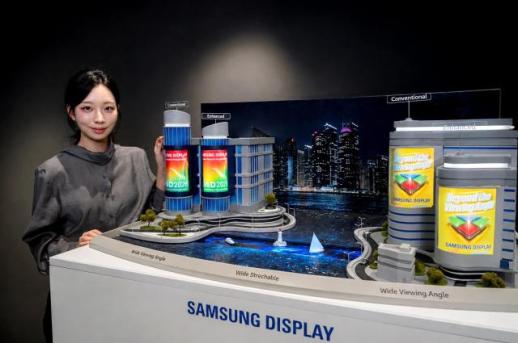 Samsung Display takes aim at foldables' dim spot with new OLED technology SEOUL, August 19 (AJP) - Samsung Display has developed a new OLED technology aimed at tackling a persistent weakness of foldable screens, uneven brightness around curved and folded areas, as the display maker looks to improve image consistency across the next generation of flexible devices. The company said Wednesday it will unveil its 7.6-inch "Wide View" display for the first time at IMID 2026, a four-day display industry conference running through Friday at BEXCO in Busan. Current commercial foldable displays can appear significantly dimmer around the curved sections on either side of the central fold, with brightness falling to about 40 percent of the level seen when viewing a flat portion head-on, according to Samsung Display. The new technology redesigns the materials and structure of the OLED's organic light-emitting layer to maintain more uniform brightness across curved sections of the panel. Samsung Display said the technology could eventually be applied beyond foldable smartphones to slidable and rollable devices, where curved viewing angles can produce similar variations in brightness. The company is also unveiling a 20-inch stretchable display, its largest to date. Samsung combined two stretchable panels using tiling technology, more than doubling the size of its previous version while minimizing the visible boundary between them. Samsung sees potential applications for the larger stretchable display in automotive digital cockpits, humanoid robots and digital signage, where screens increasingly need to conform to curved or unconventional surfaces. The exhibition also includes several experimental OLED applications aimed at emerging AI devices, including a display for humanoid robots with eye-tracking capabilities and a wearable AI OLED pendant. Samsung is also showing new automotive and high-refresh-rate gaming displays. Samsung Display will present 57 technical papers at this year's conference, the largest number among participating companies. Its OLED panel used in Samsung Electronics' Galaxy S26 Ultra also received IMID's Korea Display of the Year award for its privacy display technology. Samsung Display said the Wide View technology could improve brightness uniformity around curved portions of displays and could eventually be applied to foldable, slidable and rollable devices. AJP Takeaways Samsung Display's new Wide View OLED targets a longstanding foldable-screen issue in which curved areas around the fold can appear substantially dimmer than the flat center of the display. The technology redesigns the OLED light-emitting layer to deliver more consistent brightness and could eventually extend to foldable, slidable and rollable devices. Samsung is also showing a 20-inch stretchable display and experimental OLEDs for humanoid robots and AI wearables, signaling a push to take flexible displays beyond smartphones. 2026-08-19 10:31:19
 -
Rep. Jo Kyung-tae Calls for Leadership Change in People Power Party 국민의힘 중앙윤리위원회의 징계 심의를 받고 있는 조경태 국민의힘 의원은 19일 "당장이라도 의원총회를 열어서 장동혁 대표를 끌어내야 한다"고 주장했다. 그러면서 전국 당협위원장 재선출 추진이 장 대표를 무너뜨리는 계기가 될 수 있다고 강조했다. 조 의원은 이날 KBS 라디오 '전격시사'에서 "중진 의원들이 좀 더 용기를 내서 단체로 연명해서라도 '장 대표 내려오라'는 정도의 말은 할 수 있어야 한다"며 이같이 말했다. 조 의원은 "윤어게인을 외치고 있는, 또 윤어게인을 대변하고 있는 자들과 함께하는 장 대표에 대해 말 한마디를 제대로 못하는 것이 지금 우리 당의 현실"이라며 "국민의힘이 이렇게 무기력하고 비겁하게 한마디 말도 안 한다는 것은 말이 안되는 얘기"라고 지적했다. 이어 장 대표가 발표할 쇄신안에 대해 "윤어게인 세력과 부정 선거를 주장하는 세력과는 결별하겠다, 소위 말해 친윤(친윤석열)파들은 2선으로 후퇴하겠다는 선언이 진정한 쇄신의 출발"이라며 "장 대표는 아마 그런 용기나 자신감이 없을 거다. 민주주의와 헌법 수호의 의지가 없기 때문"이라고 했다. 그러면서 당 지도부가 검토 중인 전국 당협위원장 재선출 방안에 대해 "현실적으로 현 시점에 당협위원장 전면 재교체는 불가능한 일"이라고 내다봤다. 그는 "당협위원장 중에 비례대표를 빼면 한 80~90명은 국회의원들이 당협위원장을 겸직하고 있다"며 "다 교체하려 하면 의원들이 가만히 있겠느냐"고 반문했다. 아울러 "자기들의 이익하고 맞물리기 때문에 예민하게 움직일 것"이라며 "당협위원장 재선출 문제가 장 대표 체제를 무너뜨리는 또 하나의 계기가 될 수 있다"고 진단했다. 국회에서 5·18 민주화운동을 왜곡하는 토론회를 열어 논란이 된 이진숙 의원에 대해서는 "현 지도부와 이 의원의 공통점은 윤어게인 세력으로 제 식구 감싸기를 하고 있다"며 "이 의원을 당에서 제명시키는 것은 말할 것도 없고 국회에서도 국회의원 자격이 없다"고 질타했다. 그는 윤리위의 징계 결정에 대해 "어떤 결정을 내리더라도 담담하게 받아들일 예정"이라며 법적 대응을 고려하고 있지 않다고 밝혔다.* This article has been translated by AI. 2026-08-19 10:28:10
-
U.S.-South Korea UFS Exercise to End Early on August 21, Training Reduced by Half The U.S. and South Korean military authorities have decided to end the ongoing Ulchi Freedom Shield (UFS) exercise early, following a directive from President Donald Trump to reduce joint military drills. The Joint Chiefs of Staff (JCS) announced on August 19 that "the U.S. and South Korea agreed to adjust the duration and scale of the exercise at the suggestion of the U.S. side," stating that the UFS will now take place from August 17 to 21. The UFS exercise, a regular joint drill aimed at defending the Korean Peninsula in times of crisis, was originally scheduled to run from August 17 to 27. The JCS added that the joint command is conducting the exercise with dual command posts at CP Tango in Seongnam and Camp Humphreys in Pyeongtaek, and that the U.S. and South Korea will discuss various measures to achieve the goals of the UFS and establish a joint defense posture. CP Tango, located in Seongnam, serves as the U.S. command post during wartime, while Camp Humphreys in Pyeongtaek functions as a peacetime command facility. However, due to the reduction in U.S. personnel at CP Tango following Trump's directive, the command post exercise (CPX) is expected to be conducted at both locations. The UFS consists of a command post exercise (CPX) based on simulations and an associated field training exercise (FTX). The CPX is divided into two parts: the first part focuses on defense, while the second part practices counteroffensive operations. It has been reported that the U.S. and South Korea have agreed to conduct only the first part of the exercise, scheduled to end on August 21, while canceling the second part, originally planned for August 24 to 27. This effectively reduces the training period by half. Minister Ahn Kyubak stated during a press briefing at the Ministry of National Defense in Yongsan, Seoul, that it seems the second part of the training will be canceled. Additionally, the joint outdoor maneuver training planned in conjunction with the UFS will also be partially reduced. The JCS noted that "specific details are currently under discussion between the U.S. and South Korea." The planned joint FTX during the UFS period includes 14 integrated exercises at the battalion level and above. It has been reported that most of the planned joint FTX will be conducted separately by the U.S. and South Korea or solely by the South Korean military, leading to a reduction in the number of exercises or postponements. As a result, the joint outdoor maneuver training is expected to be significantly scaled back. However, the South Korean government is leaning towards postponing rather than completely canceling the joint FTX that was planned to be conducted throughout the year. Minister Ahn responded to a question from reporters about whether more than ten FTX related to the UFS could be canceled, stating, "No, they are not canceled; they will be conducted throughout the year after the UFS ends," indicating that the total of over 160 planned FTX for this year will proceed as scheduled. The JCS stated, "In the future, the U.S. and South Korea will discuss various measures to achieve the goals of the UFS and establish a joint defense posture." Earlier, on August 16, President Trump stated on social media platform Truth Social, "Considering that I have a very good relationship with North Korean leader Kim Jong Un, I do not like the fact that the U.S. has long agreed to participate in joint military exercises with South Korea," and directed Defense Secretary Pete Hegseth to significantly reduce the scale of U.S.-South Korea joint exercises. The following day, the U.S. Department of Defense expressed its commitment to actively implement the commander-in-chief's directive.* This article has been translated by AI. 2026-08-19 10:28:00
-
Youth Housing Planned for Part of Yongsan Park, Official Says On August 19, Han Jun-kyung, the chief of economic growth at the Blue House, stated that the plan to supply youth housing in part of Yongsan Park does not mean that the park will not be developed. He emphasized that the intention is to discuss land use options that allow for both the park and youth housing to coexist.During an appearance on TV Chosun's 'News Parade,' Han noted, "Yongsan Park covers 910,000 pyeong, which is larger than the 880,000 pyeong area inside the Yeouido embankment. If we were to turn all of this land into a park, it would be an unprecedentedly large scale globally."Han cited the low utilization rate of the Yongsan Park site and soil contamination issues as reasons for considering housing supply. He remarked, "If you visit the Yongsan Children's Garden, you will see that it is not heavily used. It is important to make good use of valuable land."He further explained that the land is significantly contaminated, with costs for removing pollutants ranging from hundreds of billions to trillions of won. He suggested that utilizing part of the land for housing could facilitate excavation and cleanup efforts.Han stated, "Creating a park that is accessible and of a suitable size can enhance its usage. We should consider ways to provide future generations with both good living spaces and a healthy environment."He specifically mentioned that the housing planned for Yongsan Park would be in the form of public assets, not private sales. Han said, "Some parts of the 910,000 pyeong could be designated as parkland while others could be allocated for youth housing. It is difficult to distribute it through private sales; we are thinking of it as public assets."He added, "We are considering ways for young people to utilize these spaces effectively, enabling them to marry and start families there."Han also hinted at the possibility of revising the current Yongsan Park creation special law, which prohibits changing the land's use for purposes other than a park or selling it. He acknowledged, "I believe there is a social consensus that outright sales are not acceptable," but noted that given the significant changes in Seoul's housing situation over the past 20 years, it may be possible to include provisions for exemptions in cases of substantial public interest after review.However, he stressed that any changes would require social discussion and consensus.Regarding the housing supply plan announced by the government on August 13, which aims to provide over 230,000 homes in the metropolitan area, Han explained that it focuses on structurally addressing the supply shortage caused by a decline in construction starts in the past.He pointed out, "During the Park Geun-hye administration, an average of 295,000 homes were started annually, while the Moon Jae-in administration saw 283,000. However, under the Yoon Suk-yeol administration, this number has dropped to 158,000, resulting in a near halving of construction starts from 2022 to 2024, which is now evident."Han stated, "The government aims to push for the largest scale of construction starts, averaging around 300,000 homes, and will do so at a very fast pace. Addressing the structural issues of housing supply is the most significant feature of this plan."He also expressed support for expanding supply through reconstruction and redevelopment. Han emphasized the need to consider the potential impact of easing regulations on floor area ratios and rental housing ratios, which could enhance project viability but also stimulate local housing prices.He noted, "This plan includes many incentives for quickly advancing reconstruction and redevelopment projects, but we must also consider whether increasing project viability will raise housing prices in those areas."Han acknowledged that reconstruction and redevelopment involve complex interests, take a long time, and do not significantly increase the number of new homes. He stressed the need to consider all options, including new land development, given the poor housing situation for young people.Regarding the Youth Future Housing Loan, which supports the purchase of non-apartment properties, he clarified, "This does not mean we are telling young people not to buy apartments but rather providing an additional option for those who find apartment loans burdensome."He added that even if they purchase non-apartment properties, they will still be eligible for benefits related to the loan-to-value ratio (LTV) and subscription qualifications when buying their first apartment in the future, ensuring no disadvantages.* This article has been translated by AI. 2026-08-19 10:28:00
-
Korean Tourism Organization Opens 'K-Trip Lounge' at Hiker Ground The Korean Tourism Organization is showcasing the interactive exhibition 'K-Trip Lounge' on the fourth floor of Hiker Ground in Jung-gu, Seoul, until September 6.This exhibition features audio guides narrated by K-pop artists, allowing visitors to explore popular domestic destinations such as Anbandegi in Gangneung, E-World in Daegu, and Hanok Village in Jeonju. Artists including N.Flying, P1Harmony, Ampersand One, pH-1, and actors Yoon Jong-seok, Lee Min-ki, and Lee Joo-seung will introduce tourist spots and Korean culture they have visited or recommend. Attendees can listen to the artists' stories through headsets while browsing their preferred travel destinations.The exhibition space is themed around an 'airport' to give visitors a sense of embarking on a journey. Guests will start by receiving a passport and boarding pass at the onboarding photo wall, followed by experiences in the boarding pass zone, artist random call booth, and mirror selfie zone.The core of the exhibition is centered on auditory experiences. Visitors can listen to the artists' recommendations while visually exploring the locations through strategically placed posts. Additionally, there are phone booths where guests can hear welcome messages from the artists, questionnaires for sharing personal travel stories, mirror photo zones, and an interactive installation where attendees can leave messages on wooden pieces to complete a 10-meter-long table.This exhibition was planned in collaboration with 'Pavement,' a company selected as an early tourism venture last year. Pavement operates 'Selectrip,' an AI audio guide platform based on K-pop fandom. The Korean Tourism Organization plans to utilize Hiker Ground in an O2O (Offline to Online) manner, linking the recommended travel destinations showcased in the exhibition with the Selectrip platform to facilitate actual travel planning.Yoon Seong-wook, head of the tourism promotion center's operations team, stated, "We aim to connect tourism demand by integrating K-content with travel experiences across various regions. We will continue to expand collaboration with diverse industries and tourism venture companies to discover new content that links K-content and tourism."* This article has been translated by AI. 2026-08-19 10:24:20
-
Kyobo Life Planet Supplies 'LaPlay' to Indonesian Fintech Company Kyobo Life Planet has announced the supply of its digital insurance marketing platform, 'LaPlay', to the Indonesian fintech company Bangjamin.On August 19, Kyobo Life Planet revealed that it has signed a memorandum of understanding (MOU) with Bangjamin for the supply of LaPlay and local business collaboration.Founded in 2022, Bangjamin is a digital insurance platform that has attracted investments from financial firms and venture capitalists, including SBI Group, BRI Ventures, BNI Ventures, and Blackstone Capital. The company offers services ranging from insurance enrollment to claims processing and is building a local insurance distribution network with over 30 insurance partners and more than 10,000 insurance products.LaPlay, developed by Kyobo Life Planet, is a nurturing platform that combines health management rewards and content to gradually increase customer interest in insurance. It has already been implemented by a global insurance company in Hong Kong, where its effectiveness was validated.Under the agreement, Kyobo Life Planet will integrate LaPlay into the Bangjamin platform. The network of over 20,000 insurance agents and distribution partners within Bangjamin will be supported in managing customer data more efficiently and nurturing potential clients.Additionally, there are plans to supply LaPlay to other insurance companies in Indonesia by leveraging Bangjamin's existing business-to-business (B2B) network. This strategy aims to expand beyond providing solutions to a single insurer and to cover the broader local insurance industry.The two companies plan to enhance local customers' awareness of insurance, analyze the effects of solution integration, and develop a joint business model that combines their technological capabilities and local expertise, starting with the introduction of LaPlay.Kim Young-seok, CEO of Kyobo Life Planet, stated, "This partnership has once again demonstrated the excellent technology and growth potential of LaPlay in the Asian market. We will continue to lead the digital transformation of the global insurance industry based on our unique insurtech capabilities."* This article has been translated by AI. 2026-08-19 10:24:20
-
China Expands Renewable Energy and Coal Power Investments China is simultaneously expanding investments in renewable energy and coal power, a seemingly contradictory approach. While the country is increasing wind and solar energy capacity to unprecedented levels to reduce carbon emissions, it is also accelerating the construction of coal-fired power plants. This dual strategy reflects clear policy goals of 'energy security' and 'grid stability.'According to the National Energy Administration, China installed over 430 gigawatts (GW) of new wind and solar power capacity in 2025 alone, the largest increase on record. This includes approximately 315 GW of solar and about 119 GW of wind power. By the end of 2025, renewable energy capacity accounted for more than 60% of the country's total power generation capacity.At the same time, coal power generation has also surged. The Global Energy Monitor (GEM) and the Center for Research on Energy and Clean Air (CREA) report that China activated 78 GW of new coal power capacity in 2025. The total scale of new or restarted coal power projects reached a record 161 GW. In 2022 and 2023, around 100 GW of coal power projects were approved each year, continuing a construction boom.While rapidly increasing wind and solar capacity, China is also building coal power plants. Solar energy cannot be generated at night, and wind power output drops significantly during calm conditions. In contrast, coal power can be adjusted as needed. This flexibility allows for backup power to be available in case of sudden spikes in electricity demand due to heatwaves or cold snaps, or when renewable generation unexpectedly declines.China experienced severe power shortages in 2021. A surge in manufacturing due to export demand coincided with soaring coal prices, which were not reflected in electricity rates due to regulatory constraints and local governments' strict carbon reduction measures. This led to widespread factory shutdowns across the country in September and October of that year. The government had to urgently resume operations at coal power plants to alleviate the crisis. In 2022, a severe drought and heatwave caused hydroelectric generation to plummet, leading to renewed power shortages, particularly in Sichuan province, prompting an increase in coal power generation.From the government's perspective, it is safer to secure excess power generation capacity in advance rather than build power plants after an industrial shutdown due to power shortages. Additionally, the rapid growth of the AI industry and the expansion of data centers have made it difficult to accurately predict future electricity demand. Even if coal power plants operate at lower capacity during normal times, the government is effectively paying for the ability to produce electricity on demand.This understanding is clearly reflected in remarks by Li Qiang, China's Premier. In a government work report in March, he emphasized the need to strengthen the construction of large wind and solar bases, transmission networks, and energy storage systems, while stating that “coal power must play a crucial role in ensuring energy security.”Such policies come with significant costs. Operating coal power plants at low capacity during normal times can lead to decreased utilization rates and increased generation costs. In the future, as renewable energy and energy storage systems become more widespread, many coal power plants may not even be operational.Nevertheless, China is willing to take on the economic risks of this potential waste. Even as wind and solar become the primary energy sources, the inherent uncertainties of not having wind or sunlight persist. To prepare for sudden power overloads and blackouts, China is essentially maintaining an expensive 'power insurance' in the form of coal power plants.* This article has been translated by AI. 2026-08-19 10:24:00
-
SK Biopharm Reaches First Settlement in US Patent Lawsuit Over Xcopri SK Biopharm announced it has reached a settlement with Indian generic developer MSN Laboratories regarding a U.S. patent lawsuit over its epilepsy drug, Cenobamate, marketed in the U.S. as Xcopri. According to SK Biopharm, the two companies agreed to grant MSN the right to launch future generic products under certain conditions related to patent protection. The specific terms of the settlement were not disclosed. This agreement concludes the patent lawsuit pending in the U.S. District Court for the District of Delaware. The lawsuit was centered on a dispute over follow-on patents rather than the substance patent for Cenobamate. SK Biopharm explained that this settlement allows it to maintain patent protection for Xcopri even after the substance patent expires in 2032. However, the actual launch date of the generic product will depend on regulatory approval from U.S. authorities and undisclosed terms between the two companies. SK Biopharm is currently involved in patent litigation with two other companies. A company representative stated, "This first settlement helps us solidify our foundation for continued growth and maintain our market position." Additionally, according to a disclosure regarding a 'single sales and supply contract,' SK Biopharm has signed a supply agreement for Xcopri with its U.S. subsidiary, SK Life Science. The contract is valued at 99.4 billion won, which represents 14.1% of the consolidated revenue of 706.7 billion won for the year 2025. This large supply contract marks the sixth of its kind this year, bringing the total cumulative contract value to 381.2 billion won.* This article has been translated by AI. 2026-08-19 10:24:00