


Latest by
-
 Lee Chan-jin Marks One Year as Head of Financial Supervisory Service Amid Organizational Changes Lee Chan-jin, the head of the Financial Supervisory Service (FSS), marked his first anniversary in office on August 14. The past year has seen the FSS navigate a crisis of organizational separation while expanding its supervisory and investigative functions, focusing on consumer protection and responses to unfair trading practices.When Lee took office, the FSS was embroiled in internal strife over the establishment of a separate Financial Consumer Protection Agency and its designation as a public institution. After retracting the organizational restructuring plan, the FSS began to strengthen its consumer protection functions internally. In January, it established a consumer protection division directly under the commissioner, linking supervisory and inspection functions with dispute resolution. In March, the FSS launched a Financial Consumer Protection Advisory Committee, which has held three meetings to discuss 32 agenda items.The focus of consumer protection is shifting from post-incident remedies to proactive prevention. The FSS now requires prior notification to consumers when changing insurance claim review standards and has expanded the application of the proxy claim system for insurance contracts. The agency continues to address large-scale consumer damages, processing 11,696 complaints related to the TMON and WEMAKEPRICE incidents, with refund procedures amounting to 13.22 billion won. In the first half of this year, the number of insurance dispute complaints handled also rose by 24.8% to 14,069 compared to the second half of last year.In the capital markets, the most significant change occurred in April when the special investigators gained the authority to conduct independent investigations. Previously, they primarily investigated cases referred by the Financial Services Commission and the Securities and Futures Commission. Now, they can initiate investigations into suspected unfair trading practices directly. The FSS has converted two major cases under administrative investigation into compulsory investigations, conducting searches last month. Over the past year, 20 cases of unfair trading in virtual assets have been investigated, with 18 referred to law enforcement agencies. An artificial intelligence monitoring system has also been established to detect illegal financial advertising and new phishing schemes.As Lee enters his second year, he faces the challenge of translating expanded authority into tangible results. The announcement of governance reform plans for financial holding companies has been delayed multiple times, and given the high interest from the financial sector, the content and implementation of these plans will serve as a litmus test for future supervisory performance.The FSS is also broadening its inspection and investigation scope. Starting this month, it will examine the sales practices of major banks regarding ETF trusts. From January to May of last year, six major banks sold ETFs worth 64 trillion won, generating 586.4 billion won in commission revenue. Based on the inspection results, the FSS plans to discuss improvements to the commission structure, bank performance evaluations, and sales procedures. It has also indicated plans for a thorough inspection of corporate insurance agencies that repeatedly engage in illegal operations.Further expansion of investigative authority is also in the works. The FSS is preparing to introduce consumer special investigators aimed at directly investigating illegal private lending and debt collection, with a target implementation date of January next year. If the scope of direct investigations expands to include consumer finance, the FSS's authority and responsibilities will significantly increase.However, uncertainty surrounding the organization remains a variable. With a second public institution relocation plan expected to be announced as early as this month, the possibility of the FSS relocating to Sejong has been raised. Lee expressed opposition in March, stating, “It is hard to imagine a supervisory body leaving the field.” The FSS, having overcome the initial controversy over the separation of the Financial Consumer Protection Agency, may again face organizational restructuring issues.If the past year was a time for the FSS to enhance its functions and authority, the coming year is expected to be one where it must demonstrate supervisory results commensurate with its expanded powers.* This article has been translated by AI. 2026-08-14 12:56:00
 -
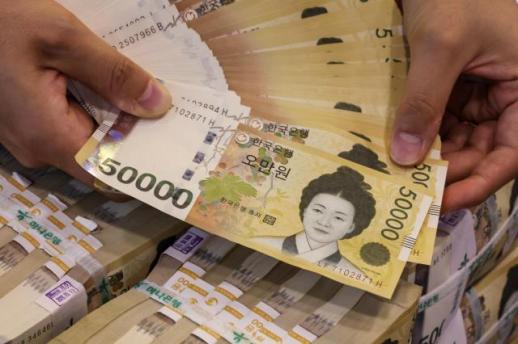 Korea's legacy M2 growth hits 53-mo high, reviving liquidity concerns SEOUL, August 14 (AJP) - South Korea’s legacy broad-money measure rose 12.3 percent in June from a year earlier, its fastest pace in four years and five months, reviving concerns that liquidity is building too quickly even as the current M2 gauge remained below its long-term average. The Bank of Korea said Friday that growth in legacy M2 accelerated from 8.0 percent in December to 9.1 percent in February, 10.4 percent in April, 11.6 percent in May and 12.3 percent in June. It was the first time the measure had exceeded 12 percent since January 2022, when it increased 12.7 percent. Growth in current M2 also climbed to 6.0 percent from 5.8 percent in May, marking its strongest reading since February 2023 and the fifth consecutive increase in the annual growth rate. The current pace remained below the 7.5 percent average recorded between 2005 and 2025, making it difficult to conclude that the economy as a whole is awash with excess cash. The gap between the two measures largely reflects non-money-market fund shares, which are included in legacy M2 but excluded from current M2 following the BOK’s statistical overhaul in December 2025. Fund shares surged 64.5 percent from a year earlier and contributed 6.5 percentage points to legacy M2 growth, accounting for more than half of the 12.3 percent increase. Subtracting that contribution leaves 5.8 percentage points, broadly in line with current M2 growth and underscoring why the legacy headline cannot be treated as a like-for-like measure of cash available for immediate spending. The increase was not entirely a statistical effect, however, as narrow money M1 grew 10.0 percent from a year earlier, while financial-institution liquidity, or Lf, rose 8.5 percent and overall liquidity, or L, increased 9.4 percent. All three rates accelerated from May, suggesting that the buildup in liquidity extended beyond the investment-fund component of legacy M2. On a seasonally adjusted basis, average current M2 stood at 4,213.0 trillion won ($3.0 trillion), up 29.4 trillion won, or 0.7 percent, from the previous month after a 0.8 percent increase in May. Money-market funds rose by 7.3 trillion won, deposits with maturities of less than two years increased by 7.1 trillion won and money trusts with maturities of less than two years gained 6.3 trillion won. The central bank attributed the increases to greater use of short-term surplus funds by nonfinancial companies, higher corporate deposit holdings and inflows of funds from semiconductor companies into money trusts. By holder, money balances at nonfinancial companies jumped 45.7 trillion won and those at other financial institutions increased 5.4 trillion won. Holdings by households and nonprofit organizations fell 19.8 trillion won, while those held by other sectors, including social security funds and local governments, declined 1.1 trillion won. The composition indicates that the latest liquidity buildup was concentrated in corporate cash and financial products rather than reflecting a household-wide surge likely to flow directly into consumption. Average M1 stood at 1,402.9 trillion won, up 0.4 percent from May, while Lf increased 1.0 percent to 6,368.7 trillion won and the month-end L measure gained 0.8 percent to 8,115.3 trillion won. Current M2 remaining below its long-term average argues against declaring an economy-wide liquidity glut, but the four-year high in legacy M2 and the synchronized acceleration across other monetary aggregates strengthen the case for monitoring corporate cash and potential spillovers into financial markets. ___________________________________________________________________________________ AJP Takeaways South Korea’s legacy M2 money supply grew 12.3 percent year on year in June 2026, its fastest pace since January 2022 and its first reading above 12 percent in four years and five months. Current M2 growth reached a 40-month high of 6.0 percent but remained below its 7.5 percent long-term average, while surging fund shares accounted for 6.5 percentage points of the legacy measure’s increase. Nonfinancial companies added 45.7 trillion won to their money holdings while household balances fell 19.8 trillion won, indicating that Korea’s liquidity growth was concentrated in corporate and financial channels rather than household consumption. 2026-08-14 12:43:42
 -
 Fund inflows defy KOSPI rout, firms turn to banks SEOUL, August 14 (AJP) - South Korean equity funds attracted 11.4 trillion won ($8.0 billion) in fresh money in July despite the steepest stock-market rout since 2008, while corporate bank loans increased by 7.7 trillion won as the bond market remained in net repayment. The benchmark KOSPI plunged 22.2 percent to 6,595 at the end of July from 8,476 a month earlier, marking its worst monthly performance since October 2008, the Bank of Korea said Friday in its monthly financial-market report. The secondary KOSDAQ tumbled 21.4 percent to 720 from 916 as concerns about the artificial-intelligence industry, uncertainty in the Middle East and sustained foreign selling drove a broad market correction. The rout wiped 56.2 trillion won from the net asset value of equity funds, helping push total fund balances at asset managers down by 42.8 trillion won. The decline did not reflect a comparable wave of investor withdrawals, as equity funds received 11.4 trillion won in fresh inflows after valuation changes were excluded, while derivative funds attracted another 8.4 trillion won. Direct stock investment cooled more sharply, with net purchases by individual investors collapsing to 3.4 trillion won from 52.0 trillion won in June and securities investor deposits falling by 17.5 trillion won. The corporate funding market moved in a different direction as bank loans to companies increased by 7.7 trillion won in July, up from 5.1 trillion won in June and more than double the 3.4 trillion won increase recorded a year earlier. Corporate bonds remained in net repayment by 1.9 trillion won after a 2.9 trillion won repayment in June, as higher market rates and the seasonal issuance lull continued to weigh on public bond financing. The cumulative increase in corporate bank loans reached 57.2 trillion won during the first seven months of 2026, up 82.7 percent from 31.3 trillion won a year earlier. Corporate bonds recorded 16.3 trillion won in net repayments over the same period, reversing from net issuance of 5.5 trillion won during the first seven months of 2025. The BOK said loans to large companies increased by 3.8 trillion won as firms continued to borrow working capital to repay bonds and redrew loans temporarily repaid at the end of the second quarter. Loans to small and midsized enterprises rose by 3.9 trillion won on value-added tax payments and expanded lending campaigns by some banks. Market borrowing costs also climbed, with the yield on three-year AA-minus corporate bonds rising to 4.46 percent at the end of July from 4.38 percent a month earlier, while yields on A-minus and BBB-plus debt increased to 5.56 percent and 7.83 percent, respectively. Commercial paper and short-term notes nevertheless swung to net issuance of 4.0 trillion won as quarter-end repayments were reissued, while equity issuance increased to 1.5 trillion won on a large rights offering by a major company. Bank household loans rose by 5.4 trillion won in July, slowing from a 7.6 trillion won increase in June but doubling the 2.7 trillion won gain recorded a year earlier. The cumulative increase in household loans stood at 21.0 trillion won during the first seven months, below 23.2 trillion won a year earlier, but the composition shifted as mortgage growth slowed to 13.3 trillion won from 23.9 trillion won while other household loans swung to a 7.8 trillion won increase from a 600 billion won decline. Bank deposits fell by 30.0 trillion won as quarter-end corporate funds were withdrawn and companies made value-added tax payments, while time deposits increased by 42.3 trillion won and money-market funds gained 27.2 trillion won. July’s data point to a rerouting rather than a uniform withdrawal of money, with fresh cash continuing to enter equity funds while companies leaned more heavily on banks as bond financing contracted. ___________________________________________________________________________________ AJP Takeaways • South Korean equity funds attracted 11.4 trillion won in fresh money in July 2026 even as the KOSPI plunged 22.2 percent and falling valuations erased 56.2 trillion won from equity-fund assets. • Corporate bank loans increased by 7.7 trillion won, more than double the rise a year earlier, while corporate bonds remained in net repayment amid elevated market borrowing costs. • Household-loan growth slowed from June and remained lower on a cumulative annual basis, but borrowing shifted away from mortgages toward other household loans. 2026-08-14 12:42:33
 -
Traffic Disruptions Expected in Seoul for Liberation Day Events on August 15 On August 15, large-scale commemorative events and rallies are set to take place in downtown Seoul, raising concerns about severe traffic congestion. Citizens planning outings or travel in the city during the holiday are advised to exercise caution.According to police and the Seoul Traffic Information System (TOPIS), significant gatherings will occur around Sejong-daero and Gwanghwamun on Liberation Day.Conservative groups plan to hold a rally from 1 p.m. in the Sejong-daero area (from Donghwa Duty-Free Shop to Daehanmun) and will march toward Sin-gyo Intersection starting at 4 p.m., leading to a complete road closure in both directions. Progressive groups will also gather from 1:30 p.m. in the Yulgok-ro and Sajik-ro areas, marching toward Seoul Plaza via Anguk, Jonggak, and Euljiro starting at 2:30 p.m., which will block traffic toward City Hall. Additionally, rallies and marches are scheduled in the outskirts of the city, such as around Olympic Park in Songpa-gu, which is expected to exacerbate traffic congestion throughout downtown.Specifically, a restricted area will be established between Gwanghwamun Rotary and Sejong-ro Rotary, with some lanes closed to traffic or operating as variable lanes using the opposite side. Major sections of Sejong-daero will see limited vehicle access due to event setups and large gatherings.Traffic congestion from the various marches is anticipated to be unavoidable.Police plan to deploy traffic officers and exemplary drivers to manage signals and direct vehicles to detours, but significant impacts on major thoroughfares are expected.A police official stated, "Given the anticipated severe traffic congestion on major roads in the city center on Liberation Day, we urge citizens to use public transportation, such as subways, instead of personal vehicles whenever possible."For those who must drive, it is advisable to check real-time road closures and detours in advance through the Seoul Police Traffic Information hotline, the traffic information center's website, or the KakaoTalk 'Seoul Police Traffic Information' channel.* This article has been translated by AI. 2026-08-14 12:40:20
-
Major Rental Fraud Case Exposes Legal Loopholes in Subleasing Contracts A significant rental fraud case has emerged involving a large-scale subleasing scheme that defrauded tenants of 10 billion won in deposits. Tenants believed they were safe because they were dealing with the Korea Construction Technology Association, a public institution, as assured by real estate agents. However, it was revealed that Sovereign State, the entity that leased the building, squandered the tenants' deposits on an electric vehicle charging station project. The court denied the association's liability for damages, leaving the tenants in a precarious situation without legal recourse. Our investigative team focused on the realities and structural risks of subleasing contracts that lack legal protection.Traps in Contracts and Complicity ControversiesChoi Hwang-soo, a professor of real estate at Konkuk University, agreed with the first-instance ruling that it is difficult to recognize the association's legal responsibility, but he pointed out issues with the exemption clause included in the contract. He stated, "If the landlord approved the sublease, they should normally bear responsibility towards the final tenant as well," but the clause stating that the association is not liable for matters agreed upon between the landlord and tenant created a structure that absolved the association of responsibility. He added, "Tenants should not have signed if such exemption clauses were present in the contract."The use of the term 'public' by Sovereign State and real estate agents also misled tenants. Eom Jeong-sook, a real estate attorney at a comprehensive law firm, noted, "The fact that the building owner is a legal entity under the Ministry of Land, Infrastructure and Transport likely served as a significant trust factor for tenants," emphasizing that it was not unreasonable for tenants to believe, 'Since it's an association's building, it must be safe.' However, she pointed out that the current legal principle, which states there is no direct contractual relationship between the original landlord and the subtenant, was reflected in this ruling, highlighting how this principle works against tenants.Tenants claim that the association effectively facilitated Sovereign State's mismanagement. However, proving 'complicity' in a legal sense is expected to be challenging. 2026-08-14 12:04:00
-
South Korea to Launch Pilot Program for Won International Payment Network Foreign investors will soon be able to hold and transfer South Korean won and settle domestic securities without needing local accounts, as the government prepares to launch a pilot program next month. This initiative aims to alleviate inconveniences in foreign exchange and securities transactions ahead of South Korea's inclusion in the Morgan Stanley Capital International (MSCI) developed markets index.On August 14, the Ministry of Economy and Finance held a meeting at the Bank Hall in Seoul, chaired by Deputy Minister Heo Jang, to review the progress of the Foreign Exchange Soundness Council and the task force for MSCI index inclusion. Attendees included representatives from the Financial Services Commission, the Bank of Korea, the Financial Supervisory Service, the Korea Exchange, and the Korea Securities Depository.The government has completed 30 out of 39 tasks outlined in the MSCI index inclusion roadmap announced in January, which accounts for 77% of the total. It plans to implement three additional tasks by the end of the year.As part of this effort, the 'Bank of Korea Won International Payment Network' will be established, allowing foreign investors to hold or transfer won through overseas financial institutions without opening accounts in South Korea. The won held abroad can also be used for settling domestic stocks and bonds.To facilitate the registration process and requirements for overseas financial institutions, the government will revise foreign exchange transaction regulations and guidelines for foreign financial institutions between August and September. The official implementation is set for 2027 following the pilot program next month.Additionally, guidelines for electronic foreign exchange (e-FX) trading, which provides price information electronically and utilizes automated order execution, will be distributed this month. These guidelines will include standards for transaction system stability, market volatility response, and internal control criteria. A checklist will be provided for banks and securities firms to self-assess compliance, which is expected to reduce the burden of nighttime staffing and costs for financial institutions.The liquidity burden in won during the securities settlement process for financial institutions will also be eased. Starting in September, the Korea Securities Depository will allow settlement facilitation fees, currently payable only in cash, to be paid in stocks and bonds.In October, securities expected to be received in the market will also be recognized as collateral. Financial institutions will be able to acquire securities without separately paying settlement facilitation fees, which is anticipated to alleviate the burden of securing won during trading hours.Meanwhile, the 24-hour operation of the foreign exchange market, which began on July 6, has contributed to an increase in trading volume. The average daily trading volume of the won-dollar spot market in the interbank market rose by 10.1% from $17.39 billion in the first half of the year to $19.14 billion following the extension of operating hours.However, due to time differences with overseas markets and the early stage of the system's implementation, late-night trading has been gradually increasing. The government plans to give more weight to late-night trading volumes in the selection process for leading banks in the won-dollar market to encourage domestic financial institutions to participate in nighttime trading.Participants also discussed the recent surge in domestic stock prices and its impact on external soundness indicators of the economy. Deputy Minister Heo noted that while the KOSPI index rose by 68% from 5,052 at the end of the first quarter to 8,476 at the end of the second quarter, leading to a significant decrease in the net external financial assets, this does not indicate a deterioration in the external soundness of the economy.* This article has been translated by AI. 2026-08-14 12:04:00
-
June Money Supply Increases by 29.4 Trillion Won as Corporate Short-Term Funding Demand Grows In June, South Korea's money supply increased by nearly 30 trillion won, continuing an upward trend for the eighth consecutive month. This rise is attributed to an increase in surplus funds, leading to greater short-term funding demand from corporations.According to the Bank of Korea's 'Money and Liquidity' statistics released on August 14, the average broad money supply (M2) for June was 4,213 trillion won, up 29.4 trillion won (0.7%) from the previous month. This marks an increase of 237 trillion won (6.0%) compared to June of last year.The M2 money supply, which includes cash, demand deposits, and checking accounts (M1), as well as money market funds (MMF), time deposits and savings accounts with maturities of less than two years, certificates of deposit (CD), repurchase agreements (RP), financial bonds with maturities of less than two years, and short-term financial products that can be quickly converted to cash.Breaking it down by financial products, the money market fund (MMF) saw an increase of 7.3 trillion won due to the expansion of short-term surplus fund management by non-financial corporations. Time deposits and savings accounts with maturities of less than two years also increased by 7.1 trillion won as corporate holdings rose.By economic sector, non-financial corporations saw an increase of 45.7 trillion won, and other financial institutions increased by 5.4 trillion won. In contrast, households and non-profit organizations decreased by 19.8 trillion won, and other sectors saw a decline of 1.1 trillion won.The narrow measure of money supply, M1 (1,402.9 trillion won), which includes only cash, demand deposits, and checking accounts, increased by 0.4% from the previous month. The liquidity of financial institutions (Lf) also rose by 1.0% to 6,368.7 trillion won. 2026-08-14 12:04:00
-
Last High-Level Meeting of Democratic Party Leadership Calls for Unity Ahead of Convention The leadership of the Democratic Party of Korea concluded its final Supreme Council meeting before the party convention scheduled for August 17, reflecting on their experiences and urging the new leadership to ensure the success of the Lee Jae-myung administration through party unity.Acting Party Leader Han Byeong-do stated during the Supreme Council meeting held at the National Assembly, "Today marks the last Supreme Council meeting I will preside over as acting leader. It has been two months since I took on this role on June 25."He expressed gratitude to those who contributed to the completion of the criminal procedure law amendment, which he described as the final piece of the judicial reform puzzle. "This party convention is taking place with unprecedented enthusiasm. While we compete fiercely, we must unite in the end," he emphasized.Supreme Council member Hwang Myeong-seon noted, "In three days, a new leadership will be elected. The new leadership must create a stronger and winning Democratic Party. I will also strive to support the party's victory and the success of the Lee Jae-myung administration until the end."Another Supreme Council member, Kang Deuk-gu, remarked, "I believe we all share a common goal for the success of the Lee Jae-myung administration and the Democratic Party. As a member of the National Assembly, I will work even harder for a more beloved Democratic Party."Park Gyu-hwan, who previously clashed with Hwang and Kang over the introduction of a preference voting system, stated, "The success of the Lee Jae-myung administration is a dream for all of South Korea and its citizens. The Democratic Party must unite and integrate with its members and supporters. There should be no actions that divide or exclude specific factions, or even seek to eliminate them."* This article has been translated by AI. 2026-08-14 11:48:00
-
Limited Local Autonomy: The Key to Success for the 5-Region 3-Special Project Anchor Initiative The government has positioned its '5-Region 3-Special' strategy and 'ANCHOR' projects as central to alleviating concentration in the capital region and creating innovative jobs. However, concerns about the effectiveness of these initiatives are rising. Despite claiming to promote local leadership, the actual implementation remains a top-down approach led by the central government, prompting calls for fundamental structural reforms to ensure the sustainability of these policies. According to reports from the education and industry sectors on August 14, the existing Regional Innovation Support System (RISE) has been restructured into the Anchor Project, significantly undermining its original intent of ensuring local autonomy. The initiative began with the philosophy that local issues are best understood by local entities, but within just a year, decision-making power has reverted to central authorities. A major structural flaw in the current Anchor Project is that the central government designs the initiatives while local governments are relegated to mere execution roles. The Ministry of Education is currently pursuing projects such as 'Creating 10 Seoul National Universities,' '5-Region 3-Special Shared University Project,' and 'Ultra-Regional Growth Engine Project.' However, critics argue that the future industrial direction and priorities for local areas are being dictated by government project plans without sufficient discussion. As a result, local governments have been reduced to mere implementing agencies rather than strategic planners, leading to a clear policy contradiction that hampers the long-term establishment of industrial ecosystems. The absence of a comprehensive industrial strategy at the ultra-regional level is also seen as a significant risk. There is a lack of clarity regarding what the key 'kingpin' industries are for each region and how to integrate the industrial value chains of the existing 17 provinces and cities. Critics warn that while the geographical scope has expanded, similar advanced industries are being pursued competitively across regions, increasing the likelihood of redundant investments. Without a coherent industrial strategy, talent development risks becoming directionless education. Experts agree that for the 5-Region 3-Special Anchor Project to be the last opportunity for balanced growth in South Korea, a genuine transfer of authority is essential. A regional industry expert, speaking on condition of anonymity, stated, "The central government's leading approach cannot foster local creativity and accountability. The central government should transition from a controlling role to that of a facilitator, supporting finances and systems instead of micromanaging projects." There are also calls for establishing an open collaborative system that can be expanded nationwide through cooperation between the capital region and local areas. A representative from a regional Anchor Center emphasized, "The Ministry of Education should not limit itself to expanding individual financial support projects but should empower local Anchor Centers with real authority and create an open collaborative system that includes participation from the capital region."* This article has been translated by AI. 2026-08-14 11:44:00
-
DL Group Holds 'Love Blood Donation' Campaign with Employees DL Group has launched a blood donation campaign for its employees as part of its ongoing social contribution efforts.On August 14, DL Group announced that it held the 'Love Blood Donation Campaign' at its One Grove headquarters in Gangseo-gu, Seoul. The campaign was organized to contribute to stable blood supply and promote the sharing of life.The blood donation bus set up in the courtyard of the One Grove headquarters saw participation from employees of various group affiliates, including DL Co., DL E&C, DL Chemical, and DL Energy. Participants underwent a pre-donation electronic questionnaire and on-site health checks before donating blood.DL Group conducts this employee blood donation campaign twice a year. The company plans to continue its social contribution activities, including blood donation, based on voluntary participation from its employees.In addition to blood donation, DL Group is engaged in various social contribution activities, such as environmental protection, ecological restoration, and support for local communities and future generations. The 'Building DL Forest' initiative allows employees and their families to grow saplings and participate in forest creation. The company also offers creative convergence education for local children to engage with science and technology. Furthermore, DL Group is involved in community support activities linked to resource recycling.A DL Group representative stated, "Blood donation is a meaningful activity where the small actions of our employees directly help save precious lives. We will continue to engage in various ESG management activities that allow our employees to participate and practice the value of sharing."* This article has been translated by AI. 2026-08-14 11:44:00