


Latest by
-
 Samsung Electro-Mechanics Outperforms Samsung Electronics with 31.61% August Gain Samsung Electro-Mechanics is experiencing a resurgence in its stock price. After reaching an all-time high of 2,417,000 won on June 19, the stock had previously declined but is now on an upward trend. In the past month, it has significantly outperformed its affiliate, Samsung Electronics, driven by strong expectations for increased demand for multilayer ceramic capacitors (MLCC) due to expanded investments in artificial intelligence (AI) servers.According to the Korea Exchange, Samsung Electro-Mechanics closed at 1,503,000 won on August 13, up 16,800 won (12.58%) from the previous trading day. This marks a 31.6% increase from the end of July, when it was priced at 1,142,000 won. In contrast, Samsung Electronics saw a modest rise of only 2.1%, moving from 262,500 won to 268,000 won during the same period, making Samsung Electro-Mechanics' growth rate approximately 15 times higher.Analysts attribute the strong performance of Samsung Electro-Mechanics to an improving market for MLCCs. The company collaborates with Japan's Murata Manufacturing to produce high-voltage, high-capacity MLCCs for AI servers. Yuanta Securities noted in a recent report that Samsung Electro-Mechanics is discussing long-term supply agreements (LTAs) to meet the demand for high-performance AI servers and is also exploring ways to expand production capacity using advance payments.The company's substrate business is also expected to benefit from increased AI investments. Capital expenditures (CapEx) from four major North American tech companies—Google, Amazon, Microsoft, and Meta—are projected to rise by 82.5% in 2026 compared to the previous year, with an additional 35.3% increase expected in 2027.Additionally, a positive outlook from Morgan Stanley has contributed to the stock's rise. The firm recently upgraded Samsung Electro-Mechanics to its top pick, citing expectations for rising MLCC prices, and raised its target price from 2,560,000 won to 2,620,000 won.Meanwhile, the KOSPI index closed at 6,813.34, up 3.56% from the previous trading day, buoyed by strong semiconductor stocks. Foreign investors purchased a net 2.1191 trillion won, while institutions bought 680.7 billion won. In contrast, individual investors sold a net 2.7333 trillion won. The KOSDAQ index also rose, closing at 861.37, up 0.29%, marking its fourth consecutive day of gains.* This article has been translated by AI. 2026-08-13 17:56:00
 -
KDB Life Insurance Finds New Owner in Korea Investment Holdings The Korea Development Bank has selected Korea Investment Holdings as the preferred bidder for the sale of KDB Life Insurance. This marks Korea Investment Holdings' first foray into the insurance industry.According to financial sources on August 13, the Korea Development Bank held an investment review committee meeting and designated Korea Investment Holdings as the preferred bidder for KDB Life Insurance. The sale involves 116.32 million common shares held by the bank, representing approximately 99.75% of the company.The bidding process, which closed on August 7, saw participation from Korea Investment Holdings, Hanwha Life, and Heungkuk Life. Reports indicate that Korea Investment Holdings proposed a capital increase of up to 1 trillion won following the acquisition. Specific details regarding the purchase price and capital increase conditions have not been disclosed.Korea Investment Holdings has subsidiaries in securities, asset management, savings banks, and capital, but does not currently own an insurance company. In the first half of this year, the group's net profit reached 1.915 trillion won, with Korea Investment Securities accounting for 1.731 trillion won, or 90.4% of the total. The acquisition of KDB Life Insurance is expected to diversify the group's securities-focused business structure.As of the end of March, KDB Life Insurance reported total assets of 16.5576 trillion won. The company employs approximately 700 exclusive agents and has a network of corporate insurance agencies. It is anticipated that Korea Investment Holdings will leverage the long-term funds of the insurance company alongside the investment capabilities of its securities and asset management subsidiaries.The sale of KDB Life Insurance has been pursued by the Korea Development Bank since acquiring the former Kumho Life in 2010. Previous attempts in 2014, 2020, and 2023 to sell the company to JC Partners and Hana Financial Group, respectively, were unsuccessful. If this transaction is finalized, it will mark the completion of the KDB Life Insurance sale after seven attempts.* This article has been translated by AI. 2026-08-13 17:56:00
-
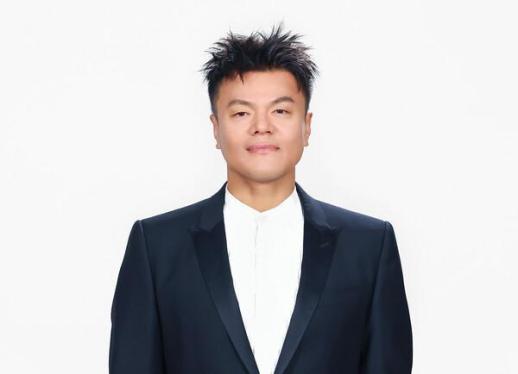 JYP Entertainment Q2 operating profit falls 41% as tour, merchandise sales drop SEOUL, August 13 (AJP) - JYP Entertainment's second-quarter operating profit fell 41.4 percent from a year earlier as lower concert and merchandise revenue outweighed stronger album and digital music sales. Operating profit for the April-June period came to 31 billion won ($21.7 million), down from 52.9 billion won a year earlier and 7.1 percent from the first quarter. The result was 18.7 percent below the FnGuide consensus of 38.1 billion won. The operating margin narrowed to 16.9 percent from 24.5 percent a year earlier, while the gross profit margin fell 3.1 percentage points to 38.7 percent. Revenue declined 15.1 percent on year to 183.1 billion won, 8.5 percent below the market estimate of 200.1 billion won. JYP attributed the decline largely to a high comparison base from Stray Kids' large-scale concerts and merchandise sales in the same period last year. Concert revenue fell 35.7 percent to 39.9 billion won as the number of major performances declined, despite tours by TWICE, DAY6, ITZY and NMIXX. Merchandise revenue dropped 34.5 percent to 43.9 billion won, reflecting the absence of large online merchandise sales and a high base from Stray Kids' tour merchandise a year earlier. Appearance revenue also fell 28 percent to 7 billion won. Music sales were stronger. Album revenue rose 36.7 percent to 37 billion won as Stray Kids' back-catalog shipments climbed to 420,000 copies from 120,000 a year earlier and JYP released five major new albums, up from three in the same period last year. Digital music revenue jumped 71.6 percent to 19.7 billion won, helped by stronger overseas demand and a reclassification of YouTube revenue. Advertising revenue increased 20.5 percent to 13.6 billion won. The weaker revenue mix and higher costs also weighed on profitability. Content production costs increased 25.9 percent from a year earlier, while selling and administrative expenses rose 6.9 percent even as overall revenue declined. Net income fell 40.3 percent to 21.7 billion won, coming in 27.8 percent below the FnGuide consensus of 30.1 billion won. JYP said it expects Stray Kids to drive stronger IP monetization in the second half through the group's new mini album "THIS & THAT," its "RUN IT" world tour, festivals and expanded merchandise and licensing businesses. The company plans to extend the tour into more regions in 2027 while expanding SKZOO pop-up stores and collaborations with global IP partners. It also expects more than 200 concerts across its artist roster in 2026. SKZOO is Stray Kids' official character brand, featuring animal-inspired characters modeled after the group's eight members and used across merchandise, pop-up stores and licensing collaborations. JYP Entertainment shares closed at 40,850 won, down 11.2 percent, or 5,150 won, on Thursday. AJP Takeaway · JYP Entertainment’s second-quarter operating profit fell 41.4 percent to 31 billion won, missing the FnGuide consensus by 18.7 percent, as weaker concert and merchandise sales outweighed gains in music. · Revenue declined 15.1 percent to 183.1 billion won, with concert and merchandise revenue down 35.7 percent and 34.5 percent, respectively, against a high base from Stray Kids’ activities a year earlier. · Album revenue rose 36.7 percent and digital music revenue jumped 71.6 percent, but the stronger music business was not enough to prevent the operating margin from falling to 16.9 percent from 24.5 percent. 2026-08-13 17:55:36
 -
 Korea still looks cheap on paper. Why doesn't it feel that way? SEOUL, August 13 (AJP) - South Korea can still look remarkably cheap to someone arriving from New York or Berlin. For Koreans earning and spending in won, it increasingly does not feel that way. Years of rising prices have made more spending discretionary as household incomes struggle to keep pace, squeezing what remains after necessities. Yet for visitors earning dollars or euros, a restaurant bill or cab fare in Seoul can still look like a bargain. A three-course meal for two at a mid-range restaurant costs about $140 in New York, compared with 92,500 won ($65) in Seoul, according to Numbeo, the crowdsourced global cost-of-living database. Numbeo puts a mile of standard taxi travel at about $3.50 in New York against 1,327 won in Seoul, excluding the starting fare. Miki Vranjes is spending a month in Korea partly because of that price appeal. "You should see how expensive things are in Germany," he said. "The price for anything in Germany is insanely high." Fresh from her previous stop in Tokyo, Cortney Haze sees less of a bargain. "I don't think I find prices for anything in Korea extraordinarily cheap compared to the United States or even Japan, to be completely honest," she said. At some restaurants, she noted, burgers can run above $10. The exchange rate explains part of the divide. The won weakened sharply during the first half of the year, with the dollar-won rate averaging above 1,530 around the end of June. It has since recovered to around 1,422 won per dollar, strengthening roughly 7 percent from that level. Even after the rebound, the exchange rate continues to make many Korean prices look relatively low when converted into dollars. That distinction — cheap after currency conversion versus affordable on a Korean paycheck — runs through the numbers. The Middle East war added another burst of inflation this spring as energy costs surged. OECD-wide inflation climbed to 4.6 percent in May as energy inflation reached 15.8 percent, before headline inflation eased to 4.2 percent in June. The OECD has said the conflict has pushed up energy and other input prices while squeezing real incomes. Korea's consumer inflation slowed to 2.8 percent in July from 3.2 percent in June, helped by falling petroleum prices. U.S. inflation similarly eased to 3.4 percent in July from 3.5 percent in June and 4.2 percent in May. Germany moved the other way last month, with inflation rebounding to 2.8 percent in July from 2.3 percent in June. Cheap compared with where? The OECD's comparative price data broadly support the impression that Korea remains inexpensive relative to many advanced economies. Its monthly comparative price levels measure the cost of a representative basket of consumer goods and services using purchasing-power estimates and market exchange rates. That means currency swings can change the comparison even when domestic sticker prices do not. Rebasing the OECD's May figures to make each comparison country equal to 100 puts Korea at about 71 against Germany and 58 against the United States. Against Japan, Korea stands much closer, at about 93. That makes Haze's reaction understandable. Korea looks substantially cheaper beside Germany or the United States, but much less so after a stop in Japan. Individual purchases make the point even more vividly. A Big Mac in Korea costs 5,700 won, after McDonald's Korea raised prices in February. In Japan, McDonald's currently lists one from 500 yen. Korea's Big Mac is therefore actually more expensive in dollar terms at current exchange rates — roughly $4 versus a little over $3 in Japan. Taxi fares tell a different story. A standard Seoul taxi starts at 4,800 won for the first 1.6 kilometers, then adds 100 won for every 131 meters. In Berlin, the base fare is 4.30 euros, followed by 2.80 euros per kilometer for the first three kilometers. When income does not keep up Lee Dong-hyun, a 35-year-old office worker in Seoul, said a familiar joke among his friends — that prices rise every year while salaries barely move — has become increasingly difficult to laugh about. "I feel like I work all day at the office, doing a lot but somehow accomplishing nothing, and at the end of it there's nothing left in my bank account," he said. His routine is mostly work and home, with money going to meals, coffee, dinner and exercise. Even without large purchases, Lee estimates he spends around 2 million won a month. He has considered cooking more often, but groceries do not feel particularly cheap either. Official household data explain why the squeeze persists even as headline inflation eases. Average monthly household income rose 2.4 percent from a year earlier to 5.481 million won in the first quarter. After inflation, real income increased just 0.4 percent. Consumption spending, meanwhile, jumped 5.3 percent to 3.105 million won, or 3.1 percent in real terms. The average household surplus fell 3.1 percent to 1.239 million won. And the latest wage data suggest the squeeze has not disappeared. Real wages fell 1.4 percent in May, the second consecutive monthly decline, as inflation outpaced nominal pay growth. That is why slowing inflation does not necessarily feel like falling prices. It means prices are rising more slowly from levels that households already regard as high. For a visitor converting dollars or euros, Korea can therefore remain relatively inexpensive. For a Korean worker measuring those same prices against a paycheck, the arithmetic can look very different. AJP Takeaways • Korea remains considerably cheaper than the U.S. or Germany on broad international price comparisons, although its gap with Japan is much narrower. • Exchange rates amplify Korea's apparent cheapness for foreign visitors, even after the won's roughly 7 percent rebound from its late-June lows. • Korean households face a different equation: real household income rose just 0.4 percent in the first quarter while consumption spending climbed 5.3 percent and household surpluses fell. 2026-08-13 17:53:08
 -
Startup Initiative Resumes Amid Security Concerns Over Data Breach The Ministry of SMEs and Startups has resumed the second phase of the 'Everyone's Startup' initiative, which was halted due to a data breach, while enhancing security measures. However, concerns have been raised that the initiative has only expanded in scale without replacing the existing artificial intelligence (AI) solution developer responsible for the breach.On August 13, the ministry announced that instead of changing the development company, it would establish a new collaboration system with three organizations to bolster security. Specifically, a specialized firm will be tasked with continuous security monitoring, and any new feature developments or changes will undergo security assessments by this firm. Additionally, response training for breach incidents and technical consulting will be conducted with the cooperation of the National Intelligence Service.However, the ministry decided not to review the contract with the developer implicated in the breach. The lack of prior verification of the outsourced AI solution provider was identified as the cause of the breach, yet the focus of the resumption plan remains on adding monitoring systems.The process of determining accountability has also been postponed until after the initiative resumes. A ministry official stated, "Right now, stabilizing the project is more important than punishing those responsible," adding that the police investigation is expected to take longer, and decisions on penalties will be made after its completion. This means the project is resuming without clarity on the circumstances of the breach or accountability.The official further explained that since last month, the ministry has been holding meetings with the selected participants of the first round of the initiative across 17 cities and provinces, and there has been significant demand from the field to continue the project.Timing is also a contentious issue. The second phase is funded through a supplementary budget, which must be executed within the fiscal year. Consequently, the ministry aims to resume applications in mid-August and complete the project by December. Concerns have been raised in the National Assembly during the budget review process about whether the project is being expanded without sufficient detail, potentially leading to rushed implementation without adequate security measures.Another point of concern is that the decision to resume and expand the project was made while the ministerial position remains vacant. Han Seong-sook, who was the minister during the first phase of the initiative, was appointed as the Prime Minister in July, and a successor has yet to be named. Currently, No Yong-seok, the first vice minister, is acting as the minister.Experts have also pointed out issues with the performance criteria of the Everyone's Startup policy, suggesting it is overly focused on simply increasing the number of startups. Kim Dae-jong, a professor at Sejong University, noted, "While Everyone's Startup 2 is significant in lowering barriers to entry for young and prospective entrepreneurs, merely providing startup funds will not create a sustainable startup ecosystem."He emphasized, "The biggest problem is the potential focus on increasing the 'number of startups' as a measure of success, and it is crucial to strengthen follow-up support and management systems to ensure that funded companies can generate actual revenue, create jobs, and survive in the market."* This article has been translated by AI. 2026-08-13 17:52:10
-
NH Bank Allocates 1 Trillion Won for Final Payment Loans at The DH Bangbae NH Nonghyup Bank has allocated a loan limit of 1 trillion won for final payment loans for the DH Bangbae apartment complex in Seocho-gu, Seoul, which is set to open next month. According to the financial sector on August 13, NH Bank has granted a loan limit of 1 trillion won for final payment loans at the Bangbae Financial Center. This follows similar allocations of 1 trillion won each by KB Kookmin, Shinhan, and Hana Banks. Woori Bank is currently reviewing the allocation of final payment loan limits for the complex. An NH Bank official stated, "We will continue to respond well to the financial authorities' management goals to assist actual demanders." With NH Bank's allocation of final payment loan limits, prospective residents are expected to find it somewhat easier to secure funding. Existing banks that have already allocated limits are also likely to increase their limits in response to the financial authorities' announcement of an expansion in household loan totals. On the same day, the Financial Services Commission announced that it would raise the target increase rate for household loans this year from 1.5% to 3%. Considering that the loan allowance corresponding to the original 1.5% increase rate was about 30 trillion won, this measure is expected to create an additional 30 trillion won in lending capacity across the banking sector in the second half of the year. Shin Jin-chang, the Secretary General of the Financial Services Commission, explained during a briefing at the Government Seoul Building, "Setting it at 3% will alleviate a significant portion of the difficulties faced by actual demanders, such as those needing relocation and final payment loans."* This article has been translated by AI. 2026-08-13 17:52:10
-
Asiana Airlines Reports $2.95 Billion Operating Loss in Q2 Amid Rising Costs Asiana Airlines reported an operating loss of 295.1 billion won ($2.95 billion) in the second quarter, impacted by high fuel prices, rising exchange rates, and the sale of its cargo business. While the passenger segment saw growth due to improved load factors and profitability, operational costs hindered overall performance.The airline's revenue for the second quarter fell 7.7% year-on-year to 1.547 trillion won ($1.54 billion). It recorded an operating loss of 295.1 billion won and a net loss of 328.6 billion won, a stark contrast to the operating profit of 34 billion won reported in the same period last year.Asiana attributed its losses to the surge in fuel prices and exchange rates due to the ongoing conflict in the Middle East, the sale of its cargo business last August, and costs associated with its merger preparations with Korean Air and enhanced customer service. The end-of-quarter exchange rate for the won against the dollar was 1,542 won, an increase of 107 won compared to the end of last year.Revenue from passenger operations rose to 1.2809 trillion won, an increase of 163.3 billion won (15%) compared to the previous year. Although aircraft maintenance schedules led to a 2% decrease in supply, the load factor improved by 5 percentage points, aided by expanded international sales. Revenue per passenger also improved by 10%.In contrast, cargo revenue plummeted to 114.7 billion won, a decrease of 256.5 billion won year-on-year, reflecting the impact of the sale of the cargo division to Air Jet last August.Looking ahead, Asiana expects improved performance in the third quarter as fuel prices and exchange rates stabilize, coupled with the seasonal boost from summer travel. The airline plans to enhance profitability on its Japan routes, with regular flights starting in September to Kobe and increasing service to Fukuoka to twice daily. In the belly cargo sector, Asiana aims to respond to the traditional peak season for cargo and rising demand for high-value goods such as semiconductors and artificial intelligence (AI) products by the end of the third quarter.* This article has been translated by AI. 2026-08-13 17:48:00
-
 Iran envoy urges South Korea to rebuild ties SEOUL, August 13 (AJP) - South Korea should draw on its historically strong relationship with Iran to seek a role in postwar reconstruction and favorable terms for safe passage through the Strait of Hormuz, a senior Iranian envoy in Seoul said. “We should close our eyes and look to the future,” Mohammad Esmaeil Passandideh, counselor and deputy head of mission at the Iranian embassy in Seoul, said in a recent interview with AJP. “The post-war period will be a great time for Korea to rebuild damaged relations,” he said. “It will be too late for Korea to wait for the green light from the United States.” The appeal comes after South Korea spent months reshaping its energy supply chain around disruptions in the Gulf. Before the war, roughly 70 percent of South Korea’s crude had historically passed through the Strait of Hormuz. Middle Eastern crude has since fallen to about half of total imports, from roughly two-thirds a year earlier, with American, African and Latin American barrels taking its place. The war began on Feb. 28, when joint American and Israeli strikes hit Iranian nuclear and military infrastructure and killed Supreme Leader Ali Khamenei. His son Mojtaba Khamenei was elected to succeed him on March 8. A ceasefire brokered by Pakistan and a memorandum signed in June halted the largest exchanges, but disputes over Iran’s nuclear program, the Strait of Hormuz and sanctions remain unresolved. Passandideh said more than 3,000 Iranians had been killed and strikes had damaged energy infrastructure and nuclear facilities. He did not provide an estimate of the financial cost. He described the postwar outlook as uncertain, but said one Iranian response was predictable. “Some concepts are not acceptable for Iranians — like surrender,” he said. “They will resist, not only for one month or two months.” That resistance, he said, has reshaped Tehran’s approach to Hormuz. Before Feb. 28, Iran’s goal had been to maintain peaceful and safe passage through the strait. The attacks fundamentally changed the security calculation. “The security situation around the Strait of Hormuz fundamentally changed,” Passandideh said. But he rejected the idea that Tehran wanted a permanent postwar closure. “I want to mention again: Iran is not looking to close or blockade the Strait of Hormuz after the war,” he said. Iran nevertheless no longer appears to view security in the waterway as something it should provide at its own expense. Tehran created the Persian Gulf Strait Authority in May and began imposing fees reportedly ranging from about $1 million to $2 million per voyage, depending on vessel size and cargo. Iran’s parliament is also considering legislation that would bar vessels linked to the United States, Israel and other states Tehran considers hostile while charging others for passage. U.S. President Donald Trump has separately demanded that vessels pay the equivalent of 20 percent of their cargo value in return for U.S. Navy protection of the waterway. Asked how Iran would price its own system, Passandideh answered by comparison. “I think that we will be cheaper than Trump,” he said. He said the strait could not simply return to its prewar order and argued that regional states should take more responsibility for their own security. “We believe bringing safety and security to our region is not by the United States, by foreigners,” he said. “By ourselves, by our countries.” “I believe it is time to know the United States cannot secure safety for others.” Pressed on whether high tolls could ultimately drive Asian shipping away from the Gulf and hurt Iran itself, Passandideh returned instead to what Iran had already paid during the war. “We paid a lot during this war. We paid the cost for our safety,” he said. “We expected the international community to defend us, to condemn the aggressors. Who blamed the United States and Israel? Who?” Iran, he argued, should no longer be expected to bear the cost of securing one of the world’s most important energy corridors by itself. “Maybe some countries should pay more for reaching this security,” he said. South Korea, he suggested, is among the countries from which Tehran expected more. “During this war, we provided free and secure passage for Korea,” Passandideh said, adding that Iran had expected Seoul to speak more forcefully in return. South Korea and Iran have a relationship stretching back more than six decades, including years when Korean builders were heavily involved in Iranian infrastructure projects and Iranian crude was an important part of Korea’s energy supply. But relations deteriorated as U.S. sanctions tightened and billions of dollars in Iranian oil proceeds became frozen in South Korean bank accounts. The funds were eventually released in 2023 as part of a U.S.-Iran prisoner exchange. The nuclear dispute remains another obstacle to the relationship Passandideh wants rebuilt. He argued that the issue was not weapons but Iran’s right to maintain a civilian nuclear program on the same terms as other countries. “A peaceful nuclear program is our choice, and it is our right,” he said. “Iranians cannot accept any double standard.” He said Tehran had no intention of developing nuclear weapons. “We don’t want nuclear weapons, and we don’t have any plan to make nuclear weapons,” he said. Iran and six world powers reached the Joint Comprehensive Plan of Action in 2015, restricting enrichment and expanding international monitoring before Trump withdrew the United States from the agreement in 2018 and reimposed sanctions. For Passandideh, the postwar question is whether South Korea treats its retreat from Iran as permanent or tries to rebuild a relationship that once carried considerable economic weight. His argument was defiant on sovereignty and security, but he ended on the cost being borne inside Iran. “I hope my country and our people can overcome these challenges,” he said. “Living is so hard. The cost of living is so high.” 2026-08-13 17:47:53
 -
Korean Film 'Gyeongju Journey' Shines Amid Hollywood Blockbusters A standout among Hollywood blockbusters like 'Spider-Man' and Christopher Nolan's latest film 'Odyssey,' the well-crafted Korean movie 'Gyeongju Journey' has made a bold entrance. Directed by Kim Mi-jo, known for her acclaimed film 'The Seagull,' the movie features a seamless ensemble of top-tier actors including Lee Jung-eun, Gong Hyo-jin, Park So-dam, and Lee Yeon, delivering an unprecedented tale of vibrant revenge.On August 13, a press screening for 'Gyeongju Journey' took place at Lotte Cinema World Tower in Songpa-gu, Seoul. The event was attended by director Kim Mi-jo and cast members Lee Jung-eun, Gong Hyo-jin, Park So-dam, Lee Yeon, and Byun Yo-han.'Gyeongju Journey' tells the story of four sisters who embark on a 'killing' trip after waiting eight years for their youngest sister, Gyeongju, who did not return from a school trip.Director Kim Mi-jo shared her thoughts on the film's premise, stating, "When I watched existing revenge dramas, I wondered, 'Is it really easy to come to that decision?' Taking a life is never simple. While the film takes on an inefficient form of family revenge, it fundamentally focuses on how to overcome the loss of family and the choices a mother makes that defy common sense."Regarding the choice to center the story on four sisters, Kim noted, "Having grown up as the youngest in a family with four daughters, I felt I could confidently portray the emotions and stories I know best," raising anticipation for the complex relationships between the mother and her daughters.Kim also discussed the film's commercial viability and directorial challenges, saying, "I always try to fit the format within the production environment and story I can manage. This work is a family story that intertwines comedy and tragedy, and I directed it accordingly. Thanks to the professionalism of the action director and the cast's ability to handle action scenes, we were able to film action sequences like car chases without difficulty."Lee Jung-eun plays the mother, Ok-sil, who is consumed by revenge after losing her youngest daughter. Gong Hyo-jin portrays the eldest daughter, Jang-joo, who prioritizes family, while Park So-dam plays the calculating second daughter, Yeong-joo, and Lee Yeon takes on the role of the tough third daughter, Dong-joo.Lee Jung-eun expressed her enthusiasm for the script, saying, "From the first reading, I found the script to be excellent. Our 'daughters' chose their roles first and waited, which led to this serendipitous casting."Gong Hyo-jin shared her intense thought process during character development, stating, "I didn’t have much in common with Jang-joo. I often thought, 'If this were real, wouldn’t it be right to stop my mother?' We constantly discussed how an ordinary family of victims would react and how to make it feel authentic during our meals together."She added, "Jang-joo is not a daughter who is anxious but rather a chic daughter who becomes a strong support for her mother, ensuring everyone’s safety. We included details like getting matching blue eyebrow tattoos at the bathhouse, which the director captured perfectly."Byun Yo-han, who joined the project on a no-fee basis due to his connection with the production company, expressed his strong trust in the impressive cast. He said, "Every time I meet Lee Jung-eun, she inspires me, and I have always been a fan of Gong Hyo-jin. Seeing Park So-dam's solid acting and Lee Yeon's innate energy, I felt there was no reason not to participate in this project."He praised the flawless ensemble of the four sisters, stating, "Although I am not a daughter, I felt a deep sense of family love while watching the film. Gong Hyo-jin created a comfortable atmosphere whenever Lee Jung-eun wavered, fulfilling her role as the eldest daughter both on and off camera. Park So-dam portrayed the edgy second daughter without showing it, while Lee Yeon excellently expressed the toughest yet most vulnerable youngest daughter. The ensemble was truly remarkable."Despite the sorrow of losing their youngest sister, the chemistry among the sisters shone through. Park So-dam remarked, "From the moment I read the script, it resonated deeply with me, and I wanted to do well. I never felt confused during filming, thanks to the director and my seniors. I hope the energy we created together, from cold to hot days, reaches the audience in theaters."Lee Yeon emphasized the importance of growth as an actor, saying, "I value my development as an actor, and I learned a lot from spending quality time with such excellent seniors. As an only daughter in real life, I felt incredibly happy to gain real siblings through this experience."Gong Hyo-jin praised director Kim Mi-jo's passion and leadership, stating, "She is particularly strong in her enthusiasm and drive. Since she wrote the script, I felt her presence in the characters, which added pressure and responsibility to my performance. Her exceptional leadership ensured that we followed the schedule without a single delay, and her relentless pursuit of perfection during post-production showcased her love for the film, which truly made it shine."In response, Kim Mi-jo acknowledged, "I have a lot of ambition, and I made the actors work hard with repeated takes for action scenes, but I felt reassured during editing. I consider myself blessed and fortunate as a rookie director."Finally, the cast encouraged audiences to see the film. Byun Yo-han said, "I hope viewers can empathize with the journey of the four sisters and how it will resonate with them." Gong Hyo-jin added, "I believe we have created a film that surpasses the script. I hope many people can feel the deep emotions we experienced. If you have the time, please don’t hesitate to invest 1 hour and 40 minutes; it will be a choice you won’t regret."'Gyeongju Journey' is set to be released in theaters on August 28.* This article has been translated by AI. 2026-08-13 17:44:00
-
 KOSPI recovers above 6,800 as foreign buying fuels broader tech rally SEOUL, August 13 (AJP) - South Korean stocks jumped more than 3 percent on Thursday as foreign investors returned to the market, extending the rally for a fourth straight session, with an artificial intelligence (AI)-driven rebound spreading beyond Samsung Electronics and SK hynix to chip equipment makers and other technology shares. The benchmark KOSPI closed at 6,813.34, up 234.30 points or 3.56 percent from the previous session. The index climbed as high as 6,895.63 during the day before paring some gains, but recovered to close above 6,800 for the first time in about three weeks. The rally spread beyond the country's two biggest chipmakers, though most of the gains still came from tech stocks and companies linked to the semiconductor supply chain. Electronic equipment and devices led KOSPI with a 9.28 percent gain, while semiconductors and semiconductor equipment rose 5.15 percent. Venture investment firms gained 5.91 percent, followed by aerospace and defense at 3.30 percent and wireless communications services at 2.55 percent. Among major technology stocks, Samsung Electronics closed 4.89 percent higher at 268,000 won, while SK hynix gained 5.92 percent to 1,593,000 won. SK Square jumped 9.08 percent to 1,117,000 won. Electronic components maker Samsung Electro-Mechanics surged 12.58 percent to 1,503,000 won after global investment bank Morgan Stanley named it its top pick among Korean technology stocks, citing growing demand and tighter supplies of multilayer ceramic capacitors or MLCCs, tiny components that help regulate power in AI servers. The gains across chipmakers, equipment producers and component suppliers showed the rally extending further into the semiconductor and AI hardware supply chain. But the buying remained largely driven by foreign and institutional investors rather than retail investors. Foreign investors bought a net 2.11 trillion won (US$1.49 billion) of KOSPI shares, while institutions added 681.7 billion won. Retail investors sold a net 2.74 trillion won, taking the other side of Thursday's rally. The return of foreign buying came amid improving global market sentiment. AI infrastructure stocks rallied sharply in the U.S. the previous day, with CoreWeave surging 19.28 percent and Super Micro Computer jumping 19.02 percent amid continued optimism over demand for AI computing infrastructure. Micron Technology gained 4.92 percent, helping lift the Philadelphia Semiconductor Index 2.49 percent. U.S. inflation data also helped support risk sentiment. Consumer prices rose 3.4 percent in July from a year earlier, slowing from 3.5 percent in June, while core inflation eased to 2.5 percent from 2.6 percent. The rally was much weaker on the KOSDAQ, where investor flows told a different story. The junior index closed just 0.29 percent higher at 861.37 after swinging between 853.09 and 870.96 during the session. Retail investors led the buying, purchasing a net 257.1 billion won, while foreign and institutional investors sold 136.3 billion won and 115.8 billion won, respectively. The modest gain came as the KOSDAQ faced tighter regulations, with dozens of companies placed under watch for failing to meet stricter minimum market capitalization requirements. But the tepid gain did little to dampen semiconductor-related stocks, which remained among the stronger performers. Chip equipment maker Jusung Engineering climbed 3.05 percent to 179,300 won, while Wonik IPS jumped 7.62 percent to 120,000 won. Robot maker Rainbow Robotics gained 1.43 percent to 497,000 won. The Korean won weakened slightly despite the stock rally, trading at 1,423.50 won against the U.S. dollar, compared with 1,415.70 won in the previous session. Other major Asian markets also made similar moves, with Japan's Nikkei 225 rising 1.16 percent to 68,308.59, supported by chip stocks and a stronger corporate earnings outlook as softer U.S. inflation reduced expectations of a Federal Reserve rate hike in September. China's Shanghai Composite fell 0.50 percent to 3,926.96, while Hong Kong's Hang Seng Index slipped 0.25 percent to 25,377.03. AJP Takeaways: - South Korea's benchmark KOSPI closed 3.56 percent higher at 6,813.34 on Aug. 13, 2026, reclaiming the 6,800 level as foreign investors returned to the market. - Foreign investors bought a net 2.11 trillion won ($1.49 billion) of KOSPI shares, while institutional investors purchased 681.7 billion won and retail investors sold 2.74 trillion won. - The rally spread beyond Samsung Electronics and SK hynix into the broader semiconductor and AI hardware supply chain, with Samsung Electronics rising 4.89 percent, SK hynix 5.92 percent and Samsung Electro-Mechanics 12.58 percent. - Samsung Electro-Mechanics surged after global investment bank Morgan Stanley named it its top pick among Korean technology stocks, citing growing demand and tighter supplies of multilayer ceramic capacitors used in AI servers. - South Korea's KOSDAQ gained a more modest 0.29 percent to 861.37 on Aug. 13, 2026, with retail investors buying a net 257.1 billion won as foreign and institutional investors remained net sellers. - South Korean technology shares were supported by gains in U.S. AI infrastructure stocks and softer U.S. inflation data, with July 2026 consumer prices rising 3.4 percent year on year, down from 3.5 percent in June. 2026-08-13 17:42:15