


Latest by
-
 Lotte Engineering Reports 230% Increase in Q2 Operating Profit Lotte Engineering reported an operating profit of 122.4 billion won for the second quarter of this year, marking a significant improvement in both profitability and financial stability. Although sales decreased, the company saw a substantial increase in operating profit due to improved cost ratios and selective order acquisition. On August 12, Lotte Engineering announced through the Financial Supervisory Service's electronic disclosure system that its consolidated sales for the second quarter reached 1.6792 trillion won, with an operating profit of 122.4 billion won. Sales fell by 14.1% compared to the same period last year, but operating profit surged by 230% from 37.1 billion won during the same period last year. The operating profit margin rose to 7.3%, up 5.4 percentage points from 1.9% a year earlier. The trend of improving cost ratios continued. Lotte Engineering's cost ratio decreased from 93.6% in the second quarter of last year and 92.8% at the end of last year to 91.7% in the first quarter and 88.8% in the second quarter of this year. The cumulative performance for the first half of the year also showed improvement, with sales amounting to 3.2804 trillion won and operating profit reaching 172.8 billion won. The operating profit for the first half increased by 1.319 billion won, or 323%, compared to 40.9 billion won in the same period last year. Lotte Engineering attributed its profitability improvement to strong performance in urban redevelopment and development projects, an increased share of high-margin projects, and company-wide cost efficiency. Selling and administrative expenses for the first half were 148.5 billion won, down 16.8 billion won from 165.3 billion won in the same period last year. Financial indicators also improved. The debt ratio, which was 186.7% at the end of last year, decreased to 168.2% in the first quarter and 162.8% in the second quarter. Total equity increased from 3.1614 trillion won at the end of last year to 3.6150 trillion won, influenced by the issuance of new capital securities and an increase in retained earnings. The current ratio rose from 120% at the end of last year to 149.8%. Cash and cash equivalents increased by 184 billion won from the end of last year to 820.9 billion won. Contingent liabilities related to project financing (PF) also decreased. As of the second quarter, PF contingent liabilities stood at 24.262 trillion won, down approximately 727.6 billion won from the end of last year, thanks to the successful transition of large projects such as Homeplus in Bucheon and Dongdaemun. The size of the Charlotte Fund, established to manage PF contingent liabilities, is also shrinking. Initially 1.9 trillion won during the refinancing in 2025, the fund has repaid 745.3 billion won to date, reducing the balance to around 1.2 trillion won. Lotte Engineering plans to repay an additional 320 billion won by maturity to lower the fund balance to around 800 billion won and will manage it stably through maturity extensions. The company aims to reduce total PF contingent liabilities to around 22 trillion won by the end of the year. Amid ongoing PF burdens and cost pressures in the construction industry, Lotte Engineering's performance improvement is seen as a successful example of a profitability-focused selective order strategy rather than mere expansion. A company representative stated, “Our selective order acquisition based on business viability and company-wide cost management efforts have led to substantial profit generation, allowing us to stabilize our financial normalization trajectory. We will continue to strengthen our sustainable growth foundation through thorough risk management and sound management practices.”* This article has been translated by AI. 2026-08-12 15:48:00
 -
SP Samhwa Launches Two New Car Repair Paints 'Carocle Premium' SP Samhwa has launched two new automotive repair paints, 'Carocle Premium,' designed to reduce worker fatigue and enhance process efficiency.The new products are core offerings that SP Samhwa expects will improve repair quality and productivity in the automotive repair paint market.The 'Carocle Premium 1K Surfacer' fills in fine scratches on vehicle surfaces, aiding in the vivid application of topcoat paint. It is available in light gray and dark gray, and features a quick drying time of 2 to 5 minutes, allowing for easy transition to subsequent sanding processes. The 'Carocle Premium Bumper Primer' (white and gray) serves as an adhesive base that connects the plastic surface of the vehicle to the topcoat paint.Both new 'Carocle Premium' products achieve a low content of volatile organic compounds (VOCs) compared to legal standards, balancing functionality and eco-friendliness. SP Samhwa aims to support the automotive repair industry's transition to environmentally friendly practices by providing compliant paint supplies and solidifying its position in the repair paint market.An SP Samhwa representative stated, “These new products were developed with the convenience and productivity of repair workers in mind. We will continue to introduce products that reflect the voices of the field, strengthening our competitiveness in the automotive repair market and realizing shared value with our repair customers.”* This article has been translated by AI. 2026-08-12 15:44:10
-
 Hot Stock: LG Electronics fly on hopes for deeper Nvidia ties SEOUL, August 12 (AJP) - Shares of LG Electronics jumped nearly 13 percent on Wednesday, fueled by expectations that an anticipated meeting between LG Group Chairman Koo Kwang-mo and Nvidia CEO Jensen Huang could lead to deeper cooperation in robotics and artificial intelligence infrastructure. LG Electronics closed at 205,000 won ($148), up 12.82 percent from the previous session, after climbing as high as 212,500 won during trading. Koo is visiting Nvidia's headquarters in Silicon Valley this week for talks with Huang, according to industry sources, drawing investor attention to potential expansion of ties between the two companies. The two executives last met in Seoul in June, when they discussed potential cooperation in areas including robotics, AI infrastructure and autonomous driving. Investor expectations have also been supported by growing interest in so-called physical AI, which extends artificial intelligence into machines and real-world systems such as robots. Morgan Stanley recently identified LG Electronics as a potential beneficiary of the trend, pointing to its businesses spanning AI-powered homes, robotics, commercial heating, ventilation and air conditioning systems and cooling solutions for AI data centers. The broader LG Group also has businesses that could feed into physical AI infrastructure, including sensing and optical components from LG Innotek, batteries from LG Energy Solution and smart factory capabilities from LG CNS. LG Electronics has meanwhile been expanding beyond its traditional consumer appliance business. On Wednesday, the company launched a new diagnostic monitor cleared by the U.S. Food and Drug Administration as part of an expansion of its B2B medical display business. Wednesday's rally followed a sharp pullback in the stock, which fell 4.37 percent in the previous session. The shares had surged to around 390,000 won in early June amid expectations surrounding Koo and Huang's previous meeting before retreating sharply in subsequent weeks. 2026-08-12 15:43:07
 -
Yuhan Corporation Concludes 'Yoo Il-han Academy 2026' to Foster Future Healthcare Talent Yuhan Corporation has completed its youth healthcare social innovation program, 'Yoo Il-han Academy 2026.'The company announced on August 12 that it held a performance sharing event and graduation ceremony for 'Yoo Il-han Academy 2026' at the Yuhan Corporation Willow House News Square, aimed at inheriting the entrepreneurial spirit of its founder, Dr. Yoo Il-han.This event was organized to share the results of a project-based learning (N-PBL) course that took place over five weeks, starting on July 9.During the presentation, six groups participated, showcasing solutions to healthcare and welfare issues, including a sleep health management app for the 2030 generation, a project to verify the authenticity of obesity treatment advertisements, a guidebook for patients with rare diseases, a voice medication platform activated by NFC tags, an AI-based podcast service for elderly individuals living alone in the metropolitan area, and a medication information connection platform.Before the graduation ceremony, Noh Yeon-hong, president of the Korea Pharmaceutical and Bio-Pharma Manufacturers Association, delivered a special lecture on 'The Present and Future of the Pharmaceutical and Bio-Pharma Sector.' He emphasized the importance of nurturing young talent to lead solutions to social issues in the healthcare and welfare fields.During the graduation ceremony, Yuhan Corporation CEO Cho Wook-je presented certificates to 36 graduates. The group proposing the medication information connection platform 'Yaksun' received the grand prize for their outstanding idea. The second prize went to the group that developed an app to verify exaggerated advertisements for obesity treatments, while the team proposing the NFC-based voice medication guidance service 'Yaktok' received the excellence award.Participants analyzed social issues in the healthcare and welfare sectors and designed solutions through expert lectures, field visits, stakeholder interviews, and design thinking workshops over the five weeks. Yuhan Corporation employees also provided support in research and development (R&D), clinical trials, marketing, and mentoring.A Yuhan Corporation representative stated, 'Yoo Il-han Academy is a participatory talent development program where young people directly experience social issues and propose actionable solutions. We will continue to nurture future talent to drive innovation in the healthcare and welfare sectors and actively support the creation of social value by youth.'Meanwhile, Yuhan Corporation continues to achieve excellent results in domestic and international environmental, social, and governance (ESG) evaluations. It received the highest rating of AA in Sustainbest's '2026 First Half ESG Evaluation' and ranked second among companies with assets over 2 trillion won in the 'ESG Best Companies 2026 First Half.'* This article has been translated by AI. 2026-08-12 15:40:00
-
Ahn Cheol-soo Calls for Exclusion of 'Reunification Movement' from Upcoming Elections Ahn Cheol-soo, a member of the People Power Party, stated on August 12 that the "reunification movement" serving specific individuals outside the party and causing division must be eliminated from the People Power Party. He argued that such individuals should be excluded from support in the upcoming general elections.Ahn made these remarks during a press conference at the National Assembly, emphasizing that now is the right time to establish clear goals and activate the Special Committee for Organizational Strengthening (조강특위).He analyzed that the People Power Party is currently engaged in a battle not only against the Lee Jae-myung administration but also against the reunification movement. Ahn pointed out, "They are mobilizing to defeat our party's candidates in the elections and attacking those who testified in court about the facts."In addition to eradicating the reunification movement, Ahn suggested filtering out individuals with ethical blemishes. He argued that the party cannot criticize the Democratic Party while neglecting internal issues. He also stressed the need to maximize organizational strength tailored to the metropolitan area and actively recruit strategists and experts.Ahn proposed that positions vacated by local party chairs should be filled by young individuals from the 2030 generation or those who have dedicated themselves to the party, stating, "We must prepare for the next general election from now on." He added that the party leader should delegate responsibilities to party resources and present better solutions to the public based on the results.In response to Ahn's proposals, Jo Kwang-han, a senior party member, expressed agreement, saying, "He has pointed out well what our party needs to do." However, Woo Jae-jun, the youth committee chair, questioned Ahn's stance, asking, "Is Ahn regretting his support for the impeachment of former President Yoon Suk-yeol, which he initially endorsed?"Meanwhile, the People Power Party recently formed the Special Committee for Organizational Strengthening to lead the reorganization of local party chairs and held its second meeting on the same day after the first meeting on August 10. Jeong Hee-yong, the committee chair, stated after the meeting that while it is inappropriate to express personal views on Ahn's proposals from a practical standpoint, the committee plans to conduct a thorough review considering various conditions.* This article has been translated by AI. 2026-08-12 15:40:00
-
Hanwha Leads Local Talent Development for AI and Aerospace Ecosystem Hanwha is taking a significant step towards building an AI and aerospace industry ecosystem in the southeastern region by partnering with national universities to develop local talent.On August 12, Hanwha Aerospace, Hanwha Ocean, and Hanwha Engine announced the signing of a 'Southeastern Regional Talent Development Agreement' at the R&D center of Hanwha Aerospace in Changwon, Gyeongnam, in collaboration with Gyeongsang National University, Pusan National University, and National Changwon University.This initiative is part of a 55 trillion won investment plan for the Yeongnam region's AI and aerospace sector, announced by Kim Dong-kwan, Vice Chairman of Hanwha Group, during a national report meeting on advanced industry development held in Jinju, Gyeongnam last month.At that time, Kim stated, "The true industrial ecosystem envisioned by Hanwha is one where local talent learns in their region, local companies challenge the global market, and local industries lead the future of South Korea in a virtuous cycle."Hanwha plans to create an AI and aerospace industry ecosystem based on three pillars: local talent development, enhancing the technological capabilities of partner companies, and fostering the growth of startups and research institutions.Hanwha will establish a contract department at Pusan National University (tentatively named 'Department of Advanced Mechanical Systems Engineering') and expand R&D cooperation. Gyeongsang National University and Changwon University will operate a contract enrollment master's program focused on nurturing AI talent.Selected students will work at Hanwha Aerospace, Hanwha Ocean, and Hanwha Engine after graduation, undergoing a separate selection process. During their studies, they will receive scholarships and living stipends, along with internship opportunities.Additionally, Hanwha plans to implement industry-academia cooperation programs, including field-centered education, special lectures, and seminars, while promoting joint research and technology exchange. The company aims to enhance employment support for outstanding talent and jointly discover and promote support projects with local governments.Changwon University will operate an exchange student program with a university in Vietnam, while Gyeongsang National University and Pusan National University plan to bid for the '10 Seoul National Universities' initiative. Existing industry-academia cooperation programs, such as the Hanwha Aerospace Hub, will also continue to expand.Attending the event were Gyeongnam Governor Park Wan-soo, Busan Mayor Jeon Jae-soo, People Power Party lawmaker Seo Il-jun, Gyeongsang National University President Kwon Jin-hwa, Pusan National University President Choi Jae-won, Changwon University President Park Min-won, Hanwha Aerospace CEO Son Jae-il, Hanwha Ocean CEO Kim Hee-cheol, Hanwha Engine CEO Kim Jong-seo, and Hanwha Aerospace Director of Win-Win Cooperation Jeong In-seop, among over 100 attendees.In his congratulatory speech, Governor Park Wan-soo emphasized that the agreement for local talent development in the southeastern region is significant as it prepares a future talent ecosystem in the region, a hub for advanced manufacturing innovation in South Korea, through collaboration among businesses, universities, and local governments.Mayor Jeon Jae-soo stated, "We will vigorously support the actual education programs, joint research, and recruitment to create a new growth axis at the southern tip of the Korean Peninsula, paving the way for South Korea to advance into a bipolar and tripolar system."Lawmaker Seo Il-jun expressed hope that the agreement would serve as a new opportunity for universities, businesses, and the region, providing a foundation for youth growth, and pledged to review and promote related systems and policies in the National Assembly to establish a sustainable talent development system.Kim Hee-cheol, CEO of Hanwha Ocean, who delivered a welcoming speech on behalf of the three companies, expressed gratitude to the government, local authorities, and university officials for their commitment to nurturing talent responsible for the region's future, stating, "Hanwha will continue to be a reliable partner that grows together with the region and creates the future."* This article has been translated by AI. 2026-08-12 15:36:00
-
Kim Min-seok and Jeong Cheong-rae Clash Over Leverage ETF Responsibility As the Democratic Party's national convention approaches in five days, candidates for party leader expressed differing views on the responsibility for single-stock leverage ETFs, housing supply policies, and the process of abolishing supplementary investigative powers.During the TV debate on August 12, Kim Min-seok stated, "I was in charge on the day President Lee Jae-myung was on an overseas trip, and there was no face-to-face report due to the unique situation of the economic team." He added, "We are stabilizing the situation with increased deposit requirements. If we had halted trading as some suggested, it would have caused chaos."In response, Jeong Cheong-rae pointed out, "The chair of the Cabinet meeting was Kim, and he was also the one who submitted the legislation," intensifying his criticism by referencing a statement from Lee Chan-jin, the head of the Financial Supervisory Service, who said, 'We should have stopped it at all costs.'On the topic of housing supply, Jeong noted, "President Lee's campaign promise included a commitment to supply 1.4 million homes, while LH is supposed to provide 550,000 homes, but improvements are needed due to existing issues." Kim countered, "The failure to realize the supply drive is due to disagreements among ministries, and we need a responsible investment in housing from the state, including a housing New Deal."He further stated, "The difficulties with LH's funding and business methods are well known within the ruling party. If I become party leader, I will push for additional measures related to housing that the government has proposed, increasing the state's responsibility."Song Young-gil remarked, "During my tenure as party leader under the Moon Jae-in administration, I proposed raising the limit for the comprehensive real estate tax exemption from 900 million won to 1.2 billion won. Although the Blue House opposed it, I persisted and succeeded. We need to change the binary thinking that equates real estate with speculation and stocks with investment."The candidates also had differing views on the evaluation of the recent local elections. Song criticized Jeong, saying, "The President apologized to the public for losing in areas we needed to win, yet you claimed the party and government had a victory." Kim supported Song's assertion, stating, "I was the government representative at the time, and there was no such discussion within the party, government, and Blue House. The atmosphere surrounding the election was not positive." Jeong clarified, "I referred to the party and the Blue House, not the party and government."Regarding the process of abolishing supplementary investigative powers, the candidates recalled differing memories. Kim stated, "While discussing the supplementary investigative powers, the government and Blue House requested it in April, which was acknowledged by policy committee chair Han Jeong-ae and legal affairs committee chair Seo Young-kyo." Jeong responded, "If we had processed the supplementary investigative powers according to the government's proposal, party members would have been in an uproar."The candidates also clashed over the 2002 presidential election and the subsequent candidate unification efforts. Jeong raised his voice, saying, "Are you blaming me for the betrayal of late President Roh Moo-hyun and my departure from the party?" Kim retorted, "You ruined the presidential election with your 'Bong-i Kim Seon-dal' comment and not apologizing is the real betrayal." Jeong firmly stated, "I do not have 'departure' in my vocabulary." In response, Song countered, "One might have to leave the party for its sake. The late Prime Minister Lee Hae-chan also left the party and later became party leader." 2026-08-12 15:36:00
-
NH Bank Hosts Summer Camp for Rural Children Focused on Career and Financial Education NH Bank, in collaboration with the Korea Scholarship Foundation, held a summer camp aimed at supporting elementary school students in rural areas with learning and career exploration. On August 12, NH Bank announced the opening ceremony of the '2026 Green Lighthouse NH Bank Green Ladder Summer Camp' at the Sono Belle in Cheonan, South Chungcheong Province. The event was attended by NH Bank President Kang Tae-young, Korea Scholarship Foundation Chairman Park Chang-dal, university student mentors, and over 500 elementary school students from rural areas. The 'Green Ladder Camp' is a social contribution initiative that provides educational and career experience opportunities to children in rural and remote areas with relatively poor educational and welfare conditions. It has been operated by the Korea Scholarship Foundation since 2020 with support from NH Bank. The program is divided into on-campus and off-campus camps. The on-campus camp involves university student mentors visiting participating schools for about five days during the summer vacation to conduct subject learning and mentoring. The off-campus camp consists of a three-day, two-night program featuring lectures from notable figures, career experiences, and cultural performances. NH Bank also offers tailored financial education to help participating students develop sound financial habits. Kang Tae-young, President of NH Bank, stated, "I hope this provides children with the opportunity to experience a broader world through new experiences," adding, "We will continue our social contribution activities that support the growth of future generations." 2026-08-12 15:32:00
-
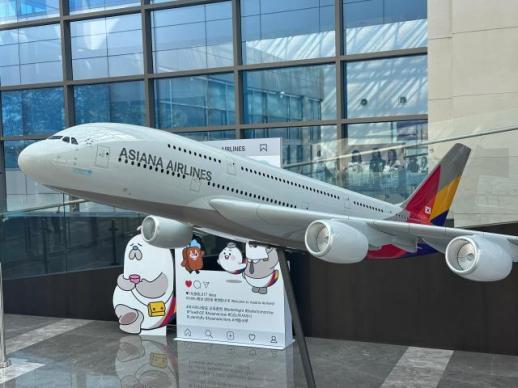 Shareholders clear Asiana folding under the wing of Korean Air SEOUL, August 12 (AJP) - Shareholders of Asiana Airlines gave their final blessing Wednesday to its merger with larger Korean Air, clearing the runway for South Korea's single full-service flag carrier's Dec. 17 liftoff after a five-year integration process. The approval came at Asiana’s 2026 extraordinary general meeting of shareholders in Seoul, in what is expected to be the airline’s final shareholder meeting before it is absorbed into larger full-service carrier Korean Air. About 180 shareholders, including those represented by proxy, participated in the meeting, representing 81.86 percent of voting shares. The merger proposal was approved with 99.33 percent of votes cast in favor. Shares of Korean Air added 0.2 percent to 26,600 won, while Asiana Airlines fell 1.8 percent to 7,240 won. The sole agenda item was approval of the merger agreement signed with Korean Air on May 14. Under the agreement, Asiana will be absorbed into Korean Air, with the integrated airline scheduled to launch on Dec. 17. “It has been a long journey of more than five years since November 2020,” Asiana Airlines CEO Song Bo-young told shareholders. “On Dec. 17, Asiana Airlines will successfully complete the business combination process with Korean Air and be reborn as an integrated Korean Air,” Song said, describing the merger as the first step toward a new chapter for South Korea’s aviation industry as a mega carrier. Korean Air first announced plans to acquire Asiana in November 2020 as the smaller carrier struggled under a heavy debt burden and the collapse in global air travel during the COVID-19 pandemic. Korean Air completed its acquisition of a 63.88 percent controlling stake in Asiana in December 2024 after securing competition approvals in 14 jurisdictions. Regulatory concessions included transferring some routes and airport slots to rivals and divesting Asiana’s cargo business. The airlines have since operated separately while preparing for full legal and operational integration. Song said Asiana would spend its remaining months reviewing preparations already made for the merger and ensuring the combined airline can generate synergies from the outset. “We will go over what we have prepared once again, and we are renewing our determination so that we can create synergies when the integrated airline is launched,” Song told reporters after the meeting. He said communication with employees and preventing disruption for passengers would be among the final priorities. “Our ultimate goal is to return the benefits to our customers, so we are preparing to become an airline that is loved more than any other,” Song said. “We are also making every effort to prepare thoroughly so that customers do not experience inconvenience or confusion.” Shareholders who spoke during the meeting largely backed the merger while acknowledging lingering concerns over regulatory concessions and the practical difficulties of combining two airlines. “Some are concerned that conditions attached to the merger approval, including slot adjustments and the sale of the cargo business, could lead to a decline in corporate value, while there are also various concerns from consumers,” shareholder Kim Kyung-ho said. Still, Kim said he expected the combined Korean Air to become more competitive in the global aviation market and urged management to ease market concerns and maximize shareholder value. Another shareholder, Shin Hyuk-soo, also expressed his blessing. “I hope the merger will maximize synergies between the two airlines and further strengthen their competitiveness in the global aviation market,” Shin said. One airline, about 229 aircraft The Dec. 17 merger will go beyond Korean Air’s 2024 acquisition of control by bringing Asiana itself to an end as a separate airline. Korean Air will become the surviving company, taking over Asiana’s assets, liabilities, employees and operating responsibilities as aircraft and systems are brought under a single organization. The combination will also substantially enlarge Korean Air’s fleet. Korean Air currently lists 162 aircraft, including 139 passenger jets and 23 freighters. Asiana lists 67 passenger aircraft, including six A380s, 15 A350s, eight Boeing 777s and 14 A330s. On those current fleet numbers, the integrated carrier would operate about 229 aircraft — 206 passenger jets and 23 freighters — before accounting for any deliveries, retirements or lease returns before Dec. 17. That would put the combined Korean Air among Asia’s largest full-service carriers. Comparisons are complicated because some airlines count regional and low-cost subsidiaries in group fleet totals while others report only mainline aircraft. A Reuters analysis based on Cirium and OAG data when Korean Air completed its Asiana acquisition in 2024 estimated the enlarged airline group would rank 12th globally by international capacity. The 229-aircraft figure also excludes Jin Air, Air Busan and Air Seoul. Korean Air plans to combine the three low-cost units separately, under the wing of Jin Air, the LCC brand of Korean Air. Asiana will also leave Star Alliance at 11:59 p.m. on Dec. 16, ending more than two decades of membership. Its customers will move into Korean Air’s SkyTeam network from the following day. The enlarged carrier will therefore gain not only aircraft but also a wider international network and larger customer base, while eliminating much of the overlap between South Korea’s two longtime full-service airlines. Mileage and pilot issues pose as headwinds For passengers, one of the most closely watched issues remains what happens to Asiana mileage. Korean Air has proposed keeping existing Asiana mileage accounts separate for 10 years after the merger while giving customers the option of converting them into Korean Air’s SKYPASS miles. Under the proposal, miles earned from flights would be converted at a 1-to-1 ratio, while those accumulated through credit cards and other affiliated programs would be converted at 1 to 0.82. That means 10,000 Asiana partner miles would become 8,200 Korean Air miles if converted. Korean Air initially proposed a lower conversion ratio before revising its plan following scrutiny from the Fair Trade Commission. The regulator has sought stronger consumer safeguards, including improvements to mileage redemption options and the availability of award tickets and seat upgrades. Asked Wednesday about the mileage program, Song said the company was still waiting for the regulator’s decision. “The Fair Trade Commission has not made an announcement yet, so we are also waiting,” he said. The proposed ratios therefore remain subject to final regulatory approval. Another unresolved issue lies in the cockpit. Integrating Korean Air and Asiana pilots has proved particularly sensitive because seniority can determine promotions, compensation, aircraft assignments and career progression. Different hiring and career systems at the two airlines have fueled disagreements over how pilots should be ranked after the merger. The tensions spilled into a legal dispute earlier this year after the head of Asiana Airlines’ pilots union argued in an official letter that many pilots had joined Korean Air after failing to enter Asiana and suggested civilian-background pilots at Asiana had entered the carrier earlier because of stronger qualifications. A screenshot of the letter was later posted on Blind, an anonymous workplace community widely used by aviation industry employees. Some Korean Air pilots subsequently filed a defamation complaint against the Asiana union chief, arguing that the remarks had damaged their reputation. Police decided on July 30 not to refer the case for prosecution, citing insufficient evidence. The Asiana union later said it would not pursue further action and would seek to put aside its differences with the Korean Air pilots union as the merger approaches. Song played down concerns over the pilot seniority dispute in June, saying standards were being established and efforts were under way to resolve the issue. Korean Air has said it does not plan artificial workforce restructuring as part of the merger, meaning much of the integration challenge will involve combining employees, aircraft and operating systems rather than simply cutting overlapping jobs. With shareholder approval secured, the focus now moves from completing the merger to making the enlarged airline work. Asiana, which began operations in 1988 and spent decades as one of South Korea’s two major full-service carriers, now has just four months left as an independent airline. On Dec. 17, its name will disappear from the skies, its aircraft will join Korean Air’s fleet and a merger process stretching back to 2020 will give way to the harder task of turning two airlines into one. AJP Takeaways △ Asiana Airlines shareholders approved the carrier’s merger with Korean Air, clearing a key step toward the launch of the integrated airline on Dec. 17, 2026. △ Mileage integration remains a major consumer issue, with Korean Air proposing a 1:1 conversion for flight-earned Asiana miles and a 1:0.82 ratio for credit card and partner miles, pending Fair Trade Commission approval. △ Pilot integration is another unresolved challenge, as Korean Air and Asiana continue to address seniority, personnel standards and lingering labor tensions ahead of the full merger. 2026-08-12 15:21:11
 -
Gwangju Mayor Park Kwan-yeol Calls for Government Support to Address Regulatory Burdens Gwangju Mayor Park Kwan-yeol emphasized the need for government support corresponding to regulatory burdens during a meeting on August 12.After visiting the Han River Flood Control Center in Seoul, Mayor Park met with the Minister of Environment to discuss key issues facing Gwangju and to request government attention and practical support for various regulations hindering local development.Currently, Gwangju is actively communicating with the central government to address overlapping regulations and local issues.Mayor Park stated, "Gwangju has endured various regulations for a long time to protect the water sources and natural environment of the metropolitan area. Therefore, as national projects are pursued, it is essential that the government and local governments work together to find solutions that do not place an undue burden on Gwangju and its citizens."In particular, he urged for measures to minimize Gwangju's burden related to the integrated water supply project for the Yongin semiconductor industrial complex, while considering the existing regulations that complicate Gwangju's situation.While acknowledging the importance of the semiconductor industry for national competitiveness, he stressed that additional burdens should not be concentrated on specific regions due to national projects, and requested that "the perspectives of Gwangju and the voices of its citizens be adequately reflected in the project process."Additionally, Mayor Park called for active government interest and support for major local issues, including the development of a park golf course in Gwangdong-ri, and the creation of historical and cultural trails around Namhansanseong and Cheonjinam.He explained, "To improve the leisure and living environment for citizens and to promote tourism utilizing local historical and cultural resources, cooperation from the central government is necessary for these projects to proceed smoothly."During the meeting, he conveyed that "Gwangju has endured various regulations for a long time to protect the water sources and natural environment of the metropolitan area, but the constraints on local development are significant."He added, "I will continue to communicate with the government to ensure that the challenges faced by Gwangju and its citizens are adequately reflected in the process of pursuing national projects."In response, the Minister of Environment expressed understanding of Gwangju's difficulties due to various regulations and indicated a willingness to actively cooperate in seeking solutions that allow the government and local governments to thrive together.Citizens have reacted positively to Mayor Park's request for government support and cooperation on local issues, stating that "the central government should understand the regulatory burdens faced by Gwangju and respond with practical support."There is a shared sentiment, particularly regarding the need to minimize Gwangju's additional burden related to the integrated water supply project for the Yongin semiconductor industrial complex.Citizens acknowledged the necessity of national projects but insisted that Gwangju residents should not bear the burden alone, expressing hope that the government's requests will lead to regulatory improvements, resolution of local issues, and enhanced quality of life for citizens.Meanwhile, Mayor Park plans to strengthen the cooperation framework with the central government through this meeting, aiming to alleviate regulatory burdens and resolve local issues while ensuring that Gwangju can fulfill its national role and that citizens can enjoy corresponding benefits and opportunities for local development.* This article has been translated by AI. 2026-08-12 15:20:00