


Latest by
-
 Small Business Leaders Meet with Prime Minister to Discuss KOSDAQ Delisting Criteria The small business sector has requested a delay in the enforcement of stricter market capitalization criteria for KOSDAQ delisting and called for separate bidding for construction materials from the Korea Land and Housing Corporation (LH).The Korea Federation of Small and Medium Businesses announced that on August 12, over 130 participants, including Prime Minister Han Seung-soo, officials from relevant ministries, and representatives from the small business community, attended a regulatory innovation forum for small and venture businesses held at KBIZ Hall in Yeouido. This forum was organized following a luncheon meeting on July 19 between Prime Minister Han and leaders of small business associations, where Kim Ki-moon, the federation's chairman, made the proposal.Kim Ki-moon suggested to the Prime Minister that improving KOSDAQ delisting criteria and implementing separate bidding for public construction materials should be prioritized. He stated, "Since the criteria for KOSDAQ delisting were tightened on July 1, small businesses are at risk of delisting due to market capitalization declines unrelated to their performance or financial status, especially amid recent market volatility. We need to identify the necessary support measures for small businesses struggling due to these market fluctuations."Regarding the separate bidding for construction materials, he noted, "In the case of LH's private participation projects, small business products can be directly purchased under the Market Support Act, but differing opinions among ministries have prevented separate bidding. Given the challenging economic conditions for small construction businesses, the survival of over 360 small manufacturers producing construction materials is at stake, and we hope for a swift revision of the relevant guidelines."The forum included three sessions focusing on: regulatory issues arising from the emergence of new industries, regulatory improvements for small business growth, and sector-specific proposals.In discussing the growth of new industries, participants addressed the lack of relevant systems or unclear regulations affecting new industries and traditional industries. Suggestions included improving regulatory sandboxes, establishing laws and systems for the digital asset industry, revising data regulations for AI development, and creating coordination bodies for harmonizing new and traditional industries.For regulatory improvements related to small businesses, topics included capital market activation, fostering local small businesses, and creating a fair competitive environment. Proposals included easing entry and exit regulations for the KOSDAQ market, improving practices for protecting newly listed companies, relaxing regulations for industries in local industrial complexes, expanding small business participation in mega-projects, introducing a payment linkage system for government procurement projects, and updating industrial safety and health management costs.Sector-specific issues addressed included regulatory challenges faced by manufacturing companies, women-owned businesses, and small merchants. Suggestions included revitalizing small manufacturing of construction materials, excluding the startup support period (seven years) for female CEOs during pregnancy and maternity leave, expanding vehicle types for small business rental needs, applying tariff quotas for edible soybeans, and improving the aT monopoly quantity management system. Twenty-five regulatory issues that could not be addressed during the forum were submitted to the government in writing.Kim Ki-moon remarked, "While our economy continues to thrive, particularly in the semiconductor sector, with record exports in the first half of the year and large corporations achieving unprecedented profits, small businesses are facing the highest loan delinquency rates since 2015, and those supplying to larger companies are not sharing in the successes."He added, "Regulatory innovation is the best way for the government to support small businesses without spending a dime, so proactive regulatory innovation is essential." 2026-08-12 14:16:10
 -
Iran Adapts Economy to Survive Amid Oil Export Blockade Despite U.S. sanctions and a maritime blockade putting pressure on its economy, Iran's leadership is shifting to a 'survival mode' to prepare for a prolonged struggle. The strategy focuses on maintaining essential goods and state functions rather than economic recovery, aiming to withstand U.S. pressure for as long as possible.According to the Wall Street Journal (WSJ) on August 11, Iran is rationing scarce supplies and reducing foreign currency use and investment while maintaining imports of essential goods. Much of the burden of the economic crisis is falling on households.The U.S. maritime blockade has dealt a severe blow to Iran's primary revenue source: oil exports. According to the British economic analysis firm Capital Economics, Iran's oil export revenue plummeted from $4.5 billion in June to virtually 'zero' in July.Living conditions are rapidly deteriorating. The annual inflation rate has surpassed 80%, with chicken prices soaring by 190% and milk by 150% compared to a year ago. There are projections that the war's impact could lead to the loss of 2 to 3 million jobs.Iran is prioritizing limited foreign currency for securing essential goods. It is providing $3.5 billion needed for imports of wheat, medicine, and powdered milk at a lower exchange rate than the market. Factories facing production disruptions due to power shortages are being allowed to operate even on holidays.Support for low-income households has also increased. Measures include allowing essential goods to be purchased on credit and raising food purchase subsidies to prevent public discontent from worsening due to economic hardship.The Trump administration believes that the economic difficulties will eventually bring Iran to the negotiating table. President Donald Trump recently cited high inflation and financial difficulties, asserting that 'the economic pressure on Iran is working.'However, the WSJ noted that 'intensifying economic hardship may not immediately lead to concessions from the leadership.' The influence of hardliners has grown, and Iran has built an economic control system over decades of sanctions.Hardy Kaulzadeh, a researcher at the Quincy Institute, stated, 'U.S. pressure is transforming the Iranian economy into a 'survival mode' that maintains only minimal functionality.' He added that even as economic pain increases, it is unlikely to exert enough pressure to change the leadership's security policies.* This article has been translated by AI. 2026-08-12 14:12:10
-
NHN Shares Rise for Second Day Following Earnings Surprise NHN has seen its shares rise for two consecutive days following the announcement of second-quarter results that exceeded market expectations.As of 1:41 PM on August 12, NHN's stock was trading at 61,700 won, up 7,500 won (13.84%) from the previous trading day. The stock opened at 56,800 won and surged to as high as 63,500 won during the session. This follows a remarkable 29.82% increase the previous day, marking another day of double-digit gains.The rise in stock price is attributed to the company's second-quarter performance, which has stimulated investor sentiment. NHN reported an operating profit of 57.9 billion won for the second quarter of this year, a 164% increase compared to the same period last year. Revenue for the same period reached 757.9 billion won, up 25.3%, while net profit rose to 29.1 billion won, a 159% increase.The improvement in performance was driven by steady growth in both the payment and technology sectors. Revenue from the payment segment, which includes Payco and KCP, increased by 27.3% year-on-year to 394 billion won, while revenue from the technology sector, including AI cloud services, grew by 52.9% to 159.8 billion won.The gaming division also contributed to the strong results, with mobile and PC online sales growing together. Revenue from the gaming sector reached 139.6 billion won, a 21.5% increase compared to the same period last year.* This article has been translated by AI. 2026-08-12 14:08:10
-
President Lee: Active Dialogue to Address Korea-U.S. Issues with Ambassador Michelle Steel President Lee Jae-myung stated on August 12 that he believes various issues between South Korea and the United States can be resolved through rational and proactive dialogue and cooperation.On that morning, President Lee received the credentials of Michelle Steel, the new U.S. Ambassador to South Korea, along with three other newly appointed ambassadors, during a ceremony held at the Blue House.According to a written briefing by Chief Spokesperson Kang Yu-jeong, President Lee urged Ambassador Steel to serve as a strong bridge to further solidify the Korea-U.S. alliance, based on a deep understanding of Korean culture and society. He emphasized that the relationship between the two countries would be further advanced through dialogue and cooperation on mutual issues.After receiving her credentials, President Lee welcomed Ambassador Steel, saying, “Welcome,” and posed for a commemorative photo with her and her husband, attorney Sean Steel. The position of U.S. Ambassador to South Korea had been vacant since Philip Goldberg, who was appointed by the Biden administration, left in January of last year, and the embassy had been operating under a temporary charge d'affaires.The credential ceremony is an event where a newly appointed ambassador presents their credentials from their home country's head of state to the head of state of the host country.Ambassador Steel expressed her happiness about her appointment to South Korea and stated her commitment to engaging broadly with the South Korean government and people to enhance mutual understanding and friendly cooperation between the two nations.Alongside Ambassador Steel, the newly credentialed ambassadors included Banda Maria Dias Stelzer, Ambassador of Portugal; Jamal Al Suwaidi, Ambassador of the United Arab Emirates; and Sean Hoy, Ambassador of Ireland. This was the fifth credential ceremony since the current government took office.President Lee congratulated each ambassador on their appointment and requested that they serve as a bridge to deepen mutually beneficial cooperation between their countries based on close communication and trust amid rapidly changing international circumstances.Ambassador Stelzer noted that while exchanges between the peoples and businesses of South Korea and Portugal have been activated in celebration of the 65th anniversary of diplomatic relations this year, there remains room for further development in high-level exchanges.Ambassador Al Suwaidi remarked that President Lee's state visit to the UAE last November marked a turning point in the bilateral relationship. He added that he would work to prepare for the successful return visit of UAE President Mohammed and to develop the special strategic partnership between the two countries in a forward-looking manner.Ambassador Hoy stated that he aims to expand mutually beneficial cooperation in various fields based on the high potential for collaboration between South Korea and Ireland. He also expressed his intention to communicate closely with South Korea, especially as Ireland is a guest country at the G20 and will hold the rotating presidency of the European Union in the second half of this year. 2026-08-12 14:08:00
-
Residents Raise Funds for Apartment Staff Facing Serious Illness A staff member who worked for seven years at an apartment in Seoul has left due to health issues, prompting residents to come together to raise funds for his treatment.According to the real estate industry on August 12, the news of A, a facility worker at the Raemian CelliTuss living support center in Yongsan-gu, Seoul, has emerged. A joined the apartment in March 2019 but had to leave due to a myeloproliferative tumor. The treatment and nursing costs for his bone marrow transplant amounted to approximately 30 million won.Upon learning of A's situation, the apartment management issued a notice in April titled 'Fundraising for Our Apartment Family, Mr. A,' calling for donations.The notice stated, “Mr. A has always diligently fulfilled his responsibilities behind the scenes, working hard for management and safety. He is currently facing the dual burden of enormous treatment and nursing costs due to a serious illness. We hope to gather the warm hearts of residents to help him recover and return to health.”Donation boxes were set up at the information desks of each building, and from April 20 to 30, a total of 460 households contributed 11 million won. Additionally, the facility team donated 1.166 million won, the community team contributed 1.15 million won, and the residents' representative meeting added 800,000 won, bringing the total to over 16 million won.The apartment management transparently tallied and publicly disclosed the total amount raised before delivering it directly to A.It has been reported that A successfully underwent the bone marrow transplant and was discharged from the hospital in mid-July, currently recuperating at home.The apartment management expressed gratitude, stating, “The warm love and support from residents have not only provided great hope to the worker going through a difficult time but have also become a meaningful example for our apartment community.”As news of this story spread, netizens reacted positively, commenting, “Some apartments even prohibit fans in the security office, but this one is different,” “Everyone has a warm heart,” and “This is truly a luxury apartment.”Meanwhile, this apartment is considered one of the high-end residences in Seoul. On July 29, a unit with a floor area of 124 square meters was sold for 5.5 billion won.* This article has been translated by AI. 2026-08-12 14:04:00
-
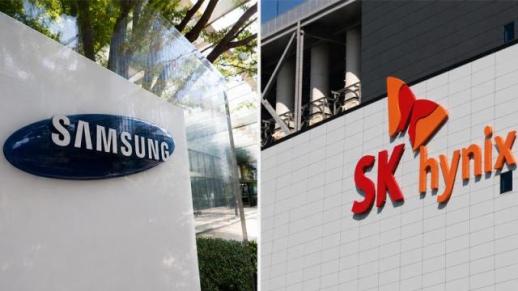 Money may buy happiness: SK hynix happier than Samsung SEOUL, August 12 (AJP) - Who says money can't buy happiness? SK hynix ranked among the top 3 percent of South Korean companies for employee happiness while archrival Samsung Electronics placed around the top 60 percent, according to a workplace survey released Wednesday, underscoring how the AI memory boom is translating into starkly different perceptions of reward inside Korea's two biggest chipmakers. The findings came from the latest Blind Index, compiled by workplace platform Blind using a methodology jointly developed with the Korea Labor Institute. The survey covered 34,372 South Korean employees between July and December last year and does not reflect this year's earnings and bonus windfall. The divergence is notable as the two chipmakers compete for talent as fiercely as they do for leadership in artificial intelligence memory. Money may be part of the answer. SK hynix allocates 10 percent of annual operating profit to its profit-sharing, or PS, program after removing a previous payout cap. Based on this year's projected earnings, employees could receive around 700 million won ($486,000) each on average, although actual payouts vary by rank and individual performance. Samsung Electronics has moved closer to that model this year after labor and management agreed to introduce a separate bonus for its Device Solutions chip division on top of its existing Overall Performance Incentive, or OPI, scheme. Samsung has traditionally calculated OPI based on economic value added, with payouts capped at 50 percent of annual salary. The new DS bonus instead draws from 10.5 percent of agreed business performance and carries no payout ceiling. Under current profit assumptions, employees in Samsung's highly profitable memory business could receive close to 600 million won in combined incentives, while payouts elsewhere could be far smaller depending on business performance. The difference is not only how much employees receive, but how they receive it. SK hynix pays 80 percent of its PS award in cash in the year it is earned, with the remaining 20 percent deferred over the following two years. Employees can also elect to receive part of their bonus in company shares. Samsung's new semiconductor bonus, by contrast, will be paid entirely in Samsung Electronics shares after tax. One-third can be sold immediately, another third after one year and the remainder after two years. The scheme is set to run through 2035 and is subject to annual operating-profit thresholds, marking Samsung's attempt to tie semiconductor compensation more directly to the profits generated by its chip business. Public reviews on Blind also point to a gap between the companies. SK hynix currently carries an overall employee rating of 3.0 out of 5, compared with Samsung Electronics' 2.8. SK hynix scores 3.3 for compensation and benefits and 2.9 for corporate culture, while Samsung scores 3.0 and 2.7, respectively. One person familiar with Samsung's workplace culture attributed part of the lower employee sentiment to what the source described as an intensely performance-driven environment, which has also exposed widening disparities between highly profitable chip operations and weaker businesses during the semiconductor boom. "Samsung Electronics is highly goal-oriented, with individual performance often prioritized over collaboration," the source told AJP. "There are also internal systems through which employees can anonymously report their colleagues, which can create an atmosphere where people find it difficult to fully trust those they work with." Blind's publicly available Samsung Index points to broader concerns over workplace culture. Samsung ranks relatively low on measures including employees' sense of meaning and importance in their work, workplace bonds, work-life balance and psychological safety, according to the platform. The gap does not mean sentiment at SK hynix is uniformly positive. Recent verified employee reviews on Blind praise compensation and benefits but also cite heavy workloads and dissatisfaction with management and labor negotiations, suggesting even some of the industry's richest bonuses have limits in determining workplace happiness. Across corporate South Korea, employee sentiment deteriorated more broadly. Only 33 percent of companies surveyed received happiness scores of 50 or higher, down from 47 percent a year earlier, according to Blind. The deterioration has not translated into greater employee mobility. The proportion of workers who attempted to change jobs over the past year fell despite lower happiness scores, suggesting a weaker labor market is keeping more dissatisfied workers where they are. SK hynix ranked among the top 3 percent of South Korean companies for employee happiness while archrival Samsung Electronics placed around the top 60 percent, according to a workplace survey released Wednesday, reflecting how generous reward in cash instead of stock option influenced employees in rating their contentment with their employers. The findings came from the latest Blind Index, compiled by workplace platform Blind using a methodology jointly developed with the Korea Labor Institute. The survey covered 34,372 South Korean employees between July and December last year. The divergence is notable as the two chipmakers compete for talent and leadership in artificial intelligence memory. Public reviews on Blind also point to a modest gap between the companies. SK hynix currently carries an overall employee rating of 3.0 out of 5, compared with Samsung Electronics' 2.8. SK hynix scores 3.3 for compensation and benefits and 2.9 for corporate culture, while Samsung scores 3.0 and 2.7, respectively. One person familiar with Samsung's workplace culture attributed part of the lower employee sentiment to what the source described as an intensely performance-driven environment that resulted in a yawning chasm between profit-making chip and non-chip operations during the chip boom. "Samsung Electronics is highly goal-oriented, with individual performance often prioritized over collaboration," the source told AJP. "There are also internal systems through which employees can anonymously report their colleagues, which can create an atmosphere where people find it difficult to fully trust those they work with." Blind's publicly available Samsung Index offers some support for broader concerns over workplace culture. Samsung ranks relatively low on measures including the perceived meaning and importance of employees' work, workplace bonds, work-life balance and psychological safety, according to the platform. The gap comes despite mixed sentiment at SK hynix itself. Recent verified employee reviews on Blind praise compensation and benefits, while others cite heavy workloads and dissatisfaction with management and labor negotiations, suggesting the survey ranking does not translate into uniformly positive employee sentiment.' SK hynix employees are moving to form a new unified union spanning production and technical-office workers as they seek greater bargaining power in a dispute over management's proposed changes to the bonus system. More than 3,500 workers joined the preparatory group within three days of its launch, equivalent to about 10 percent of the company's workforce. Across corporate South Korea, workplace happiness deteriorated more broadly. Only 33 percent of companies surveyed received happiness scores of 50 or higher, down from 47 percent a year earlier, according to Blind. The decline, however, has not translated into greater employee mobility. The proportion of workers who attempted to change jobs over the past year fell despite lower happiness scores, suggesting a weaker labor market may be keeping dissatisfied employees in place. 2026-08-12 13:58:45
 -
 Op-Ed: Securing the maritime commons India’s peninsular geography provides a long coastline extending toward the Persian Gulf in West Asia and Southeast Asia in the east. This geography provided an impetus to explore the vast waters surrounding the Indian Peninsula because it offered easy access to the maritime domain. THE INDIAN PENINSULA India’s maritime tradition is among the world’s oldest, with unparalleled continuity since the Neolithic Age developed with Indian sailors manning both naval and merchant ships. Upon gaining independence in 1947, India inherited a meagre 33 ships and 538 naval officers to protect a coastline of 7,517 km, 1,280 islands and 14,500 km of potentially navigable waterways. India’s geographical location places it close to major Sea Lanes of Communication (SLOCs) in the Indian Ocean. With limited maritime capabilities, India avoided entanglement in the bipolar world order and promoted the concept of the Indian Ocean as a Zone of Peace. After independence, India gave priority to coastal defence and the integration of the Princely States. Burdened with land wars in 1948, 1962 and 1965, India was forced to divert resources to the Army and Air Force at the expense of the Navy. India gradually began rebuilding its maritime sector and shipbuilding industry. As India’s economy grew, more resources were provided to the Navy and to the development of ports, vital for maritime commerce and national security. By the 1990s, the Indian Navy was deployed for UN peacekeeping operations, evacuations of Indian nationals during the war in Iraq and anti-piracy operations in the Arabian Sea. The Navy’s blue-water capabilities expanded to support maritime security and international seaborne commerce, with the aim of securing the maritime commons. Currently, the maritime arena faces a wide array of challenges — climate change, cyclones, sea-level rise and human-security threats such as illegal migration, trafficking, piracy, illegal fishing, pollution and seabed mining. The strategic importance of the maritime domain has driven India’s maritime strategy, providing security for around 90 percent of India’s trade by volume. The ongoing war in Iran has highlighted the weaponization of international shipping channels, particularly the Strait of Hormuz, in violation of the United Nations Convention on the Law of the Sea , while naval operations across several maritime theatres have helped combat piracy, provide safe passage to international cargo ships and support humanitarian operations. Twenty-eight partner nations and international organizations have joined India in tracking maritime traffic, piracy and illegal activities in the IOR. This strategic shift bolsters maritime security through the Indian Navy’s growing blue-water deployments. Joint exercises with different navies, such as the Malabar exercises with QUAD partners Australia, Japan and the United States, are conducted periodically. The Indian Navy has spearheaded maritime diplomacy through capacity building, joint exercises, plurilateral conferences, Humanitarian Assistance and Disaster Relief (HADR), and Search and Rescue (SAR) activities. Big-power competition is increasing in the IOR, requiring greater vigilance over maritime security. To avoid conflict, India has advocated “a free, open, secure and safe Indian Ocean” as a shared goal for securing the maritime commons, as envisaged under UNCLOS. Despite military strikes, commercial navigation through the Strait of Hormuz remains closed. Iran has weaponized its geography to disrupt one of the world’s most important energy chokepoints, keeping global energy markets under constant pressure and prolonging a worldwide economic shock. Post-Iran war, global power equations will shift decisively toward the maritime domain. An interconnected world depends on maritime routes, energy corridors, digital infrastructure and financial systems. Nations will also increasingly seek to control digital nodes, cable landing stations, undersea cable routes, data centres and satellite networks. India’s comprehensive plan to strengthen its maritime sector was long overdue. India’s vast coastline and strategic location in the IOR create vulnerabilities and expose it to maritime security threats. India’s maritime reforms and modernization drive mark a pivotal step toward achieving Maritime India Vision 2030 and aligning with Sustainable Development Goals 9 and 14. India has tasked its Navy, through Operation Sankalp, with providing escorts for merchant vessels, conducting maritime surveillance across the Arabian Sea and Gulf of Aden, and protecting sea lanes of communication vital to India’s economy and energy security. India will have to undertake autonomous actions and, wherever possible, synchronize its efforts to secure SLOCs. Operation Sankalp is focused on protecting Indian shipping, preserving freedom of navigation for India’s supply lines and avoiding direct regional involvement. India’s policy of strategic autonomy precludes joining formal coalitions while keeping diplomatic channels active with individual countries in the conflict region. To upgrade its capacity to secure the maritime commons, India is addressing infrastructure gaps, sustainability challenges and workforce inequities while building a truly blue-water Navy with nuclear deterrence capabilities. India aims to become a global maritime hub and a leading maritime power over the next two to three decades, enabling it to play a significant role in ensuring the security of the maritime commons. *The author, a retired diplomat, served as Secretary in the Ministry of External Affairs; earlier he served as India’s High Commissioner to Bangladesh and Ambassador to Thailand. **Editor's note: The views expressed in this contribution are solely those of the author and do not necessarily reflect the views of AJP or Aju Media Group. 2026-08-12 13:56:19
 -
Shift Up Shares Drop 5% After Disappointing Q2 Earnings Shift Up's stock is experiencing a downturn following a significant decline in its second-quarter revenue and operating profit compared to the previous year.According to the Korea Exchange, Shift Up's stock price fell by 1,650 won (4.90%) to 32,000 won as of 1:45 PM on August 12. Investor sentiment has been negatively impacted by the disappointing Q2 earnings report released after the market closed the previous day.The company's Q2 revenue was 55.7 billion won, a 50.4% decrease from the same period last year. Operating profit plummeted by 58.8% to 28.1 billion won, while net profit also fell by 18.7% to 41.7 billion won.Revenue from Shift Up's flagship game, 'Goddess of Victory: Nikke,' decreased by 4% year-on-year to 43.3 billion won in Q2. However, sales of 'Stella Blade,' released last year, saw a dramatic drop of 86.6% to 8.8 billion won, reflecting a high base effect from its successful launch in the previous year.Shift Up is currently developing its next flagship title, 'Project Spirits,' with plans to unveil it in the second half of 2026. A sequel to 'Stella Blade,' titled 'Stella Blade: Blood Rain,' is also in development, but a specific release date has not yet been set.The speed at which new titles can replace the significant revenue contribution from the launch of 'Stella Blade' last year will likely be a key factor influencing the company's stock price in the future.* This article has been translated by AI. 2026-08-12 13:56:00
-
Government's $1.6 Billion AI Data Project Faces Criticism for Waste and Errors The South Korean government has invested 1.63 trillion won ($1.6 billion) in an artificial intelligence (AI) training data project, but numerous instances of duplicated and unusable data have been identified. Critics argue that inadequate pre-review, quality control, and post-management have led to inefficient spending of taxpayer money.According to an audit report released by the Board of Audit and Inspection on August 12, the Ministry of Science and ICT has been developing AI training data from 2017 to 2024. As of November 2025, 908 types of data have been made available on the AI Hub.In addition, 26 public institutions, including the Ministry of Food and Drug Safety, Seoul City, and the Korea Expressway Corporation, have released 313 types of data through their own portals. However, the lack of a system for sharing construction plans or assessing the usability of existing data has resulted in the duplication of similar datasets.The Ministry of Science and ICT initially spent 7.38 billion won to develop four types of data related to wildlife, household waste, concrete cracks, and eggs. Yet, five other institutions, including Seoul City and the Korea Expressway Corporation, spent an additional 610 million won to create similar datasets.In Daejeon, data on household waste showed that 5,200 out of 9,000 images (57.8%) were similar to existing data from the Ministry of Science and ICT. Similarly, about 25,000 out of 60,000 images in the wildlife dataset from the Korea Expressway Corporation were found to be similar to previously collected data.There were also instances where similar data was created by different agencies in the same year without coordination. While the Ministry of Science and ICT invested 23.3 billion won in data related to pills, oral health, and autonomous driving from 2021 to 2023, three other agencies, including the Ministry of Food and Drug Safety, separately spent 840 million won on similar datasets.In 2023, the Personal Information Protection Commission developed 1,000 images for oral health, all of which were similar to data created by the Ministry of Science and ICT that same year. Additionally, 1,411 images for pill identification created by both the Ministry of Science and ICT and the Ministry of Food and Drug Safety overlapped.Quality control of the data was also found to be lacking. Among the top 20 public institutions in terms of construction performance, four had no separate quality control standards, and nine did not conduct third-party quality verification before delivery. The Ministry of Food and Drug Safety and Korea East-West Power did not require third-party verification or internal checks by the executing agencies.Of the 114 types of data constructed by five institutions, 96 types (84.2%) lacked a syntax rule specification to assess the accuracy of sentence structure and format, making quality checks impossible.When the Board of Audit and Inspection conducted a sample verification of six datasets constructed by Gyeonggi Province and the Korea Expressway Corporation, one dataset was found to be untestable. The remaining five datasets had format accuracy ranging from 77.3% to 99.2%, falling short of the standard of 99.5%.The 'Road Driving CCTV Training Dataset' constructed by the Korea Expressway Corporation in 2025 lacked bounding box coordinate information for 2,680 images depicting objects like cars, rendering it unusable for training autonomous driving technology.In the 'Large Waste Learning Data' created by Seoul City in 2020, 538 out of 2,303 images (23.4%) had mismatched file names and actual images. For instance, files labeled 'bag' contained images of boxes or tables instead.Issues also arose when construction companies went out of business, leaving data errors uncorrected. The Korea Intelligent Information Society Agency constructed 721 types of data through 1,270 companies from 2021 to 2024, with 213 types (29.5%) coming from 65 companies that either closed or faced internal issues.Despite receiving complaints about errors in 11 types of data, the agency closed the complaints without making corrections or engaging third parties, citing the closure of the construction companies. Data with confirmed errors continued to be publicly available on the AI Hub.The Board of Audit and Inspection has instructed the Ministry of Science and ICT to collaborate with the Ministry of the Interior and Safety to review the potential for alternative use of existing data and to establish a system for sharing and coordinating construction plans among agencies. It also called for the establishment of common quality control standards and procedures for internal checks and third-party verification applicable to public institutions.The Korea Intelligent Information Society Agency has been directed to directly correct errors in data constructed by closed companies or to establish a third-party maintenance system. The Ministry of Science and ICT stated that it would verify the quality of existing data through a comprehensive investigation across ministries and address deficiencies with the help of data and AI specialized companies.The Board of Audit and Inspection noted, “The production of unusable data due to duplicated datasets and inadequate quality control systems has occurred, and post-management has been insufficient. The ongoing complaints from AI companies about the lack of usable data highlight the urgent need for improvements in both the quantity and quality of data to achieve the goal of becoming a leading AI nation.” 2026-08-12 13:56:00
-
Mokpo City Implements Proactive Measures Against Rising Tides Mokpo City is activating a proactive emergency response system to secure citizen safety against seawater inflow and flooding in low-lying areas due to rising tides following recent personnel changes.Under the leadership of Kim Sang-moon, the head of the sewage department, the city is preemptively inspecting areas at risk of flooding and actively communicating response plans and on-site conditions through press briefings, enhancing preventive administrative measures.According to the city, significant tidal increases are expected from August 12 to 16. Forecasted levels start at 4.90 meters on August 12, rising to 5.09 meters on August 13, 5.16 meters on August 14, 5.10 meters on August 15, and dropping to 4.92 meters on August 16.To prepare for potential seawater backflow and flooding, the city has designated six areas as flood-prone zones: roads around North Port Noeul Park, the alley next to the former Fisheries Cooperative Auction House, roads near the International Passenger Terminal, in front of Dongmyeong-dong Comprehensive Fish Market, the entrance to Samhakdo Ilwoo Shipyard, and the road in front of Gabbawi Hanyang Chicken.Given the possibility of backflow through storm drains and seawater inundation in coastal areas, the city will enhance on-site patrols and monitoring during high tide periods.The city has also installed banners warning of potential road flooding due to rising seawater levels and is promoting parking restrictions along affected roads to ensure residents are aware of the risks associated with rising tides.Emergency operations will focus on the two hours before and after high tide. On-site personnel will monitor flooding conditions in real-time and check the operational status of stormwater pump stations. In the event of flooding, the city plans to coordinate with police and fire departments to control traffic and guide nearby residents regarding vehicle movement.On August 12, actual water levels reached 5.27 meters, exceeding the forecast of 4.90 meters, prompting a storm surge warning from 1:20 AM to 3:00 AM.In response, Mokpo City deployed 25 personnel, including Kim Sang-moon, to emergency duty from 11:50 PM the previous night until 3:50 AM on August 12, activating stormwater pump stations along the coastal road and in Manho-dong, while conducting vehicle control and on-site monitoring in flood-prone areas.As a result, some seawater entered the six designated flood-prone areas, but natural drainage occurred, and no significant damage or flooding complaints were reported.During this tidal increase period, the city has organized teams for sewage maintenance, sewage facilities, flood prevention, and sewage administration to enhance on-site response capabilities. Staff have been assigned to vulnerable areas such as Gabbawi, the coastal road, North Port, and Samhakdo, with a system established to share real-time updates on conditions through a situation room.Kim Sang-moon, head of the sewage department, emphasized the importance of monitoring actual water levels and seawater inflow rather than solely relying on forecasts. He stated, "We will thoroughly prepare for preemptive inspections in flood-prone areas, ensure the readiness of stormwater pump stations, and enhance public awareness to prevent inconvenience and property damage to citizens."He added, "Particular caution is needed for vehicle traffic and parking in low-lying coastal areas during high tide periods. We will maintain vigilance and respond based on on-site conditions until the tidal increase period concludes."Mokpo City plans to continue monitoring tidal conditions until August 16, focusing on inspections of vulnerable areas, traffic control preparations, and stormwater pump station checks.* This article has been translated by AI. 2026-08-12 13:52:00