


Latest by
-
 Kim Min-seok and Jeong Cheong-rae Clash Over Leverage ETF Responsibility As the Democratic Party's national convention approaches in five days, candidates for party leader expressed differing views on the responsibility for single-stock leverage ETFs, housing supply policies, and the process of abolishing supplementary investigative powers.During the TV debate on August 12, Kim Min-seok stated, "I was in charge on the day President Lee Jae-myung was on an overseas trip, and there was no face-to-face report due to the unique situation of the economic team." He added, "We are stabilizing the situation with increased deposit requirements. If we had halted trading as some suggested, it would have caused chaos."In response, Jeong Cheong-rae pointed out, "The chair of the Cabinet meeting was Kim, and he was also the one who submitted the legislation," intensifying his criticism by referencing a statement from Lee Chan-jin, the head of the Financial Supervisory Service, who said, 'We should have stopped it at all costs.'On the topic of housing supply, Jeong noted, "President Lee's campaign promise included a commitment to supply 1.4 million homes, while LH is supposed to provide 550,000 homes, but improvements are needed due to existing issues." Kim countered, "The failure to realize the supply drive is due to disagreements among ministries, and we need a responsible investment in housing from the state, including a housing New Deal."He further stated, "The difficulties with LH's funding and business methods are well known within the ruling party. If I become party leader, I will push for additional measures related to housing that the government has proposed, increasing the state's responsibility."Song Young-gil remarked, "During my tenure as party leader under the Moon Jae-in administration, I proposed raising the limit for the comprehensive real estate tax exemption from 900 million won to 1.2 billion won. Although the Blue House opposed it, I persisted and succeeded. We need to change the binary thinking that equates real estate with speculation and stocks with investment."The candidates also had differing views on the evaluation of the recent local elections. Song criticized Jeong, saying, "The President apologized to the public for losing in areas we needed to win, yet you claimed the party and government had a victory." Kim supported Song's assertion, stating, "I was the government representative at the time, and there was no such discussion within the party, government, and Blue House. The atmosphere surrounding the election was not positive." Jeong clarified, "I referred to the party and the Blue House, not the party and government."Regarding the process of abolishing supplementary investigative powers, the candidates recalled differing memories. Kim stated, "While discussing the supplementary investigative powers, the government and Blue House requested it in April, which was acknowledged by policy committee chair Han Jeong-ae and legal affairs committee chair Seo Young-kyo." Jeong responded, "If we had processed the supplementary investigative powers according to the government's proposal, party members would have been in an uproar."The candidates also clashed over the 2002 presidential election and the subsequent candidate unification efforts. Jeong raised his voice, saying, "Are you blaming me for the betrayal of late President Roh Moo-hyun and my departure from the party?" Kim retorted, "You ruined the presidential election with your 'Bong-i Kim Seon-dal' comment and not apologizing is the real betrayal." Jeong firmly stated, "I do not have 'departure' in my vocabulary." In response, Song countered, "One might have to leave the party for its sake. The late Prime Minister Lee Hae-chan also left the party and later became party leader." 2026-08-12 15:36:00
 -
NH Bank Hosts Summer Camp for Rural Children Focused on Career and Financial Education NH Bank, in collaboration with the Korea Scholarship Foundation, held a summer camp aimed at supporting elementary school students in rural areas with learning and career exploration. On August 12, NH Bank announced the opening ceremony of the '2026 Green Lighthouse NH Bank Green Ladder Summer Camp' at the Sono Belle in Cheonan, South Chungcheong Province. The event was attended by NH Bank President Kang Tae-young, Korea Scholarship Foundation Chairman Park Chang-dal, university student mentors, and over 500 elementary school students from rural areas. The 'Green Ladder Camp' is a social contribution initiative that provides educational and career experience opportunities to children in rural and remote areas with relatively poor educational and welfare conditions. It has been operated by the Korea Scholarship Foundation since 2020 with support from NH Bank. The program is divided into on-campus and off-campus camps. The on-campus camp involves university student mentors visiting participating schools for about five days during the summer vacation to conduct subject learning and mentoring. The off-campus camp consists of a three-day, two-night program featuring lectures from notable figures, career experiences, and cultural performances. NH Bank also offers tailored financial education to help participating students develop sound financial habits. Kang Tae-young, President of NH Bank, stated, "I hope this provides children with the opportunity to experience a broader world through new experiences," adding, "We will continue our social contribution activities that support the growth of future generations." 2026-08-12 15:32:00
-
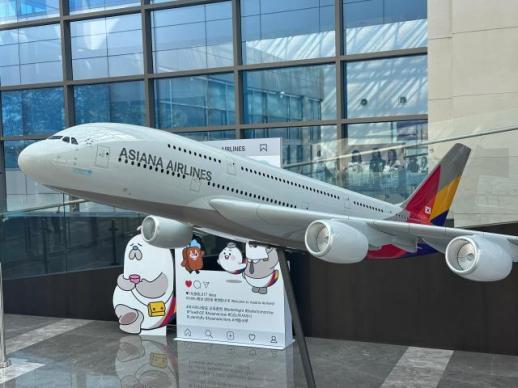 Shareholders clear Asiana folding under the wing of Korean Air SEOUL, August 12 (AJP) - Shareholders of Asiana Airlines gave their final blessing Wednesday to its merger with larger Korean Air, clearing the runway for South Korea's single full-service flag carrier's Dec. 17 liftoff after a five-year integration process. The approval came at Asiana’s 2026 extraordinary general meeting of shareholders in Seoul, in what is expected to be the airline’s final shareholder meeting before it is absorbed into larger full-service carrier Korean Air. About 180 shareholders, including those represented by proxy, participated in the meeting, representing 81.86 percent of voting shares. The merger proposal was approved with 99.33 percent of votes cast in favor. Shares of Korean Air added 0.2 percent to 26,600 won, while Asiana Airlines fell 1.8 percent to 7,240 won. The sole agenda item was approval of the merger agreement signed with Korean Air on May 14. Under the agreement, Asiana will be absorbed into Korean Air, with the integrated airline scheduled to launch on Dec. 17. “It has been a long journey of more than five years since November 2020,” Asiana Airlines CEO Song Bo-young told shareholders. “On Dec. 17, Asiana Airlines will successfully complete the business combination process with Korean Air and be reborn as an integrated Korean Air,” Song said, describing the merger as the first step toward a new chapter for South Korea’s aviation industry as a mega carrier. Korean Air first announced plans to acquire Asiana in November 2020 as the smaller carrier struggled under a heavy debt burden and the collapse in global air travel during the COVID-19 pandemic. Korean Air completed its acquisition of a 63.88 percent controlling stake in Asiana in December 2024 after securing competition approvals in 14 jurisdictions. Regulatory concessions included transferring some routes and airport slots to rivals and divesting Asiana’s cargo business. The airlines have since operated separately while preparing for full legal and operational integration. Song said Asiana would spend its remaining months reviewing preparations already made for the merger and ensuring the combined airline can generate synergies from the outset. “We will go over what we have prepared once again, and we are renewing our determination so that we can create synergies when the integrated airline is launched,” Song told reporters after the meeting. He said communication with employees and preventing disruption for passengers would be among the final priorities. “Our ultimate goal is to return the benefits to our customers, so we are preparing to become an airline that is loved more than any other,” Song said. “We are also making every effort to prepare thoroughly so that customers do not experience inconvenience or confusion.” Shareholders who spoke during the meeting largely backed the merger while acknowledging lingering concerns over regulatory concessions and the practical difficulties of combining two airlines. “Some are concerned that conditions attached to the merger approval, including slot adjustments and the sale of the cargo business, could lead to a decline in corporate value, while there are also various concerns from consumers,” shareholder Kim Kyung-ho said. Still, Kim said he expected the combined Korean Air to become more competitive in the global aviation market and urged management to ease market concerns and maximize shareholder value. Another shareholder, Shin Hyuk-soo, also expressed his blessing. “I hope the merger will maximize synergies between the two airlines and further strengthen their competitiveness in the global aviation market,” Shin said. One airline, about 229 aircraft The Dec. 17 merger will go beyond Korean Air’s 2024 acquisition of control by bringing Asiana itself to an end as a separate airline. Korean Air will become the surviving company, taking over Asiana’s assets, liabilities, employees and operating responsibilities as aircraft and systems are brought under a single organization. The combination will also substantially enlarge Korean Air’s fleet. Korean Air currently lists 162 aircraft, including 139 passenger jets and 23 freighters. Asiana lists 67 passenger aircraft, including six A380s, 15 A350s, eight Boeing 777s and 14 A330s. On those current fleet numbers, the integrated carrier would operate about 229 aircraft — 206 passenger jets and 23 freighters — before accounting for any deliveries, retirements or lease returns before Dec. 17. That would put the combined Korean Air among Asia’s largest full-service carriers. Comparisons are complicated because some airlines count regional and low-cost subsidiaries in group fleet totals while others report only mainline aircraft. A Reuters analysis based on Cirium and OAG data when Korean Air completed its Asiana acquisition in 2024 estimated the enlarged airline group would rank 12th globally by international capacity. The 229-aircraft figure also excludes Jin Air, Air Busan and Air Seoul. Korean Air plans to combine the three low-cost units separately, under the wing of Jin Air, the LCC brand of Korean Air. Asiana will also leave Star Alliance at 11:59 p.m. on Dec. 16, ending more than two decades of membership. Its customers will move into Korean Air’s SkyTeam network from the following day. The enlarged carrier will therefore gain not only aircraft but also a wider international network and larger customer base, while eliminating much of the overlap between South Korea’s two longtime full-service airlines. Mileage and pilot issues pose as headwinds For passengers, one of the most closely watched issues remains what happens to Asiana mileage. Korean Air has proposed keeping existing Asiana mileage accounts separate for 10 years after the merger while giving customers the option of converting them into Korean Air’s SKYPASS miles. Under the proposal, miles earned from flights would be converted at a 1-to-1 ratio, while those accumulated through credit cards and other affiliated programs would be converted at 1 to 0.82. That means 10,000 Asiana partner miles would become 8,200 Korean Air miles if converted. Korean Air initially proposed a lower conversion ratio before revising its plan following scrutiny from the Fair Trade Commission. The regulator has sought stronger consumer safeguards, including improvements to mileage redemption options and the availability of award tickets and seat upgrades. Asked Wednesday about the mileage program, Song said the company was still waiting for the regulator’s decision. “The Fair Trade Commission has not made an announcement yet, so we are also waiting,” he said. The proposed ratios therefore remain subject to final regulatory approval. Another unresolved issue lies in the cockpit. Integrating Korean Air and Asiana pilots has proved particularly sensitive because seniority can determine promotions, compensation, aircraft assignments and career progression. Different hiring and career systems at the two airlines have fueled disagreements over how pilots should be ranked after the merger. The tensions spilled into a legal dispute earlier this year after the head of Asiana Airlines’ pilots union argued in an official letter that many pilots had joined Korean Air after failing to enter Asiana and suggested civilian-background pilots at Asiana had entered the carrier earlier because of stronger qualifications. A screenshot of the letter was later posted on Blind, an anonymous workplace community widely used by aviation industry employees. Some Korean Air pilots subsequently filed a defamation complaint against the Asiana union chief, arguing that the remarks had damaged their reputation. Police decided on July 30 not to refer the case for prosecution, citing insufficient evidence. The Asiana union later said it would not pursue further action and would seek to put aside its differences with the Korean Air pilots union as the merger approaches. Song played down concerns over the pilot seniority dispute in June, saying standards were being established and efforts were under way to resolve the issue. Korean Air has said it does not plan artificial workforce restructuring as part of the merger, meaning much of the integration challenge will involve combining employees, aircraft and operating systems rather than simply cutting overlapping jobs. With shareholder approval secured, the focus now moves from completing the merger to making the enlarged airline work. Asiana, which began operations in 1988 and spent decades as one of South Korea’s two major full-service carriers, now has just four months left as an independent airline. On Dec. 17, its name will disappear from the skies, its aircraft will join Korean Air’s fleet and a merger process stretching back to 2020 will give way to the harder task of turning two airlines into one. AJP Takeaways △ Asiana Airlines shareholders approved the carrier’s merger with Korean Air, clearing a key step toward the launch of the integrated airline on Dec. 17, 2026. △ Mileage integration remains a major consumer issue, with Korean Air proposing a 1:1 conversion for flight-earned Asiana miles and a 1:0.82 ratio for credit card and partner miles, pending Fair Trade Commission approval. △ Pilot integration is another unresolved challenge, as Korean Air and Asiana continue to address seniority, personnel standards and lingering labor tensions ahead of the full merger. 2026-08-12 15:21:11
 -
Gwangju Mayor Park Kwan-yeol Calls for Government Support to Address Regulatory Burdens Gwangju Mayor Park Kwan-yeol emphasized the need for government support corresponding to regulatory burdens during a meeting on August 12.After visiting the Han River Flood Control Center in Seoul, Mayor Park met with the Minister of Environment to discuss key issues facing Gwangju and to request government attention and practical support for various regulations hindering local development.Currently, Gwangju is actively communicating with the central government to address overlapping regulations and local issues.Mayor Park stated, "Gwangju has endured various regulations for a long time to protect the water sources and natural environment of the metropolitan area. Therefore, as national projects are pursued, it is essential that the government and local governments work together to find solutions that do not place an undue burden on Gwangju and its citizens."In particular, he urged for measures to minimize Gwangju's burden related to the integrated water supply project for the Yongin semiconductor industrial complex, while considering the existing regulations that complicate Gwangju's situation.While acknowledging the importance of the semiconductor industry for national competitiveness, he stressed that additional burdens should not be concentrated on specific regions due to national projects, and requested that "the perspectives of Gwangju and the voices of its citizens be adequately reflected in the project process."Additionally, Mayor Park called for active government interest and support for major local issues, including the development of a park golf course in Gwangdong-ri, and the creation of historical and cultural trails around Namhansanseong and Cheonjinam.He explained, "To improve the leisure and living environment for citizens and to promote tourism utilizing local historical and cultural resources, cooperation from the central government is necessary for these projects to proceed smoothly."During the meeting, he conveyed that "Gwangju has endured various regulations for a long time to protect the water sources and natural environment of the metropolitan area, but the constraints on local development are significant."He added, "I will continue to communicate with the government to ensure that the challenges faced by Gwangju and its citizens are adequately reflected in the process of pursuing national projects."In response, the Minister of Environment expressed understanding of Gwangju's difficulties due to various regulations and indicated a willingness to actively cooperate in seeking solutions that allow the government and local governments to thrive together.Citizens have reacted positively to Mayor Park's request for government support and cooperation on local issues, stating that "the central government should understand the regulatory burdens faced by Gwangju and respond with practical support."There is a shared sentiment, particularly regarding the need to minimize Gwangju's additional burden related to the integrated water supply project for the Yongin semiconductor industrial complex.Citizens acknowledged the necessity of national projects but insisted that Gwangju residents should not bear the burden alone, expressing hope that the government's requests will lead to regulatory improvements, resolution of local issues, and enhanced quality of life for citizens.Meanwhile, Mayor Park plans to strengthen the cooperation framework with the central government through this meeting, aiming to alleviate regulatory burdens and resolve local issues while ensuring that Gwangju can fulfill its national role and that citizens can enjoy corresponding benefits and opportunities for local development.* This article has been translated by AI. 2026-08-12 15:20:00
-
Korea Company Reports 35.6% Increase in Q2 Operating Profit Korea Company announced on August 12 that its preliminary operating profit for the second quarter reached 100.2 billion won, marking a 35.6% increase compared to the same period last year.During the same period, sales totaled 339.6 billion won, a slight decrease of 1.2% year-on-year. However, the increase in equity method gains, driven by expanded sales and improved product mix at its core subsidiary, Hankook Tire & Technology, along with favorable exchange rates, contributed to the improved operating profit.The operating profit margin for the second quarter was 29.5%. While this represents a slight decline from 32.2% in the first quarter, it is an improvement from 21.5% in the second quarter of the previous year.In terms of business segments, the Hankook battery division experienced a decline in both sales and operating profit compared to the previous year due to U.S. tariff policies, geopolitical risks, and rising raw material costs. However, the expansion of sales in high-value-added AGM (Absorbent Glass Mat) batteries helped maintain profitability and global market responsiveness.Korea Company is continuously enhancing its business competitiveness to address uncertainties such as global demand slowdown, trade risks, and rising cost pressures.The Hankook battery division has established a sales network in approximately 100 countries, serving over 450 customers, and plans to expand its high-value product lineup centered on AGM batteries while implementing region-specific strategies to adapt flexibly to market changes.Additionally, the company is focusing on enhancing the competitiveness of its subsidiaries and expanding the role of the holding company to establish a sustainable growth foundation.Under the integrated brand strategy promoted by Chairman Cho Hyun-bum, the company is strengthening group synergies. Following the tire division of Hankook Tire & Technology surpassing 10 trillion won in annual sales for the first time last year, the benefits of acquiring Hanon Systems are also beginning to materialize.Looking ahead, Korea Company plans to refine its business portfolio centered on tires, batteries, and automotive thermal management systems to secure future growth drivers.A representative from Korea Company stated, "Despite ongoing challenges in the global trade environment and cost pressures, we have secured a stable profit base through a premium product-focused sales strategy and the competitiveness of our core subsidiaries. We will continue to respond flexibly to market changes and enhance the group's business competitiveness and corporate value."* This article has been translated by AI. 2026-08-12 15:20:00
-
U.S.-Iran Stalemate Pushes Oil Prices Near $90, Shipping Costs Surge As negotiations between the United States and Iran remain stalled, international oil prices are rising, and shipping costs are increasing. Iran has raised the conditions for reopening the Strait of Hormuz, while the U.S. has intensified its maritime blockade against Iran, raising concerns about prolonged disruptions in energy supplies from the Middle East.The blockade of the Strait of Hormuz has led to increased demand for U.S. crude oil and petroleum products from Asian countries, resulting in a surge of vessels heading to the Panama Canal. Compounding the situation, low water levels due to El Niño have driven transit fees for the canal to record highs.Stalled Negotiations Push Brent Crude Near $90On August 12, Reuters reported that Brent crude futures in the Asian market reached $89.63 per barrel, while West Texas Intermediate (WTI) climbed to $83.91. This marks an increase of approximately 13% and 11%, respectively, compared to August 4, when hopes for a U.S.-Iran agreement were high.The weakening expectations for an early reopening of the Strait of Hormuz have contributed to this rise. Mohsen Rezaei, Secretary of Iran's Supreme National Security Council, stated on August 11, "We will not open the Strait of Hormuz unless the U.S. ends the war and releases frozen funds abroad."U.S. President Donald Trump has also escalated pressure, mentioning in an interview with 'Real America Voice' on August 11 that he would continue economic pressure to either let Iran fail on its own or to strike it hard.The stalemate in negotiations is leading to actual disruptions in oil transport. Only six vessels passed through the Strait of Hormuz on August 10, significantly lower than the recent average of about 11 vessels per day and far below the pre-war average of 125 to 140 vessels.According to the U.S. Energy Information Administration (EIA), oil and petroleum transport through the Strait of Hormuz plummeted from an average of 21.6 million barrels per day in the fourth quarter of last year to just 4.9 million barrels per day in the second quarter of this year. Last month, disruptions in oil production in the Middle East were estimated at an average of 5.5 million barrels per day. The EIA predicts that transit through the Strait of Hormuz will remain significantly restricted through this month.The U.S. is also intensifying enforcement of its maritime blockade. On August 11, U.S. Central Command reported that the cargo ship Belanova, bound for an Iranian port, was disabled by two Hellfire missiles after ignoring repeated warnings.Increased U.S. Oil Demand in Asia Creates Bottlenecks at Panama CanalThe effects of the Hormuz blockade are extending to the Panama Canal. According to the Financial Times, the average price for same-day transit rights at the Panama Canal has soared to about $1.1 million this month, more than 16 times higher than the same period last year, reaching an all-time high. Some auction prices for large vessel transit rights have hit as high as $3.78 million.This surge is not due to an increase in the basic tolls for the canal, but rather intense competition for same-day transit rights. Up to 30% of all vessels using the canal participate in same-day auctions.The blockade of the Strait of Hormuz is a key factor behind this situation. Asian refiners and energy companies are increasing their purchases of U.S. Gulf Coast crude oil and petroleum products instead of Middle Eastern oil, leading to a backlog of vessels at the Panama Canal, a major route for shipments from the U.S. to Asia.Additionally, drought conditions exacerbated by El Niño are worsening the bottleneck. The water level of Gatun Lake, which supplies water necessary for canal operations, has dropped, raising concerns about reduced vessel loads. As of August 3, the number of vessels waiting to transit was 113, nearly triple the 40 vessels waiting on January 2.Panama Canal authorities stated, "Current water level restrictions will not reduce the number of vessels transiting per day." However, they have not ruled out additional restrictions if water levels drop further. Shipping information firm Argus noted that the rate of decline in Gatun Lake's water level is unusually rapid, suggesting that conditions could worsen compared to the severe drought experienced in 2023. 2026-08-12 15:20:00
-
 Over 200 water tankers sent to southern province to combat drought SEOUL, August 12 (AJP) - Some 200 water tankers and 400 firefighters have been deployed to South Gyeongsang Province to provide emergency water supplies amid prolonged dry conditions exacerbated by recent extreme heat, fire authorities said on Wednesday. The emergency water supply to run for two days until Thursday comes as drought conditions have worsened across the southern region after weeks of dry weather, with no rainfall from late June to mid-July. These medium-sized trucks, which can carry between 6,000 and 12,000 liters of water, will supply agricultural and household water after being distributed across 14 cities and counties there, depending on the severity of the drought. About 40 trucks will be deployed to Miryang, which faces the most severe shortages, while Jinju, Sacheon and Gimhae will receive 20 each, Yangsan will receive 18, and the remaining trucks will be deployed to other drought-affected areas. According to the province, the average storage rate at agricultural reservoirs stood at 33.3 percent this summer, less than half the normal level of 70.9 percent. Drought alerts have also been issued in 17 of the province's 18 cities and counties, with Geoje, Haman and Miryang at the highest "severe" level. Drought damage has also affected some 2,121 hectares of farmland including rice paddies and fields growing fruits and vegetables. The nationwide mobilization of fire personnel came after government authorities determined that local resources alone were insufficient, making it only the second such case, following a similar measure for Gangneung, Gangwon Province in August last year. AJP Takeaways: - South Korea deployed 200 water tankers and 400 firefighters to South Gyeongsang Province on Aug. 12, 2026, to provide emergency agricultural and household water amid worsening drought and extreme heat. - The emergency water supply operation will run for two days through Aug. 13, 2026, with the water tankers distributed across 14 cities and counties based on drought severity; each truck can carry 6,000 to 12,000 liters of water. - Miryang will receive the largest allocation of 40 water tankers, while Jinju, Sacheon and Gimhae will each receive 20 and Yangsan will receive 18, as Miryang faces some of the province's most severe water shortages. - South Gyeongsang Province's agricultural reservoir storage rate fell to 33.3 percent in summer 2026, less than half the normal 70.9 percent level, with drought alerts issued in 17 of the province's 18 cities and counties. - Drought has damaged about 2,121 hectares of farmland in South Gyeongsang Province as of Aug. 12, 2026, including rice paddies and fields growing fruits and vegetables; the nationwide fire mobilization was only the second such deployment for drought after Gangneung, Gangwon Province, in August 2025. 2026-08-12 15:19:52
 -
Controversy Surrounds Ha Young's Apology for Ancestor's Pro-Japanese Actions Actor Ha Young released a handwritten apology three days after a controversy regarding his ancestor's pro-Japanese actions emerged. However, public reaction remains largely cold.On the 13th, Ha Young shared a handwritten letter stating, "I sincerely apologize for the disappointment and hurt caused by matters related to my great-grandfather." He addressed the ongoing controversy in his statement.Since the release of the apology, various online communities have criticized the timing and content of the letter, noting that some aspects of the controversy were not mentioned.Netizens reacted with comments such as, "It seems you have no plans to take a break for a few years," "Just quietly enjoy your family's wealth," "Let’s not see you on TV anymore," "It’s surprising it took three days for this," and "If you hadn’t made a fuss, it would have been forgotten."Particularly, netizens pointed out that the apology only mentioned the pro-Japanese actions of Ha Young's great-grandfather, An Sang-ho, while omitting references to his grandfather's connection to Sorokdo, which had been mentioned by the agency during the clarification process.One netizen remarked, "The Sorokdo issue that the agency promoted is not mentioned. Is this issue too big to address?" Another added, "The apology only includes details about the great-grandfather, and the Sorokdo content will likely be criticized for being omitted."Some responses compared Ha Young to descendants of independence activists, criticizing the disparity. One netizen wrote, "It’s unfortunate that those who fought for independence lost their fortunes, leaving their descendants in poverty."In his apology, Ha Young stated that he had only a limited understanding of his great-grandfather's life through family stories.He admitted, "Regrettably, I have spoken about my great-grandfather as a family pride without fully understanding the context. Through this incident, I learned about my great-grandfather's pro-Japanese actions while researching related materials."He continued, "I reflect on my lack of knowledge regarding our country's painful history during the Japanese colonial period and my casual references to family history."Ha Young also apologized for his agency's initial statement, which claimed the allegations were unfounded. He said, "I also did not know the facts, which led to the agency's statement being released without proper verification. I believe it was my shortcoming that a misleading position was communicated without sufficient confirmation."Regarding the delay in his statement, he expressed, "The matter is so serious and regrettable that I struggled with how to convey my apology, which caused the delay in my response."He added, "I believe that my ignorance does not excuse me from overlooking or trivializing that history. I take this mistake seriously and sincerely apologize as a descendant."Ha Young also shared his feelings about the controversy arising just before Liberation Day, stating, "I feel even more remorseful for causing trouble due to my shortcomings at a time leading up to Liberation Day. I will take a closer look at my family's history and approach history with greater caution in the future."He concluded, "I will strive to study our history deeply and serve with respect for the independence activists and all those who contributed to our country's liberation and well-being, committing to actions rather than just words." 2026-08-12 15:12:20
-
KAI Union Opposes Hanwha's Management Participation Amid Concerns Hanwha Group has acquired over 15% of Korea Aerospace Industries (KAI), prompting the union to express opposition to the merger. The union argues that Hanwha, a supplier in the aviation sector and a competitor in the space sector, could create conflicts of interest in KAI's management.On August 12, the KAI union issued a statement urging the Fair Trade Commission to reject the merger review of KAI and Hanwha. This follows Hanwha Group's continued acquisition of KAI shares, which reached 15.89% as of August 10, with the stated purpose of 'management participation.'The union highlighted that Hanwha Aerospace and Hanwha Systems are major suppliers to KAI. They pointed out that Hanwha Aerospace has supplied engines for the T-50 series and signed a contract worth 473.1 billion won for 17 types of components for the KF-21's initial production. Hanwha Systems also supplies avionics for the LAH and KF-21.The union claims that if Hanwha exerts influence over KAI's management, it could lead to preferential selection of Hanwha products and limit business opportunities for competing suppliers, thereby undermining independent purchasing and supply chain decision-making.They also emphasized the competitive relationship in the space sector, noting that KAI and Hanwha Systems are competing for the Defense Acquisition Program Administration's (DAPA) synthetic aperture radar (SAR) satellite project, which is set to be announced by the end of the year. The union expressed concerns that Hanwha's management participation could grant access to sensitive competitive information, such as bid prices, project costs, and technology development strategies.The union referenced a previous merger case between Hanwha and Daewoo Shipbuilding & Marine Engineering, where the Fair Trade Commission imposed corrective measures due to concerns over price discrimination and the potential leakage of trade secrets between suppliers and shipbuilders. They argue that the merger between Hanwha and KAI, which involves both supply and competitive relationships, should be scrutinized even more rigorously.A KAI union representative stated, 'The aerospace industry is a strategic sector formed through significant national investment and long-term research and development. If the independent competitive structure is compromised, it will be difficult for new entrants to replace it. The most effective way to protect competition is to prevent competitors from participating in each other's management.'* This article has been translated by AI. 2026-08-12 15:12:00
-
Culley Reports Record Q2 Operating Profit of 27.4 Billion Won, Marking Six Consecutive Quarters of Profit Culley reported record operating and net profits for the second quarter of this year. Growth in core businesses such as food and beauty, along with new ventures like seller delivery products (3P) and fulfillment services (FBK), contributed to both revenue growth and improved profitability.On August 12, Culley announced that its consolidated operating profit for the second quarter reached 27.4 billion won, a staggering 1,991% increase compared to the same period last year. This marks the largest quarterly operating profit in the company's history and the sixth consecutive quarter of profitability. Revenue rose to 734.8 billion won, a 27% increase.Net profit for the quarter was 25.4 billion won, a turnaround from a loss in the same period last year. Culley has now recorded net profit for two consecutive quarters following the first quarter.The improvement in profitability was influenced by reduced cost of sales and an expansion of commission-based businesses. The share of revenue from seller delivery products (3P) increased, leading to a gross profit margin of 35.3% for the second quarter, up 1.5 percentage points from the previous year.Culley also continued its growth trajectory, with total transaction volume (GMV) for the second quarter reaching 1.0786 trillion won, a 25.1% increase year-on-year. The core business, Market Culley, saw a 25.7% increase in transaction volume, driven by higher sales of fresh food and home meal replacements (HMR), while Beauty Culley also experienced a 13.5% increase.In new businesses, FBK and 3P led the growth. The transaction volume for 3P, including FBK, increased by 32.1% year-on-year, supported by an expanded product range in fashion, kitchenware, and home decor, as well as enhanced logistics competitiveness. Culley N-Mart also continued to see growth in transaction volume.Thanks to improved profitability, cash assets reached an all-time high of 372.9 billion won, a 73% increase from the same period last year.Kim Jong-hoon, Chief Financial Officer of Culley, emphasized, "We will maximize corporate value based on the high growth of our core and new businesses, laying the groundwork for a successful initial public offering (IPO) in the future."Meanwhile, Culley is hosting its first Grand Beauty Culley Festa until August 20, offering discounts of up to 90% on over 10,000 beauty products.* This article has been translated by AI. 2026-08-12 15:12:00