


Latest by
-
 Hanssem and Hyundai Livart Sustain Performance Amid Construction Market Slowdown As the construction market continues to slow and uncertainty looms over the housing sales sector, South Korea's leading home furnishing companies, Hanssem and Hyundai Livart, reported similar trends in their second-quarter results. The stagnation in revenue appears to have been offset by cost reductions and restructuring efforts.According to the furniture industry on August 11, both companies experienced a decline in sales but a significant increase in operating profit. Hanssem reported consolidated sales of 417.2 billion won and an operating profit of 11.3 billion won for the second quarter. While sales decreased by 9.2% compared to the same period last year (459.4 billion won), operating profit surged over 400% from 2.3 billion won, marking 13 consecutive quarters of profitability. However, net profit fell to 4.8 billion won, an 85.2% decrease from the previous year.Hyundai Livart, which announced its results on August 4, showed a similar pattern. The company reported consolidated sales of 373.1 billion won for the second quarter, down 9.0% from 409.9 billion won a year earlier, but operating profit rose by 9.4% to 5.6 billion won from 5.1 billion won. Net profit saw a dramatic increase of 507.4%, reaching 3.7 billion won.The improvement in Hanssem's performance was largely driven by its rehouse segment, which saw a 13% increase in sales year-on-year. This growth was attributed to rising demand for apartment transactions and renovations, particularly in key product categories such as kitchens, bathrooms, and storage solutions. In the home furnishing sector, sales of the storage furniture line 'Signature' increased by 12%, while the Swive sofa series, including 'Swive the Master,' saw a 46% rise in sales.Notably, the growth of premium lines was significant. Combined sales of the premium kitchen brands 'Kitchen Bach' and 'Euro Kitchen' increased by 40% compared to the same period last year, and sales of the bathroom solution 'Easy Bath 5,' launched in February, surged by 80% in June compared to its first month of release.Additionally, the company undertook restructuring efforts by closing inefficient stores and reorganizing distribution channels.A Hanssem representative stated, "While external risks will persist in the second half of the year, we will consistently strengthen the competitiveness of our core products, enhance customer experiences through distribution channels, and elevate brand value through focused marketing to solidify our position as an industry leader."Hyundai Livart's profit improvement was primarily driven by cost reductions and operational efficiencies. The company noted that the ongoing construction market slowdown has led to a decrease in the supply of built-in furniture, impacting sales. However, through efficient management, operating profit was slightly increased compared to the previous year.There were notable differences across business segments. The B2B sector continued to grow, while the decline in built-in furniture supply affected overall sales. Its affiliate, Zinus, faced challenges in the mattress business, but production rates at overseas facilities in Indonesia, China, and Cambodia improved.Hyundai Livart plans to accelerate its restructuring and business diversification efforts. The company aims to continue focusing on profitability through efficient management while actively pursuing new housing maintenance projects and B2B contracts to lay the groundwork for a sales rebound.A Hyundai Livart representative commented, "We plan to actively pursue new housing maintenance projects and B2B contracts to continuously expand our sales."* This article has been translated by AI. 2026-08-11 18:00:00
 -
 Korea, Tajikistan industry officials meet ahead of C5 summit SEOUL, August 11 (AJP) - Ahead of the first Korea-Central Asia Summit in September, South Korea and Tajikistan on Tuesday discussed expanding economic cooperation in critical minerals, supply chains and new technologies. South Korean Vice Minister of Trade, Industry and Resources Moon Shin-hak met Isojon Qurbonzoda, Tajikistan's first deputy minister of industry and new technologies, in Seoul to discuss projects that could produce tangible economic outcomes at the upcoming summit. The two sides discussed creating a regular C5+Korea Industry Ministers' Meeting, bringing together South Korea and the five Central Asian countries — Kazakhstan, Kyrgyzstan, Tajikistan, Turkmenistan and Uzbekistan. They also discussed a memorandum of understanding on bilateral cooperation in industry and new technologies and ways to expand exchanges among companies through a Korea-Central Asia Business Summit. The first Korea-Central Asia Summit is scheduled to be held in South Korea on Sept. 16-17, according to the Foreign Ministry. Seoul has been preparing for the inaugural gathering through a series of senior officials' meetings and established a 17-member private advisory committee covering seven fields. The summit is expected to serve as a platform for South Korea to deepen ties with the five Central Asian states, an increasingly important region for energy, critical minerals, infrastructure and supply-chain cooperation. Critical minerals were a major focus of Tuesday's meeting. Tajikistan has deposits of gold, silver and antimony, while South Korea is seeking to diversify supplies of minerals needed for its advanced manufacturing industries. The two countries will hold their first Korea-Tajikistan Minerals Forum in Seoul on Wednesday, bringing together government officials, institutions and companies to discuss mineral policies, joint exploration, investment, financing and supply-chain development. Moon said the forum could connect Tajikistan's resource potential with South Korea's mineral exploration and development technologies and its demand for raw materials. The government hopes the talks will lead to specific projects that can be presented when leaders meet in September. Economic ties between the two countries remain relatively small but have expanded sharply in recent years. Bilateral trade reached US$354 million in 2025, according to Korea International Trade Association data cited by the Foreign Ministry. "With their abundant resources and growth potential, Tajikistan and other Central Asian countries are important partners for Korea," Moon said, adding that Seoul would work to turn the discussions into concrete cooperation in industry, supply chains and critical minerals at the September summit. AJP Takeaways: - South Korea and Tajikistan are expanding cooperation in critical minerals, supply chains and advanced technologies ahead of the first Korea-Central Asia Summit in Seoul on Sept. 16-17. - Critical minerals will be a key focus, with the first Korea-Tajikistan Minerals Forum set for Wednesday to explore joint projects in mineral exploration, investment, financing and supply-chain development. - Seoul is seeking concrete economic outcomes from the September summit, including a possible C5+Korea Industry Ministers' Meeting and stronger business ties with resource-rich Central Asian countries. 2026-08-11 17:57:31
 -
 KOSPI closes higher as record August exports lift chip stocks SEOUL, August 11 (AJP) - South Korean stocks closed higher on Tuesday, buoyed by record exports in early August that lifted semiconductor shares, although lingering uncertainty over the Strait of Hormuz limited gains. The benchmark KOSPI rose 0.73 percent to 6,345.53, extending gains for a second straight session. The index opened 0.95 percent lower at 6,240.06 before reversing course, though gains remained limited through much of the session. The turnaround came after stronger export figures released shortly after the opening provided fresh momentum for chip stocks. The country's exports rose 45.3 percent from a year earlier to US$21.3 billion in the first 10 days of August, the highest level ever recorded for the period, according to preliminary customs data. Semiconductor exports were a major driver, surging 155 percent to $10 billion. Chips also accounted for a much larger share of total exports, with their share rising about 20 percentage points from a year earlier. The figures helped semiconductor heavyweights rebound from early weakness. Samsung Electronics climbed 4.13 percent to 239,500 won, while SK hynix edged up 0.35 percent to 1,425,000 won after falling around 3 percent earlier in the session. The market's upside was limited, however, by continued uncertainty over the Strait of Hormuz. Reports overnight said Iran had rejected direct negotiations with the United States unless Washington ended sanctions and military threats and agreed to compensate Iran for war damage, leaving investors uncertain over prospects for reopening the key shipping route. Trading flows were modest across investor groups. Foreign and institutional investors bought a net 44.3 billion won ($31 million) and 30.5 billion won worth of KOSPI shares, respectively, while individuals sold a net 70.7 billion won. Foreign investors showed stronger buying in the futures market. They purchased a net 476.5 billion won in KOSPI200 futures, while institutions bought 123.3 billion won. Individuals sold a net 545.8 billion won. Overall trading activity, meanwhile, increased from the previous session, with KOSPI turnover reaching 21.94 trillion won, about 2 trillion won higher than the prior day. Market volatility also continued to ease. The KOSPI200 Volatility Index, or VKOSPI, fell 11 percent to around 61, its lowest level since early May. The decline followed a 7.99 percent drop Monday, when the index fell below 70 for the first time since late May. Among other large-cap stocks, SK Square slipped 0.42 percent to 945,000 won, Samsung Electro-Mechanics lost 0.94 percent to 1,262,000 won, LG Energy Solution dropped 3.54 percent to 354,500 won and Hyundai Motor declined 1.23 percent to 403,000 won. Samsung Biologics, meanwhile, rose 2.55 percent to 1,609,000 won, while Samsung Life Insurance gained 3.21 percent to 289,500 won and Samsung C&T advanced 2.53 percent to 344,500 won. By sector, pharmaceuticals gained 3.02 percent, IT services rose 2.73 percent and insurance stocks added 2.47 percent. Transportation equipment and parts fell 3.37 percent, while metals lost 2.67 percent and food and tobacco declined 2.41 percent. The junior KOSDAQ followed a similarly volatile path. The index closed 0.39 percent higher at 857.84 after swinging sharply between losses and gains. It opened 0.69 percent lower at 848.59 and fell as much as 1.64 percent before surging as much as 2.42 percent. The index later gave up most of those gains before edging back into positive territory near the close. Retail investors were the sole net buyers on the KOSDAQ, purchasing 435.1 billion won worth of shares. Foreign and institutional investors sold a net 360 billion won and 96.6 billion won, respectively. Some of the KOSDAQ's largest stocks came under selling pressure. Alteogen, a biotechnology company and the KOSDAQ's largest stock by market capitalization, fell 5.89 percent to 327,500 won after a sharp gain in the previous session. Battery materials holding company EcoPro dropped 3.42 percent to 90,300 won, while its cathode materials unit EcoPro BM lost 4.36 percent to 109,800 won. Semiconductor equipment and materials stocks bucked the weakness. Jusung Engineering surged 12 percent, Wonik IPS gained 6 percent and Jeju Semiconductor climbed more than 3 percent. By sector, machinery and equipment gained 2.38 percent, distribution rose 2.12 percent and transportation and warehousing added 1.77 percent. General services fell 2.31 percent, while financials lost 1.45 percent and paper and wood declined 1.06 percent. Trading turnover reached 6.77 trillion won on the KOSDAQ. Trading on alternative exchange Nextrade's pre-market and main-market sessions totaled 12.57 trillion won. The Korean won strengthened to 1,417.50 per dollar from 1,418.40 at the previous close. Regional markets showed a mixed picture, with Japan's stock market closed for the Mountain Day holiday in observance of Mountain Day, a national public holiday celebrated annually on Aug. 11 since 2016 to give people an opportunity to connect with nature and appreciate the blessings of mountains. China's Shanghai Composite fell 0.82 percent to 3,934.09, while Hong Kong's Hang Seng Index was down 1.10 percent at 25,652.82 in late trading. AJP Takeaways: - South Korea's KOSPI rose 0.73 percent to 6,345.53 on August 11, 2026, reversing early losses and extending its winning streak to a second session. - South Korean exports surged 45.3 percent year on year to $21.3 billion during August 1-10, 2026, the highest level ever recorded for the period, while semiconductor exports jumped 155 percent to $10 billion. - Samsung Electronics gained 4.13 percent to 239,500 won and SK hynix rose 0.35 percent to 1,425,000 won, helping drive the KOSPI's intraday reversal. - The KOSPI200 Volatility Index (VKOSPI) fell 11 percent to around 61 on Aug. 11, 2026, its lowest level since early May, signaling an easing in recent market volatility. 2026-08-11 17:53:04
 -
Conflict Over Jang Dong-hyuk's Leadership Sparks Calls for Party Vote Conflicts over the leadership of Jang Dong-hyuk, head of the People Power Party, have escalated from the National Assembly to the party's grassroots. Responsible party members demanding Jang's resignation argue that a party-wide vote is necessary for re-endorsement, while the Responsible Party Members Council warns against using the names of responsible members as political weapons.Park In-kyu, who is leading the signature campaign for Jang's resignation, held a press conference in front of the National Assembly on August 11, stating, "The calls for Jang's resignation have not ceased, but no one within the party has stepped up responsibly."At the conference, he revealed a petition signed by approximately 27,000 party members and citizens urging Jang's resignation, criticizing that he had delivered this petition to 33 senior lawmakers but received official responses from none.He added, "The reality of the People Power Party is that it is safer to remain silent out of fear of backlash from the hardline supporters, labeling legitimate criticism as 'internal strife.'" He pointed out that the party is suppressing dissenting voices while holding disciplinary measures and the potential for changing local party leaders.Park further argued that a party-wide vote should be conducted to allow members to directly decide on Jang's resignation and the party's direction. If Jang refuses to accept this, he plans to gather support from 20% of responsible members to invoke the party's recall system.In response, the People Power Party's Responsible Members Council stated, "Do not misrepresent 20,000 signatures as the will of 1 million responsible members," and criticized the movement for attempting to turn the party into a battleground for factions.Spokesperson Yoo Young-dae issued a statement emphasizing that while they do not oppose criticism or calls for resignation of the party leader, they firmly oppose using the names of party members to advance specific political agendas.Yoo highlighted that responsible members should not be political pawns for specific factions and urged that if a party-wide vote is necessary, it should follow the proper procedures outlined in the party's constitution and regulations. He cautioned that pouring all political energy into ousting the party leader would not lead to reform but merely a power struggle. He stated, "While it is free to support or oppose the party leader, the party's constitution and democratic procedures must be upheld."The party leadership has maintained a strategy of ignoring the signature campaign. Jang responded briefly on August 5, questioning whether the opinions of just over 20,000 party members could represent the will of more than 1 million members, and has not issued an official statement since. Chief Spokesperson Park Chung-kwon also told reporters that Jang has not been briefed on the matter recently and feels there is no need to respond.* This article has been translated by AI. 2026-08-11 17:52:00
-
 100 days to go for 2027 CSAT A student sets a timer while solving problems at Etoos 247 Academy's Daechi branch in Gangnam-gu, Seoul, 100 days before the 2027 College Scholastic Ability Test (CSAT), August 11, 2026. 2026-08-11 17:48:41
 -
 100 days to go for 2027 CSAT A student receives counseling at Etoos 247 Academy's Daechi branch in Gangnam-gu, Seoul, 100 days before the 2027 College Scholastic Ability Test (CSAT), August 11, 2026. 2026-08-11 17:46:34
 -
 100 days to go for 2027 CSAT Students study at Etoos 247 Academy's Daechi branch in Gangnam-gu, Seoul, 100 days before the 2027 College Scholastic Ability Test (CSAT), August 11, 2026. 2026-08-11 17:45:37
 -
 100 days to go for 2027 CSAT Students study at Etoos 247 Academy's Daechi branch in Gangnam-gu, Seoul, 100 days before the 2027 College Scholastic Ability Test (CSAT), August 11, 2026. 2026-08-11 17:44:00
 -
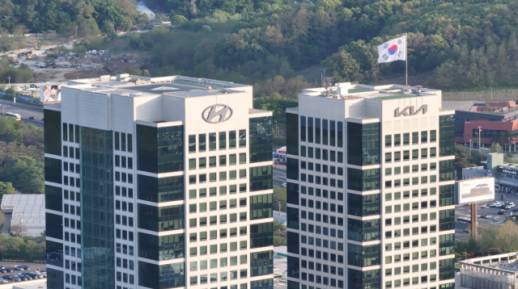 Unionized workers at Hyundai Motor set to resume partial strikes this week SEOUL, August 11 (AJP) - Unionized workers at Hyundai Motor will resume partial strikes this week after wage negotiations failed to narrow differences last month. The workers, who had just returned from their summer holiday, decided Tuesday to stage additional rounds of partial strikes from Wednesday through early next week, halting production for four hours each on Wednesday and Thursday before extending the stoppage to six hours each on Friday and next Tuesday. If carried out as planned, the additional strikes would result in 40 hours of lost production, bringing the cumulative stoppage from this year's wage dispute to about 100 hours. The automaker's union has been ratcheting up pressure in recent weeks. In July, it staged three rounds of partial strikes over nine days, starting with two-hour walkouts per shift from July 13 to 15 before extending them to four hours per shift. The automaker estimated that last month's strikes resulted in production losses of more than 42,000 vehicles. The company's domestic output in July fell 22 percent from the previous month to 137,449 vehicles, while domestic sales dropped 14.4 percent from a year earlier to 48,113 units. But the union left room for negotiations, saying it would suspend any scheduled strike once wage talks with management resume, possibly as early as Aug. 18. The union is seeking a 149,600 won increase in monthly base pay, a performance bonus equal to 30 percent of the company's net profit from the previous year, and an increase in regular bonuses to 800 percent from 750 percent. It is also demanding a prior labor agreement before any legal changes to the retirement age as well as the rehiring of workers who were fired. Both sides have gone back and forth between talks and strikes since last month without narrowing differences on major issues after the union rejected an offer from the company that included an 89,000 won increase in monthly base pay, a performance bonus worth 350 percent of base pay plus 10 million won, and 15 treasury shares per employee. Amid the union's new strike plans, Hyundai Motor's shares closed down 1.23 percent at 403,000 won for the day. AJP Takeaways: - Hyundai Motor's union will resume partial strikes from Aug. 12 after summer break, escalating stoppages to as long as six hours per shift on Aug. 14 and 18. - If all planned walkouts go ahead, this week's strikes would add 40 hours of lost production time and bring cumulative disruption from this year's wage talks to about 100 hours. - Hyundai Motor estimated July's earlier partial strikes caused production losses of more than 42,000 vehicles, while domestic output fell 22 percent from the previous month. 2026-08-11 17:42:38
 -
 Korea, Uzbekistan put AI minerals atop business agenda for C5 summit SEOUL, August 11 (AJP) - Artificial intelligence, from the critical minerals needed to build its infrastructure to the data centers and digital technologies that power it, is emerging as the centerpiece of the business agenda for Uzbek President Shavkat Mirziyoyev's visit to South Korea next month. Mirziyoyev is expected to bring a roughly 200-strong business delegation to Seoul during his first state visit to South Korea in nearly five years, coinciding with the inaugural Korea-Central Asia Summit on Sept. 16-17. The groundwork was laid in Seoul on Tuesday, when senior Uzbek officials and executives from major Korean companies met to identify projects that could be advanced during the summit. “Uzbekistan aims to join the ranks of upper-middle-income countries by 2030 and attract more foreign investment by improving its investment environment,” Deputy Prime Minister Jamshid Khodjaev said at a Korea-Uzbekistan business roundtable at Lotte Hotel Seoul. “We hope Korean companies will take part in Uzbekistan’s development.” Khodjaev identified infrastructure, critical minerals, automobiles and digital development as priority areas for bilateral cooperation, placing AI and the infrastructure supporting it high on the agenda. “Uzbekistan has established plans for AI and digital development,” he said, adding that Tashkent was seeking Korean participation in data centers, green technologies and renewable energy projects. The push reflects Uzbekistan's effort to pair its natural resources and growing domestic market with Korean capital and technology as it seeks to move up the industrial value chain. The high-level roundtable brought together officials from both governments and representatives from Hyundai Motor Group, Korea Electric Power Corp., GS E&C, LX International, SK Nexilis and Lotte Hotels & Resorts. The Uzbek Embassy said the meeting was organized as part of preparations for Mirziyoyev's visit and aimed at generating concrete projects before the leaders meet. Khodjaev also proposed expanding cooperation in healthcare, including hospital construction and pharmaceutical industry clusters. South Korean Trade Minister Yeo Han-koo said the talks could provide a foundation for broader economic diplomacy with Central Asia. “Uzbekistan is a key cooperation partner for Korea, and we are producing tangible results together,” Yeo said. “I hope today’s discussions will deepen our understanding of bilateral trade, investment, supply chains and economic cooperation and serve as a meaningful foundation for the successful Korea-Central Asia summit.” Moon Ji-sung, deputy minister for international economic affairs at South Korea's Finance Ministry, said the two economies could complement each other. “If Uzbekistan’s abundant potential is combined with Korea’s technology and financial capabilities, the economies of both countries can make a new leap forward,” Moon said. Officials and companies discussed prospective projects spanning industry, energy, critical minerals, AI, healthcare and logistics, with the aim of turning some of them into concrete investment and cooperation deals before the September summit. The Sept. 16-17 gathering will be South Korea's first summit with all five Central Asian countries — Kazakhstan, Kyrgyzstan, Tajikistan, Turkmenistan and Uzbekistan — collectively known as the C5. AJP Takeaways: South Korea and Uzbekistan are putting AI, critical minerals and data centers at the center of their economic agenda ahead of the inaugural Korea-Central Asia Summit in Seoul on Sept. 16-17. Uzbek President Shavkat Mirziyoyev is expected to bring about 200 business leaders to South Korea, as the two countries seek concrete deals in infrastructure, renewable energy, digital technology, healthcare and supply chains. Uzbekistan wants Korean technology, capital and investment to support its industrial transformation, while Seoul sees the partnership as a gateway to deeper economic cooperation with the five Central Asian countries, or C5. 2026-08-11 17:41:41