


Latest by
-
 Easier Registration for Franchisee Associations as Membership Rules Change The Fair Trade Commission (FTC) is set to enhance the negotiating power of franchisees by clarifying the registration requirements for franchisee associations and the consultation process with franchisors. Associations with more than 10% of franchisees as members will find it easier to register with the FTC, while those with membership below 30% will need to gather opinions from non-member franchisees.On August 3, the FTC announced that it will issue an administrative notice for the amendment of the Franchise Business Act enforcement decree by September 14, and for the establishment of guidelines regarding the registration of franchisee associations and the consultation process by August 24. This follows the revised Franchise Business Act, which mandates the registration of qualifying franchisee associations and requires franchisors to consult with these registered associations. Franchisors that fail to comply may face corrective orders.According to the amendment, a franchisee association can register with the FTC if it has at least 10% of franchisees or more than 1,000 members. The FTC has set a minimum membership requirement of 30 members, considering the lowered membership ratio of 10%. This aims to reduce the burden on small franchisors while ensuring meaningful consultation opportunities for franchisee associations.When registering, associations must submit a registration application, and if there are changes, a change registration application. They can also request consultations with franchisors regarding franchise agreements and advertising or promotional activities.If a registered association with less than 30% membership requests a consultation, it must first gather opinions from non-member franchisees. The association is required to announce the consultation topic, its opinions, and the method for submitting feedback, and then relay the results to the franchisor.To prevent repeated consultation requests, the amendment includes restrictions. Once a registered association has consulted on a topic, it cannot request the same topic again for 180 days. Requests for different consultation topics will be limited to 60 days. For franchisors with fewer than 100 franchisees, the restriction period is 90 days.This amendment is expected to empower franchisees to negotiate fairly with franchisors, helping to prevent unfair trading practices and improve transaction conditions in the franchise sector. The FTC believes that by clearly regulating the registration requirements and consultation procedures for franchisee associations, concerns from franchisors about the proliferation and indiscriminate consultation requests from these associations will be significantly alleviated.The FTC stated, "To prepare this amendment, we have continuously engaged with stakeholders through meetings and discussions throughout the first half of this year," adding that it will carefully review the feedback received during the legislative and administrative notice period to ensure the smooth implementation of the revised Franchise Business Act, aiming to complete the amendment of the enforcement decree and the establishment of guidelines within the year.* This article has been translated by AI. 2026-08-03 10:04:00
 -
Jojungwon Launches First Fair Trade Training for Teachers 미래세대에게 올바른 경제관을 심어주기 위해 교사들을 대상으로 공정거래 교육이 시행된다. 한국공정거래조정원은 4일부터 6일까지 사흘간 전국 초·중·고등학교 교사 20여 명을 대상으로 '전국 교사 대상 특수분야 연수'를 최초로 실시한다고 3일 밝혔다. 이번 연수는 미래세대의 공정거래 경제관을 확립하고 학교 현장 내 공정 경제 가치를 확산하기 위해 마련됐다. 조정원은 공정거래 분야 최고 전문가들을 강사로 초빙해 청소년 눈높이에 맞춘 강의를 진행할 예정이다. 교사들이 실제 학교 현장에서 공정거래 관련 사례를 교수 자료로 활용할 수 있도록 돕기 위한 취지다. 주요 교육 과정으로 △교복 입찰 담합 사례로 보는 담합 예방 △사례로 배우는 공정거래법 및 표시광고법 △온라인 플랫폼 공정거래 가이드 △청소년 경제교육 지도법 등이 진행된다. 조정원은 이번 연수 운영 결과를 바탕으로 향후 교사 대상 교육 프로그램을 더욱 확대·발전시켜 나갈 계획이다. 김정기 한국공정거래조정원장은 "이번 연수는 학교 교육의 최전선에 계신 선생님들이 공정거래의 가치를 깊이 이해하고 이를 미래 세대에게 생생하게 전달하는 발판이 될 것"이라며 "첫 연수를 시작으로 앞으로도 교육 현장과의 소통을 강화해 공정한 거래 질서의 중요성을 널리 알리겠다"고 강조했다. * This article has been translated by AI. 2026-08-03 10:04:00
-
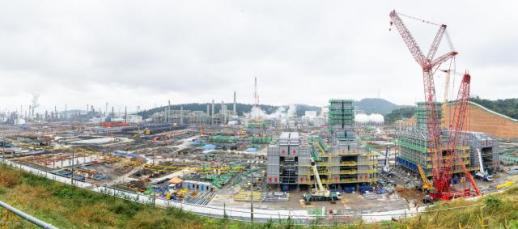 S-Oil returns to profit in second quarter on firm refining margins SEOUL, August 03 (AJP) - South Korea's S-Oil swung to a second-quarter operating profit as robust refining margins and record lubricant spreads outweighed a sharp drop in crude prices. According to regulatory filings released Monday, operating profit came in at 965.0 billion won ($674.2 million) for the three months ended June, reversing a year-earlier operating loss of 344.0 billion won. Revenue climbed 40.9 percent from a year earlier to 11.34 trillion won, lifted by elevated oil prices, while net profit reached 514.6 billion won, against a loss of 66.8 billion won in the same period of 2025. The rebound came even as operating profit fell 21.6 percent from the first quarter, when a one-off inventory gain had padded the refining division's earnings. The company said the lubricant business delivered its highest-ever quarterly operating profit, cushioning much of that decline. "Refining margins rose sharply as the supply of oil products tightened," the company said, pointing to strained global inventories. Crude prices held high through most of the quarter before tumbling in late June, when the blockade of the Strait of Hormuz was temporarily lifted. S-Oil expects firm market conditions to persist into the second half, citing global crude and product stocks that sit near the bottom of their five-year range. The refiner said tight refined-product supply should continue, driven by summer driving demand, heatwave-fueled power generation, Russian export curbs and disruptions at Middle Eastern facilities. The company added that its Shaheen petrochemical project remains on track for commercial operation in early 2027, following test runs in the second half of this year. Shares of S-Oil traded at 120,500 won at 10:00 a.m., 5.34 percent lower than the previous session. 2026-08-03 10:03:11
 -
Indium Prices Surge Amid AI Data Center Boom As the global construction boom for AI data centers continues, the price of indium, a key material for fiber optics, is skyrocketing.According to recent data from the China Nonferrous Metals Industry Association, indium prices have risen by approximately 60% over the past six months, as reported by Taiwan's United Daily News on August 3. While prices for other metals used in data centers, such as copper, aluminum, tin, and tantalum, have also surged, indium is drawing particular attention due to expectations of even steeper price increases in the future.Michael Hurst, CEO of U.S. fiber optics company Lumentum, recently identified indium phosphide (InP), a compound of indium, as a potential bottleneck for future AI infrastructure during an AI-related event.Indium phosphide is a critical material used in optical transceivers, which facilitate ultra-fast data transmission between servers within AI data centers. As the demand for high-performance AI server clusters grows, the need for faster fiber optic networks increases, thereby driving up the demand for indium as well.Notably, indium is a mineral that China dominates in the global supply chain. Additionally, it is among the items that China has placed export controls on. Since China imposed export restrictions in February of last year, the price of indium has continued to rise. The international price of indium, which was $354 per kilogram at the end of December 2024, surged to $812 by the end of last month, marking an increase of over 130% in just a year and a half.Indium is not mined independently like typical metals; it is primarily produced as a byproduct during the smelting of zinc, lead, and tin ores. China is the world's largest producer of indium, accounting for about 70% of global production, while South Korea ranks second with approximately 15%.With the supply of indium expected to remain constrained, demand is projected to rise sharply. Market research firms estimate that the global indium phosphide wafer market will grow from $200 million in 2025 to $700 million by 2035.Meanwhile, data from the China Nonferrous Metals Industry Association indicates that the price of tin has increased by about 40% over the past six months, while tantalum prices have skyrocketed by 158%.* This article has been translated by AI. 2026-08-03 10:00:00
-
Park Wan-soo's Administration Accelerates Future Industries, Faces Challenges in Governance and Livelihood Park Wan-soo, the governor of Gyeongsangnam-do, marked one month since the start of his second term on August 1. The industrial policies centered on aerospace, nuclear energy, and defense, established during his first term, are gaining momentum. His administration continues to operate with stability, leveraging his administrative experience. However, significant challenges remain in translating ambitious investment plans into actual construction and job creation, and the gap between macroeconomic growth and the local economy's performance persists.The rapidly changing political landscape poses the biggest test for Park's administration. With the central government and both Busan and Ulsan led by the Democratic Party, Gyeongsangnam-do stands out as the only region in the southeast with a governor from the People Power Party. It is crucial for Park to maintain his policy vision while establishing a collaborative governance structure that secures Gyeongsangnam-do's interests. Continuity in Industrial Policy is a Strength; Key is 'What Comes After the Agreement'One of the greatest strengths of Park Wan-soo's administration is the continuity of its industrial policy. The establishment of the Aerospace Agency in Sacheon has laid the groundwork for the development of an aerospace complex, while small modular reactors (SMRs), physical artificial intelligence (AI), and defense industries are positioned as next-generation growth engines.In his first month, significant achievements were announced. On July 27, Gyeongsangnam-do signed an investment agreement for a defense-focused AI data center worth 1.6555 trillion won. The plan involves constructing the data center in the Changwon National Industrial Complex to assist defense companies in transitioning to AI.While the scale of these projects is impressive, execution is still in its early stages. The astronomical project costs will need to be financed through the establishment of special purpose companies and project financing. If the announced investment amounts do not translate into actual funding and local job creation, these large agreements will remain mere numbers. The success of the aerospace complex and SMR projects also hinges on securing national funding and corporate investment. The success of the second term will depend on how quickly and effectively existing plans can be completed rather than new blueprints.Park, a former civil servant, embodies a pragmatic bureaucratic approach that ensures administrative stability. For instance, when a heatwave and drought struck at the end of July, he promptly activated the disaster response headquarters and conducted on-site inspections.However, the impact of these swift measures on the daily lives of residents remains a separate issue. Although Gyeongsangnam-do's manufacturing and export indicators show improvement, small business owners and self-employed individuals still feel the economic downturn acutely.Gyeongsangnam-do has rolled out various livelihood initiatives related to investment, small businesses, and job creation, but some policies have faced criticism for lacking clarity on funding and target beneficiaries. If the warmth generated in the industrial sector does not reach small businesses and young people, the vision of a 'Great Leap Forward for Gyeongsangnam-do' may remain just a slogan. Internal evaluations suggest that the promised personnel reforms to inject urgency into the public sector have yet to materialize, which will need to be demonstrated in future appointments.The most challenging task for Park's administration is the ultra-regional cooperation among Busan, Ulsan, and Gyeongsangnam-do. As a governor from the opposition party, Park's political negotiation skills are more crucial than ever in securing national funding and influencing key policy decisions.Currently, perspectives on the cooperation model among Busan, Ulsan, and Gyeongsangnam-do are divided. Park insists on 'administrative integration' to secure substantial authority, while the mayors of Busan and Ulsan, both from the Democratic Party, prioritize restoring a 'special alliance' focused on joint projects in transportation and industry over immediate administrative integration.While the goals are aligned, the execution order differs. If Park insists solely on the principle of administrative integration and dismisses gradual cooperation proposals from neighboring municipalities, Gyeongsangnam-do risks isolation in significant ultra-regional projects such as transportation networks and tourism development along the southern coast.The standards for evaluating the second term are stricter than those for the first. Rather than using his position as an opposition governor as a justification for political confrontation, practical collaboration that persuades the ruling party government and neighboring leaders to secure Gyeongsangnam-do's share is essential.* This article has been translated by AI. 2026-08-03 09:52:00
-
Severe Heat Wave Expected in Seoul and Surrounding Areas This Week The heat engulfing the Korean Peninsula is expected to peak this week, with temperatures soaring to around 37 degrees Celsius in Seoul and the surrounding areas. This intense heat, which has primarily affected the southern regions, is now forecasted to impact the western areas due to changes in lower atmospheric winds.According to a meteorological analyst, the prevailing westerly winds have shifted to easterly winds, drastically altering the pressure distribution over the Korean Peninsula. The Korea Meteorological Administration stated, "Unlike last week, this week we expect temperatures exceeding 37 degrees Celsius in the western regions due to the easterly winds crossing the Taebaek Mountains."The primary cause of this heat wave is the 'Foehn effect' caused by the easterly winds. Humid air from the eastern seas rises over the Taebaek Mountains, precipitating rain, and transforms into hot, dry winds as it descends the western slopes. This process results in a buildup of hot air that directly impacts the western regions, including the capital area and parts of Chungcheong and Honam.Additionally, a 'double high-pressure' system in the upper atmosphere is intensifying the heat at ground level. The Tibetan high-pressure system continuously pushes hot, dry westerly air, while the North Pacific high-pressure system releases warm, humid air, turning the entire Korean Peninsula into a massive heat trap. The combination of westerly pressure in the upper atmosphere and the easterly Foehn effect at ground level has created a 'heat dome' that retains heat in the western regions.As a result, daytime temperatures in Seoul are expected to hover around 37 degrees Celsius from early in the week through Wednesday, potentially setting a record for the hottest temperature this summer. The tropical night phenomenon, where temperatures do not drop below 25 degrees Celsius at night, is also expected to prolong sleepless nights for residents.The Korea Meteorological Administration has urged the public to refrain from outdoor activities and to stay hydrated, citing concerns over a surge in heat-related illnesses, power supply overloads, and damage to agricultural products.In response to the forecast, netizens expressed their concerns, with comments such as, "It was cool until June, but now it's unbearable," and "We need a typhoon to cool things down..." Others shared their experiences, saying, "I went on a trip two days ago and we just ended up arguing; being outdoors only increases stress," and "I just returned from Thailand, and it's even hotter here..."* This article has been translated by AI. 2026-08-03 09:52:00
-
Geopolitical Uncertainty in the Middle East Eases as Exchange Rate Fluctuates Around 1430 Won The won-dollar exchange rate is trading in the 1430 won range.As of 9:26 a.m. in the Seoul foreign exchange market, the exchange rate stands at 1433.5 won against the U.S. dollar.At the same time, the dollar index, which measures the dollar's value against six major currencies, has decreased by 0.15% to 99.77.This decline in the dollar is interpreted as a response to U.S. President Donald Trump's announcement of plans to resume negotiations with Iran.International oil prices are also experiencing significant declines. During morning trading in Asia, Brent crude fell by over 7% at the start but later reduced its losses, trading at $83.79 per barrel, down 4.71%. West Texas Intermediate (WTI) crude is down 4.67%, trading at $80.72 per barrel.Futures on the New York Stock Exchange showed strength, with S&P 500 futures rising by 0.5% and Nasdaq 100 futures increasing by 0.8%.The exchange rate is expected to decline as the strong dollar weakens. Min Kyung-won, an economist at Woori Bank, stated, "We anticipate a decrease due to the easing of geopolitical uncertainty in the Middle East, which will stabilize interest rates and restore risk appetite. We expect the drop in international oil prices to lead to a decline in U.S. Treasury yields, which had been a source of market volatility late last week."* This article has been translated by AI. 2026-08-03 09:52:00
-
LNC Bio Shares Plunge Over 12% Following $1.4 Billion Rights Offering Announcement LNC Bio's shares fell more than 12% in early trading following the announcement of a rights offering worth 1.4 trillion won.As of 9:44 a.m. on August 3, LNC Bio's stock was trading at 45,300 won, down 6,600 won (12.72%) from the previous trading day, according to the Korea Exchange.On July 31, LNC Bio disclosed plans to issue 3.7 million common shares through a rights offering and a public offering for any unsubscribed shares. The planned issuance price is set at 38,000 won per share, which is 26.8% lower than the last closing price of 51,900 won. The record date for the new share allocation is September 4, with payment due on October 22.Market analysts attribute the decline in investor sentiment to concerns over share dilution from the large new share issuance and the discounted offering price.The company plans to allocate 1.05 trillion won of the raised funds for facility investments. This includes establishing a global smart factory in Dongtan, expanding production lines for human tissue and medical devices, building facilities for products based on human adipose tissue, introducing smart factory and automation equipment, enhancing global quality management systems, and securing raw materials. The remaining funds will be used for operational expenses and debt repayment.This investment is part of a strategy to respond to domestic regulatory changes regarding the use of human-derived adipose tissue. LNC Bio initially aimed to establish a production base in the United States but shifted its focus to domestic production following recent amendments to regulations allowing the use of human-derived fat as medical materials.To enhance shareholder value, the company will conduct a 1-for-1 free share issuance alongside the rights offering and plans to buy back and retire convertible bonds (CB) worth 15 billion won at cost through the exercise of call options, aiming to mitigate potential share dilution and overhang concerns.* This article has been translated by AI. 2026-08-03 09:48:20
-
L&F Plus Ships First Production of Domestic LFP Cathode Material L&F, a company specializing in secondary battery materials, announced on August 3 that its subsidiary, L&F Plus, shipped its first production of lithium iron phosphate (LFP) cathode material from the country’s first LFP mass production line on July 31. The shipment consists of products produced during the ramp-up phase of the production line, aimed at stabilizing production and increasing output. These initial products will undergo customer evaluations and quality verification to establish a full-scale production and supply system. The shipped products are high-density third-generation LFP cathode materials developed to achieve higher energy density than standard LFP. L&F Plus plans to enhance the relatively low energy density of existing LFP by developing products with a density of 2.50 g/cc or higher. With this foundation, the company aims to target the high-value LFP market, focusing on both price and performance competitiveness. The application range will expand, starting with energy storage systems (ESS) for power grids, followed by ESS for AI data centers and affordable electric vehicles. L&F Plus plans to begin full-scale production at an annual capacity of 30,000 tons by the end of Q3, following customer evaluations and additional process stabilization. Subsequently, it will gradually increase production capacity to 60,000 tons annually by mid-2027 to meet demand in the North American ESS market. As over 90% of the global LFP supply chain is concentrated in China, L&F aims to respond to the growing demand for LFP cathode materials outside of China. The company plans to pursue a two-track strategy by supplying both LFP and high-nickel NCM (nickel-cobalt-manganese) to address diverse needs in the electric vehicle and ESS markets. Heo Je-hong, CEO of L&F, stated, "The first shipment of these initial products marks a significant starting point for stabilizing production at the country’s first LFP cathode material mass production line and preparing for full-scale production. We will respond promptly to customer evaluations and quality verifications while establishing a stable production system." He added, "Based on our two-track strategy encompassing LFP and high-nickel NCM, we will address diverse demands in the EV and ESS markets while strengthening the competitiveness of the non-China LFP supply chain to continuously expand our presence in the global market." Meanwhile, L&F Plus was selected in May as a recipient of long-term, low-interest loan support from the National Growth Fund, amounting to 220 billion won. 2026-08-03 09:48:10
-
S-Oil Reports 2nd Quarter Operating Profit of 965 Billion Won Amid Strong Refining Margins S-Oil reported a turnaround to profitability in the second quarter of this year, driven by strong refining margins and favorable conditions in the lubricants market. However, the operating profit decreased from the previous quarter due to the absence of one-time inventory-related gains recorded earlier.On August 3, S-Oil announced that its consolidated revenue for the second quarter reached 11.3435 trillion won, with an operating profit of 965 billion won, both showing a positive shift compared to the same period last year.For the first half of the year, cumulative revenue totaled 20.2862 trillion won, with an operating profit of 2.1961 trillion won and a net profit of 1.2356 trillion won.By business segment, the refining division reported revenue of 9.0293 trillion won and an operating profit of 532.4 billion won. Although refining margins surged due to tight supply conditions for refined products, the operating profit declined as the one-time inventory-related gains from the previous quarter were no longer present.The petrochemical segment recorded revenue of 1.0125 trillion won but faced an operating loss of 44.8 billion won. The price of paraxylene (PX) fell slightly due to a sharp increase in raw material costs. Meanwhile, benzene saw improved margins due to low operating rates at Chinese facilities and the resumption of exports to the U.S.Polypropylene (PP) margins decreased due to rising production costs from reduced propylene output caused by the blockade of the Strait of Hormuz, coupled with weakened demand from rising product prices. Propylene oxide (PO) margins improved due to supply constraints from lower regional operating rates.The lubricants segment achieved revenue of 1.3017 trillion won and an operating profit of 477.4 billion won, marking the highest quarterly performance on record. The increase in margins was attributed to reduced supply of lubricants due to production disruptions in the Middle East and logistical constraints from the blockade of the Strait of Hormuz.Additionally, S-Oil is preparing for the commercial operation of the Shahin project, expected to begin in early 2027. The company is currently verifying compliance with mechanical completion requirements and plans to conduct commissioning in the second half of this year, leading to commercial operations early next year.* This article has been translated by AI. 2026-08-03 09:48:10