


Latest by
-
 Weaker Dollar and Foreign Buying Push Exchange Rate Down to 1420 Won The won-dollar exchange rate has fallen to the 1420 won range as investor preference for risk assets has recovered.As of 9:21 a.m. in the Seoul foreign exchange market, the exchange rate for the Korean won against the U.S. dollar stood at 1428.7 won. Earlier, at 6 a.m., the rate was trading at 1418.0 won, down 19.40 won from the previous session.This decline is attributed to a recovery in risk appetite among investors. The dollar index, which measures the value of the dollar against six major currencies, dropped 1.02% to 99.94.U.S. stock markets also showed strong performance. The Dow Jones Industrial Average closed up 613.92 points (1.19%) at 52,208.06.The Standard & Poor's 500 index rose 121.48 points (1.66%) to finish at 7,437.63, while the Nasdaq Composite gained 679.24 points (2.78%) to close at 25,122.18.In the domestic market, foreign investment has surged for the second consecutive day. Early in the trading session, foreign investors net purchased 3.8631 trillion won in the stock market.International oil prices fell amid discussions on multinational maritime defense in the Red Sea. September futures for Brent crude oil dropped 1.4% to $86.88 per barrel, while September futures for West Texas Intermediate (WTI) fell 1.0% to $83.59 per barrel.The exchange rate is expected to fluctuate in the low 1420 won range today. Min Kyung-won, an economist at Woori Bank, stated, "Despite expectations for a weaker dollar and improved regional supply, buying pressure is likely to keep the rate fluctuating in the low 1420 won range. With the recovery in risk appetite, a favorable trend is anticipated in the domestic market, particularly in semiconductor and technology stocks, which may lead to continued upward pressure on the won due to foreign investors returning."* This article has been translated by AI. 2026-07-31 09:32:10
 -
SK Hynix Shares Surge, Boosting Leverage ETFs by Nearly 50% SK Hynix's soaring stock price has led to a significant rise in related leveraged exchange-traded funds (ETFs) and exchange-traded notes (ETNs).According to the Korea Exchange, as of 9:29 a.m. on July 31, the SOL SK Hynix Single Stock Leverage ETF was trading at 8,565 won, up 47.93% from the previous trading day. The KODEX SK Hynix Single Stock Leverage and TIGER SK Hynix Single Stock Leverage also surged by 47.32% and 46.87%, respectively.Additionally, other SK Hynix-related leveraged products, including the Mirae Asset Leverage SK Hynix Single Stock ETN (up 47.12%), RISE SK Hynix Single Stock Leverage (up 46.89%), KIWOOM SK Hynix Futures Single Stock Leverage (up 45.72%), and ACE SK Hynix Single Stock Leverage (up 45.33%), have all recorded increases in the 40% range.Leveraged products betting on the semiconductor sector are also performing well. The Kiwoom Leverage Semiconductor TOP10 ETN rose by 45.45%, while the TIGER Semiconductor TOP10 Leverage (up 44.95%), KB Leverage Semiconductor TOP10 TR ETN (up 44.44%), and KODEX Semiconductor Leverage (up 41.21%) also saw significant gains.The N2 Monthly Leverage KOSPI 200 Futures ETN, a KOSPI 200 futures leverage product, was trading at 120,000 won, up 45.7%. Recently, leveraged products that had sharply declined during market corrections are quickly recovering, driven by the rebound in semiconductors centered around SK Hynix. Notably, single-stock leveraged products track the price fluctuations of SK Hynix at a twofold rate, amplifying returns during price increases.* This article has been translated by AI. 2026-07-31 09:32:10
-
Samsung Electronics, SK Hynix, and SK Square Surge Over 20% Amid Semiconductor Rally Major stocks in the top five by market capitalization are surging in early trading.As of 9:15 a.m. on July 31, Samsung Electronics is trading at 249,500 won, up 42,500 won (20.53%) from the previous trading day. SK Hynix has risen 300,000 won (22.70%) to 1,622,000 won. Samsung Electronics preferred shares and SK Square have also jumped 20.66% and 26.41%, respectively, while Samsung Electro-Mechanics has hit its upper limit with a 29.69% increase.This surge is attributed to a rebound in semiconductor stocks on the New York Stock Exchange, driven by strong performances from big tech and semiconductor equipment companies. Investor sentiment, which had been dampened by concerns over overheating in AI investments, has improved, leading to an 8.2% rise in the Philadelphia Semiconductor Index (SOX) on July 30.Memory semiconductor stocks are leading the upward trend. Samsung Electronics has projected that the shortage of memory supply could continue until 2028, raising expectations for market improvement. Following a significant correction after its earnings announcement, SK Hynix's American Depositary Receipts (ADRs) rebounded by 17.5%, while Micron and SanDisk surged by 18.3% and 25.8%, respectively.Semiconductor equipment stocks and AI infrastructure-related companies also showed strength. Lam Research soared 17.9% after exceeding market expectations with its performance and positive outlook based on demand for AI semiconductor equipment. Microsoft announced plans for significant growth in its Azure cloud business and expanded AI investments, resulting in a 15.2% increase. Other companies, including Applied Materials (15.0%), AMD (13.3%), Marvell Technology (13.2%), Intel (10.9%), and NVIDIA (2.8%), also experienced gains.After the market closed, Amazon reported earnings that surpassed market expectations. Revenue from its core cloud business, AWS, increased by 37% year-over-year, marking the highest growth rate since 2021 and reaffirming expectations for expanded AI infrastructure investment.In South Korea, expectations for improved memory market conditions are spreading, particularly around Samsung Electronics and SK Hynix. SK Square, which has SK Hynix as a subsidiary, is also seeing a rise in corporate value, with gains exceeding 20%. Samsung Electro-Mechanics has surged to its upper limit due to expectations of improved performance driven by increased demand for AI servers and high-performance semiconductors.* This article has been translated by AI. 2026-07-31 09:28:00
-
NH Nonghyup Bank Issues 100 Billion Won in Korean Green Bonds NH Nonghyup Bank announced on July 31 that it has issued Korean green bonds worth 100 billion won at an interest rate of 3.69%. This issuance marks the first Korean green bond in nearly three years since 2023, aimed at expanding eco-friendly finance and supporting the transition to a sustainable green economy. The bonds, which have a one-year maturity, comply with the Korean green taxonomy (K-Taxonomy), and the funds raised will be fully utilized for eco-friendly projects, including the purchase of zero-emission vehicles for leasing and rental purposes. Nonghyup Bank has also secured 200 million won in interest subsidies through the "Korean Green Bond Issuance Interest Subsidy Support Project" promoted by the Korea Environmental Industry and Technology Institute. This support will help reduce the costs associated with the bond issuance and enhance the efficiency of eco-friendly financial support. The move may signal a broader resumption of green bond issuances across the financial sector. A representative from NH Nonghyup Bank stated, "The issuance of this Korean green bond is a significant step toward expanding eco-friendly finance and practicing ESG management," emphasizing the bank's commitment to leading the realization of carbon neutrality through increased green finance and socially responsible investments.* This article has been translated by AI. 2026-07-31 09:24:10
-
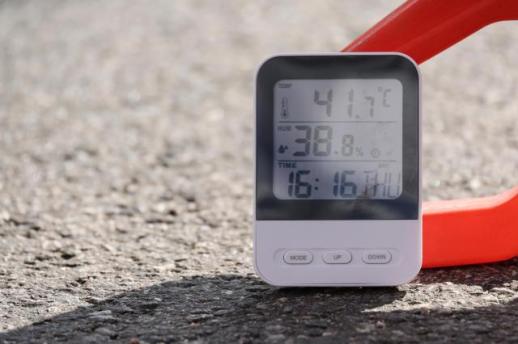 South Korea braces for prolonged heat as Yangsan nears 40 C SEOUL, July 31 (AJP) - South Korea's record-breaking heat wave is expected to persist through the first week of August, with the southeastern city of Yangsan forecast to approach 40 degrees Celsius again on Friday after two consecutive days above the mark. The Korea Meteorological Administration on Friday forecast daytime highs of 32-37 C nationwide, with mostly sunny skies across the southern regions and Jeju Island and partly cloudy conditions over central areas. Most of the country will continue to experience heat-wave conditions and tropical nights, with overnight temperatures remaining above 25 C in many areas. Yangsan, South Gyeongsang Province, is expected to reach 40 C, following highs of 40.3 C on both Tuesday and Wednesday. If temperatures top 40 C for a third straight day, it would mark the first such streak since the historic summer of 2018, widely regarded as South Korea's worst heat wave this century. Including observations from automated weather stations, South Korea has recorded only two previous instances since 1973 in which temperatures exceeded 40 C for at least three consecutive days. One occurred in Anseong, Gyeonggi Province, from Aug. 1-3, 2018, while another lasted four consecutive days in Yeongcheon, North Gyeongsang Province, during the same month. Elsewhere on Friday, Busan, Changwon and Gimhae are expected to reach 39 C, while Daegu will climb to 36 C, Gwangju 35 C, Seoul and Daejeon 34 C, and Incheon 32 C. The weather agency said little relief is in sight. Weekend temperatures are forecast to range between 21-27 C in the morning and 32-38 C during the day, while similar conditions are expected to continue into next week. Its medium-range outlook projects morning lows of 24-27 C and daytime highs of 33-38 C from Aug. 4-10, indicating the current heat wave will remain largely unchanged. Strong sunshine is also expected to push ozone concentrations to "bad" levels Friday afternoon across the Seoul metropolitan area, Chungcheong, Jeolla, Busan, Ulsan, and much of North and South Gyeongsang provinces. Authorities advised vulnerable groups to limit outdoor activities because elevated ozone can aggravate respiratory and skin conditions. 2026-07-31 09:19:33
 -
Government Expands Discount on Spectrum Fees for Small MVNOs to 90% The government will increase the discount rate on spectrum fees for small and medium-sized budget phone operators from the current 50% to 90%. It will also introduce a new budget phone business model that moves beyond simply reselling mobile carriers' networks to include operators with their own facilities.Deputy Prime Minister and Minister of Economy and Finance Koo Yun-cheol discussed the "Budget Phone 2.0 Leap Plan" during a meeting of the Emergency Economic Headquarters, the Economic Relations Ministers' Meeting, and the Task Force for Special Management of Living Prices on July 31.Koo stated, "We will activate the budget phone market to reduce the burden of communication costs on the public and allow innovative businesses to grow." He added, "We will expand the discount rate on spectrum fees for small and medium-sized budget phone operators from the current 50% to 90% and create a foundation for more affordable rate plans through improvements in wholesale conditions."The government plans to diversify the business model for budget phone operators, allowing them to design their own rate plans and services instead of merely reselling mobile carriers' plans.Koo emphasized, "We will introduce a new budget phone business model that goes beyond simple resale to provide various rate plans and services through independent facilities."The new business model will be divided into Partial MVNO and Full MVNO. Operators will possess the necessary facilities for billing, subscriber identification, authentication, and traffic management, allowing them to independently design their rate plans and services.Additionally, the government will strengthen sanctions against budget phone operators that are misused for crimes such as voice phishing. Koo stated, "We will impose differentiated discount rates on spectrum fees for operators that violate laws and cause harm to the public through voice phishing and other activities."* This article has been translated by AI. 2026-07-31 09:16:10
-
New Leap Fund Acquires Additional 2.6 Trillion Won in Long-Term Delinquent Loans The New Leap Fund has acquired an additional 2.6 trillion won in long-term delinquent loans held by securitization companies, public institutions, mutual finance, and lending companies. This purchase will immediately halt collection efforts against 236,000 debtors.The Financial Services Commission announced that on July 31, the New Leap Fund purchased 2.6146 trillion won in long-term delinquent loans from securitization companies such as Sangnoksoo and K-Bista, as well as from public institutions like the Korea Credit Guarantee Fund, and mutual finance entities including Nonghyup and credit cooperatives.The sixth round of purchases included 1.4449 trillion won in bonds held by public institutions, 1.0316 trillion won in other bonds from securitization companies, and 1.04 trillion won in loans from lending companies. Bonds worth 273 billion won from 383 Nonghyup branches and 68 billion won from 98 credit cooperatives were also included in the acquisition.Notably, the purchase of bonds worth 7.235 trillion won from Sangnoksoo and 2.817 trillion won from K-Bista has been completed. The remaining bonds from these two companies, which are not eligible for New Leap Fund support, are scheduled to be sold to the Korea Asset Management Corporation in the second half of this year.With the acquisition of these bonds, collection efforts will cease immediately. Debts of vulnerable groups, including basic livelihood recipients and severely disabled individuals receiving disability pensions, will be extinguished without a separate repayment ability assessment.For other debtors, if their income and assets are assessed and deemed to have effectively lost repayment ability, their debts will be extinguished within one year. In cases of significant repayment inability, debt adjustments such as principal reductions and long-term installment repayments will be implemented.The assessment of repayment ability is set to begin in the third quarter, following the implementation of a revised credit information law on August 13, which allows the New Leap Fund to collect financial asset information.Since its first acquisition in October of last year, the New Leap Fund has purchased a total of 11.7378 trillion won in long-term delinquent loans. Approximately 957,000 debtors have benefited from this initiative, including duplicates.By sector, the cumulative purchase amount is highest for public institutions at 7.3566 trillion won, followed by other asset management companies at 1.5936 trillion won, credit card companies at 847.3 billion won, and lending companies at 739.4 billion won.Currently, 15 of the top 30 lending companies have joined the New Leap Fund agreement. Financial authorities are reviewing practical incentive measures to encourage lending companies to participate more actively in the sale of long-term delinquent loans and plan to continue discussions with the industry.* This article has been translated by AI. 2026-07-31 09:16:00
-
Government Allocates 2.1 Billion Won for Urgent Repairs of Four High-Risk Bridges The government has identified 57 aging bridges across the country that require urgent safety measures but lack secured funding. In response, it will provide 2.1 billion won in emergency disaster safety grants to four bridges rated as E grade.The Ministry of the Interior and Safety announced on July 31 that a joint safety inspection of aging bridges was conducted nationwide from June 23 to July 10, involving the ministry, the Ministry of Land, Infrastructure and Transport, local governments, the Korea Infrastructure Safety Agency, and private experts from the Structural Engineering Society.This safety inspection is part of measures to prevent a recurrence of the Seosomun overpass collapse that occurred in May. The inspection revealed that 57 bridges (four rated E and 53 rated D) require safety measures but do not have secured budgets.The government plans to immediately allocate 2.1 billion won in disaster safety grants to the E grade bridges needing urgent action and will continue to support the D grade bridges in consultation with local governments.Alongside budget support, the Ministry of the Interior and Safety will enhance existing regulations in phases to prevent accidents during the processes of demolition, construction, and reinforcement.In the initial bidding phase, the government will strengthen evaluations to select contractors with similar demolition experience. During the design phase, projects will be designated for safety reviews to assess risks in advance.In the construction phase, safety management plans will be required, and work will proceed only after verification by professional structural engineers. If any anomalies are detected during work, operations will be halted immediately to observe structural changes for a sufficient period, utilizing advanced equipment such as drones and CCTV to ensure safety.Additionally, the 'Seosomun Overpass Recurrence Prevention Task Force' (involving the Ministry of the Interior and Safety, the Ministry of Land, Infrastructure and Transport, and the Ministry of Employment and Labor) will continue to develop safety management improvement measures for demolition projects, based on the findings of the construction accident investigation committees regarding the Ulsan thermal power plant and the Seosomun overpass collapse.Minister of the Interior and Safety Yoon Ho-jung stated, “Through this joint inspection, we will swiftly support bridges that have been left in danger due to lack of funding and fundamentally improve safety management systems for the demolition of aging structures based on the lessons learned from the Seosomun overpass accident.”* This article has been translated by AI. 2026-07-31 09:16:00
-
 Samyang Foods joins culture ministry to lure Buldak fans to Korea SEOUL, July 31 (AJP) - South Korea's culture ministry announced it would sign a memorandum of understanding with instant-noodle maker Samyang Foods to promote overseas tourism, seeking to convert the global appetite for Korean food into visits to the country. The Ministry of Culture, Sports and Tourism said Friday the deal is designed to channel the worldwide popularity of K-food into tangible travel demand, pairing Korean tourism advertising with Samyang's products and content across large-scale online and offline promotions. Under the agreement, consumers who encounter Samyang products at local retail channels around the world would be steered toward Korea's tourism appeal, with QR codes embedded in Buldak stir-fried noodles and sauce products linking to travel information and events. The partnership will debut at the "Love Korea 2026" in Bangkok from Aug. 21 to 23, where a dedicated space will offer noodle tastings alongside Korean cultural experiences and games. The two sides will also run a joint campaign linking their official online channels. "We expect the government's Korean tourism content and the private sector's overseas marketing capabilities to create a synergy that raises the national brand," Culture Minister Chae Hwi-young said, adding that he hoped the effort would help Korea emerge as an "irreplaceable travel destination" for the world. 2026-07-31 09:15:34
 -
President Yoon Visits Argentina to Strengthen Mineral Supply Chains President Yoon Suk Yeol is set to engage in "economic sales diplomacy" in Argentina, the final stop of his South American tour, focusing on establishing supply chains for key minerals, including lithium, and resuming negotiations for the Korea-Mercosur trade agreement.On July 30, local time, President Yoon departed Santiago, Chile, for Buenos Aires, Argentina. This marks the first bilateral visit by a South Korean president to Argentina in 22 years, since Roh Moo-hyun's visit in 2004.On July 31, President Yoon will hold a summit with President Javier Milei to discuss advancing cooperation in economic security areas, including key minerals, energy, and food.A primary agenda item will be the lithium supply chain. Argentina ranks as the fourth-largest lithium producer globally and forms part of the "lithium triangle" alongside Chile and Bolivia.The government plans to establish a cooperative framework for the lithium supply chain during this visit. The strategy aims to connect Argentina's rich mineral resources with South Korea's advanced manufacturing capabilities in batteries and electric vehicles, facilitating resource development, processing, and production of materials and components.Given Argentina's role as a major supplier in energy and food, discussions are also expected to cover strategies for diversifying supply chains. The government intends to seek a mutually beneficial economic cooperation model that links resource acquisition with technology, investment, and local production.Resuming negotiations for the Korea-Mercosur trade agreement is another key topic for the summit. Argentina is a core member of Mercosur, the South American common market, alongside Brazil, Uruguay, and Paraguay.During a previous state visit to Brazil, President Yoon and President Luiz Inácio Lula da Silva initiated the resumption of Mercosur negotiations. The two countries agreed to form a working group to analyze trade opportunities and sensitivities, aiming to announce the resumption of negotiations at the Mercosur summit in December.In his meeting with President Milei, President Yoon aims to secure cooperation from Argentina to maintain the momentum for resuming negotiations established in Brazil. The government anticipates that resuming talks will enhance access for South Korean companies to the South American market and expand opportunities for Mercosur companies in the Asian market.The two leaders will also discuss cooperation in areas that can benefit citizens and businesses, such as defense, science and technology, Antarctic research, and cultural and educational exchanges. High-level exchanges and intergovernmental consultative bodies will be reactivated to support these initiatives.After the summit, President Yoon will meet with Buenos Aires Mayor Jorge Macri in the afternoon. He is expected to request the city's support and attention to ensure the safety and rights of the local Korean community.Approximately 23,000 Koreans reside in Argentina, making it the second-largest Korean community in South America after Brazil. The community has expanded its activities from clothing and manufacturing to various sectors, including economy, culture, and education.In the evening, President Yoon will hold a dinner meeting with local Koreans to listen to their concerns and expectations from the government. After concluding his schedule in Argentina, he plans to visit Frankfurt, Germany, to meet with expatriates.* This article has been translated by AI. 2026-07-31 09:12:00