


Latest by
-
 Bank of Korea Revamps Foreign Asset Management Strategy for Domestic Firms The Bank of Korea is significantly overhauling its foreign asset management portfolio for domestic asset management firms, shifting from a focus on quantitative support to enhancing the operational capabilities and qualitative growth of these firms.In a plan announced on September 16, the Bank of Korea stated that due to a surge in private sector investments in overseas stocks, the need for policy support for passive overseas stock management has diminished. Consequently, the bank will reduce its allocation to overseas stock management while increasing its investment in overseas bonds. Notably, the existing U.S. aggregate bond strategy will be transitioned to a global aggregate bond strategy, which will broaden the investment targets and regions.Cho Seok-bang, head of the Foreign Asset Management Division at the Bank of Korea, remarked, "Domestic asset management firms have been overly focused on stocks, with no overseas stocks and only U.S. bonds domestically. We recognized this issue in the past and have been discussing adjustments internally since last year."Since beginning to entrust foreign assets to domestic asset management firms in 2012 with investments in Chinese stocks, the Bank of Korea has steadily expanded its entrusted sectors to include developed country stocks in 2019 and U.S. aggregate bonds in 2022. The entrusted amount has grown from $100 million in 2012 to $3.21 billion in 2025.The Bank of Korea assessed that, thanks to long-term funding support and the activation of private sector overseas stock investments, domestic firms have established overseas investment infrastructure and developed independent market resilience, achieving a significant level of the initial goal of creating a quantitative base. However, it noted that existing overseas stock management funds have been largely passive, closely following benchmarks, which limits the development of advanced operational capabilities.The core of the new global aggregate bond strategy involves managing bonds from approximately 28 countries and over 30,000 securities, requiring simultaneous management across multiple countries and various currency zones. This presents a higher level of operational complexity compared to the previous U.S. aggregate bond strategy, which focused on one country and around 10,000 securities. It demands advanced active management capabilities that go beyond simple interest rate forecasts, requiring comprehensive analysis of various factors such as central bank monetary policy, macroeconomic cycles, and exchange rate volatility.The Bank of Korea expects that the global aggregate bond strategy will enhance the systematic research and risk management capabilities of domestic asset management firms. Additionally, it will facilitate direct comparisons with large overseas asset management firms operating under the same strategy, making it easier to identify and address the shortcomings of domestic firms.As part of this overhaul, approximately $1 billion in overseas stock assets managed by domestic firms will be shifted to the global aggregate bond strategy. Kim Jeong-hoon, head of the entrusted management team at the Bank of Korea, stated, "Internally, we plan to work with about three firms to transfer around $1 billion from stocks to bonds. The final amount may vary during discussions with the firms involved."Notably, the management fees paid by the Bank of Korea for the global aggregate bond strategy will be more than double those for the existing passive stock strategy. The bank explained that this move is not merely a reduction in support for domestic asset management firms but a measure to maximize policy effectiveness using limited foreign assets.The Bank of Korea emphasized that this restructuring is not aimed at reducing the scale of entrusted foreign assets for domestic asset management firms. It maintains its existing goal of expanding the entrusted proportion to around 10% in the medium to long term. However, it did not specify a concrete timeline for achieving this, noting that conditions must be established to allocate the increase in foreign exchange reserves to entrusted assets.Kim added, "Transitioning from quantitative to qualitative does not mean we will not expand the quantitative scale. We aim to concentrate support in areas that are more complex and where private sector demand is relatively lacking to maximize policy effectiveness."The adjustment in the entrusted proportion for domestic asset management firms will occur within the overall asset allocation framework of the Bank of Korea's foreign assets, ensuring that the overall proportions of stocks and bonds remain unchanged.* This article has been translated by AI. 2026-09-16 12:04:20
 -
19 Major Construction Firms Increase Subcontractor Prices by 107.7 Billion Won Nineteen major construction companies will raise the prices paid to subcontractors by a total of 107.7 billion won due to challenges posed by the Middle East conflict and rising raw material costs. This increase represents approximately 80% of the amount promised for this year, and regulatory authorities will monitor the implementation of the cooperation agreement through a public-private consultative body.The Fair Trade Commission held a meeting on September 16 at the Specialized Construction Hall in Dongjak-gu, Seoul, attended by representatives from the comprehensive and specialized construction sectors. This meeting was a follow-up to the 'Construction Industry Cooperation and Fair Trade Agreement' signed with the 19 major construction firms on May 28. The consultative body was established to share implementation results, best practices, and trends in the enforcement of subcontracting laws.The participating construction companies include Samsung C&T, Hyundai Engineering & Construction, Daewoo Engineering & Construction, DL E&C, and GS Engineering & Construction, among others. At the time of the agreement, they committed to raising the prices paid to subcontractors by a total of 134.3 billion won within the year due to increased burdens from the Middle East conflict.At the time of the agreement, an initial increase of 34 billion won was already implemented. Following that, an additional increase of 73.7 billion won was made, bringing the total increase to approximately 107.7 billion won, achieving an implementation rate of about 80% compared to the annual plan.Contracts linked to subcontractor payments have also been expanded. Among the 19 construction firms, 15 have signed additional linked contracts with 52 subcontractors. Some companies have also conducted training on linked payment systems for their partners.A dispute resolution mechanism for subcontracting is operated by 14 construction firms. Since the agreement was signed, a total of 14 disputes have been resolved using this mechanism.Examples of improved cost burdens and payment conditions on-site were also shared. Kyeryong Construction Industry added a clause to its project specifications stating that 'the primary contractor will bear all waste disposal costs' and implemented this change. POSCO E&C supported the labor costs of safety personnel for subcontractors. Jeil Construction reduced the payment period from the previous 60 days to 30 days.The agreement signed in May includes key provisions for timely cash payments for subcontractor fees, the elimination of unfair retention practices, rapid adjustments to payments due to changes in supply costs, and the expansion of linked payment systems.It also stipulates that subcontractors should not be required to contract at amounts lower than those submitted during bidding and eliminates clauses that unfairly transfer costs related to industrial safety and waste disposal. In cases where construction is disrupted due to war or supply chain instability, it allows for mutual discussions on extending deadlines and waiving penalties.The public-private consultative body will meet at least once a year to share the status of agreement implementation and trends in subcontracting law enforcement, as well as to discuss industry recommendations. The Fair Trade Commission plans to hold a meeting with 30 construction firms that signed a separate cooperation agreement on July 24 in November.The Fair Trade Commission stated, 'We will strive to ensure that the cooperation agreement is properly implemented through the public-private consultative body and will continue to communicate to bring about tangible changes on-site.'* This article has been translated by AI. 2026-09-16 12:04:20
-
Insurance Companies' Solvency Ratio Declines for First Time in Five Quarters 보험사 건전성 지표인 지급여력비율(K-ICS)이 2분기 소폭 하락했다. 주가 상승으로 가용자본이 크게 늘었지만 주식위험액 증가로 요구자본도 함께 확대된 영향이다. 16일 금융감독원에 따르면 지난 6월 말 보험사의 경과조치 적용 후 지급여력비율은 215.2%로 전분기 대비 0.8%포인트(p) 하락했다. 지급여력비율은 보험사의 가용자본을 요구자본으로 나눈 재무건전성 지표다. 보험사가 예상치 못한 손실을 감당할 수 있는 자본을 얼마나 확보하고 있는지를 보여준다. 생명보험사는 206.8%로 전분기보다 0.7%p 하락한 반면 손해보험사는 230.9%로 1.2%p 상승했다. 대형 생보사 중에서는 삼성생명(208.2%)과 교보생명(200.8%)이 각각 1.8%p, 10.6%p 하락한 반면 한화생명(168%)은 5.9%p 상승했다. 대형 손보사에서는 DB손해보험(204.4%)과 메리츠화재(230.5%)가 각각 27.7%p, 10.2%p 떨어졌다. 반면 삼성화재(282.8%)는 12.7%p 늘었고 현대해상(209%)도 1.9%p 증가했다. 가용자본과 요구자본이 모두 큰 폭으로 증가하면서 지급여력비율은 전분기보다 소폭 하락한 것으로 분석된다. 가용자본은 380조원으로 전분기보다 69조1000억원(22.2%) 증가했다. 당기순이익 시현과 주가 상승에 따른 기타포괄손익누계액 증가 등이 영향을 미쳤다. 보험업계의 당기순이익은 4조5000억원 늘었고 주가 상승으로 기타포괄손익누계액은 61조2000억원 증가했다. 요구자본도 176조6000억원으로 전분기보다 32조6000억원(22.6%) 늘었다. 주가 상승으로 주식위험액이 35조2000억원 증가한 것이 주요 원인이다. 금감원은 최근 시장금리 상승 등 대외환경 변화에 대응해 보험사가 충분한 지급여력을 확보할 수 있도록 감독을 강화할 방침이다. 특히 자본구조가 취약한 보험사를 중심으로 자본의 질을 높이고 위험관리를 강화할 수 있도록 면밀히 모니터링할 계획이다.* This article has been translated by AI. 2026-09-16 12:04:10
-
German Bundestag Delegation Visits South Korea's National Tax Service to Discuss Digital Tax Administration A delegation of lawmakers from the German Bundestag's Finance Committee visited South Korea's National Tax Service (NTS) for the first time to share experiences on digital tax administration, including the use of Home Tax and artificial intelligence (AI), and to discuss ways to enhance tax cooperation between the two countries.According to the NTS, Commissioner Lim Kwang-hyun met with Christian Görke, the acting chair of the German Bundestag's Finance Committee, and other members on September 15 to exchange views on electronic taxation and AI transformation.During the meeting, Commissioner Lim introduced South Korea's strategies for utilizing big data and advancing AI in tax administration. He explained how AI technology can be integrated into tax administration based on the development process and accumulated experiences of digital taxation, and presented a phased plan for establishing AI work support assistants.The German lawmakers actively inquired about the current state of South Korea's tax administration and the Home Tax system, showing interest in the operation of electronic taxation. Both sides shared policy experiences focusing on the digitalization of tax administration and the use of data analysis.High-level exchanges in the tax sector between the two countries have not occurred since the Korea-Germany Tax Administration Meeting held in Berlin in 2008. This visit is expected to serve as an opportunity to continue exchanges and expand cooperation in the tax field.Commissioner Lim stated, "This meeting has laid the foundation for Korea and Germany to share policy experiences in tax administration, including electronic taxation and AI, and to broaden cooperation between the two countries."He also requested support for Korean companies operating in Germany, urging the Bundestag to ensure a convenient and stable institutional environment for their activities, to which the German lawmakers promised active support.The NTS plans to continue supporting the stable economic activities of companies expanding overseas through various channels and to share its digital tax administration experiences and AI capabilities with the international community.* This article has been translated by AI. 2026-09-16 12:04:10
-
Labor Inspectors Prepare for Independent Investigative Authority The labor authorities are set to establish an independent investigative authority for labor inspectors on October 2. They will reorganize the investigative command structure and review procedures at local offices. This includes the preparation of an investigative manual and separate investigative regulations, as well as plans to establish a specialized training institution for inspectors.The Ministry of Employment and Labor announced on September 16 that it will hold regional briefings for 49 local employment and labor offices across the country from September 17 to 21. The briefings will involve department heads and team leaders from the labor standards division at both headquarters and local offices. The sessions aim to share preparations for the changes in the investigative system and gather feedback from the field.The first briefing will take place on September 17 at 2 p.m. at the HJ Business Center in Gwanghwamun, targeting the Seoul, Central, and Gyeonggi regions. On September 18, a session will be held for the Daegu and Busan regions at the Daegu Regional Employment and Labor Office, and on September 21, the briefing for the Daejeon and Gwangju regions will occur at the Daejeon Regional Employment and Labor Office.In preparation for the independent investigative authority, the Ministry is establishing a command structure for local offices. This includes the installation of an investigative review committee and the revision of the investigative manual, as well as the drafting of a proposed 'Labor Case Investigation Regulations.' The goal is to ensure fairness and objectivity in handling cases, even with the changes in the investigative system, while allowing local offices to operate smoothly.The Ministry is also enhancing the expertise of labor inspectors. It plans to expand case-based training that reflects the necessary competencies for each rank and aims to open a specialized training institution for inspectors by next year.During the briefings, the Ministry will communicate its preparations and confirm any practical issues and areas needing improvement as anticipated by local offices.Choi Kwan-byeong, head of the Labor Inspection Policy Division, stated, "The independence of investigative authority for special judicial police officers marks a historic turning point that grants greater power and responsibility to labor inspectors. We will work together to create safe workplaces where fundamental rights are upheld, even in the changing investigative environment."* This article has been translated by AI. 2026-09-16 12:04:10
-
Unique Identification Numbers Introduced for Power Plants from Licensing to Operation A unique identification number will be introduced for each power plant to manage the entire process from licensing to construction, inspection, and operation. This system will integrate dispersed electricity business information across various agencies, allowing for the simultaneous online processing of major permits and applications.The Electricity Commission, under the Ministry of Climate, Energy and Environment, announced on the 16th that it will sign a memorandum of understanding on the 'Establishment of the Electricity Business Information System and the Integration and Utilization of Power Information' with four organizations, including the Korea Energy Agency, Korea Electric Power Corporation, Korea Power Exchange, and Korea Electrical Safety Corporation, on the 17th at the L Tower in Seocho-gu, Seoul.This agreement was established to implement the revised Electricity Business Act, which passed the National Assembly on August 20. The revised law includes provisions for the establishment and operation of the electricity business information system.Previously, information regarding electricity business permits, facilities, inspections, and market transactions was managed separately by the Electricity Commission, local governments, Korea Electric Power Corporation, the Electrical Safety Corporation, the Power Exchange, and the Energy Agency. This led to inconsistencies in data between agencies and delays in processing permits and applications.The government and related agencies plan to establish the electricity business information system to allow for the online submission and processing of eight major applications, including power plant permits, construction plan approvals, and project commencement. Businesses will also be able to check the status of their applications in real-time through the system.During the power plant permit stage, each plant will be assigned a unique number, linking the entire process from application to construction, inspection, and operation for effective record management. This approach is similar to how vehicle registration is managed from issuance to decommissioning.Kim Chang-seop, Chairman of the Electricity Commission, stated, "The revision of the Electricity Business Act and the establishment of the electricity business information system will serve as an opportunity to streamline the dispersed electricity administration system and enhance the information management framework. We will accelerate the digital transformation of the power industry in collaboration with related agencies."* This article has been translated by AI. 2026-09-16 12:04:00
-
Energy Entrepreneurs Sought for 'Spark-Up' Competition with 200 Million Won Prize The government is seeking innovative ideas from aspiring and early-stage entrepreneurs in the fields of energy transition and carbon neutrality. The winner of the competition will receive a prize of 200 million won, along with support for commercialization and promotion.The Ministry of Climate, Energy, and Environment announced on September 16 that it will hold an information session for the 'Spark-Up' startup competition on September 17 at the Conrad Hotel in Yeongdeungpo, Seoul.This session is designed to provide details on how to apply, the areas of focus, and benefits for outstanding participants, coinciding with the recruitment period that began on September 8. The competition is co-hosted by Korea Electric Power Corporation, the Korea Energy Agency, the Korea Energy Technology Evaluation Institute, and the Korea Chamber of Commerce and Industry.The target participants are aspiring entrepreneurs preparing to start businesses in the energy transition and carbon neutrality sectors, as well as early-stage entrepreneurs who have been in business for less than five years. The areas of focus include solar power, wind power, electricity, hydrogen, demand management, nuclear energy, energy efficiency, smart grids, energy storage systems (ESS), energy artificial intelligence (AI), and carbon capture, utilization, and storage (CCUS).The winner will receive a cash prize of 200 million won. The organizing and sponsoring institutions will also provide support for commercialization, expert advice, and corporate promotion to outstanding participants. Applications can be submitted through the Spark-Up website until October 2.During the information session, KEPCO will introduce the application process, areas of focus, and follow-up support. The session will also outline the format for the competition program 'Spark-Up: Everyone's Energy,' which is set to air at the end of the year, along with the judging and evaluation criteria.Additional information sessions for local entrepreneurs will follow. The Korea Energy Agency, Korea Hydro & Nuclear Power, KEPCO KDN, and KEPCO KPS will hold traveling information sessions starting in Busan on September 21, followed by Gwangju on September 22 and Daegu.* This article has been translated by AI. 2026-09-16 12:04:00
-
 BOK to expand beyond U.S. bonds for "active" FX management SEOUL, Sep. 16 (AJP) — The Bank of Korea (BOK) will turn more active and return-oriented in managing part of its foreign exchange reserves by increasing allocations to overseas bonds and expanding beyond U.S. Treasuries. The change would apply only to assets managed by domestic firms and would not alter the BOK's overall mix of stocks and bonds in its foreign reserves, the central bank said Wednesday. The shift comes as U.S. Treasury yields hover near two-decade highs, with the benchmark 10-year yield topping 5 percent this week and reaching about 5.04 percent Tuesday, its highest since 2007. The BOK said the move is aimed at broadening the investment skills of domestic asset managers rather than responding to short-term moves in Treasury yields. The change applies only to assets entrusted to Korean firms and will not alter the central bank's overall mix of stocks and bonds in its foreign reserves. The central bank will reduce passive developed-market stock mandates and expand overseas bond investment, replacing its existing U.S. Aggregate Bond strategy with a Global Aggregate strategy covering about 28 countries and roughly 30,000 securities. The move marks a shift from helping Korean asset managers build a basic overseas investment business toward training them to make active investment decisions and generate returns above market benchmarks. As part of the shift, the BOK will reduce mandates for developed-market equity funds, which largely follow benchmark indexes, and expand overseas bond mandates handled by domestic firms. It will also replace its existing U.S. Aggregate Bond strategy with a Global Aggregate strategy covering bonds across multiple countries and currencies. The change comes after overseas investing expanded sharply among South Korean individuals and institutions, reducing the need for the BOK to support relatively simple foreign equity investment strategies. Overseas equity funds held 163 trillion won ($118.9 billion) in net assets as of June, nearly six times the 27.7 trillion won recorded in 2020, according to Korea Financial Investment Association data cited by the BOK. Overseas equity exchange-traded funds accounted for 126.3 trillion won, surging from just 1.6 trillion won in 2020. Overseas bond funds remained much smaller at 11.1 trillion won. The growth has given domestic asset managers a larger independent business base outside the central bank's program, while years of BOK mandates have helped them build overseas investment teams and strengthen research, investment decision-making, risk management and settlement systems. The BOK began entrusting part of its foreign assets to domestic firms in 2012 with Chinese equities and expanded the program to developed-market stocks in 2019 and U.S. bonds in 2022. The amount entrusted to domestic managers rose from $100 million in 2012 to $3.21 billion in 2025 and remained at that level as of July this year. Five asset managers currently participate in the program. The portfolio consists of $1.92 billion in developed-market equities, $700 million in U.S. bonds and $590 million in Chinese stocks. AJP Takeaways - The Bank of Korea (BOK) will expand part of its foreign exchange reserve management beyond U.S. bonds by adopting a Global Aggregate strategy covering about 28 countries and roughly 30,000 securities. - South Korea's central bank said the change will give domestic asset managers more experience in active, return-oriented investing while leaving the BOK's overall stock-and-bond allocation unchanged. - South Korea's overseas investment market has grown rapidly, with overseas equity funds reaching 163 trillion won ($118.9 billion) in net assets as of June, reducing the need for the BOK to support simpler foreign equity strategies. 2026-09-16 12:00:00
 -
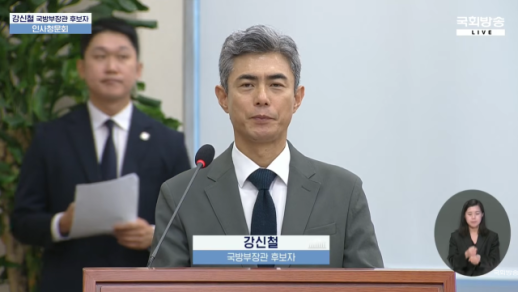 Korea's defense min nominee faces confirmation test on Hormuz SEOUL, September 16 (AJP) - Defense Minister nominee Kang Shin-chul faces grilling from lawmakers Wednesday over contentious issues ranging from the proposed merger of South Korea's military academies to U.S. calls for Seoul to contribute to security in the Strait of Hormuz. Even before facing lawmakers, Kang set out firm positions on several key issues, backing the Lee Jae Myung administration's push to integrate the Army, Navy and Air Force academies. “I believe integrated education is necessary,” Kang, a retired four-star Army general and Korea Military Academy graduate, said in written responses submitted ahead of the hearing. The government has proposed establishing a four-year Armed Forces Academy at the military complex in Daejeon. Kang said there are areas of military education that the three services should conduct together, while pledging to hear views from cadets, applicants, parents and others before details are finalized. The hearing comes as Seoul weighs how to respond to U.S. calls for contributions to security in the Strait of Hormuz. A government assessment team recently returned from the United Arab Emirates after examining operating conditions, military facilities and logistical support near the strategic waterway. The government has said no deployment decision has been made, while the National Security Council is expected to review possible options Thursday. Kang has so far taken a cautious stance, saying the issue should be approached from the perspective of protecting South Korean citizens and safeguarding national interests. Possible contributions under consideration have included P-8A maritime patrol aircraft, explosive ordnance disposal personnel and unmanned mine-detection and removal systems. Another focus will be the transfer of wartime operational control, or OPCON, from the U.S.-led Combined Forces Command to South Korea. Kang has said he agrees with the assessment that South Korea could defend itself even if OPCON were transferred immediately, while stressing that mutual trust in the alliance must be maintained. He has pledged to pursue the transfer in a way that strengthens the South Korea-U.S. alliance and their combined defense posture. Lawmakers are also expected to question Kang over property-related allegations involving him and his family. Opposition lawmakers have alleged that Kang registered his address at a house in Seoul's Cheonwang-dong while serving at a military unit in Gangwon Province and later qualified for a special apartment allocation available to residents displaced by redevelopment. Kang subsequently acquired an apartment in Seoul's Seocho District through the program. He has denied wrongdoing, saying the Cheonwang-dong property was a family home he legally received from his parents and that his military postings led to differences between his actual residence and registered address. Separate questions surround Kang's son, who bought a 700 million won ($512,000) commercial property in Bundang's Yangji Village in June. The property was initially omitted from Kang's disclosure submitted for the confirmation process. Kang's side said the omission was an error and later submitted corrected documents. His son financed the purchase largely through loans from relatives, while Kang has said neither he nor his wife was involved in selecting or financing the property. AJP Takeaways - South Korean Defense Minister nominee Kang Shin-chul faced scrutiny over a potential Strait of Hormuz deployment, wartime operational control and military academy reform. - Opposition lawmakers also raised property allegations involving special housing allocation and a 700 million won commercial property purchased by Kang's son. - Lawmakers from both ruling and opposition parties urged Kang to address the security and ethics controversies while maintaining close communication with the National Assembly. 2026-09-16 11:42:44
 -
Hong Ji-sun: Tax Policy Not a Direct Tool for Housing Price Stabilization Hong Ji-sun, the nominee for Minister of Land, Infrastructure and Transport, clarified that utilizing real estate tax policy as a direct means to stabilize housing prices is not the intent. She emphasized that housing policies take time to show results and that the government will consistently pursue existing policies, including expanding supply.During a confirmation hearing on September 16, Hong stated, "(President Lee Jae-myung's real estate policy pledge) does not mean we will control housing prices through taxes."She noted, "Due to a slowdown in construction over the past three to four years, we currently face a shortage of housing supply," and stressed that housing policies require steady, long-term implementation rather than expecting immediate effects.When asked by Kim Eun-hye, a member of the ruling People Power Party, whether she would maintain the current government's real estate policy direction, Hong highlighted the importance of consistency and predictability in policy. She said, "Policies must be predictable and consistent for their effects to be sustained," adding that there is a time lag before the actual effects of supply measures are realized.Hong also mentioned that the Ministry of Land will thoroughly consider policies for non-homeowners and actual residents, collaborating with the tax department.Regarding the potential use of part of Yongsan Park for housing supply, she stated that a specific development plan has not yet been established. In response to a request from Democratic Party lawmaker Yoon Jong-gun to initiate public discussions if the need for utilizing Yongsan Park is identified, Hong replied, "We have not yet established a concrete development plan."She added, "We need to go through a process of public discussion and opinion gathering, and even if we proceed, a legislative process will be necessary. The core areas of Yongsan Park must be preserved, and if there are ways to contribute to solving housing issues for future generations, we will consider those as well."In response to concerns about the lack of documentation regarding her past relocations and military service classification, Hong explained, "I have lived in jeonse (long-term rental) for 20 of my 30 years in public service, moving due to work or my spouse's circumstances," and clarified that the military service classification documents were not refused but were lost by the Military Manpower Administration.* This article has been translated by AI. 2026-09-16 11:28:00