


Latest by
-
 Controversial Bill to Abolish Prosecutors' Investigative Powers Advances in South Korea 검찰의 보완수사권을 전면 폐지하고 법원의 공소기각 사유를 확대하는 내용을 담은 형사소송법 개정안이 국회 본회의에 상정되어 처리를 앞두고 있다. 여당인 더불어민주당이 상임위원회에서 법안을 단독 의결한 지 하루 만에 본회의 수순을 밟으면서, 정치권은 또다시 극심한 강대강 대치 국면으로 치닫고 있다. 형사사법 체계의 근간을 뒤흔드는 중대 입법이 충분한 사회적 합의나 숙의 과정 없이 정쟁의 한복판에서 일방통행식으로 추진되는 현실에 깊은 우려를 표하지 않을 수 없다. 이번 개정안의 핵심은 검사의 직접수사권과 보완수사권을 묶어 전면 폐지하고 수사는 경찰과 중대범죄수사청 등에 전담시키는 것이다. 더불어 상정 직전 법안에는 ‘중대한 위법수사가 확인되거나 소추재량권을 현저히 일탈해 공소를 제기한 경우’ 판사가 공소기각을 선고할 수 있도록 한 조항이 추가됐다. 민주당은 검찰의 수사권·공소권 남용을 막고 피의자의 인권을 보호하기 위한 장치라고 설명한다. 그러나 야당과 법조계 일각에서는 공소기각 사유의 기준과 범위가 모호해 재판 지연을 유발하고 특정 정치적 사건을 구제하기 위한 수단으로 악용될 수 있다는 비판을 제기한다. 특히 현장의 경찰 수사 능력이 완전히 담보되지 않은 상태에서 보완수사마저 차단될 경우, 억울한 피해자의 구제길이 막히고 민생범죄 대응력이 현저히 약화될 것이라는 우려가 깊다. 여야 지도부의 발언에서도 격한 시각차가 드러난다. 한병도 민주당 대표 직무대행 겸 원내대표는 “경찰 수사를 견제하고 피해자를 보호하는 장치를 강화했다”며 야당을 향해 “토론을 외면하고 필리버스터로 시간을 끄는 것은 반대가 아니라 무책임”이라고 지각 처리를 압박했다. 반면 정점식 국민의힘 원내대표는 “검찰에 대한 증오와 복수심으로 탄생한 악법”이라며 “보완수사권 폐지로 인한 범죄대란의 모든 책임은 여당에 있다”고 강하게 반발했다. 한동훈 무소속 의원 역시 “법원을 압박해 억지로 공소기각 판결을 받아보자는 취지”라고 직격했다. 국민의힘은 법안 처리를 저지하기 위해 무제한 토론(필리버스터)에 돌입한다는 방침이다. 주호영, 나경원 의원 등 법조인 출신 의원들을 대거 배치해 법안의 위헌성과 부작용을 부각하겠다는 전략이다. 하지만 절대다수 의석을 확보한 민주당이 필리버스터 시작 24시간이 지나는 31일 오후 종결 동의안 표결을 실시해 필버를 강제 무력화하고 표결을 강행할 예정이어서, 법안 통과는 기정사실로 받아들여진다. 문제는 31일 표결 이후 펼쳐질 정국 전망이다. 민주당은 형소법 처리에 이어 패스트트랙 기간 단축을 골자로 한 국회법 개정안 등 후속 입법을 속도전으로 이어갈 기세다. 야당의 강렬한 반발 속에 여야 협치의 고리는 사실상 끊어지고, 정국 파행은 장기화될 가능성이 크다. 무엇보다 수사권 조정에 따른 경찰의 업무 과부하와 수사 지연, 공소기각 신설로 인한 법원의 사법적 혼란 등 그 부작용은 온전히 국민의 피해로 돌아가게 된다. 나아가 입법부가 사법부의 판단 영역까지 과도하게 개입한다는 삼권분립 침해 논란마저 불거지며 국가 사법 체계 전체가 거센 흔들림을 겪을 것으로 보인다. 수사·기소 분리라는 명분 뒤에 국민적 불안을 방치해서는 안 된다. 정치권은 강행 처리와 필리버스터라는 대립을 넘어 실질적인 국민 권익 보호를 최우선에 두는 사법개혁의 길을 다시 모색해야 한다.* This article has been translated by AI. 2026-07-30 14:28:00
 -
Korea's KOSME and Credit Guarantee Fund Sign MOU to Support Mid-Sized Enterprises' Global Expansion The Korea SMEs and Startups Agency (KOSME) announced that it signed a memorandum of understanding (MOU) with the Credit Guarantee Fund on July 30 in Daegu to support the global expansion and scale-up of mid-sized enterprises.This agreement aims to combine the policy capabilities of both organizations to establish a multifaceted support system that enables promising domestic mid-sized enterprises to evolve into globally competitive companies.The two organizations will collaborate on initiatives including: supporting companies' entry into overseas markets through market development and investment attraction; fostering global leading companies and scale-up support through the linkage of KOSME's policy funds and Credit Guarantee Fund's guarantees; and enhancing policy support through research on domestic and international financial systems.In particular, they will strengthen policy support throughout the entire process of overseas expansion to ensure that promising domestic mid-sized enterprises successfully establish themselves in global markets and secure international competitiveness.To facilitate this, KOSME will integrate its policy funds with the Credit Guarantee Fund's guarantee support system, enabling mid-sized enterprises to smoothly secure the necessary funding for overseas market entry and market development. This will provide the momentum for stable growth in the global market based on large-scale funding.Additionally, KOSME will systematically support the establishment of promising companies in global markets by linking its overseas infrastructure with the Credit Guarantee Fund's programs.To achieve this, KOSME will utilize its overseas bases, such as the Global Business Center (GBC) and K-Startup Center (KSC), to offer tailored programs from local settlement support to investment attraction and commercialization, while expanding networking opportunities for companies entering foreign markets and relevant organizations.Furthermore, they will provide office and residency space at overseas bases to assist companies in settling locally, and both organizations will strengthen their collaborative framework by jointly utilizing these overseas bases. Moreover, they will offer tailored support at various growth stages by linking the Credit Guarantee Fund's financial and non-financial support to promising companies participating in KOSME's overseas base programs and global projects.Previously, KOSME announced on June 26 that it supported the issuance of corporate bonds worth 204 billion won for 70 promising mid-sized enterprises through its 2026 Scale-Up Finance (P-CBO) initiative.Gang Seok-jin, President of KOSME, stated, "Building a strong ladder for mid-sized enterprises, which are the backbone of our economy, to leap to become leading companies is key to restoring the dynamism of the national economy. Through this agreement, we will combine KOSME's policy funds, overseas infrastructure, and the Credit Guarantee Fund's policy capabilities to support promising domestic mid-sized enterprises in becoming global leaders."* This article has been translated by AI. 2026-07-30 14:28:00
-
 Amorepacific rides K-beauty boom to strongest Q2 in years SEOUL, July 30 (AJP) - Amorepacific Group reported sharply higher second-quarter earnings on Thursday as robust growth in North America, Europe and Japan offset weakness in Greater China, underscoring the South Korean cosmetics maker's accelerating shift toward a broader global business footprint. The company posted consolidated revenue of 1.25 trillion won and operating profit of 122.8 billion won for the April-June period, up 14.6 percent and 53.3 percent, respectively, from a year earlier. It also recorded a double-digit operating margin for a second consecutive quarter. The earnings were driven by strong overseas demand, with North America, Europe, the Middle East and Africa (EMEA), and Japan delivering broad-based growth across both online and offline channels. Higher profitability from fast-growing brands also helped lift margins. At its flagship Amorepacific unit, overseas revenue jumped 28 percent from a year earlier, while overseas operating profit nearly doubled, rising 99 percent. The company said North America and EMEA were the biggest growth drivers, supported by an expanding brand portfolio and improving profitability. In North America, Aestura posted triple-digit sales growth on Amazon and Sephora, led by its Atobarrier 365 Cream, while COSRX continued strong momentum through Amazon and TikTok Shop. Innisfree also reported solid gains on the back of its Green Tea skincare line and sun care products. Europe also delivered strong results, with COSRX's Ultra Light Invisible Sunscreen topping Amazon's beauty category in Germany and the sunscreen category in the United Kingdom. The company also expanded into additional European markets while strengthening partnerships with Sephora. Japan remained another bright spot. Laneige extended its growth through new product launches and broader distribution, while COSRX achieved record sales during Qoo10 Japan's Mega Sale campaign. Across Southeast Asia, India and Australia, revenue also increased, although sales in Greater China declined as the company continued restructuring its distribution channels and focusing on higher-quality sales. Domestically, Amorepacific benefited from continued strength in luxury skincare, derma cosmetics and hair care. Sulwhasoo and Hera maintained leadership in Korea's premium beauty market, while online sales and the company's multi-brand store channel posted double-digit growth. The company said it would continue investing in key global markets under its "Create New Beauty" strategy, focusing on expanding its international business, strengthening its multi-brand portfolio and accelerating AI-driven business transformation. 2026-07-30 14:27:56
 -
 ESS transition helps Samsung SDI swing to profit as peers lag SEOUL, July 30 (AJP) -Samsung SDI returned to the black in the second quarter, snapping seven consecutive quarters of operating losses as booming demand for energy storage systems powering AI data centers offset the prolonged electric-vehicle slowdown that continues to weigh on most Korean battery makers. According to regulatory filings released Thursday, the firm booked an operating profit of 203.8 billion won ($141.5 million) for the three months through June, reversing a loss of 397.8 billion won a year earlier and a first-quarter shortfall of 155.6 billion won. Revenue climbed 18.5 percent from a year earlier to 3.77 trillion won, while net profit vaulted to 471.6 billion won, up about 740 percent from the previous quarter. "We had originally expected a turnaround in the second half, but revenue growth and improving profitability came faster than anticipated, moving up the timing of our return to profit," said a Samsung SDI spokesperson, adding that it would keep pursuing sustainable growth and firmer margins. The battery division led the charge with an operating profit of 159.3 billion won, as sales of high-output cells for uninterruptible power supplies, backup battery units and power tools gained traction alongside brisk European electric-vehicle orders. Momentum also came from home. This month Samsung SDI cells were tapped for 21 of the 32 distribution lines in the government's first AI-based grid ESS program — about 66 percent of the volume, or roughly 420 megawatt-hours — the biggest share of any supplier and a lead over LG Energy Solution and SK On, positioning the firm ahead of a larger state ESS auction expected around September. Higher-margin products, expanding U.S. output and subsidies under the Advanced Manufacturing Production Credit of the Inflation Reduction Act, together with tariff refunds, further sharpened profitability. The electronic-materials arm chipped in an operating profit of 44.5 billion won, up 34.8 percent, buoyed by resilient semiconductor-material sales and film used in foldable smartphones. The result stood in relief against rival LG Energy Solution, which earlier the same day reported second-quarter operating profit of 113.3 billion won — down 77 percent from a year earlier, though a recovery from a first-quarter loss, as North American energy-storage demand cushioned a punishing slump in electric-vehicle sales. For LG, government support did the heavy lifting: about 241 billion won in IRA tax credits masked what would otherwise have been a 127.7 billion won operating loss, underscoring how heavily Korea's battery makers still lean on Washington's subsidies. Samsung SDI said it expects earnings to keep improving in the second half, pledging to ramp up prismatic LFP battery output in the United States and expand capacity for power-storage and uninterruptible-supply products as the data-center build-out accelerates. Shares of Samsung SDI traded at 354,000 won per stock at 2:11 p.m., down by 2.75 percent from the previous session. 2026-07-30 14:27:53
 -
Japan's Population Falls Below 120 Million for First Time in 42 Years, Foreign Residents Reach 4 Million The population of Japan has fallen below 120 million for the first time in 42 years. The country recorded a decrease of over 910,000 people in the past year, marking the largest decline since the start of population surveys. Meanwhile, the number of foreign residents in Japan has surpassed 4 million for the first time.According to the Nihon Keizai Shimbun (Nikkei), the Ministry of Internal Affairs and Communications reported on July 29 that as of January 1 this year, the Japanese population stood at 119,736,483. This represents a decrease of 916,744 people (0.76%) from the previous year, falling below 120 million for the first time since 1984. Both the number and rate of decline are the highest since the surveys began in 1968. The Japanese population has been decreasing for 17 consecutive years since peaking in 2009.The natural decrease was also the largest on record. The Asahi Shimbun reported that the number of births in Japan last year was the lowest ever at 670,467. Deaths were recorded at 1,593,475, a decrease from the previous year. The number of births was 923,008 less than the number of deaths.By age group, the proportion of children has decreased while the share of elderly individuals has increased. According to the Asahi, the working-age population (ages 15-64) among Japanese residents is 70,748,417, accounting for 59.1% of the total. The population aged 0-14 is 13,323,730, which is down 0.25 percentage points to 11.13%, while those aged 65 and older number 35,664,327, an increase of 0.21 percentage points to 29.79%.Regionally, the only area where the Japanese population increased was Tokyo. All other 46 prefectures saw declines. The largest decrease was in Hokkaido, with a drop of 58,104 people, while Akita Prefecture recorded the highest rate of decline at 1.95%. The Yomiuri Shimbun reported that the only regions where the number of Japanese moving in exceeded those moving out were Tokyo and the four surrounding prefectures of Saitama, Chiba, and Kanagawa, as well as seven other areas including Aichi, Osaka, and Fukuoka.In contrast, the foreign population increased in all 47 prefectures. The number of foreign residents reached 4,031,159, an increase of 353,696 (9.62%) from the previous year, the highest since records began in 2013. The number of foreigners moving to Japan from abroad also hit a record high of 720,988.Among foreign residents, 86.17% are of working age (15-64 years). The largest age group is those aged 25-29. Foreigners now make up 3.26% of the total population, with Tokyo having the highest proportion at 5.57%.The combined total population of Japanese and foreign residents is 123,767,642, a decrease of 563,048 from the previous year. The total population increased in only three areas: Tokyo, Osaka, and Chiba. The overall working-age population accounts for 59.97% of the total, with a decline in the Japanese working-age population while the foreign working-age population has increased.* This article has been translated by AI. 2026-07-30 14:24:10
-
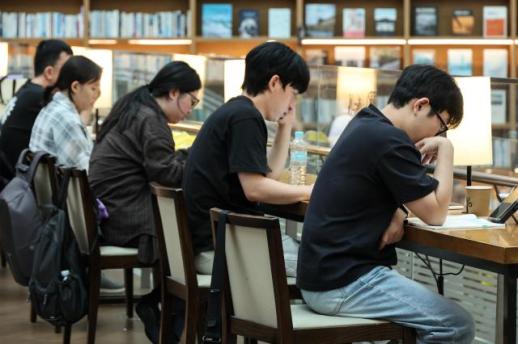 Most Korean jobseekers feel "on hold" rather than unemployed SEOUL, July 30 (AJP) —Active jobseekers theoretically fall under the "unemployed" in South Korea, but most of them see themselves as being "on hold" or in "rest mode," reflecting a growing sense of uncertainty and defeat rather than withdrawal from the labor market, a survey showed. According to a survey of 1,412 job seekers conducted by career platform Saramin, 63.3 percent said they considered themselves to be in a "resting" or "taking a break" phase. The finding underscores a gap between South Korea's official labor classifications and how many job seekers perceive their own status. Under the country's labor statistics, people actively seeking work are classified as unemployed rather than economically inactive. Even those preparing for employment by studying or acquiring new skills are not included in the official "taking a break" category. The survey, however, found that many use the term more broadly to describe the emotional reality of prolonged job hunting. The perception was widespread across age groups, with 62.4 percent of respondents in their 20s, 66.1 percent in their 30s and 65.8 percent in their 40s describing themselves that way. The figure was lower among those aged 50 or older at 53.9 percent. The biggest reason cited was the inability to secure a full-time job, selected by 70.9 percent of respondents. Others said they felt unproductive (37.9 percent), believed they were simply letting time pass (34.6 percent), were not engaged in paid work such as part-time jobs (28.9 percent), or were recovering physically or mentally before returning to work (20.6 percent). Respondents could choose more than one answer. Yet most respondents remained actively engaged in their job search. More than four in five, or 81.4 percent, said they had either been looking for work continuously over the past year or had resumed their job search after taking a break. They had applied for an average of 30.3 job postings during that period. Their willingness to find work also remained strong. Some 86.6 percent said they hoped to find a job within the next month, while the number of newly registered resumes on Saramin rose 14.4 percent from the second half of last year. Different meanings were attached to the "taking a break" phrase. While 34.8 percent associated it with helplessness or giving up on job hunting, 28.5 percent viewed it as a period of regrouping before the next opportunity. Another 20.1 percent said it meant waiting for a job that met their expectations, while 13.4 percent associated it primarily with leisure or time off. Saramin said many job seekers use the expression not because they have left the labor market, but because it captures the uncertainty and pressure of an increasingly prolonged job search. 2026-07-30 14:24:04
 -
Amanoi Resort Plans $43 Million Investment for Luxury Experience Expansion The luxury resort market in Vietnam is shifting from a competition of quantity to one focused on offering irreplaceable experiences. Amanoi has announced plans to invest 800 billion dong (approximately $43.9 million) to add 10 new rooms, raising questions about whether an investment of 80 billion dong (about $4.4 million) per room is justified. Unlike typical resorts that increase room numbers to boost profitability, luxury resorts are expanding their market by emphasizing scarcity, privacy, environmental preservation, and cultural richness.According to local media reports on July 30, Luc Van Nerom, co-founder of Amanoi, revealed plans to invest 800 billion dong in the Amanoi Resort, located in the Vinh Hy Bay area of Khanh Hoa Province, known to Koreans as Nha Trang. He acknowledged that the average investment per room is quite high, describing it as a "very significant amount." Experiences Worth More Than Rooms: A Market for Multi-Million Dong StaysThis investment is not merely about increasing room numbers; it aims to expand experience-based offerings targeted at luxury clientele. Van Nerom explained that the investment encompasses not only a limited number of rooms but also an ecosystem of experiences connected to nature, as well as cultural and entertainment spaces. He admitted that from a financial perspective, it may not seem rational, but emphasized that it aligns with the high-end customer segment.Amanoi is the only resort in Vietnam operated by the globally renowned luxury hotel and resort brand Aman, which was founded in 1988 and currently operates 38 hotels, resorts, and residences across 24 countries. The name Amanoi combines Aman with the Vietnamese word "noi" and opened in 2013 in the former Ninh Thuan Province. The resort is situated within the UNESCO-recognized Nui Chua National Park, a biosphere reserve.Amanoi's expansion will continue to prioritize privacy over large-scale room supply. The resort spans approximately 90 hectares, but Van Nerom believes that the ideal number of rooms should not exceed 90. Currently, Amanoi operates 68 rooms, and he stated that around 78 rooms would be an appropriate scale to maintain quality, noting that nearly one room per hectare strikes the best balance between guest experience and natural landscape preservation.The luxury accommodation market in Vietnam reportedly established a distinct price range in December 2022. According to data from last year, Amanoi offered a three-bedroom villa for $15,000 per night, requiring guests to book a minimum of three nights. This package includes two private pools, a spa, a living room, a dining area, a beach, and two 24-hour butlers.Meanwhile, the Vias Resort on the Phu Quoc Peninsula also introduced luxury accommodation options. This resort presented a five-star exclusive rental model in August 2022, with prices ranging from $10,000 to $25,000 per night, accommodating up to 100 guests with 25 staff members providing services.Market experts believe that the supply of luxury resorts in Vietnam remains insufficient. Morgan Ulakanathan, head of tourism and hotel consulting at Avison Young Vietnam, noted that while competition in the resort market is intensifying, the luxury segment lacks adequate supply despite the increase in five-star resorts. He explained that assets like Amanoi possess unique value that is difficult to replicate, making investors willing to inject additional funds.The key criteria for investment are shifting from cost per room to scarcity and brand value. Ulakanathan stated that investment in this sector should not be evaluated solely based on the cost per room. He analyzed that value derives from scarcity, quality, craftsmanship, and the brand's ability to command top-tier room rates.Changes in the customer base are also cited as a factor driving the expansion of luxury resorts. Van Nerom noted that a decade ago, the primary clientele was in their 50s, but now millennials and Generation Z account for over 60% of guests. He explained that these younger generations prioritize authentic experiences and meaningful memories over material luxury or ostentation. Tourism market indicators further support investment decisions. In the first half of this year, Vietnam welcomed 12.3 million international tourists, a 14.9% increase from the previous year, generating $9 billion in tourism revenue. Khanh Hoa Province alone received over 4.6 million visitors during the same period, marking a 66.1% increase, with revenue rising by 24.9% to 42.5 trillion dong.Luxury Resort Investment Draws Mixed ReactionsResponses to the luxury resort investment have linked it to cultural value. One user noted that the floor tiles used in the resort are handcrafted using traditional methods, taking over 50 days to produce a single tile. They highlighted the use of ancient Bat Trang glaze, which is becoming increasingly rare due to production costs, expressing respect for the investment in culture and mindset.Conversely, some comments expressed surprise at the scale of the investment. One user described the 80 billion dong investment per room as a "true luxury item." Another remarked that while typical resorts focus on increasing room numbers for profitability, luxury resorts prioritize space and experience, suggesting that success is possible if the market accepts this approach.Additional opinions on travel and development were also shared. Some users expressed realistic concerns about living costs and affordable travel, while others hoped for more world-class investors in Vietnam. One comment emphasized that investments, whether by Vietnamese or foreign companies, should prioritize respect for the landscape.* This article has been translated by AI. 2026-07-30 14:24:00
-
Creating Memories of Taean Through Art: Special Experiences at Irooon Workshop On July 28, an online exchange event for Korean and Chinese fan crafts was held at the Irooon Workshop in Taean, South Chungcheong Province.During the event, artisans from Taean and Tai'an, China, showcased their works, with Seong Ji-sook, the representative of Irooon Workshop, presenting her own creations.The Irooon Workshop serves as a space where visitors can create handicrafts, allowing them to take home memories of their trip to Taean.Last October, the workshop relocated to provide a more spacious and comfortable environment for visitors and to showcase a variety of items.The expanded workshop offers individual experiences and group classes, selling not only Seong's works but also handmade dolls and crocheted items from other artisans. Plans are underway to produce goods that reflect the nature and local characteristics of Taean.Seong stated, "I want travelers to leave with their own unique creations from their time in Taean. I aim to make Irooon Workshop a space that connects local artists with visitors and promotes Taean's handicraft culture."Tourists visiting the workshop added special memories to their trips by making mother-of-pearl keychains. Hong Jong-seung from Eunpyeong-gu, Seoul, remarked, "It was meaningful to express creativity that I usually don't get to showcase and to create a piece that captures the memories of our family trip."Hong Jong-soo, also from Seoul, shared, "The process of creating art together as a family was meaningful, and we are satisfied with how our finished products turned out. Visiting Taean's attractions like Cheollipo Arboretum and enjoying the craft experience made our trip even more special."Experiencing handicrafts after exploring the natural beauty of Taean transforms sightseeing into an engaging and memorable journey.Irooon Workshop adds a new charm as a space where visitors can preserve their memories of Taean in one-of-a-kind creations.* This article has been translated by AI. 2026-07-30 14:24:00
-
Hwacheon County Council Calls for Designation of Peace Economic Zone On July 30, the Hwacheon County Council concluded its 297th extraordinary session, during which council members passed a resolution urging the designation of the county's second Peace Economic Zone. This session marked the first extraordinary meeting since the 10th Hwacheon County Council was established, focusing on various policy initiatives aimed at securing future growth and improving the quality of life for residents over a 15-day agenda.During the sixth plenary session, the council approved the 'Resolution Urging the Designation of the Hwacheon County Peace Economic Zone,' co-sponsored by Chairperson Jo Woong-hee and seven other council members. The resolution will be forwarded to the government, the National Assembly, and the Gangwon Special Self-Governing Province.The council also approved 12 ordinances, the 2026 second supplementary budget, and changes to the fund management plan as originally proposed. This extraordinary session, which began on July 16, served as a platform to review the administration's key tasks and discuss the direction of military governance for the second half of the year.During deliberations, council members focused on issues directly affecting residents, including the expansion of stay-type tourism, stable implementation of basic income for rural areas, attracting businesses and creating jobs, enhancing childbirth and welfare support, and strengthening disaster response.Chairperson Jo Woong-hee emphasized the need to expand the foundation for stay-type tourism, develop sports vacation programs, and improve educational conditions in preparation for the establishment of a public high school for military families. Vice Chairperson Lee Sun-hee proposed linking the tomato festival with sunflower tourism resources and expanding the economic impact of local sports events.Council members Kim Dong-wan, Kim Myung-jin, Kim Eun-kyung, Park Jin-cheon, and Choi Ho-ki each raised specific issues, including job creation through the designation of the Peace Economic Zone, disaster response systems, securing funding for basic income, expanding childbirth support and transportation welfare, and revitalizing industrial complexes to create youth jobs.During the review of ordinances and the supplementary budget, discussions centered on expanding delivery services in mountainous areas, protecting civil service workers, securing funding for basic income in rural areas, enhancing facilities to respond to heat waves, and strengthening the competitiveness of traditional markets. Council members visited the site of the Gumanri Hwacheon Dam historical trail project in Gandan-myeon to inspect facility safety and completion status, requesting improvements before finalization.The core of the resolution urging the designation of the Peace Economic Zone reflects the council's belief that a national growth foundation must be established for border areas that have endured sacrifices for national security over a long period.The council argued that Hwacheon County faces challenges in industrial base development and attracting businesses due to military facility protection zones and various development regulations. They called for the evaluation of not only development potential but also military regulations, population decline, and the risks of regional extinction to be included in the criteria for the designation process.Additionally, they urged the government to establish a new growth model for border areas through the opening of the second Hanawon, experiential security and unification education, development around Hwacheon Station, and linking security and peace tourism resources. They called for the designation of the second Peace Economic Zone, expansion of the target area, reflection of border area sacrifices in evaluations, enhancement of infrastructure linked to Hwacheon Station, and an increase in development project funding for special situation areas.This extraordinary session is recorded as the first comprehensive review of military governance and policy direction since the establishment of the 10th Hwacheon County Council. Notably, through the resolution urging the designation of the Peace Economic Zone, the council clearly expressed a collective will to address the issues of regulations and population decline in border areas as a matter of national balanced development rather than a local concern.Attention now turns to whether the policy proposals and resolutions presented by the council will translate into government policies, securing national and provincial funding, and institutional improvements that residents can feel.* This article has been translated by AI. 2026-07-30 14:20:10
-
Foreign Sales at Duty-Free Shops Near 5 Trillion Won in First Half of 2026 In the first half of 2026, foreign sales at South Korean duty-free shops approached 5 trillion won. The increase in foreign visitors and the industry's shift from catering to bulk buyers from China to attracting individual tourists contributed to this growth. However, despite the rise in the number of customers, the increase in sales has been slower, highlighting a decline in average spending as a new challenge. According to the Korea Duty-Free Shops Association, foreign sales from January to June 2026 totaled 4.9967 trillion won, a 3.2% increase from 4.8414 trillion won during the same period last year. Compared to the second half of 2025, this figure represents an 11.2% increase. Monthly sales figures were 786.6 billion won in January, 704.7 billion won in February, 851.3 billion won in March, 879.5 billion won in April, and 857.0 billion won in May. In June, sales reached 917.6 billion won, surpassing 900 billion won for the first time in 14 months since April 2025, when sales were 937.7 billion won.The increase in foreign buyers has driven sales higher. In June, the number of foreign customers at duty-free shops rose to 1.28 million, a 32.0% increase from 970,000 in the same month last year. The number of buyers increased from 940,000 in January and 910,000 in February to 1.09 million in March, 1.19 million in April, and 1.23 million in May. However, the amount spent per customer has decreased. In June 2025, the average spending per foreign customer was approximately 848,000 won, but last month it dropped to about 717,000 won, a decline of 15.4%. This reduction is attributed to a decrease in bulk purchases by Chinese buyers and a higher proportion of individual tourists, leading to a dispersion of spending amounts.The duty-free industry is expanding its product offerings to target individual foreign tourists, focusing on K-beauty, fashion, and daily necessities, while enhancing discount events and brand experiences. Lotte Duty-Free's foreign beauty sales in the first half of the year increased by 55% compared to the same period last year, while food sales rose by 62%. An industry official stated, "While foreign sales approached 5 trillion won in the first half, we need to monitor whether this growth translates into improved profitability, considering the slowdown in domestic consumption and the decline in average spending."Meanwhile, domestic consumption at duty-free shops has slowed. Sales to domestic customers were 284.2 billion won in January, dropping to 257.6 billion won in February and 231.2 billion won in March. Although sales rebounded to 239.7 billion won in April and 254.6 billion won in May, they fell again to 211.0 billion won last month.* This article has been translated by AI. 2026-07-30 14:20:10