


Latest by
-
 Samsung Electronics Faces Constant Pressure to Prove Itself as a Leading Company The world's top company is not defined by a single success. Maintaining that position is often more challenging than reaching it in the first place. This is why the scrutiny on Samsung Electronics is particularly intense. Despite posting record quarterly earnings and securing major contracts with global tech giants, the market immediately demands the next achievement. Yesterday's records become today's benchmarks, and today's successes turn into tomorrow's obligations. This is the fate of a world-leading company. Samsung Electronics reported a record revenue of 171.5 trillion won and an operating profit of 89.5 trillion won for the second quarter of this year, setting a new quarterly performance record. The operating profit margin reached 52%, showcasing profitability that ranks among the best in both manufacturing and global tech sectors. Aside from Saudi Arabia's Aramco, one of the world's largest oil companies, no other firm can rival Samsung's operating profit scale. Even Nvidia, a leader in the AI industry, falls behind. Nevertheless, market interest focuses more on 'how much more can be earned next' rather than 'how much was earned.' It may seem unfair. Apple continues to be recognized for the growth potential of its services ecosystem, even as iPhone sales growth slows. Nvidia maintains its high corporate value despite concerns about a slowdown in future AI demand. In contrast, analysts question whether Samsung's AI investments will slow after this year, whether Chinese memory companies will catch up, and whether increased supply will lead to price declines. Following the earnings announcement, profit-taking sales flooded the market, and even news of major contracts did not sustain a long-term rise in stock prices. In the financial sector, there is a prevailing analysis that Samsung's price-to-earnings ratio (PER) remains low compared to its profit growth rate. Samsung's share of total operating profit among KOSPI-listed companies exceeds its market capitalization share, making it difficult to conclude that its corporate value is overvalued relative to its profit-generating ability. However, this should not be viewed solely through the lens of market harshness. The competition in AI semiconductors is just beginning. As the market expands beyond generative AI to include agentic AI and physical AI, competition surrounding next-generation memory after HBM, advanced packaging, and AI system semiconductors is expected to intensify. The current record performance is both a result of industrial change and an indication of investment capacity for future competition. The ongoing demand for new achievements from Samsung also stems from this context. The era where corporate value was determined solely by memory market share has passed. Factors such as the speed of technology development, securing clients, supply chain stability, and the ability to invest in large-scale facilities are now all criteria for competitiveness. The higher the company ranks globally, the higher the standards become. What matters is not just quarterly results or short-term stock prices. The key question is whether Samsung can maintain its global technology leadership in the AI era. Samsung's investment direction has a cascading impact on the domestic semiconductor ecosystem, as well as the materials, components, and equipment industries, employment, and export competitiveness. This connection extends beyond individual corporate performance to national industrial competitiveness. Samsung's need to continuously prove itself is not due to market skepticism. Companies that set the standards for the global semiconductor industry bear significant responsibility. Achieving record performance is not an end but a new starting point. Moving forward, the focus will be on how long Samsung can maintain technological leadership in the AI era based on these records. This is the expectation of the market regarding Samsung and a challenge that the Korean industry must address together. 2026-07-30 13:40:00
 -
KOSPI Declines Over 1% Despite Foreign and Institutional Buying The KOSPI is showing a decline of over 1%. Concerns about a 'Black Thursday' have increased due to a drop in the U.S. stock market, a surge in long-term Treasury yields, and geopolitical risks in the Middle East. However, the decline has been limited to the 1% range thanks to buying from foreign and institutional investors.As of 1:19 PM on July 30, the KOSPI was down 97.16 points (1.72%) at 5,566.08. The index opened at 5,681.77, up 18.53 points (0.33%) from the previous trading day, but quickly turned downward before fluctuating again. In the afternoon, it widened its losses, falling to the 5,560 range.In the securities market, foreign and institutional investors have net bought 675.8 billion won and 880.1 billion won, respectively. In contrast, individual investors have net sold 1.545 trillion won, taking profits.The top stocks by market capitalization in the KOSPI are mixed. Samsung Electronics (up 0.48%), LG Energy Solution (up 5.16%), Samsung Biologics (up 0.88%), and KB Financial (up 3.69%) are gaining. Meanwhile, SK Hynix (down 4.93%), SK Square (down 7.65%), Hyundai Motor (down 1.70%), Samsung Electro-Mechanics (down 10.40%), and Samsung Life Insurance (down 1.32%) are experiencing losses.At the same time, the KOSDAQ index recorded a decline of 16.30 points (2.46%), standing at 646.38. The index opened at 654.72, down 7.96 points (1.20%), and while it briefly turned upward during the day, it returned to a downward trend, showing continued volatility.In the KOSDAQ market, individual and institutional investors have net sold 30.7 billion won and 49.7 billion won, respectively, while foreign investors have net bought 75.5 billion won.The top stocks by market capitalization in the KOSDAQ are also showing mixed results. Alteogen (up 0.35%), EcoPro (up 4.90%), and EcoPro BM (up 5.29%) are rising. Conversely, Rainbow Robotics (down 7.43%), Juseong Engineering (down 14.81%), Rino Industry (down 4.81%), HLB (down 4.00%), Wonik IPS (down 7.57%), Pharma Research (down 9.72%), and ABL Bio (down 2.53%) are declining.* This article has been translated by AI. 2026-07-30 13:40:00
-
Labor Minister Discusses Rights of Migrant Workers in Fisheries Sector The government has initiated discussions on protecting the rights and improving the working conditions of migrant workers in the fisheries and aquaculture sectors. As the workforce in fishing villages declines and ages, migrant workers have become essential personnel, prompting efforts to strengthen systems for preventing human rights violations and providing remedies.On July 30, the Ministry of Employment and Labor held a meeting on the protection of migrant workers' rights in the fisheries and aquaculture sectors, chaired by Minister Kim Young-hoon, at the Gwangju Government Complex.With the ongoing decline in fishing personnel and an aging workforce, migrant workers have established themselves as key contributors in the fisheries and aquaculture sectors. The types of work visas available for the fishing industry include E-8 seasonal work, E-9 non-professional employment, and E-10 seafarer employment.The number of migrant workers in the fishing sector has been on the rise. From 2021 to 2025, the allocation for E-8 visas increased from 996 to 8,796, E-9 workers rose from 6,000 to 14,000, and E-10 residents grew from 18,000 to 21,000.However, some fishing workplaces have reported unfair treatment of migrant workers, including violence, wage theft, and inadequate housing. In response, the Ministry is enhancing its field-based prevention, inspection, and rights remedy systems to quickly identify and protect victims of human rights violations.Specifically, the Ministry will operate anonymous surveys and reporting channels in which migrant workers can participate in their native languages. It will appoint 'foreign human rights leaders' who are familiar with local conditions to identify potential human rights violations early. In regions with high concentrations of migrant workers, such as Mokpo and Yeosu, the Ministry will conduct guidance, inspections, and planned supervision focused on aquaculture businesses.During the meeting, participants shared updates on the protection of migrant workers' rights in the fishing sector and discussed collaborative strategies and institutional improvements for preventing human rights violations and enhancing working conditions. The Ministry plans to review the suggestions made during the meeting to strengthen the systems and support frameworks for preventing human rights violations and providing remedies for migrant workers.Minister Kim Young-hoon emphasized, "Today, migrant workers are indispensable personnel in our fishing villages, not just temporary guests but colleagues and neighbors who help build workplaces and communities together. All labor must be recognized fairly, and respect for labor should not vary by nationality."He added, "A workplace where workers are treated safely and fairly can lead to stable workforce retention and increased productivity. We will work together with employers, local governments, and the national government to ensure that these workplaces become safe and healthy environments."* This article has been translated by AI. 2026-07-30 13:32:00
-
KAI Signs Strategic MOU with Brazilian Aerospace Company Embraer 한국항공우주산업(KAI) announced on July 30 that it signed a memorandum of understanding (MOU) with Brazilian aerospace company Embraer on July 28 to establish strategic cooperation in the field of aircraft structures.The MOU aims to create a framework for exploring potential business opportunities and identifying areas for collaboration based on the technical capabilities and expertise of both companies. The partnership will focus on various areas, including research and development of new technologies and opportunities in aircraft structures.By combining KAI's advanced aerospace engineering technology with Embraer's aircraft development and manufacturing capabilities, the two companies plan to seek various opportunities to enhance technological competitiveness, improve industrial strength, and increase manufacturing efficiency, thereby supporting the continuous growth of the aerospace industry.KAI President Kim Jong-chul stated, "This marks significant progress in expanding international cooperation with leading aerospace companies. We will closely collaborate in exploring future cooperation possibilities based on our mutual interest in aircraft structures and future aerospace technologies."KAI has previously supplied key structural components for Embraer's E-Jet E2 aircraft wings.* This article has been translated by AI. 2026-07-30 13:32:00
-
Small Business Agency Visits Seonyang Soju Production Facility to Promote ESG Practices The Small Business Market Promotion Agency announced on July 30 that it visited the production facility of Seonyang Soju and the Gyejoksan Mud Road on July 29 to enhance the ESG management of private companies and the innovative capabilities of their employees. This visit was organized as a follow-up to a special lecture by Seonyang Chairman Jo Woong-rae in June, which focused on the philosophy behind the company's success and the background of the 990 won Good Soju. The on-site exploration included a tour of the Good Soju production facility, a discussion on ESG case studies at Gyejoksan, a communication seminar for the innovation council, and an experience of the Gyejoksan Mud Road. Participants observed the production and logistics facilities of Good Soju, a successful collaboration model that revitalizes local economies, confirming the operational achievements of public-private partnerships. At Gyejoksan, they examined ESG management practices in collaboration with the local community and discussed innovative solutions that could be integrated into support policies for small businesses and models for regional coexistence. Good Soju is a public-private collaboration model launched in April, designed to help local supermarkets recover sales and stimulate consumption in neighborhood markets. It is produced by Seonyang and distributed by the Korea Super Chain Distribution Cooperative. In just four months since its launch, Good Soju has sold 6.2 million bottles across 7,400 local supermarkets, generating approximately 6.2 billion won in revenue, with customer inflow increasing by 7.8% and repeat visit rates rising by 12.5%. Additionally, the Small Business Agency has been planning solutions for local economies beyond its existing policy support, including the recent launch of 'Mantang Beer' in June. Mantang Beer is available exclusively at 30,000 local supermarkets at a price of 1,700 won. Jung Yoon-jung, head of the Innovation Performance Division at the Small Business Agency, stated, "We aim to enhance the effectiveness of support policies for small businesses and traditional markets by incorporating ideas derived from the private sector's innovations and ESG cases learned during this benchmarking visit." In Tae-yeon, Chairman of the Small Business Agency, remarked, "Innovation begins with looking at the field from a new perspective and implementing small ideas. I hope the experiences gained from this visit lead to work innovations that create tangible policy outcomes for small businesses."* This article has been translated by AI. 2026-07-30 13:28:00
-
BTS Declines to Submit Music for Grammy Awards, Academy Responds BTS has announced that it will not submit music for the 2027 Grammy Awards, prompting a response from the Recording Academy. The newly created "Asian Pop" category is intended not to segregate Asian music but to provide more opportunities for artists to win awards.On July 29, Harvey Mason Jr., CEO of the Recording Academy, expressed disappointment upon hearing that BTS would not participate, stating, "While I was saddened to hear that BTS has decided not to participate in the Grammy Awards, I understand and respect their decision as creators of music."Mason also addressed the controversial "Best Asian Pop Music Performance" category, explaining that it was established to showcase the diversity and excellence of pop music from Asia. He emphasized that the category is not meant to separate Asian music but to broaden the opportunities for approximately 15,000 Grammy voters to evaluate more artists.He further clarified that submitting in the Asian Pop category does not exclude artists from competing for major Grammy awards. Works submitted in genres like pop, jazz, or country can still contend for top honors such as Album of the Year, Song of the Year, and Record of the Year.Previously, BTS stated its decision to refrain from submitting music for the 2027 Grammy Awards, expressing a desire for music to be appreciated for its essence rather than being categorized by region or language.The controversy arose when the Recording Academy introduced the "Best Asian Pop Music Performance" category. Critics questioned whether this move aimed to separate Asian music from the existing major Grammy categories.In response, the Recording Academy reiterated that the establishment of the new category does not limit eligibility for major awards, stating it is designed to provide more opportunities for musicians regardless of region or language.BTS first appeared on the Grammy stage as presenters in 2019 and has been nominated for three consecutive years since 2021, yet they have not won an award. This year, the Netflix animated series "K-Pop Demon Hunters" won the award for "Best Song Written for Visual Media."* This article has been translated by AI. 2026-07-30 13:28:00
-
Chinese Ambassador to South Korea Visits Ulsan for First Time in 12 Years Chinese Ambassador to South Korea Dai Bing visited Ulsan on July 30 to discuss expanding cooperation in future advanced industries with Ulsan Mayor Kim Sang-wook. This marks the first official visit by a Chinese ambassador to Ulsan in 12 years, and it is expected to enhance economic and industrial collaboration between the industrial city of Ulsan and China.On the morning of his visit, Ambassador Dai met with Mayor Kim at Ulsan City Hall to discuss economic and industrial cooperation. Following their meeting, he held a discussion with local export companies and toured key industrial sites in Ulsan.The meeting included Chen Ribo, the Chinese Consul General in Busan, as well as Ulsan City Council Chair Lee Young-hae and Vice Chairs Hong Seong-woo and Son Geun-ho.This visit was arranged after Mayor Kim proposed it during a meeting with Ambassador Dai in Seoul last June, prior to his election.During their discussion, Mayor Kim highlighted Ulsan's sister-city relationships with six Chinese cities: Changchun, Wuxi, Yantai, Qingdao, Henan Province, and Guangzhou. He suggested expanding cooperation in future advanced industries such as industrial artificial intelligence (AI), smart manufacturing, future mobility, and the hydrogen economy.Mayor Kim also requested the support and interest of the Chinese Embassy in facilitating cooperation with Chinese cities that are leaders in advanced manufacturing, which Ulsan is considering for expanded exchanges.The subsequent 'Ulsan Region Export-Import Business Meeting with China' included six local companies: Kemp, MTG, Ginkgo Tech, Suchang TFS, Mobil Korea Lubricants, and Whale City. They discussed challenges in entering the Chinese market and ways to enhance cooperation.The companies shared their difficulties in accessing the Chinese market and provided suggestions for boosting trade. Ambassador Dai listened to their concerns and exchanged views on expanding economic cooperation.After the meeting, the Chinese delegation visited the Taehwa River National Garden and Taehwaru, followed by a tour of Hyundai Motor's new electric vehicle plant and the SK Energy Ulsan Complex to observe Ulsan's future automotive and energy industries.Ulsan is South Korea's largest hub for the automotive, shipbuilding, and petrochemical industries, with significant trade ties to China. Recently, the city has been accelerating its transition to future industries centered on industrial AI, smart manufacturing, and the hydrogen economy, indicating a strong potential for expanding cooperation beyond traditional manufacturing sectors.An official from Ulsan City expressed hope that this visit would solidify trade in key industries and expand cooperation with Chinese local governments and businesses in future advanced industries such as AI and smart manufacturing. He added that the city aims to continuously enhance practical economic cooperation.* This article has been translated by AI. 2026-07-30 13:24:00
-
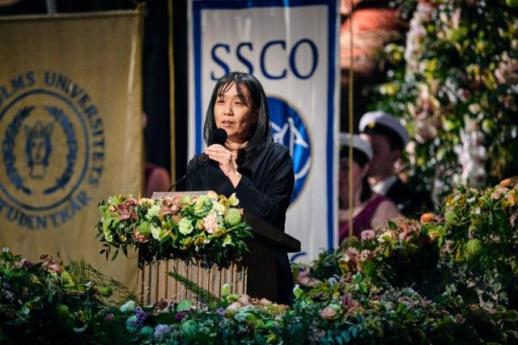 Han Kang's old neighborhood turns Nobel victory into cultural landmark SEOUL, July 30 (AJP) - A northern Seoul district has given an honorary name to a stretch of road near the childhood home of Nobel laureate Han Kang, seeking to turn growing international interest in Korean literature into a local cultural asset. Gangbuk-gu said Thursday that the 463-meter section in Ui-dong has been designated “Nobel Literature Road.” The route comprises 307 meters of Samyang-ro 165-gil and a 156-meter section of Samyang-ro 169-gil. The streets surround an old house where Han spent part of her childhood and school years. District officials said the area helped nurture the literary sensibility that would later shape her work. The honorary name was selected after a survey of local residents. Honorary road names are symbolic designations used to highlight historical figures, cultural landmarks or tourism resources associated with an area. They are assigned separately from existing street names and do not change residents’ official legal addresses. The district said the project was intended to connect heightened interest in Korean literature following Han’s Nobel Prize victory with the neighborhood’s cultural heritage. It also aims to create a symbolic space where visitors can reflect on the author’s life and body of work. “We will do our utmost to make Nobel Literature Road a place where people can remember Han’s literary world and share the value of Korean literature,” Gangbuk-gu Mayor Jeong Chang-su said. Han, born in the southwestern city of Gwangju in 1970, moved to Seoul with her family when she was nine. She began her literary career as a poet in 1993 before turning primarily to novels and short stories. She became the first South Korean writer to receive the Nobel Prize in Literature in 2024. The Swedish Academy honored her for her “intense poetic prose” exploring historical trauma and the fragility of human life. Han gained international prominence through The Vegetarian, which won the International Booker Prize in 2016. Her other major works include Human Acts, The White Book, Greek Lessons and We Do Not Part. Ui-dong is a relatively quiet neighborhood on Seoul’s northern outskirts, situated between Bukhansan and Dobongsan mountains. Known for its wooded valley, the area is a popular retreat for residents and serves as one of the main gateways to Bukhansan National Park and its hiking trails. 2026-07-30 13:11:07
 -
 Hanroro revives 'A Cruel Angel's Thesis' in latest J-pop remake project SEOUL, July 30 (AJP) — Singer-songwriter Hanroro has reinterpreted "A Cruel Angel's Thesis," the iconic opening theme from the Japanese anime "Neon Genesis Evangelion," as part of a Korean project reimagining classic J-pop hits for a new generation of listeners. The remake will be released at 6 p.m. (0900 GMT) Thursday, music producer SHgold Networks said. Originally recorded by Yoko Takahashi in 1995, "A Cruel Angel's Thesis" became one of Japan's most recognizable anime songs after serving as the opening theme for "Neon Genesis Evangelion." Three decades after its release, the track continues to enjoy enduring popularity in both Japan and South Korea. Hanroro preserves the song's dramatic energy and sweeping sound while adding her own vocal style and emotional interpretation, according to the producer. She previously performed a rock rendition of the track at the WONDERLIVET 2024 festival, a performance that led organizers to tap her for the remake. The release is part of the "J-pop Remake" project organized by singer and television personality Kangnam, a Korean-Japanese entertainer who obtained South Korean citizenship in 2022, which brings Korean artists together to reinterpret well-known Japanese pop songs. The project debuted with Girls' Generation member Taeyeon's remake of "Manchanga," a 2023 ballad by Japanese singer-songwriter tuki. that has drawn more than 170 million YouTube views. Taeyeon's version ranked No. 7 on Melon's Top 100 chart as of 9 a.m. Thursday. 2026-07-30 13:10:54
 -
 SK hynix scraps paperwork in hunt for AI-native talent SEOUL, July 30 (AJP) -Generous bonuses and an extraordinary AI boom are not the only appeals that have made SK hynix South Korea's most sought-after employer for a second consecutive year, as the chipmaker continues to break hiring norms in search of AI-native talent. SK hynix said Thursday it will scrap the traditional self-introduction essay and replace brief interviews with half-day competency assessments for new graduate recruitment beginning next month, introducing its biggest hiring overhaul in years as chipmakers compete for a new generation of AI engineers. Applications for the rolling recruitment cycle will be accepted from Aug. 20 to 26 for positions in chip design, device engineering, research and development, manufacturing processes and production technology. Openings are available at its major sites in Icheon, Cheongju, Bundang and Seoul. The changes come a month after SK hynix abolished academic qualification requirements, allowing applicants to apply regardless of age or educational background. Instead of the conventional 20- to 30-minute interview, candidates will spend half a day completing practical assignments and participating in in-depth interviews. Recruiters will assess not only technical expertise but also AI application skills, logical reasoning, humanities-based thinking and the ability to solve engineering problems from first principles. The application itself is also changing. SK hynix has scrapped the conventional self-introduction essay in favor of a format requiring candidates to explain their AI capabilities and semiconductor expertise. Rather than polished resumes, the company said it wants applicants who can use AI to solve problems on semiconductor production lines. SK hynix is also moving beyond campus recruiting. Instead of focusing on a handful of universities, it will hold recruitment sessions in Seoul, Cheongju, Daegu and Gwangju, opening participation to aspiring engineers and young people interested in semiconductors regardless of where they study. Later this year, the company will launch an AI hackathon in which participants develop software or algorithmic models to solve semiconductor manufacturing challenges within a limited time. Outstanding participants will receive fast-track access to interviews without going through the document screening stage. The hiring overhaul echoes SK Group Chairman Chey Tae-won's vision for the AI era. Chey has argued that future competitiveness will depend less on credentials than on what he calls "thinking muscles" — the ability to ask fundamental questions, cross disciplinary boundaries and design systems in which humans and AI work together. The changes come as SK hynix enjoys the biggest windfall in its history from the AI memory boom. This week, the company reported another record quarterly profit, cementing its lead in high-bandwidth memory used in Nvidia's AI accelerators. SK hynix is betting that its next competitive edge will come as much from people as from silicon, a HR official said. 2026-07-30 13:10:17