


Latest by
-
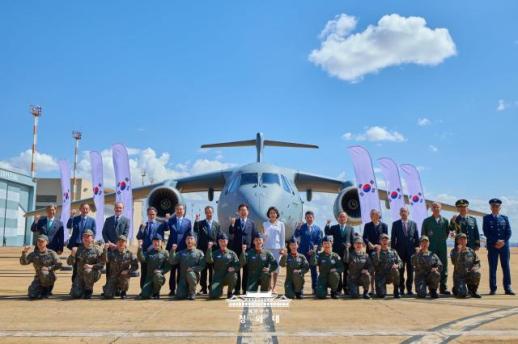 Why Korea is turning to Brazil's C-390 as aging airlift fleet faces pressure SEOUL, July 28 (AJP) - South Korean President Lee Jae Myung wasted little time in Brazil tending to one of Seoul's key dense priorities. Upon arriving in Brasilia for a state visit, Lee headed straight to inspect a Brazilian-built C-390 Millennium military transport aircraft before holding summit talks with President Luiz Inácio Lula da Silva. The acquisition addresses two strategic objectives: replacing South Korea's aging tactical transport fleet while diversifying defense procurement and industrial partnerships beyond traditional U.S. suppliers. South Korea has ordered three C-390 transport aircraft from Brazilian aerospace manufacturer Embraer under a contract worth about $603 million. The first aircraft is scheduled for delivery in December, with the remaining two arriving by the end of next year. During the visit, Lee described the acquisition as "the first step" in bilateral defense cooperation and called for broader collaboration between the two countries. The timing is significant. South Korea's tactical transport fleet is increasingly showing its age as the military expands its role beyond the Korean Peninsula to overseas deployments, humanitarian assistance, disaster relief and civilian evacuation missions. Publicly available data indicate the Republic of Korea Air Force operates about 34 tactical transport aircraft, including 16 C-130 Hercules variants and 18 CN-235 transports. Among the Hercules fleet, 12 are older C-130H and C-130H-30 aircraft introduced from 1988, while only four are the newer C-130J-30 models delivered in 2014. Those older aircraft represent the Air Force's most pressing modernization challenge. More payload, more speed The C-390 offers a different operating profile from the C-130 that has long formed the backbone of South Korea's tactical airlift capability. According to Embraer, the aircraft can carry up to 26 metric tons of concentrated cargo, or 23 metric tons of distributed payload, and cruise at 470 knots, or about 870 kilometers per hour. By comparison, the U.S. Air Force lists the C-130J-30's maximum payload at about 20 metric tons and the older C-130H's at roughly 19 metric tons. Their cruising speeds are 356 knots and 318 knots, respectively. The comparison, however, is not one-sided. The stretched C-130J-30 can transport up to 128 combat troops, 92 paratroopers, 97 medical litters or eight cargo pallets. The older C-130H carries 90 troops, 64 paratroopers, 72 litters or six pallets. Embraer's C-390 accommodates up to 80 troops, 64 paratroopers, seven 463L pallets or as many as 80 litters depending on its medical evacuation configuration. Its main advantage lies elsewhere. The C-390 combines greater payload with substantially higher speed and a wider, taller cargo compartment, allowing it to transport bulkier military vehicles and equipment. Although its cargo bay is shorter than that of the stretched C-130J-30, its larger cross-section provides greater flexibility for oversized loads. Rather than replacing the Hercules outright, the C-390 complements the existing fleet with a newer platform optimized for heavier cargo and faster deployment. Why Seoul chose Brazil The procurement attracted attention because the Brazilian aircraft defeated Lockheed Martin's C-130J and Airbus' A400M in South Korea's Large Transport Aircraft II competition in 2023. The outcome surprised many defense analysts given the Air Force's decades of experience operating the U.S.-built Hercules. The Defense Acquisition Program Administration (DAPA) said at the time that the competing aircraft offered broadly comparable performance and cost. The decisive difference came from industrial cooperation, contract conditions and technology partnerships. Embraer assembled a consortium with three South Korean companies, offering domestic industrial participation valued at about $135 million. Lockheed Martin partnered with a single Korean company with local participation worth about $129 million, while Airbus did not establish a comparable consortium. DAPA said the consortium model—used for the first time in the program—would enable Korean manufacturers to enter Embraer's global supply chain through parts production, extending the project's value beyond aircraft procurement. Maintenance also factored into the decision. "The C-390 is expected to offer significant savings in maintenance costs," a defense expert said. "Its parts supply is relatively fast, and its supply chain management appears more active than that of the C-130. Since the Hercules is an aging platform, parts procurement has become more difficult, with operators increasingly relying on substitute components." Beyond a transport aircraft Lee's visit also highlighted Brazil's growing importance as a strategic defense partner. Brazil fields the Western Hemisphere's second-largest military after the United States and possesses Latin America's largest defense industry, anchored by Embraer—one of the world's few globally competitive aircraft manufacturers. The relationship has already begun expanding beyond the transport aircraft deal. DAPA signed a memorandum of understanding with Embraer during ADEX 2025 to broaden Korean suppliers' participation in Embraer's global production network while exploring additional defense cooperation. Korea Aerospace Industries' FA-50 light combat aircraft has also emerged as a potential contender in Brazil's future light attack aircraft program, opening opportunities for two-way industrial collaboration rather than a conventional buyer-seller relationship. For Seoul, the C-390 therefore represents more than a fleet replacement. It reflects a broader shift toward building defense partnerships with technologically capable middle powers that can complement—rather than replace—its longstanding alliance with the United States. As geopolitical competition reshapes global supply chains, diversification has become as important in defense procurement as it has in semiconductors and critical minerals. Three aircraft alone will not solve South Korea's long-term airlift requirements. But if the C-390 integrates smoothly into Air Force operations and the industrial partnership delivers as promised, the purchase could mark the beginning of a much deeper aerospace relationship between Seoul and Brasilia—one extending well beyond military transport aircraft. 2026-07-28 18:15:21
 -
 Hyundai to Unveil Physical AI Strategy at Upcoming Investor Day Hyundai Motor Company will reveal its strategy for physical artificial intelligence (AI) at an investor briefing next month. The agenda is expected to include plans for expanding its stake in Boston Dynamics and a detailed blueprint for its robotics business.According to industry sources, Hyundai will hold its '2026 CEO Investor Day' on August 26 at the Conrad Hotel in Yeouido, Seoul. Hyundai President Jose Munoz and Chief Financial Officer Lee Seung-jo are expected to present the company's mid- to long-term business strategy, vehicle mix, and annual performance guidance.The main focus will undoubtedly be on physical AI, coinciding with the operational launch of the Robot Meta-Plant Application Center (RMAC) in Georgia, USA. This facility will be responsible for training and validating the humanoid robot Atlas, which is set to be piloted at Hyundai Motor Group Meta-Plant America (HMGMA) next year. Hyundai plans to fully integrate Atlas into its parts assembly plant by 2028.Chung Eui-sun, Chairman of Hyundai Motor Group, highlighted the ultimate goal of physical AI as 'integrated intelligence at the city level' during the San Francisco AI Summit held on July 24.The share structure of Boston Dynamics is also a key issue. Earlier this month, SoftBank exercised a put option, prompting Hyundai Group to proceed with additional share acquisition.If the acquisition is completed and Boston Dynamics is fully integrated as a subsidiary, there is a strong possibility that the company will provide insights into its investment rationale, group-level robotics strategy, and future plans for an initial public offering (IPO). Hyundai Group initially entered the robotics sector by acquiring 80% of Boston Dynamics in 2021.Additionally, the company is expected to announce its new vehicle strategies, including the upcoming 'All-New Avante' and the Ioniq 3, which will be introduced to the European market.A Hyundai representative stated, '(The event will cover) a wide range of key business strategies, including the mix of electrified vehicle models, as well as the expansion of hybrid, internal combustion engine, and robotics businesses.'Meanwhile, at last year's CEO Investor Day in New York, Hyundai set a target of 5.55 million global sales and 3.3 million electrified vehicle sales by 2030. The company also outlined growth strategies, including expanding its hybrid lineup to 18 models, launching an Extended Range Electric Vehicle (EREV) by 2027, transitioning to Software-Defined Vehicles (SDV), and investing in next-generation batteries.* This article has been translated by AI. 2026-07-28 18:15:00
 -
Defense Industry Sees Mixed Results Amid Export Boom The ongoing conflicts between Russia and Ukraine, as well as the U.S. and Iran, have sparked a boom in South Korea's defense industry. The combined operating profit of five defense companies surpassed 1.5 trillion won in the second quarter, setting a new record for quarterly performance. However, the results varied significantly among the companies due to gaps in export volumes.According to the Financial Supervisory Service and industry sources, the consensus for the second-quarter operating profit of Hanwha Aerospace, Hyundai Rotem, Korea Aerospace Industries (KAI), LIG Defense and Aerospace (LIG D&A), and Hanwha Systems is projected at 1.531 trillion won, a 16.2% increase from 1.317 trillion won in the same period last year.The combined revenue is expected to rise by 23.1% to 12.639 trillion won, compared to 10.270 trillion won in the second quarter of last year.Individually, Hanwha Aerospace is anticipated to report second-quarter revenue and operating profit of 7.553 trillion won and 997 billion won, respectively, marking increases of 19.3% and 15.3% year-on-year. The sales figures reflect the successful export of K9 self-propelled howitzers and Chunmoo multiple rocket launchers to Poland, along with improved profitability due to the stabilization of mass production for Chunmoo. Additionally, the significant increase in operating profit from its subsidiary Hanwha Ocean positively impacted overall results.Hyundai Rotem saw an increase in revenue but a sharp decline in operating profit. The second-quarter revenue is expected to rise by 13.3% to 1.606 trillion won, while operating profit is projected to drop by 9.7% to 232.4 billion won. The decline in profitability is attributed to a gap in exports following the completion of the first batch delivery of K2 tanks to Poland, as well as delays in export plans to Iraq, which were anticipated to be finalized in the first half of the year due to escalating risks in the Middle East. Despite the drop in profitability, the volume of K2 tanks supplied domestically has increased, contributing to higher sales figures.Hanwha Systems is expected to report second-quarter revenue of 1.1176 trillion won, a 45.5% increase, and an operating profit of 103.7 billion won, up 218.8%. The defense sector benefited from strong exports of K2 tanks to Poland and the Chunkoo-II multifunction radar to the United Arab Emirates and Saudi Arabia. In the ICT sector, projects such as the enterprise resource planning system for Hanwha Heavy Industries and smart plant systems for Hanwha Aerospace contributed positively.KAI's second-quarter revenue is projected at 1.1597 trillion won, a 40.1% increase, with operating profit expected to rise by 4.3% to 889 billion won. LIG D&A is forecasted to achieve second-quarter revenue and operating profit of 1.1597 trillion won and 109 billion won, respectively, representing increases of 22.7% and 40.5% compared to the same period last year.Looking ahead to the second half of the year, the five defense companies are likely to continue securing large contracts. Recently, Hanwha Aerospace signed a supply contract worth 660 billion won, maintaining a positive trend in orders. Industry insiders speculate this is related to discussions on the K9 self-propelled howitzer project in Spain. Negotiations are also ongoing with Poland for a third local production contract for the K9.Hyundai Rotem is continuing negotiations to export K2 tanks and K808 wheeled armored vehicles to Peru. Additionally, discussions are underway for K2 tank exports to Iraq, estimated at around 9 trillion won. KAI is pursuing exports of KF-21 jets to Indonesia and the Philippines, as well as FA-50 light attack aircraft to Peru and Egypt. LIG D&A is working on exporting Chunkoo-II systems to Qatar and Kuwait.DS Investment & Securities noted, "The ongoing threat from Russia to Poland continues to be a concern, and as South Korean defense companies gradually meet NATO's regional production requirements, market share is expected to expand. Uncertainties regarding large orders are expected to be resolved starting in the second half of the year."* This article has been translated by AI. 2026-07-28 18:15:00
-
Korean Defense Industry Thrives Amid Global Conflicts The Korean defense industry is experiencing a surge as conflicts in Russia, Ukraine, the U.S., and Iran continue to escalate. The combined operating profit of five defense companies surpassed 1.5 trillion won in the second quarter, setting a new record for quarterly performance. However, the companies faced mixed results due to gaps in export volumes.According to the Financial Supervisory Service and industry sources, the consensus for the second-quarter operating profit of Hanwha Aerospace, Hyundai Rotem, Korea Aerospace Industries (KAI), LIG Defense & Aerospace (LIG D&A), and Hanwha Systems is estimated at 1.531 trillion won. This marks a 16.2% increase from the combined operating profit of 1.317 trillion won in the same quarter last year.The total sales are projected to reach 12.639 trillion won, a 23.1% increase from 10.270 trillion won in the second quarter of last year.Individually, Hanwha Aerospace is expected to report second-quarter sales and operating profit of 7.553 trillion won and 997 billion won, respectively, reflecting increases of 19.3% and 15.3% year-on-year. The sales figures are bolstered by exports of K9 self-propelled howitzers and Chunmoo multiple rocket launchers to Poland, along with improved profitability due to the stabilization of mass production for Chunmoo. Additionally, the significant increase in operating profit from its subsidiary Hanwha Ocean positively impacted overall results.Hyundai Rotem saw an increase in sales but a sharp decline in operating profit. The second-quarter sales are expected to rise by 13.3% to 1.606 trillion won, while operating profit is projected to drop by 9.7% to 232.4 billion won. The decline in profitability is attributed to a gap in exports following the completion of the first batch delivery of K2 tanks to Poland, along with delays in export plans to Iraq, which were anticipated to be finalized in the first half of the year due to increased risks in the Middle East. Despite the drop in profitability, the volume of K2 tanks supplied domestically has increased, contributing to higher sales figures.Hanwha Systems is expected to report second-quarter sales of 1.117 trillion won, a 45.5% increase, and an operating profit of 103.7 billion won, up 218.8%. The defense sector benefited from strong exports of K2 tanks to Poland and the Chunkoo-II multifunction radar (MFR) to the United Arab Emirates and Saudi Arabia. In the ICT sector, projects such as the enterprise resource planning (ERP) system for Hanwha's shipbuilding division and smart plant systems for Hanwha Aerospace contributed positively.KAI's second-quarter sales are projected at 1.159 trillion won, a 40.1% increase, with operating profit expected to rise by 4.3% to 889 billion won. LIG D&A is anticipated to report second-quarter sales and operating profit of 1.159 trillion won and 109 billion won, respectively, reflecting increases of 22.7% and 40.5% compared to the same quarter last year.Looking ahead, the five defense companies are likely to continue securing large contracts in the second half of the year. Recently, Hanwha Aerospace signed a product supply contract worth 660 billion won, maintaining a positive trend in orders. Industry insiders speculate this is related to discussions on the K9 self-propelled howitzer project in Spain. Negotiations for a third local production contract for K9 with Poland are also ongoing.Hyundai Rotem is continuing negotiations to export K2 tanks and K808 wheeled armored vehicles to Peru. It is also engaged in discussions for K2 tank exports to Iraq, valued at approximately 9 trillion won. KAI is pursuing exports of KF-21 jets to Indonesia and the Philippines, as well as FA-50 light attack aircraft to Peru and Egypt. LIG D&A is working on exporting Chunkoo-II to Qatar and Kuwait.DS Investment & Securities noted, "The ongoing threat from Russia to Poland is prompting Korean defense companies to gradually meet NATO's regional production requirements, which will likely expand their market share. Uncertainties regarding large orders are expected to be resolved starting in the second half of the year." 2026-07-28 18:15:00
-
 Seoul's heatwave relief canopy at crosswalks Pedestrians wait for the traffic light under a heatwave shade canopy installed at a crosswalk in front of Daehanmun Gate at Deoksugung Palace in Jung-gu, Seoul, on July 28, 2026. Seoul’s daytime high reached 32 degrees Celsius. AJP Yoo Na-hyun 2026-07-28 18:11:35
 -
Rising U.S. Tariffs and China's Double Taxation Leave Small Businesses in Distress A company supplying LCD TV components to major domestic electronics firms is closely monitoring industry trends amid reports that the U.S. has raised tariffs on China. The company expressed concerns about the potential impact on its operations in China, fearing that major manufacturers may adjust their supply chains, deepening its worries. Small and medium-sized enterprises (SMEs) with production bases in China are increasingly alarmed by the intensified push to exclude Chinese products from the market. Although they opted for 'Made in China' to maintain price competitiveness, U.S. tariffs have increased their cost burdens. Experts warn that the necessary adjustments to supply chains by large domestic firms could exacerbate the financial difficulties faced by small partner companies. According to industry sources, as of July 24, domestic companies exporting products made with forced labor to the U.S. are subject to tariffs of up to 12.5%. This follows new tariff measures implemented by the Trump administration under Trade Law 301. Until February, companies were subject to a 10% global tariff under the International Emergency Economic Powers Act (IEEPA). However, as soon as that tariff expired, the U.S. government confirmed a new tariff that is 2.5 percentage points higher, further increasing the cost burden on businesses. Experts believe that the entire export manufacturing sector, including petrochemicals, battery materials, machinery, home appliances, and electronic components, is affected. While items like automobiles and auto parts, which are subject to Section 232 tariffs, are excluded from this measure, rising export costs for basic materials and intermediate goods to the U.S. will inevitably lead to increased costs across the entire supply chain for finished products. Additionally, if the U.S. implements excess production tariffs based on Trade Law 301, the burden on companies will increase further, with a decision expected by March 11 of next year. The challenge lies with small and medium-sized enterprises that lack the capacity to respond as effectively as larger firms. Partner companies with production bases in China find it difficult to establish alternative production sites or secure large amounts of funding for such moves. Maintaining factories in China risks exclusion from large firms' supply chains, while relocating to other countries often incurs prohibitive costs. This situation is deepening the concerns of small partner companies. For years, the ongoing U.S. tariffs have intensified profitability pressures on partner companies. Recently, a first-tier supplier to Hyundai Motor Group expressed strong opposition after the group requested a cost reduction plan of up to 20% by 2027. In the first half of this year, Hyundai and Kia paid tariffs amounting to 1.76 trillion won and 1.57 trillion won, respectively. Moreover, many small businesses, lacking trade expertise, are unaware of what Trade Law 301 entails or how it will impact them, leaving them in a state of uncertainty. One small business representative stated, "The impact of tariffs on intermediate goods directly affects our clients' costs, so we are closely monitoring the situation. However, we are frustrated that finished product companies have yet to provide clear guidelines."* This article has been translated by AI. 2026-07-28 18:10:00
-
Is Early Private Education for Young Children Beneficial? Experts Say Play and Experience Matter More In the midst of the so-called 'early childhood private education craze,' the Education Ministry and experts have issued a warning to anxious parents concerned about their children falling behind. They presented scientific analyses showing that stable relationships and proactive play experiences are more crucial for long-term learning capabilities than simply mastering letters and numbers at an early age. On July 28, the Education Ministry and the Child Policy Institute published the 88th issue of the "Child Policy Forum" to enhance understanding of the issues surrounding private education for young children. This forum included contributions from top experts in brain development, emotional and behavioral science, cognitive science, and early childhood education, who academically examined the impacts and limitations of so-called 'early learning.' Earlier, in May, the Education Ministry signed a memorandum of understanding with major professional associations, including the Korean Society of Pediatrics and Adolescent Medicine, the Korean Society of Child and Adolescent Mental Health, the Korean Cognitive Science Society, and the Constructivist Early Childhood Education Society. This publication is a continuation of that effort. The key message from the experts at the forum was that "the 'quantity and speed' of when a child starts learning is far less important than 'how' the child is learning." The Korean Society of Pediatrics and Adolescent Medicine clarified that while young children's brains are sensitive to experiences, this does not imply a need for early academic learning. Instead, they emphasized that stable relationships with parents, adequate sleep, and developmentally appropriate experiences are essential for brain development. From a cognitive science perspective, the limitations of mechanical learning were also highlighted. The Korean Cognitive Science Society noted that repetitive learning focused on getting the right answers can deprive young children of exploration opportunities, stating, "The effectiveness of learning depends more on the quality of experiences in various contexts, such as conversations and play, rather than the quantity of learning." The Constructivist Early Childhood Education Society added that "play and learning are not opposing concepts; when appropriate interventions from teachers or parents (such as questions and language support) are added to child-led play, true learning capabilities like self-regulation and problem-solving skills are developed." They also warned of the negative effects of excessive achievement pressure. The Korean Society of Child and Adolescent Mental Health cautioned that the burden of early learning can manifest as frequent irritability, sleep issues, and decreased interest in play, urging parents to be attentive to signs of distress in their children. The Education Ministry plans to make the forum materials available on the Child Policy Institute's website and distribute them to 3,255 institutions, including the National Assembly and research organizations. Additionally, they aim to create various content formats, such as card news and short videos, to help parents easily understand the information. Education Minister Cho Kyoo-jin stated, "What is important in early childhood education is not to teach children earlier than others, but to create an environment where they can play, move, ask questions, and learn on their own. We will continuously provide reliable information based on scientific evidence to help caregivers make informed educational choices without being swayed by exaggerated information or vague anxieties regarding early childhood learning."* This article has been translated by AI. 2026-07-28 18:10:00
-
Hanmi Pharmaceutical Reports Strong Q2 Earnings Driven by Global Licensing Deals Hanmi Pharmaceutical reported a 116.9% increase in operating profit for the second quarter, driven by global technology transfer achievements and growth in its domestic pharmaceutical business.On July 28, Hanmi announced its preliminary consolidated results for Q2 2026, showing sales of 467.2 billion won and operating profit of 131.1 billion won. Compared to the same period last year, sales increased by 29.3%, and operating profit rose by 116.9%. The company recorded a net profit of 84.1 billion won for the quarter, a 95.5% increase. It invested 60.3 billion won, or 12.9% of sales, in research and development (R&D).For the first half of the year, cumulative consolidated sales reached 860.2 billion won, a 14.4% increase from the same period last year, while operating profit rose by 54.6% to 184.7 billion won.Hanmi stated, "The solid growth of key products like Rosuzet and the expansion of co-marketing with global pharmaceutical companies contributed to the increase in sales. The recognition of the technology transfer contract fee for sonepaglutide from Eli Lilly also played a significant role in improving our performance. We expect to achieve our highest sales figures since our founding this year."According to Ubiest, the company recorded 561.6 billion won in external prescription sales for the first half of the year, maintaining its position as the top company in South Korea for external prescription sales for eight consecutive years since 2018.Sales of the combination drug Rosuzet for treating dyslipidemia reached 61.6 billion won in Q2, a 10.1% increase from the previous year. The antihypertensive product line, Amlozartan Family, generated 37 billion won, while the gastroesophageal reflux disease product line, Esomezol Family, brought in 14.6 billion won.Hanmi's Chinese subsidiary, Beijing Hanmi Pharmaceutical, reported sales of 60.7 billion won in Q2. Due to seasonal off-peak periods and the impact of China's centralized purchasing system, both sales and operating profit decreased compared to the same period last year. The company plans to secure new growth engines through the development of non-targeted items and new drugs.Hanmi Precision Chemical, a subsidiary specializing in active pharmaceutical ingredients (APIs), recorded sales of 24 billion won in Q2, a 4.4% increase from the previous year. The increase in exports of APIs to Japan and the expansion of high-margin contract development and manufacturing (CDMO) orders contributed to a 76.7% rise in operating profit compared to the same period last year.Hanmi is strengthening its revenue structure centered on self-developed products while expanding strategic partnerships with domestic and international pharmaceutical companies to build a sustainable growth foundation.In the R&D sector, the company is operating over 30 innovative drug pipelines focused on obesity and metabolism, rare diseases, and oncology, enhancing its global technological competitiveness through a differentiated strategy incorporating new modalities.The market anticipates that the upcoming launch of an obesity treatment drug at the end of the year will be a turning point. Hanmi is preparing for the launch of the glucagon-like peptide-1 (GLP-1) obesity drug, Epeglanatide, in Q4.The next-generation obesity treatment triple-action drug, HM15275, is in Phase 2 clinical trials in the U.S., while the muscle-gaining obesity treatment drug, HM17321, has entered Phase 1 clinical trials in the U.S.Hanmi CEO Hwang Sang-yeon stated, "We will continue to enhance corporate value and create new opportunities for growth through responsible management and continuous innovation."* This article has been translated by AI. 2026-07-28 18:05:00
-
Hoban Construction Automates Concrete Volume Calculation with AI, Expanding to Sites by August Hoban Construction is enhancing productivity on construction sites by automating the calculation of concrete volumes using artificial intelligence (AI). On July 28, the company announced that it has developed an AI-based 'automated concrete volume calculation technology' and is currently applying it at pilot sites. This technology automatically calculates the amount of concrete needed for structural pouring, such as in basements. The AI analyzes blueprints uploaded to a server, and when site technicians mark the pouring areas on the processed drawings, the required concrete volume is calculated in real-time. The results can be viewed by structural component, such as floors, columns, and beams, as well as by concrete strength. With this system, site technicians can establish more accurate concrete ordering plans based on the automatically generated data. The company expects benefits including reduced work hours, improved accuracy in volume calculations, decreased concrete waste, and enhanced operational efficiency. Previously, site technicians manually calculated the concrete volumes for each pouring area by reviewing the blueprints. This process could lead to longer calculation times and a higher likelihood of errors, especially for less experienced technicians. Discrepancies between the actual required volume and the calculated amount could result in delays in pouring or leftover concrete, leading to inefficiencies. Throughout July, Hoban Construction is conducting technical validation at two Hoban Summit sites. The team responsible for technology development plans to incorporate user feedback from the field to refine the features before expanding the application to all sites in August. Last year, Hoban Construction also developed AI-based window estimation technology, which analyzes blueprints to automatically calculate construction quantities. This technology reduced the time required for estimation and ordering from over three days to about half a day. The company intends to gradually expand AI-based volume calculation systems, starting with the automated concrete volume calculation technology and including window estimation technology, to enhance the construction quantity estimation framework. A representative from Hoban Construction stated, "We are utilizing AI not just as a simple work support tool but as a practical means to enhance on-site productivity. We will continue to expand the introduction of AI technology to reduce the workload of field practitioners and improve the accuracy of process and cost management." Meanwhile, on July 26, Hoban Construction was selected as the contractor for the redevelopment project in the Geumjeong 3 district of Gunpo, Gyeonggi Province. This project involves constructing six buildings with 656 apartments and community facilities, spanning four underground floors and 35 above-ground floors, with a total construction cost of approximately 230 billion won.* This article has been translated by AI. 2026-07-28 18:05:00
-
Korean Women Golfers Aim for Most LPGA Wins in Six Years Korean women golfers are steadily reclaiming their status as a dominant force in the sport, achieving six victories on the 2026 LPGA Tour and positioning themselves to regain the title of most wins by a country for the first time in six years.On July 26, Shin Ji-eun secured a wire-to-wire victory at the ISPS Handa Scottish Open held at Dundonald Links in North Ayrshire, Scotland, finishing with a total score of 9-under 279. This marks her second career win, coming nearly 10 years and two months after her first victory at the Texas Shootout in May 2016.With this win, Korean players have now combined for six victories this season. Lee Mi-hyang opened the season with a win at the Blue Bay LPGA in March, her first in over eight years. Kim Hyo-joo followed with consecutive wins at the Founders Cup and the Ford Championship. Yoo Hae-ran then achieved back-to-back major victories at the KPMG Women’s PGA Championship in June and the Amundi Evian Championship in July. Shin Ji-eun's recent win completed a remarkable streak of three consecutive victories for Korean golfers.As the second half of the season approaches, Korea has matched last year's total of six wins, placing them in a tie for first in the country standings. The United States has also recorded six wins, with world No. 1 Nelly Korda contributing four victories, while Lauren Coughlin and the team of Gina Kim and Yana Wilson each have one win.Japan, which led with seven wins last year, has only one victory this season from Miyu Yamashita.Korean women’s golf was once a dominant force on the LPGA Tour, achieving 15 wins in 2015, 2017, and 2019. However, after narrowly leading the U.S. with seven wins in 2020, the number of victories declined to six in 2021, four in 2022, and five in 2023, with only three wins in 2024, trailing the U.S. significantly.This year, the momentum has shifted positively, with hopes for double-digit wins for the first time since 2019 and a return to the top of the country standings for the first time in six years. The resurgence is largely attributed to the strong performances of veteran players in their 30s, who have contributed four of the six wins. Kim Hyo-joo, 31, has two wins, while Lee Mi-hyang, 33, and Shin Ji-eun, 34, each have one win, showcasing their experience and stability in Korean golf.Additionally, 25-year-old Yoo Hae-ran's success has created a perfect blend of youth and experience. Yoo has emerged as a top player on the LPGA Tour, winning two major tournaments this year. It is the first time since Inbee Park swept three major tournaments in 2013 that a Korean player has won back-to-back majors.Looking ahead, the focus for the Korean golfers is on the AIG Women’s Open, which begins on July 30. If a Korean player wins this tournament, it would mark four consecutive victories on the tour and place them in sole possession of the lead for most wins by a country.* This article has been translated by AI. 2026-07-28 18:00:00