


Latest by
-
 Seoul mulls contingency as Saudi disruption complicates cold-season oil supplies SEOUL, September 15 (AJP) - International oil prices climbed again Tuesday on supply concerns ahead of colder weather after drone attacks crippled Saudi Arabia's main oil pipeline bypassing the dysfunctional Strait of Hormuz. Brent crude rose $1.24 to $106.93 a barrel in early trading, while U.S. West Texas Intermediate gained $1.29 to $102.65, as traders weighed how long Saudi Arabia's East-West Pipeline could remain offline and whether alternative export routes could compensate for the disruption. The strain is showing up even more dramatically in shipping costs. The Baltic Exchange's benchmark Middle East Gulf-to-China route for very large crude carriers, or VLCCs, reached a time-charter-equivalent rate of about $862,150 a day on Sept. 10. A separate Gulf of Oman-to-China VLCC route reached a record Worldscale 450, equivalent to roughly $11.50 per barrel. For a typical VLCC carrying about 2 million barrels of crude, a freight rate of $11.50 per barrel translates into roughly $23 million for a single voyage. The additional burden does not stop there. An executive at Emirates National Oil Co., or ENOC, said cargo insurance alone could add about $10 million, while war-risk premiums and other expenses could push total transit costs to between $10 million and $20 million as risks around Hormuz intensify. The soaring transport bill significantly raises the delivered cost of Middle Eastern crude even before it reaches a refinery. Saudi Arabia had already begun directing more barrels back through Hormuz before the pipeline shutdown. Total Saudi crude exports rose to nearly 4 million barrels per day during the first 10 days of September, from around 3 million barrels per day in August, according to tanker-tracking data compiled by Bloomberg, Vortexa and Kpler. Roughly 1 million barrels per day were shipped through Hormuz, with most of the remainder moving through the Red Sea port of Yanbu. Riyadh is now seeking to increase Hormuz shipments further. The East-West Pipeline has long given Saudi Arabia a way to bypass Hormuz. The roughly 1,200-kilometer pipeline stretches from the kingdom's oil-producing east to Yanbu on the Red Sea and has capacity of up to 7 million barrels per day. Drone attacks last week forced Saudi Arabia to shut the pipeline, and repairs are expected to take several weeks. For South Korea, the outage adds a new risk to an oil supply chain already forced to adapt to months of disruption in the Middle East. The government said Monday that domestic refiners have secured more than 90 percent of their crude needs for September and October based on year-earlier levels and that the Saudi pipeline shutdown is unlikely to cause an immediate supply shortage. The Ministry of Trade, Industry and Resources nevertheless held an emergency meeting with refiners and shipping companies to review crude supplies, tanker movements and contingency measures. The government has been preparing alternative transportation routes through the Suez Canal and Egypt's SUMED pipeline while seeking additional crude supplies from outside the Middle East. It is also prepared to use its strategic oil reserve swap program if supply conditions deteriorate. "The government will communicate closely with oil refiners and maritime shippers while closely monitoring supply conditions to prevent any inconvenience to the public," Vice Industry Minister Moon Shin-hak said Monday. South Korea also maintains emergency crude inventories above the minimum level recommended by the International Energy Agency. "We currently have no issues with our oil reserves. The volume of reserves we hold exceeds the level recommended by the International Energy Agency," an official at Korea National Oil Corp. said. IEA members are required to hold emergency oil stocks equivalent to at least 90 days of the previous year's net imports, with the required amount calculated for each country based on its own net oil imports. Still, the main Gulf shipping artery has not returned anywhere close to normal. Kpler recorded just four commodity vessels transiting the Strait of Hormuz on Monday, down from 10 on Sunday and far below the roughly 125 large commercial vessels that crossed the waterway each day before the U.S.-Iran war began on Feb. 28. Some vessels are believed to be sailing with their Automatic Identification System, or AIS, transponders switched off, meaning visible ship-tracking data may understate actual flows. The result is an increasingly difficult squeeze: Saudi Arabia needs to push more crude through Hormuz after losing its principal bypass route, just as overall commercial traffic through the strait remains a fraction of prewar levels. For South Korea, supplies through October may be largely secured. The bigger concern is what happens afterward if the Saudi pipeline remains impaired, Hormuz traffic fails to recover and higher freight and insurance costs carry into the winter demand season. AJP Takeaways - Saudi Arabia is pushing more crude through Hormuz after drone attacks shut its key East-West Pipeline bypass. - Brent crude topped $106 a barrel as VLCC freight and war-risk insurance costs surged to record levels. - South Korea says more than 90 percent of September-October crude needs are secured, limiting immediate supply concerns. - Seoul is preparing reserve swaps, alternative routes and non-Middle Eastern supplies if disruptions extend into winter. 2026-09-15 17:22:49
 -
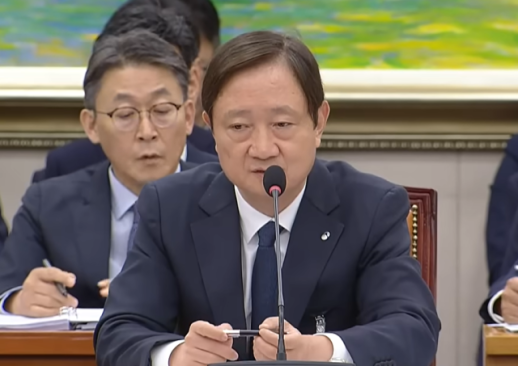 FSS chief calls for fairer CEO succession at financial groups SEOUL, September 15 (AJP) - South Korea's top financial regulator called on financial holding companies Tuesday to strengthen the fairness and transparency of CEO succession at their subsidiaries, saying existing procedures remain inadequate. Financial Supervisory Service (FSS) Governor Lee Chan-jin said at an executive meeting that succession procedures at most financial holding companies lacked clear standards for choosing subsidiary chiefs. Lee identified several weaknesses, including vague qualification standards for chief executives and insufficient time to review candidates at each stage. He also said candidate pools were not actively managed and the shortlisting and review process lacked transparency. Under industry governance guidelines, only some financial holding companies share information on standing CEO candidate pools with subsidiaries or allow bank nomination committees to recommend candidates, according to the filing. "Transparency and fairness should be strengthened throughout the entire CEO succession process, including candidate selection, verification, evaluation and record keeping," Lee said. The remarks come as financial authorities review corporate governance practices across the sector through a task force that has been operating since January. Lee said the group had discussed measures aimed at preventing executive appointments from being decided through closed processes based on internal factions or personal ties. He urged financial companies to establish more transparent and credible succession systems that can also support shareholder value. The regulator said it would closely check whether financial companies follow clear and fair rules when choosing CEOs. AJP Takeaways - South Korea's financial regulator called for stronger safeguards in CEO succession at financial holding company subsidiaries. - FSS Governor Lee Chan-jin cited vague qualification standards, insufficient review periods and largely formal candidate-pool management. - The FSS said it would strengthen scrutiny of whether CEO appointments follow transparent and fair standards. 2026-09-15 17:18:36
 -
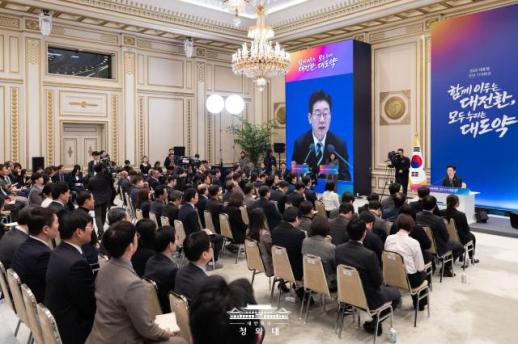 Lee to face controversies at Friday press conference SEOUL, September 15 (AJP) - President Lee Jae Myung will hold an agenda-free press conference Friday, with questions expected over whether he would seek a second term under any constitutional revision. The press conference will begin at 10 a.m. at Cheong Wa Dae's Yeongbingwan, or state guest house, presidential communications chief Sung Ki-hong said Tuesday. The event, Lee's seventh press conference since taking office, is expected to last about 90 minutes and will be attended by around 150 domestic and foreign journalists. It will consist of Lee's opening remarks, a question-and-answer session and closing remarks. Questions will be divided broadly into politics and foreign affairs, and policy and the economy, although reporters will be free to raise other major issues. “This press conference will be an occasion to convey the president's firm commitment to reform, his governing principle of putting people's livelihoods first and a message of stronger national unity,” Sung said. Lee will also “make clear and explain to the public his position and direction on major pending issues,” Sung added. Cheong Wa Dae plans to arrange seating to reduce the distance between Lee and reporters and will also introduce real-time comments from members of the public during the event. The conference comes as Lee faces his weakest public approval numbers since taking office. A Realmeter survey released Monday put Lee's approval rating at 33.8 percent, down 3.6 percentage points from the previous week and marking a ninth consecutive weekly decline. His disapproval rating rose 3.8 percentage points to 63.3 percent. Realmeter cited uncertainty over housing policy and controversy surrounding Lee's recent Cabinet reshuffle among factors weighing on his support. The poll also showed a particularly sharp drop among voters in their 20s and liberal voters. The conference is also expected to draw questions over a continuing controversy surrounding constitutional revision and presidential reelection. Lee said on Aug. 14 that he had consistently supported changing South Korea's current single five-year presidential term to a four-year system allowing a president to serve a second term, saying such a system would make possible greater political accountability through a midterm public assessment. The proposal prompted the opposition People Power Party to demand that Lee explicitly promise not to seek another term. During a meeting with South Korean residents in Paris on Sept. 9, Lee appeared to respond to the controversy, saying, “My term is clearly limited under the Constitution.” Cheong Wa Dae later said the comment meant reelection by Lee was not possible, but opposition politicians have continued to press him to state unequivocally that he would not seek another term. Rep. Son Myung Soo of the ruling Democratic Party welcomed the opportunity for Lee to address the public directly. “I think it is a meaningful occasion for the president to communicate directly with the public,” Son said. AJP Takeaways - President Lee Jae Myung will hold a press conference Friday as his approval rating falls to a new low. - Lee is expected to face questions over Cabinet nominations, housing policy and controversy surrounding presidential reelection. - The event will be Lee’s seventh press conference since taking office, with about 150 domestic and foreign journalists attending. 2026-09-15 17:17:59
 -
 Boryung Establishes 'Boryung Pharma Solution' for Sales and Marketing Boryung has announced the establishment of a new commercial entity, 'Boryung Pharma Solution,' dedicated to sales and marketing of prescription drugs. This move is part of a strategy to enhance expertise by dividing operations into distinct areas: production and research and development (R&D), sales and marketing, and space life sciences research.On September 15, Boryung's board of directors approved the physical division necessary for the establishment of Boryung Pharma Solution. The new company is expected to launch in January 2027, following approval from shareholders at a meeting scheduled for October, with Boryung retaining 100% ownership.As Boryung approaches its 70th anniversary next year, it has unveiled a new vision as a 'life sciences research infrastructure company.' The plan is to develop independent competitive infrastructures for production and R&D, commercial operations, and space life sciences research.Boryung Pharma Solution will focus on commercial infrastructure, aiming to expand its product portfolio by continuously introducing blockbuster drugs from both domestic and international markets, while leveraging its expertise in sales and marketing to strengthen its position in the domestic market.Boryung has set a goal for Boryung Pharma Solution to become 'the best commercial platform in South Korea,' targeting a market share of over 10% in the domestic pharmaceutical sector. The company stated that this would serve as a benchmark for determining its status as the 'overwhelming leader' in the domestic pharmaceutical industry.The production and R&D division will serve as the foundation for Boryung's global essential medicines business. The company plans to evolve into a 'global essential pharma company' responsible for the entire lifecycle of essential medicines, from production to research and supply.The space life sciences research infrastructure will be pursued as a strategic business, aiming to become a key gateway for domestic and international companies conducting research and development in the field of space life sciences.Boryung has stated that the three business divisions will operate independently while remaining interconnected. Boryung Pharma Solution will serve as the foundation for domestic operations, while the production and R&D infrastructure will support global initiatives. The space life sciences research will be nurtured as a future growth driver.As part of the physical division, personnel from the sales and marketing and management support sectors will transition to the new company without changes to their working conditions. Boryung aims to maintain employment and treatment during this transition while enhancing the expertise of its commercial organization.Kim Jeong-kyun, CEO of Boryung, stated, "The launch of Boryung Pharma Solution is aimed at allowing each entity to focus on its strengths for greater growth. We will nurture it as a core growth pillar for Boryung."* This article has been translated by AI. 2026-09-15 17:12:00
 -
President Lee to Hold Press Conference on September 18 Amid Declining Approval Ratings President Lee Jae-myung will hold a press conference on September 18. With his approval ratings dropping to the 30% range for the first time since taking office, he will address key issues affecting the nation, including constitutional amendments, troop deployment to the Strait of Hormuz, and requests for the dismissal of charges in his criminal trial.Seong Gi-hong, the chief of public relations at the Blue House, announced during a briefing on September 15 that the press conference will take place at 10 a.m. at the Blue House's guesthouse, lasting approximately 90 minutes, including the president's opening remarks, a Q&A session with reporters, and closing statements. About 150 domestic and international journalists are expected to attend, marking President Lee's seventh press conference since taking office.The conference will be divided into two main areas: political and diplomatic issues, and policy and economic matters. Reporters will be allowed to ask questions freely without prior coordination, and President Lee will respond directly. The seating arrangement will be designed to minimize the distance between the president and the journalists, and live citizen comments will be incorporated, addressing topics not covered in previous questions.This press conference is noteworthy as it is not tied to specific milestones such as the 30th or 100th day of his presidency, the New Year, or the first anniversary of his inauguration. Seong explained that it will be simply referred to as the 'Lee Jae-myung press conference,' indicating a desire to address recent complex issues without delay.Analysts suggest that the timing of the conference is closely linked to the recent decline in approval ratings. A survey conducted by Gallup Korea from September 8 to 10 revealed that only 38% of respondents approved of President Lee's job performance, the lowest since he took office, while 51% disapproved (for more details, visit the Central Election Survey Deliberation Commission website). Seong acknowledged that approval ratings are a crucial indicator of public evaluation of governance, stating that the president and the Blue House are taking this matter seriously.The most significant political issue is the proposed constitutional amendment. Last month, President Lee outlined plans for a constitutional revision that would include a four-year term with the possibility of re-election and a distribution of presidential powers. While he stated during a meeting with expatriates in Paris on September 9 that his term is clearly limited by the constitution, opposition parties continue to criticize him for a 'self-re-election' agenda.Political circles believe that to quell the controversy, specifics regarding the timing and scope of the constitutional amendment, as well as strategies for garnering bipartisan support, need to be clarified.The issue of troop deployment to the Strait of Hormuz is also unavoidable. The government is considering military contributions to ensure freedom of navigation but has not yet made a decision among various options, including combat, non-combat, and reconnaissance roles. Given the pressure from the United States, the South Korea-U.S. alliance, the need to protect oil supply routes, and strong domestic opposition to deployment, the president must directly explain the criteria for participation.Additionally, President Lee's request for the dismissal of charges in his criminal trial, raised by both opposition and some members of his own party, remains a sensitive issue. If the president does not clarify his position, the debate over judicial reform being linked to his personal legal issues may continue.In the policy and economic sectors, the focus is expected to be on real estate, public welfare, and controversies surrounding ministerial nominations. Recent Gallup surveys indicated that disapproval ratings were primarily due to real estate policies, personnel decisions, and economic welfare issues. With 'public welfare as a priority' as a central theme, how specifically the president addresses housing market stability and personnel renewal will be crucial.Following the resignation of Yong Hye-in, the candidate for Minister of Gender Equality and Family, amid controversies over dual roles as a proportional representative and minister, discussions continue regarding Kim Seung-won, the candidate for Minister of Justice, who is embroiled in allegations of lobbying for a new drug.Seong stated, 'This will be an opportunity to convey the president's firm commitment to reform, the priority of public welfare in governance, and a stronger message of national unity,' adding that the president will clearly outline his positions and directions on major issues to the public.* This article has been translated by AI. 2026-09-15 17:08:20
-
Lee So-young Outlines Regulatory Reform Plans Amid Controversies Lee So-young, the nominee for Minister of SMEs and Startups, presented her policy plans on regulatory reform, labor market flexibility, and alleviating the financial burden on small businesses during a confirmation hearing on September 15.Opening Remarks: "I Will Be a Minister for Regulatory Reform"In her opening remarks, Lee stated, "I will open a 'national startup era' where everyone can challenge and grow," expressing her commitment to finding solutions from the perspective of businesses and citizens if unreasonable regulations hinder new challenges. She emphasized, "If necessary, I will persuade ministers from other departments to lift regulations." Lee also promised to restore and revitalize the KOSDAQ market, a vital funding source for SMEs and startups. "If I become minister, I will not only support small businesses and startups facing immediate difficulties but also prepare for the future together to ensure they do not fall behind in the changing times," she said.Consulting Fees of 70 Million Won: "Cannot Disclose Specific Identities"Rep. Choi Soo-jin of the People Power Party raised concerns about Lee's payments totaling over 70 million won to a consulting firm from September 2023 to April 2025, with monthly fees ranging from 3.3 million to 11 million won. The firm reportedly has a vacant registered address. Lee explained that the payments were for consulting related to election preparations but did not disclose specific identities, stating that the registered representative and the actual consultant were different individuals.Allegations of Real Estate 'Gap Investment' and Late Gift Tax PaymentThe real estate controversy revolved around two issues. One was the 'gap investment' allegation concerning an apartment in Hongje-dong. Lee purchased the apartment for 490 million won in 2016 and lived there for about four years before moving to Gyeonggi Province to run for the National Assembly in 2020. Rep. Choi claimed that a similar apartment in the same complex sold for 1.19 billion won in July, resulting in a 'book profit' of about 700 million won over ten years, suggesting it was a 'gap investment rental.' Lee countered, stating, "The facts differ from the definition of gap investment" and asserted that she had not realized any capital gains.The second issue involved a gift tax related to a financial transaction between family members. Lee's spouse reportedly lent over 220 million won interest-free to her mother in 2022 for a security deposit. Lee explained, "I was not aware of it beforehand. I considered it support for living expenses under Article 46 of the Inheritance and Gift Tax Act," but confirmed that she reported and paid a gift tax of 1.65 million won on the 11th.Zero Legislative Proposals Related to the Ministry of SMEsRep. Choi pointed out that among Lee's legislative proposals during the 21st and 22nd National Assembly (51 and 36 proposals, respectively), there were no legislative achievements related to eight key laws under the Ministry of SMEs, including the Basic Law for Small Enterprises and the Basic Law for Small Business Owners. Lee responded, "I believe that a high quantity of legislative proposals does not necessarily equate to diligent legislative activity."Choi further criticized Lee for proposing a bill to classify nitrogen trifluoride (NF3), essential for semiconductor and display processes, as a greenhouse gas last September, calling it an excessive regulation. Lee defended her action, stating it was necessary for proactive verification in response to international carbon trade regulations.Surge in Donations to Climate Solutions Raises ConcernsRep. Yoon Han-hong of the People Power Party highlighted the significant increase in donations to the environmental organization 'Climate Solutions,' co-founded by Lee, from 1.8 million won in 2017 to 17.87 billion won in 2025. He raised suspicions of policy lobbying based on her history of co-hosting 15 discussions with the organization while serving as a lawmaker. Lee responded, "Since resigning from the board in January 2020, I have only engaged in policy exchanges and cannot know all specific activities," disputing claims of contracted legislation for specific organizations."Rigid Regulations on 52-Hour Workweek Are Inappropriate"During policy inquiries, Lee's comments on labor hour regulations drew significant attention. She stated that the current penalty of up to two years in prison for violating the 52-hour workweek does not align with today's diverse work structures. She argued, "Unlike past factory-based labor, knowledge work is often evaluated based on outcomes rather than hours." However, she acknowledged the issues of long working hours and overwork, agreeing that reducing working hours is necessary for worker health while also mentioning the need for flexibility in the comprehensive wage system."Delivery App Fees Should Be Used Efficiently"Rep. Song Jae-bong of the Democratic Party questioned the high fees charged by large platforms like Coupang, which burden small businesses, and asked about corrective measures through cooperative delivery apps. Lee acknowledged that fees from not only Coupang but also other open markets and delivery apps are burdensome for small businesses. She proposed strengthening public delivery app competitiveness alongside private platform regulations and information disclosure, reaffirming the need to reform the existing coupon system into a more efficient model.Questions on Technology Theft, Overseas Expansion, and Capital Region ConcentrationRegarding overseas expansion, Rep. Lee An-joo of the Democratic Party called for a one-stop support system designed from the startup stage for global business. Lee expressed agreement with the strategy of accompanying large enterprises in their overseas ventures and announced plans to establish new overseas bases within the Ministry of SMEs to complement KOTRA's functions. In response to Rep. Park Hee-seung's suggestion to utilize the Korean-American network, she admitted, "There are no such connections. I will look into it," acknowledging the lack of concrete plans.On the issue of technology theft, Rep. Park pointed out that the Ministry of SMEs lacks statistics on damage, including 59 cases of dispute resolution. Lee stated, "I will identify the scope of lower regulations and report it during the National Assembly audit," and announced plans to allocate 50% of support to non-capital regions starting next year to address the concentration of venture startups in the capital area. 2026-09-15 17:08:10
-
U.S. 10-Year Treasury Yield Surpasses 5%, Driving Up South Korean Bond Rates The yield on the U.S. 10-year Treasury has surpassed the psychological barrier of 5%. Concerns over inflation and the widening U.S. budget deficit have contributed to a sharp rise in long-term interest rates, which has also led to an increase in South Korean government bond rates. As South Korea has proactively entered a cycle of interest rate hikes, the likelihood of the U.S. shifting to a tightening stance has raised expectations for continued upward pressure on domestic market rates.According to the Korea Financial Investment Association, on September 15, the yield on the 3-year government bond rose by 6.6 basis points to 4.091%, marking a year-to-date high. The yield on the 10-year government bond closed at 4.600%. After a sharp increase following the outbreak of conflict in the Middle East, government bond rates had declined until August but have faced renewed upward pressure this month.Recently, the pace of rising rates has accelerated, driven by increasing expectations for a rate hike by the U.S. Federal Reserve. On September 14, the yield on the U.S. 10-year Treasury reached 5.00% during trading and climbed to 5.012%. This marks the first time since October 2023 that the yield has exceeded 5%, and it is the second highest level since the global financial crisis in 2007.The 10-year Treasury yield serves as a benchmark for determining borrowing costs for corporate bond issuers and significantly influences mortgage and student loan rates in the U.S.The 5% threshold is considered a critical psychological barrier in financial markets. Since the U.S. 10-year Treasury yield acts as a benchmark for global long-term risk-free rates, surpassing this level could lead to increased upward pressure on corporate bonds and mortgage rates across the market.The rise in Treasury yields reflects concerns over inflation in the U.S. and the potential for tightening by the Federal Reserve. As military conflicts between the U.S. and Iran resume, international oil prices have surged past $100, heightening inflation fears. Additionally, the increasing budget deficit in the U.S. has added to the supply burden of government bonds, contributing to the rise in long-term rates.The increase in U.S. Treasury yields poses challenges for the domestic bond market in South Korea. Both short- and long-term South Korean government bond yields are on the rise, with the 3-year yield surpassing 4% on September 11 for the first time in nearly two years.Higher government bond yields increase borrowing costs for businesses and households. Specifically, rising long-term rates can elevate the borrowing costs for corporate bonds, while loan rates tied to market rates, such as mortgages, may also face upward pressure. This could apply downward pressure on the prices of risk assets like stocks and real estate due to relatively higher discount rates.The possibility of further rate hikes by the Bank of Korea (BOK) is another factor contributing to higher domestic bond yields. Following the BOK's shift to a tightening stance in July, expectations for sustained inflation due to prolonged high oil prices may lead to a longer-than-anticipated tightening cycle, which is reflected in market rates.Particularly, as the BOK reassesses the potential growth rate (currently at 1.8%), the neutral interest rate may rise. An increase in the neutral rate would imply that the current tightening intensity of the benchmark rate at 3.50% is weaker than initially expected, raising the likelihood of additional rate hikes by the BOK, which could further exert upward pressure on government bond yields.Kim Myung-sil, a researcher at iM Securities, stated, "If investments in semiconductors and artificial intelligence (AI) lead to productivity improvements and domestic recovery, next year's potential growth rate could be revised upward from the current range of 1% to 2.1% to 2.2%. Considering the rise in global real interest rates, the nominal neutral rate could increase from the previous 2.55% to between 2.8% and 3.1%." He added, "If the neutral rate rises, the tightening intensity of the current benchmark rate of 3.50% will weaken, making it possible for rates to remain unchanged until the end of next year or even into 2028."Market experts anticipate that the final rate level in the BOK's tightening cycle will be 3.50%. Jo Yong-gu, a researcher at Shin Young Securities, noted, "The BOK is likely to reach the final rate more quickly than in the past and maintain a high-rate environment. Following an additional hike in November, the final rate is expected to reach 3.50% by February or April of next year."* This article has been translated by AI. 2026-09-15 17:08:00
-
President Lee to Hold Press Conference on September 18 Amid Declining Approval Ratings President Lee Jae-myung will hold a press conference on September 18. With his approval ratings dropping to the 30% range for the first time since taking office, he will address key issues affecting the nation, including constitutional amendments, troop deployment to the Strait of Hormuz, and requests for the dismissal of charges in his criminal trial. Seong Gi-hong, the chief of public relations at the Blue House, announced during a briefing on September 15 that the press conference will take place at 10 a.m. at the Blue House's guesthouse. He estimated that the event, which will include the president's opening remarks, a Q&A session with reporters, and closing statements, will last about 90 minutes. Approximately 150 domestic and international journalists are expected to attend, marking President Lee's seventh press conference since taking office. The conference will be divided into two main areas: politics and diplomacy, and policy and economics. Reporters will be allowed to ask questions freely without prior coordination, and President Lee will respond directly. The seating arrangement will be designed to minimize the distance between the president and the journalists, and real-time public comments will be incorporated, addressing topics not covered in existing questions. This press conference is notable as it is not tied to specific milestones such as the 30th or 100th day of his presidency, the New Year, or the first anniversary of his inauguration. Seong described it as simply a “Lee Jae-myung press conference,” indicating a commitment to address recent complex issues without delay. Analysts suggest that the timing of the conference is closely linked to the recent decline in approval ratings. A survey conducted by Gallup Korea from September 8 to 10 revealed that only 38% of respondents approved of President Lee's job performance, the lowest since he took office, while 51% disapproved (for more details, visit the Central Election Survey Deliberation Commission website). Seong acknowledged that approval ratings are a crucial indicator of public evaluation of governance, stating that the president and the Blue House are taking this matter seriously. The most significant political issue is the proposed constitutional amendment. Last month, President Lee outlined plans for a constitutional revision that would include a four-year term with the possibility of re-election and a distribution of presidential powers. During a meeting with expatriates in Paris on September 9, he clarified that his term is constitutionally limited, but opposition parties continue to criticize him for a perceived attempt at “self-re-election.” Political circles believe that to quell the controversy, specifics regarding the timing and scope of the constitutional amendment, as well as strategies for garnering bipartisan support, need to be clarified. The issue of troop deployment to the Strait of Hormuz is also unavoidable. The government is considering military contributions to ensure freedom of navigation but has not yet made a decision among various options, including combat, non-combat, and reconnaissance roles. Given the pressures from the United States, the importance of the South Korea-U.S. alliance, the need to protect oil supply routes, and strong domestic opposition to troop deployment, the president will need to provide clear explanations regarding participation and decision-making criteria. Additionally, President Lee's request for the dismissal of charges in his criminal trial, raised by both opposition and some members of his own party, remains a sensitive issue. If the president does not clarify his position, the controversy surrounding judicial reform being linked to his personal legal issues may persist. In the policy and economic sectors, the focus is expected to be on real estate, public welfare, and controversies surrounding ministerial nominations. Recent Gallup surveys indicated that disapproval ratings were primarily due to real estate policies, personnel decisions, and economic and public welfare issues. As the administration emphasizes “public welfare first,” the specifics of follow-up measures to stabilize the housing market and renew personnel will be critical. Following the resignation of Yong Hye-in, the candidate for Minister of Gender Equality and Family, amid controversies over dual roles as a proportional representative and minister, discussions continue regarding Kim Seung-won, the candidate for Minister of Justice, who is facing allegations of lobbying related to a new drug. Seong stated that the press conference will convey the president's firm commitment to reform, prioritizing public welfare, and delivering a stronger message of national unity. He emphasized that the president will clearly outline and explain his positions and directions on major issues to the public. * This article has been translated by AI. 2026-09-15 17:08:00
-
 TWICE to release live vinyl SEOUL, September 15 (AJP) - K-pop girl group TWICE will release a special live vinyl record from the Seoul finale of its "THIS IS FOR" world tour next month, JYP Entertainment said Tuesday. The record, titled "TWICE Special Vinyl WORLD TOUR FINALE in SEOUL - LIVE," will be released at 1 p.m. on Oct. 16. It will feature live versions of songs performed during the group's Seoul finale at KSPO Dome in Olympic Park in July. The Seoul concerts were held from July 10 to 12, with the venue opened in a 360-degree seating configuration. The final show was also streamed online through Beyond LIVE for viewers outside the concert hall. The vinyl release follows TWICE's sixth world tour, which covered 81 shows in 44 regions across Asia, Oceania, North America and Europe. JYP said the tour included several firsts for the group. TWICE became the first foreign act to perform at Japan's National Stadium in Tokyo and the first K-pop girl group to hold a solo concert at Hong Kong's Kai Tak Stadium, according to the agency. The North American leg drew about 550,000 people, while the Japan leg drew about 640,000, JYP said. AJP Takeaways - TWICE will release a live vinyl record from its Seoul tour finale on Oct. 16. - The record features live versions of songs from the group's July concerts at KSPO Dome. - The final Seoul show was streamed through Beyond LIVE. 2026-09-15 17:01:31
 -
Middle East Conflict Drives Up Shipping Costs and Insurance Rates The ongoing conflict in the Middle East is reshaping the pricing structure of global shipping routes. War risk insurance premiums for vessels passing through the Strait of Hormuz have skyrocketed, while container shipping rates to the United States are approaching $10,000. The financial burden stemming from the war is causing rerouting and a shortage of shipping capacity, putting pressure on global logistics networks.According to the shipping industry on September 15, military tensions in the Middle East have sharply reduced vessel traffic through the Strait of Hormuz. Global commodity analysis firm Kpler reported that only four cargo ships passed through the strait on September 14, down from ten the previous day and significantly lower than the pre-war average of about 125 vessels per day.As shipping traffic declines, war risk insurance premiums remain elevated. Recent market estimates indicate that premiums for vessels transiting Hormuz have surged to as much as 40 times the normal rate. For a Very Large Crude Carrier (VLCC) valued at $100 million, the insurance premium, which typically hovers around $250,000, could reach as high as $10 million. Actual premiums are determined individually based on the vessel, insurer, and operational conditions.Shipping rates have also seen a dramatic increase. According to British shipping consultancy Drewry, as of September 10, the cost for a 40-foot container (FEU) from Shanghai to New York was recorded at $9,726. At current exchange rates, this translates to approximately 1.3 million won per container.On the same date, the average spot rate for containers from China to Khor Fakkan was $10,626 per 40-foot container, marking a 479% increase since February 28. This is about 5.8 times higher than pre-war levels, as container transport through the Strait of Hormuz has become virtually restricted, leading to increased demand for alternative shipping routes through Jeddah and Khor Fakkan.The Shanghai Containerized Freight Index (SCFI) is also on the rise. On September 11, the SCFI reached 3,662.18, up 2% from the previous week's 3,590.05. As of September 4, shipping rates to the U.S. West Coast were $7,242 per FEU, while rates to the U.S. East Coast reached $10,324.Shipping companies are passing on the increased costs to customers. Maersk has implemented emergency surcharges for cargo heading to or departing from regions including Iraq, Kuwait, parts of Saudi Arabia, Bahrain, Qatar, the United Arab Emirates, and Oman. The surcharges are $1,800 for a 20-foot standard container, $3,000 for a 40-foot standard container, and $3,800 for refrigerated, special, or hazardous containers. Additionally, vessels transiting the Strait of Hormuz incur an extra $1,000 per container to cover insurance and crew risk compensation.This situation has complicated the calculations for shipping companies regarding their routes. While the war risk in the Strait of Hormuz has led to increased insurance and crew risk costs, some shipping companies are returning to the Suez Canal to avoid the longer transit times and fuel costs associated with rerouting around the Cape of Good Hope.Cost and time are the primary factors driving this decision. According to Geneta, using the Red Sea and Suez Canal for the China to Genoa route can reduce transit time by about 11 days compared to rerouting around the Cape of Good Hope. Shorter distances mean savings on fuel and operational costs, allowing vessels to be deployed for subsequent voyages more quickly.However, the Red Sea route has not fully normalized. In August, the average weekly shipping capacity passing through the Bab el-Mandeb Strait was 212,636 TEU, double the amount from a year ago, but only 23% of the 930,679 TEU recorded in August 2023, prior to the Red Sea crisis. Shipping companies are cautiously resuming some services while monitoring the security situation.Ultimately, the Middle East conflict is not only blocking shipping routes but also altering the cost structure of maritime transport. A shipping industry insider noted, "As the geopolitical risks in the Middle East persist, shipping companies must consider safety, insurance premiums, fuel costs, and transit times when deciding on routes. If additional costs continue for an extended period, they will likely be reflected in shipping rates, leading to increased logistics costs for shippers and import-export businesses."* This article has been translated by AI. 2026-09-15 17:00:20