


Latest by
-
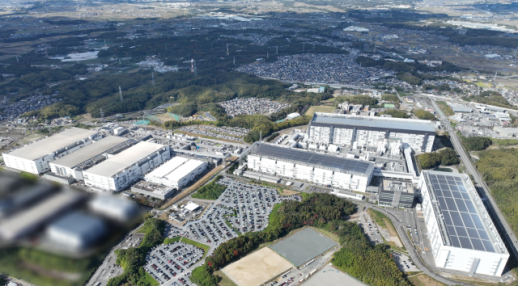 Korea's AI chip ETF frenzy poised to spread to Tokyo SEOUL, July 27 (AJP) —The chip-linked leveraged ETF frenzy that turned South Korea into a proving ground for AI-fueled speculative trading is poised to spill over to Japan. U.S. asset managers are seeking to launch the first single-stock leveraged exchange-traded funds tied to Japanese chipmaker, modeled after single-stock instruments on Samsung Electronics and SK hynix to ride on the AI chip fever. According to Bloomberg on Monday, U.S. firms including Kogi Strategies, GraniteShares and Turtle Capital have filed to list leveraged and inverse ETFs tracking Kioxia shares and its American depositary receipts. At least nine products, including 2x leveraged and inverse ETFs linked to Kioxia, are currently under review by U.S. regulators. If approved, the products would mark the first U.S.-listed single-stock leveraged ETFs based on a Japanese company. Supporters expect strong demand for the products as investors continue to pour into AI-related stocks, while critics warn they could further amplify volatility. The concern stems from the way leveraged ETFs operate. Because the funds must rebalance their positions at the end of each trading day to maintain their target exposure, those large trades can add to market volatility and make price swings bigger. "The experience in South Korea shows that leveraged ETFs distort normal market mechanisms and significantly increase volatility," Andrew Jackson, head of Japanese equity strategy at Ortus Advisors, told Bloomberg. He added that such products could further fuel speculative trading in AI-related shares and create a more challenging environment for long-term investors. Bloomberg pointed to South Korea as a recent example. Rapid growth in leveraged ETFs tied to Samsung Electronics and SK hynix was followed by wider market swings, prompting regulators to suspend approvals for new single-stock leveraged ETFs. The debate also come as Kioxia has become one of Japan's most volatile large-cap stocks. After briefly becoming the country's most valuable listed company during the AI rally, its shares have fallen about 42 percent over the past month to 51,350 yen on Monday and are down about 3.3 percent over the past five trading days. Meanwhile, U.S. issuers are also targeting other major Japanese stocks. Turtle Capital has also filed for leveraged ETFs tied to SoftBank Group, Nintendo and bitcoin-focused Metaplanet. Direxion and Themes ETF Trust are separately seeking similar products linked to Tokyo Electron, Toyota Motor and Lasertec. 2026-07-27 15:18:53
 -
 Hyundai to Provide 33 Genesis Vehicles for Korea-Central Asia Summit Hyundai Motor Company will support the successful hosting of the Korea-Central Asia Summit by providing official vehicles. On July 27, Hyundai announced that it signed a memorandum of understanding (MOU) with the preparatory planning team for the first Korea-Central Asia Summit. The summit is scheduled to take place on September 16 in South Korea. This summit will be the only multilateral meeting held in South Korea this year, bringing together leaders from South Korea and five Central Asian countries: Kazakhstan, Kyrgyzstan, Tajikistan, Turkmenistan, and Uzbekistan. They are expected to discuss cooperation in various fields, including economy, diplomacy, and trade. During the summit, Hyundai will provide a total of 33 Genesis G90 and G80 vehicles for the leaders and senior officials from the five Central Asian countries. This initiative aims to support the successful hosting of a major diplomatic event while promoting the excellent quality of Genesis vehicles. Hyundai has consistently supported official and operational vehicles for major international events both domestically and abroad. The company also plans to provide event vehicles for the 49th ASEAN Summit, which will be held in the Philippines in November. A Hyundai official stated, "We are honored to provide official vehicles for the first Korea-Central Asia Summit. Based on our experience in supporting major international events, we will actively cooperate to ensure the success of this summit." Last year, Hyundai Motor Group supported approximately 200 vehicles, including Genesis models and hydrogen electric buses, for the APEC Summit held in Gyeongju.* This article has been translated by AI. 2026-07-27 15:16:00
 -
President Lee Jae-myung: South Korea and Brazil Must Uphold Multilateralism President Lee Jae-myung stated on July 27 that "South Korea and Brazil are democratic nations representing their respective regions and global middle powers," emphasizing the need for closer cooperation to uphold multilateralism, free trade, and international norms as global order becomes increasingly uncertain.During his state visit to Brazil, President Lee made these remarks in an exclusive interview with the local daily O Globo. He noted, "Brazil has consistently supported a multilateral and norm-based international order, and South Korea shares the same values."He further highlighted that if the two countries work closely together, they could strengthen multilateral cooperation frameworks, including the World Trade Organization (WTO), and contribute to establishing a more open, stable, and predictable international trade order.Regarding recent international developments, President Lee assessed that "geopolitical conflicts are intensifying, and global leadership is weakening, shaking the norms and order that have long supported the international community."He added, "Ongoing conflicts in regions such as the Middle East and Europe are causing supply chain instability and energy and price crises, directly impacting the daily lives of citizens in various countries," stressing that close cooperation and solidarity among nations are more important than ever.President Lee noted that discussions with leaders of major countries, including the G20, confirmed a consensus on the need to strengthen cooperation and joint responses rather than confrontation and conflict, positioning cooperation with Brazil as a key pillar in addressing complex crises.On the WTO, which has faced criticism for its weakened function due to recent U.S. tariff measures, he expressed the need to enhance its role through reform. He stated, "As protectionism spreads, the WTO's function is weakening, and uncertainty for businesses in the global market is increasing. However, the WTO remains the most comprehensive and legitimate multilateral forum for member countries to continue dialogue, resolve disputes, and expand cooperation based on international trade norms."He acknowledged that there are criticisms regarding the WTO's inability to adequately respond to changing trade environments, emphasizing the importance of strengthening its functions and pursuing reforms that align with current realities.President Lee also expressed optimism about the swift conclusion of the Korea-Mercosur trade agreement. He explained that during Brazilian President Luiz Inácio Lula da Silva's state visit to South Korea in February, both leaders recognized the importance of a free and norm-based international trade order.He noted, "Since the start of negotiations in 2018, seven official rounds of talks have laid a solid foundation by 2021," and he believes that the joint efforts of both sides will contribute to the rapid progress and conclusion of the Korea-Mercosur trade negotiations.The Korea-Mercosur trade agreement refers to a comprehensive trade agreement pursued by South Korea and four South American countries: Brazil, Argentina, Paraguay, and Uruguay. Although its official name is 'Trade Agreement (TA)' rather than 'Free Trade Agreement (FTA),' it encompasses not only product tariffs but also services, investment, e-commerce, government procurement, and intellectual property, making it structurally similar to an FTA.However, rather than specifying a concrete timeline for the conclusion, President Lee emphasized mutual benefit and balance. He stated, "The trade agreement includes sensitive issues such as market access for both sides. It is more important to derive mutually beneficial and balanced results than to predict a specific conclusion timeline."He pledged, "I will do my utmost to conclude a high-level agreement that brings substantial benefits to both sides as soon as possible," asserting that the Korea-Mercosur trade agreement will serve as an important milestone demonstrating the commitment of South Korea and Mercosur to uphold a free and open trade order beyond mere economic cooperation.Regarding South Korea's diplomatic and security strategy, he proposed a 'virtuous cycle of self-reliance, alliances, and solidarity.' He explained, "South Korea has consistently strengthened its capacity to take responsibility for national security through self-reliance, even amid an uncertain international order," while also actively contributing to solving global issues as a responsible member of the international community.President Lee clarified that the solidarity South Korea seeks is not aimed at excluding or confronting specific countries, but rather an open and pragmatic cooperation that complements the existing international order, with capable nations taking on greater responsibilities and enhancing cooperation in various fields.He added, "Based on diplomacy that fosters a virtuous cycle of self-reliance, alliances, and solidarity, I will navigate the waves of complex global crises together with Brazil and the international community, striving to be a trusted partner that fulfills responsibilities for coexistence and shared prosperity."On North Korea policy, he reaffirmed the commitment to dialogue and gradual denuclearization. President Lee expressed regret that a decisive breakthrough has not yet been achieved in inter-Korean dialogue, stating, "I firmly believe that peace begins with persistent efforts, and I will unwaveringly pursue the path of dialogue and cooperation."He promised, "I will work closely with the international community, including the United States, to deliver a consistent message of dialogue to North Korea, and I will do my best to create diplomatic conditions for the resumption of inter-Korean dialogue and U.S.-North Korea dialogue."President Lee stated, "Starting with opening the channels for dialogue, I will comprehensively promote inter-Korean exchanges, normalization of relations, and gradual denuclearization to achieve substantial progress toward lasting peace and stability on the Korean Peninsula."He expressed appreciation for Brazil's consistent interest and support for peace and stability on the Korean Peninsula, requesting, "I value Brazil's ongoing support for our government's efforts to establish peace on the Korean Peninsula and hope for continued cooperation."On democracy, President Lee emphasized citizen participation and action as core values. He remarked, "Democracy is not a self-sustaining institution but a value upheld through the participation and actions of citizens," noting that South Korea has preserved democracy and overcome crises through the courage and solidarity of its people during critical junctures.He added, "Brazil has also been a nation that has continuously strived to uphold and develop democracy," stating that while the two countries have evolved in different historical contexts and environments, they share universal values of freedom, human rights, and the rule of law.Regarding K-culture, he defined it as an investment for the future of South Korea, extending beyond cultural industries or soft power. He stated, "If politics and diplomacy connect nations, culture connects people's hearts," explaining that the growth of K-culture signifies not only the success of the content industry but also an increased interest in South Korea, expanding into tourism, consumption, investment, and industrial cooperation.President Lee emphasized, "Promoting K-culture is an investment for the future of South Korea beyond the growth of the cultural industry, serving as a new driving force for economic development that grows together with the world and sustainable national competitiveness."He evaluated cultural cooperation with Brazil, stating, "Just as Brazil's music, art, and soccer inspire people worldwide, K-culture serves as a bridge connecting the hearts of Koreans and people around the world."He expressed hope that the rich cultural potential of K-culture and Brazil will inspire each other and deepen the friendship between the two nations, wishing for it to serve as a new foundation for revitalizing economic, tourism, and youth exchanges. 2026-07-27 15:16:00
-
2026 Global Art Fair Connects the World Through Art in Seoul The '2026 Global Art Fair: Shanghai-Yantai-Seoul International Exchange Exhibition' concluded its final leg at the Dongjak Art Gallery in Seoul from July 23 to 25.This exhibition in Seoul marked the culmination of an international tour that began in Shanghai on July 3 and continued through Yantai, Shandong Province, from July 6 to 9.Works from domestic artists, as well as those from China, Japan, Singapore, and Vietnam, captivated visitors.Interest in the exhibition surged starting July 22, when artworks began arriving. Artists traveled from various regions, including Jeju Island and Masan, bringing their pieces to the Dongjak Art Gallery.The dedication of these artists, who traveled long distances, reflected their passion for sharing their work and connecting through art.Artist Park Joo-eun stated, "It was meaningful for artists from different regions and environments to meet in one space through their works. This exhibition has been a valuable experience for my growth as an artist."Artist Park Seong-a expressed, "I realized that moments spent directly engaging with the audience to share thoughts and emotions are as important as the process of completing a work. I want to continue presenting heartfelt pieces in the future."Artist Jang Hyo-hee shared, "I feel proud to have participated in this international exchange exhibition that connected Shanghai, Yantai, and Seoul. It was a confirmation that, despite different nationalities and languages, we can empathize through art."Reina Lee, the organizing committee chair, remarked, "The true stars of this international tour are the artists who have dedicated themselves to their work and willingly traveled from across the country. Through the journey connecting Shanghai, Yantai, and Seoul, we have confirmed the capabilities and competitiveness of our artists. We will continue to create opportunities for domestic and international artists to showcase their work and engage in exchanges on broader stages."The Seoul exhibition featured artists including Kim Min-chae, Choi Seo-chan, Kim Hee-mang, Kim Mi-kyung, Choi Yeon-gyeong, Kang Mi-seon, Choi Ji-a, Park Mi-jin, Kim Hye-ri, Park Cheol-wan, Kim Da-rim, Ko Ji-eun, Kim Jeong-hee (Western painting), Choi Hyun-seung, Bang Seon-mi, Lee Gang-yong, Lim Hye-mi, Lee Mi-ran, Kim Jeong-hee (Korean painting), Kim Ah-young, Yoo So-hee, Lee Ga-hye, Jang Hyo-hee, Lee Seo-yul, Park Joo-eun, Park Seong-a, Lee Haeng-yeon, Kim Hee, Kim Jeong-hu, Hong Hyo-jin, and Kim Hye-na, among others.This international exchange exhibition, spanning three cities, served not only to display artworks but also to connect artists with audiences and bridge nations and cultures through artistic exchange.While the artistic journey that began in Shanghai concluded in Seoul, the artists' new challenges and steps toward the international stage are just beginning.* This article has been translated by AI. 2026-07-27 15:12:00
-
 Silicon Valley VC courtship lifts KOSDAQ on hopes for startup capital SEOUL, July 27 (AJP) — President Lee Jae Myung's Silicon Valley outreach to some of the world's most influential venture capital firms gave South Korea's startup-heavy KOSDAQ a lift on Monday, even as enthusiasm surrounding his AI diplomacy over the weekend failed to spill over to the broader stock market. While headlines focused on Lee's meetings with Nvidia, Broadcom and other technology giants, Monday's attention shifted to his separate gathering with six leading U.S. venture capital firms, fueling expectations that Korean startups could gain greater access to global funding. The benchmark KOSPI traded lower as investors instead watched the blockbuster Shanghai debut of Chinese memory chipmaker CXMT, whose shares surged about 500 percent in their first trading session, reinforcing competitive concerns in the semiconductor sector. The KOSDAQ, however, outperformed as buying spread across artificial intelligence, robotics and deep-tech names. Industrial automation company Hyundai Movex jumped 14.7 percent to 22,050 won. Rainbow Robotics, backed by Samsung Electronics, climbed 6.0 percent to 443,500 won, while robotic automation developer Cosmo Robotics gained 2.6 percent to 14,680 won. Investors viewed Lee's Silicon Valley meetings as a potential catalyst for improving Korean startups' access to overseas venture funding rather than an immediate earnings driver. "The biggest structural weakness of the KOSDAQ has been that many technology companies have struggled to clearly differentiate themselves and secure sufficient capital for long-term growth," said Baek Jong-min, an analyst at Yuanta Securities. "If cooperation with leading Silicon Valley venture capital firms leads to actual investment, it could enhance the global credibility of Korean technology companies and provide a meaningful positive signal for the market." The optimism was reinforced by Lee's pledge to make South Korea "the world's best environment for investment and entrepreneurship" through easier visa rules, deeper cooperation with overseas investors and expanded financial and global-market support for startups. As part of the initiative, the National Pension Service signed investment cooperation memorandums of understanding with Andreessen Horowitz, Sequoia Capital, General Catalyst, Lightspeed Venture Partners, New Enterprise Associates and Khosla Ventures. The six venture firms collectively manage roughly $313 billion in assets, while the NPS oversees about 1.69 quadrillion won ($1.2 trillion). The agreements are intended to identify promising Korean startups, expand cross-border investment opportunities and strengthen venture ecosystems in both countries. Presidential Policy Chief Kim Yong-beom said the meetings were intended to deepen investment cooperation between global technology companies and South Korea's AI sector. "The purpose was to combine the technology and capital of global Big Tech companies with Korea's capabilities not only in semiconductors but across the entire AI ecosystem, including infrastructure, models and physical AI, to generate tangible investment and cooperation," Kim said after the summit. He described the meetings as "a giant global initiative" prepared jointly with major technology companies seeking strategic investment cooperation with South Korea, rather than a one-off diplomatic event. The lineup underscored the significance of the meeting. Sequoia Capital was an early investor in Apple, Nvidia and Google. Andreessen Horowitz backed Meta and Instagram during their early growth, while Khosla Ventures invested in OpenAI before the generative AI boom. Andreessen Horowitz recently opened a Seoul office, highlighting growing interest among global investors in South Korea's startup ecosystem. Still, whether those discussions translate into concrete investment commitments remains to be seen. For now, the meetings have offered the KOSDAQ a sentiment boost rather than a structural turning point. The startup-heavy market has struggled to keep pace with the KOSPI's AI-driven rally, and investors say only sustained capital inflows from global venture firms would change that narrative. 2026-07-27 15:06:01
 -
Investor Loses Half of Assets in Aggressive Leverage Bet on Semiconductor Stocks A retail investor who engaged in aggressive leveraged investments based on a rising semiconductor market revealed that their asset value has plummeted by more than half in just a month.Recently, a post titled 'My Life is Ruined by Hynix Leverage' appeared on an online community.The author of the post, identified as A, stated that they began investing with 200 million won (approximately $150,000) last October and grew their assets to 400 million won (about $300,000) by March of this year through investments in SK Hynix and semiconductor-related stocks. They continued to generate profits from cosmetics, department stores, energy storage systems, and semiconductor materials, reaching a peak valuation of 550 million won (around $410,000).However, A explained that they believed semiconductors were still undervalued and concentrated their investments in Samsung Electronics and SK Hynix, utilizing 2x leveraged products and margin trading, effectively going all-in.The results A shared were devastating.They reported, 'In just a month, my asset valuation dropped from 550 million won to 220 million won.' While this is still a slight profit compared to the initial investment of 200 million won, it represents a valuation loss of over 300 million won from the peak, causing significant stress.A expressed, 'After working for ten years, I thought I finally built my wealth during this market rise, but I lost over 300 million won in just a month. I regret that if I hadn’t used 2x leverage, my losses would have been much smaller.'A also asked other investors if they had similar experiences of life being ruined by leverage.According to the post, A identified leveraged investment as the cause of their losses. Due to the structure of leveraged stocks, which have greater volatility than regular stocks, losses can accumulate much faster if stock prices move contrary to expectations. Financial authorities have repeatedly warned that single-stock leveraged products are high-risk investments with much greater volatility than regular stocks and are more suitable for short-term strategies rather than long-term holding.Online commenters noted that losses from peak valuations are a common psychological burden for investors.They remarked, 'What hurts more is how much I lost from the peak compared to my principal,' 'If I start averaging down from here, I could lose my entire principal,' 'Profits feel like my money, but I can’t accept losses, so I keep averaging down,' and 'Leverage loses money much faster than it makes money. Greed ultimately destroys accounts.'Some commenters added, 'At least I still have my principal, so that’s a relief,' 'In times like this, it’s crucial to clear margin trades first,' and 'Even if the semiconductor outlook is good, leverage is a completely different investment,' emphasizing the need to be cautious of further losses.* This article has been translated by AI. 2026-07-27 15:04:00
-
Broadcast Commission Warns Against Exaggerated Promotions for Galaxy Z8 Series The Broadcasting and Communications Commission (BCC) warned on July 27 about potential user harm due to exaggerated promotions by some mobile phone retailers during the pre-order period for the Galaxy Z8 series, including excessive promises of subsidies and giveaways.The BCC emphasized the importance of verifying the sales entity and contract details when pre-ordering to prevent user harm. According to the Korea Association of Information and Communication Technology (KAIT), which has implemented a registration system for retailers since May, customers should check for pre-approval documents and retailer identification to confirm the responsible sales entity.Consumers should also ensure that the promised subsidies and giveaway details are included in the contract. If these details are not documented, users may not receive the promised benefits. The BCC stated that contracts are essential evidence for protecting user rights and should be obtained and kept securely.Additionally, starting in September, the three major mobile carriers (SK Telecom, which has already implemented this) will establish a system to include retailer information in mobile service contracts for user transparency.The BCC advised that if users experience issues such as non-payment of subsidies or failure to receive contracts during the pre-order and activation process, they can report these incidents through the User Participation Reporting System operated by the User Protection Association (KCUP).Kim Jong-cheol, chairman of the BCC, stated, "During the pre-order period, users should not rely solely on the subsidies presented by retailers but should carefully check the conditions stated in the actual contract. If there are suspicions of exaggerated or false advertising, please report it immediately through the User Participation Reporting System."Meanwhile, the domestic retail prices for the Galaxy Z8 series are set at 2,577,300 won for the Galaxy Z Fold8 Ultra with 12GB of memory and 256GB of storage, 2,278,100 won for the Galaxy Z Fold8, and 1,683,000 won for the Galaxy Z Flip8.* This article has been translated by AI. 2026-07-27 15:04:00
-
Government Raises Heat Wave Alert to 'Severe' as Response Efforts Intensify The government has raised the national heat wave alert to 'severe' as extreme heat and tropical nights are expected to persist for the time being. The Ministry of the Interior and Safety announced on July 27 that, effective at 3 p.m., the heat wave disaster alert would be elevated to 'severe' and that the Central Disaster and Safety Countermeasure Headquarters (CDSCHQ) would be activated under the leadership of Minister Yoon Ho-jung.According to the Korea Meteorological Administration, heat wave warnings have been issued for most regions following the end of the July monsoon, with extreme heat and tropical nights expected to continue.In response, Minister Yoon instructed relevant agencies and local governments to prioritize the safety and lives of citizens and to implement field-centered heat wave response measures.Efforts will focus on monitoring vulnerable populations, including the elderly, residents of small rooms, and the homeless, to ensure adequate support for cooling supplies. Compliance with heat safety regulations at outdoor workplaces and vulnerable businesses will also be monitored. Additionally, officials will check on elderly farmers and advise them to limit outdoor activities.Cooling centers and heat reduction facilities accessible to the public will be assessed for operational status, including the functionality of cooling equipment and accessibility. Operating hours may be extended based on weather conditions, such as tropical nights.In areas where severe heat wave alerts are issued, a 'Severe Heat Wave Response Guide' will be distributed, and additional on-site situation management personnel will be dispatched to monitor response efforts.Infrastructure will also be proactively inspected. Support will be provided to livestock farms and aquaculture industries for the distribution of heat prevention facilities.Minister Yoon emphasized, 'Heat waves are a disaster that hits the most vulnerable, including residents of small rooms, elderly individuals living alone, and outdoor workers, the hardest. We will implement protective measures, such as expanding the operation of cooling centers, and work closely with local governments to prevent loss of life.'He also urged citizens to stay hydrated and take breaks during the hottest parts of the day, advising those in areas under severe heat wave alerts to immediately cease outdoor activities and move to cooler locations.* This article has been translated by AI. 2026-07-27 15:00:00
-
Samsung Card Reports 7.5% Drop in First-Half Net Profit Samsung Card's net profit for the first half of the year decreased due to one-time labor costs and rising financial expenses. On July 27, Samsung Card announced that its net profit for the first half of the year was 310.5 billion won, a 7.5% decline compared to the same period last year. Total transaction volume for the first half reached 96.5 trillion won, marking a 9.0% increase from the previous year. The growth was attributed to enhanced product competitiveness through expanded partnerships with high-quality affiliates, leading to an increase in both membership and spending per member. The card business recorded a transaction volume of 96.1 trillion won, up 9.1% year-on-year. By segment, credit sales accounted for 86.9 trillion won, while financial services, including short- and long-term card loans, totaled 9.3 trillion won. The installment finance business recorded a transaction volume of 404.2 billion won. Despite increased operating revenue from higher spending and an increase in product receivables, net profit declined due to a proactive reflection of retirement benefit provisions, which raised one-time labor costs. The expansion of borrowings and rising funding costs also contributed to the decrease in net profit. A Samsung Card official stated, "Excluding one-time factors such as retirement benefit provisions, net profit for the first half shows a slight increase compared to the same period last year." Asset soundness remained stable, with the delinquency rate for loans overdue by more than one month at 0.89% as of the end of June, down 0.03 percentage points from the previous quarter. Samsung Card anticipates continued challenges in the second half due to rising funding costs and plans to focus on managing asset soundness and enhancing core business competitiveness. The company also intends to continue investing in future growth foundations, including artificial intelligence (AI), stablecoins, and platforms.* This article has been translated by AI. 2026-07-27 15:00:00
-
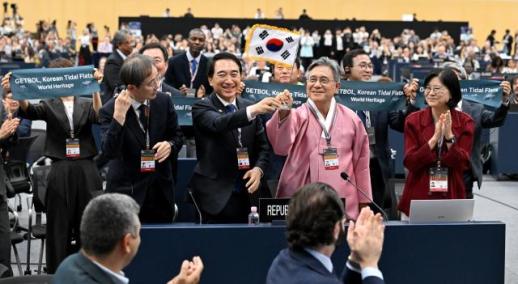 More South Korean tidal flats listed as UNESCO World Heritage sites SEOUL, July 27 (AJP) - More getbol, or tidal flats in South Korea have been added to or expanded as UNESCO World Heritage sites at the global body's annual gathering in Busan over the weekend, the Korea Heritage Service (KHS) said on Monday. The decision was made during the 48th session of the UNESCO World Heritage Committee, which kicked off last week and runs through Wednesday at BEXCO in the southeastern port city of Busan, marking the first time South Korea has hosted the gathering. The boundaries of existing wetlands in southern South Korea including those in Boseong, Gochang and Suncheon were expanded, while tidal flats in Seosan, South Chungcheong Province, and Yeosu, Goheung and Muan in South Jeolla Province were newly listed, after the committee decided they met criteria for outstanding biodiversity and the conservation of threatened species. The committee also recognized them as key habitats for internationally important migratory waterbirds and diverse marine life. First listed as UNESCO World Heritage sites in 2021, these tidal flats are home to more than 2,400 species, including numerous endangered wildlife, with the latest decision expanding their geographic boundaries and recognizing their ecological value. KHS administrator Huh Min expressed gratitude to the committee, saying the expansion would "help strengthen international cooperation to protect them." With the latest expansion, South Korea now has 17 UNESCO World Heritage sites. 2026-07-27 14:57:03