


Latest by
-
 Competition Among Candidates for Democratic Party Leadership Intensifies The race for the next leader of the Democratic Party has narrowed to three candidates, setting the stage for the party convention scheduled for August 17.According to political sources on the 26th, candidates Kim Min-seok, Jung Cheong-rae, and Song Young-gil have each presented their visions and appealed for support from party members.Kim is advocating for continued governance through integration and solidarity, while Jung emphasizes ongoing reform to reclaim power. Song is focusing on specific policies related to youth and housing to expand the party's reach. Each candidate has also expressed their commitment to supporting President Lee Jae-myung's administration and laying the groundwork for a victory in the 2030 presidential election. "I will discuss integration and present principles... Establishing a committee upon taking office"From the outset of the leadership race, Kim has sought support by positioning himself as someone who can work closely with President Lee. He has adopted the slogan "A Democratic Party that Wins Again" to emphasize the need for a sustained governance system, aiming to win both the 2028 general election and the 2030 presidential election.He identified the integration and solidarity of progressive groups as a prerequisite for this goal. At an event in Gwangju, Kim stated, "I will clarify the integration issue. I will not create chaos by making vague declarations. I will discuss what the Justice Reform Party wants and what Democratic Party members desire, and I will present principles."Integration and solidarity are expected to be centered around a comprehensive integration committee that Kim plans to establish immediately upon taking office. He intends to include divisions for solidarity, integration, and expansion within this committee. In addition to the integration committee, he aims to establish five key bodies focused on nomination reform, mega projects, balanced development between local and metropolitan areas, party innovation, and addressing social polarization as part of his foundational plan for the "Kim Min-seok administration." "Complete abolition of supplementary investigative powers... Strengthening reform in Honam nominations"Jung, who successfully passed the preliminary election, introduced himself as a steadfast supporter of the Democratic Party's identity and reform over the past 20 years without ever leaving the party. He is running for re-election as party leader with the slogan "Making the Democratic Party True to Itself, a Stronger Reform Leader."Jung believes that the party's identity is rooted in reform, stating that the party has historically succeeded when it embraced reform and failed when it did not. His candidacy declaration on July 13 was filled with references to "reform." He pledged to fully complete the abolition of the prosecution's supplementary investigative powers and to strengthen reform nominations in Honam, asserting that he would not back down from the banner of reform.Despite concerns that his re-election could pose a challenge for President Lee due to the deep factionalism within the party, Jung strongly refutes these claims. He held meetings with party members in Ulsan and Daegu, asserting, "I am confident that I will be the one to protect President Lee until the end, as I have never betrayed the party." "Clear legitimacy allows for inclusive freedom... Promising youth-oriented expansion"Song's campaign strategy is based on expanding the party's reach by appealing to youth and public sentiment. He aims to achieve alignment between the party and the government alongside President Lee. On July 19 in Busan, Song stated, "With clear legitimacy, I am free to expand and be inclusive," claiming he can execute the external expansion that President Lee has called for most accurately.He has particularly emphasized a youth-oriented expansion strategy, adopting the slogan "No 2030, No 2030 Victory," indicating that without support from the younger generation, a victory in the 2030 presidential election is unattainable. He has also promised to appoint two youth members to the highest committee and proposed specific policies to increase housing supply. Additionally, he highlighted his unique experience as the only candidate who has served as a regional governor, asserting that he can lead the party-government alignment. 2026-07-26 17:08:00
-
Iran Blames U.S. for Recent Maritime Tensions in Hormuz Abbas Araghchi, Iran's Foreign Minister, accused the United States of unilaterally establishing a slower and more dangerous alternative route in the Strait of Hormuz, leading to recent military confrontations. He placed the responsibility for these tensions squarely on the U.S.In an interview with the Iranian daily 'Iran' on July 25, Araghchi claimed that the U.S. violated agreements regarding the reopening of the Strait and sought to undermine Iran's authority over the waterway, which escalated tensions.He referred to Article 5 of the U.S.-Iran memorandum of understanding (MOU) concerning the reopening of the Strait, stating, "It specifies that Iran will reopen the Strait within a month after necessary measures, such as mine removal, and will provide related services for free for 60 days. There is no ambiguity in the interpretation."Araghchi emphasized that Article 5 grants Iran the authority to determine the routes and navigation methods, arguing that the U.S. violated the agreement by opening a separate route without consulting Iran.He noted that only two weeks had passed since the implementation of the agreement, with about two weeks remaining, yet the U.S. opened a southern alternative route. "The U.S. knew that the route they created was slower and more dangerous than the one designated by Iran, yet they encouraged ships to use the southern route," he said, adding that they have records of relevant maritime communications.After several clashes over the routes, both sides established a direct communication line during a meeting in Switzerland to prevent misunderstandings. However, Araghchi contended that the U.S. continued to encourage ships to change their routes, asserting that this was not a simple misunderstanding but a deliberate action."I have not seen any goodwill in the actions of the U.S.," he stated, suggesting that the U.S. appeared to be escalating tensions or undermining Iran's sovereignty and management authority over the Strait.He also mentioned that Iran had repeatedly requested the U.S. to wait 15 more days, either directly or through mediators from Qatar and Pakistan, to see if Iran would fulfill its commitments. "Ultimately, it was the U.S. that violated the agreement and led the situation in the current direction," he emphasized.Regarding the recent escalation of conflicts related to Yemen and Saudi Arabia, Araghchi stated that there is no military solution and called for dialogue. He noted, "The Yemeni side explains that their actions are aimed at breaking the blockade imposed by Saudi Arabia," asserting that the roots of the Yemen issue cannot be found in Iran.He added that if dialogue begins between Yemen and Saudi Arabia, Iran could play a positive and constructive role, emphasizing that the Yemen issue should be resolved through diplomacy and dialogue, akin to the Persian proverb about untangling knots with hands rather than tools.Araghchi also claimed that attacks on U.S. military bases and facilities in the region during the war with the U.S. were acts of self-defense. He stated that Iran continuously communicates with regional countries to clarify that it has no hostile intentions toward them.However, he expressed dissatisfaction that the territories and airspace of some countries have been used for U.S. military operations against Iran. He reiterated the need to rebuild trust with neighboring countries after tensions subside, advocating for a 'strong region' where regional countries can jointly secure security and stability without relying on external powers.* This article has been translated by AI. 2026-07-26 17:08:00
-
President Yoon Announces $1.4 Trillion AI Alliance with U.S. Tech Giants President Yoon Suk Yeol secured a $950 billion (approximately 1.4 trillion won) partnership in San Francisco on July 24, focusing on semiconductor and artificial intelligence (AI) infrastructure, as well as physical AI. This initiative brought together leading domestic and international companies with a combined valuation exceeding 2 quadrillion won, while also establishing an investment network connecting Silicon Valley venture capitalists with Korean startups. The most significant achievement is a semiconductor collaboration set to unfold over the next five years. Samsung Electronics and Broadcom signed a memorandum of understanding (MOU) for a $200 billion partnership in advanced memory semiconductor supply and AI chip production. SK Group is also pursuing a long-term supply agreement worth $750 billion with global tech giants like NVIDIA. The scope of collaboration has expanded to include data centers and physical AI. Domestic companies and big tech firms are planning investments in AI data centers with a capacity of approximately 5GW and around 2 million NVIDIA B200 standard GPUs. Naver, with support from NVIDIA and Brookfield, aims to establish a $10 billion global AI factory. Hyundai Motor Group and NVIDIA are jointly developing a 'robot reference platform' to support university and startup robotics initiatives, while Hyundai is also pursuing a self-driving car foundry project with Waymo. Samsung SDS and Anthropic have formed a strategic partnership to explore the AI market and cultivate engineers. During the event, President Yoon met with Jensen Huang, CEO of NVIDIA; Sam Altman, CEO of OpenAI; Hock Tan, CEO of Broadcom; and Dario Amodei, CEO of Anthropic, to invite them to participate in South Korea's three major mega projects. Huang remarked, "It is not an exaggeration to say that this is truly South Korea's golden age," to which President Yoon responded, "This is just the beginning." In the 'San Francisco AI Declaration,' President Yoon stated, "South Korea will rise as a key player in the irreplaceable global AI supply chain," adding that the country aims to become a reliable production base for AI semiconductors and a supply chain partner, leveraging its world-class memory semiconductor competitiveness and production capacity. At a subsequent dinner, President Yoon and CEOs of major U.S. tech companies discussed AI collaboration strategies. Attendees included Huang, Hock Tan, and Rani Borkar, President of Microsoft Azure Hardware, along with Lee Jae-yong, Chairman of Samsung Electronics; Chey Tae-won, Chairman of SK Group; Chung Eui-sun, Chairman of Hyundai Motor Group; and Lee Hae-jin, Chairman of Naver's board. The following day, July 25, President Yoon discussed cooperation in the U.S.-Korea venture ecosystem with representatives from six major Silicon Valley VCs, including Andreessen Horowitz and Sequoia Capital. The National Pension Service and these VCs agreed to establish a long-term cooperation framework through an MOU to enhance overseas investment opportunities and global expansion for promising 'K-startups.' President Yoon stated, "When Korean startups meet U.S. capital and markets, and when U.S. investors and innovative companies connect with South Korea's technology, manufacturing, and talent ecosystem, the two countries will become partners in innovation for the next 30 years."* This article has been translated by AI. 2026-07-26 17:04:00
-
AI Full-Stack Collaboration Network Established, Implications of $950 Billion Semiconductor Partnership President Lee Jae-myung's visit to San Francisco has led to the announcement of a $950 billion semiconductor collaboration, which combines advanced memory supply and AI chip production efforts between domestic semiconductor companies and global tech giants over the next five years. According to the Blue House on July 26, this collaboration consists of a $200 billion memorandum of understanding (MOU) signed by Samsung Electronics and Broadcom, along with a $750 billion long-term supply partnership for advanced memory being pursued by SK and other global tech companies. Jensen Huang, CEO of NVIDIA, stated during a meeting with President Lee on July 25 that the company plans to collaborate with SK Hynix and Samsung Electronics on chip and memory design, as well as pursue significant investments in Naver. A key feature of this collaboration is its expansion beyond high-bandwidth memory (HBM) supply to include AI semiconductor design, foundry services, data centers, large language models (LLM), and physical AI, effectively establishing an 'AI full-stack collaboration network.' Global tech companies aim to secure a stable supply of advanced memory and production capabilities necessary for operating AI models and data centers, while domestic firms will gain access to long-term demand and joint technology development opportunities. Huang also revealed plans to support Naver's domestic and international business expansion, collaborate with Hyundai Motor Group on autonomous driving and robotics, and develop AI systems with LG. He proposed establishing an 'AI Frontier Lab' in Korea and relocating NVIDIA researchers to collaborate with KAIST on 'Korea AI.' Huang praised the plan to encompass AI chip development, physical AI, and AI infrastructure as aligning with the President's vision of an 'AI Native Nation.' He remarked, "Under the President's leadership, Korea has achieved a great deal in the past year, and it is not an exaggeration to say that this is truly Korea's golden age." Other big tech CEOs also noted Korea's AI ecosystem and semiconductor competitiveness. Sam Altman, CEO of OpenAI, described Korea as "one of the most important countries in the world," highlighting its leading role in AI programs, including three major mega projects. Hock Tan, CEO of Broadcom, explained that the company is collaborating with Samsung Electronics and SK Hynix to develop the latest HBM and solutions that combine Broadcom's AI chips. He expressed a commitment to supplying customized semiconductors necessary for developing Korean AI models and LLMs, contributing to Korea's sovereign AI capabilities. Dario Amodei, CEO of Anthropic, emphasized the high priority of collaborating with Korean companies and presented investment plans in memory manufacturing and AI data centers. This reflects a growing recognition that domestic firms are emerging as partners in building AI infrastructure and services, rather than merely semiconductor suppliers in the global AI supply chain. The $950 billion figure does not represent immediate investment funds or confirmed revenues. It is a cumulative figure for the MOUs and long-term supply collaborations planned over the next five years, necessitating follow-up negotiations to specify actual supply volumes, pricing, production schedules, and foundry contracts. Securing timely access to power grids, land, and permits necessary for operating large-scale AI data centers, as well as training personnel in AI semiconductor design and software, are also identified as challenges. If subsequent contracts and infrastructure investments proceed as planned, domestic semiconductor companies are expected to secure long-term demand for advanced memory while expanding their business areas into foundry services, customized AI chips, and data centers. Kim Yong-beom, head of the Blue House Policy Office, stated, "The government plans to strengthen cooperation between domestic companies and global tech giants through individual meetings, the AI summit, and a dinner, aiming to achieve visible results from the three mega projects at an early stage."* This article has been translated by AI. 2026-07-26 17:04:00
-
South Korea Diversifies Oil Supply Amid Middle East Tensions The oil supply chain in South Korea is facing significant disruptions as the Strait of Hormuz and the Red Sea are threatened with blockades. Refineries are grappling with supply shortages and increased transportation costs, prompting them to diversify their sources of crude oil.According to industry sources, GS Caltex recently imported Venezuelan crude oil, a product that South Korean refiners had avoided for over 20 years due to transportation distance and economic concerns. The urgency of the current supply situation has led to this reconsideration.South Korea relies heavily on imported oil, with approximately 70% of its crude coming from the Middle East before the outbreak of conflict in the region. A significant portion of this oil passes through the Strait of Hormuz.With the ongoing conflict, access to oil from major producers like Saudi Arabia, the United Arab Emirates, and Kuwait has become increasingly difficult. Additionally, attacks by Houthi rebels on oil tankers in the Red Sea and a blockade of Saudi vessels have further complicated alternative shipping routes.As both exits of the Middle Eastern oil supply chain face threats, tankers heading to Asia must now navigate around the Cape of Good Hope via the Suez Canal. This detour can more than double fuel costs and add approximately $1 million in tolls per vessel.Potential alternative supply sources for South Korean refiners are limited to the United States, the North Sea, and Venezuela. Brent crude from the North Sea is primarily allocated for European demand, making it difficult for South Korean refiners to secure large quantities at competitive prices.U.S. crude oil is lighter, making it challenging to fully replace Middle Eastern supplies. South Korean refiners, who have focused on processing heavy crude into high-value products, may face operational difficulties if they increase their reliance on U.S. light crude.Venezuelan heavy crude could help address the limitations of U.S. light crude. By blending the two types of oil, refiners could potentially create a more economically viable supply chain that mitigates the issues stemming from Middle Eastern disruptions.While S-Oil, which is majority-owned by Aramco, faces restrictions on importing non-Middle Eastern crude, SK Energy and HD Hyundai Oilbank are likely to expand discussions on Venezuelan imports if the risks in the Middle East persist. The results of GS Caltex's refining tests will likely influence the decisions of these two companies.This conflict has prompted a significant reevaluation of the supply chain structure for South Korean refiners, who have relied on Middle Eastern oil for about 70% of their needs. Even if the Middle East remains a primary supplier, there is an increasing push to enhance the share of non-Middle Eastern crude from sources like the U.S., Canada, and Venezuela to establish a reliable alternative supply network for emergencies.Kim Tae-hwang, a professor of international trade at Myongji University, stated, "The import of Venezuelan crude oil is not about replacing existing Middle Eastern and U.S. supplies but rather securing a complementary option to prepare for supply chain instability. South Korea possesses the refining technology and facilities to convert heavy and extra-heavy crude into high-value products, making it competitive in this regard."* This article has been translated by AI. 2026-07-26 17:04:00
-
South Korea Imports Venezuelan Oil for First Time in 20 Years As the U.S.-Iran conflict continues to disrupt oil supply, Venezuelan crude oil has made its way to South Korea for the first time in over 20 years. This development raises questions about whether it can serve as an alternative to alleviate the vulnerabilities posed by the Hormuz and Red Sea chokepoints.According to industry sources, GS Caltex imported 110,000 barrels of Venezuelan oil last month, amounting to $12.015 million, with an average import price of approximately $109.23 per barrel.This marks the first import of Venezuelan oil by South Korea in nearly two decades. From 2003 to 2006, South Korea imported Venezuelan heavy crude oil as a substitute for bunker fuel, but trade ceased after former Venezuelan President Hugo Chávez intensified resource nationalism. Subsequently, U.S. sanctions against the Maduro regime made importing Venezuelan oil an unfeasible option.However, following the potential collapse of the Maduro regime earlier this year and the prolonged uncertainties surrounding the Middle East conflict, both the government and the refining industry began to seriously assess the economic viability and applicability of Venezuelan oil in domestic facilities. Moon Shin-hak, the first vice minister of the Ministry of Trade, Industry and Energy, stated in May that companies were in contact regarding Venezuelan oil imports and that results would likely emerge soon.GS Caltex has been the most proactive in this regard. Chevron, which holds a 50% stake in GS Caltex, is currently the only major oil company engaged in oil drilling operations in Venezuela, producing about 200,000 barrels per day. Given the favorable conditions for short-term production increases, it is expected that Chevron will begin allocating export volumes to GS Caltex.SK Energy and HD Hyundai Oilbank are also reportedly starting to evaluate the economic feasibility and refining potential of Venezuelan oil.However, Venezuelan 'Merey 16' crude oil has a lower API gravity compared to Middle Eastern Dubai crude, making it a heavy sour crude with high viscosity and significant impurities such as sulfur and metals. The refining process is complex, requiring additional processing to convert it into high-value products like gasoline and diesel, making the assurance of economic viability crucial when considering transportation and refining costs.In fact, GS Caltex's recent oil import is primarily aimed at assessing whether it can secure stable refining margins rather than generating immediate profits. A GS Caltex official confirmed, "We have indeed imported Venezuelan oil, but due to its lower quality, it was brought in for testing purposes." If it is confirmed that securing refining margins is feasible, imports are expected to increase next year. An industry insider noted, "Given the precarious situation in the Hormuz and Red Sea, diversifying oil supply chains to countries like Canada, Australia, and Kazakhstan is not an option but a necessity," adding that the import of Venezuelan oil is part of this diversification effort. 2026-07-26 17:04:00
-
Electric Vehicle Charging Company Chabi Reports Data Breach Affecting 300,000 Members Electric vehicle charging company Chabi announced on July 26 that a data breach occurred on July 23 due to an illegal hacking attack, affecting a total of 298,333 personal information records.Chabi reported that it immediately blocked the attack path upon discovering the breach and has notified the Personal Information Protection Commission and the Korea Internet & Security Agency (KISA).Starting today, customers can check if their personal information has been compromised on the company's website, and notifications will be sent to affected customers on July 27.The leaked personal information includes: 164,858 email addresses, 131,411 email and password combinations (encrypted), 1,235 records containing email, name (encrypted), contact information (encrypted), gender, and date of birth, and 829 records with email, name (encrypted), contact information (encrypted), password (encrypted), gender, and date of birth.Chabi explained that the encrypted data is stored in a way that makes it impossible to decrypt into a readable format. Additionally, sensitive information such as resident registration numbers, passport numbers, and card or account numbers was not compromised.The company stated, "Names, contact information, and passwords are encrypted in a way that cannot be decrypted, so they cannot be used for personal identification or login exploitation." It urged members who may be affected by the password leak to change their passwords immediately for safety reasons.* This article has been translated by AI. 2026-07-26 17:00:00
-
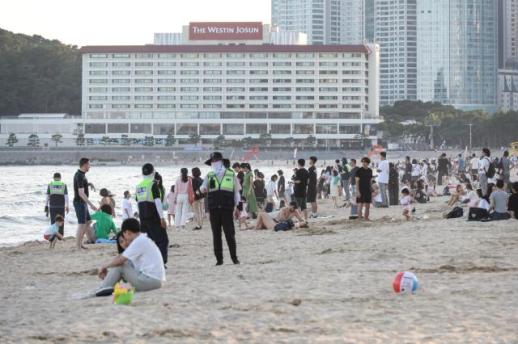 South Korea swelters through hottest vacation weekend SEOUL, July 26 (AJP) — South Korea's peak summer vacation season opened under suffocating heat on Sunday, with the heat index approaching 38 degrees Celsius across parts of the country's south, prompting heat-related deaths, livestock losses and a mass exodus to beaches and water parks. The Korea Meteorological Administration maintained its highest-level heat warnings across parts of North Gyeongsang, South Gyeongsang, South Jeolla and Daegu, where apparent temperatures climbed to around 38C. Yangsan, South Gyeongsang Province, recorded an afternoon high of 39.3C, surpassing the previous day's 39.1C and marking one of the hottest temperatures of the summer. Seoul, the greater capital region, Gangwon, Chungcheong and Jeju also endured heat indices near 36C. The prolonged heat wave has begun taking a growing human toll. A Thai farm worker in his 30s collapsed while working in a field in Haenam, South Jeolla Province, on Friday and later died after being taken to hospital in what authorities suspect was heatstroke. Earlier this month, an octogenarian woman in Jeju also died after suffering heat-related illness. Several other workers required emergency treatment over the weekend, including a fisherman who collapsed while hauling fishing nets off Yeosu. According to the Korea Disease Control and Prevention Agency, 1,232 people had been treated for heat-related illnesses nationwide this year as of July 23, with five fatalities reported. The heat has also devastated livestock farms. Nearly 20,000 animals, including chickens, ducks and pigs, had died from heat stress in North Chungcheong Province alone by July 24, forcing farmers to operate cooling pads, ventilation systems and ice supplies around the clock. The heat offered little relief overnight. Most regions recorded tropical nights between Saturday evening and Sunday morning, with temperatures remaining above 25C, while Busan experienced its seventh consecutive tropical night. Despite the dangerous conditions, beaches, rivers and water parks were packed as families sought relief during the busiest holiday period of the year. Major beaches including Haeundae, Gwangalli and Songjeong in Busan remained crowded after attracting more than 366,000 visitors on Saturday. Jeju's Hamdeok, Hyeopjae and Jungmun beaches also saw large crowds, while surfers filled Songjeong Beach and tourists flocked to Gangneung's Gyeongpo Beach and Sokcho on the east coast. The Boryeong Mud Festival, which opened Friday, also drew large numbers of visitors to Daecheon Beach. In contrast, downtown streets in Daegu, Pohang and Gyeongju were noticeably quieter as residents avoided the blistering afternoon sun, opting instead for shopping malls, department stores and indoor cultural venues. Forecasters expect the intense heat to persist into the coming week, with tropical nights likely to continue across much of the country. 2026-07-26 16:57:46
-
AI Projects Overwhelm Companies Amid Administrative Burdens Companies involved in or considering participation in government artificial intelligence (AI) projects are expressing concerns that they are spending more time on administrative tasks than on research and development (R&D) due to a series of calls for proposals and evaluation schedules. Each new solicitation requires the formation of new consortia and the preparation of business plans, and even after selection, companies must undergo repeated evaluations, increasing their burden.According to industry sources, the Ministry of Science and ICT's 'Everyone's AI' initiative is moving forward with a timeline that requires consortia to be formed and proposals submitted about three weeks after an information session.An official from an AI company considering participation in the Everyone's AI project stated, "After the business briefing, we have to recruit participating organizations and adjust roles within just a few weeks. Since different companies are involved in each project, forming a new consortium takes a significant amount of time."Another source pointed out that the lack of clear direction in project requirements adds to the burden on companies. "Although the project names differ, there are often no clear explanations of what differentiating factors are required. We find ourselves guessing the government's desired direction while reading the announcements multiple times to draft our proposals," the source said.The administrative procedures necessary for preparing proposals are also considerable. Last year, the public AI transformation (AX) project required over ten types of documents, including business plans, personal data self-assessment forms, and various confirmations. The business plan must detail annual performance goals and technology development plans, which takes a significant amount of time to prepare.Even after selection, the burden continues. Many projects involve a structure where subsequent support is determined through phased performance evaluations, requiring companies to simultaneously engage in technology development and evaluation preparation.Uncertainty surrounding the projects is another concern for companies. The Everyone's AI initiative is still pending confirmation of next year's government budget. The Ministry of Science and ICT plans to select two to three consortia to operate beta services and then conduct a comprehensive evaluation of performance and usage rates to decide on further support. However, it has not yet been determined whether new participants will be selected if any consortia are eliminated.A representative from the Ministry of Science and ICT explained, "With about four months remaining until the beta service, we plan to clarify the method of subsequent support while advancing the project."While companies agree on the necessity of fostering an AI ecosystem through government support, they collectively emphasize the need for clearer distinctions in roles between projects and a more predictable support system.In a situation where the number of companies capable of developing AI services and R&D personnel is limited, the simultaneous promotion of similar government projects forces the same companies and personnel to participate in multiple solicitations, leading to a dilution of their capabilities in consortium formation, proposal writing, and performance evaluation, which only increases administrative burdens.However, there are also positive assessments of the government's solicitation method. An official from an AI company that has participated in government projects noted, "Many companies have been able to enhance their technology and secure commercialization opportunities thanks to government support. While it is meaningful in terms of expanding opportunities for private sector participation, if the differentiation and operational methods between projects are improved, we can expect positive effects."* This article has been translated by AI. 2026-07-26 16:44:00
-
Genosis AI Healthcare Celebrates Graduation of 35 Experts from AI Academy Genosis AI Healthcare, led by Chairman Lee Hee-won, concluded the eighth session of its AI Academy with a graduation ceremony on July 25. The program, aimed at social contribution, has trained 35 experts from various fields, including former and current hospital directors, medical professors, research institute heads, media representatives, and former vice-ministerial officials, through four practical training sessions. The ceremony was held at the International Vaccine Institute (IVI), hosted by Park Sang-cheol, chairman of the IVI Korean Support Committee, who provided the venue and lunch.The Genosis AI Academy was established in December 2022 to assist professionals and organizational leaders in utilizing generative AI in their work. The program has been conducted once or twice a month since its inception, and this eighth session marks another successful graduation. It operates as a social contribution initiative rather than a profit-driven business, gaining popularity among participants over time.Since the first session, the program has been led by Vice Chairman Kang Si-cheol of Genosis AI Healthcare. The eighth session consisted of four classes where participants learned practical skills such as writing, report preparation, and multimedia production using various generative AI tools, including Claude, Gemini, Genspark, Grok, and Suno. The hands-on approach allowed participants to apply AI in their actual work, producing tangible results. Notably, the process of creating papers and presentation materials using over 200 skills developed by Vice Chairman Kang in Claude Co-Work drew significant attention.This session included notable participants such as Park Sang-cheol, head of the Genosis AI Healthcare Research Center and chairman of the IVI Korean Support Committee; Park Kwang-sung, emeritus professor at Chonnam National University Medical School; Lee Myung-cheol, chairman of the Korea Pasteur Institute; Kwon Soon-yong, emeritus professor at Catholic University of Korea Seoul St. Mary's Hospital; Park Jong-hoon, professor at Korea University Medical School; Lee Hyun-seok, director of Seoul Medical Center; and Lim Kyu-sung, senior researcher at Genosis AI Research Institute.Chairman Lee Hee-won stated, "The eighth session has successfully concluded. I sincerely congratulate the participants for sharing new knowledge and insights, joining the new wave of AI healthcare." He added, "This is not just a training program but a meaningful starting point for creating future changes together."Vice Chairman Kang Si-cheol expressed, "Having experts from various fields directly utilize AI and experience its potential is the fastest way to enhance our society's AI capabilities. I feel the greatest sense of fulfillment when I see participants producing results through hands-on practice."Participants responded positively as well. One participant remarked, "In this AI era, I can grasp trends in the related industry and effectively apply the techniques I've learned to my work." Another participant shared, "Thanks to the efficient use of our short weekend time, it feels like a new world has opened up." A graduate who traveled from Gwangju stated, "The valuable lectures made the long journey worthwhile."Genosis AI Healthcare plans to continue sharing educational materials and the latest information with graduates while expanding its AI training programs for professionals as part of its social contribution efforts. 2026-07-26 16:44:00