


Latest by
-
 New Jersey Officials Oppose FIFA's Sale of World Cup Grass Following the conclusion of the 2026 FIFA World Cup final, a dispute has erupted between New Jersey officials and FIFA over the sale of natural grass from MetLife Stadium, where the final was held.The Athletic reported on July 19 that New Jersey criticized FIFA and the local organizing committee for profiting from the sale of grass funded by taxpayer dollars, arguing that the revenue should benefit residents.The controversy began when FIFA announced it would sell pieces of the grass preserved from the final. The official FIFA online store lists basic grass souvenirs for $450, with premium options priced at $900, $1,200, and $3,000. Each product is limited to 2,026 units. If all items sell out, projected revenue could reach $11.2 million, intensifying the debate.New Jersey officials are particularly concerned that the cost of installing the stadium's grass was largely borne by taxpayers. According to The Athletic, the New Jersey Sports and Exposition Authority (NJSEA) invested approximately $13.04 million in design, construction, and maintenance equipment to install natural grass that met FIFA standards. NJSEA is a public agency that operates the sports complex housing MetLife Stadium. A spokesperson for the New Jersey governor stated, "Since New Jersey residents spent millions preparing the stadium, the sales revenue should also be shared with them."Republican members of the New Jersey legislature echoed these sentiments. Assemblyman Mike Inganamort remarked, "Selling grass installed with taxpayer money without permission could be illegal," adding that legal action should be considered if necessary. He emphasized, "The grass was cultivated with New Jersey taxpayers' money, yet FIFA is reaping all the profits. The sales revenue should go to New Jersey residents."In response, FIFA refuted claims that it would pocket significant sales revenue. The organization stated, "The grass sale is led by the host city committee, and FIFA will receive less than 5% in royalties for trademark use," calling assertions that FIFA would earn $11 million a blatant distortion of the facts.According to FIFA and organizing committee officials, the grass being sold represents only about 5 yards (approximately 4.6 meters) of the field, and most of the sales revenue will go to the New York-New Jersey host committee, which plans to reinvest it in local projects and sports initiatives. However, New Jersey maintains that the benefits should directly accrue to its residents.This dispute highlights ongoing tensions between New Jersey and FIFA that have persisted throughout the World Cup. Earlier, New Jersey raised the fare for a special train service between Manhattan and MetLife Stadium from $12.90 to $98, leading to clashes with FIFA, which expressed concern that the steep fare increase could deter fans. New Jersey Governor Mikie Sherrill countered, "FIFA, which is making enormous profits, should also bear transportation costs."Additionally, during the World Cup, the stadium's name was changed to 'New York New Jersey Stadium,' prompting Sherrill to argue that 'New Jersey New York Stadium' would be more appropriate given New Jersey's investment and contributions, further escalating tensions with FIFA.The Athletic noted that New York and New Jersey invested hundreds of millions for the World Cup, expecting an economic impact of about $3.3 billion, although there are concerns that these projections may be overstated.* This article has been translated by AI. 2026-07-24 10:48:00
-
Koo Yoon-cheol Announces 8th Oil Price Cap to Be Announced at 7 PM, Extends Fuel Tax Cut by Two Months Koo Yoon-cheol, Deputy Prime Minister and Minister of Economy and Finance, stated on July 24 that the 8th oil price cap will be announced at 7 PM, aiming to minimize the burden on the public. He also confirmed that the fuel tax cut will be extended for an additional two months.During a meeting of the special task force on cost of living at the Government Seoul Complex, Koo noted that the country's GDP grew by 0.6% in the second quarter compared to the previous quarter, indicating continued growth momentum.However, he acknowledged that rising international oil prices due to escalating tensions from the Middle East conflict have increased volatility and uncertainty.Koo explained that the 8th oil price cap, effective from midnight on July 25, will be announced after today's meeting, taking into account international oil price trends. He also mentioned that the current fuel tax cut, set to expire at the end of this month, will be extended until the end of September to alleviate fuel costs.He provided updates on managing essential goods, stating that the government plans to import 23 million fresh eggs, with contracts for 10.1 million already signed and 5.224 million eggs imported. The imported eggs are expected to be supplied to the market at a rate of 20 million per week until early next month.Koo added that the government has secured the initial target of 2,000 tons of mackerel through a special delegation to Norway and is pursuing additional contracts for 1,200 tons from the UK and Norway by August to stabilize mackerel prices.He also announced an extension of the ban on hoarding urea and urea solution until the end of next month. The ban on hoarding syringes will also be extended, with relaxed storage limits and lifted sales restrictions.Finally, Koo emphasized the need to actively improve institutional shortcomings identified during the response to the Middle East conflict, aiming to enhance the effectiveness of supply chain response systems and price stabilization measures. He stated that a revised price stabilization law will be proposed next month to strengthen penalties for unfair practices such as hoarding.* This article has been translated by AI. 2026-07-24 10:48:00
-
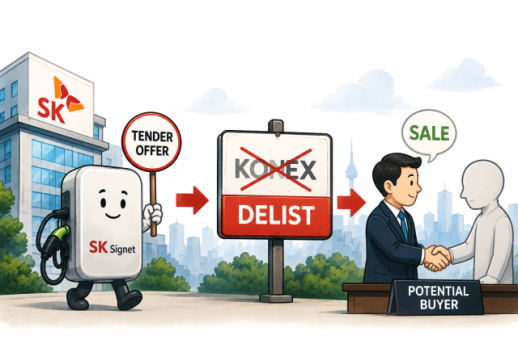 SK to delist EV charging subsidiary ahead of planned sale SEOUL, July 24 (AJP) - SK Inc. launched a tender offer for minority shareholders of its electric vehicle charging subsidiary SK Signet as it moves to delist the company ahead of a planned sale, according to a company disclosure on Friday. SK is offering 8,200 won (US$5.90) per common share for up to 10.07 million shares, equivalent to 25.07 percent of the company's fully diluted share count. The tender offer runs from Friday through Aug. 24, with settlement scheduled for Aug. 26. The offer price is more than 20 percent above the stock's one-month average price, allowing shareholders to exit before the planned delisting and sale. SK currently owns 74.9 percent of the EV charger maker. According to a tender offer filing submitted to the Financial Supervisory Service (FSS), it plans to delist SK Signet if the tender offer secures enough shares. If not, SK said it will acquire the remaining shares through a comprehensive share exchange, making SK Signet a wholly owned subsidiary. The filing also disclosed that SK signed a non-binding memorandum of understanding (MOU) with a potential buyer on July 15 for a potential sale of the company. The deal has yet to be finalized. SK said the tender offer is intended not only to facilitate the sale process but also to provide minority shareholders with an opportunity to dispose of their holdings at a premium as part of its commitment to responsible management and shareholder protection. The offer price was based primarily on the company's one-month average share price, reflecting volatility in the KONEX market. The company aims to complete the delisting and conversion into a wholly owned subsidiary in the fourth quarter before completing the sale in the first quarter of next year. SK Signet, acquired by SK in 2021, manufactures fast and ultra-fast EV charging systems. The company has struggled as the global EV market slowed, swinging from a 3 billion won operating profit in 2022 to operating losses of 149.4 billion won in 2023, 242.8 billion won in 2024 and 48.4 billion won in 2025. 2026-07-24 10:41:53
-
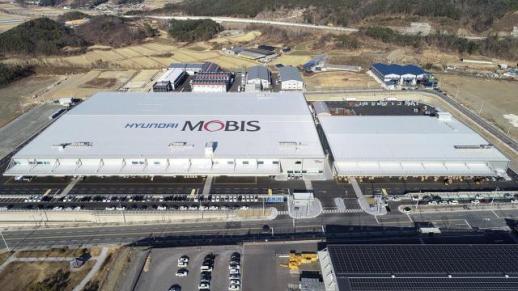 Hyundai Mobis posts record Q2 profit SEOUL, July 24 (AJP) - Hyundai Mobis announced that its second-quarter operating profit climbed 12.1 percent from a year earlier to 975.2 billion won ($665.7 million), as brisk sales of high-margin electronics components and a resilient after-sales parts business carried the auto parts maker. According to preliminary regulatory filings released Friday, revenue rose 2.4 percent to 16.32 trillion won, while net profit advanced 13.5 percent to 1.06 trillion won. Measured against the first quarter, the gains were sharper still — operating profit jumped 21.5 percent and net profit 20.1 percent. A richer product mix and company-wide cost discipline drove the improvement, Hyundai Mobis said. Electrification revenue slipped modestly on lower output at some automaker customers and memory chip costs remained a burden, but stronger sales to overseas carmakers and expanded shipments of high-value electronics parts more than offset the drag. The supplier spent 950.8 billion won on research and development in the first half, about 44 percent of its 2.16 trillion won annual plan, and booked $740 million in orders from global clients. "Some orders were delayed in the first half due to customers' strategy changes and a slowdown in the electrification market, but we plan to focus on securing first-time orders with new products and new customers to raise the quality of our order book," said a Hyundai Mobis spokesperson. The company declared an interim dividend of 1,500 won per share, with a record date of Aug. 10. It bought back about 910,000 shares worth 500 billion won between May and July, all of which are scheduled to be cancelled in August. Shares of Hyundai Mobis traded at 494,500 won per share at 10:35 a.m., down by 5.73 percent from the previous session. 2026-07-24 10:40:46
-
HK Inno.N Achieves Dual Wins in Social Media Marketing HK Inno.N has been recognized for its achievements in social media marketing, winning awards on both YouTube and Instagram.The company announced on July 24 that its official YouTube channel, Channel Inno.N, and its Instagram account received the grand prize and excellence award, respectively, at the 2026 Social Eye Awards, achieving a dual victory.Now in its eighth year, the Social Eye Awards is the largest SNS awards ceremony in South Korea, organized by the Korea Internet Professionals Association (KIPFA) under the Ministry of Science and ICT. A panel of over 4,000 business marketing experts and creators evaluated entries across five categories using 15 assessment criteria. This year, a total of 296 companies participated.Channel Inno.N won the grand prize in the medical and pharmaceutical category, marking its second consecutive year of receiving this honor. The channel was praised for effectively delivering medical and health information through relatable content, ensuring public benefit and content dissemination while providing practical value to viewers.In the past year, Channel Inno.N recorded a total of 9.75 million views, with the number of 'likes' increasing by 199%, demonstrating active two-way communication between customers and the brand.Notable content includes the talk series 'Infomentary,' which provides insights into the pharmaceutical industry, the entertainment content 'Circle King Ha-jun,' which experiences health clubs, the interview series 'Inno.N Molraewato' reflecting the brand's philosophy, and recruitment and company performance content 'ㅇㄴㅇ' (Inno.N).HK Inno.N's official Instagram also received the excellence award in the pharmaceutical category. The account has expanded its engagement with customers by providing editorial content that explains proper medication usage and the new drug development process, leveraging the expertise of the pharmaceutical industry.A representative from HK Inno.N stated, "We have been working to lower the entry barriers of the complex pharmaceutical and bio industry through content, allowing the brand to establish meaningful relationships with customers. We will continue to create empathetic content that reflects our corporate values and customer needs from HK Inno.N's perspective."Meanwhile, HK Inno.N is expected to report second-quarter results that fall slightly below market expectations.According to an iM Securities report, HK Inno.N's consolidated revenue for the second quarter is projected to be 267.2 billion won, with an operating profit of 29.5 billion won. While these figures represent a 2% and 51% increase, respectively, compared to the same period last year, they are below the market consensus of 276.6 billion won in revenue and 31.7 billion won in operating profit.The report noted that domestic sales of K-Cab are expected to decline slightly due to changes in accounting standards for drug price refunds. However, it is anticipated that increased exports of finished products and royalties from China will largely offset this decline. Additionally, the analysis indicated that the long-term growth momentum remains valid based on K-Cab's entry into the U.S. market and its subsequent pipeline.* This article has been translated by AI. 2026-07-24 10:40:00
-
Government Extends Fuel Tax Cut and Announces Discounts on Agricultural Products The government has decided to extend the fuel tax cut for an additional two months until September and will launch a major discount event for all agricultural and marine products in July and August to stabilize prices. Additionally, it will begin improving supply chain structures for certain economic security items to reduce dependency on specific countries.Koo Yoon-cheol, Deputy Prime Minister and Minister of Economy and Finance, held a meeting on July 24 at the Government Seoul Complex with the special task force on managing the cost of living. The meeting was convened amid renewed tensions between the U.S. and Iran, which have increased uncertainties in international oil prices and supply chains. Participants reviewed the progress of price stabilization measures and discussed future initiatives.In light of market conditions, including international oil prices and supply and demand trends, the government will determine the eighth maximum price for petroleum products. Considering the burden on citizens, the fuel tax cut will be extended at the current level until September 30. This extension is expected to result in a reduction of 122 won per liter for gasoline, 145 won for diesel, and 51 won for butane.To compensate for the losses incurred by refiners due to the maximum price system, a financial support guideline will be established, and the support amount will be finalized after review by the maximum price settlement committee based on production costs.Measures to stabilize the cost of living will also be implemented. Starting this month, a large-scale discount event for all agricultural and marine products will be conducted, with the number of participating companies increasing from 75 to 90.Additionally, the government plans to urgently import 200 million fresh eggs and 2,000 tons of mackerel from Norway to increase supply and will enhance on-site inspections. Furthermore, a 'Chuseok Cost of Living Stabilization Plan' will be announced in September to further address public concerns about price stability and burden reduction.For certain key items with high dependency on specific countries, the government will pursue phased responses tailored to the characteristics of each item and improve supply chain structures in the second half of the year.Support for domestic production will be linked to tax incentives and subsidies, and the government will increase stockpiles of essential industrial and consumer goods. It is also considering expanding stockpiles of crude oil, naphtha, and fertilizer-grade urea, as well as piloting new stockpiling models for vehicle urea.For items that are difficult to produce or stockpile domestically, the government will support the establishment of overseas production bases and promote diversification of import sources. Additionally, a supply chain early warning system will be developed to enable coordinated responses across government agencies.Finally, to ensure that tariff quotas lead to actual reductions in consumer prices, joint inspections will be conducted in the second half of the year for pork, chicken, mackerel, and food ingredients.* This article has been translated by AI. 2026-07-24 10:36:00
-
 KOSPI opens lower as US announces new tariffs amid oil market jitters SEOUL, July 24 (AJP) - Seoul stocks opened sharply lower on Friday after Washington announced a 12.5 percent tariff on South Korean and Japanese exports over "dubious" forced labor concerns, hitting a market already unsettled by a Middle East supply shock that pushed Brent crude back above US$100 a barrel. The benchmark KOSPI dropped 2.2 percent in early trade to 6,939.11, giving up the 7,000 line it had reclaimed only days earlier, while the Nikkei 225 fell 2.5 percent in Tokyo, the two markets named together in the U.S. action. Chipmakers and automakers, the shares carrying the export exposure, led the decline, with Hyundai Motor down 6.1 percent and Samsung Electronics down 3.5 percent, while defense and pharmaceutical names ran the other way. The index shed 157.78 points. Samsung Electronics fell to 260,500 won, or $177.56. SK hynix lost 3.4 percent to 1,854,000 won, or $1,263.72. SK square dropped 6.3 percent to 1,144,000 won, or $779.77. Hyundai Motor traded at 405,500 won, or $276.40, and Kia lost 5.1 percent. The U.S. Trade Representative announced the findings of its investigation under the Section 301 of the Trade Act the previous day, imposing 12.5 percent tariffs on South Korea, Japan and dozens of other economies, while applying a lower 10 percent rate to a smaller group including Britain, Canada, and Mexico. The main index in Seoul was also carrying the previous session's Wall Street losses, where the Nasdaq fell 2.2 percent to 25,137.69. Oil supplied the second blow. Brent settled above $100 for the first time since May after Houthi forces said they struck two Saudi tankers in the Red Sea, opening a route risk beyond the Strait of Hormuz. Defense and shipbuilding names ran against the tape. Hanwha Aerospace gained 5.2 percent to 1,008,000 won, or $687.07, and HD Hyundai Heavy Industries added 1.2 percent. Samsung Biologics jumped 7.7 percent to 1,485,000 won, or $1,012.20, in the day's strongest sector. The Nikkei traded at 64,755.96, down 1,666.64 points. The junior KOSDAQ fell 2.3 percent to 772.19. Foreigners sold a net 117.9 billion won on the main board in early trade and institutions sold 122.2 billion won, while individuals bought 247.5 billion won. The won traded at 1,467.10 per dollar, stronger than the previous session. 2026-07-24 10:32:42
-
 Hyundai Rotem, Hanwha vie for military robot dog project SEOUL, July 24 (AJP) - South Korea’s military is moving to acquire quadruped robots, setting the stage for another competition between Hyundai Rotem and Hanwha Aerospace in the country’s growing military robotics market. According to the Defense Acquisition Program Administration and industry sources Friday, the military is preparing to draw up a purchase plan in September for the quadruped robot project, with a contractor expected to be selected through open bidding early next year. DAPA plans to issue a public tender in January for the project, which will be conducted as a domestic purchase program. The robots, often called “robot dogs,” are designed to conduct reconnaissance, surveillance and search missions in areas that conventional unmanned ground vehicles have difficulty reaching, including stairs, rough terrain and the interiors of buildings. The planned acquisition comes as militaries around the world are expanding the use of unmanned systems, with the war in Ukraine highlighting the operational value of drones and robotic platforms. For South Korea, the systems are also seen as a way to cope with a shrinking pool of military personnel caused by demographic decline. The initial project is expected to cost about 50 billion won ($36 million) and involve the purchase of 60 to 70 quadruped robots. DAPA is also expected to pursue a separate program to acquire more than 400 additional robot dogs in the future. The robots acquired under the projects are expected to be deployed mainly to Army frontline divisions. The program will be conducted through open competition rather than being assigned to a specific company. Hyundai Rotem and Hanwha Aerospace, which previously competed in the military’s first multipurpose unmanned ground vehicle project, are expected to face off again. That earlier project was awarded to Hanwha Aerospace’s Arion-SMET platform, giving the company an early lead in the Army’s unmanned ground vehicle sector. Hyundai Rotem, seeking to regain ground in the unmanned systems market, is preparing to join the new quadruped robot project in cooperation with Rainbow Robotics, according to industry officials. Under a likely arrangement, Rainbow Robotics would provide the four-legged robot platform, while Hyundai Rotem would adapt it for military use by adding command, control and mission systems. Hanwha Aerospace is also expected to enter the bidding with its own consortium, leveraging its track record in defense systems integration and unmanned ground vehicle development. 2026-07-24 10:32:10
-
Han Byeong-do: Legislative Action on Criminal Procedure Reform to be Finalized Han Byeong-do, the acting leader of the Democratic Party and floor leader, stated that the party will gather consensus in a general meeting of lawmakers to swiftly finalize legislation aimed at abolishing the prosecution's supplementary investigation rights. He emphasized the party's responsibility as the ruling party to shoulder the weight of national governance.During a Supreme Council meeting held on July 24 at the National Assembly, Han remarked, "The complete separation of investigation and prosecution is a key task of the Lee Jae-myung administration and a steadfast principle of the Democratic Party." He noted that the party has consistently maintained this principle from the abolition of the prosecution office last September to the discussions on the amendment of the Criminal Procedure Act this March. Despite internal disagreements, the Democratic Party has confirmed its stance to fully abolish supplementary investigation rights, believing that further delays in prosecutorial reform legislation are unacceptable. However, there are ongoing concerns regarding potential gaps in investigations and the need for enhanced victim protection measures.As a result, the Democratic Party plans to revisit the amendment to the Criminal Procedure Act in the afternoon general meeting. Han reiterated, "The amendment to the Criminal Procedure Act is the final piece of the puzzle for prosecutorial reform. Establishing a new criminal justice system requires thorough deliberation and discussion. The discussions have matured, and it is time to yield results."In response to criticism from the People Power Party regarding the real estate policy forum hosted by President Lee Jae-myung the previous day, Han strongly criticized them as a "party that has predetermined answers and repeats them." He stated, "Immediately after the forum, they were quick to dismiss it as a 'show for public opinion manipulation.' I am concerned that the real estate forum the People Power Party intends to hold may also become a platform for disparaging government policies."Han specifically pointed out the People Power Party's plans for a real estate forum and policy discussions with Seoul Mayor Oh Se-hoon, stating, "The idea of discussing housing stability with a mayor who has been sentenced to lose his position is difficult to accept and undermines the trust of 10 million Seoul citizens." He urged the opposition party to stop the cycle of criticism and to responsibly cooperate in legislation aimed at expanding housing supply and formulating policies for the stability of actual housing demand. 2026-07-24 10:32:00
-
Korea's Fair Trade Commission Signs Cooperation Agreement with 30 Mid-Sized Construction Firms The Fair Trade Commission has signed a cooperation agreement with mid-sized construction companies to improve unfair practices in the construction industry.On July 24, the Fair Trade Commission held a "Construction Industry Cooperation and Fair Trade Agreement Ceremony" at the Specialized Construction Hall in Dongjak-gu, Seoul. This agreement aims to promote a culture of cooperation among 30 mid-sized construction firms, which are pivotal to the industry. The agreement was signed by representatives from comprehensive construction companies ranked 21st to 50th in construction capability evaluation and the Korea Specialty Contractors Association.Unfair practices in the construction industry have included delayed payments, retention funds, unjust special provisions, and shifting responsibility in defect lawsuits. The Fair Trade Commission has enforced the subcontracting law to impose penalties but has now decided to sign agreements with mid-sized construction firms following similar agreements with large construction companies to expedite and effectively improve market order.The key points of the agreement include: sharing responsibility for defect lawsuits, prompt payment and elimination of retention funds, correction of unjust special provisions, establishment of a linkage system for subcontracting payments, rapid adjustment of delivery prices in emergencies, creation of a subcontracting dispute resolution body, and formation of a public-private consultative body.Among these, the sharing of responsibility for defect lawsuits was not included in the initial agreement with large construction companies in May. Previously, when lawsuits related to defects in construction projects such as apartment buildings were filed against comprehensive construction companies, the main contractor often proceeded with the lawsuit without informing the subcontractor, leading to excessive liability for damages imposed on the subcontractor after losing the case.Going forward, comprehensive construction companies will promptly notify subcontractors when a defect lawsuit is filed and will share the damages determined by the lawsuit according to the responsibility involved.The practice of retaining funds will also be abolished. In some construction sites, only about 90% of the progress payment was made to subcontractors, with the remaining balance delayed until after project completion. Under the agreement, the construction industry will pay subcontracting fees in cash within the legal deadline unless there are special reasons and will eliminate unjust retention fund practices.Unjust special provisions that shift costs for industrial safety and waste disposal to subcontractors will also be removed through self-inspection. If there are changes in supply costs, the parties will sincerely engage in negotiations to adjust subcontracting fees, and if delays occur in project execution, they will negotiate adjustments to contract terms, including extensions and waivers of penalties.To enhance the effectiveness of the agreement, a public-private consultative body will be established. The Fair Trade Commission, comprehensive construction companies, and the specialty construction industry will share information on the implementation of the agreement, trends in enforcing the subcontracting law, and best practices for cooperation. Meetings of the consultative body are scheduled for September with 19 large construction companies and in November with 30 mid-sized construction companies.The Fair Trade Commission stated that this agreement will encompass 19.89% of the total number of subcontracting transactions and 59.53% of the transaction value in the construction industry by 2025. Last year, the total value of subcontracting contracts in the construction industry was 54 trillion 131.6 billion won (approximately 54.1 billion USD) across 61,673 cases.Chairman Joo Byeong-ki of the Fair Trade Commission remarked, "The participation of mid-sized construction companies in cooperation following large construction companies signifies that our construction industry is moving to a new stage. I hope this cooperation agreement serves as a catalyst for eradicating unfair practices across the construction industry and establishing a culture of cooperation."* This article has been translated by AI. 2026-07-24 10:32:00