


Latest by
-
 K-pop quartet aespa release new album in Japan SEOUL, July 24 (AJP) - K-pop girl group aespa released their first Japanese mini album on Friday as they seek to expand their presence in Japan. "KISS N TELL" features six songs including the title track of the same name, a dance-pop song with upbeat piano melodies, rhythmic beats and layered harmonies, with lyrics exploring deepening friendships through shared personal concerns and emotions, according to their agency SM Entertainment. Released alongside the album, the music video for the title track is set in an amusement park and showcases the quartet's choreography against bright, summery visuals. The album also includes "ATTITUDE," a theme song for the Japanese television anime "Kill Blue"; "In Halo," featured in the drama "First Bite"; and three new songs, "Orbit Pop," "Fangirl" and "Done with Rules." The latest release comes about two years after aespa debuted in Japan with their single "Hot Mess" in 2024. Meanwhile, aespa will perform at this year's Lollapalooza Chicago in Grant Park, a music festival in Illinois, in August. 2026-07-24 11:04:48
 -
 South Korea Engages in Public Consultation for Participation in GEPA The South Korean government has initiated a public consultation process regarding its participation in the Green Economy Agreement (GEPA) being pursued by Singapore, New Zealand, and Chile.On July 24, the Ministry of Trade, Industry and Energy held a public hearing at the Korea International Trade Association to gather opinions from stakeholders and experts before establishing a plan for the trade agreement. This hearing was organized in accordance with relevant laws.GEPA is a multilateral agreement that discusses the introduction of new trade norms in the green economy to ensure that countries' measures to combat climate change do not create unnecessary trade barriers. It also aims to promote trade and investment in related fields. The three countries agreed to pursue this initiative during the Asia-Pacific Economic Cooperation (APEC) summit in Gyeongju last October.Singapore, New Zealand, and Chile are leading countries in establishing new trade norms, having first launched the Digital Economy Partnership Agreement (DEPA). South Korea's participation in GEPA discussions would allow for the proactive reflection of domestic industries' realities and interests in the establishment of new trade norms.The public hearing included presentations on the overview of GEPA, progress updates, and economic feasibility analysis results, followed by panel discussions and feedback sessions. The Korea Institute for International Economic Policy (KIEP) presented the economic feasibility analysis, with participation from experts in academia and the fields of trade, carbon reduction, and environmental energy.This public hearing signifies South Korea's commitment to actively respond to the convergence of climate and trade issues. As countries strengthen their environmental measures, including carbon reduction, green certifications, supply chain due diligence, and product environmental information disclosure, differing standards across nations could effectively act as new non-tariff barriers for businesses.Kim Jang-hee, the Ministry's Director of New Trade Strategy Support, stated, "The need for establishing new trade norms is increasing to ensure that trade-related environmental measures are transparent and based on scientific evidence, and to enhance institutional coherence between countries. We will thoroughly establish a plan for the agreement to ensure that responses to climate change and the expansion of green markets lead to our industry's competitiveness and new export opportunities."* This article has been translated by AI. 2026-07-24 11:04:00
 -
Government Seeks Input on Improving Total Project Cost Management System The government is seeking input from industry experts to improve the 'Total Project Cost Management System,' which oversees the management of total project costs for large-scale projects.On July 24, the Ministry of Strategy and Finance held a 'Total Project Cost Management System Improvement Meeting' at the Korea Fiscal Information Service. This system is designed to adjust and manage the total project costs of large-scale projects funded by the national budget and funds to enhance the efficiency of fiscal expenditures.During the meeting, participants discussed practical challenges arising from discrepancies between the total project cost management system and actual execution on the ground. Suggestions for reform, including the need to increase the number of items that can be autonomously adjusted when project timelines are extended or tasks change, were also raised.The Ministry plans to develop an improved 'Total Project Cost Management Guidelines' later this year, taking into account the discussions held during the meeting and consulting with relevant agencies.Jeong Hyang-woo, the Social Budget Review Officer at the Ministry, stated, "The Total Project Cost Management System is the budget system most closely related to the field. We will pursue practical and effective improvements that ensure fiscal efficiency while harmonizing with on-site conditions. To achieve this, we will maintain ongoing communication with the construction industry and academia to establish a rational total project cost management framework."Meanwhile, the government has been continuously working to improve the total project cost management system. Last year, it relaxed the cost segregation for different types of projects, such as technology proposal projects, and revised the total project cost management guidelines to reflect on-site suggestions. This led to changes, including the addition of actual construction management units to the calculation of supervision costs for large construction sites.* This article has been translated by AI. 2026-07-24 11:04:00
-
Grand Kensington Seorak Beach to Open in October, Reservations Start July 27 E-Land Park will begin official reservations for its luxury resort, Grand Kensington Seorak Beach, which is set to open in October. Ahead of the opening, the resort is unveiling details about its rooms, facilities, and cultural content on its website to enhance customer engagement.On July 24, E-Land Park announced that the official reservation service for Grand Kensington Seorak Beach will start on July 27 through its website.Located in Goseong County, Gangwon Province, Grand Kensington Seorak Beach is a members-only luxury resort under Kensington Hotel & Resort, scheduled to open in October.The resort features a cruise-inspired exterior and boasts a private beach that stretches approximately 1 kilometer.The newly launched official website will offer room information and a customized reservation service. The resort comprises 72 rooms, each ranging from 184 to 462 square meters (about 50 to 140 pyeong).Visitors can also preview the resort's facilities on the website, including wellness swimming pools such as the 'Ocean Infinity Pool,' 'Hanging Pool,' and 'Lagoon Pool.'Cultural content will also be showcased. The E-Land Museum will provide digital access to a collection of over 130 artworks, including more than 110 pieces of Picasso ceramics and works by contemporary artists.Guests can explore four curation themes related to Picasso ceramics on the website, and after the opening, they will be able to view these works in a dedicated exhibition space within the resort.A representative from Grand Kensington stated, "We have made it easier for customers to check room and facility information through our official reservation channel, and we plan to continuously expand member-exclusive services based on this channel."* This article has been translated by AI. 2026-07-24 11:04:00
-
Nongshim to Raise Prices of 43 Brands by 5.8% Nongshim will raise the ex-factory prices of its popular cup noodles, snacks, and beverages by an average of 5.8% starting August 1. The primary reason for the increase is the soaring costs of materials, including packaging, due to prolonged high exchange rates and oil prices. However, all instant noodle products, including Shin Ramyeon, which directly affect consumer prices, are excluded from this price hike. According to Nongshim on July 24, the price adjustment will affect a total of 43 brands, including 18 cup noodles, 23 snacks, and 2 beverages. The average increase by category is 6.0% for cup noodles, 5.5% for snacks, and 7.7% for beverages. As a result, the recommended retail prices for key products will also rise. The price of the flagship cup noodle, 'Yukgaejang Cup Noodle,' is expected to increase from 1,100 won to 1,200 won, while the popular snack 'Shrimp Chips (90g)' will go up from 1,500 won to 1,600 won. The actual selling prices of major products such as Shin Ramyeon Cup, Honey Twist Snack, Capri Sun, and Welch's will also be adjusted across various distribution channels. This price adjustment marks the first increase for noodles in 1 year and 5 months since March 2025, while Shrimp Chips have seen price changes after a decrease in 2023 and a prior increase in September 2022. Nongshim noted that this is effectively the first increase in 3 years and 11 months. Nongshim stated that the accumulated cost burden has exceeded its capacity to absorb it. A Nongshim official said, "The surge in material prices, including packaging, due to high exchange rates and oil prices stemming from international circumstances has significantly deteriorated the profitability of our domestic operations. We have managed to endure this through operational efficiency and cost-cutting measures, but the increase in supplier prices has made this adjustment unavoidable." Nevertheless, Nongshim has decided to freeze the prices of all instant noodles, which account for 63% of its noodle sales, to minimize the burden on consumers amid high inflation and to support the government's price stabilization efforts. Additionally, the company plans to expand discounts and promotional offers at large supermarkets, convenience stores, and e-commerce platforms to reduce the perceived impact of the price increase on consumers. Recently, the food industry has seen price adjustments due to rising costs of packaging, raw materials, and logistics. Lotte Chilsung Beverage raised the ex-factory prices of 44 items, including Chilsung Cider and Pepsi Cola, by an average of 5.3% in June, and Ottogi increased prices for 29 items, including curry, noodles, ketchup, and pepper this month. 2026-07-24 10:52:00
-
New Jersey Officials Oppose FIFA's Sale of World Cup Grass Following the conclusion of the 2026 FIFA World Cup final, a dispute has erupted between New Jersey officials and FIFA over the sale of natural grass from MetLife Stadium, where the final was held.The Athletic reported on July 19 that New Jersey criticized FIFA and the local organizing committee for profiting from the sale of grass funded by taxpayer dollars, arguing that the revenue should benefit residents.The controversy began when FIFA announced it would sell pieces of the grass preserved from the final. The official FIFA online store lists basic grass souvenirs for $450, with premium options priced at $900, $1,200, and $3,000. Each product is limited to 2,026 units. If all items sell out, projected revenue could reach $11.2 million, intensifying the debate.New Jersey officials are particularly concerned that the cost of installing the stadium's grass was largely borne by taxpayers. According to The Athletic, the New Jersey Sports and Exposition Authority (NJSEA) invested approximately $13.04 million in design, construction, and maintenance equipment to install natural grass that met FIFA standards. NJSEA is a public agency that operates the sports complex housing MetLife Stadium. A spokesperson for the New Jersey governor stated, "Since New Jersey residents spent millions preparing the stadium, the sales revenue should also be shared with them."Republican members of the New Jersey legislature echoed these sentiments. Assemblyman Mike Inganamort remarked, "Selling grass installed with taxpayer money without permission could be illegal," adding that legal action should be considered if necessary. He emphasized, "The grass was cultivated with New Jersey taxpayers' money, yet FIFA is reaping all the profits. The sales revenue should go to New Jersey residents."In response, FIFA refuted claims that it would pocket significant sales revenue. The organization stated, "The grass sale is led by the host city committee, and FIFA will receive less than 5% in royalties for trademark use," calling assertions that FIFA would earn $11 million a blatant distortion of the facts.According to FIFA and organizing committee officials, the grass being sold represents only about 5 yards (approximately 4.6 meters) of the field, and most of the sales revenue will go to the New York-New Jersey host committee, which plans to reinvest it in local projects and sports initiatives. However, New Jersey maintains that the benefits should directly accrue to its residents.This dispute highlights ongoing tensions between New Jersey and FIFA that have persisted throughout the World Cup. Earlier, New Jersey raised the fare for a special train service between Manhattan and MetLife Stadium from $12.90 to $98, leading to clashes with FIFA, which expressed concern that the steep fare increase could deter fans. New Jersey Governor Mikie Sherrill countered, "FIFA, which is making enormous profits, should also bear transportation costs."Additionally, during the World Cup, the stadium's name was changed to 'New York New Jersey Stadium,' prompting Sherrill to argue that 'New Jersey New York Stadium' would be more appropriate given New Jersey's investment and contributions, further escalating tensions with FIFA.The Athletic noted that New York and New Jersey invested hundreds of millions for the World Cup, expecting an economic impact of about $3.3 billion, although there are concerns that these projections may be overstated.* This article has been translated by AI. 2026-07-24 10:48:00
-
Koo Yoon-cheol Announces 8th Oil Price Cap to Be Announced at 7 PM, Extends Fuel Tax Cut by Two Months Koo Yoon-cheol, Deputy Prime Minister and Minister of Economy and Finance, stated on July 24 that the 8th oil price cap will be announced at 7 PM, aiming to minimize the burden on the public. He also confirmed that the fuel tax cut will be extended for an additional two months.During a meeting of the special task force on cost of living at the Government Seoul Complex, Koo noted that the country's GDP grew by 0.6% in the second quarter compared to the previous quarter, indicating continued growth momentum.However, he acknowledged that rising international oil prices due to escalating tensions from the Middle East conflict have increased volatility and uncertainty.Koo explained that the 8th oil price cap, effective from midnight on July 25, will be announced after today's meeting, taking into account international oil price trends. He also mentioned that the current fuel tax cut, set to expire at the end of this month, will be extended until the end of September to alleviate fuel costs.He provided updates on managing essential goods, stating that the government plans to import 23 million fresh eggs, with contracts for 10.1 million already signed and 5.224 million eggs imported. The imported eggs are expected to be supplied to the market at a rate of 20 million per week until early next month.Koo added that the government has secured the initial target of 2,000 tons of mackerel through a special delegation to Norway and is pursuing additional contracts for 1,200 tons from the UK and Norway by August to stabilize mackerel prices.He also announced an extension of the ban on hoarding urea and urea solution until the end of next month. The ban on hoarding syringes will also be extended, with relaxed storage limits and lifted sales restrictions.Finally, Koo emphasized the need to actively improve institutional shortcomings identified during the response to the Middle East conflict, aiming to enhance the effectiveness of supply chain response systems and price stabilization measures. He stated that a revised price stabilization law will be proposed next month to strengthen penalties for unfair practices such as hoarding.* This article has been translated by AI. 2026-07-24 10:48:00
-
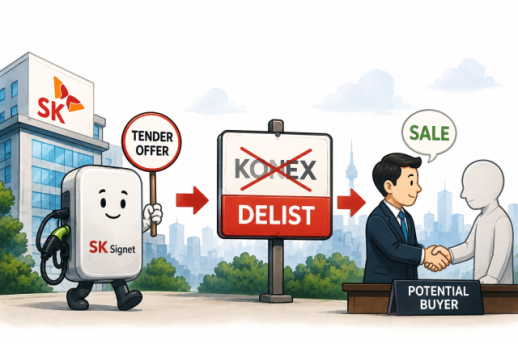 SK to delist EV charging subsidiary ahead of planned sale SEOUL, July 24 (AJP) - SK Inc. launched a tender offer for minority shareholders of its electric vehicle charging subsidiary SK Signet as it moves to delist the company ahead of a planned sale, according to a company disclosure on Friday. SK is offering 8,200 won (US$5.90) per common share for up to 10.07 million shares, equivalent to 25.07 percent of the company's fully diluted share count. The tender offer runs from Friday through Aug. 24, with settlement scheduled for Aug. 26. The offer price is more than 20 percent above the stock's one-month average price, allowing shareholders to exit before the planned delisting and sale. SK currently owns 74.9 percent of the EV charger maker. According to a tender offer filing submitted to the Financial Supervisory Service (FSS), it plans to delist SK Signet if the tender offer secures enough shares. If not, SK said it will acquire the remaining shares through a comprehensive share exchange, making SK Signet a wholly owned subsidiary. The filing also disclosed that SK signed a non-binding memorandum of understanding (MOU) with a potential buyer on July 15 for a potential sale of the company. The deal has yet to be finalized. SK said the tender offer is intended not only to facilitate the sale process but also to provide minority shareholders with an opportunity to dispose of their holdings at a premium as part of its commitment to responsible management and shareholder protection. The offer price was based primarily on the company's one-month average share price, reflecting volatility in the KONEX market. The company aims to complete the delisting and conversion into a wholly owned subsidiary in the fourth quarter before completing the sale in the first quarter of next year. SK Signet, acquired by SK in 2021, manufactures fast and ultra-fast EV charging systems. The company has struggled as the global EV market slowed, swinging from a 3 billion won operating profit in 2022 to operating losses of 149.4 billion won in 2023, 242.8 billion won in 2024 and 48.4 billion won in 2025. 2026-07-24 10:41:53
 -
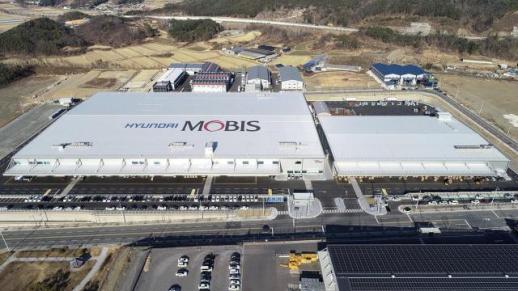 Hyundai Mobis posts record Q2 profit SEOUL, July 24 (AJP) - Hyundai Mobis announced that its second-quarter operating profit climbed 12.1 percent from a year earlier to 975.2 billion won ($665.7 million), as brisk sales of high-margin electronics components and a resilient after-sales parts business carried the auto parts maker. According to preliminary regulatory filings released Friday, revenue rose 2.4 percent to 16.32 trillion won, while net profit advanced 13.5 percent to 1.06 trillion won. Measured against the first quarter, the gains were sharper still — operating profit jumped 21.5 percent and net profit 20.1 percent. A richer product mix and company-wide cost discipline drove the improvement, Hyundai Mobis said. Electrification revenue slipped modestly on lower output at some automaker customers and memory chip costs remained a burden, but stronger sales to overseas carmakers and expanded shipments of high-value electronics parts more than offset the drag. The supplier spent 950.8 billion won on research and development in the first half, about 44 percent of its 2.16 trillion won annual plan, and booked $740 million in orders from global clients. "Some orders were delayed in the first half due to customers' strategy changes and a slowdown in the electrification market, but we plan to focus on securing first-time orders with new products and new customers to raise the quality of our order book," said a Hyundai Mobis spokesperson. The company declared an interim dividend of 1,500 won per share, with a record date of Aug. 10. It bought back about 910,000 shares worth 500 billion won between May and July, all of which are scheduled to be cancelled in August. Shares of Hyundai Mobis traded at 494,500 won per share at 10:35 a.m., down by 5.73 percent from the previous session. 2026-07-24 10:40:46
 -
HK Inno.N Achieves Dual Wins in Social Media Marketing HK Inno.N has been recognized for its achievements in social media marketing, winning awards on both YouTube and Instagram.The company announced on July 24 that its official YouTube channel, Channel Inno.N, and its Instagram account received the grand prize and excellence award, respectively, at the 2026 Social Eye Awards, achieving a dual victory.Now in its eighth year, the Social Eye Awards is the largest SNS awards ceremony in South Korea, organized by the Korea Internet Professionals Association (KIPFA) under the Ministry of Science and ICT. A panel of over 4,000 business marketing experts and creators evaluated entries across five categories using 15 assessment criteria. This year, a total of 296 companies participated.Channel Inno.N won the grand prize in the medical and pharmaceutical category, marking its second consecutive year of receiving this honor. The channel was praised for effectively delivering medical and health information through relatable content, ensuring public benefit and content dissemination while providing practical value to viewers.In the past year, Channel Inno.N recorded a total of 9.75 million views, with the number of 'likes' increasing by 199%, demonstrating active two-way communication between customers and the brand.Notable content includes the talk series 'Infomentary,' which provides insights into the pharmaceutical industry, the entertainment content 'Circle King Ha-jun,' which experiences health clubs, the interview series 'Inno.N Molraewato' reflecting the brand's philosophy, and recruitment and company performance content 'ㅇㄴㅇ' (Inno.N).HK Inno.N's official Instagram also received the excellence award in the pharmaceutical category. The account has expanded its engagement with customers by providing editorial content that explains proper medication usage and the new drug development process, leveraging the expertise of the pharmaceutical industry.A representative from HK Inno.N stated, "We have been working to lower the entry barriers of the complex pharmaceutical and bio industry through content, allowing the brand to establish meaningful relationships with customers. We will continue to create empathetic content that reflects our corporate values and customer needs from HK Inno.N's perspective."Meanwhile, HK Inno.N is expected to report second-quarter results that fall slightly below market expectations.According to an iM Securities report, HK Inno.N's consolidated revenue for the second quarter is projected to be 267.2 billion won, with an operating profit of 29.5 billion won. While these figures represent a 2% and 51% increase, respectively, compared to the same period last year, they are below the market consensus of 276.6 billion won in revenue and 31.7 billion won in operating profit.The report noted that domestic sales of K-Cab are expected to decline slightly due to changes in accounting standards for drug price refunds. However, it is anticipated that increased exports of finished products and royalties from China will largely offset this decline. Additionally, the analysis indicated that the long-term growth momentum remains valid based on K-Cab's entry into the U.S. market and its subsequent pipeline.* This article has been translated by AI. 2026-07-24 10:40:00