


Latest by
-
 Labor Ministry Begins Overhaul of Chemical Substance Management System The government is set to reform the management system for chemical substances in workplaces. This initiative aims to create a practical exposure risk management system centered on chemical substance risk assessments, following a review of the limitations of the current system, which focuses on workplace environment measurements and special health examinations.On July 24, the Ministry of Employment and Labor, along with the Korea Occupational Safety and Health Agency and the Korean Society of Industrial Health, held the '2026 Industrial Health-Chemical Substance Policy Forum Seminar.' This seminar was designed for stakeholders, including academics, field experts, labor representatives, and business leaders, to share their insights on innovating chemical substance management in workplaces.Discussions at the seminar included topics such as the transition from formal compliance to practical risk management, legislative tasks for chemical substance risk assessments, a new paradigm for managing exposure risks, future directions for chemical substance policies, and plans for the 2026 Industrial Health and Chemical Substance Policy Forum.During the comprehensive discussion, representatives from labor, business, and private accident prevention organizations provided feedback on the practical operability of chemical substance risk assessments. The Ministry of Labor plans to incorporate the insights and discussions from this forum into future improvements for worker health protection.This forum is significant as it seeks to shift the focus of chemical substance management from mere regulatory compliance to actual exposure reduction. Concerns have been raised that the current system, which primarily involves measurement and examination procedures, fails to adequately reflect changes in processes or the risks of combined exposures at individual workplaces.Ryu Hyun-cheol, head of the Ministry of Labor's Industrial Safety and Health Agency, stated, 'We must move beyond mere regulatory compliance to a practical risk management system that identifies the harmfulness and risks of chemical substances through the capabilities of the workplaces themselves and implements exposure reduction measures. We will do our utmost to support discussions and insights from stakeholders to ensure they lead to necessary improvements for worker health protection.'* This article has been translated by AI. 2026-07-24 13:04:00
 -
Ministry of SMEs Launches $100 Million Fund to Support Overseas Korean Entrepreneurs The Ministry of SMEs and Startups announced on July 24 that it will host the 'K-Founders Connect in Silicon Valley' event in Silicon Valley, USA, to promote exchanges among overseas Korean entrepreneurs and strengthen connections within the global startup ecosystem.On this day, the ministry will officially unveil the 'Global Project for Everyone's Entrepreneurship,' aimed at supporting the entrepreneurial efforts of overseas Koreans and international students.The ministry plans to select 80 prospective and current entrepreneurs from four regions: Silicon Valley, New York, Singapore, and India. These individuals will receive online and offline mentoring, tailored incubation, and support for startup activity expenses to nurture them into global entrepreneurs.The mentoring team will include prominent Korean entrepreneurs such as Lee Jeong-hee, CEO of Primer USA; Oh Seon-ho, co-founder of Osteogen Tech; Kim Joo-yoon, CEO of Dot; and Lee Seung-hoon, CEO of Ringle, who will share their overseas startup experiences and expertise. Additionally, a launch ceremony for the 'K-Founders Fund' will be held, which aims to support the discovery and growth of junior entrepreneurs by senior entrepreneurs.This fund, amounting to 100 billion won, is the first overseas Korean fund created through collaboration between successful senior entrepreneurs and investors abroad, facilitated by the government’s fund of funds.On the same day, the ministry will also hold a meeting to gather feedback from venture startups operating in the U.S. and explore policy support measures, listening to the challenges faced on the ground and discussing inter-agency cooperation.Meanwhile, the national entrepreneurship project, 'Everyone's Entrepreneurship,' is currently ongoing. The ministry has been conducting 'Founders Circle' events for participants in the 'Everyone's Entrepreneurship' project, starting from Busan on July 22.Deputy Minister Noh Yong-seok stated, 'We will support citizens in boldly challenging entrepreneurship both domestically and abroad,' adding, 'We will create a virtuous cycle that connects the capital and experience of Korean entrepreneurs and investors to the challenges faced by entrepreneurs.'* This article has been translated by AI. 2026-07-24 13:00:00
-
Kim Young-shin Visits Lion Robotics to Review Deep Tech Investment Success Kim Young-shin, head of the Small and Medium Business Technology Innovation Agency, visited Lion Robotics, a deep tech company specializing in quadrupedal robots, to review the outcomes of its R&D advancements and investment achievements.According to the agency, the visit aimed to confirm successful cases where government R&D support policies have led to significant business outcomes, including securing cutting-edge technology and attracting large-scale private investments, while also listening to feedback from the field.Lion Robotics, founded by a professor from KAIST, possesses unique control algorithms and hardware design technology in the field of special-purpose robots for surveillance, reconnaissance, and hazardous material handling.In July 2024, Lion Robotics was selected for the TIPS deep tech track, receiving up to 1.5 billion won in support over three years to establish a foundation for technological advancement.The company focused on technology enhancement and won the top prize at the Army AI Dronebot Challenge. Following its selection for the deep tech TIPS program, Lion Robotics achieved a series A investment of 23 billion won in 2025.During the visit, Kim inspected Lion Robotics' research facilities and observed demonstrations of advanced quadrupedal robots overcoming obstacles and navigating rough terrain. A subsequent meeting addressed challenges faced in the development of deep tech and discussed follow-up support measures for global growth.Earlier, in April, the agency held a 'Scale-Up TIPS Investment Consultation Meeting' to expand investment opportunities for promising small and venture businesses, with participation from 40 investment firms and 80 small enterprises.Kim Young-shin stated, "We will further enhance the deep tech support system so that domestic robotics companies can lead the public and global markets based on irreplaceable core technologies."* This article has been translated by AI. 2026-07-24 12:44:00
-
Government Extends Special Management Task Force for Saemaul Geumgo Until Year-End The government has extended the 'Special Management Task Force for Saemaul Geumgo' until the end of the year, originally scheduled to operate only through the first half of 2026. Following the merger of 21 credit unions in the first half of the year, further restructuring and joint inspections are planned for the second half.On July 24, the Ministry of the Interior and Safety, along with the Financial Services Commission, the Financial Supervisory Service, the Korea Deposit Insurance Corporation, and the Bank of Korea, announced that the task force will continue its operations until the end of this year.The task force has been conducting weekly video conferences to continuously monitor management indicators, share information, and discuss joint inspections, restructuring, and regulatory improvements. The Bank of Korea has been participating in the task force since February.According to the government's ongoing monitoring, the management indicators of Saemaul Geumgo have shown an improving trend compared to the same period last year. Restructuring efforts are also accelerating, with 21 credit unions merging in the first half of this year, three times the number from the same period last year (seven). The number of merged credit unions is expected to rise sharply, with five in the second half of 2023, 12 in 2024, and 25 in 2025.Since the end of March, Saemaul Geumgo has been submitting data through the Financial Supervisory Service's 'CPC Support System.' To enable real-time monitoring of deposit trends, the financial authorities are also working on a computer system that will be operational in August.Since May, the Ministry of the Interior and Safety, the Korea Deposit Insurance Corporation, and the Saemaul Geumgo Central Association have been operating a 'Restructuring Promotion Task Force.' The Korea Deposit Insurance Corporation will continue to support investigations into the causes of insolvency and provide management consulting even after the mergers.The government completed inspections of 35 credit unions in the first half of the year. In the second half, an additional 22 credit unions will be inspected, bringing the total to 57 for the year. If any intentional misconduct or serious negligence by employees is identified during inspections, strict penalties will be imposed.The government has extended the special management due to increasing volatility in the financial markets, including interest rates and exchange rates, as well as capital movements resulting from a booming stock market, which may lead to a challenging management environment in the second half of the year. The government plans to continue soundness management through cooperation among related agencies while discussing long-term soundness maintenance and sustainable development strategies for Saemaul Geumgo.* This article has been translated by AI. 2026-07-24 12:00:00
-
People Power Party Holds Debate on Real Estate Policies, Calls for Change The People Power Party held a debate on July 24 aimed at normalizing the real estate market, stating, "We need to increase housing supply and revitalize redevelopment and reconstruction projects." This event was seen as a counter to President Lee Jae-myung's 'National Debate on Real Estate Policy' held the previous day.Jang Dong-hyuk, the party's leader, remarked during the debate at the National Assembly, "It seems that President Lee has no intention of changing his real estate policies."He criticized the government's national debate on real estate policy, saying, "It was exactly as expected; the president was surrounded by supporters cheering for the administration's policies, making it merely a platform for him to say what he wanted."Jang continued, "While experts presented thoughtful opinions, they were dismissed as theoretically sound but practically unfeasible. Meanwhile, the president continued to list unrealistic real estate policies."He pointed out, "The president's plan to significantly raise property taxes and abolish the long-term holding tax exemption effectively reveals a lack of supply measures. He also clearly indicated a desire to strengthen loan regulations, which he identified as a primary cause of skyrocketing housing prices."Jang asserted, "This ultimately means going against the will of the people and market demands. If the administration has no intention of changing its policies, the only option left is to change the government."Additionally, he criticized President Lee for selling his apartment under a mortgage, stating, "He was simply trying to avoid a tax burden. After deciding to raise taxes, he quickly sold his house to escape the tax hit. How is this different from insider trading in the stock market?"Yoo Yi-dong, chair of the National Assembly's Land, Infrastructure and Transport Committee, stated, "Real estate should not be a means to realize ideological goals. While President Lee talks about normalizing the market, he continues to impose supply restrictions, increase tax burdens, and tighten loan regulations, effectively repeating the failures of the Moon Jae-in administration."Regarding President Lee's apartment sale, he questioned, "How will the public perceive a president who acts as a private lender while citizens struggle to meet the government's loan regulations? If the president considered the buyer's circumstances, the government should also take into account the needs of young people desperate for home ownership and those without homes."Representative Lee Jong-wook expressed frustration, saying, "No matter how reasonable our arguments are, the government does not listen and instead seeks to strengthen regulations. It seems futile to say the direction is wrong; it might be more beneficial to predict the consequences of continuing on this path and communicate that to the public."Professor Shim Kyo-eon, who moderated the debate, noted, "The government's real estate discussion should include a diagnosis of the situation and an explanation of the effects of past policies, which were notably absent. Are we not moving towards a situation where the principles of tax law and freedom of residence are disregarded, leading to a tyranny of the majority?"* This article has been translated by AI. 2026-07-24 11:48:00
-
HJ Heavy Industries Leads US-Korea Joint Shipbuilding R&D, Developing AI Welding Technology HJ Heavy Industries has been selected as the lead organization for a joint research and development (R&D) project in shipbuilding between South Korea and the United States, signing a collaborative agreement with U.S. research institutions.On July 23, HJ Heavy Industries attended the opening ceremony of the 'Korea-U.S. Shipbuilding Cooperation Partnership Center' in Washington, D.C., where it announced the signing of an agreement with San Diego State University (SDSU), the U.S. partner in the joint R&D.This project is part of a key technology development initiative for the shipbuilding and marine industry, announced by the Ministry of Trade, Industry and Energy last month. HJ Heavy Industries will focus on developing a Physical AI-based Friction Stir Welding (FSW) system for the autonomous manufacturing of aluminum ship panels, one of eight AI-related projects selected by the government.Friction Stir Welding (FSW), recognized as a next-generation welding technology, is a solid-state joining method that uses friction heat and pressure without melting the metal. This technique enables high-strength and high-quality welding of aluminum panels, which is challenging with traditional arc welding methods. It is particularly noted for its energy efficiency and processing stability, making it a key technology to meet the global trend toward lightweight ships and low-carbon vessels.In this research, HJ Heavy Industries will collaborate with the Korea Institute of Small Shipbuilding and Kyungpook National University to develop AI-based optimization technology for the FSW process. SDSU and domestic company Sangrim MSP will handle the design and production of system hardware and tools. Samsung Heavy Industries, Hanwha Ocean, and Gangnam will also participate as demand institutions to enhance the effectiveness of the developed technology.This joint R&D in core shipbuilding technology is significant as it aligns with the Korea-U.S. shipbuilding cooperation framework known as MASGA. Earlier this year, HJ Heavy Industries became the first medium-sized shipbuilder in South Korea to sign a Maintenance Support Agreement (MSRA) with the U.S. Navy, securing eligibility to enter the U.S. Navy's maintenance, repair, and overhaul (MRO) market.Industry experts believe that the development of this AI-based welding technology will enhance competitiveness not only in shipbuilding but also in the MRO sector. There are also expectations for the Korea Institute of Small Shipbuilding to benefit from support in entering the U.S. market.Through this R&D, HJ Heavy Industries anticipates that securing high-quality solid-state joining technology will have ripple effects across related industries such as aerospace and manufacturing, as well as contribute to technology support for small and medium-sized enterprises in the defense and shipbuilding sectors and the creation of a manufacturing ecosystem.HJ Heavy Industries CEO Yoo Sang-cheol stated, "This joint development of shipbuilding technology between Korea and the U.S. will be a symbolic case of combining the strengths of both countries to secure future technological competitiveness and lead the green and digital transition. We aim to accelerate the development and commercialization of next-generation core technologies through close cooperation among shipyards, companies, and research institutions in both countries, creating a new growth model that generates demand in the global market."* This article has been translated by AI. 2026-07-24 11:44:00
-
Sandara Park Creates Special Memories for Underprivileged Children in Singapore Singer Sandara Park partnered with the social contribution platform Dream Fund to create special memories for underprivileged children in Singapore.On July 17, Dream Fund hosted a cultural experience program at the Museum of Ice Cream, inviting 19 children from the nonprofit organization Epworth Community Services.The children enjoyed a meaningful day exploring interactive exhibits like the Sprinkles Pool and Banana Jungle Maze, as well as indulging in various ice cream and play activities. Many of the participants were visiting the Museum of Ice Cream for the first time.Epworth Community Services is a leading nonprofit organization in Singapore that supports children, youth, and families from vulnerable and crisis backgrounds. It aids healthy development through operating group homes, literacy improvement programs, and psychological and behavioral support initiatives.Sandara Park expressed, "Seeing the children smile and enjoy themselves was a great gift in itself," adding, "I want to continue participating in activities that bring hope to children."A representative from Epworth Community Services remarked, "It was truly an unforgettable day for the children," and expressed gratitude to Dream Fund and Sandara Park for providing such a meaningful experience.David Yong, founder of Dream Fund, stated, "Children are our future," emphasizing that the goal of Dream Fund is to create opportunities for children to dream and realize their potential. He added that this collaboration marks the beginning of ongoing social contribution activities with various organizations in Singapore.Last winter, Dream Fund continued its support for vulnerable children by donating padded jackets to three child welfare facilities in Seoul. This program is significant as it goes beyond a one-time experience, aiming to enhance children's self-esteem and social experiences through culture and play.* This article has been translated by AI. 2026-07-24 11:36:00
-
North Korean Defector School 'Yeomyung School' Settles in Seoul with Hyundai Support Yeomyung School, an alternative school for North Korean defectors, has settled in the site of the closed Yeomgang Elementary School in Gangseo, Seoul, with support from Hyundai Motor Company, the Ministry of Unification, and the Seoul Education Office.On July 24, Hyundai Motor Group announced that it signed a memorandum of understanding (MOU) with the Ministry of Unification and the Seoul Education Office for the construction of new facilities for Yeomyung School.Founded in 2004 in Bongcheon-dong, Seoul, Yeomyung School is an alternative school for North Korean defectors that received official recognition for middle and high school education in 2010. The school has faced challenges in establishing a permanent location due to a lack of space and facilities.Since 2023, the school has been operating under a temporary use permit at the site of the closed Yeomgang Elementary School, but the permit is set to expire in February 2027, necessitating the search for a new location.In response, Hyundai Motor Group, the Ministry of Unification, and the Seoul Education Office have stepped in to support Yeomyung School's stable establishment. Hyundai Motor Group will provide funding for the construction of new school facilities, reportedly amounting to 6 billion won.The Seoul Education Office will offer the site of the closed Yeomgang Elementary School for the new school construction at no cost, while the Ministry of Unification will assist with relevant administrative and legal improvements. Yeomyung School will oversee the construction and operation of the new facilities.Hyundai Motor Group plans to implement tailored education and support programs for current and former students of Yeomyung School. The company will deploy 20 college mentors from its social contribution program, H-Jump School, to provide customized learning in subjects such as English, math, and science. Additionally, the school will offer career exploration programs during winter break and vocational lectures, as well as build a community with alumni to assist with career planning and social adaptation. The Hyundai Chung Mong-koo Foundation will also provide scholarships for outstanding graduates to cover college tuition and living expenses.“The newly created educational space will be a cradle of hope where students can dream bigger and plan for their futures,” said Sung Kim, president of Hyundai Motor Group. “We will continue to work closely with relevant agencies to create an inclusive society where all children can realize their potential.” 2026-07-24 11:32:00
-
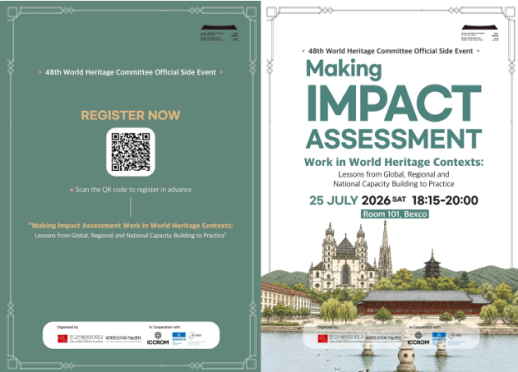 Korea spotlights heritage impact assessments versus developments SEOUL, July 24 (AJP) - Korea will bring together international heritage experts to discuss how Heritage Impact Assessments (HIA) can help safeguard UNESCO World Heritage sites from mounting pressure caused by development projects, tourism and climate change, the Korea National University of Heritage, which operates under the Korea Heritage Service, said Friday. The forum, titled Making Impact Assessment Work for World Heritage: From Capacity Building to Practice, will be held from 6:15 p.m. to 8 p.m. on July 25 in Room 101 at BEXCO in Busan as an official side event of the 48th session of the UNESCO World Heritage Committee. The event is organized by the Centre for World Heritage and Sustainable Development at the Korea National University of Heritage in cooperation with the International Centre for the Study of the Preservation and Restoration of Cultural Property (ICCROM) and UNESCO's World Heritage Institute of Training and Research for the Asia and the Pacific Region, Shanghai. According to the university, Heritage Impact Assessments are becoming increasingly important as governments seek to evaluate how development projects, infrastructure expansion, tourism and climate change could affect the Outstanding Universal Value of World Heritage properties before projects move forward. The forum will explore ways to integrate the assessments into heritage conservation, site management and development planning. The program will open with presentations on international, regional and national efforts to strengthen impact assessment capacity. Speakers include Eugene Jo of the ICCROM-IUCN World Heritage Leadership Program, Li Hong of UNESCO WHITR-AP Shanghai, and Seolin Kim of the Korea National University of Heritage. The presentations will be followed by a roundtable discussion on the legal, institutional and practical challenges of implementing Heritage Impact Assessments. The discussion will examine Korea's legal and institutional framework before experts from Norway, Ireland and Japan share their national experiences in implementing the system. The Korea National University of Heritage said the forum aims to contribute to international discussions on Heritage Impact Assessments while strengthening Korea's capacity to conserve and manage World Heritage sites in line with international standards. The university also plans to expand cooperation with UNESCO WHITR-AP Shanghai on education and professional training in Heritage Impact Assessments. 2026-07-24 11:30:40
 -
 Korea brings galleries, auction houses under mandatory art-market registration SEOUL, July 24 (AJP) - South Korea will require galleries, auction houses and other art businesses to register with local authorities beginning July 26, marking the country's first comprehensive effort to bring the commercial art market under a unified regulatory system, the Ministry of Culture, Sports and Tourism said Friday. The new system applies to six business categories: galleries, art auctions, art advisory services, art rental and sales, appraisal services, and exhibition operators. Businesses must register separately from their standard business registration. The registration requirement was newly established under Article 18 of the Fine Arts Promotion Act, which was enacted in 2023 and takes effect this year after a three-year preparation period. The requirement extends beyond major auction houses and established galleries. Online platforms that repeatedly broker art sales, individuals who continuously engage in art sales as a business — including artists selling their own work — foreign galleries operating in Korea, and regularly held art fairs may also be required to register, according to ministry guidance. One-off private sales and temporary exhibitions are generally exempt. The ministry said the system is intended to improve transparency in an industry where transaction records, auction disclosures and appraisal standards have not previously been subject to uniform rules. It also expects the registration framework to provide a clearer picture of Korea's commercial art market, supporting future policy development. Registered galleries, auction houses, advisers and art dealers will be required to keep records of the artworks they handle, including the type of artwork, transaction date, title, artist, sale price and seller. They must also provide information needed to administer artists' resale royalty payments. Auction houses must disclose winning bids and whether buyers have completed payment. They are also prohibited from participating in their own auctions or engaging in practices that undermine fair bidding. If an auction house offers a work owned or managed by the operator or a relative, that relationship must be disclosed to bidders before the auction. Separate rules apply to appraisal businesses. Appraisers must remain independent from clients and other market participants and issue appraisal reports using a government-designated format. They are prohibited from issuing false appraisal reports, conducting sole appraisals of works owned or circulated by themselves or close relatives where conflicts of interest may arise, and accepting compensation beyond appraisal fees and related expenses. They are also barred from offering money or other benefits in exchange for appraisal work. Businesses that fail to register or violate their obligations may face administrative fines or suspension of operations. However, the ministry will operate a one-year grace period through July 25, 2027, postponing penalties while local governments and related agencies help businesses adapt to the new requirements. Once the registration system is fully in place, the ministry said it plans to use the data collected to develop policies and support programs tailored to different sectors of the art market. "The art service business registration system will help build consumer confidence in the art market and support its continued growth," Jeong Hyang-mi, head of the ministry's Culture and Arts Policy Office, said. 2026-07-24 11:28:17