


Latest by
-
 Toss Partners with Circle to Enhance Payment Services Toss, operated by Viva Republica, is exploring the potential for building a blockchain-based payment and settlement infrastructure in collaboration with Circle, one of the world's largest stablecoin issuers.On July 23, Toss and Toss Bank announced that they have signed a strategic memorandum of understanding (MOU) with Circle Internet Financial to examine collaboration opportunities in blockchain-based payment infrastructure and stablecoin technology.Under this agreement, the three parties will jointly explore methods for establishing payment and settlement infrastructure utilizing stablecoins and blockchain technology. They will assess the potential for integrating Circle's blockchain infrastructure with the financial ecosystems of Toss and Toss Bank, while also seeking service models that comply with regulatory frameworks.Toss aims to enhance the digital payment experience based on its expertise in operating super app-based financial services. The company plans to investigate the use of blockchain technology in digital wallets and payment and settlement infrastructure, as well as explore various integration options, including biometric authentication for payments, the use of USDC-based financial instruments, and on-chain programmable payments.As an internet-only bank, Toss Bank will examine the potential for linking account-based financial infrastructure with global payment networks. The bank plans to explore ways to improve the efficiency of overseas payment and settlement processes by connecting stablecoin infrastructure with existing fiat currency payment systems.They will also consider collaboration opportunities in the area of won-based digital assets and tokenized financial services, in accordance with relevant regulatory frameworks. Additionally, they plan to work together on areas necessary for providing secure services, including regulatory compliance, risk management, security, and anti-money laundering (AML).Kim Kyu-ha, Chief Business Officer of Toss, stated, "We are exploring various technological collaboration possibilities to provide users with a more natural and convenient payment experience. We will continuously strengthen our service competitiveness to keep pace with the rapidly changing payment environment."* This article has been translated by AI. 2026-07-23 17:40:00
-
IPARK Hyundai Industrial Development Reports 52.9% Increase in Q2 Operating Profit IPARK Hyundai Industrial Development announced on July 23 that its consolidated operating profit for the second quarter of this year reached 122.7 billion won, marking a 52.9% increase compared to the same period last year.During the same period, the company reported sales of 914.6 billion won, a decrease of 21.4% from the previous year. Net income rose to 83.7 billion won, up 58.9%.For the first half of the year, total sales amounted to 1.5886 trillion won, a decline of 23.2% year-on-year. However, operating profit increased by 51.1% to 202.9 billion won, while net income grew by 24.4% to 133 billion won.IPARK Hyundai Industrial Development stated, "The significant improvement in profitability was driven by cost rate improvements and a portfolio focused on high-margin self-developed projects and quality large-scale sites. We aim to maintain stable operating profit margins and continue qualitative growth centered on profitability in the second half of the year, reflecting the performance of our self-developed projects, including Seoul One IPARK and Cheonan IPARK City."* This article has been translated by AI. 2026-07-23 17:40:00
-
How to Utilize 100% Stock Collateral Loans Without Selling Shares Financial products often come with various ancillary services. One useful service is a collateral loan, which allows individuals to borrow funds based on the products they have subscribed to. A typical example is a loan against insurance contracts, where one can borrow within the limits of the policy's surrender value.Among financial products, a similar service exists for securities. Known as a 'securities collateral loan,' this service allows investors to secure funds without selling their stocks or exchange-traded funds (ETFs), making it a highly practical option for obtaining living expenses or emergency funds.A securities collateral loan enables investors to borrow money using their stocks, ETFs, bonds, equity-linked securities (ELS), or funds as collateral. The loan limit is determined based on the assessed value of the collateral assets. However, not all securities are valued equally. The collateral recognition ratio and the amount available for borrowing can vary based on the risk level of the securities and the brokerage's criteria. After borrowing, the value of the collateral is continuously monitored in relation to stock price fluctuations. Borrowers can repay the loan by selling the collateralized stocks or depositing cash.The interest rates for securities collateral loans at major brokerages generally range from the high 6% to the high 9% annually. Samsung Securities offers rates between 6.6% and 8.0% depending on customer grade and loan amount, while Mirae Asset Securities applies rates of 6.9% to 8.5% for branch accounts. For direct or non-branch accounts, rates are around 9.0% to 9.5%. Korea Investment & Securities offers rates from 7.5% to 9.0% based on the duration of use, and Kiwoom Securities varies rates from 7.65% to 9.45% based on the collateral type. Shinhan Investment Corp. applies rates from 7.55% to 9.85% depending on account type and customer grade. The loan period typically exceeds one month, and the possibility of extending the maturity varies by brokerage.The primary advantage of a securities collateral loan is that it allows investors to secure necessary funds without selling their stocks. Borrowers can maintain their investment strategy while utilizing the loan for additional investments, potentially amplifying their investment scale through leverage. If stock prices rise as anticipated, the returns can exceed those achieved with only personal funds.However, it is crucial to be aware that a decline in stock prices can also reduce the value of the collateral. If the collateral maintenance ratio falls below the brokerage's established threshold due to a drop in stock prices, investors may be required to deposit additional collateral or repay part of the loan. This highlights the importance of managing the collateral maintenance ratio. Typically, the collateral maintenance ratio for domestic stocks is around 140%, but this can vary depending on the brokerage, product, and stock type.If investors fail to address collateral shortfalls within the specified period, the collateralized stocks may be subject to forced liquidation. This is particularly concerning if stock prices plummet, as shares may be sold at lower prices, resulting in confirmed losses. If the loan funds were used for additional investments, both the original stocks and the new investment assets may decline in value, leading to increased losses and interest burdens.Experts advise that before utilizing a collateral loan, individuals should carefully compare interest rates, collateral recognition ratios, collateral maintenance ratios, and repayment conditions. A brokerage industry representative stated, "It is essential to consider the potential for stock price declines and the risks of forced liquidation. Above all, it is crucial to determine how the loan funds will be used and to establish a repayment plan that accounts for any unexpected movements in stock prices."* This article has been translated by AI. 2026-07-23 17:36:00
-
Young Adults Turn to 'Body Tech' Amid Rising Housing Prices Thirty-one-year-old A, who is preparing for marriage, purchased a semi-basement villa in a redevelopment area of Seodaemun-gu, Seoul, in March. After paying a deposit of 170 million won, A made the decision as the rent for their previous new villa skyrocketed to 200 million won within a year. Concerned that continuing to rent would jeopardize their chances of homeownership, A chose a redevelopment area where they could inherit membership in the association after it received approval. Although A will have to bear a future cost of about 700 million won, they believe opportunities to acquire a new apartment in Seoul at this price are rare. However, A faces the daunting prospect of living in the semi-basement villa for at least two more years until the redevelopment is completed. A described their new home as being in "a state of disrepair," recalling their shock upon seeing cockroaches scurrying around during the initial visit. Unable to live in such conditions, A renovated the flooring, wallpaper, kitchen, and bathroom. Still, A feels satisfied, stating, "In two years, I can move into a new apartment, so this level of hardship is manageable..."Young Adults Embrace 'Body Tech'As apartment prices in Seoul soar and loan regulations tighten, an increasing number of people in their 20s and 30s are turning to what is known as 'Body Tech.' This term combines the concepts of physical presence and financial investment, referring to the practice of living in older villas or apartments while anticipating future value increases from redevelopment or reconstruction projects. With the average apartment price in Seoul reaching around 1.6 billion won, young adults are finding it increasingly difficult to purchase apartments outright and are instead looking at relatively lower-priced older villas or apartments in the early stages of redevelopment.According to an analysis by the real estate platform Dabang of the Ministry of Land, Infrastructure and Transport's actual transaction system, apartment sales in Seoul from January to May this year totaled 34,932, a 1.4% decrease from the same period last year (35,419). In contrast, sales of multi-family and multi-unit homes surged by 45.8% during the same period, reaching 19,273 transactions. The increase was particularly pronounced in areas with high expectations for redevelopment projects. For instance, the number of transactions in Gwangjin-gu rose by 95.7% compared to the previous year, while Songpa-gu and Yeongdeungpo-gu saw increases of 82.4% and 82.2%, respectively. Recently, areas like Sangye New Town in Nowon-gu and Banghwa New Town in Gangseo-gu, which are part of the Rapid Integrated Planning initiative supported by the Seoul city government, have gained attention as 'Body Tech' locations.First Step in Investment: Confirm Project StageWhen purchasing housing in redevelopment or reconstruction areas, there are many factors to consider. The first step is to verify the current stage of the project. Generally, the stages of a redevelopment project include: 1) designation of the redevelopment area, 2) formation of an association by land and building owners, 3) approval of the project plan, 4) approval of the management and distribution plan, 5) relocation and demolition of existing residents, and 6) construction and occupancy of new apartments.It is crucial to determine at which stage the membership in the association can be inherited. In speculative overheating zones, if a home is purchased before the approval of the association formation for reconstruction projects or before the approval of the management and distribution plan for redevelopment projects, the buyer can inherit membership. If a home is purchased after these points, the buyer may not receive occupancy rights and could be subject to cash settlement.There are also exceptions that allow for the inheritance of membership after approval. In small-scale redevelopment projects, to prevent speculation, buyers generally cannot inherit membership if they purchase property after the association formation approval. However, if two years pass without an application for project plan approval and the seller has held the property for a certain period, inheritance may be permitted. Nonetheless, it is essential to consider that delays in the project or increases in construction costs and additional contributions could extend the timeline for occupancy by over ten years.Yang Ji-young, a specialist at Shinhan Premier Pathfinder, noted, "When a redevelopment project is in its early stages, it can take a long time to progress, which may result in funds being tied up for an extended period. Even if purchasing relatively inexpensive multi-family or multi-unit homes, it is crucial to verify regulations and approach carefully."Carefully Check Your Contribution AmountIn addition to the project stage, the feasibility of the redevelopment project itself must be assessed. Generally, larger complexes with lower existing floor area ratios and more units are more favorable for securing general sale quantities. However, if the project consists mainly of small units under 60 square meters and the land share per member is small, the required contributions may exceed expectations. The willingness of residents to proceed with the project is also a variable. If there are many elderly residents or significant opposition to additional contributions and relocation burdens, the process may be delayed, making it necessary to gauge the internal atmosphere through local real estate agencies.Nam Hyuk-woo from Woori Bank's real estate research institute stated, "In the early stages of redevelopment projects, demand tends to increase as expectations for development rise, leading to apparent price increases. However, if specific events or delays in permits occur, demand can plummet, causing prices to drop sharply. It is essential to focus on areas with solid long-term demand." He added, "It is crucial to pay attention to the rate of resident agreement. Buying based solely on hearsay that an area has been selected for rapid integrated planning can be risky."Start Auctions with Rights AnalysisAuctioning is also a niche market for acquiring homes at prices lower than market value. In auctions, understanding property rights is critical. If there are existing tenant deposits or rights such as provisional registration, provisional disposition, or lien, the actual acquisition cost can significantly increase. For example, if a property is auctioned for 500 million won but has a tenant deposit of 150 million won, the actual acquisition cost rises to 650 million won. It is essential to review the auction property specifications, registration documents, and current status reports while considering the tenant's rights.On-site verification and financial planning are also essential. Factors such as transportation, school districts, living infrastructure, surrounding development plans, as well as the condition of the building and occupancy status must be directly checked. The bidding price should be conservatively estimated, reflecting surrounding market prices, repair costs, moving expenses, and taxes. It is also important to note that the payment deadline for the auction price is typically within four weeks after the sale approval decision is finalized.Kim Hyo-sun, a senior real estate expert at KB Kookmin Bank, remarked, "Even in auctions, apartments are often not significantly cheaper than market prices. If the price is too low, it is crucial to carefully examine how rights will be interpreted regarding the eviction process." 2026-07-23 17:36:00
-
Theological Western 'Hope': Who is the Monster and Who's Hope? ※ This article contains spoilers regarding the main content and ending of the film 'Hope.'Director Na Hong-jin's new film 'Hope' begins with a story of a community defending itself against an external invasion.In the vicinity of Hopohang near the Demilitarized Zone, an unidentified entity appears, prompting the local station chief, Beom-seok (Hwang Jung-min), and the villagers to arm themselves. The audience, following the human perspective, fears the unknown and roots for human survival.However, the film attempts to subvert this dynamic in its latter half. Were humans truly innocent victims against the invasion? Why did the being labeled as a monster come here, and what actions did humans take before understanding their circumstances? The film reveals the aliens' motives and losses, questioning the positions of humans and monsters.Ultimately, 'Hope' does not aim for a simple good versus evil confrontation between humans and aliens. It explores the tragedy of beings that define others in their own language and destroy the hopes of others to protect their own.▲ A Western that Aligns with HumanityThe basic genre structure of 'Hope' resembles that of a classic Western.Hopohang is a border area removed from the center of civilization. Station chief Beom-seok occupies the role of sheriff, while the armed villagers become a vigilante group protecting their community from external threats.In classic Westerns, the town represents order and civilization, while the beings that emerge from the wilderness are depicted as barbaric and chaotic threats to that civilization. The gun-toting hero eliminates the external enemy and restores peace to the town.Initially, 'Hope' follows this formula. The alien appears with a massive body, incomprehensible sounds, and overwhelming power, making it natural for the audience to empathize with the humans. The act of shooting is perceived more as defense than aggression.However, as the circumstances of the alien become clearer, the positions of settlers and invaders are reversed.Humans are victims trying to protect their village, yet they mistakenly kill the alien child, perceiving it as a beast, and occupy its body as aggressors. To humans, the alien is an unexpected invader, but to the alien, humans are the monsters who killed a child and concealed the body.In the latter half of the film, the appearance of the aliens reveals that they too have families, relationships, languages, and purposes. 'Hope' initially aligns the audience with humans, then questions whether that position was truly just.▲ The Tiger: Humanity's First MisinterpretationBeom-seok believes a tiger has appeared after seeing unidentified traces. This reflects how humans understand unknown entities. The most plausible explanation for those who see a dead cow, large tracks, and unfamiliar cries is a tiger.Humans do not know the true name of the aliens, but they quickly find reasons to kill them. Believing themselves to be civilized, they are not much different from animals driven by fear and aggression when faced with a more overwhelming presence.For a significant portion of the film, the alien's language is not translated. The audience hears their sounds alongside the humans but does not understand their meaning. The incomprehensible speech sounds more like cries or roars than language. The aliens' actions also appear as instinctual violence rather than reasoned choices.They did have a language; the audience simply was not provided with subtitles.Humans convert their inability to understand into a judgment of meaninglessness. If they cannot comprehend the speech, they consider the beings incapable of communication, and if they believe communication is impossible, they classify them as threats to be eliminated.The moment the alien's language is translated, the meanings of earlier scenes change. What the audience heard as monstrous noise contained loss, relationships, faith, and hope.'Hope' confines the audience within human ignorance, prompting reflection on how easily they treated the other as a meaningless entity simply due to a lack of understanding.▲ The Alien's Tears Turn the Face of the MonsterThe turning point for Beom-seok's perception is the alien's tears.Upon witnessing what he thought was a monster crying, the alien transforms from a creature attacking humans into a being mourning a loss.Tears transcend the differences in appearance, language, and civilization between humans and aliens.A crying being has lost something. If something is lost, it also has relationships, memories, and a future it wishes to protect. Acknowledging that the monster also possesses sorrow complicates the label of 'monster' that humans have assigned.Beom-seok does not fully understand the alien. However, for the first time, he senses the possibility that he misjudged the other. In this moment, 'Hope' shifts its question: Did he too quickly label that being as a monster?▲ The Carpenter Fails to Recognize the Child from HeavenThe themes of death and resurrection in the latter half of the film evoke Christian imagery, centered around the carpenter Yang-bae (Eum Moon-seok).In Christian culture, carpenters evoke images of Joseph and Jesus. Joseph protected the child born of divine will, while Jesus was known as the carpenter's son.'Hope' flips this familiar image. The carpenter in the film does not protect the child from heaven. Instead, he kills the unfamiliar being, mistaking it for a beast, and conceals its body in his freezer.Yang-bae's freezer becomes a 'twisted stable' where the child from heaven descends into the human world and a tomb where the dead await resurrection.In the narrative of Jesus' birth, carpenter Joseph accepts the unfamiliar child, but the carpenter in 'Hope' defines the child he does not understand as a beast and eliminates it. The protector's role is inverted into that of an aggressor.The film does not leave these biblical images to mere implication. The alien Zor (Alicia Vikander) directly recites Hebrews 11:1: "Now faith is the substance of things hoped for, the evidence of things not seen."This resonates with the hope of the aliens, who believe in a resurrection that has not yet appeared. While humans seek to preserve the visible present, the aliens refuse to abandon their hope for an unseen return.▲ The Moment Hope Becomes ViolenceThe film's deepest conflict arises from the clash of beings desiring different futures.Humans aim to protect their village, families, and lives. They hope to return to their previous lives after the aliens disappear. Their hope lies in preserving the visible present.The aliens focus on the already deceased. They do not abandon the possibility of the lost returning or the restoration of broken relationships and order.For humans to protect their village, they must eliminate the aliens. For the aliens to reclaim their lost child and protect their hope, they must attack humans. The moment one side's hope is realized, the other side's future collapses.Here, 'Hope' becomes a paradox rather than a positive slogan.Hope drives existence and life. However, when one believes their hope to be the absolute good, the other becomes an obstacle to that future. The hope of others is seen not as a future to understand but as a threat to eliminate.▲ 'Hope' as a Theological Western'Hope' positions the audience alongside the human community through the format of a classic Western. It then reverses the positions of invader and victim, shaking the foundation of humanity's belief in its own civilization.The tiger represents humanity's first misinterpretation of the unknown. The untranslated alien language illustrates how easily humans treat the incomprehensible other as a meaningless entity. The alien's tears reveal the relationships and losses of what was perceived as a monster.In this context, 'Hope' emerges as a theological Western that raises questions of death and resurrection atop the genre's pitfalls.Ultimately, the film does not ask who is more right. It questions what we erase from the face of the other when we define them in our own language and strive to protect only our own hope.* This article has been translated by AI. 2026-07-23 17:32:00
-
Mother Acquitted in 36-Week Abortion Case; Hospital Director and Surgeon Sentenced A mother who was charged with killing her fetus after a cesarean section at 36 weeks of pregnancy has been acquitted in an appeals court. Meanwhile, the hospital director and the surgeon involved in the case were found guilty of fetal homicide, but their sentences were reduced from the first trial.On July 23, the Seoul High Court's Criminal Division 5, led by Judge Kim Yong-seok, acquitted the mother, identified as Kwon. The first trial had sentenced her to three years in prison, suspended for five years, after recognizing her as an accomplice in the murder. However, the appeals court overturned that decision.The court determined that it was difficult to conclude that Kwon was aware that the fetus would be killed after being born alive. It found that Kwon believed the fetus would be stillborn and did not know that medical staff would kill a living fetus. Therefore, the court ruled that the intent to commit murder, as recognized in the first trial, could not be established.The court noted that Kwon had received information through a broker stating that the fetus would be stillborn and did not verify the fetus's condition with medical staff, which indicated her belief in that explanation. Additionally, the mere fact that she signed a consent form allowing the hospital to handle the fetus did not imply that she accepted the killing of a living fetus.Furthermore, the court referenced Kwon's decision to create and share a video of her recovery process on YouTube after the surgery as part of its reasoning. The court stated, "It is hard to believe that she would post a video on a public channel knowing that she had given birth to a living fetus and that it would be killed artificially."In contrast, the hospital director, identified as Yoon, and the surgeon, identified as Shim, were found guilty of murder. According to Yonhap News, the two were charged with killing the fetus after performing a cesarean section on Kwon, who was between 34 and 36 weeks pregnant, in June 2024, by covering the fetus with a plastic wrap and placing it in a freezer.The appeals court sentenced Yoon to four years in prison, a fine of 1.5 million won, and a confiscation order of 9 million won, while Shim received a sentence of two years and six months. Both were also banned from working in child-related institutions for five years, a reduction from the six-year and four-year sentences imposed in the first trial.The court criticized the actions, stating, "Murder is a crime that takes away the absolute value of life and cannot be justified for any reason," adding, "It is hard to imagine the fear the victim faced while struggling for life."However, regarding sentencing, the court acknowledged that a pregnant woman's right to decide whether to continue her pregnancy is derived from the constitutional right to self-determination. It considered that the crime stemmed from Kwon's desire to terminate her pregnancy. The defendants' acknowledgment of their actions and expressions of remorse in court were also taken into account for the reduced sentences.This case gained public attention when Kwon shared her abortion experience on YouTube, prompting the Ministry of Health and Welfare to file a complaint with the police in July 2024, leading to the investigation.* This article has been translated by AI. 2026-07-23 17:32:00
-
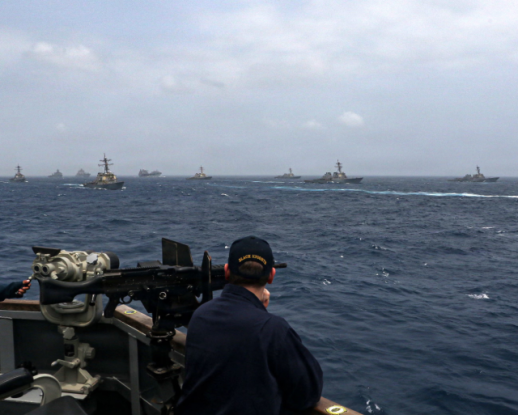 U.S. pressure exposes South Korea's limited Hormuz options SEOUL, July 23 (AJP) - As long as the Strait of Hormuz remains a potential flashpoint, one question is likely to keep returning to Seoul: What can South Korea realistically contribute if Washington asks for military support? Remarks by U.S. Secretary of State Marco Rubio this week have revived that debate, raising fresh questions over what Seoul can realistically offer should Washington turn its expectations into a concrete request. Speaking to reporters in Manila on Wednesday after meetings on the sidelines of ASEAN-related forums, Rubio said the United States had not asked South Korea or other allies that day to provide naval assets. But Washington had raised the issue with several countries previously, he said, arguing that participation would be in their own interest because many Asian economies depend heavily on Middle Eastern oil and natural gas. Rubio also singled out mine-clearing as one area where allies with "unique capabilities" could make meaningful contributions to securing the waterway. His remarks followed reports in Seoul that the Trump administration had asked South Korea to consider deploying a warship to help protect commercial shipping through Hormuz. South Korea's presidential office has said there has been no additional U.S. request for a specific contribution while reiterating that Seoul is considering practical ways to help restore freedom of navigation. The issue is difficult for Seoul to ignore. South Korea imports roughly 70 percent of its crude oil and about one-fifth of its liquefied natural gas from the Middle East, making safe passage through Hormuz a core energy security concern. The military options, however, are far less straightforward. Seoul could dispatch a Cheonghae Unit destroyer to escort South Korean commercial vessels, assign officers to a multinational command structure or expand intelligence and logistical support. A more demanding option would involve mine-clearing assets — the capability Rubio specifically highlighted. Yet analysts say a single destroyer would fall far short if South Korea intends to operate independently rather than under U.S. command. "If South Korea conducts an independent operation, it would need at least 10 ships," Paik Seung-hoon, a senior researcher at the HUFS Middle East Institute, said. "It cannot be done by sending just one Aegis destroyer." Paik said South Korea could participate with a smaller naval presence if it operated within a U.S.-led command structure, relying on American intelligence and missile defense support. But that would fundamentally alter the political meaning of the deployment. "If we say we are joining the operation under U.S. command, that means we are participating in a U.S.-led war," he said. If Seoul wants to avoid that perception, Paik said, it would need to define the mission narrowly as protecting South Korean nationals and commercial shipping, similar to its 2020 expansion of the Cheonghae Unit's operational area during heightened U.S.-Iran tensions. Unlike six years ago, however, the current crisis involves an active war, making parliamentary approval likely before any major deployment. Nor would the mission amount to a symbolic naval dispatch. Mine threats, anti-ship missiles, drones and fast attack craft would require not only a destroyer but also command-and-control assets, escorts, mine countermeasure vessels and potentially submarine or maritime patrol support, Paik said. Japan could further complicate Seoul's calculations. Rubio's reference to mine-clearing capabilities was widely interpreted as applying, at least in part, to Japan, whose Maritime Self-Defense Force has long maintained one of the world's strongest mine countermeasure fleets. If Tokyo decides to participate, pressure on Seoul could quickly intensify. "If Japan sends forces, can South Korea simply refuse to send anything?" Paik said, noting that alliance politics often narrow Seoul's room for maneuver. Kim Houng-yu, a committee member of the Korea Defense Industry Association, said Japan's mine-clearing expertise reflects decades of preparing for the security challenges of an island nation. "Japan is strong in naval operations because it is an island country," Kim said, adding that its mine-clearing capabilities are regarded as among the world's most advanced. He said Tokyo's possible participation should also be viewed in the broader context of Japan's steadily expanding security role alongside the United States. In April, Japan lifted its long-standing ban on lethal weapons exports, marking a major shift in its postwar security policy and opening the door to broader overseas transfers of defense equipment. Around the same time, Tokyo and Washington accelerated defense industrial cooperation aimed at strengthening supply chains, production capacity and long-term sustainment. The momentum continued at a Japan-U.S. defense ministers' meeting in Singapore on May 30, where both sides agreed to accelerate a broad range of initiatives to strengthen deterrence and military readiness. Against that backdrop, Kim said a mine-clearing mission in Hormuz would also allow Tokyo to present its expanding military role as a response to international demand rather than purely domestic policy changes. South Korea's calculus is considerably more complicated. Keeping Hormuz open is clearly in Seoul's economic interest. Yet any naval deployment would immediately raise difficult questions over command authority, combat risk, parliamentary approval and the diversion of naval assets from waters closer to the Korean Peninsula. South Korea's stake in Hormuz is beyond dispute. The harder question is whether Seoul can translate that stake into a military contribution substantial enough to satisfy Washington, yet limited enough to avoid being drawn into a U.S.-led conflict with Iran. 2026-07-23 17:25:59
-
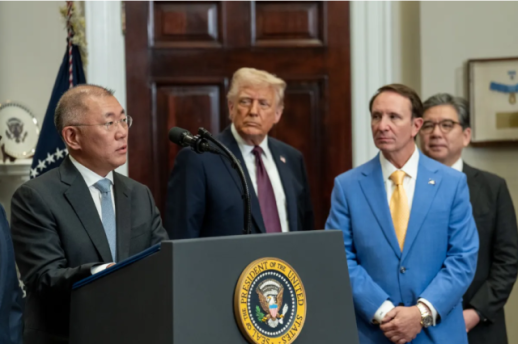 Trump's tariff maze keeps Korea guessing as another deadline looms SEOUL, July 23 (AJP) - For U.S. trading partners—foes and allies alike—it has become nearly impossible to keep up with tariff rates during President Donald Trump’s second term. The levy on South Korean imports has swung from 25 percent to 10 percent, back toward 25 percent, down to 15 percent and then back again to 10 percent — all in little more than a year. The next number could be 12.5 percent. A temporary 10 percent U.S. surcharge on imports from South Korea and most other trading partners expires at 12:01 a.m. Eastern time on Friday. The Trump administration is preparing to replace it with tariffs imposed under Section 301 of the Trade Act of 1974, citing the alleged failure of dozens of economies to block imports made with forced labor. South Korea has been provisionally placed among economies facing a proposed 12.5 percent tariff, rather than the 10 percent rate reserved for countries judged to have stronger or partial restrictions on forced-labor imports. U.S. Trade Representative Jamieson Greer told lawmakers Wednesday that the final action could be released as soon as Thursday. If the proposal is adopted with similar product coverage, the additional tariff burden on many Korean exports would rise by 2.5 percentage points overnight. "It is at least somewhat reassuring that most of our major competitors fall into the same group subject to the 12.5 percent tariff," Rep. Park Sun-won of the Democratic Party, a former first deputy director of South Korea's National Intelligence Service, told AJP. "South Korean companies are fighting for survival to secure an edge over their overseas rivals." South Korean Industry Minister Kim Jung-kwan traveled to Washington this week for meetings with senior U.S. officials as Seoul sought to preserve the 15 percent tariff ceiling negotiated last year and prevent another increase in the cost of accessing its second-largest export market. Yet the constantly shifting tariff rates tell only part of the story. Economists interviewed by AJP said Trump's tariffs are reshaping U.S. political coalitions, raising costs for American businesses and households, fragmenting global trade and steadily eroding confidence in agreements reached with Washington. "The tariffs have reshaped voter coalitions," said Kevin Milligan, professor of economics at the University of British Columbia. "Farm states like Iowa have suffered because their inputs — machinery, potash and other supplies — have become more expensive," he said. "Their agricultural exports have suffered from counter-tariffs imposed by other countries." "This has eroded President Trump's support in states like Iowa that have been heavily affected." Trump's first major blow to South Korea's export economy came through automobiles. On March 26, 2025, Trump invoked Section 232 of the Trade Expansion Act, a national security provision, to impose a 25 percent tariff on imported automobiles and selected parts. The vehicle tariff took effect on April 3, followed by covered auto parts on May 3. Automobiles are among South Korea's largest exports to the United States, making the measure particularly consequential for Hyundai Motor, Kia and their extensive network of suppliers. Days later, Trump unveiled his "Liberation Day" trade program, imposing a 10 percent baseline tariff on most imports while assigning higher country-specific reciprocal tariffs to dozens of trading partners. South Korea received a 25 percent rate despite the Korea-U.S. Free Trade Agreement having eliminated duties on most bilateral merchandise trade. The 10 percent baseline took effect on April 5, while South Korea's 25 percent reciprocal tariff formally began on April 9. It survived for barely a day. After global financial markets tumbled and governments pressed Washington to negotiate, Trump suspended the higher country-specific tariffs for 90 days. Beginning April 10, eligible South Korean products were again subject to a 10 percent tariff rather than 25 percent. The reciprocal tariff never applied universally. Automobiles, steel, aluminum and other products already covered under Section 232 remained outside the measure, as did semiconductors, pharmaceuticals, energy products and several other categories. That distinction remains crucial because there has never been a single tariff rate covering every South Korean export. Trump escalated his metals policy in June 2025 by doubling Section 232 tariffs on many steel and aluminum products to 50 percent. Washington later introduced more differentiated treatment, allowing some Korean steel and aluminum derivative products to receive a 15 percent tariff floor beginning in June 2026 while core metal products continued to face rates as high as 50 percent. The original 90-day pause was due to expire in July 2025. Trump instead extended negotiations until Aug. 1 while warning South Korea that the 25 percent reciprocal tariff would return unless the two governments reached an agreement. A preliminary deal emerged on July 30. Washington agreed to reduce the threatened tariff to 15 percent. In return, Seoul pledged a $350 billion investment framework in the United States, including $150 billion linked to shipbuilding and another $200 billion for strategic industries. Trump and President Lee Jae Myung finalized the core terms during their October summit in Gyeongju. A joint fact sheet later stated that the United States would generally apply whichever was higher — the existing tariff or 15 percent — to qualifying South Korean products. The agreement also lowered total tariffs on South Korean automobiles, auto parts, timber and lumber to 15 percent. The stability proved temporary. On Jan. 26, Trump accused South Korea's National Assembly of moving too slowly to implement legislation supporting the investment package and declared that tariffs on South Korean automobiles, lumber, pharmaceuticals and other products would rise from 15 percent to 25 percent. The announcement included neither an implementation date nor a formal revision to the U.S. tariff schedule. Two days later, Trump said the two countries would "work something out," effectively leaving the 15 percent arrangement intact. For Seoul, the episode underscored that even a negotiated trade agreement backed by a massive investment pledge could be reopened through a presidential social media post. Milligan said that unpredictability may ultimately prove more damaging to the United States than the economic cost of any individual tariff. "I think the biggest long-run impact is the complete erosion of trust in 'deals' made with the United States," he said. "Canadians and many other governments have watched President Trump rip up commitments and walk away from solemn agreements." "Trust in the United States has forever been broken, and this will have serious long-term consequences because countries will hesitate to strike deals if they believe America's word can no longer be relied upon." The legal foundation of Trump's reciprocal tariff system collapsed on Feb. 20 when the U.S. Supreme Court ruled 6-3 that the International Emergency Economic Powers Act did not authorize the president to impose tariffs. The ruling invalidated the emergency-based tariff system under which South Korea had first faced a 25 percent tariff before negotiating it down to 15 percent. It did not affect tariffs imposed under separate authorities, including Section 232 measures covering automobiles and metals. Trump responded by invoking Section 122 of the Trade Act, allowing the administration to impose a temporary 10 percent import surcharge for up to 150 days beginning Feb. 24 and expiring Friday. Washington simultaneously began constructing a more durable replacement under Section 301, which authorizes trade action against foreign practices deemed unreasonable or burdensome to U.S. commerce. The Office of the U.S. Trade Representative opened investigations into 60 economies accounting for more than 99 percent of U.S. imports. Its June report concluded that South Korea had failed to adequately prohibit imports produced with forced labor and that the failure burdened U.S. commerce. Seoul has rejected the proposed 12.5 percent tariff as disproportionate, arguing that South Korea's labor protections, cooperation with the United States and bilateral trade commitments warrant different treatment. The investigation nevertheless illustrates the administration's ability to move from one legal authority to another — emergency powers, national security statutes, a temporary balance-of-payments provision and now an unfair-trade investigation — while keeping tariffs at the center of U.S. trade policy. Kenneth Rogoff, professor of economics at Harvard University and former chief economist of the International Monetary Fund, described the approach as an effort to use trade policy as an instrument of personal and political power. "Trump's weaponization of tariffs, and his use of them as a tool of individual power, will surely undermine U.S. leadership in the global economy over the long run," Rogoff said. "The inevitable balkanization of global trade will also undermine the dominance of the U.S. dollar." Costs for American companies and workers Trump has repeatedly argued that tariffs will revive manufacturing, encourage companies to build factories in the United States and reduce dependence on foreign supply chains. Milligan offered a sharply different assessment. "For the U.S. economy, there is nothing good," he said. "Manufacturing employment is down as exports suffer, while the cost of imported inputs such as Canadian aluminum has risen." U.S. manufacturing employment declined from about 12.64 million in June 2025 to 12.60 million in June 2026, according to seasonally adjusted Bureau of Labor Statistics data. Employment in motor vehicle and parts manufacturing fell by more than 21,000 over the same period. Tariffs designed to protect one domestic industry can simultaneously raise costs for downstream manufacturers using imported steel, aluminum and intermediate goods. Exporters may also face retaliation abroad, while households ultimately bear part of the burden through higher retail prices. David Laibson, the Robert I. Goldman Professor of Economics at Harvard University, summarized the impact succinctly. "U.S. tariffs have damaged the global trading system, hurting most U.S. households, most U.S. firms, and all U.S. trading partners." Rogoff said the tariffs had caused less macroeconomic damage than initially feared, although the longer-term structural risks remained significant. "The effects on the U.S. economy have been relatively modest," he said, adding that Trump's immigration crackdown, particularly on highly skilled workers, "will ultimately have a much greater impact." "The global economy has also proved surprisingly resilient despite the arbitrary nature of the tariffs and the broader erosion of confidence in U.S. global leadership." IMF projections reflect that combination of resilience and drag. The fund forecasts global growth of 3 percent in 2026 and 3.4 percent in 2027 while expecting world trade volume growth to slow from 5 percent in 2025 to 3.5 percent this year. "The broader global economy: the impact is bad, but not as bad as feared," Milligan said. "For Canada, which is the most dependent on U.S. trade, the impact has been much larger. But not for the world as a whole." A policy that may outlast Trump The political consequences are harder to isolate. Trump has simultaneously pursued sweeping changes in immigration, taxation, foreign policy and the federal bureaucracy, making it difficult to determine how much of his declining approval ratings can be attributed specifically to tariffs. "As for the political impact in the United States, he has taken so many dramatic actions that it is difficult to isolate any one policy as the dominant driver of his low approval ratings," Rogoff said. He nevertheless expects aggressive tariff policy to continue through the remainder of Trump's presidency and perhaps beyond. "I strongly expect Trump to continue to use tariffs aggressively for the next two and a half years," Rogoff said. "Frankly, things may not change that much after 2028, given that the Democratic Party is dominated by the hard left, who are very protectionist, while any Republican successor will likely need to embrace Trump's policies to secure his political support." For South Korea, the immediate question is whether Friday's expiring 10 percent surcharge will be replaced by the proposed 12.5 percent tariff, a modified rate with broader exemptions or yet another last-minute compromise. Today, the tariff facing a Korean exporter depends not only on the country of origin but also on the product itself, its tariff classification, its metal content and the particular U.S. trade law being invoked. The broader lesson extends well beyond tariff schedules. The Korea-U.S. Free Trade Agreement may continue to set the underlying tariff on most Korean products at or near zero, but it has not shielded exporters from additional duties imposed under U.S. domestic trade laws. Nor did Seoul's promise to invest $350 billion in the United States permanently settle the tariff question. After more than a year of threats, negotiations, court rulings and fresh investigations, the tariff on South Korean exports is once again no longer a fixed number. It is a moving target. 2026-07-23 17:24:33
-
Kang Hoon-sik Hosts Meeting for All Cheong Wa Dae Employees Kang Hoon-sik, head of the Presidential Office, held a meeting on July 23 for all Cheong Wa Dae employees to mark the second year of the Lee Jae-myung administration. This meeting is the second of its kind since one was held last October. According to Cheong Wa Dae, the purpose of this meeting was to encourage employees who have dedicated themselves to their work, reflect on the past year, and outline the goals and operational direction for the second year of the administration. Kang stated that the true achievements of the Lee Jae-myung administration over the past year are not just visible indicators like the KOSPI and export figures, but rather correcting irregularities and establishing a system that allows for performance commensurate with effort. He expressed gratitude and respect for the employees who have demonstrated a united front as a 'One Team Cheong Wa Dae.' He emphasized that to leap forward under the national vision of 'Irreplaceable Republic of Korea' in the second year, it is essential to go beyond 'One Team Cheong Wa Dae.' Kang urged, "Let us maximize the capabilities of each individual and department while achieving greater results as a single organization," introducing the term 'United Cheong Wa Dae' as the goal for the second year. He added, "United Cheong Wa Dae should not just be an organization that responds to change, but one that designs, leads, and realizes change for the Republic of Korea. Let us be a Cheong Wa Dae that interprets, plans, and adapts flexibly." Furthermore, he noted that the past year was not just about planning but also about execution and delivering tangible results, stating, "It felt like we spent it as if it were 'one term.' I intend to approach this as the first year of the second term."* This article has been translated by AI. 2026-07-23 17:24:00
-
JB Financial Reports Record Half-Year Profit of 385.7 Billion Won JB Financial Group achieved a record half-year net profit nearing 400 billion won this year. On July 23, JB Financial announced that its net profit for the second quarter was 219.6 billion won, a 5.7% increase compared to the same period last year. The cumulative net profit for the first half of the year reached 385.7 billion won, marking a 4.1% rise from the same period last year and setting a new record for the half-year. The return on equity (ROE) for the second quarter was 13.0%, while the return on assets (ROA) stood at 1.07%. The cost-to-income ratio (CIR) was reported at 36.9%, and the common equity tier 1 capital ratio (CET1) was 12.52%. JB Financial stated, "Thanks to solid revenue growth and ongoing cost management, we improved our CIR and maintained stable capital adequacy." Among its subsidiaries, JB Woori Capital led the overall performance with a second-quarter net profit of 104.1 billion won, more than a 42% increase from 73.2 billion won in the same period last year. Gwangju Bank also reported a second-quarter net profit of 85.6 billion won, up over 5% from 81.4 billion won a year earlier. In contrast, Jeonbuk Bank saw its second-quarter net profit decline to 54.6 billion won from 65.1 billion won last year, a decrease of about 16%. Phnom Penh Commercial Bank (PPCBank) recorded a net profit of 14 billion won, while JB Investment reported 2.3 billion won, and JB Asset Management posted 400 million won in net profit. Additionally, JB Financial's board of directors approved a quarterly cash dividend of 314 won per common share, the largest in its history. The board also decided to acquire and retire treasury stock worth 100 billion won. A JB Financial representative stated, "We maintained profitability and capital adequacy based on the stable performance of our core subsidiaries, and we plan to continue our shareholder return policy to enhance corporate value." * This article has been translated by AI. 2026-07-23 17:24:00