


Latest by
-
 Musinsa Targets Fall/Winter Market with Premium Down Outerwear Collection Musinsa is set to target the fall and winter market by diversifying its down outerwear line under its private brand, Musinsa Standard, and introducing a new collection featuring premium materials.On July 23, Musinsa held a '2026 FW Season Preview' in Seongdong-gu, Seoul, showcasing key products scheduled for release in the second half of the year.This season, the brand has strengthened its outerwear offerings, focusing on its flagship collection, City Leisure. The popular light down jacket has been segmented into light, midweight, and heavy options, broadening consumer choices based on warmth and thickness.A Musinsa representative stated, "Given the popularity of the light down jacket, we have expanded the down outerwear line by diversifying materials and thicknesses."The brand also introduced a new 'Trail Line' designed for both urban and outdoor use. Trail sports refer to activities enjoyed off paved roads, including dirt paths, forests, and mountainous terrains. Musinsa Standard has crafted these products to maintain the functionality of professional outdoor wear while ensuring they can be worn casually in everyday settings.Kim Ji-hoon, head of design at Musinsa Standard, explained, "We launched the Trail Line in response to consumer demand for trail sports, ensuring the products can be used casually in the city, not just for trail activities."The new collection, 'Musinsa Standard Plus,' was also unveiled, emphasizing high-quality materials and craftsmanship. It retains the practicality of basic wear while elevating the quality of fabrics and stitching.Sweaters feature a blend of Surri alpaca, 100% cashmere from Inner Mongolia, and silk-cashmere yarns. Shirts and pants utilize Egyptian Giza cotton and high-density twill fabric from Japan's Cosmos. Musinsa highlighted its meticulous production methods to enhance the fabric's texture and silhouette.Collaborations with global outdoor brand Helinox and women's fashion brand Ohesio were also showcased. The collection with Helinox features a 'Durable Bag Collection' that applies high-strength fabrics used in outdoor environments to everyday bags, enhancing durability and storage convenience while maintaining a simple design.The collaboration with Ohesio combines Ohesio's delicate details with Musinsa Standard's fundamental design.Musinsa transformed the preview venue into an experiential space where visitors could try on upcoming products and examine materials and silhouettes. A photo booth was also set up for guests to capture styles featuring the FW products.A Musinsa representative stated, "In the second half of this year, we will continue to strengthen our brand competitiveness by opening new Musinsa Standard stores in key areas of Seoul, including Seongdong and Myeongdong."* This article has been translated by AI. 2026-07-23 17:20:00
 -
KB Securities Reports Record Half-Year Operating Profit of 1.05 Trillion Won KB Securities achieved a record half-year operating profit of over 1 trillion won, driven by a strong domestic stock market.On July 23, KB Securities announced that its consolidated operating profit for the first half of the year reached 1.0537 trillion won, a 138% increase compared to the same period last year. Pre-tax profit was reported at 1.08 trillion won, with net profit amounting to 801 billion won.Both the half-year operating profit and net profit set new records.In the second quarter, operating profit soared to 600.6 billion won, marking a 175.5% increase from the previous year, while net profit rose by 180.6% to 450.8 billion won.KB Securities attributed its record half-year performance to robust growth across all business sectors, fueled by a bullish stock market.In the wealth management (WM) sector, the favorable market environment led to an increase in asset allocation products and personalized consulting, resulting in the first-time surpassing of 200 trillion won in assets under management (AUM) for individual clients. The company enhanced its marketing focused on BK&WM and advanced AI-based services to attract more client assets.Despite ongoing market volatility, the investment banking (IB) sector strengthened its corporate finance capabilities.In the debt capital markets (DCM) sector, KB Securities maintained its market dominance by leading large-scale underwriting and managing the issuance of foreign exchange stabilization fund bonds and kimchi bonds. In the equity capital markets (ECM) sector, it successfully completed four initial public offerings (IPOs) including License Medical, Chaevi, Stradvision, and Lemon Healthcare, as well as a large deal involving SKC's capital increase.The acquisition finance and mergers & acquisitions (M&A) sector focused on strengthening its competitiveness in high-quality domestic transactions, while the project finance (PF) sector maintained stable profitability through quality projects centered in the metropolitan area and expanded into new growth areas such as data centers.In the capital markets sector, despite ongoing fluctuations in interest rates and exchange rates, profits increased year-on-year due to expanded mezzanine investment returns, foreign exchange flows, increased proprietary trading profits, and enhanced collaboration in equity-linked securities (ELS) operations.The wholesale sector also recorded its best half-year performance, leveraging a global and institutional sales integrated platform. It expanded cross-border transactions by linking international inbound customer services with outbound markets, achieving the top market share in domestic institutional equities and enhancing profitability based on its liquidity provider competitiveness. The prime brokerage services (PBS) sector continued its growth trend.* This article has been translated by AI. 2026-07-23 17:20:00
-
Hyundai Commercial Reports 117.1 Billion Won in First-Half Net Profit, Up 17.2% Year-on-Year Hyundai Commercial reported a double-digit increase in net profit for the first half of the year, driven by the expansion of its investment finance assets. The company announced on July 23 that its net profit for the first half of the year reached 117.1 billion won, a 17.2% increase compared to the same period last year. Operating revenue rose to 745.8 billion won, marking a 14.5% increase during the same timeframe. By the end of the first half, total assets amounted to 10.7988 trillion won, up 6.0% from the previous year. Industrial finance assets remained stable at 5.1567 trillion won, while corporate finance assets slightly decreased to 3.0575 trillion won. Investment finance assets surged by 44.5% year-on-year to 2.5846 trillion won, primarily due to investments in overseas private equity funds, private debt funds, domestic real estate, and non-performing loans. Operating profit was recorded at 69.7 billion won, a decrease of 3.6% from the previous year. Despite the increase in operating revenue, operating expenses rose by 16.8%. Pre-tax profit increased by 20.6% to 134.1 billion won. The delinquency rate, a key indicator of financial health, rose to 0.90%, up 0.19 percentage points from the previous year, but remained below 1%. The ratio of non-performing loans was 1.3%, with a non-performing loan coverage ratio of 119.4%. The leverage ratio decreased from 7.6 times to 6.9 times. A Hyundai Commercial representative stated, "As we maintain a stable asset base in industrial and corporate finance, the growth in investment finance assets has led to increases in operating revenue and net profit. We are also managing our financial health by keeping the delinquency rate below 1%."* This article has been translated by AI. 2026-07-23 17:20:00
-
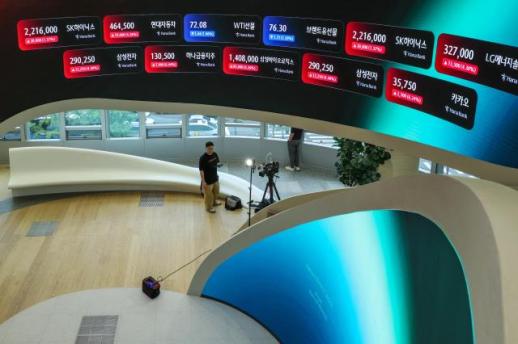 Won surges amid foreign inflows as stronger-than-expected GDP SEOUL, July 23 (AJP) - The South Korean won strengthened sharply against the dollar on Thursday as foreign investors poured more than 2 trillion won into local shares following stronger-than-expected economic growth and renewed optimism over artificial intelligence-related chip demand. Government bond yields, by contrast, ended little changed as the prospect of further monetary tightening was offset by buying interest after their recent climb. The won gained 13.3 won to close daytime trading at 1,466.8 per dollar, its strongest level in about two and a half months. The currency opened near 1,477 per dollar and briefly weakened before reversing direction and advancing into the mid-1,460s later in the session. Foreign investors purchased a net 2.136 trillion won (US$1.46 billion) of shares on the main Kospi market, adding to demand for the won and accelerating the currency's rise. The benchmark KOSPI climbed 4.40 percent to 7,096.89 as overseas investors concentrated their purchases in large-cap stocks, including semiconductor companies. The scale of foreign buying strengthened expectations of equity-related dollar selling, while exporters also sold dollars as the exchange rate extended its decline. The market rally followed data showing that South Korea's real gross domestic product expanded 0.6 percent in the second quarter from the previous three months, exceeding the 0.4 percent median forecast in a Reuters poll. The economy grew 3.7 percent from a year earlier, also beating expectations, as exports increased 1.4 percent on strong shipments of semiconductors, machinery and equipment. The figures eased concern that economic momentum would fade sharply after 1.8 percent growth in the first quarter and reinforced expectations that the Bank of Korea will raise its annual growth forecast next month. They also strengthened the case for at least one more interest-rate increase, improving the won's relative yield outlook despite continued strength in the broader dollar. Renewed optimism over global artificial intelligence (AI)-related investment provided additional support, lifting South Korean chipmakers and drawing foreign funds back into a market that had recently experienced sharp volatility. Government bonds showed a much more restrained response to the GDP surprise, with yields ending on opposite sides of their previous closes. The yield on the three-year government bond rose 0.4 basis point to 3.917 percent, while the benchmark 10-year yield declined 0.8 basis point to 4.392 percent. The stronger growth figures kept expectations for another BOK rate increase intact, but the possibility had already been largely reflected in short-term yields after their recent advance. The central bank raised its benchmark interest rate by 25 basis points to 2.75 percent on July 16, and economists broadly expect at least one additional increase to 3.00 percent by the end of the year. Buying interest emerged as the three-year yield approached 3.9 percent and the 10-year yield neared 4.4 percent, limiting further losses in bond prices despite the stronger-than-expected GDP data. The decline in the longer-dated yield slightly flattened the yield curve, indicating that investors were reluctant to extend the bond sell-off without clearer evidence that stronger growth would generate persistent inflation. Thursday's trading highlighted a divergence across South Korean financial markets, with the won and equities responding strongly to foreign inflows and the chip-led growth surprise while bonds remained caught between additional rate-hike risks and perceptions that yields were near a short-term peak. 2026-07-23 17:12:19
 -
Godzilla series actress Kaylee Hottle dies in car accident at 18 Kaylee Hottle, an actress known for her role as the deaf girl Jia in the films 'Godzilla vs. Kong' and 'Godzilla X Kong: New Empire,' has died in a car accident at the age of 18.According to the Associated Press, Hottle was killed in a traffic accident early on July 22 in Ijamsville, Maryland, as reported by the Frederick County Sheriff's Office.The sheriff's office stated that Hottle was a passenger in a vehicle that left the road and struck a drainage ditch around 3 a.m. One of the two other passengers sustained non-life-threatening injuries and was taken to the hospital, while the other did not require treatment. Hottle was airlifted to a hospital but reportedly died before arrival.Authorities are investigating the accident, considering speeding as a possible factor, according to the AP.Following the news of her passing, Hottle's family expressed their grief on social media. Her father, Joshua Hottle, shared in a video, "I am grateful for the 18 years I had with my daughter, but I wish we had more time together." He also addressed the 19-year-old driver of the vehicle, saying, "I forgive you, but don’t let this accident ruin the rest of your life." Her mother, Ketch Hottle, added, "I feel Kaylee is still with us." Hottle was a deaf actress who used American Sign Language as her first language, and her entire family is also deaf. She made a strong impression on audiences with her portrayal of Jia, a girl who communicates with the giant monster Kong through sign language, in 'Godzilla vs. Kong,' released in 2021, and its sequel, 'Godzilla X Kong: New Empire,' set to release in 2024.Tributes from fellow actors have poured in. Millie Bobby Brown, who starred alongside Hottle in the 'Godzilla' series, wrote on Instagram, "I am heartbroken to hear this news. Kaylee, I will miss you deeply." Academy Award-winning deaf actress Marlee Matlin expressed, "May Kaylee's beauty and talent be remembered forever," while Troy Kotsur, an actor from the film 'CODA,' remarked, "This news reminds us not to take time for granted," extending his condolences to Hottle's family.* This article has been translated by AI. 2026-07-23 17:08:00
-
South Korea's Food and Drug Administration Uncovers 26 Companies Misleading Consumers with Diet Ads The Korea Food and Drug Administration (KFDA) has identified 26 online food advertising companies that exaggerated the weight loss effects of their products by using terms associated with the obesity treatment drug 'Wegovy.' The scale of these misleading advertisements exceeded 10 billion won (approximately $7.5 million).On July 23, the KFDA announced the results of a focused inspection of summer online diet food advertisements, revealing violations of the 'Labeling and Advertising of Food Act' across 30 products from these companies. The firms misled consumers into believing their products, such as 'Eating Wegovy,' 'GLP-1,' and 'Oleshot,' were proven weight loss medications or functional products.Particularly targeted were the 'Oleshot' and 'Natural Wegovy Recipe,' which have gained popularity on social media. Oleshot involves consuming olive oil and lemon juice together, while the 'Natural Wegovy Recipe' combines olive oil with boiled eggs. These products were promoted online as having effects like 'fat reduction,' 'appetite suppression,' and 'detoxification,' but they lack medical validation as effective treatments.Among the products identified, only eight were recognized as health functional foods, while the remaining 22 were classified as general foods. However, even the health functional foods were advertised in ways that implied disease prevention and treatment effects beyond their approved functionalities. Most of the advertisements effectively resembled 'drug-like promotions' that exceeded legal standards.The investigation found that these companies sold approximately 600,000 products, generating total sales of about 11.5 billion won (around $8.6 million). The pricing structure was also abnormal, with some products sold at prices up to 27.5 times their purchase cost. One company reported sales of 2 billion won (about $1.5 million) by selling a product originally priced in the 2,000 won range for 60,000 won.Advertising methods have become increasingly sophisticated. Companies employed strategies such as partially obscuring specific drug names like 'Wegovy' and 'Mounjaro' or emphasizing mechanisms of action like 'GLP-1' to evoke associations with drug-like effects. They also used endorsements from celebrities or pharmacists, AI-generated virtual figures, and images of fat reduction to enhance credibility.The platform strategies have evolved as well. Companies attract consumers through provocative short-form content on platforms like Facebook, Instagram, and YouTube, directing them to their own shopping sites. These short videos often featured strong claims like 'rapid weight loss in a short period' and 'a body that doesn't gain weight even when eating.' On actual sales pages, related phrases were either removed or softened to evade regulation.Experts point out that this case highlights the dangers of a 'derivative market' created by the global obesity treatment drug craze, as the explosive demand for GLP-1 class treatments like Wegovy and Mounjaro has led to the rapid proliferation of imitation or alternative products.The KFDA plans to publish the names of the identified companies and products on its website and will request administrative actions and prosecutions from local authorities. Additionally, it has urged consumers to be cautious of advertisements claiming drug-like efficacy for products labeled as 'Eating Wegovy,' 'appetite suppressants,' and 'fat eliminators.'* This article has been translated by AI. 2026-07-23 17:00:00
-
Hyundai Glovis to Expand Fleet to 110 Car Carriers by Year-End Amid Rising Demand from China Hyundai Glovis plans to increase its fleet of large car carriers (PCTC) from 98 to 110 by the end of the year to meet rising maritime transport demand from China. The company is also focusing on expanding into new markets, including defense logistics.During a conference call on July 23, CEO Lee Kyu-bok stated, "Although rising oil prices and increased shipping costs have temporarily impacted profitability, we achieved solid results based on our unwavering strength. We expect profitability to recover starting in the third quarter as previously incurred costs translate into revenue."In the second quarter of this year, Hyundai Glovis reported a revenue of 8.7054 trillion won, a 15.8% increase compared to the same period last year. This growth was driven by a 20.9% rise in shipping business revenue, which reached 1.6441 trillion won, thanks to increased orders from Chinese original equipment manufacturers (OEMs).Hyundai Glovis announced plans to expand its fleet of car carriers, which can transport 6,500 vehicles each, to 120 vessels by next year in response to the growing demand for maritime transport from China.Chief Financial Officer Yoo Byung-gak noted, "In the first half of the year, China's automobile exports increased by about 66% compared to the previous year, exceeding expectations and driving a strong market for car carriers. We anticipate continued growth in demand for finished vehicle maritime transport, particularly from China, in the second half of the year, which supports our plan to increase the fleet to 110 vessels."However, the company reported an operating profit of 495 billion won for the second quarter, an 8.1% decrease from the same period last year, primarily due to rising fuel costs. Hyundai Glovis estimated a loss of approximately 60 billion won in the second quarter due to timing differences in freight rate adjustments related to fuel price increases.In terms of business segments, both logistics and distribution continued to show growth. The logistics segment recorded sales of 2.8558 trillion won, a 10.3% increase year-on-year, driven by non-affiliated cargo and increased inland transportation in North America. However, operating profit in this segment decreased by 5.9% to 191.8 billion won due to lower container contract rates. The distribution segment achieved sales of 4.2055 trillion won and an operating profit of 172.3 billion won, reflecting increases of 17.9% and 27.8%, respectively, compared to the previous year, thanks to the ramp-up of semi-knocked down (CKD) exports to emerging markets and growth in non-ferrous metal trading.Hyundai Glovis expects improved performance in the second half of the year, driven by the effects of new car launches, increased maritime transport demand from China, and rising CKD exports to emerging markets. The company is also expanding its business by handling some defense logistics transportation for Hanwha Aerospace.Lee Kyu-bok emphasized, "Despite the temporary impact of rising fuel costs due to unforeseen war effects, we are more focused on the continuous revenue growth seen in the first and second quarters. If we can expand non-affiliated cargo and combine that with the anticipated global logistics growth in the second half, we will be on track to achieve our revenue targets for this year and our goal of 40 trillion won in revenue by 2030."* This article has been translated by AI. 2026-07-23 17:00:00
-
Court Allows Live Broadcast of Yoon Suk Yeol's Election Law Verdict The court has permitted a live broadcast of the first-instance verdict hearing for former President Yoon Suk Yeol's alleged violation of election laws.According to legal sources on July 23, the Seoul Central District Court's Criminal Division 21, led by Judge Jo Soon-pyo, accepted requests from broadcasters to cover the verdict scheduled for July 27 at 2 PM.The court will transmit video footage captured with its own equipment to the broadcasters in real-time.Additionally, the special prosecutor's team, led by Kim Geon-hee, has also been granted permission for a recorded broadcast, which will be released after the verdict is announced.Yoon is accused of making false statements during a discussion hosted by the Kwanhun Club on December 14, 2021, when he claimed, "I did not introduce a certain lawyer to former Yongsan Tax Office head Yoon Woo-jin," which is alleged to be untrue. He was indicted in December of last year.He is also accused of spreading false information during an interview at the launch of the Buddhist Leaders Forum in January 2022, where he stated, "I was introduced to Geon-jin Beopsa by party officials, and I have never met him with Kim Geon-hee."The special prosecutor's office suspects that Yoon did introduce the lawyer to Yoon and that he first met Geon-jin Beopsa through Kim Geon-hee, maintaining a relationship for over ten years.In last month's closing arguments, the special prosecutor's office sought a two-year prison sentence for Yoon. If a fine of over 1 million won is confirmed in this case, the People Power Party will be required to return 39.7 billion won in election funds to the National Election Commission.* This article has been translated by AI. 2026-07-23 16:56:00
-
 Top court refers ex-first lady's case to full bench amid conflicting rulings SEOUL, July 23 (AJP) - Former first lady Kim Keon Hee's appeal case was referred to the Supreme Court's full bench on Thursday, delaying a scheduled ruling amid conflicting lower court decisions over allegations involving election-related polls. The top court said it had decided to refer Kim's case to the full bench and postpone its ruling, just a day before the scheduled verdict was set to be delivered at 2 p.m. on Friday. No new date has been set. The move is widely seen as aimed at resolving conflicting lower court rulings over allegations involving self-proclaimed political broker Myung Tae-kyun, who allegedly provided opinion polls to Kim and former President Yoon Suk Yeol free of charge, in what prosecutors allege constituted illegal political funding. A full-bench review is typically reserved for cases involving significant legal questions or the need to unify judicial interpretations. Kim and her husband, ousted former President Yoon Suk Yeol, allegedly received opinion polls worth about 270 million won (US$180,000) free of charge from Myung between June 2021 and March 2022. She also faces several other charges including allegations of involvement in the Deutsche Motors' stock manipulation scheme and acceptance of luxury handbags and jewelry in exchange for favors from the Unification Church, a secretive religious sect better known as the Moonies. In the first trial in January, Kim was sentenced to 20 months in prison after being found guilty of some bribery-related charges. About three months later, an appellate court increased her sentence to four years in prison and fined her 50 million won, though she was still found not guilty of the poll-related charges in both her first and second trials, a finding that ran counter to Yoon's lower-court sentencing on the same charge. Thursday's referral came about 10 days after the Seoul Central District Court sentenced Yoon to two years in prison after finding him guilty of receiving free opinion polls from Myung, a ruling that contradicted the lower court rulings in Kim's case clearing her of the same allegations. It also came just a day after the same court fined Seoul Mayor Oh Se-hoon 10 million won for receiving similar opinion polls from Myung ahead of the 2021 mayoral by-election and allegedly having his supporter cover the costs. Legal observers said the top court's decision to convene the full bench appears intended to establish a consistent legal framework after lower courts reached conflicting conclusions in related cases. 2026-07-23 16:55:02
 -
2027 College Admissions Fair Kicks Off with 150 Universities Participating Despite the sweltering heat, the enthusiasm of students and parents for college admissions was palpable. The '2027 College Admissions Fair' opened on July 23, bringing together 150 major universities to provide tailored admissions strategies for prospective students. Lee Gi-jeong, President of the Korean Council for University Education (KCU), defined college admissions as a crucial starting point for future planning and urged students to choose paths that align with their own aptitudes. The fair is being held at COEX Hall A in Samseong-dong, Seoul, from July 23 to 25, featuring participation from regional public universities and major institutions in the metropolitan area.Given that this is the last admissions cycle under the current system, anxiety levels among students and parents are understandably high. Many attendees were seen waiting in line from early morning, despite the inclement weather, eager to gather information and strategize their applications. During the opening ceremony at 9 a.m., President Lee expressed gratitude to the students, parents, and teachers who attended the fair on such a hot summer day, acknowledging the vibrant atmosphere. Celebrating its 17th year, Lee emphasized that college admissions is not merely about deciding which university to attend but is a vital opportunity to discover one's potential and plan for the future. He encouraged students to prioritize their own dreams and capabilities over external standards. At the fair, dedicated consultation booths were set up for each participating university, where admissions officers and faculty provided one-on-one personalized counseling based on last year's admissions results. Additionally, informational materials regarding each university's admission guidelines were distributed for free. Beyond university booths, various special sections were available to assist students in career planning. A '1:1 Admissions Counseling Center' was operated by the KCU's experienced counseling teachers for pre-registered participants, while a comprehensive admissions information center allowed attendees to search for national university admissions results. Promotional booths for the admissions information portal 'Adiga', University Information, Sports Talent Admissions Portal, and the Korea Health and Medical Information Management Education Evaluation Institute were also set up. President Lee stated, "KCU will continue to provide fair and reliable admissions information to students and parents, striving to alleviate the burdens of the admissions preparation process. After the fair, we will maintain online and phone counseling through the admissions information portal 'Adiga' and the counseling teacher group."* This article has been translated by AI. 2026-07-23 16:52:00