


Latest by
-
 Kookmin University joins World Design Capital exhibition in Frankfurt SEOUL, July 23 (AJP) - A South Korean university design team was invited to Germany this month to show its work on public transportation for people who struggle to get around, one of a set of campus research projects gathered for an exhibition tied to the world's biennial design capital program. Kookmin University's Department of Automotive and Transportation Design took part in the World Design Capital Campus Exhibition 2026 Frankfurt on July 3 at the Museum Angewandte Kunst. The event is organized by the World Design Organization (WDO), which selects a World Design Capital every two years. Frankfurt holds the title for 2026, and Busan in South Korea was chosen for 2028. The Frankfurt exhibition is built around university research rather than commercial products. It gathers next-generation design projects from campuses worldwide and pairs the displays with presentations and a lecture program. The invitation came out of a project Kookmin completed in 2025 with the Genesis Design Innovation Division at Hyundai Motor, titled "Human-Centered Public Mobility Service Design Based on Future Smart Cities." The university shared those results with Hyundai Motor's European design center, the University of Art and Design Offenbach and WDO officials, who cited the project's originality in extending the invitation. At the museum, the department showed a concept video and panels explaining the project, along with scale models and a three-dimensional terrain map of the target area. Kookmin's Noh Jae-seung, who led the research, walked through the project's aims, its development and its outcome during a Design Talk session held the day after the opening. The work centers on what transportation planners call the last mile, the short final stretch of a journey that public transit often fails to cover. For older riders, people with disabilities and residents of areas with thin transit service, that gap can decide whether a trip happens at all. Hyundai Motor's Genesis Design Innovation Division said it wanted to deliver mobility solutions that could actually be used by people who have difficulty moving around and by communities cut off from transit. "In order to create a city where anyone can move freely, we sought to improve not only mobility design but also physical and digital infrastructure, and even the invisible service experience," the division said. It described the collaboration as a valuable chance to search for answers alongside Kookmin students, and said it would continue projects aimed at free mobility for everyone, including those inconvenienced on last-mile trips. Dorothée Bolade, membership engagement manager at the WDO, said Kookmin's participation showed the value of design schools communicating and connecting across borders, together with the involvement of international educational institutions working with the organization. She said the group works so that universities worldwide can share ideas, sustain academic exchange and cooperation, and consider the future of design together. She added that she hoped such exchange would carry through to the World Design Assembly in Seoul in 2027 and to Busan as the 2028 World Design Capital. Noh called the invitation meaningful recognition of the joint work with Hyundai. He said the company's active support allowed designers and students to stay in close contact through repeated feedback and design reviews while shaping user-centered mobility scenarios for future megacities. "Since Busan has been selected as the 2028 World Design Capital, it would carry even greater meaning if we could build on this project and present a more developed outcome tailored to the regional characteristics of Busan," Noh said. The project is also documented on Open Design Lab, the platform Hyundai Motor uses to publish its future mobility design research, where the theme, process and final results are available in detail. 2026-07-23 13:48:41
-
 CCTV Wires Damaged in Gyeongsan Apartment Fire Incident A 70-year-old resident, identified as A, has been charged with arson after a fire at the management office of an apartment complex in Gyeongsan, North Gyeongsang Province. Reports indicate that A had been in conflict with the management office over regulations and resident representative elections.According to Yonhap News Agency, an explosion believed to be related to the arson occurred at 8:29 a.m. on July 23 in the management office of an apartment in the Sadong area of Gyeongsan.The incident resulted in injuries to eight residents, aged between 40 and 70, including two men and six women. Among the injured was A, who reportedly entered the management office carrying flammable materials just before the explosion. Additionally, five elderly individuals who were at a senior center located directly across from the management office also suffered burn injuries.Police investigations and witness statements revealed that A fled the scene immediately after the explosion. He later returned home, armed with a weapon, and began shouting while wandering around the apartment complex until he was apprehended by responding officers.A, who sustained severe burns from the explosion, has been transferred to an intensive care unit at a specialized hospital in Daegu for treatment.Authorities believe that A's actions stemmed from long-standing grievances with the management office, exacerbated by recent events. Tensions between the management office and some residents had been reported prior to the incident, with residents having filed multiple complaints with the Gyeongsan City Hall in the past.Furthermore, A had recently run for a position in the resident representative election but lost. Following his defeat, he reportedly caused a disturbance by damaging the ballot box.In a related note, B, a family member of one of the explosion victims, confirmed that all power connections for the CCTV cameras illuminating the apartment complex had been damaged since the evening of July 22.* This article has been translated by AI. 2026-07-23 13:48:00
-
BBQ Celebrates Yuhyun's Back-to-Back LPGA Major Wins BBQ held an event to celebrate professional golfer Yuhyun's consecutive LPGA major tournament victories and to continue its sponsorship partnership.Genesis BBQ Group announced on July 23 that it hosted a celebration for Yuhyun, her family, and representatives from her agency at its headquarters in Songpa-gu, Seoul, on July 22.Yuhyun recently achieved back-to-back victories at the LPGA Tour major tournaments, the KPMG Women's PGA Championship and the Amundi Evian Championship.The event began with a commemorative video showcasing Yuhyun's journey to her major victories. Following the video, Hong Geun, chairman of Genesis BBQ Group, presented Yuhyun with a BBQ jacket, a commemorative plaque, and a congratulatory cash prize to celebrate her consecutive major wins.Chairman Hong expressed pride in Yuhyun's remarkable achievement, stating, "I am very proud of Yuhyun for achieving back-to-back major tournament victories on the LPGA stage, where the world's best players compete. BBQ will continue to support her as a strong partner in her pursuit of even greater goals."Yuhyun remarked, "It is meaningful to be able to support each other as partners beyond the relationship of sponsor and athlete. I will do my best to repay this support with good performances and results for the remainder of the season."Since last year, BBQ has been expanding its sponsorship of LPGA players as part of its strategy to penetrate the U.S. market. After signing a sponsorship agreement with Yuna in January of last year, it also partnered with Yuhyun to engage in sports marketing through women's golf in the U.S. Additionally, BBQ has been involved in activities that combine sports and K-food, such as hosting youth golf charity events and offering BBQ chicken tasting events for participating athletes and officials.Currently, BBQ operates over 300 stores across 33 states in the U.S. Consumer sales in the U.S. market have grown from 70 billion won in 2021 to 340 billion won in 2025.* This article has been translated by AI. 2026-07-23 13:48:00
-
South Korea to Support 520 GPUs for AI Projects, 512 for 'Everyone's AI' The Ministry of Science and ICT (MSIT) will provide 512 graphics processing units (GPUs) for the 'Everyone's AI Project,' which aims for a launch by the end of the year. This initiative is part of the government's effort to directly support computational resources needed for AI service development for the public.On July 23, during the 11th Science and Technology Ministers' Meeting held at the Government Seoul Building, Deputy Prime Minister and MSIT Minister Baek Kyung-hun presided over the deliberation and approval of the 'GPU Support Plan for Major Government AI Projects.'The government has decided to allocate a total of 520 GPUs for newly requested AI projects this year, with 512 designated for the Everyone's AI Project. An information session for the project was held on July 21, and the project launch ceremony is scheduled for September 1.Following this, the government plans to support the release of AI services that all citizens can use without burden within the year, utilizing NVIDIA B200 GPUs to aid in service development and enhancement.The remaining eight GPUs will be used to improve the quality of the 'AI Legal Search Service,' which allows citizens to search laws, precedents, and interpretations in natural language.Additionally, the meeting discussed various topics, including the direction for fostering next-generation small modular reactors (SMRs), strategies for domestic semiconductor production and industrial ecosystem development, physical AI port strategies, the Agentic AI initiative, and a public AX privacy protection guide.The Agentic AI initiative includes establishing safety and trust guidelines for AI agents, developing performance and safety evaluation systems, and reviewing identity verification and accountability frameworks for AI agents. The government aims to create an environment where all citizens can utilize AI agents based on the Everyone's AI Project and support the development and demonstration of industry-specific Agentic AI services.The physical AI port strategy focuses on the autonomy of port equipment and optimizing port operations based on AI. The government is considering establishing a '(tentative) Advanced Port Technology Institute' that links real and virtual environments at Gwangyang Port, planning to apply research and development results to the first phase of the Gyeongin Port project to build a physical AI port model.To secure a leading position in the next-generation SMR market, the government will pursue demand discovery, supply chain enhancement, and regulatory improvements. It plans to identify business models by reactor type and foster public-private joint venture companies while establishing a comprehensive supply chain covering development, manufacturing, demonstration, and nuclear fuel. Demonstrations will utilize digital twins and the site of the Munmu the Great Science Research Institute, while securing high-purity low-enriched uranium (HALEU) and establishing domestic nuclear fuel production capabilities. Based on the SMR Special Act, which will take effect in September next year, the government will establish a development promotion committee and a basic plan while pursuing regulatory improvements.Deputy Prime Minister Baek Kyung-hun stated, "In the second year of the people's sovereignty government, it is time to prove our direction with results during this golden time for a great leap forward. I hope all related ministries and agencies will actively cooperate and execute to ensure that citizens can feel the changes." He added, "We will secure overwhelming competitiveness in the semiconductor, AI data center, and physical AI sectors through three mega projects and accelerate the realization of a basic AI society that all citizens can enjoy."* This article has been translated by AI. 2026-07-23 13:48:00
-
Lotte Wellfood Launches 'Ilwoljeong Black Garlic Samgyetang' in Daegu As demand for health foods rises during the summer, Lotte Wellfood's home meal replacement (HMR) brand, Meal Theory, has introduced a new product in collaboration with Daegu's Centennial Store, Ilwoljeong.Lotte Wellfood announced on July 23 that it has launched 'Ilwoljeong Black Garlic Samgyetang,' a representation of the signature dish from the renowned samgyetang restaurant in Daegu.This product is the sixth in the 'Meal Theory x Centennial Store' collaboration project. Centennial Stores are selected by the Ministry of SMEs and Startups for their excellence and growth potential, having been in operation for over 30 years.The new product features Ilwoljeong's signature dish, made with black garlic, known for its rich broth and deep flavor, which has been beloved in the region for many years.It uses 100% domestically sourced whole chicken, along with black garlic, mung beans, and glutinous rice to enhance nutrition and flavor. The product aims to replicate the taste of a long-simmered broth and tender texture typical of specialty restaurants.With rising dining costs and early heat waves, the demand for convenient health foods is increasing, leading to growth in the HMR market during the summer season. Lotte Wellfood has launched this product in anticipation of demand during the early, mid, and late summer.Meal Theory is expanding its collaborations with local eateries. Previous releases include 'Hyungjae Songjeong Tteokgalbi,' 'Shin Ya Chicken Dakgangjeong,' 'Tahyanggol Sliced Gamjatang,' 'Haeundae Wonjo Halmae Gukbap Beef Radish Soup,' and 'Odeng Restaurant Budae Jjigae,' continuing the Centennial Store collaboration series.A representative from Lotte Wellfood stated, "We are continuing our collaborations to allow more consumers to experience the traditional flavors and expertise that Centennial Stores have built over time. We plan to introduce a variety of differentiated meal products with unique taste and quality in the future."* This article has been translated by AI. 2026-07-23 13:48:00
-
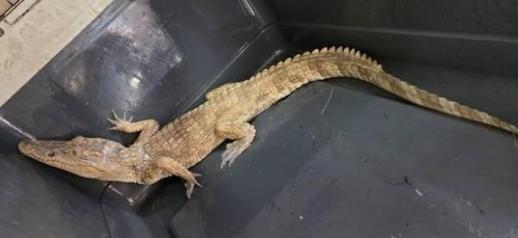 Crocodile discovery renews scrutiny of Korea's exotic pet trade SEOUL, July 23 (AJP) - A crocodile pulled from a stream in Yeoju has been identified as a critically endangered Siamese crocodile, adding to a series of crocodile discoveries in South Korea over the past two years and renewing scrutiny of the country's exotic pet trade. Firefighters captured the 50-centimeter reptile from Soyang Stream on July 18 after a passerby reported what appeared to be a pet crocodile swimming in the water. Rescue crews netted the animal within about 30 minutes without injuries. Yeoju City later asked the National Institute of Biological Resources to identify the species using photographs and video taken after the capture. The institute concluded that the reptile was a Siamese crocodile (Crocodylus siamensis), a freshwater species native to Southeast Asia that is listed in Appendix I of the Convention on International Trade in Endangered Species of Wild Fauna and Flora (CITES), the treaty's highest level of protection. Once found across Thailand, Cambodia, Laos and Vietnam, Siamese crocodiles are now among the world's rarest crocodilian species after decades of habitat loss, hunting and hybridization. International commercial trade in wild-caught animals of the species is prohibited under CITES. The crocodile is being housed at a temporary animal shelter operated on behalf of Yeoju City while officials search for its owner during the legally required 10-day public notice period. If no owner comes forward, the animal is expected to be transferred to the National Institute of Ecology in Seocheon, South Chungcheong Province, for long-term care. The discovery follows several unusual crocodile incidents in South Korea in recent years. In February 2024, two dead juvenile crocodiles measuring about 30 centimeters each were found beside a trash pile near a shopping complex in Incheon. The National Institute of Biological Resources said they were believed to be either Siamese crocodiles or saltwater crocodiles, both species protected under CITES. Six months later, a 60-centimeter crocodile carcass, believed to be either a New Guinea crocodile or a saltwater crocodile, was discovered on a roadside in Sacheon, South Gyeongsang Province. Another reported sighting in Yeongju, North Gyeongsang Province, in June 2023 prompted an extensive search after witnesses reported seeing what appeared to be a crocodile in a stream. Authorities found no animal or physical evidence confirming the sighting. Police are investigating how the Yeoju crocodile ended up in the stream, including whether it escaped from private captivity or was deliberately abandoned. Under South Korean law, possession, trade or release of internationally protected wildlife without proper authorization may result in criminal penalties. Experts say South Korea's climate makes it unlikely that crocodiles released into the wild could survive long enough to establish a breeding population. Even so, the repeated discoveries have raised concerns about the illegal trade and abandonment of exotic reptiles, as authorities continue investigating how protected species are entering the country. 2026-07-23 13:45:11
-
U.S. Increases Military Presence in the Middle East Amid Iran Tensions As President Donald Trump considers escalating military action against Iran, the U.S. military is significantly increasing its presence in the Middle East with special operations forces and fighter jets. This buildup is aimed at preparing for potential further attacks on Iran and responding to the Iran-aligned Houthi forces in Yemen. According to the Wall Street Journal on July 22, the U.S. military has recently moved special operations forces from the continental U.S. to the Middle East and deployed fighter jet squadrons across the region. F-16s from Spangdahlem Air Base in Germany and F-35s from RAF Lakenheath in the UK have been relocated to the Middle East. Long-range bombers from U.S. and UK bases are also maintaining a high state of readiness for expanded operations. Medical support has also been enhanced, with over 150 medical personnel recently deployed to a medical center in Landstuhl, Germany, which serves as a key facility for treating injured U.S. troops in the Middle East. This military buildup comes in the wake of recent attacks by Iran that have resulted in U.S. casualties. Three U.S. service members were killed in an Iranian attack on a base in Jordan, and one soldier died while engaging an Iranian drone in Iraq. The U.S. has been conducting airstrikes against Iran for 12 consecutive days. The U.S. Central Command has targeted Iranian military command facilities, maritime operation sites, aircraft hangars, drone storage facilities, and logistical centers. President Trump is also increasing military pressure on Iran, warning that the U.S. could strike “bridges or power plants” in response to Iranian attacks on vessels. He has mentioned the possibility of targeting 'Pickaxe Mountain,' suspected of housing underground nuclear enrichment facilities. The military buildup is also aimed at enhancing the U.S. response capabilities against the Houthis, who have recently threatened maritime blockades against Saudi Arabia. Trump warned, “If they attack ships in the Red Sea, we will take care of it.” On the same day, a tanker was reportedly attacked in the Red Sea, with the Houthis claiming to have targeted two Saudi tankers with ballistic and cruise missiles, as well as drones. However, analysts suggest that the increase in U.S. military presence does not necessarily indicate an immediate large-scale military operation. Retired General Joseph Votel, a former commander of U.S. Central Command and Special Operations Command, stated, “The key is to provide the president and the secretary of defense with maximum flexibility and a range of options.” As the war drags on, the financial burden is also growing. U.S. Defense Secretary Pete Hegseth reported this week that over $37 billion has been spent on the Iran war so far. The U.S. has already deployed tens of thousands of troops to the Middle East. The U.S. Navy is operating 17 vessels in the region, including two aircraft carrier strike groups. Since the war began in February, 18 U.S. service members have died due to enemy attacks and various incidents.* This article has been translated by AI. 2026-07-23 13:44:00
-
Rare Earth Prices Surge Eightfold After China's Export Controls More than a year after China implemented export controls on rare earths, some prices have surged eightfold. The price of dysprosium in the European market has reached $2,250 per kilogram, an eightfold increase compared to April of last year, according to Nikkei Asia on July 23. Dysprosium is used in permanent magnets for electric vehicle motors, wind turbines, and military radar systems.The price of terbium, another rare earth material that enhances the heat resistance of electric vehicle motors, has also increased fivefold during the same period.China enacted its rare earth export control policy in April of last year, allowing only companies with export permits to ship these materials. The controlled rare earths include samarium, gadolinium, terbium, dysprosium, lutetium, scandium, and yttrium.As a result of China's export controls, international rare earth prices rose last year. Additionally, the intensification of export restrictions on rare earths to Japan earlier this year has exacerbated supply shortages, leading to a sharp increase in international prices. Japanese companies have particularly struggled to source rare earths in Europe, where supply shortages have become more pronounced.In contrast, rare earth prices within China have not increased, remaining at levels similar to early last year due to sufficient domestic supply.Meanwhile, China's exports of rare earth magnets to Japan totaled 128 tons last month, a 2% decrease from the previous year. Following comments from Japanese Prime Minister Sanae Takaichi suggesting intervention in the event of a Taiwan crisis, China has prohibited the export of dual-use goods to Japan since January. Rare earths are considered a key dual-use material.* This article has been translated by AI. 2026-07-23 13:36:00
-
Kakao Pay Securities Accelerates IPO Market Entry, Aiming for 20 Million Investors in Three Years Kakao Pay Securities has outlined a plan to enter the initial public offering (IPO) market and expand the number of investors in South Korea to 20 million within three years, leveraging its artificial intelligence (AI)-based investment services.During a press conference held on July 23 in Yeouido, Seoul, CEO Shin Ho-cheol stated, "We will lower the barriers to capital market participation based on our accessibility as a national platform and our AI technology. We aim to create a new financial culture where important life moments are celebrated with stocks."Following its recent licensing for investment trading, the company is expected to accelerate its entry into the IPO market. Kakao Pay Securities has been preparing for IPO underwriting since two years ago. On July 1, the firm obtained its investment trading license, establishing a foundation to conduct corporate finance activities, including underwriting and acquiring corporate bonds and IPOs.The company will particularly focus on public offerings for startups, supported by venture capital investments. CEO Shin noted, "Kakao Pay Securities has a higher proportion of venture capital investments compared to other brokerages," adding that it will actively support promising startups in their investments and listings by utilizing its network with affiliates like Kakao Ventures and Kakao Investment.In the medium to long term, the company aims to become a liquidity provider (LP) for exchange-traded funds (ETFs). Shin explained, "The proportion of ETF trading among Kakao Pay Securities customers is particularly high," and the firm is preparing its LP business based on its recent investment trading license. Additionally, it is considering entering the sales and trading (S&T) sector, which can synergize with its strengths in retail.Kakao Pay Securities also revealed its strategy for expanding its customer base through the Kakao ecosystem. Currently, Kakao Pay Securities services are available on the Kakao Pay application, and starting in August, stock trading services will also be accessible through Kakao Bank. Shin emphasized, "The influx of customers through the Kakao Pay app is resulting in the opening of 100,000 to 200,000 new accounts each month," and stated that the channel expansion strategy through Kakao Bank will enhance its competitiveness in acquiring customers compared to other brokerages.Regarding its recent integration as a wholly-owned subsidiary of Kakao Pay, the company clarified that it has no plans for a separate listing.Kakao Pay Securities presented three key growth strategies: popularizing asset formation among the public, building a global investment ecosystem to internationalize K-stocks, and leading a new investment culture. By actively utilizing the Kakao ecosystem, including KakaoTalk, Kakao Pay, and Kakao Bank, the firm aims to lower investment barriers and open the era of 20 million investors in South Korea within three years. Additionally, it plans to promote a campaign to gift stocks to newborns in the coming year and couples marrying this year, further embedding investment culture into daily life.Furthermore, the company aims to support domestic stock investments for U.S. investors through a strategic partnership with Siebert Financial, a Nasdaq-listed firm, enhancing global investment accessibility for Korean stocks. 2026-07-23 13:32:00
-
Japan, UK, Italy Advance Development of Next-Generation Fighter Jet with Canada Joining The development of a next-generation fighter jet, jointly pursued by Japan, the United Kingdom, and Italy, is set to advance significantly. Following the completion of the basic design evaluation, the project is moving into the detailed design phase, with Canada participating for the first time as an observer.In 2022, Japan, the UK, and Italy merged their individual next-generation fighter projects to launch the Global Combat Air Programme (GCAP). The plan aims to develop a new aircraft to replace Japan's F-2, which is set to retire in the mid-2030s, as well as the Eurofighter Typhoon used by the UK and Italy, with deployment expected to begin in 2035. The need to jointly address changes in the security environment in Europe and the Indo-Pacific, particularly with the increasing stealth capabilities of China and Russia, has driven the initiative.The design and development of the aircraft will be handled by BAE Systems from the UK, Mitsubishi Heavy Industries from Japan, and Leonardo from Italy, through a joint venture called Edgewing. Edgewing has signed a development contract worth £4.6 billion (approximately $5.8 billion) with an international agency established by the three governments. Marco Zoff, CEO of Edgewing, stated at the UK’s Farnborough Airshow that the concept evaluation is nearing completion before entering the detailed design phase, and each country will establish development bases, with Japan's base located in Nagoya.This sixth-generation aircraft will enhance the capabilities of fifth-generation fighters with advanced stealth features. Its core function will be to integrate and control individual aircraft, drones, unmanned combat vehicles, satellites, naval vessels, and ground forces into a single network. By analyzing data collected from various platforms using artificial intelligence (AI), it will function as an aerial command center capable of early detection and response to enemy attacks. Andrew Howard, interim manager responsible for the electronic technology of GCAP, noted, "We will process large amounts of data collected from each drone and other systems."Canada became the first observer nation of GCAP following a meeting with defense ministers from Japan, the UK, and Italy on July 21 in London. According to the Yomiuri Shimbun, the four nations described this as a "new phase" for GCAP in a joint statement, emphasizing that it is an important step toward strengthening cooperation among like-minded partners. Canada will not bear any costs, and its direct involvement in development and manufacturing has yet to be determined. However, it will receive information regarding the aircraft's specific capabilities and the participation of its domestic companies to assess the feasibility of its involvement. After the meeting, Japan's Defense Minister Shinjiro Koizumi expressed his pleasure at welcoming Canada, which connects the Pacific and Atlantic, amid military exercises conducted by both China and Russia around Japan.Canada's participation signifies more than just an increase in potential partner nations. As the number of countries involved and operational units grows, field data will accumulate, which can be utilized for AI software and improvements in fighter performance. Kenji Minemura, a senior researcher at Canon Global Strategic Research Institute, stated, "In next-generation aircraft, software centered around AI will be a competitive axis, and we need to gather more field data." The three nations aim to replace a total of 300 existing fighters. If additional countries join, production volumes will increase, reducing the per-unit production costs and the development cost burden on participating nations, according to the Asahi Shimbun. The three countries have been exploring participation from Australia and Singapore, while Sweden and Poland have also shown interest.Setbacks in Sixth-Generation Fighter Competition Favor GCAPSetbacks in the sixth-generation fighter competition may benefit GCAP. The Future Combat Air System (FCAS), pursued by France, Germany, and Spain since 2017, was suspended last month due to disagreements over operational concepts and conflicts among participating companies. The United States is also independently developing the Air Force's F-47 and the Navy's F/A-XX. However, Tony Osborne of Aviation Week noted, "The U.S. is reluctant to export sixth-generation fighters, which are advanced technology packages," adding that currently, GCAP is the only option for Western nations to acquire such aircraft. As uncertainties surrounding the foreign policy of the Trump administration have increased, more countries are feeling the burden of relying on the U.S. for core combat systems.While the number of available sixth-generation fighters is limited, the related market is expected to expand. Indian research firm Fortune Business Insights predicts that the global fighter jet market will grow by 60% to $126.5 billion (approximately 185 trillion won) by 2034, when sixth-generation fighter production is expected to ramp up.A variable in this scenario is the financial situation in the UK. The previous Starmer government included £8.6 billion for next-generation fighter development in its defense investment plan, but the announcement has been delayed due to difficulties in internal coordination. According to the Yomiuri, a Japanese government official expressed concern that "the UK's financial instability could hinder development."The expansion of participating countries could also delay development. Following the suspension of FCAS, there are discussions about Germany seeking to join GCAP, but a Japanese defense ministry official believes Germany will not settle for simple procurement and will likely seek to participate in development. If it takes time to reconcile requirements and interests, the development schedule could be pushed back. Japan's urgency in adhering to the timeline is partly due to China's development of next-generation fighters. If the deployment of GCAP is delayed beyond the planned retirement of the F-2 in 2035, it could create a gap in Japan's air defense capabilities. A Japanese defense ministry official stated, "Delays are inevitable in development plans, but we want to make up for it to avoid gaps in Japan's air defense capabilities."* This article has been translated by AI. 2026-07-23 13:28:00