


Latest by
-
 Ministry of Science and Technology and Telecom Companies Collaborate on AI Network Investment The Ministry of Science and Technology and the three major telecom companies—SK Telecom, KT, and LG Uplus—have joined forces to enhance livelihood stability. They agreed to form a public-private consultative body to advance the development of AI-native networks, while also expanding membership and partnership discounts in closely related sectors, and strengthening benefits for youth and vulnerable groups. Each company plans to enhance customer benefits in August and September.On the morning of July 23, the Ministry and the telecom companies held a meeting at SKT T Tower in Jung-gu, Seoul, to discuss network advancements for the AI era and measures for livelihood stability. Vice Minister Baek Kyung-hoon emphasized that “telecom companies are no longer just network providers,” stating that they are now AI infrastructure and platform companies that connect daily life and industrial sites.The three telecom companies also unveiled their next-generation network investment plans. SK Telecom announced a future network strategy focused on 6G and AI-RAN, KT revealed a plan to invest 1 trillion won in undersea cables and establish a 1GW AIDC, and LG Uplus outlined plans to build a 5G SA and develop an AIDC in Paju by the end of the year.SK Telecom CEO Jeong Jae-hun stated, “As a key player in one of the three major mega projects, we will fulfill our roles and responsibilities,” expressing optimism for fruitful discussions and outcomes for the success of these projects.KT CEO Park Yun-young noted, “KT was the first to commercialize 5G standalone mode and is preparing ahead for 6G and AI networks,” adding that the company plans to proactively invest 1 trillion won in undersea cables to meet the surging global traffic demand.He further stated, “We aim to expand the AIDC based on actual demand to a total of 1 gigawatt and establish AI edge infrastructure at 3,500 national data centers, playing a central role in the Physical AI Alliance to ensure South Korea becomes a leader in Physical AI.”LG Uplus CEO Hong Beom-sik remarked, “We will do our utmost to create an AI ecosystem where infrastructure, models, and services circulate positively based on the synergy of One LG,” and mentioned that preparations are underway to utilize the Paju AIDC starting next year.He added, “Through ‘Everyone’s AI,’ we will contribute to improving the quality of life for citizens and making South Korea the best country in utilizing AI.”During the meeting, the Ministry and the telecom companies also reviewed the progress of tasks agreed upon in previous discussions. Initiatives such as expanding the data assurance option for basic communication rights, revising rate plans to include additional voice and text services for the elderly, and prioritizing emergency communication for the Fire Agency have been implemented. They assessed that major tasks, including the operation of a Chief Information Security Officer (CISO) consultative body to enhance security capabilities and upgrading subway Wi-Fi from LTE to 5G, are being carried out without issues.The Ministry plans to establish a public-private consultative body in August to discuss regulatory improvements and network investment support, aiming to develop institutional improvement measures by the end of the year.Additionally, the meeting addressed measures for livelihood stability in the telecommunications sector amid rising prices. The telecom companies agreed to actively cooperate by announcing customer support measures, including expanding lifestyle-oriented memberships and partnership discounts, as well as temporary rate plan benefits for youth and vulnerable groups within this month.Furthermore, discussions were held on collaborative measures across the telecommunications industry, including mobile phone distribution, MVNOs, and information and communication construction industries. The government and the telecom companies committed to creating a healthy distribution environment by improving practices that encourage high-priced rate plan subscriptions and supporting balanced growth in the industry ecosystem through improvements in wholesale prices for MVNOs and expanding work for the information and communication construction sector.* This article has been translated by AI. 2026-07-23 11:40:00
-
Supreme Court Confirms Suspended Sentence for Kim Sang-min in Corruption Case Kim Sang-min, a former chief prosecutor accused of soliciting favors from Kim Geon-hee by presenting her with an expensive painting, has had his suspended prison sentence confirmed by the Supreme Court.On July 23, the Supreme Court's third division, led by Justice Lee Heung-koo, upheld the lower court's ruling that sentenced Kim to two years in prison, suspended for three years, for violating the Anti-Corruption Act, and one year in prison, also suspended for three years, for violating the Political Funds Act, along with a fine of 41.39 million won.Kim was indicted by the special prosecutor's team investigating Kim Geon-hee for allegedly giving her a painting by artist Lee Ufan worth 140 million won in February 2023, in exchange for favors related to public appointments and the upcoming general election. He was also accused of receiving 41.39 million won for election-related vehicle expenses while preparing to run in the 2024 general election.In the first trial, only the charge of violating the Political Funds Act was upheld. The court noted, "The defendant, a legal expert with approximately 14 years of experience as a prosecutor, was well aware of his legal obligations yet actively solicited contributions from a third party," and sentenced him to six months in prison, suspended for one year.In the appeals court, the violation of the Anti-Corruption Act was also found to be valid, resulting in a two-year prison sentence suspended for three years. The court recognized the painting as authentic and confirmed that it was delivered to Kim Geon-hee. Additionally, the sentence for the Political Funds Act violation was increased to one year in prison, suspended for three years.The Supreme Court dismissed the appeal, stating that there were no errors in the second trial's judgment.* This article has been translated by AI. 2026-07-23 11:40:00
-
SK Eteronics Shares Surge Over 24% Amid Rising Oil Prices SK Eteronics shares surged more than 24% during trading on July 23, driven by a spike in international oil prices due to geopolitical risks in the Middle East.As of 11:13 a.m. KST, SK Eteronics was trading at 77,300 won, up 15,300 won (24.68%) from the previous day. At one point, the stock reached 77,500 won, setting a new 52-week high.The surge in stock price is attributed to escalating military tensions between the U.S. and Iran, which have led to concerns over oil supply disruptions and increased buying interest in renewable energy stocks.On July 22, West Texas Intermediate (WTI) crude for September delivery closed at $86.83 per barrel, a 2.95% increase, while Brent crude for the same month rose 3.36% to $94.07 per barrel on the New York Mercantile Exchange.Market analysts suggest that rising oil prices are expected to increase the cost burden of fossil fuel-based power generation, improving investor sentiment towards alternative energy companies such as solar and wind.SK Eteronics is involved in renewable energy, focusing on solar and wind power, solid oxide fuel cells (SOFC), and energy storage systems (ESS). The company is also expanding into the virtual power plant (VPP) platform business, which integrates and manages power generation resources.* This article has been translated by AI. 2026-07-23 11:36:00
-
Public Calls for Limits on Benefits for High-Value Homeowners Public opinion has emerged calling for restrictions on excessive benefits for homeowners of high-value properties, suggesting that homes valued at over 3 billion won should be classified as high-value properties.Lee Hyung-il, Deputy Minister of Finance, presented the results of public feedback during a real estate policy forum chaired by President Lee Jae-myung. The government had previously opened both offline discussions and online channels to gather public suggestions.During the forum, participants expressed the need to limit excessive benefits for high-value homeowners. There were also calls to set the threshold for high-value properties at 3 billion won. Conversely, online discussions revealed differing opinions, with some advocating for a relaxation of the preference for owning a single high-value property, while others cautioned against taxing unrealized gains, which could be passed on to tenants.Regarding the criteria for comprehensive real estate tax, similar views were expressed both at the forum and online. Deputy Minister Lee explained, "There was a consensus at the forum and online that it would be preferable to eliminate the differential based on the number of homes and instead tax based on the total value of the properties owned."There were also suggestions to differentiate the property tax for non-resident homeowners, advocating for stricter residency requirements and increased tax burdens for those not residing in their properties. Online opinions varied, with some supporting this approach while others argued that distinguishing between genuine demand and speculation based on residency status is challenging, and that there are unavoidable circumstances for residency.Debate also arose regarding the relationship between property taxes and transaction taxes. Some argued that property taxes should be prioritized, suggesting a reduction in capital gains tax to account for the potential locking up of inventory. Opponents countered that capital gains should be appropriately taxed to ensure equity with earned income.On the topic of reforming the long-term capital gains tax exemption, participants at the forum suggested reducing benefits for non-residents and establishing limits on the exemption rate, considering the high exemption rates. Online discussions raised concerns that reducing these exemptions could lead to inventory lock-up, serving as an inflationary pressure.Finally, there were conflicting opinions regarding tax relief for elderly individuals relocating to rural areas. Some argued that retired seniors should receive tax relief when moving to the countryside, while others expressed concerns that providing separate tax incentives could lead to tax evasion.Additionally, proposals were made during the forum to convert unused urban land and non-residential sites into residential areas to increase housing supply. There were also calls for the government to enhance the feasibility of private redevelopment and reconstruction projects by increasing floor area ratios and rationalizing public obligations.In terms of housing finance, opinions diverged on whether to use total loan limits as a temporary measure or to maintain them for housing market stability and household debt management.Deputy Minister Lee noted, "Regarding loan regulations for genuine demand, there were suggestions to ease restrictions for young people with insufficient income or assets, while others argued for maintaining regulations due to concerns over rising housing prices."* This article has been translated by AI. 2026-07-23 11:36:00
-
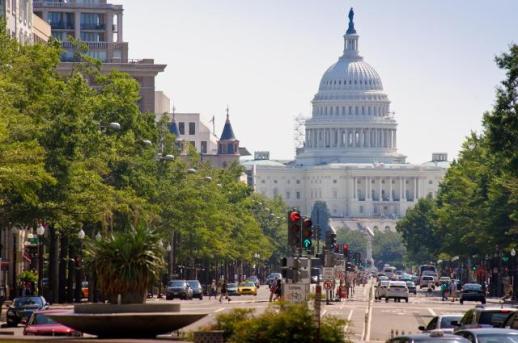 US House passes defense bill tightening guardrail against USFK troop cuts SEOUL, July 23 (AJP) - The U.S. House of Representatives has passed a fiscal 2027 defense policy bill that would strengthen congressional guardrails against any move to reduce the number of American troops stationed in South Korea below 28,500. The House approved its version of the National Defense Authorization Act (NDAA) on Wednesday in a 216-212 vote, advancing a $1.15 trillion defense policy package that authorizes military programs and sets national security priorities for the next fiscal year. The bill includes language barring the use of funds to reduce U.S. Forces Korea below the current level of 28,500 troops. The provision is not new, as previous NDAAs have also included language aimed at maintaining the U.S. troop presence on the Korean Peninsula. The House bill would amend the fiscal 2026 NDAA by expanding the funding restriction to cover money “otherwise made available for fiscal years 2026 or 2027,” extending the guardrail beyond funds authorized under the NDAA itself. The expanded wording appears aimed at limiting the administration’s ability to use money provided through other legislation to carry out a troop reduction, amid renewed concerns over President Donald Trump’s views on overseas deployments and defense cost-sharing with U.S. allies. Trump has repeatedly pressed allies to shoulder more of the cost of hosting American forces and has raised questions over the scale of U.S. military commitments abroad. The measure, however, is not yet final. The Senate is considering its own version of the NDAA, and the USFK provision would have to survive Senate consideration and negotiations between the two chambers before becoming law. The NDAA is an annual defense authorization bill that sets policy and spending priorities for the Defense Department, though actual funding must be provided through separate appropriations legislation. The Pentagon has said the United States has spent $37.5 billion so far on the Iran war, adding pressure on Congress to replenish defense accounts before the fiscal 2027 budget is finalized. Separately, the House passed a $95 billion budget package tied to the Iran war and other Trump administration priorities in a 216-214 vote. The package includes $60 billion for the Defense Department, $13 billion for other national security items, $12 billion in aid for farmers and $10 billion in grants to states for implementing voter identification laws. The Trump administration has argued that additional funding is needed to refill defense accounts depleted by the Iran war before the regular fiscal 2027 budget process is completed. For Seoul, the key provision to watch is whether the strengthened USFK funding restriction remains in the final NDAA. If enacted, it would mark another congressional effort to restrain any abrupt reduction of the U.S. military presence on the Korean Peninsula. 2026-07-23 11:25:53
-
 Foreign arrivals to Korea near 2 million in June SEOUL, July 23 (AJP) - Nearly nine in 10 foreign visitors to South Korea in June traveled for tourism, driving monthly arrivals to nearly 2 million while business, official and study-related travel remained comparatively subdued, the Korea Tourism Organization said Thursday. Korea received 1,993,128 foreign visitors during the month, up 23.1 percent from 1,619,220 a year earlier. The total reached 135 percent of its June 2019 level, before the COVID-19 pandemic disrupted international travel. Tourism accounted for 1,731,508 arrivals, or 86.9 percent of the total, after rising 26.3 percent from a year earlier. By comparison, business arrivals increased 3 percent to 12,797, official visits slipped 0.2 percent to 6,257, and arrivals for study and training fell 12 percent to 25,582. China remained South Korea's largest source market with nearly 650,000 visitors, followed by Japan with 348,000, Taiwan with 223,000, the United States with 178,000 and Hong Kong with 66,000. Together, the five markets accounted for nearly three-quarters of all foreign arrivals in June. Arrivals from China and Japan recovered to 136.8 percent and 123.3 percent, respectively, of their June 2019 levels. Women accounted for about 60 percent of all foreign arrivals. Female visitor numbers rose 27.5 percent from a year earlier to 1,202,181, outpacing a 17 percent increase among men to 654,363. A further 136,584 arrivals were recorded as airline or ship crew members. Korea welcomed 10.71 million foreign visitors in the first half of the year, up 21.3 percent from a year earlier. Chinese visitors totaled 3.21 million, accounting for about 30 percent of all arrivals during the period. Meanwhile, Koreans made 2,004,723 overseas trips in June, down 10 percent from a year earlier and equivalent to 80.3 percent of the June 2019 level. First-half outbound travel reached 14.96 million, recovering to 99.7 percent of its pre-pandemic level. 2026-07-23 11:24:54
-
POSCO Labor Negotiations Fail, Union Plans to Initiate Strike Procedures POSCO and its labor union have failed to reach an agreement in this year's wage and collective bargaining negotiations. The POSCO labor union, affiliated with the Korean Confederation of Trade Unions, has notified the company of its intention to seek mediation from the Central Labor Relations Commission and plans to initiate formal dispute procedures.According to reports from Aju Economy, the sixth round of negotiations held on the morning of July 23 did not yield any consensus on key issues such as wage increases, bonuses, and employee benefits. The union declared the negotiations a failure, stating that the company did not present proposals that were acceptable to its members.Kim Sung-ho, chairman of the POSCO union, emphasized during a live broadcast on YouTube following the negotiations, "As of today, we declare the failure of the 2026 collective bargaining negotiations. If the company continues to ignore the anger of the workforce, we will not hesitate to take collective action in accordance with legal procedures."The union is demanding a 7.1% increase in base salary and a bonus equivalent to 600% of monthly pay. It has highlighted wage increases, bonuses, and the expansion of employee stock ownership plans as its core demands, arguing for a compensation system that allows for long-term sharing of the company's growth, moving beyond a short-term reward structure.In light of the failed negotiations, the union has notified the company of its intention to seek mediation from the Central Labor Relations Commission, marking the beginning of strike procedures. Previously, the POSCO union had completed internal procedures to push for strike actions, including a vote on whether to proceed with such actions.However, both parties plan to continue negotiations during the mediation period.In response to the breakdown of negotiations, POSCO stated, "Given the current management conditions, including low-cost competition from China, the spread of global protectionism, and unprecedented high oil prices, exchange rates, and interest rates, it is difficult to accept the union's demands. We will do our best to communicate with the union to reach a reasonable and amicable agreement that acknowledges the management environment." 2026-07-23 11:24:00
-
 Korean growth runs above potential of 2% H1 on AI chip boon SEOUL, July 23 (AJP) - South Korea's economy cooled in the second quarter from the blistering pace of the previous three months, but stayed comfortably above its estimated growth potential and on track to achieve the government's annual growth target of 3.0 percent, Bank of Korea data showed Thursday. Gross domestic product expanded 0.6 percent in the April-June period after expanding 1.8 percent in the first quarter. The Bank of Korea portrayed the moderation as a healthy normalization rather than the start of a slowdown. "When growth is exceptionally strong in one quarter, it often falls sharply or even turns negative in the next, but the economy continued to expand in the second quarter," said Lee Dong-won, director general of the BOK's Economic Statistics Department II. From a year earlier, GDP grew 3.7 percent in the second quarter after a 3.8 percent increase in the January-March period, keeping the broader expansion comfortably above the economy's estimated growth potential of around 2 percent. "Even if quarter-on-quarter growth averages minus 0.1 percent in the third and fourth quarters, annual growth could still reach 3 percent," Lee said. Annual growth compares the average level of GDP over all four quarters of 2026 with the average for 2025, rather than simply adding quarterly growth rates. The strong gains already accumulated in the first half would therefore cushion modest weakness later in the year. The BOK's latest official growth forecast, released in May, remains at 2.6 percent, making Lee's 3 percent figure an arithmetic possibility rather than a revised central bank projection. The central bank will update its outlook in August. If achieved, 3 percent growth would mark South Korea's strongest annual expansion in five years. Financial markets took the stronger-than-expected GDP figures in stride. The benchmark KOSPI rose 3.2 percent to 7,012 as of 11 a.m., extending gains as investors welcomed signs of economic resilience. The three-year Korean government bond yield was little changed at 3.909 percent, hovering just below the 4.0 percent threshold, while the 10-year yield rose 2.3 basis points to 4.377 percent. The stronger growth figures reinforced expectations that the Bank of Korea could tilt toward a more aggressive pace of monetary tightening. The Korean won, which opened at around 1,476.6 won per dollar at about 9 a.m., strengthened sharply to around 1,468 after the data release. Another upside surprise was that the composition of second-quarter growth suggested momentum was not confined entirely to exports. Domestic demand and net exports each contributed 0.3 percentage point to quarterly growth, contrary to expectations that external demand would account for most of the increase. Still, stronger exports and chip-facility expansion remained the primary growth engines. Private consumption remained lackluster, hovering around zero growth. Higher oil prices weighed on passenger-car fuel consumption, but discretionary spending increased on household appliances, department-store goods, clothing, bags and travel, supported by income gains from the stock market and the AI boon. Beyond the stock market and the semiconductor sector, domestic demand remained broadly subdued, with elevated household debt continuing to weigh on consumer spending. The AI-driven chip boon, however, boosted the economy's income far more than its output. Real gross domestic income rose 15.6 percent from a year earlier, its strongest annual gain in 38 years, as semiconductor export prices increased much faster than crude oil import prices. The widening gap between GDP and GDI indicated that the purchasing power generated by the economy rose much faster than real output, reflecting a sharp improvement in South Korea's terms of trade. Officials cautioned that more evidence was needed to determine whether the income windfall would feed through to corporate investment, employment and broader household consumption. The second-quarter figures therefore suggest that while the economy likely passed its quarterly growth peak in the first three months of the year, the broader expansion has held up better than expected. Yet the figures also point to an increasingly two-speed economy, with the AI-driven chip boom generating outsized gains in national income while much of the domestic economy continues to struggle under weak consumption, sluggish private demand and elevated household debt. The second-half trajectory will depend on developments in the Middle East, energy prices and whether the semiconductor upswing broadens beyond favorable pricing into sustained gains in production, exports, investment and domestic demand. 2026-07-23 11:21:37
-
HLB Innovation Expands CAR-T Clinical Trial Dosage for Blood Cancer Treatment HLB Innovation has confirmed the safety of initial dosages in its U.S. Phase 1 clinical trial (CELESTIAL-301) for the next-generation chimeric antigen receptor T-cell (CAR-T) candidate, SynKIR-310. Following discussions with the U.S. Food and Drug Administration (FDA), the company will now verify the safety and therapeutic potential of higher dosage ranges.CAR-T therapy involves collecting a patient's T-cells, genetically modifying them to recognize cancer cells with a chimeric antigen receptor (CAR), and reinfusing them into the body.On July 23, HLB Innovation announced that its U.S. subsidiary, Verismo Therapeutics, has begun enrolling patients for Cohort 3 in the Phase 1 trial of SynKIR-310.CELESTIAL-301 is an open-label, multicenter trial in the U.S. targeting patients with relapsed or refractory B-cell non-Hodgkin lymphoma (B-NHL). It includes patients who have relapsed after receiving existing CD19 CAR-T therapies, assessing the potential of SynKIR-310 in a patient population with limited treatment options.The expansion of the trial follows the observation of no dose-limiting toxicities (DLT) in Cohort 2, confirming its tolerability. Originally designed in two phases, the dosage escalation plan has been expanded by two additional phases to Cohort 4 after discussions with the FDA.Cohort 3 will explore high dosage ranges that exceed the typical administration levels of currently commercialized CAR-T therapies. The company aims to further validate the safety of SynKIR-310, based on the multi-chain KIR-CAR platform, and establish evidence for the recommended Phase 2 dose (RP2D).Generally, as the dosage of CAR-T therapies increases, the risk of severe side effects such as cytokine release syndrome (CRS) and immune effector cell-associated neurotoxicity syndrome (ICANS) also rises. Additionally, high-dose cell administration requires efficient gene transfer into T-cells and maintenance of consistent cell quality, making manufacturing more challenging.Verismo's KIR-CAR platform applies the operational principles of NK cell KIR receptors to CAR-T technology. It is designed to suppress unnecessary T-cell activation in the absence of target antigens, reducing immunotoxicity and cell exhaustion while allowing for more sustained attacks on cancer cells.Verismo plans to present interim results from the Phase 1 trial up to Cohort 2 at a global conference later this year.In April, at the American Association for Cancer Research (AACR 2026), the company reported that a patient in Cohort 1 achieved complete remission (CR) without severe CRS or ICANS just 28 days after treatment, maintaining remission for over six months. This study was selected for an oral presentation in the prestigious 'Plenary' session, marking a first for a domestic company.An HLB Innovation representative stated, "We will continue to secure clinical evidence supporting the safety and therapeutic efficacy in higher dosage ranges, reinforcing the distinctiveness of the KIR-CAR platform."* This article has been translated by AI. 2026-07-23 11:20:00
-
InBody Presents Strategies for Enhancing Hospital Competitiveness in the Era of GLP-1 Treatments InBody has outlined strategies to enhance hospital competitiveness in response to the growing use of GLP-1 obesity treatments. As the focus shifts from simple weight loss to maintaining muscle mass while achieving healthy weight reduction, comprehensive management of body composition changes, including skeletal muscle mass, body fat, body water, and phase angle, is gaining attention in medical settings.On July 23, InBody, in collaboration with the medical platform Medistaff, held a webinar titled 'In the Era of Obesity Treatments, How Will Hospitals Survive?'The webinar addressed the rapidly changing landscape of the GLP-1 treatment market. With increased accessibility to drug therapies due to price reductions, diversification of formulations such as oral and patch forms, expanded indications for metabolic diseases, and broader international coverage, the importance of precise monitoring and ongoing patient management was emphasized.InBody proposed a shift from traditional body mass index (BMI) assessments to diagnostics based on body composition analysis. Internal medicine, family medicine, and orthopedics are expanding their focus to include body fat reduction, pain management, and post-treatment care. Dermatology and plastic surgery are also adopting differentiated strategies by utilizing body composition data for managing side effects and patient education, according to the company.Particularly highlighted was the significance of body water indicators in interpreting weight changes. A reduction in body water can be misinterpreted as muscle loss, underscoring the need to evaluate muscle mass, body fat, body water, and nutritional status together.The following session introduced the clinical application of phase angle, a cellular health indicator. Phase angle, which translates the resistance of cell membranes into an angle, indicates that a higher value reflects better membrane stability and health. InBody explained that even without significant changes in muscle mass or body fat, monitoring phase angle and extracellular water ratio can provide early insights into cellular-level changes.An InBody representative stated, "As the medical field rapidly evolves with the spread of GLP-1 treatments, precise monitoring based on body composition analysis will be the solution. We aim to enhance the accuracy of prescriptions and the level of patient management based on global clinical data and technology."Meanwhile, a report from market research firm GlobalData predicts that the global market for GLP-1 treatments will grow from approximately $30 billion in 2023 to $125 billion by 2033, with an average annual growth rate of 15%.* This article has been translated by AI. 2026-07-23 11:20:00