


Latest by
-
 Test Drive: 2026 Ford Expedition Offers Smooth Ride Despite Its Size "Overwhelming size, surprisingly smooth ride." The Ford Expedition, a leading American sports utility vehicle (SUV), has returned with a fully redesigned fifth generation. It showcases the appeal of a full-size American SUV with its hefty body and comfortable driving experience.On July 22, the all-new Ford Expedition was encountered at the Signiel parking lot in Songpa, Seoul. True to its name, it embodies the spirit of exploration. Its imposing size commanded attention, making the transition from the underground parking lot to the main road feel like an adventure.The Ford Expedition is a full-size SUV measuring over 5 meters in length. Similar in size to the Cadillac Escalade, which was launched in South Korea last year, it presents a formidable presence.Upon taking the driver's seat, the first thing that stood out was the elevated front visibility. The steering wheel and pedal positions were adjustable to fit various body types. A 24-inch panoramic digital display was prominently positioned in front, allowing for seamless integration with smartphones to use familiar navigation apps like KakaoMap. The central display provided real-time information about the vehicle's surroundings and key situations.During an 80-kilometer round trip to Namyangju, Gyeonggi Province, the interior remained quieter than expected despite the rain. Noise from the road and raindrops was not overly intrusive.On the highway, the power and strength typical of American cars were evident. The model is equipped with a 3.5-liter EcoBoost high-output V6 engine that delivers 446 horsepower and 70.5 kg·m of torque, paired with a 10-speed automatic transmission. Pressing the accelerator made it easy to forget the vehicle's size as it accelerated powerfully.On downhill stretches, the hill descent control function maintained speed without frequent braking. The auto hold brake feature, uncommon in American vehicles, proved useful in congested urban driving.At the turnaround point, the Expedition's signature split gate caught the eye. When the trunk was opened, the upper door acted as a makeshift canopy to shield from the rain, while the lower door could be used as a bench or table. This design clearly considered outdoor activities like camping and car camping.Spacious interior space is another advantage. The seven-passenger model is well-suited for family travel and recreational activities. As one approaches the vehicle, the electric side steps automatically extend to assist with entry and exit.Having sold over 3 million units worldwide in its 30-year history, the Ford Expedition remains a best-seller. The fifth-generation model enhances its existing popularity and practicality while further improving recreational utility and driving convenience. Although the test drive was brief, it was sufficient to appreciate the unique comfort and appeal of an American full-size SUV.* This article has been translated by AI. 2026-07-23 00:04:00
-
 Skies weep as Ethiopia's Kagnew Choir offered heavenly songs of remembrance SEOUL, July 22 (AJP) -The heavenly voices of Ethiopian children drifted across Gwanghwamun Square on Wednesday afternoon, transforming Seoul's Garden of Gratitude into a place of remembrance as the Kagnew Choir sang Korean folk songs in tribute to the veterans who fought in the Korean War 75 years ago. The cultural exchange performance, titled "The Courage of That Day, Today's Song," commemorated the 75th anniversary of Ethiopia's participation in the Korean War. Hosted by the Seoul Metropolitan Government, it brought together the Kagnew Choir — founded in 2018 and made up of descendants of Ethiopian Korean War veterans — and Seoul city arts ensembles before an audience of about 300, including Seoul Mayor Oh Se-hoon, veterans' affairs officials and cultural figures. The choir performed beloved Korean songs, including Spring in My Hometown and Alone Arirang, in fluent Korean, drawing warm applause from the audience. Their youthful voices carried special significance, representing a new generation preserving the legacy of the Ethiopian soldiers who fought on the Korean Peninsula. Ethiopia was the only African nation to send ground troops to fight under the U.N. Command during the Korean War. Its Kagnew Battalion earned a distinguished reputation on the battlefield without suffering a single captured soldier. The name "Kagnew," derived from Amharic, is commonly understood to mean "bringing order out of chaos" or "defeating the enemy." As the final notes faded beneath the summer sky, the performance served not only as a cultural exchange but also as a living tribute, linking the sacrifices of the wartime generation with the voices of their descendants seven decades later. Among the delegation was Tesfaye Asmamaw, 95, a veteran of the famed Kagnew Battalion, who traveled to Seoul alongside 34 choir members aged 8 to 16. The group arrived on June 22 for a 36-day visit marking the anniversary of Ethiopia's deployment during the Korean War. 2026-07-22 23:12:46
-
Samsung Collaborates with Tony Award-Winning Playwright for Galaxy Unpacked Event Samsung Electronics is set to present a unique storytelling stage at this year's Unpacked event. Park Chun-hyu, the first Korean to win a Tony Award for Best Book of a Musical, is participating as a creative partner, weaving together artificial intelligence (AI) and foldable technology into a cohesive narrative.On July 22, during the 'Galaxy Unpacked 2026' event held in London, Samsung announced that Park Chun-hyu collaborated on the overall narrative design and storytelling for the event.Park is known for his work on the musical 'Maybe Happy Ending,' which won six awards, including Best Musical and Best Book, at the 78th Tony Awards, making him the first Korean to receive the Tony Award for Best Book.This collaboration aims to move away from the traditional product announcement format that merely introduces features, instead conveying the open innovation philosophy and foldable technology of Galaxy in a way that audiences can easily understand.Park designed the narrative to ensure that the entire presentation flows as a single emotional journey. Each product announcement is interconnected, focusing on translating technology-centered messages about AI and foldable devices into relatable everyday experiences for users.The new foldable products emphasize how to enhance user experience rather than just showcasing design changes or performance improvements. Park also contributed to the narrative video and stage direction shown during the event, proposing a connection between AI, human relationships, emotions, and daily experiences. The presentation, video, and product unveilings were structured to create an immersive performance atmosphere.A Samsung representative stated, "We incorporated the sensibilities of a performance writer who meticulously calculates audience reactions and stage dynamics to maximize the live event experience. This collaboration with an external creator will help convey Samsung's advanced technology messages in a more relatable and accessible language to a global audience."* This article has been translated by AI. 2026-07-22 22:56:00
-
Samsung Display CEO: Galaxy Z Fold/Flip 8 Series Showcases Dominant Technology "The foldable panels in the Galaxy Z Fold/Flip 8 series are a core area where Samsung Display maintains a significant technological edge. Our recent announcement of large-scale investments in the Chungcheong region will proceed without any issues as planned."Lee Cheong, CEO of Samsung Display, expressed strong confidence in the company's panel innovation capabilities and regional investment commitments during a press conference at the '2026 Korea Display Industry Exhibition' held at COEX in Gangnam, Seoul, on July 22.Ahead of the 'Galaxy Unpacked 2026' event taking place in London, Lee commented on the competitive strength of the new foldable phone's display, stating, "If I were not confident, I wouldn't be launching the product. We are overwhelmingly ahead of competitors in quality, durability, and overall display characteristics, ensuring we maintain our market dominance."Addressing recent concerns regarding the three major mega projects in the Chungcheong region, Lee dismissed any doubts, stating, "We are currently collaborating with local governments to prepare thoroughly. As promised to the public, we will proceed without delay."The 2026 Korea Display Industry Exhibition, which opened on this day, showcased a shift in the display industry from merely providing screens to embracing intelligent interfaces that incorporate artificial intelligence (AI) and next-generation mobility.Upon entering the Samsung Display exhibition, the standout feature was the 'Big Hole' display, which redefines future vehicle interiors. It features an 80mm diameter hole in the center, seamlessly integrating gear mechanisms and air conditioning vents with digital screens and physical components.A vertically expanding slider OLED vividly illustrated the future of autonomous driving, guided by an AI assistant.Across from Samsung's exhibit, LG Display's booth, themed 'Window of Communication,' was filled with innovations in form factors that spanned everyday life and various industries. Notably, the humanoid plastic OLED (P-OLED), unveiled for the first time in Korea, showcased its impressive durability, capable of withstanding extreme temperatures from -30 degrees Celsius to 85 degrees Celsius, proving its value as a key component in the industrial robot ecosystem.The '27-inch 5K OLED' experience zone, which received the Minister of Trade, Industry and Energy Award, and the 'Gaming OLED' zone, achieving the world's highest refresh rate of 540Hz, attracted large crowds of experts and visitors.Industry analysts believe that the next-generation display market will not only expand quantitatively but will also rely on high-profit OLED technologies centered around AI and automotive applications. While global market growth is slowing, demand for premium displays is increasing as AI devices proliferate and the transition to future vehicles accelerates.LG Display is also preparing to shift its business structure towards OLED and target the premium market in response to these market changes.Jeong Cheol-dong, CEO of LG Display, emphasized, "We are preparing to expand our tandem OLED technology, known for its longevity and performance, beyond TVs and automotive applications to include smartphones and other mobile devices. We are also developing technologies related to smart glass and various application solutions."* This article has been translated by AI. 2026-07-22 22:20:00
-
Samsung Unveils Galaxy Z Series, Marking the Era of $3000 Smartphones Samsung Electronics has officially entered the premium smartphone market with the launch of its next-generation Galaxy Z series, introducing devices that exceed the $3000 price point. The top-tier Galaxy Z Fold8 Ultra 1TB model is priced at 3,451,800 won, marking the first time a smartphone has surpassed the 3 million won threshold. However, the actual price increase is considered minimal compared to market expectations of up to an 18% hike.At the Galaxy Unpacked 2026 event held in London on July 22, Samsung revealed the pricing for the new Galaxy Z series. For the 16GB memory and 1TB storage models, the prices are as follows: Galaxy Z Fold8 Ultra at 3,451,800 won and Galaxy Z Fold8 at 3,152,600 won. The introduction of a smartphone priced at over 3 million won has been officially confirmed. Additionally, for the 12GB memory and 256GB storage models, the prices are: Galaxy Z Fold8 Ultra at 2,577,300 won, Galaxy Z Fold8 at 2,278,100 won, and Galaxy Z Flip8 at 1,683,000 won. For the 12GB memory and 512GB storage models, the prices are: Galaxy Z Fold8 Ultra at 2,830,300 won, Galaxy Z Fold8 at 2,531,100 won, and Galaxy Z Flip8 at 1,936,000 won.The price increase for the top-tier Fold8 Ultra 1TB model is the most significant, rising approximately 10.4% (32,450 won) compared to the previous model, the Fold7, which saw a price increase in April. However, compared to the price before the increase, the rise is 17.6% (51,810 won). The Fold8 Ultra 512GB and 256GB models have each increased by 198,000 won compared to the previous model (based on the Fold7's April selling price), and the Flip8 has also seen a rise of 198,000 won across all models.This price increase reflects the rising costs of key components, including memory. Recently, prices for DRAM and NAND flash have surged, increasing the cost burden for smartphone manufacturers. Additionally, improvements in titanium materials, display technology, and AI features have made price hikes unavoidable.Industry analysts have noted that the actual price increases are not as steep as initially anticipated. Originally, it was expected that the price would rise by around 300,000 won due to the increase in prices for key components like memory semiconductors and displays, along with the popularity of foldable phones. However, Samsung managed to limit the price increases for most models to around 198,000 won, easing some of the consumer burden. Market research firm Counterpoint Research has projected that the average selling price (ASP) of global foldable phones will rise by approximately 18% this year compared to the previous year.This situation can be attributed to Samsung's economies of scale and cost-cutting efforts. The company has leveraged its supply chain from subsidiaries like Samsung Display and Samsung Electro-Mechanics, and its accumulated production know-how from seven years of foldable phone manufacturing has helped offset some of the cost increases. Furthermore, by combining its Galaxy AI with Google Gemini, Samsung has enhanced its platform competitiveness while minimizing hardware cost burdens.* This article has been translated by AI. 2026-07-22 22:20:00
-
Samsung Unveils Galaxy Z Series with AI and Display Innovations This year's Galaxy Unpacked event highlighted innovations in artificial intelligence (AI) and display technology. With Apple poised to launch its first foldable iPhone later this year, Samsung aims to leverage its seven years of expertise in foldable technology and AI differentiation to maintain its market competitiveness.Samsung held the 'Galaxy Unpacked 2026' event on July 22 at 2 p.m. local time in London, unveiling its next-generation Galaxy Z series. The lineup includes the content-focused 'Galaxy Z Fold8,' the multitasking and creator-oriented 'Galaxy Z Fold8 Ultra,' and the portable and AI-enhanced 'Galaxy Z Flip8.' A much-anticipated wide-format foldable device with a 4:3 aspect ratio was also revealed in teaser ads prior to the event.The focus of this launch was primarily on display improvements. Samsung addressed consumer demands for reduced screen creases, enhanced durability, and increased brightness. The company introduced 'titanium alloy film' and 'flex titanium' materials to minimize screen creases. Additionally, the hinge structure and screen tension were meticulously designed to provide a smoother user experience when opening and closing the device. The main display now boasts a maximum brightness of 3,000 nits, a 15% improvement over the previous Galaxy Fold7, along with anti-reflective technology to ensure clear visibility even in bright outdoor conditions.The enhanced AI experience tailored for foldable devices is another distinguishing feature. Samsung optimized its Galaxy AI in conjunction with Google Gemini intelligence for a foldable screen. The AI can automatically perform tasks across more than 40 apps, including delivery, reservations, shopping, and scheduling, while allowing users to continue other activities on the foldable screen. The 'Now Nudge' feature enhances the AI's role by suggesting the next actions based on user context. For instance, if a user is chatting with a friend about meeting up, the AI may suggest adding the appointment to the calendar or saving the location when searching for a meeting place.However, competition in the foldable phone market is expected to intensify in the latter half of the year. According to global market research firm Counterpoint Research, global shipments of foldable smartphones are projected to increase by 21% compared to last year. With Apple's market entry, Samsung's share is expected to decline from 40% last year to 32% this year, although it is still anticipated to maintain its position as the global leader. Apple is expected to capture a 25% market share in its first year of foldable phone sales, while Huawei is projected to achieve a 24% share.Many analysts believe that Apple's entry will serve as a catalyst for market expansion rather than a threat to Samsung. Yoon Jeong, a researcher at Counterpoint Research, stated, "Apple's market entry will enhance consumer awareness and elevate the standards for the premium foldable market. As AI-based app integration and multitasking become more widespread, the importance of large-screen foldables will continue to grow." She added, "Samsung still holds a distinct competitive advantage in product completeness, global distribution networks, and user experience accumulated over seven years."A Samsung representative emphasized, "Since commercializing the world's first foldable smartphone in 2019, Samsung has continuously refined its products based on consumer feedback. Leveraging our seven years of foldable technology expertise, we will maintain strong leadership in the foldable phone market, recognized as the optimal form factor in the AI era, by prioritizing display innovation and AI technology competitiveness."* This article has been translated by AI. 2026-07-22 22:16:00
-
Samsung Unveils Galaxy Z Series, Expands Foldable Phone Lineup Samsung Electronics is expanding its foldable phone lineup from two to three models as it aims to capture the premium phone market in the second half of the year. Since pioneering the foldable market in 2019, Samsung plans to maintain its lead against Apple, which is expected to launch its first foldable phone this year, by leveraging advancements in artificial intelligence (AI) and display technology.On July 22, during the Galaxy Unpacked 2026 event held at Old Billingsgate in London, Samsung introduced three new models in the Galaxy Z series: the Galaxy Z Fold8 Ultra, Galaxy Z Fold8, and Galaxy Z Flip8. The lineup has been segmented based on consumer usage patterns, including content consumption, productivity, and portability.The new products feature improvements in thickness, weight, and camera performance. Built on seven generations of foldable innovation, the latest lineup reflects users' modern lifestyles, achieving the highest quality in foldable devices.The newly introduced wide-format Fold8 sets a new standard for smartphones with its 4:3 aspect ratio. It offers various screen ratios (4:3 landscape, 3:4 portrait, and 10:16 cover screen) to accommodate different content consumption patterns. Weighing just 201 grams and equipped with a 4800mAh battery, it allows users to enjoy a variety of content for extended periods.The Fold8 Ultra, which builds on the previous Fold 7, carries the 'Ultra' designation, signifying Samsung's top-tier product. True to its name, it boasts significantly enhanced camera capabilities, including the first-ever 50-megapixel ultra-wide camera in the Fold series, a 200-megapixel main camera, improved night photography, and high-resolution 8K video recording using next-generation video compression technology (APV). Weighing 215 grams and measuring just 4.1mm thick, it enhances portability while providing a spacious 8-inch main screen optimized for multitasking.Focusing on portability and user expression, the Flip8 is the thinnest and lightest Flip model to date, weighing 180 grams and measuring 6.1mm thick.Noh Tae-moon, President of Samsung Electronics' Device Experience (DX) division, stated, "As AI evolves, mobile devices will better understand users and seamlessly integrate into their daily lives, becoming the closest point of contact. The new Galaxy Z series represents Samsung's most refined foldable products, advancing mobile experiences and offering personalized services to usher in the next era of intelligence."The company also unveiled its AI smart glasses, 'Intelligent Eyewear,' expected to launch later this year. These glasses utilize the Google Android XR platform and Gemini AI to perform tasks such as real-time translation, navigation, and document recording hands-free.* This article has been translated by AI. 2026-07-22 22:16:00
-
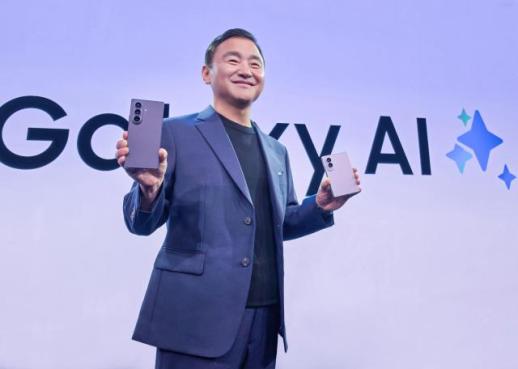 Samsung's foldables share spotlight with AI eyewear at Galaxy Unpacked SEOUL, July 22 (AJP) - Samsung Electronics on Wednesday unveiled three new foldable smartphones and detailed its first AI-powered smart glasses, expanding the Galaxy ecosystem as it seeks to make artificial intelligence a more proactive part of consumers’ daily lives. At its Galaxy Unpacked event in London, the South Korean technology giant introduced the Galaxy Z Fold8 Ultra, Galaxy Z Fold8 and Galaxy Z Flip8, marking the first time it has offered three distinct models in its flagship foldable lineup. Samsung also showcased its Intelligent Eyewear, developed with Google and eyewear brands Gentle Monster and Warby Parker, as well as the Galaxy Watch Ultra2 and Watch9. The announcements underline Samsung’s effort to extend Galaxy AI beyond smartphones into devices that can interpret users’ surroundings, health data and daily routines. “As AI evolves, mobile devices will become the closest point of contact with users, understanding them better and blending naturally into their daily lives,” said TM Roh, Samsung Electronics’ chief executive and head of its Device eXperience division. The new foldables run on Android 17 and Samsung’s One UI 9 and combine Galaxy AI with what the company calls Gemini Intelligence, an enhanced version of Google’s AI designed to understand on-screen context and carry out tasks across applications. Samsung said the system can automatically operate more than 40 apps covering food delivery, reservations and shopping. It can also search for restaurants, make bookings, manage schedules and retrieve ticket information through a series of linked actions. The company introduced an upgraded “Now Nudge” feature that anticipates users’ next actions and “Now Brief,” which provides personalized updates based on schedules, news, health data and usage patterns. The Galaxy Z Fold8 Ultra sits at the top of the expanded range, featuring an 8-inch main screen, a 200-megapixel primary camera and a 50-megapixel ultra-wide camera. The device weighs 215 grams and measures 4.1 millimeters thick when unfolded, making it the thinnest Fold model Samsung has produced. It carries a 5,000-mAh battery, supports charging of up to 45 watts and uses Qualcomm’s Snapdragon 8 Elite Gen 5 for Galaxy processor. The standard Fold8 features a 7.6-inch main display, a 4,800-mAh battery and a dual-camera system with 50-megapixel wide and ultra-wide sensors. At 201 grams, it is Samsung’s lightest Fold device to date. Both Fold models use Samsung’s new Flex Titanium structure, which combines a titanium alloy film with a reinforced titanium plate. Samsung said the design improves durability and reduces the visible crease in the folding display. Their displays reach peak brightness of up to 3,000 nits, around 15 percent brighter than the previous generation, according to the company. The Galaxy Z Flip8 weighs 180 grams and is 6.1 millimeters thick when unfolded. It features a 6.9-inch main display, a 4.1-inch cover screen and a 4,300-mAh battery. Samsung has expanded the Flip’s cover display into a more AI-focused interface, allowing users to access applications, customized information and AI functions without opening the device. The Flip8 is powered by Samsung’s Exynos 2600 processor and features a 50-megapixel main camera. New video functions include a camcorder-style grip, touch-based zoom control and enhanced stabilization. Samsung said the Fold8 Ultra will start at 2.577 million won ($1,850) in South Korea for the 256-gigabyte model. The Fold8 will start at 2.278 million won, while the Flip8 will be priced from 1.683 million won. Domestic preorders will run from July 28 through Aug. 3, with global sales beginning in major markets including South Korea, the United States, Britain, India and Brazil on Aug. 7. Alongside the foldables, Samsung provided further details of its Intelligent Eyewear, an Android XR-based device that uses cameras, microphones, speakers and sensors to deliver hands-free AI functions. The glasses can interpret voice, gestures and visual information to provide navigation, translations, messaging and information-recording functions. They can, for example, recognize a foreign-language menu or a conversation and relay a real-time translation through Google’s Gemini AI. The device can also record whiteboards, documents and meetings through its built-in camera and automatically organize the information in the Samsung Notes app on a connected Galaxy phone. Samsung said the glasses can operate for up to nine hours on a single charge, with the charging case providing up to seven additional charges. The company revealed two new designs developed with Gentle Monster and Warby Parker, bringing the total number of Intelligent Eyewear designs shown so far to four. The products are scheduled to go on sale later this year, though Samsung did not disclose pricing or a specific launch date. The move places Samsung more directly in competition with Meta Platforms, whose Ray-Ban smart glasses have helped build early consumer demand for AI-enabled eyewear. Samsung also introduced the Galaxy Watch Ultra2 and Watch9, both powered by Qualcomm’s Snapdragon Wear Elite platform. The Watch Ultra2 features an 800-mAh battery, a display with peak brightness of 5,000 nits and new tracking tools for trail running and diving. It carries 10ATM and IP69K water-resistance ratings and has received EN13319 certification for diving instruments. The Watch9 focuses on continuous health monitoring and adds functions covering vital signs, heart health scores, daily cardiovascular load, physical fitness and hearing protection. The Watch Ultra2 will cost 969,100 won ($655) in South Korea, while the Watch9 will start at 499,000 won ($337) for the 40-mm Bluetooth model. Both will go on sale on Aug. 7, following domestic preorders beginning July 28. 2026-07-22 22:10:55
-
Samsung Unveils AI Glasses as Telecom Companies Launch Ray-Ban Meta The rise of generative artificial intelligence (AI) is opening a new market for personal devices that follow smartphones. Following Samsung Electronics' unveiling of its AI smart glasses, 'Intelligent Eyewear,' the three major South Korean telecom companies—SK Telecom, KT, and LG Uplus—are also entering the AI glasses market by launching sales of Meta's 'Ray-Ban Meta.'On July 22, Samsung Electronics showcased the key features and design of its AI smart glasses, 'Intelligent Eyewear,' during the Galaxy Unpacked event in London.Samsung's Intelligent Eyewear is equipped with a camera, sensors, microphone, speaker, and Qualcomm Snapdragon AR1 Gen1 chipset. Users can access features such as message notifications, real-time translation, navigation, and information searches through voice and gesture controls. The glasses offer up to nine hours of use on a single charge. The design has been enhanced through collaborations with global eyewear brands like Gentle Monster and Warby Parker.The three major telecom companies in South Korea have also begun selling AI glasses. SK Telecom, KT, and LG Uplus announced that they would start selling the AI glasses 'Ray-Ban Meta,' co-developed by Meta and EssilorLuxottica, from this day forward.Ray-Ban Meta combines voice AI, a camera, and open-ear speakers. Users can activate the device by saying 'Hey Meta,' allowing it to answer questions, search for information, and provide recommendations.Equipped with a 12-megapixel ultra-wide camera, the glasses can capture 3K ultra HD videos and photos. They feature five microphones and open-ear speakers for music listening, phone calls, and voice AI functions. The glasses can last up to eight hours on a single charge, and with a charging case, they can extend usage to 48 hours, while also being water-resistant.In response, each company is launching discount programs linked to their plans and setting up experience stores to expand the AI glasses market. SK Telecom has begun sales through its online store, T Direct Shop, and six T World locations, while KT is prioritizing sales through its online store, KT Direct Shop, with plans to expand to general retailers starting August 3.Various discount offers are available from each company. SK Telecom is providing up to 24,000 won off device installment payments for customers on high-tier plans. KT is offering a 10% discount for its membership customers, with plans starting at around 10,000 won per month when bundled with a dedicated plan, and around 7,000 won per month through the 'Choice Double Device' plan at general retailers. LG Uplus is also offering discounts of up to 80% depending on the plan through its 'Mania Device' program.According to market research firm IDC, shipments of display-less AI smart glasses are expected to increase from 13.6 million units this year to 27.3 million units by 2030, more than doubling. In the first quarter of this year, shipments rose by 167% compared to the same period last year, with Meta holding a 69.2% share of the global market, ranking first.* This article has been translated by AI. 2026-07-22 22:04:00
-
Kim Yong-beom: Quick Implementation of Leverage Measures, Yellow Envelope Law Can Be Adjusted Later Kim Yong-beom: Quick Implementation of Leverage Measures, Yellow Envelope Law Can Be Adjusted Later Kim Yong-beom, head of the Blue House Policy Office, stated on July 22 that President Yoon Suk-yeol's directive to enhance the single-item leverage exchange-traded fund (ETF) system was not a call for new measures but rather an inquiry about the timing of previously announced actions. He emphasized the need for swift implementation of these significant changes, noting that it is essential to assess their effects before considering any further adjustments. In response to a question during a briefing, Kim said, "The measures we announced previously include substantial changes, so prompt execution is a priority." He added, "We should evaluate the effects and consider necessary adjustments, but discussing additional measures at this point would be premature." Regarding previous comments about aligning the ETF's net asset value with market prices, he suggested that there might be room for flexible interpretation and dialogue between authorities and the industry. Lee Byung-tae: President Yoon Should Apologize for the Baekjae High School Incident Lee Byung-tae, former vice-chairman of the Regulatory Reform Committee, called for President Yoon to apologize for the controversy surrounding the Baekjae High School baseball team's 'Starbucks cheer' incident. In a post on Facebook, Lee stated, "The root cause of the Baekjae High School incident lies with President Yoon. His irresponsible, conspiracy-theory perspective on social media, mocking past unfortunate events during the democratization process, initiated this issue." He described this as an example of the arrogance of a power holder acting as a historical judge, and he conveyed to the President's Office that the President should apologize. Lee added, "I don't know if that message was conveyed, but the instigator has remained silent so far." Previously, President Yoon criticized Starbucks Korea's 'Tank Day' event on social media, expressing anger over what he called the 'inhumane behavior of a low-quality merchant' and asserting that moral, legal, and political responsibilities should follow. Blue House: US Additional Tariffs Will Not Exceed Agreed Rates; Coupang is a Secondary Issue Wi Sung-lak, head of the Blue House National Security Office, stated on July 22 that while there is a possibility of the United States imposing additional tariffs on South Korea under Section 301 of the Trade Act, these tariffs will not exceed the rates previously agreed upon by both countries. During a briefing at the Blue House, Wi responded to questions about the 301 issue, saying, "I believe there could be additional tariffs under Section 301, but we generally understand that even if such measures are taken, they will not exceed the significant rates agreed upon between South Korea and the U.S." The U.S. government has been using Section 301, often referred to as 'Super 301,' to pressure neighboring countries. This law allows for retaliatory tariffs against foreign unfair or discriminatory trade practices that burden U.S. commerce. Countries that fail to effectively block imports of products made with forced labor may face additional tariffs of 10% or 12.5%, with South Korea included among those facing the 12.5% tariff. Wi Sung-lak: Delay in Announcing National Diplomatic Academy Hacking Due to Security Concerns Wi Sung-lak addressed the hacking incident involving the National Diplomatic Academy's educational information system on July 22, explaining that the delay in publicizing the incident was due to urgent security matters that needed to be addressed. During a briefing at the Blue House, he stated, "The reason we could not announce the facts immediately was that there were security issues among the hacked information that required urgent action." He clarified that the delay in announcing the incident, which was made public on July 20, was not an attempt to conceal anything. The Ministry of Foreign Affairs revealed on July 20 that the National Diplomatic Academy's system was hacked in April of the previous year, and it took about ten months to identify the issue and investigate the damage. This has led to criticism regarding the five-month delay in disclosing the personal data breach after the incident was recognized. Foreign Minister Park Hyun: ASEAN is a Reliable Partner; Strengthening Cooperation in AI and Cultural Industries Foreign Minister Park Hyun stated on July 22 that ASEAN is a reliable partner, emphasizing the need to strengthen cooperation in areas such as artificial intelligence (AI), cultural industries, and transnational crime response. Speaking at the 29th Korea-ASEAN Foreign Ministers' Meeting in Manila, Philippines, Park noted, "In the face of global supply chain disruptions, instability in the Middle East, and rapid technological advancements, no country can ensure prosperity and security alone." He highlighted that President Yoon has consistently emphasized the importance of solidarity among reliable partners, stating that ASEAN is precisely such a partner for South Korea. Park outlined the 'Korea-ASEAN Comprehensive Strategic Partnership (CSP) Vision' centered on being a contributor to dreams and hopes, a springboard for growth and innovation, and a partner for peace and stability, seeking support from ASEAN member states. 2026-07-22 21:48:00