


Latest by
-
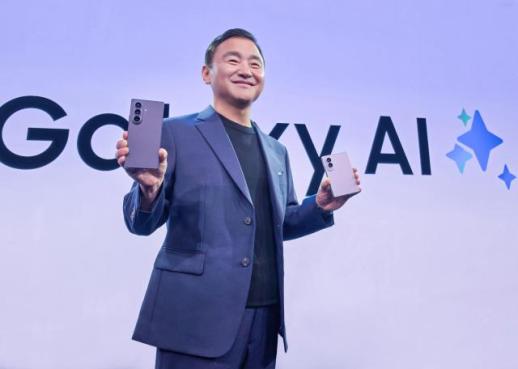 Samsung's foldables share spotlight with AI eyewear at Galaxy Unpacked SEOUL, July 22 (AJP) - Samsung Electronics on Wednesday unveiled three new foldable smartphones and detailed its first AI-powered smart glasses, expanding the Galaxy ecosystem as it seeks to make artificial intelligence a more proactive part of consumers’ daily lives. At its Galaxy Unpacked event in London, the South Korean technology giant introduced the Galaxy Z Fold8 Ultra, Galaxy Z Fold8 and Galaxy Z Flip8, marking the first time it has offered three distinct models in its flagship foldable lineup. Samsung also showcased its Intelligent Eyewear, developed with Google and eyewear brands Gentle Monster and Warby Parker, as well as the Galaxy Watch Ultra2 and Watch9. The announcements underline Samsung’s effort to extend Galaxy AI beyond smartphones into devices that can interpret users’ surroundings, health data and daily routines. “As AI evolves, mobile devices will become the closest point of contact with users, understanding them better and blending naturally into their daily lives,” said TM Roh, Samsung Electronics’ chief executive and head of its Device eXperience division. The new foldables run on Android 17 and Samsung’s One UI 9 and combine Galaxy AI with what the company calls Gemini Intelligence, an enhanced version of Google’s AI designed to understand on-screen context and carry out tasks across applications. Samsung said the system can automatically operate more than 40 apps covering food delivery, reservations and shopping. It can also search for restaurants, make bookings, manage schedules and retrieve ticket information through a series of linked actions. The company introduced an upgraded “Now Nudge” feature that anticipates users’ next actions and “Now Brief,” which provides personalized updates based on schedules, news, health data and usage patterns. The Galaxy Z Fold8 Ultra sits at the top of the expanded range, featuring an 8-inch main screen, a 200-megapixel primary camera and a 50-megapixel ultra-wide camera. The device weighs 215 grams and measures 4.1 millimeters thick when unfolded, making it the thinnest Fold model Samsung has produced. It carries a 5,000-mAh battery, supports charging of up to 45 watts and uses Qualcomm’s Snapdragon 8 Elite Gen 5 for Galaxy processor. The standard Fold8 features a 7.6-inch main display, a 4,800-mAh battery and a dual-camera system with 50-megapixel wide and ultra-wide sensors. At 201 grams, it is Samsung’s lightest Fold device to date. Both Fold models use Samsung’s new Flex Titanium structure, which combines a titanium alloy film with a reinforced titanium plate. Samsung said the design improves durability and reduces the visible crease in the folding display. Their displays reach peak brightness of up to 3,000 nits, around 15 percent brighter than the previous generation, according to the company. The Galaxy Z Flip8 weighs 180 grams and is 6.1 millimeters thick when unfolded. It features a 6.9-inch main display, a 4.1-inch cover screen and a 4,300-mAh battery. Samsung has expanded the Flip’s cover display into a more AI-focused interface, allowing users to access applications, customized information and AI functions without opening the device. The Flip8 is powered by Samsung’s Exynos 2600 processor and features a 50-megapixel main camera. New video functions include a camcorder-style grip, touch-based zoom control and enhanced stabilization. Samsung said the Fold8 Ultra will start at 2.577 million won ($1,850) in South Korea for the 256-gigabyte model. The Fold8 will start at 2.278 million won, while the Flip8 will be priced from 1.683 million won. Domestic preorders will run from July 28 through Aug. 3, with global sales beginning in major markets including South Korea, the United States, Britain, India and Brazil on Aug. 7. Alongside the foldables, Samsung provided further details of its Intelligent Eyewear, an Android XR-based device that uses cameras, microphones, speakers and sensors to deliver hands-free AI functions. The glasses can interpret voice, gestures and visual information to provide navigation, translations, messaging and information-recording functions. They can, for example, recognize a foreign-language menu or a conversation and relay a real-time translation through Google’s Gemini AI. The device can also record whiteboards, documents and meetings through its built-in camera and automatically organize the information in the Samsung Notes app on a connected Galaxy phone. Samsung said the glasses can operate for up to nine hours on a single charge, with the charging case providing up to seven additional charges. The company revealed two new designs developed with Gentle Monster and Warby Parker, bringing the total number of Intelligent Eyewear designs shown so far to four. The products are scheduled to go on sale later this year, though Samsung did not disclose pricing or a specific launch date. The move places Samsung more directly in competition with Meta Platforms, whose Ray-Ban smart glasses have helped build early consumer demand for AI-enabled eyewear. Samsung also introduced the Galaxy Watch Ultra2 and Watch9, both powered by Qualcomm’s Snapdragon Wear Elite platform. The Watch Ultra2 features an 800-mAh battery, a display with peak brightness of 5,000 nits and new tracking tools for trail running and diving. It carries 10ATM and IP69K water-resistance ratings and has received EN13319 certification for diving instruments. The Watch9 focuses on continuous health monitoring and adds functions covering vital signs, heart health scores, daily cardiovascular load, physical fitness and hearing protection. The Watch Ultra2 will cost 969,100 won ($655) in South Korea, while the Watch9 will start at 499,000 won ($337) for the 40-mm Bluetooth model. Both will go on sale on Aug. 7, following domestic preorders beginning July 28. 2026-07-22 22:10:55
-
 Samsung Unveils AI Glasses as Telecom Companies Launch Ray-Ban Meta The rise of generative artificial intelligence (AI) is opening a new market for personal devices that follow smartphones. Following Samsung Electronics' unveiling of its AI smart glasses, 'Intelligent Eyewear,' the three major South Korean telecom companies—SK Telecom, KT, and LG Uplus—are also entering the AI glasses market by launching sales of Meta's 'Ray-Ban Meta.'On July 22, Samsung Electronics showcased the key features and design of its AI smart glasses, 'Intelligent Eyewear,' during the Galaxy Unpacked event in London.Samsung's Intelligent Eyewear is equipped with a camera, sensors, microphone, speaker, and Qualcomm Snapdragon AR1 Gen1 chipset. Users can access features such as message notifications, real-time translation, navigation, and information searches through voice and gesture controls. The glasses offer up to nine hours of use on a single charge. The design has been enhanced through collaborations with global eyewear brands like Gentle Monster and Warby Parker.The three major telecom companies in South Korea have also begun selling AI glasses. SK Telecom, KT, and LG Uplus announced that they would start selling the AI glasses 'Ray-Ban Meta,' co-developed by Meta and EssilorLuxottica, from this day forward.Ray-Ban Meta combines voice AI, a camera, and open-ear speakers. Users can activate the device by saying 'Hey Meta,' allowing it to answer questions, search for information, and provide recommendations.Equipped with a 12-megapixel ultra-wide camera, the glasses can capture 3K ultra HD videos and photos. They feature five microphones and open-ear speakers for music listening, phone calls, and voice AI functions. The glasses can last up to eight hours on a single charge, and with a charging case, they can extend usage to 48 hours, while also being water-resistant.In response, each company is launching discount programs linked to their plans and setting up experience stores to expand the AI glasses market. SK Telecom has begun sales through its online store, T Direct Shop, and six T World locations, while KT is prioritizing sales through its online store, KT Direct Shop, with plans to expand to general retailers starting August 3.Various discount offers are available from each company. SK Telecom is providing up to 24,000 won off device installment payments for customers on high-tier plans. KT is offering a 10% discount for its membership customers, with plans starting at around 10,000 won per month when bundled with a dedicated plan, and around 7,000 won per month through the 'Choice Double Device' plan at general retailers. LG Uplus is also offering discounts of up to 80% depending on the plan through its 'Mania Device' program.According to market research firm IDC, shipments of display-less AI smart glasses are expected to increase from 13.6 million units this year to 27.3 million units by 2030, more than doubling. In the first quarter of this year, shipments rose by 167% compared to the same period last year, with Meta holding a 69.2% share of the global market, ranking first.* This article has been translated by AI. 2026-07-22 22:04:00
-
Kim Yong-beom: Quick Implementation of Leverage Measures, Yellow Envelope Law Can Be Adjusted Later Kim Yong-beom: Quick Implementation of Leverage Measures, Yellow Envelope Law Can Be Adjusted Later Kim Yong-beom, head of the Blue House Policy Office, stated on July 22 that President Yoon Suk-yeol's directive to enhance the single-item leverage exchange-traded fund (ETF) system was not a call for new measures but rather an inquiry about the timing of previously announced actions. He emphasized the need for swift implementation of these significant changes, noting that it is essential to assess their effects before considering any further adjustments. In response to a question during a briefing, Kim said, "The measures we announced previously include substantial changes, so prompt execution is a priority." He added, "We should evaluate the effects and consider necessary adjustments, but discussing additional measures at this point would be premature." Regarding previous comments about aligning the ETF's net asset value with market prices, he suggested that there might be room for flexible interpretation and dialogue between authorities and the industry. Lee Byung-tae: President Yoon Should Apologize for the Baekjae High School Incident Lee Byung-tae, former vice-chairman of the Regulatory Reform Committee, called for President Yoon to apologize for the controversy surrounding the Baekjae High School baseball team's 'Starbucks cheer' incident. In a post on Facebook, Lee stated, "The root cause of the Baekjae High School incident lies with President Yoon. His irresponsible, conspiracy-theory perspective on social media, mocking past unfortunate events during the democratization process, initiated this issue." He described this as an example of the arrogance of a power holder acting as a historical judge, and he conveyed to the President's Office that the President should apologize. Lee added, "I don't know if that message was conveyed, but the instigator has remained silent so far." Previously, President Yoon criticized Starbucks Korea's 'Tank Day' event on social media, expressing anger over what he called the 'inhumane behavior of a low-quality merchant' and asserting that moral, legal, and political responsibilities should follow. Blue House: US Additional Tariffs Will Not Exceed Agreed Rates; Coupang is a Secondary Issue Wi Sung-lak, head of the Blue House National Security Office, stated on July 22 that while there is a possibility of the United States imposing additional tariffs on South Korea under Section 301 of the Trade Act, these tariffs will not exceed the rates previously agreed upon by both countries. During a briefing at the Blue House, Wi responded to questions about the 301 issue, saying, "I believe there could be additional tariffs under Section 301, but we generally understand that even if such measures are taken, they will not exceed the significant rates agreed upon between South Korea and the U.S." The U.S. government has been using Section 301, often referred to as 'Super 301,' to pressure neighboring countries. This law allows for retaliatory tariffs against foreign unfair or discriminatory trade practices that burden U.S. commerce. Countries that fail to effectively block imports of products made with forced labor may face additional tariffs of 10% or 12.5%, with South Korea included among those facing the 12.5% tariff. Wi Sung-lak: Delay in Announcing National Diplomatic Academy Hacking Due to Security Concerns Wi Sung-lak addressed the hacking incident involving the National Diplomatic Academy's educational information system on July 22, explaining that the delay in publicizing the incident was due to urgent security matters that needed to be addressed. During a briefing at the Blue House, he stated, "The reason we could not announce the facts immediately was that there were security issues among the hacked information that required urgent action." He clarified that the delay in announcing the incident, which was made public on July 20, was not an attempt to conceal anything. The Ministry of Foreign Affairs revealed on July 20 that the National Diplomatic Academy's system was hacked in April of the previous year, and it took about ten months to identify the issue and investigate the damage. This has led to criticism regarding the five-month delay in disclosing the personal data breach after the incident was recognized. Foreign Minister Park Hyun: ASEAN is a Reliable Partner; Strengthening Cooperation in AI and Cultural Industries Foreign Minister Park Hyun stated on July 22 that ASEAN is a reliable partner, emphasizing the need to strengthen cooperation in areas such as artificial intelligence (AI), cultural industries, and transnational crime response. Speaking at the 29th Korea-ASEAN Foreign Ministers' Meeting in Manila, Philippines, Park noted, "In the face of global supply chain disruptions, instability in the Middle East, and rapid technological advancements, no country can ensure prosperity and security alone." He highlighted that President Yoon has consistently emphasized the importance of solidarity among reliable partners, stating that ASEAN is precisely such a partner for South Korea. Park outlined the 'Korea-ASEAN Comprehensive Strategic Partnership (CSP) Vision' centered on being a contributor to dreams and hopes, a springboard for growth and innovation, and a partner for peace and stability, seeking support from ASEAN member states. 2026-07-22 21:48:00
-
Kim Yong-beom: Quick Implementation of Leverage Measures, Yellow Envelope Law Can Be Adjusted Later Kim Yong-beom, head of the policy office at Cheong Wa Dae, stated on July 22 that President Lee Jae-myung's directive to enhance the single-item leverage ETF (exchange-traded fund) system was not a call for new measures. Instead, he interpreted it as a request to expedite the implementation of previously announced policies.During a briefing at Cheong Wa Dae, Kim responded to related questions by saying, "The measures announced previously include significant changes, so swift implementation is a priority." He added, "We should assess their effects and consider necessary adjustments, but since the impact has not yet been realized, discussing additional measures would be premature."However, in a prior broadcast interview, he mentioned the need to address the burden of selling to align the discrepancy rate (the difference between the ETF's net asset value and its actual market price). He suggested that there might be room for flexible interpretation of the discrepancy rate and dialogue between authorities and the industry.Regarding President Lee's comments the previous day about the Yellow Envelope Law and concerns over the excessive expansion of labor disputes, Kim dismissed the notion that the president was expressing worry about the law. He clarified, "I don't think the president was concerned about the Yellow Envelope Law. He was suggesting that if clear guidelines are not established, it could lead to debates attributing issues to the law. It would be beneficial for the Ministry of Employment and Labor to clarify its position through guidelines."Kim described the impact of the Yellow Envelope Law as subjective, stating, "Whether it is seen positively or negatively is a matter of personal judgment, but at least there has not been a situation where the primary contractor is overwhelmed by fragmentation of negotiation units." He continued, "After one to two years, once the Yellow Envelope Law is established, both its benefits and areas for improvement will become apparent, and we can evaluate and make adjustments accordingly."* This article has been translated by AI. 2026-07-22 21:12:00
-
White Powder Suspected to Be Drugs Found at Olympic Park; Police Request Analysis Police have discovered a white powder suspected to be drugs at Olympic Park in Seoul and have requested a detailed analysis from the National Forensic Service.According to Yonhap News Agency, the Songpa Police Station in Seoul reported that a plastic bag containing an unidentified white powder was found recently in a pavilion within Olympic Park.The pavilion is located approximately 300 meters from the handball stadium, where a protest against the Jamsil ballot counting is taking place.Police responded to a report of the white powder, believed to be drugs, at 3:59 PM on July 17.After conducting ten preliminary drug tests at the scene, all results were negative. However, police have requested a thorough examination from the National Forensic Service to confirm the substance's nature.A police official stated, "We are currently waiting for a response from the forensic service," adding that the plastic bag's shape and size differ from typical bags used for drug distribution.* This article has been translated by AI. 2026-07-22 21:08:00
-
National Security Office Chief: Delay in Announcing National Diplomatic Academy Hack Due to Security Concerns On July 22, National Security Office Chief Wi Sung-lak addressed the hacking incident involving the Ministry of Foreign Affairs' National Diplomatic Academy educational information system, stating, "The reason we could not announce the relevant facts immediately was that there were security issues that needed urgent attention among the hacked information."During a briefing at the Blue House, Wi explained, "It took several months to address the related issues, and we announced it on the 20th. There was absolutely no intention to hide or conceal anything."The Ministry of Foreign Affairs revealed on the 20th that the National Diplomatic Academy's educational information system was hacked in April of last year, and it was only in February of this year that they identified the issue, leading to the system being shut down and an investigation into the damage.This has raised concerns regarding the delay in disclosing the personal information leak, which was made public only this month, five months after the hacking was recognized.Wi acknowledged, "If we had provided a detailed explanation at the early stage of recognizing the hacking, it could have dispelled misunderstandings. I think our communication was insufficient. Since this was a matter with security implications, we had to prioritize our response, which delayed the public announcement of the facts."The Ministry of Foreign Affairs is currently investigating the hacking damage in cooperation with relevant agencies over a period of about five months. The affected system contained information on up to 10,000 individuals, including names, IDs, and email addresses of foreign service officials, diplomats, and trainees.Wi stated, "We will take this incident as a lesson and do our utmost to check our security system and prevent recurrence. We will also create guidelines or firewalls to address this issue."* This article has been translated by AI. 2026-07-22 20:52:00
-
Korean Presidential Chief of Staff Calls for Universal Support System in AI Era On July 22, Kang Hoon-sik, the Chief of Staff to the President of South Korea, stated that a Korean-style universal support system is necessary to address the challenges of the AI era.During a meeting with senior aides at the Blue House, as reported by Deputy Spokesperson Ahn Gyu-ryeong, Kang noted, "The AI era will present opportunities for economic growth and innovation in administrative services, but it will also bring serious challenges such as job losses and increased polarization."Kang emphasized that South Korea faces significant youth employment instability and a high proportion of workers, including platform laborers, who fall outside existing support systems. He stressed the need for a more comprehensive social safety net.He acknowledged that while the government is actively considering universal support systems for children, youth, artists, farmers, and small business owners, welfare policies must be designed with sustainability as the top priority and should not impose excessive burdens on future generations.Kang called for a comprehensive approach to redesign the existing social safety net and instructed officials to develop a mid- to long-term roadmap that adequately reflects public opinion.He also urged the newly established Youth Future Office, reporting directly to the Chief of Staff, to interpret issues from the youth perspective and to connect future changes with overall national policy.Regarding the recently launched Blue House Youth Fellowship, Kang encouraged young people who can view familiar issues from new perspectives and are willing to connect their experiences to social change to actively participate.Kang pointed out the complexities in the certificate issuance system for military service records and other defense-related documents, which currently operates through a cumbersome civil complaint application process. He noted that this inconvenience could significantly affect young people needing certificates for employment or certification applications and called for prompt improvements to the system.* This article has been translated by AI. 2026-07-22 20:44:00
-
South Korean Prime Minister Inspects Local Child Care Center, Considers Expanding Night Care Services Han Seong-sook, the Prime Minister of South Korea, visited a local child care center in the Mapo district of Seoul on July 22 to assess its operations.After touring the counseling and program rooms, she held a meeting with the center's director and staff to discuss operational conditions and challenges they face."I empathize with the heavy hearts of parents who have no choice but to leave their children alone at night due to work or illness," Han said. "Our society must take responsibility to ensure that children are not neglected and are safely cared for."She urged the Ministry of Health and Welfare to consider expanding night care services to accommodate parents who cannot supervise their children at night due to work commitments.Han also emphasized the need to create an environment where caregivers with affection and experience can continue to work effectively.Additionally, she noted that since January, 343 local care facilities across the country have been providing extended care until 10 p.m. or midnight to address gaps in night care. She encouraged parents in urgent need of care to check for nearby centers and apply through the designated hotline or the Child Rights Protection Agency's website."Starting this summer, a new service will be launched nationwide to support elementary school students during their vacation periods, particularly in local child care centers near schools, to ensure their meals and care needs are met," Han said. She called for proactive promotion of these policies to ensure that the public is well-informed and that children's meals and safety are thoroughly supported.This visit was organized amid growing concerns about care gaps as the summer vacation approaches, allowing for an assessment of the care environment at local child care centers and gathering feedback from on-site staff. 2026-07-22 20:28:00
-
Blue House: U.S. Tariffs Will Not Exceed Agreed Rates; Coupang Issues Second Priority Wi Sung-lak, the National Security Chief of the Blue House, stated that while there is a possibility of the United States imposing additional tariffs on South Korea under Section 301 of the Trade Act, the tariffs will not exceed the rates previously agreed upon by the two countries.During a briefing at the Blue House on July 22, Wi responded to related questions by saying, "I think there could be additional tariffs on us due to the Section 301 issue." However, he emphasized, "Generally, we understand that even if there are Section 301 measures, they will not exceed the significant tariff rates agreed upon between South Korea and the U.S."The U.S. government has been using Section 301, often referred to as 'Super 301,' to pressure surrounding countries with tariff measures. This section allows for retaliatory tariffs if foreign unfair or discriminatory trade practices are deemed burdensome to U.S. commerce.Wi pointed out that countries failing to effectively block imports of products made with forced labor could face additional tariffs of 10% or 12.5%. South Korea is included in the group facing the 12.5% tariff alongside China and Japan.He also cited the recent imposition of a 50% tariff on Canada as an example of the U.S. utilizing Section 338 of the Trade Act, a provision that has rarely been used. Wi noted, "Since provisions that have rarely been activated are being applied, there could be various movements regarding tariff imposition," while adding, "We are holding several meetings and explaining the necessary responses and data."Regarding the Coupang issue, the Blue House stated, "There seems to be a difference in the starting point for resolving the issue with the U.S.," and emphasized that it should be handled fairly and non-discriminatorily according to legal procedures.Wi remarked, "The biggest issue among various U.S.-Korea matters is investment, and the next significant issue is Coupang. This matter is being addressed according to specific regulations and legal procedures. It is not being treated discriminatorily or targeted."He explained that the Personal Information Protection Commission has investigated and reported a significant data breach involving over 33 million individuals. However, he noted that some are downplaying the breach, citing only 3,000 cases based on statements from a suspect, highlighting a substantial discrepancy in perspectives.Wi added, "In the U.S., this would be equivalent to the personal information of 200 million people being leaked, which is not a simple matter if the locations of the breaches are unknown."He stressed that the most important aspect of addressing this issue is through the established regulations and legal procedures, stating, "If lobbying or other means occur outside of this framework, it could undermine the legitimacy of the existing legal processes, so it must be handled fairly and non-discriminatorily according to legal procedures."However, Wi asserted that issues like Coupang do not impact security matters. He stated, "While there are various U.S.-Korea issues, there are no signs that security discussions are being delayed due to Coupang or similar matters. In the past, such situations occurred, but that is not the case now. Investment discussions are ongoing, and efforts are being made to visualize the outcomes."Regarding the temporary return of South Korean Ambassador to the U.S. Kang Kyung-wha, Wi noted, "I understand she came back at a time when we could discuss U.S.-Korea issues comprehensively."* This article has been translated by AI. 2026-07-22 20:24:00
-
Weather Forecast: Rain and Heat Expected Across the Country On Thursday, July 23, which marks the hottest period of the year known as Dae-seo, rain is expected across various regions of the country, accompanied by high temperatures.According to the Korea Meteorological Administration on July 22, the morning low temperatures are forecasted to range from 23 to 26 degrees Celsius, while daytime highs are expected to reach between 26 and 37 degrees Celsius.In the Seoul metropolitan area and inland Gangwon, heavy rain is anticipated in the morning, with rates of 20 to 30 mm per hour. Central regions may experience strong winds, thunder, and lightning along with significant rainfall.Expected rainfall amounts include 30 to 80 mm for Seoul, Incheon, Gyeonggi, the five islands of the West Sea, inland and mountainous areas of Gangwon, Daejeon, Sejong, Chungnam, and Chungbuk; 5 to 40 mm for Jeonbuk; 5 to 20 mm for northern Jeonnam; 10 to 60 mm for Daegu and Gyeongbuk; 5 to 40 mm for western inland Gyeongnam; and around 5 mm for Jeju.With heat wave warnings in effect for parts of the eastern coast of Gangwon, Chungcheong, southern regions, and Jeju, the perceived temperatures in most areas are expected to exceed 31 degrees Celsius. In regions under heat wave advisories, the perceived temperatures may reach around 33 degrees, while southern coastal areas of Gangwon, parts of Jeolla, Gyeongsang, and Jeju could see temperatures rise to around 35 degrees, necessitating caution against heat-related illnesses.Heat advisories have also been issued for southern regions and Jeju, predicting nighttime temperatures to remain above 25 degrees Celsius.Wave heights are expected to be between 0.5 to 1.5 meters in the East and West Seas, and between 0.5 to 1.0 meters in the South Sea.In the offshore waters (approximately 200 km from the coastline), wave heights are forecasted to be 0.5 to 1.5 meters in the East, West, and South Seas.Looking at the expected temperatures for major regions, morning lows are forecasted as follows: △Seoul 25 degrees △Incheon 24 degrees △Suwon 24 degrees △Chuncheon 23 degrees △Gangneung 25 degrees △Cheongju 25 degrees △Daejeon 24 degrees △Sejong 24 degrees △Jeonju 25 degrees △Gwangju 26 degrees △Daegu 25 degrees △Busan 25 degrees △Ulsan 24 degrees △Changwon 26 degrees △Jeju 27 degrees.Daytime highs are expected to be: △Seoul 27 degrees △Incheon 27 degrees △Suwon 28 degrees △Chuncheon 28 degrees △Gangneung 31 degrees △Cheongju 31 degrees △Daejeon 31 degrees △Sejong 30 degrees △Jeonju 32 degrees △Gwangju 33 degrees △Daegu 34 degrees △Busan 31 degrees △Ulsan 34 degrees △Changwon 33 degrees △Jeju 35 degrees.* This article has been translated by AI. 2026-07-22 19:32:00