


Latest by
-
 Cultural Indoor Activities for Kids During Summer Vacation As summer vacation begins amid alternating heat waves and monsoon rains, parents pondering where to take their children might consider 'cultural indoor activities.'The National Museum of Korea will extend its hours from July 27 to August 17, opening at 9 a.m. and closing at 6 p.m. This adjustment, which adds an hour to the visiting time, aims to alleviate the burden on parents during the busy summer vacation and holiday season, especially after a 40% increase in visitors in the first half of this year compared to the same period last year.Children can also participate in hands-on programs. The National Museum of Korea is offering a children's educational program titled 'Let’s Eat, Kids!' in conjunction with its special exhibition 'Our Dining Table,' along with a special lecture called 'Words of Our Food.' This initiative allows children to learn that the dining table they encounter daily is a product of the wisdom and history accumulated over time in society.The National Museum of Modern and Contemporary Art (MMCA) has prepared special summer programs linked to the exhibition 'Still Trying Days.' These include a lecture by artist Kim So-young titled 'The World of Children in the Museum' and a performance by the 'Heart Piano Trio,' composed of performers with developmental disabilities. There will also be a keyring-making experience.Sejong Center for the Performing Arts will present performances and exhibitions for children and family audiences at the Dream Forest Art Center in northern Seoul. Highlights include an interactive play 'Pinocchio Trial,' which addresses questions of the AI era from a child's perspective, and 'Choi Tae-ji's Ballet Treasure Box,' featuring commentary by artistic director Choi Tae-ji. The children's experience exhibition 'Finding Pasi' will also be showcased, providing artistic experiences where children can watch performances, think critically, and participate directly.In 'Choi Tae-ji's Ballet Treasure Box,' children will not only enjoy classic ballets like 'Swan Lake' but also learn basic movements themselves. In the interactive play 'Pinocchio Trial,' children will serve as jurors, helping to shape the direction of the performance.The Seoul Arts Center will host the '2026 Seoul Arts Center Children's Family Festival' at the Free Theater. The festival will feature a fabric object theater performance 'The Elephant Who Lost His Nose,' where everyday clothing and items transform into a new world, and a children's opera 'Little Red Riding Hood and the Wolf,' where the audience can actively participate in the story.Additionally, a children's academy performance program will be available, allowing children to express the story, characters, and music from the performance through art and movement, deepening their understanding of the show.From July 23 to August 2, Assitej Korea will hold an international summer festival in the Daehakro area, showcasing ten domestic and international works suitable for children and youth. For infants aged 12 to 48 months, recommended performances include Italy's 'Tana: The Little Cave' and Poland's 'Mr. Satie: A World Made of Paper.' For children over 36 months, Austria's 'Flap Flap' and Ireland/UK's 'A Perfect Day,' as well as the Czech Republic's 'I Don't Want to Sleep!' are suggested.For preschoolers and elementary school students aged 5 to 7, recommended works include 'Little One, Little One,' 'Gulliver's Travels,' 'Blink, Jump Under the Moonlight!' 'Lang Lang Star Tete-Tete,' and 'My Friend Calf.' All performance venues will feature an art playground in the lobby where children can freely engage in artistic experiences and participate in performance-related programs.Major musicals such as the Broadway hit 'Hell's Kitchen,' the domestic premiere of 'Dear Evan Hansen,' and Disney's 'Frozen' will also open, welcoming summer vacation audiences. 2026-07-22 14:04:00
-
National Assembly Resumes After 54 Days; Cooperation is Key 54 days after being stalled, the National Assembly has begun the process of normalization. The People Power Party has decided to end its boycott and participate in the formation of the Assembly, with plans to elect seven committee chairs from the opposition during a plenary session on the 23rd. The parties have also reached an agreement to address the special investigation bill regarding the shortage of ballots for the Election Commission, effectively bringing an end to the extreme standoff.The normalization of the National Assembly is a necessary step. However, the political responsibility for delaying this process for nearly two months is significant. The National Assembly is the legislative body of the nation and the highest decision-making institution responsible for the people's livelihoods. The inability to finalize the formation of committees, which rendered them largely ineffective, created a political vacuum that is difficult to explain to the public.Meanwhile, the challenges we face have not diminished. Issues such as trade pressures from the United States, the restructuring of global supply chains, competition in artificial intelligence (AI), the nurturing of strategic industries like semiconductors and defense, low birth rates, pension reform, and responses to regional extinction are all urgent matters that cannot be postponed. The world has continued to move forward even while the National Assembly was at a standstill.Both parties share responsibility for this situation. The Democratic Party, leveraging its overwhelming majority, unilaterally elected committee chairs, including the chair of the Legislation and Judiciary Committee. While the National Assembly operates on the principle of majority rule, majority power cannot replace cooperation. The foundation of Assembly operations should be dialogue and compromise, especially since the formation of committees determines the future framework of the Assembly, necessitating efforts to persuade and reach agreements with the opposition.The People Power Party must also reflect on whether its choice to boycott the Assembly was the best course of action. The role of the opposition is not outside the Assembly but within it, to check the government and the ruling party. Refusing to participate in legislative schedules for an extended period while abandoning the review of bills and budget scrutiny ultimately delays the interests of the public.A notable aspect of this agreement is the special investigation into the Election Commission. Both parties have agreed to process the special investigation bill within the July extraordinary session. Elections are the foundation of democracy, and public trust in the election management body is a pillar supporting democracy. It is essential to clarify the responsibilities and causes surrounding the ballot shortage through objective investigation rather than political disputes. This is why the special investigation should serve as a starting point for institutional improvement rather than a tool for political conflict.Now, the National Assembly must not present its normalization as an achievement but demonstrate what it will accomplish afterward. The most urgent matter is the people's livelihoods. There are numerous bills directly related to the lives of citizens, including strengthening competitiveness in advanced industries, regulatory innovation, legislation in preparation for the AI era, support for small businesses, and reforms in healthcare and pensions. Committees should serve as practical workspaces to address these challenges, not merely as political symbols.The National Assembly is a place of conflict. However, mediating conflicts and reaching agreements is also a fundamental reason for its existence. The majority party must exercise restraint, while the minority party must responsibly perform its oversight role. Neither unilateral actions nor unconditional boycotts reflect the National Assembly that the public expects.The 54-day void is now behind us. What is more important is to prevent a recurrence of such an event. If the National Assembly becomes mired in political strife again, public trust will further erode. Both parties should regard this agreement on committee formation as a starting point for cooperation. The National Assembly that the public desires is not one that fights but one that works. 2026-07-22 14:00:00
-
Park Hong-keun: Regional Development is Key to South Korea's Sustainable Growth Park Hong-keun, Minister of the Ministry of Planning and Budget, stated on July 22 that "developing regions into new growth hubs is a key strategy for South Korea's sustainable growth."During a meeting with city and provincial leaders at the Sejong Government Complex, Park shared the government's fiscal management policies and key investment directions. Eight local leaders, including those from Sejong and Busan, attended the meeting to discuss regional projects.The Ministry plans to cultivate regions as next-generation growth centers to ensure South Korea's sustainable development. Park emphasized, "As the concentration in the capital region intensifies, national competitiveness weakens, making regional development a core strategy for sustainable growth. Now is the time for each region to leverage its industrial, talent, and locational strengths as part of a new national growth strategy."The government aims to link three major mega-projects, future response funds, and large-scale landmark projects with regional strategic industries. This approach seeks to attract businesses and quality jobs to regions, creating a "virtuous cycle" of growth.Park believes that the role of local governments is crucial for the government's investment strategy to yield tangible results. He stated, "The three mega-projects and the support for five key regions cannot be completed solely by government plans; local governments must take the lead in planning. I urge you to actively identify key projects linked to regional strategic industries."Discussions on regional issues were conducted through one-on-one meetings between Park and the city and provincial leaders. Each leader presented local projects aligned with the government's investment priorities and expressed the need for financial and institutional support for their initiatives.In response, Park assured that he would work with local governments to transform local ideas into feasible financial projects.The Ministry plans to incorporate the feedback from this meeting into the 2027 budget proposal and key policies.Finally, Park emphasized, "We will continue to engage in ongoing communication with local governments across all aspects of budget preparation and fiscal management to ensure that this meeting is not a one-time feedback session."* This article has been translated by AI. 2026-07-22 13:56:00
-
Yen Falls Past 163 Against Dollar for First Time in 40 Years The yen has fallen past 163 against the dollar for the first time since December 1986, reaching its lowest value in 40 years. The decline is attributed to increased demand for the dollar as a safe asset amid escalating tensions in the Middle East, coupled with rising international oil prices that heighten the likelihood of U.S. interest rate hikes. Analysts suggest that Japan's proactive fiscal measures and the Bank of Japan's (BOJ) slow rate increases, along with a perception that monetary authorities may not act decisively, have further exacerbated the yen's weakness.On July 21, the yen's exchange rate briefly reached 163.24 per dollar, marking the highest level in nearly 39 years and 7 months. After fluctuating between the low 161 yen and mid-162 yen range for the past two weeks, the yen surged past the previous high of 162.84 yen recorded on July 1, driven by a wave of stop-loss selling. The yen's decline continued in the Tokyo market on July 22, where it reached 163.21 yen per dollar at one point.The immediate catalyst for this decline was the worsening situation in the Middle East. The Asahi Shimbun reported that fears of escalating conflict between the U.S. and Iran have accelerated dollar buying. The Yomiuri Shimbun noted that the Iran-aligned Houthi rebels in Yemen declared a maritime blockade against Saudi Arabian vessels, contributing to rising oil prices and yen selling.West Texas Intermediate (WTI) crude oil prices rose to around $85 per barrel. Concerns about renewed inflationary pressures in the U.S. due to rising oil prices have strengthened expectations for interest rate hikes by the Federal Reserve, with the yield on U.S. 10-year Treasury bonds climbing to approximately 4.6%. The probability of a Fed rate hike in July, as reflected in the U.S. short-term interest rate futures market, increased from 16% to 26.2%. Rinto Maruyama, a senior interest rate and currency strategist at SMBC Nikko Securities, analyzed that the expectations for U.S. rate hikes and the widening interest rate gap between the U.S. and Japan have led to continued yen selling and dollar buying.The rise in oil prices has also increased Japan's energy import costs, further contributing to the yen's decline. Atsuhide Sakamoto, a senior economist at Mitsubishi UFJ Morgan Stanley Securities in New York, explained that the increase in energy import costs could widen the trade deficit, raising long-term pressures on the yen.Perception of Yen Weakness Acceptance SpreadsHowever, the current yen depreciation cannot be solely explained by the dollar's strength amid Middle East instability. The dollar index, which measures the dollar's value against major currencies, rose by 0.2 points to around 101, yet the yen hit its lowest level in 39 years and 7 months. The yen-euro exchange rate also climbed to the low 186 yen range per euro, marking the lowest value for the yen in about a month. During the past two weeks of renewed U.S.-Iran conflict, the yen has depreciated by 0.6% against the dollar, making it the weakest among the ten major currencies (G10) with high trading volumes. In contrast, currencies like the New Zealand dollar, which continue to raise interest rates, have seen buying interest even in a strong dollar environment. While Middle East tensions may have triggered the yen's decline, internal factors in Japan have amplified the drop.In fact, the yen-dollar exchange rate was around 147 yen per dollar when Sanae Takaichi's administration took office in October last year, but concerns over proactive fiscal measures have led to a rise of more than 16 yen in just nine months. The Nihon Keizai Shimbun (Nikkei) reported that after the Japanese government confirmed its 'Basic Policy on Economic and Fiscal Management and Reform' (Honebuto Policy) at a Cabinet meeting on July 21, the perception that the government is effectively accepting yen weakness has spread in the market.This policy changed the wording from 'fiscal consolidation' to 'fiscal sustainability,' which was included in previous years. Although the government added a clause respecting the independence of the BOJ that was not in the original draft, the market did not view it as a factor that would reverse the yen's decline. Kosuke Hanao, head of Valta Research, pointed out, "The government's economic policy is ultimately leading to a direction that accepts yen weakness, and the market believes that monetary authorities will not be able to act decisively."Concerns that the BOJ may delay interest rate hikes and fiscal instability due to tax cuts have also been identified as factors contributing to the yen's weakness. Maruyama noted that fears of the BOJ lagging behind in responding to inflationary pressures from rising oil prices are fueling the yen's decline. He indicated that considering the declining approval ratings of the Takaichi Cabinet, there is a high likelihood that a tax cut proposal to lower the consumption tax rate on food to 1% will be pursued, but discussions on securing funding have been postponed under the Honebuto Policy, raising concerns about fiscal deterioration.Market Intervention Possibility RisesAs the yen falls to its lowest level in 39 years and 7 months, concerns about market intervention have increased. Finance Minister Satsuki Katayama stated on July 22, "We will respond appropriately and decisively whenever necessary," hinting at the possibility of market intervention. However, she refrained from commenting on specific exchange rate levels, stating, "The government's policy has not changed." Despite Katayama's remarks, the foreign exchange market showed little reaction. The Nikkei reported that a cynical view is spreading in the market that mere intervention will not address the fundamental causes of the yen's weakness.In reality, the Japanese government lacks a strong justification for immediate market intervention. While the exchange rate has risen, the pace of the yen's decline has been relatively moderate. The expected volatility of the yen over the next month is in the low 6% range, lower than the 8% range seen on July 1 when the exchange rate surged. The Nikkei pointed out that with the current movements, it is difficult for the Japanese government to argue that there is 'excessive volatility,' which has been its justification for foreign exchange market intervention.Akihiro Kawakami, an analyst at Mitsubishi UFJ Bank, predicted on July 22 that the yen could fall to around 163.50 per dollar in the Tokyo market. The market is now discussing 165 yen as the next critical threshold. The Nikkei warned that if the Japanese government continues its passive stance, corporate dollar buying and the 'yen carry trade'—borrowing yen at low interest rates to invest in high-yield assets—could further drive the yen's value down to around 165 yen per dollar. Mari Iwashita, chief interest rate strategist at Nomura Securities, suggested that if the yen's value drops to 165 yen before the BOJ's monetary policy meeting in September, the government may intervene to buy time.* This article has been translated by AI. 2026-07-22 13:48:00
-
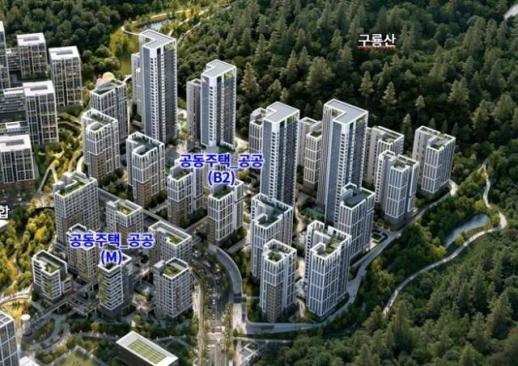 Seoul's last shantytown takes first step towards redevelopment SEOUL, July 22 (AJP) - The planned transformation of Guryong Village, widely known as Seoul’s last remaining shantytown, moved a step closer after the city conditionally approved plans to build 2,120 public housing units in two core sections of the settlement. The Seoul Metropolitan Government said Wednesday that its Public Housing Integrated Review Committee, conditionally approved construction plans for the M and B2 blocks within Guryong Village in Gangnam District. The review marks a key administrative step toward the city’s target of beginning construction in 2027 and completing the housing complexes by 2031. Seoul plans to seek approval for the housing construction plans in the second half of 2026. Guryong Village is a settlement of unauthorized makeshift homes that has remained for decades in Gangnam, one of Seoul’s most affluent districts and home to some of the country’s most expensive real estate. The village was formed as people displaced by demolition and redevelopment projects moved into the area during the rapid development of southern Seoul in the 1970s and 1980s. Its proximity to high-priced apartment districts has made it one of the most visible reminders of the displacement that accompanied Gangnam’s expansion. Under the conditionally approved plans, public housing complexes of up to 28 stories will be built in the M and B2 blocks. The larger B2 block will contain 1,820 homes on a 52,718 square-meter site. The complex will include 643 integrated public rental units and 1,177 long-term lease homes under Seoul’s Mirinae House program. The M block will add 300 homes on a 12,901 square-meter site, comprising 115 integrated public rental units, 165 Mirinae House units and 20 units for public sale. Buildings in the block will rise to a maximum of 15 stories. The city plans to provide units ranging from 31 to 59 square meters, or about 330 to 635 square feet. The plans may be revised during the remaining approval process. Seoul said the complexes will be arranged to preserve as much of the surrounding natural environment near Mount Daemo and Mount Guryong as possible. Pedestrian routes will connect the residential buildings with neighborhood parks, community facilities and surrounding green spaces. The project will also incorporate high-insulation and airtight exterior systems, renewable energy facilities and other low-carbon design features. “This review has put the supply of more than 2,000 public housing units in Guryong Village on track,” said Myeong No-jun, head of Seoul’s Housing Office. “The project will significantly improve housing conditions in Guryong Village while contributing to housing stability by supplying quality homes in Gangnam, where demand remains high.” 2026-07-22 13:44:52
-
JT Savings Bank Enhances Employee Digital Skills with AI Training JT Savings Bank is enhancing its employees' capabilities in utilizing artificial intelligence (AI) as the technology becomes increasingly integrated into the financial sector. The bank aims to strengthen its digital financial competitiveness by expanding the use of AI from financial data analysis to work automation.On July 22, JT Savings Bank announced that it conducted digital data analysis training based on generative AI for its employees in collaboration with Korea Polytechnic University.This training is part of an internal program to enhance work capabilities and marks the second session following last year's initiative. Over 40 employees, from staff to executives, participated in the four-day training, which began on July 20 and covered topics such as office automation using AI, financial data analysis, and data analysis based on generative AI.The course on trend analysis using generative AI focused on identifying relevant information from large datasets held by companies, utilizing the ChatGPT plugin feature to enhance data analysis skills. In practical sessions, participants used generative AI to collect and analyze various financial data, including market trends, investment risks, and customer behavior, to extract key information related to their work and predict market movements and decision-making outcomes.Through this training, JT Savings Bank plans to integrate data collected via generative AI into its existing services to respond to market changes. The bank has already provided paid corporate accounts for ChatGPT to its departments.Park Jung-yong, CEO of JT Savings Bank, stated, "The ability to utilize AI is becoming increasingly important in data analysis. We will strive to enhance our employees' expertise to provide better services to our customers."* This article has been translated by AI. 2026-07-22 13:44:00
-
Naver Pay to Fully Support Fees for Small Merchants During Summer Vacation During the peak summer vacation season, Naver Pay is set to support payment fees for small merchants. This initiative marks the third phase of its co-prosperity finance program this year, following similar efforts during the Lunar New Year and Family Month.Naver Pay announced on July 22 that from July 27 to August 2, it will cover the Naver Pay fees for small merchants utilizing online and offline payment services, as well as Naver reservation and order services.Eligible for support are online and in-store payment merchants classified as small sellers by the National Tax Service, along with those using Naver reservation and order services. The support will be provided automatically without a separate application, covering all payment methods for online and reservation merchants, while in-store merchants will receive support for fees incurred from Naver Pay money and point transactions. Fees accrued during the support period will be aggregated and paid in full by September.This program aims to help small merchants better experience the sales boost associated with increased consumer spending during the summer vacation.This is the third time Naver Pay has offered fee support to small merchants this year, having previously done so during the Lunar New Year in February and Family Month in May.Naver Pay continues to expand its co-prosperity finance initiatives through fee support and reductions. In 2020, during the COVID-19 pandemic, it fully covered in-store payment fees, and last year, it implemented a fee support program for new merchants. In 2021, 2022, and 2025, it reduced fee rates.A Naver Pay representative stated, "We will continue to support the growth of small businesses and practice co-prosperity finance through various services and financial support."* This article has been translated by AI. 2026-07-22 13:44:00
-
Hyundai Strike Causes Billions in Losses as Auto Industry Faces Labor Disputes Hyundai Motor Company's labor union has initiated a strike, resulting in an estimated loss of billions of won in revenue. The auto industry is experiencing a significant labor dispute, referred to as 'summer struggle.'As of July 22, the Hyundai union has been conducting a partial strike for three days, working four hours each day. This follows a previous strike from July 13 to 15, where workers struck for two hours each day, and the duration was extended to four hours starting July 20.Technical staff, divided into morning and afternoon shifts, are participating in the strike, leading to a total of 36 hours of halted production during the strike period this year.The estimated revenue loss due to the strike is in the billions of won. Industry analysts estimate that the production disruption amounts to about 430 vehicles and 18.7 billion won per hour, resulting in approximately 15,800 vehicles and a total loss of 673 billion won over the 36-hour strike.The impact extends to suppliers, as the just-in-time production system minimizes inventory of products and parts. When the assembly line stops, parts manufacturers are also affected.Despite the significant losses, labor-management negotiations remain at a standstill. The company proposed a third negotiation plan on July 8, which included an increase of 89,000 won in monthly base salary, a performance bonus of 350% plus 10 million won, and 15 shares of stock. However, no further negotiations have taken place since then.The union plans to hold a central countermeasure committee meeting on July 23 to discuss the possibility of additional strikes. If the company does not present a new negotiation proposal, the strike is expected to continue.Other automakers are also ramping up their labor actions. Korea GM and its labor union are set to conduct their 17th negotiation for a wage and collective agreement today, coinciding with a four-hour partial strike by the morning shift. Renault Korea is scheduled to hold labor negotiations on July 23 and is likely to engage in strike actions as it has already met the legal requirements for a strike.* This article has been translated by AI. 2026-07-22 13:40:00
-
Rubio: U.S. Open to Negotiations with Iran, But Not on Hormuz Control The United States continues airstrikes against Iran while keeping the door open for negotiations to end the conflict. However, it has made it clear that it will not accept Iran's control over the Strait of Hormuz and will maintain military pressure.On July 22, U.S. Secretary of State Marco Rubio stated at a meeting in Manila related to the Association of Southeast Asian Nations (ASEAN) that "the U.S. is always committed to diplomacy" and that "if Iran is serious about negotiations, the U.S. is ready to engage in dialogue."Rubio added, "Currently, Iran is not engaging seriously in negotiations," and warned that if Iran does not respond to talks, the U.S. and its allies will take necessary actions to protect their interests.He emphasized, "We cannot accept Iran's control over the Strait of Hormuz," arguing that no country should set a precedent by controlling international waterways and attacking vessels that do not comply with toll demands.This diplomatic message from the U.S. comes amid ongoing military actions. As of July 21, U.S. forces have conducted airstrikes against Iran for 11 consecutive days, while Iran has retaliated by attacking U.S. military facilities in Bahrain, Kuwait, and Jordan.Efforts for a diplomatic resolution are also underway. A senior Iranian official stated that they received a 10-day ceasefire proposal from mediating countries aimed at reviving a temporary truce agreement reached between the U.S. and Iran last month. Iranian Interior Minister Eskandar Momeni visited Pakistan, a mediating country, to request continued mediation efforts.* This article has been translated by AI. 2026-07-22 13:40:00
-
Dongbu Construction Aims for Profitability and Productivity in Second Half of 2026 Dongbu Construction has announced plans to accelerate its focus on profitability and productivity during the second half of 2026.The company held its "2026 Second Half Management Strategy Meeting" at its headquarters in Yeoksam-dong, Gangnam, Seoul, where it shared strategies for enhancing the execution of its management policy centered on profitability and discussed long-term growth plans.Key executives, including CEO Yoon Jin-oh, and employees from both headquarters and field operations attended the meeting. Participants reviewed the internal and external business environment, including the construction and real estate markets, government policies, construction costs, and financial markets, and discussed the feasibility and execution plans for the second half based on first-half business performance and key issues.To ensure that the expansion of new orders in the first half translates into stable revenue and profit, Dongbu Construction plans to strengthen its project management capabilities post-award. The company will closely examine project performance and cost appropriateness from the bidding stage and will manage schedules, costs, and cash flow in a linked manner after construction begins to enhance visibility into profitability throughout the project lifecycle.The company will also selectively expand its business portfolio. Building on its competitiveness in public civil engineering and construction, it will focus on growth areas such as urban redevelopment projects, private construction, and advanced industrial facilities, while outlining a long-term growth path based on the market competitiveness and execution capabilities of each business division.Productivity innovation was also addressed as a key issue. Dongbu Construction plans to reduce repetitive and redundant tasks and streamline decision-making processes, while leveraging AI and digital technologies to create an environment where employees can focus on high-value tasks. On-site, the company aims to enhance efficiency in schedule management and quality and safety management to achieve higher performance with the same resources.As the construction market faces a slowdown and ongoing cost pressures, construction companies are shifting their management strategies from growth in scale to profitability management that connects awarded projects to actual profits.CEO Yoon Jin-oh stated, "Our competitiveness cannot be evaluated solely by the scale of orders or revenue; it is only when we adhere to planned costs, schedules, and quality that we can achieve real results."He emphasized, "Every organization must recognize profitability and productivity as their execution tasks, and even small improvements must be connected to results on-site."In the first half of this year, Dongbu Construction recorded approximately 1.5 trillion won in new orders, the largest amount for the first half in its history, through selective orders focused on profitability and diversification of its business portfolio. The company has expanded its order base in public infrastructure, private construction, and urban redevelopment projects, securing a foundation for future revenue growth.A Dongbu Construction official remarked, "In the second half, the focus will be on how stably we can execute the secured projects and convert them into profits, rather than the scale of orders itself. We will meticulously manage costs and risks from the start of projects to completion and continuously enhance productivity to establish a profit-generating structure that is resilient to market conditions."* This article has been translated by AI. 2026-07-22 13:32:00