


Latest by
-
 Mediation Countries Propose 10-Day Ceasefire Between U.S. and Iran, Reopening of Hormuz Strait Mediation countries in the Middle East have proposed a 10-day ceasefire and the reopening of shipping routes in the Hormuz Strait to the United States and Iran. The U.S. government is currently reviewing the proposal, and Iran has confirmed receipt of the mediation offer.According to Axios, Qatar, Egypt, and Pakistan recently delivered this ceasefire proposal to both the U.S. and Iran.The ceasefire plan aims to halt hostilities for 10 days and normalize navigation through the Hormuz Strait, allowing both countries time to revive their faltering memorandum of understanding (MOU) for peace.If an agreement is reached, Iranian attacks on vessels in the southern route through Omani waters would cease, and the U.S. blockade on the northern route through Iranian waters would be lifted.During the ceasefire, the U.S. and Iran are expected to discuss long-term navigation solutions for the Hormuz Strait. One proposal includes Iran receiving a service fee for maritime security, which would be managed by a joint fund involving the International Maritime Organization (IMO).However, neither the U.S. nor Iran has accepted the ceasefire proposal yet. The U.S. is keeping open the possibility of further retaliation following Iranian attacks that resulted in U.S. military casualties, leaving the outcome of the ceasefire uncertain.Esmaeil Baghaei, spokesperson for the Iranian Foreign Ministry, confirmed during a briefing that mediation countries, including Qatar, have conveyed proposals aimed at reducing tensions with the U.S.The U.S. is also preparing for the possibility of negotiations failing. Reports indicate that U.S. forces have recently deployed dozens of fighter jets and refueling aircraft to the Middle East to bolster regional military capabilities.* This article has been translated by AI. 2026-07-21 13:12:00
-
Jung Cheong-rae's Vehicle Damaged in Attack; Kim Min-seok Calls for Action Against Anti-Democratic Acts Jung Cheong-rae, a candidate for the leadership of the Democratic Party of Korea, was attacked on October 20 after a joint speech event for the preliminary party convention, resulting in damage to his vehicle. Kim Min-seok, a fellow candidate and former Prime Minister, condemned the incident as an "anti-democratic act" and called for measures to prevent its recurrence.On October 21, Jung's team reported that an incident occurred where the candidate's vehicle was struck with feet and tools, prompting an ongoing police investigation. They expressed deep regret over the threats and violence directed at the candidate while he was inside the vehicle.In response, Kim's team stated, "Any illegal acts, insults, derogatory terms, or violence are anti-democratic actions and merely provide grounds for division and counteractions. These must be eradicated." They emphasized that all forms of verbal abuse, dual party membership, ghost party members, and involvement of Shincheonji must come to an end. They also urged all party members to take on the role of protectors for safety.Meanwhile, the party convention has intensified factional conflicts between the pro-Myeong (Lee Jae-myung) and pro-Cheong (Jung Cheong-rae) camps. They have engaged in disputes over the introduction of a preferential voting system and the failure of the youth supreme committee. 2026-07-21 13:12:00
-
K Bank Partners with HashKey Group to Expand Blockchain Remittance Services 케이뱅크가 홍콩 기반 디지털자산 금융그룹 해시키그룹(HashKey)과 손잡고 블록체인 기반 해외송금 사업 확대에 나선다. 케이뱅크와 국내 블록체인 기업 비피엠지(BPMG)는 해시키그룹과 해외송금 및 결제 분야 협력을 위한 업무협약(MOU)을 체결했다고 21일 밝혔다. 3사는 이번 협약을 바탕으로 블록체인을 활용한 해외송금과 디지털자산 관련 사업을 공동 추진한다. 우선 케이뱅크와 비피엠지가 개발 중인 블록체인 기반 해외송금 모델에 해시키그룹의 네트워크를 접목해 한국과 홍콩 간 송금 기술검증(PoC)을 추진할 계획이다. 또 디지털자산 기반 해외송금·결제 인프라 구축과 디지털자산 수탁·변환·정산 기술 협력, 디지털자산 기반 신규 비즈니스 모델 발굴도 함께 추진한다. 해시키그룹이 홍콩과 동남아시아를 중심으로 구축 중인 송금 네트워크와 연계해 아시아 지역으로 서비스 범위를 확대하는 방안도 검토한다. 아울러 관련 서비스 제도화와 금융당국 인가에 대비해 고객확인, 자금세탁방지 등 내부통제 체계를 선제적으로 마련할 방침이다. 케이뱅크 관계자는 "아랍에미리트, 태국과의 업무협약에 이어 홍콩까지 네트워크를 확장하게 됐다"며 "앞으로도 다양한 국가의 금융∙블록체인 기업과 협력을 지속해서 확대해 나갈 것"이라고 밝혔다.* This article has been translated by AI. 2026-07-21 13:08:00
-
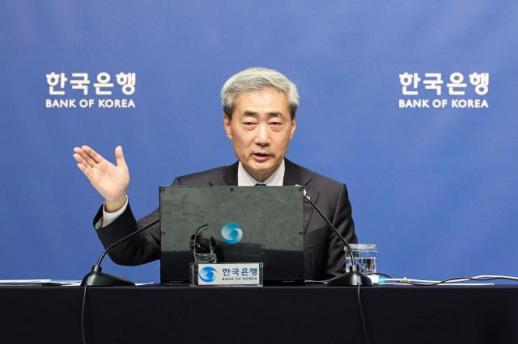 BOK governor joins Asia-Pacific policymakers amid AI and inflation risks SEOUL, July 21 (AJP) -Bank of Korea Governor Shin Hyun-song will join Asia-Pacific central bankers and financial regulators in Singapore this week for talks on inflation, financial stability and the economic risks posed by intensifying artificial intelligence competition and escalating tensions in the Gulf. Shin will attend the 31st Executives' Meeting of East Asia-Pacific Central Banks (EMEAP) Governors and a separate gathering of central bank governors and financial supervisory chiefs from Wednesday through Friday, the BOK said Tuesday. The discussions come as policymakers assess how the rapid adoption of AI is reshaping economic structures while creating new challenges for financial stability, regulation and monetary policy. Shin and fellow EMEAP governors will exchange views on recent economic developments and examine the implications of AI for regional economies and financial systems. They will also review the work of the group's committees on monetary and financial stability, financial markets, payment and settlement systems, banking supervision, information technology and financial institution resolution. At the separate meeting with financial supervisors, participants will focus on how banks and other financial institutions are deploying AI and the regulatory challenges arising from its broader adoption. Officials will also discuss the macroeconomic and financial implications of supply chain disruptions and possible policy responses. Founded in 1991, EMEAP comprises the central banks and monetary authorities of 11 East Asia-Pacific economies, including South Korea, China, Japan, Australia, Singapore and Hong Kong. Financial regulators from South Korea, China, Japan, Australia and Indonesia will also participate in the joint meeting of central bank governors and supervisory authorities. Shin is scheduled to depart for Singapore on Wednesday and return to South Korea on Saturday. 2026-07-21 13:00:38
-
Prosecutors Seek 5-Year Sentence for Kang Ui-goo in Coup Document Case The special prosecutor's team, led by Jo Eun-seok, has requested a five-year prison sentence for Kang Ui-goo, the former head of the presidential office's secretariat, who is charged with drafting a post-facto martial law declaration during the December 3 martial law period. This follows a previous sentence of one year and six months handed down by a lower court.The Seoul High Court's Criminal Division 12-3, presided over by judges Kim Min-a, Lee Seung-cheol, and Jo Jin-goo, held the first hearing of Kang's appeal on July 21. The court listened to both sides' arguments and concluded the proceedings.The special prosecutor's office argued that the initial sentence was too lenient and reiterated its request for a five-year term, claiming that Kang's actions involved factual misrepresentation, legal misunderstanding, and inappropriate sentencing.They emphasized that Kang, who has over 30 years of experience as a prosecutor, should have recognized the unconstitutional and illegal nature of the martial law declaration, as he was involved in the entire process. They pointed out that he played a leading role in obtaining signatures from former Defense Minister Kim Yong-hyun, former Prime Minister Han Duck-soo, and former President Yoon Suk Yeol.The prosecution stated, "This was not merely a case of document forgery for personal gain, but an act that obstructed accountability for the unconstitutional and illegal martial law, reflecting a serious moral failing."Kang's defense attorney argued that the declaration cover created three days after the martial law was not a false official document and that there was no intent to make the martial law appear legitimate based on pre-signed documents, asserting that the initial ruling was unjust.Kang Ui-goo expressed remorse during his final statement, saying, "In the serious situation of declaring martial law, I did not recognize the gravity and thought it was acceptable to obtain signatures afterward as a matter of practice. I apologize for causing public concern due to my lack of prudence."He maintained, however, that he had no awareness of any falsehood, no intent to deceive, and no ulterior motive, asking the court for leniency given his remorse and reflection.The court has scheduled its ruling for 11 a.m. on August 24.Kang was indicted for allegedly creating the cover for the martial law declaration on December 6, 2024, and obtaining signatures from former President Yoon and others. The prosecution claims this was intended to make the martial law declaration appear legitimate, having gone through a cabinet meeting based on pre-signed documents.In the previous ruling on May 28, the lower court sentenced Kang to one year and six months in prison and ordered his immediate detention. The court found him guilty of creating a false official document by obtaining signatures for the martial law declaration cover three days after it was announced, but acquitted him of charges related to the use of the false document.* This article has been translated by AI. 2026-07-21 13:00:00
-
Korean Beef Promotion Targets Military Food Service with Cooking Classes The Korean Beef Promotion Committee is targeting military food service personnel to promote the use of Korean beef and secure new demand sources. The initiative aims to allow prospective cooks to experience the quality and competitive pricing of Korean beef, encouraging its selection in military and dining establishments in the future. On July 21, the committee announced it will conduct a series of cooking classes titled "Daily Korean Beef Cooking Classes for Future F&B Leaders" for students at the Army Logistics School and culinary specialty high schools, which are training the next generation of culinary leaders and military cooks. These classes are designed for cooks who will be responsible for food ingredients in the Army, Navy, Air Force, and Marine Corps, as well as prospective chefs entering the F&B field, allowing them to directly experience the freshness, quality, and competitive pricing of Korean beef. The strategy is to encourage participants to naturally choose Korean beef as an ingredient when they enter the workforce. Star chefs are leading the classes. In the first session held on June 17 at the Army Logistics School, Chef Song Ha-seul, known as the "Side Dish Chef," demonstrated recipes using Korean beef brisket, including "Korean Beef Brisket Soba" and "Korean Beef Onion Curry Fried Rice," which received positive feedback. In the second session on July 2, Chef Lim Hee-won, known as the "Celebrity Chef," took over. He presented practical recipes such as "Korean Beef Sirloin with Dried Radish Greens," "Korean Beef Chop Steak," and a modern reinterpretation of a traditional royal dish, "Korean Beef with Zucchini Rice." The training was hands-on, allowing participants to cook and receive direct feedback from the chefs. The entry of domestic livestock products into public food service is also on the rise. The Ministry of Agriculture, Food and Rural Affairs began supplying low-carbon certified pork to the Army Training Center's 30th Regiment in February, marking the first instance of low-carbon certified livestock products being supplied to military food service. This expands the market for domestically certified livestock products from school meals to military food service. The Korean Beef Promotion Committee's classes align with the trend of increasing the presence of domestic livestock products in public and institutional food service markets. Korean Beef Promotion Committee Chairman Jo Jae-sung stated, "These classes will be an important opportunity to instill the excellent taste and cost-effectiveness of Korean beef in the students of the Army Logistics School, who will be responsible for the future of military food service, as well as the next generation of F&B leaders."* This article has been translated by AI. 2026-07-21 13:00:00
-
Sales of Chinese Cars in Mexico Surge Despite 50% Tariff, Capturing 17% Market Share Despite imposing a 50% additional tariff in January, sales of Chinese cars in Mexico have surged. According to a report by Reuters on July 21, sales of Chinese brand vehicles in Mexico reached 137,525 units in the first half of the year, a 27.7% increase from 107,712 units during the same period last year.Chinese brands accounted for a total market share of 17% in new car sales during the first half of the year, up 3 percentage points from 14% in the same period last year. In 2020, Chinese brands held less than 1% of the Mexican market. This significant increase indicates that Mexican consumers are increasingly accepting Chinese cars as a major option, suggesting that Chinese automakers have successfully established themselves in the local market.Since January, Mexico has imposed a 50% additional tariff on cars produced in Asia. Hyundai Motor Group, with production bases in North America, can avoid these high tariffs. However, Chinese manufacturers, lacking automotive plants in North America, must bear the full burden of the 50% tariff.While Chinese brands recorded sales growth in the first half of the year, analysts predict a decline in sales in the latter half. They interpret that the first-half sales figures were largely due to inventory accumulated before the tariff was imposed, noting that imports of Chinese cars into Mexico sharply decreased. In fact, by May of this year, imports of Chinese cars to Mexico had dropped by 43% compared to the previous year.Guillermo Rosales, president of the Mexican Association of Automotive Dealers, stated, "The expansion of market share for Chinese brands will continue, but the pace of growth will slow down."Reuters also noted that the rapid expansion of Chinese automotive brands is reshaping the Mexican car market while raising concerns in the United States. The U.S. is wary of the potential for Chinese automakers to use Mexico as a base to enter the North American market, which could threaten the $1.2 trillion U.S. automotive industry. Local officials believe that the Mexican government's decision to impose a 50% tariff on Chinese cars is intended to reassure the United States.Meanwhile, the U.S. and Mexican governments are engaged in negotiations to amend the United States-Mexico-Canada Agreement (USMCA) to address trade issues centered around the automotive industry.* This article has been translated by AI. 2026-07-21 13:00:00
-
Expansion of Solar Installations in Water Source Protection Areas Opens Path for Local Residents' Income 상수원보호구역과 수변구역 등 각종 규제로 재산권 행사에 제약을 받아온 상수원관리지역에서 태양광 등 재생에너지 설비 설치가 확대된다. 정부는 발전 수익을 지역 주민과 공유할 수 있는 제도를 마련해 재생에너지 보급과 지역경제 활성화를 동시에 추진한다는 방침이다.기후에너지환경부는 이 같은 내용을 담은 한강·낙동강·금강·영산강·섬진강 등 4대 수계법 시행령 개정안이 21일 국무회의에서 의결돼 이날부터 시행된다고 밝혔다.그동안 정부는 상수원관리지역 주민을 대상으로 수계관리기금을 활용한 복지와 생활환경 개선 등 주민지원사업을 추진해 왔다. 이번 개정은 기존 지원사업을 유지하면서 태양광과 히트펌프 등 재생에너지 설비 설치를 새롭게 지원할 수 있는 근거를 마련한 것이 핵심이다.이에 따라 마을회관과 공공시설, 개인 주택 등에 재생에너지 설비를 설치할 수 있게 되며, 사업 규모를 확대해 발생하는 발전 수익도 지역 주민과 공유할 수 있게 된다.또 상수원보호구역 주민들이 구성한 협동조합은 별도의 부지 제한 없이 태양광 발전시설을 설치할 수 있다. 지역 주민이 발전사업에 참여하는 경우에는 지방자치단체 등 수면관리자가 직접 수상태양광 설비를 설치·운영할 수 있도록 관련 규정도 함께 개정된다.기존에는 상수원보호구역 내 태양광 설치가 건축물 옥상이나 일부 공공시설, 주택 대지 등으로 제한되고 수면 설치는 허용되지 않았다. 정부는 이번 제도 개선으로 주민들의 안정적인 소득원인 '햇빛소득' 기반이 확대되고 재생에너지 보급에도 속도를 붙을 것으로 기대하고 있다. 조희송 기후부 물관리정책실장은 "재생에너지 설비 설치를 규모 있게 확대해 햇빛소득 혜택을 원하는 지역 주민을 지원하기 위해 제도를 개정했다"며 "지역경제와 환경이 상생하는 지속가능발전 모델을 만들어 나가겠다"고 말했다.* This article has been translated by AI. 2026-07-21 12:48:00
-
Mandatory Safety Disclosures for Companies with Over 500 Employees Starting next month, companies with more than 500 employees and construction projects exceeding 120 billion won must publicly disclose their safety and health status annually. Employers who fail to conduct risk assessments or skip essential procedures, such as worker participation, will face fines of up to 10 million won.The government approved these measures during a Cabinet meeting on July 21, as part of amendments to the Industrial Safety and Health Act. This revision follows a comprehensive workplace safety plan announced in September of last year.The most significant change is the introduction of the safety disclosure system, which mandates that larger companies disclose their safety and health status annually. The amended regulations specify that this requirement applies to employers with more than 500 employees and construction firms with annual project values exceeding 120 billion won.Disclosure items will include statistics on worker fatalities among subcontractors and accidents resulting in death on public construction projects. The safety disclosure system will take effect on August 1.The Ministry of Employment and Labor believes that the introduction of the safety disclosure system will ensure workers' right to know and encourage companies to take proactive measures to prevent workplace accidents. By making safety and health information public, companies will be evaluated by the market, workers, and partner firms based on their safety management levels.The system for appointing honorary industrial safety supervisors will also be strengthened. The amended regulations will require that a representative of the workers recommend someone from among the employees to serve as an honorary industrial safety supervisor.The scope of eligible worker representatives for recommendations will expand from those in the existing industrial safety and health committee to include representatives from all workplaces. Additionally, user representatives in the industrial safety and health committee or those defined as users under the Labor Standards Act will be added to the reasons for dismissal.New criteria for imposing fines for failing to conduct risk assessments have also been established. Employers who do not perform risk assessments will face fines of 5 million won for a first offense, 7 million won for a second offense, and 10 million won for subsequent violations. Fines will also be imposed for failing to involve workers or their representatives or for not sharing risk assessment results with workers, with penalties of 1.5 million won for a first offense, 3 million won for a second, and 5 million won for subsequent violations.If employers fail to record and preserve risk assessment results, they will incur fines of 500,000 won for a first offense, 1.5 million won for a second, and 3 million won for subsequent violations. The fine criteria will apply to workplaces with 50 or more employees starting January 1 of next year, and to those with fewer than 50 employees starting January 1, 2028.The scope of businesses required to establish and implement safety and health improvement plans will also be expanded. Companies that have experienced two or more industrial accidents due to fire, explosion, or collapse within the past year for failing to implement safety or health measures will be included. This aims to systematically encourage improvements in workplaces with repeated accidents to swiftly eliminate hazardous and risky factors.* This article has been translated by AI. 2026-07-21 12:48:00
-
Regulations on Livestock Manure Solid Fuel Eased to Expand Renewable Energy Use The easing of production standards for solid fuel made from livestock manure is expected to expand the use of renewable energy in the livestock sector. The government plans to allow the use of auxiliary materials to increase calorific value and relax molding requirements to promote the production and distribution of solid fuel.The Ministry of Climate, Energy and Environment announced that a partial amendment to the Enforcement Decree and Enforcement Rules of the 'Act on the Management and Use of Livestock Manure' was approved at a Cabinet meeting on July 21. The amendment will be announced on July 30 and will take effect immediately.This revision aims to reduce environmental pollution caused by improperly treated livestock manure while utilizing it as a renewable energy source to support greenhouse gas reduction and carbon neutrality in the livestock sector. Previously, solid fuel production was only possible if livestock manure was molded into specific forms, such as pellets. However, production in unmolded forms will now be permitted if safety measures are in place to prevent fires caused by dust.Additionally, while solid fuel production was previously limited to livestock manure, the new regulations will allow for the mixing of auxiliary materials such as crop byproducts, coffee grounds, and sawdust, up to a limit of 40% to supplement calorific value. The minimum calorific value standard for solid fuel produced solely from livestock manure will also be relaxed from 3,000 kcal per kilogram to 2,000 kcal.The government expects that this easing of standards will broaden the scope of livestock manure solid fuel usage, which has been limited due to economic viability, and alleviate some of the burden on livestock farms regarding manure disposal. The expanded use of this renewable energy source is also anticipated to enhance greenhouse gas reduction effects.Alongside the regulatory easing, the government has strengthened management standards. Livestock farms and manure treatment operators must submit facility installation and operation plans to ensure compliance with component standards, as well as plans for securing solid fuel usage facilities when establishing solid fuel production facilities. Administrative agencies will review the feasibility of solid fuel production and the availability of usage facilities based on these submissions.Furthermore, any changes to the mixing ratio of auxiliary materials will require approval, and the treatment methods and usage amounts must be recorded in a management ledger and retained for three years. The installation and management standards for solid fuel production facilities will also be clearly defined to prevent environmental pollution.Kim Eun-kyung, Director of Water Environment Policy at the Ministry of Climate, Energy and Environment, stated, "This amendment will contribute to achieving carbon neutrality in the livestock sector by utilizing livestock manure as a renewable energy source, while also helping to activate the solid fuel market and diversify manure treatment, thereby improving water quality in public waters."* This article has been translated by AI. 2026-07-21 12:48:00