


Latest by
-
 U.S. Secretary of State Confirms Xi Jinping's Planned Visit in September Despite rising tensions between the United States and China following President Donald Trump's allegations of Chinese interference in the 2020 U.S. presidential election, Chinese President Xi Jinping's visit to the U.S. in September is still on track.On July 19, U.S. Secretary of State Marco Rubio spoke to reporters before departing for the ASEAN Foreign Ministers' Meeting in Manila, stating, "We expect President Xi's visit to take place in September." He added, "The Chinese side continues to send preparation teams, and I have not heard any reports of changes to the visit plans."Last week, President Trump claimed that the Chinese government had stolen 220 million voter records to interfere in the 2020 election. However, U.S. intelligence agencies have previously deemed such claims to be unfounded.When asked about potential responses to the allegations of Chinese election interference, Trump replied, "We'll see" and indicated he would discuss the matter with Chinese officials.Bloomberg reported that Trump's comments could disrupt the trade truce established last year and the ongoing stabilization of U.S.-China relations ahead of Xi's visit.If Xi's visit proceeds, it will mark the second face-to-face meeting between Trump and Xi this year, following their summit in Beijing in May.In anticipation of Xi's visit, diplomatic channels between the U.S. and China are expected to continue practical coordination. At this week's ASEAN Foreign Ministers' Meeting, Rubio is likely to meet with Chinese Foreign Minister Wang Yi to discuss preparations for the summit and current issues between the two countries. Rubio is also scheduled to hold talks with foreign ministers from key regional countries, including South Korea and Japan.Rubio emphasized, "There will always be friction between two large and powerful countries like the U.S. and China. However, it is our responsibility as important and powerful nations to continue dialogue and maintain our relationship."* This article has been translated by AI. 2026-07-20 16:04:00
-
Deputy Prime Minister Baek Kyung-hun Proposes Global AI Alliance Centered on K-AI "We will create a cooperative framework with countries around the world centered on South Korea's artificial intelligence (K-AI). We are considering becoming a nation that can provide a full AI stack, including models, services, graphics processing units (GPUs), and entire platforms, by forming an AI alliance with partner countries."Baek Kyung-hun, Deputy Prime Minister and Minister of Science and ICT, unveiled a global AI initiative centered on K-AI during a press conference marking his first anniversary in office at the Government Sejong Center on July 20. This strategy aims to export South Korea's AI full stack to countries in the European Union, the Middle East, and ASEAN, seeking to move away from the AI ecosystems dominated by the United States and China.Currently, efforts are underway to secure data from target countries. Baek stated, "Local data is necessary for services to be implemented in those countries," adding that he is contemplating plans to create an AI alliance by further training AI with data from partner nations.Second Vice Minister Ryu Je-myung also noted, "We plan to support a K-AI package business strategy that combines AI solutions, data centers, and power facilities for developing countries in a bundled format," but clarified that they are not yet at the stage of proposing specific selection criteria for companies or business limitations.Baek emphasized the need for South Korea to achieve good results in the process of preparing for a major transformation in the AI era and building a science and technology-based society. He added, "If we prepare well, I believe good opportunities will continue to be presented to me."In his second year in office, Baek plans to focus on enhancing the competitiveness of AI services rather than just developing AI models. He assessed, "It is time to prepare for the agent AI era by ensuring actual service competitiveness rather than just creating foundation models."To this end, he plans to launch 'Everyone's AI' within the year and prioritize the application of public AI agent services. Acknowledging the challenges of surpassing ChatGPT in a short time, he aims to differentiate by applying it first to public services. Baek stated, "We will gradually start services this year and aim to provide full-fledged agent AI services in the second half of next year to make a significant impact."Development of frontier models is also being pursued. Baek noted, "It is difficult to create frontier models with the current level of support for independent AI foundation model projects," explaining that approximately 10,000 GPUs based on the Vera Rubin standard are needed, with the simple purchase cost reaching about 3.5 trillion won. He added that he is in the process of persuading and informing relevant ministries and financial authorities.Regarding the possibility of forming an AI alliance with China, he took a cautious stance. He remarked, "It is enviable that Chinese AI startups are achieving good results," but also predicted that China's open-weight models could switch to closed systems once certain objectives are met. He emphasized that South Korea's position must be discussed policy-wise, considering relations with both countries.In the field of science and technology, Baek pledged to accelerate efforts to enhance the tangible impact of policies in research settings. He stated, "Even when policies are announced, there is often a gap where the government believes changes have been made, but the field does not feel it. We will implement policies that can be executed quickly."First Vice Minister Koo Hyuk-chae added, "Research projects typically last from three to five years, which seems to take time in restoring the R&D ecosystem in research settings. We are taking a careful approach to ensure that we enhance the tangible impact in the field, even if it is slow."* This article has been translated by AI. 2026-07-20 16:04:00
-
South Korea to Host Invictus Games in 2029, First in Asia South Korea will host the Invictus Games, the global sporting event for wounded veterans, in 2029, marking the first time the event will take place in Asia. According to the Ministry of Veterans Affairs on July 20, the Invictus Games Foundation announced that Daejeon, South Korea, has been selected as the host city for the 9th Invictus Games, scheduled for October 2029, following a unanimous decision by its board. Daejeon triumphed over competing cities, including San Diego, California, and Aalborg, Denmark, in a competitive selection process. The Invictus Games Foundation praised the collaborative efforts of the central and local governments, as well as the veterans' community, in systematically preparing for the event with a shared goal of recovery and rehabilitation for wounded veterans. The foundation also expressed hope that South Korea's cultural influence and the significance of being the first Asian host will lead to a new chapter for the Invictus Games and increased participation from the region. The Invictus Games were founded in 2014 by Prince Harry to support the physical, psychological, and social recovery of wounded veterans through sports. The 2029 event is expected to attract over 3,000 participants, including around 550 wounded veteran athletes from 26 countries and 1,100 family members. The Ministry of Veterans Affairs expressed its intention to bid for the 2029 event during the 2023 Invictus Games in Düsseldorf, Germany. In December of the previous year, Daejeon was selected as one of the final three candidate cities, alongside San Diego and Aalborg. Following a local inspection in February, the submission of the bid application in May, and a competitive presentation last month, Kwon Oh-eul, the Minister of Veterans Affairs, participated in the presentation held in London, where he outlined South Korea's commitment and capabilities to host the event. Since its inception in London in 2014, the Invictus Games have been held in North America, including the United States and Canada, as well as in Europe, including Germany and the Netherlands, and Australia. The next event in 2027 will be hosted in Birmingham, England. Kwon Oh-eul stated, "The selection of Daejeon as the host city for the 2029 Invictus Games is a historic achievement, as it will be the first time this stage honoring the indomitable spirit of wounded veterans is held in Asia. The government will work closely with Daejeon City and the Korean Veterans Association to prepare for the best event ever, ensuring it serves as a platform for the rehabilitation, recovery, and solidarity of wounded veterans worldwide."* This article has been translated by AI. 2026-07-20 16:04:00
-
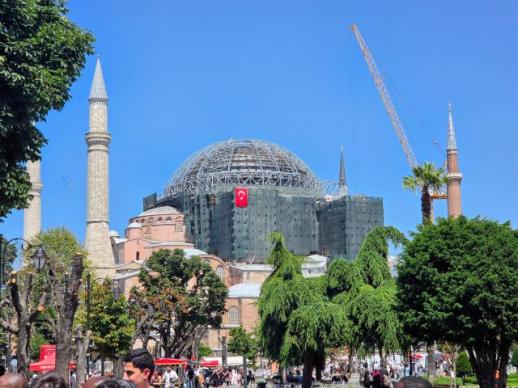 Five centuries of standing in between makes Türkiye indispensable SEOUL, July 20 (AJP) - There is a reason the only direct peace talks between Russia and Ukraine in four years of war have happened in one city, and that city is Istanbul. Earlier this month, NATO leaders gathered in Ankara for the first summit the alliance has ever held in the Turkish capital. The choice of venue was not a courtesy. It was an acknowledgment that the country long treated as the alliance's difficult southeastern flank has become something closer to its hinge. To understand why, it helps to look past the headlines and at a much older habit. Türkiye has spent most of its history as the country in between. Istanbul was the capital of Christian Byzantium for a thousand years before it became the seat of the Islamic caliphate for nearly five hundred more. Hagia Sophia has been a cathedral, a mosque, a museum, and a mosque again, and the city has somehow absorbed each conversion without losing itself. The Ottoman Empire governed Greeks, Armenians, Jews, Arabs, and Slavs under a system that let each community keep its own courts, schools, and houses of worship. When Spain expelled its Jews in 1492, the sultan sent ships to collect them. None of this was modern liberalism. It was something more durable: the practical knowledge that a state straddling two continents survives by holding differences together rather than resolving them. That knowledge came at a price, paid mostly at home. The republic that Mustafa Kemal Atatürk built from the empire's ruins has spent a century arguing with itself about what it is: secular or religious, European or Middle Eastern, democratic or strong-handed. The argument has repeatedly turned violent. The military overthrew governments in 1960, 1971, and 1980, and pressured another from office in 1997. In July 2016, a faction of the armed forces bombed the parliament and fired on citizens. 253 people died stopping them. I spent last week in Istanbul interviewing survivors of that night, and what struck me was not their anger but their vocabulary. A businessman who lost part of his foot to a bullet told me that everyone living on Turkish soil is his family. The purges that followed the coup swept up tens of thousands and drew lasting criticism from Europe, and the wound is not closed. A country that has nearly torn itself apart this many times does not romanticize division. It learns to manage it. That learned reflex is now worth a great deal, because Türkiye's neighborhood is on fire on two sides. To the north, the war in Ukraine grinds into its fifth year. Ankara has armed Kyiv with drones, closed the Turkish straits to warships, and affirmed Ukraine's territorial integrity, while refusing to join sanctions on Moscow and keeping its channels to the Kremlin open. Western capitals once called this fence-sitting. They call it something else now that it has produced the grain deal that fed markets across Africa and Asia, the largest prisoner exchanges of the war, and the only venue both sides will accept. Just last week, Türkiye's foreign minister stood in Kyiv proposing a truce covering the Black Sea and energy infrastructure, an interim step no other government is positioned to broker. To the southeast, this year's war between Israel, the United States, and Iran left Türkiye in a position no other NATO member occupies: alliance air defenses shot down Iranian ballistic missiles crossing Turkish airspace even as Ankara kept talking to Tehran. The radar at Kürecik in eastern Türkiye is the front line of Europe's missile defense against Iran. Remove Türkiye from the map, and Europe's early warning starts a thousand kilometers further west. The European Union has kept Türkiye's membership application frozen for decades, with reasons ranging from principled to reflexive. Yet the continent now finds it needs the country it would not admit. America's rethinking of its security guarantees has left Europe rearming in a hurry, and the arithmetic is uncomfortable. Türkiye fields NATO's second-largest army, will command the alliance's rapid reaction force from 2028, and has grown its defense exports from under $2 billion a decade ago to a projected $11 billion this year, with its drones already embedded in European arsenals. In Ankara, alliance members announced more than $50 billion in new procurement and pledged roughly $80 billion in military support for Ukraine in 2026. Brussels still debates whether to open its new defense programs to a non-member it does not fully trust. Ankara warns that a European security architecture built without Türkiye will protect less of Europe. On the evidence of the past four years, the warning is hard to dismiss. Critics have a sharper word for all this balancing, transactionalism, the accusation that Ankara simply sells its position to every side. I would suggest the older word is better. What looks like playing both sides is, in the long Turkish habit, openness, the refusal to let any single identity, bloc, or patron claim the whole country. A state that contained Orthodox Christians and Sunni Muslims for five centuries does not find it strange to host Russians and Ukrainians at the same table. A society that argues perpetually about religion and secularism is not scandalized that the world disagrees with itself too. This openness has hard limits, and Türkiye's own citizens know them best; the decade since the coup has tested civil liberties at home even as flexibility flourished abroad. But the leaders of the Western alliance, having just left Ankara, might consider that the ally they have found hardest to categorize is valuable for precisely that reason. In a world splitting into camps, somebody has to stand in between. Türkiye has had five hundred years of practice. 2026-07-20 16:03:27
-
Stock Market Plummets as Semiconductor Sector Faces New Challenges The KOSPI index fell more than 4% as weakness in major semiconductor stocks dragged it below the 6,500 mark. The KOSDAQ also dropped over 5%, prompting the activation of sell sidecars in both markets, which increased market volatility. On July 20, the Korea Exchange reported that the KOSPI closed at 6,516.27, down 304.33 points (4.46%) from the previous trading day. The index opened at 6,643.58, down 2.60%, and continued to decline throughout the session. In the securities market, institutions sold a net 920.3 billion won, contributing to the index's drop. In contrast, foreign and individual investors bought a net 516.1 billion won and 349.5 billion won, respectively. As market volatility increased, the KOSPI market activated its 20th sell sidecar of the year at 11:21 a.m. The sell sidecar is triggered when the price of the most traded futures contract based on the KOSPI 200 falls by more than 5% for one minute. Major stocks generally showed weakness. Samsung Electronics closed at 244,000 won, down 11,000 won (4.31%). SK Hynix ended at 176,400 won, down 7,800 won (4.24%). Hyundai Motor closed at 399,000 won, down 26,000 won (6.12%), while Samsung Electro-Mechanics fell by 2,000 won (0.16%) to 127,500 won. Conversely, Samsung Electro-Mechanics preferred shares rose by 54,900 won (29.82%) to close at 239,000 won. The KOSDAQ index closed at 749.64, down 42.20 points (5.33%). In the KOSDAQ market, individual investors bought a net 190.7 billion won, while foreign and institutional investors sold a net 57.7 billion won and 134.8 billion won, respectively. The KOSDAQ also activated its 10th sell sidecar of the year at 10:52 a.m. This was triggered when the most recent KOSDAQ 150 futures contract fell by more than 6% and the KOSDAQ 150 index dropped by over 3% for one minute. Most of the top market capitalization stocks in the KOSDAQ also declined. Alteogen closed at 269,500 won, down 7,000 won (2.53%). Ecopro BM fell by 8,300 won (7.38%) to 104,100 won, and Ecopro dropped by 6,500 won (8.12%) to 73,500 won. JUSUNG Engineering fell by 10.64%, and Rainbow Robotics dropped by 5.54%. Wonik IPS plummeted by 18.19%, while Peptron fell by 12.59%. In contrast, Samsung SDI preferred shares surged by 29.82%, nearing the upper limit. Lino Industry fell by 4.43%, and Kolon TissueGene dropped by 1.45%. Lee Kyung-min, a researcher at Daishin Securities, explained, "The domestic stock market reflected the accumulated semiconductor-related bad news during the holiday period and the military conflict risks between the U.S. and Iran, leading to the decline." He added, "Concerns over a slowdown in AI infrastructure and semiconductor demand were highlighted again with the release of a new model by China's Moonshot AI, coupled with rising tensions in the Middle East and inflation fears due to high oil prices, which dampened investor sentiment."* This article has been translated by AI. 2026-07-20 16:00:00
-
Korea Credit Guarantee Fund, Korea Development Bank, Hanwha to Support Defense and Shipbuilding Investments The Korea Credit Guarantee Fund is partnering with the Korea Development Bank and Hanwha Group to support facility investments for defense and shipbuilding companies located outside the capital region.On July 20, the Credit Guarantee Fund announced that it has signed a memorandum of understanding with Korea Development Bank, Hanwha Ocean, Hanwha Aerospace, Hanwha Systems, and Hanwha Engine to promote a financial program for the joint growth of the defense and shipbuilding sectors.The agreement aims to enhance productivity by supporting the expansion of automation equipment and industrial safety facilities for Hanwha Group's partner companies, thereby strengthening the competitiveness of the defense and shipbuilding industry ecosystem and the local economy.Under the agreement, Hanwha Group will make a special contribution to the Credit Guarantee Fund, which will use these funds to provide preferential guarantees to the recommended partner companies. The Korea Development Bank will support facility loans using its special fund for future strategic industries. However, the specific conditions regarding the scale of the special contribution and the guarantees and loans are currently under discussion among the relevant institutions.The support will target small and medium-sized enterprises in the defense and shipbuilding sectors located outside the capital region that require facility investments, such as the establishment of automation equipment.The Credit Guarantee Fund plans to expand its financial support from primarily operating funds to large-scale facility investments. It is expected to assist manufacturers outside the capital region in enhancing their industrial safety equipment, which has been challenging to finance in the private financial market.Kang Seung-jun, Chairman of the Credit Guarantee Fund, stated, "We will reliably support large-scale, high-risk facility investments that are difficult for private finance to adequately back, and we will continue to expand the joint growth program for the defense and shipbuilding industries."* This article has been translated by AI. 2026-07-20 16:00:00
-
International Oil Prices Surge as U.S.-Iran Conflict Escalates, Brent Crude Exceeds $90 As fears grow that the U.S.-Iran military conflict could escalate into full-scale war, international oil prices have surged, with Brent crude surpassing $90 per barrel. Amid intensifying retaliatory strikes between the two nations, shipping traffic through the Strait of Hormuz, a critical route for global oil transport, has declined again, raising concerns about supply disruptions.According to Reuters, as of 2:41 a.m. GMT on July 20, September Brent crude futures were trading at $90.19 per barrel, up 2.37% from the previous trading day. August West Texas Intermediate (WTI) futures also rose by 2.07% to $84.20 per barrel. Both Brent and WTI saw increases of 15.9% and 15.5%, respectively, just last week.The primary driver behind the rising oil prices is the potential for renewed full-scale conflict between the U.S. and Iran. The U.S. has continued its airstrikes against Iran for the ninth consecutive day. In retaliation, Iran has targeted U.S. military bases and allied nations in the Middle East, including Jordan, Kuwait, and Bahrain. A ceasefire agreement reached last month has effectively collapsed.U.S. retaliation has intensified following the deaths of two American service members and the disappearance of another due to Iranian attacks in Jordan. Additionally, one U.S. soldier was killed while dismantling an unexploded Iranian drone in Iraq. The U.S. military has been targeting Iranian command facilities, air defense systems, coastal surveillance sites, and missile and drone launch facilities, while also deploying additional military aircraft to the region.Market analysts are increasingly concerned that prolonged hostilities could severely disrupt oil transport through the Strait of Hormuz, which accounts for about 20% of global oil supply.Shipping traffic through the strait has already seen a significant decline. According to financial information firm LSEG, only four vessels passed through the Strait of Hormuz on July 19, down from eight the previous day. Recently, the passage of liquefied natural gas (LNG) carriers has also ceased, as confirmed by the Automatic Identification System (AIS).The risks associated with shipping operations are also rising. The Iranian Revolutionary Guard Corps (IRGC) claimed that two oil tankers passing through the southern route of the Strait of Hormuz exploded and are now unable to operate. The UK Maritime Trade Operations (UKMTO) reported a fire incident involving a vessel near Oman.Oil exports from the Gulf region have not yet returned to pre-war levels. Major oil-producing countries increased their oil and condensate exports to 12 million barrels per day in the first half of this month, but this remains 32% below the peak levels seen in February before the conflict.Middle Eastern oil-producing nations are increasingly utilizing transport routes that bypass the Strait of Hormuz. Saudi Arabia has redirected a significant portion of its oil exports to the Red Sea port of Yanbu. However, concerns are rising that Iran could threaten this alternative route through its support of the Houthi armed group in Yemen.Experts warn that a prolonged reduction in shipping traffic through the Strait of Hormuz could lead to actual decreases in oil supply. Johannes Laubach, an analyst at energy and shipping data firm Kpler, stated, "If traffic through the strait continues to decline, oil-producing countries may have to cut production, ultimately reducing the amount of oil available in the market."Amarpreet Singh, an analyst at Barclays, noted, "In a situation where the U.S. is blocking Iranian ports and Iran is controlling the Strait of Hormuz, the key question is how much Gulf region oil can actually be supplied to the market." He added, "Despite oil inventories being at their tightest levels in five years, the market is overly optimistic about the risk of supply shocks."* This article has been translated by AI. 2026-07-20 15:56:00
-
Korean Commission Promotes Cooperation in Home Shopping Industry The Broadcasting and Media Communications Commission (BMCC) is seeking to advance the home shopping industry through regulatory innovation and industrial promotion.On July 20, the BMCC held a 'Joint Declaration Ceremony for Home Shopping Cooperation' at the Korea Federation of Small and Medium Businesses in Yeongdeungpo, Seoul, with 12 home shopping companies and partner small and medium enterprises (SMEs).This event was organized as a follow-up to the BMCC's 'Home Shopping Cooperation and Vitalization Plan' announced in May. It marks the first comprehensive strategy since the Ministry of Science and ICT transferred home shopping promotion responsibilities to the BMCC. The plan aims to support an industry facing challenges such as declining TV viewership and high transmission fees, proposing a complete overhaul of home shopping regulations for the first time in nearly 30 years.In his opening remarks, BMCC Chairman Kim Jong-cheol stated, "Cooperation between home shopping and SMEs is a crucial foundation for creating a fair distribution environment and ensuring the sustainable growth of small businesses. I urge continued collaboration to expand market access for SMEs and promote mutual growth."The joint declaration ceremony was attended by representatives from the TV Home Shopping and Data Home Shopping Associations, as well as leaders from the 12 participating companies and SMEs.The joint declaration includes commitments to government regulatory innovation and policy support, assistance for SME growth by home shopping companies, the promotion of fair trading practices, protection of user rights, the establishment of a healthy broadcasting media ecosystem, and the enhancement of quality innovation and competitiveness in products and services offered by SMEs. Participants also established ten joint action items to ensure the implementation of the declaration, including building a cooperation framework, improving regulations, and expanding market access for SMEs.The BMCC plans to closely communicate with the industry and SMEs to ensure that the action items from the joint declaration lead to tangible results.* This article has been translated by AI. 2026-07-20 15:56:00
-
Special Prosecutor's Office Considers Third Extension of Investigation, Plans to Question Kim Geon-hee and Won Hee-ryong The second special prosecutor team, led by Kwon Chang-young, is currently investigating with the possibility of a third extension as a bill to extend the investigation period and increase personnel has been submitted to the National Assembly.Special Prosecutor Kim Ji-mi held a regular briefing on July 20 at the special prosecutor's office in Gwacheon, stating, "The possibility of an extension is uncertain," but added, "We are preparing for both the end of the second investigation period on the 24th and the possibility of an extension."After extending the investigation twice, the special prosecutor's office submitted a request to the National Assembly earlier this month to extend the activity period by an additional 30 days. The amendment request includes increasing the number of dispatched public officials and allowing special investigators with legal qualifications to maintain prosecutions.However, skepticism about the extension has grown due to minimal investigative results and excessive budget usage. The special prosecutor's office has adopted a 'Heavy Tail' strategy, focusing on requesting arrest warrants and filing charges in the latter half of the investigation, but has yet to secure suspects at even half the expected rate.In response to criticism, Kim stated, "Securing suspects through arrest warrants while investigating areas not clarified by the three major special prosecutors (insurrection, Kim Geon-hee, Chae Hae-byeong) is more challenging than the previous special prosecutors who sought arrest warrants early in their investigations for evidence collection."Despite deploying more budget and personnel compared to the three major special prosecutors, the lack of investigative results has been noted. Kim explained, "When comparing the number of prosecutors, the insurrection special prosecutor had 70 prosecutors, while we have been operating with 14, which inherently limits our investigative capacity."While the People Power Party opposes the amendment to the special prosecutor law, the Democratic Party plans to hold a plenary session to process it, increasing the likelihood that the special prosecutor's investigation will be extended until July 23. In this context, the special prosecutor's office is expected to focus on investigating key suspects identified in various allegations.On July 22, they plan to question Kim Geon-hee regarding allegations of preferential treatment related to the relocation of the presidential residence, and on July 23, they will investigate former Minister of Land, Infrastructure and Transport Won Hee-ryong regarding allegations of preferential treatment for the Yangpyeong Expressway. Given that these individuals are at the center of the related allegations, the special prosecutor's office is expected to exert all efforts to substantiate the charges.The investigation into Hong Jang-won, former first deputy director of the National Intelligence Service, and Cho Sung-hyun, former commander of the 1st Guard Brigade of the Army Capital Defense Command (Colonel), who made different judgments from the insurrection special prosecutor team, is also drawing attention.Kim noted, "We have confirmed indications that former Deputy Director Hong instructed his subordinate department to 'establish a communication network with the Military Counterintelligence Command' immediately after the declaration of martial law, and that former Deputy Director Hwang Won-jin instructed to 'dispatch investigators to the Joint Investigation Headquarters of the Martial Law Command.' We are currently verifying whether these instructions were actually carried out." Regarding Cho, who underwent a second suspect identity investigation last week, Kim emphasized, "We have clarified the facts of the allegations."Last week, the special prosecutor's office investigated nine suspects and eleven witnesses. 2026-07-20 15:52:00
-
POSCO Cheongam Foundation Supports Global Talent with Overseas Doctoral Scholarships The POSCO Cheongam Foundation held the '2026 POSCO Overseas Study Scholarship Award Ceremony' on July 20 at the POSCO Center in Seoul, awarding scholarship certificates to two students entering doctoral programs at prestigious overseas universities.The 'POSCO Overseas Study Scholarship' aims to support outstanding domestic talent by alleviating financial burdens, allowing them to focus on research at top international universities. The foundation initiated this program this year to cultivate key talent that will drive future national competitiveness amid intensifying global technological and knowledge competition.During the selection process, candidates were evaluated based on their research capabilities, academic achievements, the excellence of their research plans, and their potential for development.After a review of applications and interviews, the final two selected students are Noe Jun from Stanford University and Seo Dong-woong from Paris School of Economics.The selected scholars will receive up to $30,000 annually for five years. Additionally, the foundation plans to provide ongoing support through networking opportunities with senior scholars, allowing them to share academic interests and research experiences, further enhancing their growth as future researchers.Noe Jun expressed his commitment, stating, "I will illuminate the possibilities of materials science and connect the expertise and international research networks I build abroad with academia and industry in Korea." Seo Dong-woong remarked, "I will strive to ensure that academic research in public economics translates into policy applications, becoming a researcher who contributes to Korean society."The POSCO Cheongam Foundation stated, "We plan to continue creating an environment where outstanding talent can focus on research and to nurture global research talent that will lead Korea's future on the world stage."Since 1985, the foundation has supported 189 students, including master's and doctoral candidates, through its overseas study scholarship program until 2018. These individuals are now active as professors and researchers at universities and research institutions both domestically and internationally.* This article has been translated by AI. 2026-07-20 15:48:00