


Latest by
-
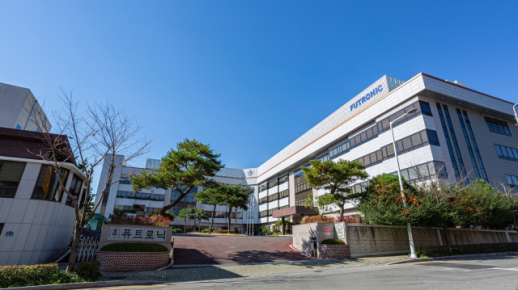 Blackstone buys Busan-based actuator maker Futronic SEOUL, July 20 (AJP) -Blackstone has bought a majority stake in South Korean actuator and motion-control technology company Futronic in a deal that values the Busan-based company at about 1 trillion won ($720 million), according to multiple local media outlets. The two companies are yet to announce the deal or disclose the financial terms. The investment is being made in partnership with Futronic founder and Chairman Ko Jin-ho, who will remain chairman and chief executive officer to lead the company's next phase of global expansion alongside Blackstone. Founded in 1993, Futronic has grown into a key supplier of actuators and motion-control systems for the global automotive industry, working with leading original equipment manufacturers from the early engineering and development stages. The company has broadened its business beyond traditional automotive applications into next-generation mobility, including humanoid and general-purpose robotics, reflecting rising demand for precision motion-control technologies.Futronic operates primarily from South Korea and the United States while continuing to expand its global manufacturing and customer base. Its client roster includes major global automakers such as General Motors, Ford, Volvo, Mercedes-Benz, Volkswagen, Nissan and Hyundai Motor, as well as several leading Chinese vehicle manufacturers. The company employed 216 people as of April 2026. 2026-07-20 13:36:56
-
 South Korea Responds to Indonesia's Mandatory Halal Certification with Joint Support Team The Ministry of Food and Drug Safety is dispatching a "Joint Support Team for Entry into Indonesia" in response to Indonesia's mandatory halal certification, which will take effect in October. The team aims to improve certification and market entry procedures in collaboration with Indonesian regulatory authorities, easing the export burden on domestic cosmetics companies.On July 20, the ministry announced that it has formed a support team of 27 members, led by the Director of the Bio-Pharmaceutical Bureau, including representatives from the Korea Pharmaceutical Export Association, the Korea Testing & Research Institute for Chemical Industry (KTC), and cosmetics exporting companies. The team will engage directly with local regulatory authorities.Indonesia, the world's fourth most populous country and the largest market in ASEAN, is a key export market for K-beauty. However, the mandatory halal certification starting in October is expected to increase certification costs and complicate customs and distribution processes, raising export burdens for South Korean companies. Many small and medium-sized enterprises have previously abandoned certification due to a lack of information, which requires obtaining confirmation letters from raw material suppliers for dozens of ingredients in cosmetics.The support team plans to discuss improvements to market entry procedures for domestic cosmetics during high-level meetings with the Indonesian Food and Drug Authority (BPOM), including enhancing the import procedures for sample products and establishing regulatory cooperation channels between the two countries.In meetings with the Halal Product Assurance Agency (BPJPH), the team will discuss improvements to halal certification procedures, such as applying grace periods for customs products before the system's implementation and exempting duplicate inspections for already certified manufacturing facilities.Additionally, the team will hold a business meeting with representatives from the Indonesian Food and Drug Authority and the Halal Product Assurance Agency to explain the changes in the halal system and cosmetics regulations, allowing South Korean companies to address their questions directly. They will also visit cosmetics manufacturing facilities and sales locations in Indonesia to listen to concerns and incorporate feedback into future regulatory improvements.Ryu Hyung-seon, president of the Korea Pharmaceutical Export Association, stated, "The government's active support in facilitating discussions on overseas regulatory issues that individual companies find challenging is a significant help for exporters. We will work closely together to expand K-beauty's global market presence."Bio-Pharmaceutical Bureau Director Ahn Young-jin emphasized, "Proactively responding to regulatory changes in each country is crucial for the continuous expansion of K-beauty exports. We will strengthen cooperation with overseas regulatory authorities to actively resolve export challenges and provide substantial support for entering global markets."Meanwhile, the Ministry of Food and Drug Safety recently introduced South Korea's cosmetics safety management system at the 20th annual meeting of the International Cooperation on Cosmetic Regulation (ICCR) held in Tokyo, Japan, and proposed international cooperation to expand global regulatory harmonization. The ministry plans to continue providing regulatory information by country and enhancing cooperation among regulatory authorities to eliminate overseas regulatory barriers and support the global competitiveness and export growth of K-beauty.* This article has been translated by AI. 2026-07-20 13:36:00
-
TSMC Expands U.S. Investment to $265 Billion Amid AI Chip Demand The world's largest foundry, Taiwan Semiconductor Manufacturing Company (TSMC), is increasing its investment in the United States to a total of $265 billion (approximately 393 trillion won) in response to anticipated strong demand for artificial intelligence (AI) chips over the coming years. This significant expansion aims to address rising orders from U.S. customers and to fend off competition.On July 20, Reuters and Bloomberg reported that TSMC has decided to add $100 billion (about 148 trillion won) to its existing U.S. investment plans.Wendell Huang, TSMC's Chief Financial Officer, stated, "We expect strong demand from our customers to continue for several years to come."If the investment proceeds as planned, Arizona will eventually host 10 semiconductor manufacturing plants, two advanced packaging facilities, and one research and development center. The first plant is already operational, while the second will soon begin receiving production equipment. The third plant is under construction, and preliminary work has started on the fourth plant and the first advanced packaging facility.The primary driver behind this large-scale expansion is the demand for AI chips. North American customers, including NVIDIA and AMD, accounted for 78% of TSMC's total revenue last quarter. TSMC anticipates that AI chip demand will exceed its production capacity for the foreseeable future, prompting an increase in capital investment to at least $60 billion (approximately 89 trillion won) this year.Competition is also intensifying. Intel, backed by the U.S. government, is ramping up its efforts in the advanced semiconductor foundry market, while Elon Musk is pursuing his own semiconductor production business. Huang expressed confidence in TSMC's competitiveness, saying, "Our competitors are excellent, but we are better."However, there are practical constraints to the expansion in the U.S. Arizona faces a shortage of construction labor and infrastructure, which limits the speed of factory construction. Huang noted, "We will work with the U.S. government to address these issues."While expanding its investments in the U.S., TSMC maintains its principle of first mass-producing the latest semiconductor technologies in Taiwan. The company plans to consider relocating production to overseas plants only after stable production is established in Taiwan. TSMC also plans to build an additional 13 advanced semiconductor and packaging plants in Taiwan over the next few years.Market analysts have raised concerns about the aggressive expansion of investments. Despite reporting record earnings, TSMC's stock fell 7.3% on July 17. GF Securities in China suggested that TSMC's delayed response to the rising demand for AI chips may have resulted in some orders shifting to competitors, leading to a downgrade in their investment outlook.* This article has been translated by AI. 2026-07-20 13:36:00
-
Hugel Launches Four New HA Fillers, Enhancing Safety and Quality Hugel has introduced a new line of hyaluronic acid (HA) fillers, targeting a market projected to grow to 14 trillion won. On July 20, Hugel announced the launch of its new HA filler line, 'The Chaeum Signature.' The new products consist of four types, each designed to be selected based on the treatment area and purpose. Typically, HA fillers undergo a crosslinking process to maintain a stable gel form of hyaluronic acid, which is easily broken down in the body. The Chaeum Signature utilizes the proprietary 'MPC (Multi Purified Crosslinking)' technology from its affiliate, Acros. This method reportedly reduces the amount of crosslinking agent used by over 50% compared to traditional manufacturing processes while enhancing crosslinking efficiency with high-concentration HA materials. Notably, a multi-purification process lasting about two weeks minimizes residual crosslinking agents (BDDE) and micro-hydrolysis byproducts (BDPE) that can occur during the crosslinking process, thereby enhancing safety and quality. The new line maintains the strong properties and durability of the existing 'The Chaeum Premium' line while reducing the use of crosslinking agents. Jang Doo-hyun, CEO of Hugel, stated, "We are excited to present a differentiated product utilizing our proprietary MPC technology. We will continue to enhance product competitiveness and safety to build trust with medical professionals and consumers." According to Fortune Business Insights, the global market for hyaluronic acid-based skin fillers was estimated at $4.83 billion (approximately 7.15 trillion won) last year. It is projected to grow at an annual rate of 8.10%, reaching $5.22 billion (about 7.7 trillion won) this year and expanding to $9.73 billion (around 14.4 trillion won) by 2034. The North American market accounted for approximately 42.93% of the total last year.* This article has been translated by AI. 2026-07-20 13:36:00
-
Investigator Probes Allegations of Military Secrets Leak Amid Emergency Martial Law Claims A whistleblower who alleged illegal activities by the military during the emergency martial law period on December 3 is now under investigation for leaking military secrets. According to reports from Aju Economy on July 20, Kim Hyun-seok, who reported that some units did not utilize the satellite-based command and control system (PRE-Positioning Report Equipment) during the martial law, faced his first interrogation at the National Investigation Agency this morning on charges of leaking military secrets. He had previously been subjected to a search warrant related to these allegations on July 3.Kim, who has developed military communication systems for 27 years, detected that command communication equipment was not operational in some units on the day of the emergency martial law. He claims that normally, units would activate the satellite PRE during deployment and standby processes to monitor troop movements, but this was not done.Kim Hyun-seok stated in a phone interview with Aju Economy, "It is unusual for the satellite PRE not to be used." He added, "During the emergency martial law, the higher command provided a list of items that should be carried, excluding legitimate command and control equipment." Previous reports from Aju Economy also indicated that former allied commanders and military officials at the corps level shared similar views, describing the situation as 'unusual.'He believes that this evidence is crucial in revealing the illegality of the emergency martial law. Consequently, he submitted materials to several members of the National Assembly and reported the information to the insurrection special investigation team led by Special Prosecutor Cho Eun-seok. However, this information was transferred to the National Investigation Agency after the special investigation's deadline expired in December of last year.Kim claims that the National Investigation Agency is not examining his whistleblower report but is instead investigating him for leaking military secrets. He expressed that the issue he raised in the public interest has now turned into an investigation against him. He remarked, "It seems that the National Investigation Agency received my report containing unit information and judged it as a disclosure of military secrets to the outside."After appearing at the National Investigation Agency, Kim issued a statement emphasizing, "Even if there are some military secrets, I believe that the evidence related to serious crimes against the state and the public, as well as the disruption of constitutional order by former President Yoon Suk Yeol, is significant enough to warrant a report to national agencies."He further stated, "I reported this believing it was justified, but it is unfair that I am now facing a search and investigation as a suspect. I express my deep regret to the investigative agencies and the government."On the same day, Kim plans to submit related materials to the second comprehensive special investigation team (led by Special Prosecutor Kwon Chang-young) continuing the investigation after the insurrection special investigation. He also intends to hold a press conference with the civic group Participation Solidarity to urge the special investigation.* This article has been translated by AI. 2026-07-20 13:36:00
-
Ministry of Industry Awards Employees for Stabilizing Oil and Naphtha Supply The Ministry of Industry has awarded special performance bonuses to employees who contributed to stabilizing the supply of oil and naphtha and supporting exports amid instability in the Middle East. This initiative aims to encourage staff who responded on the ground during ongoing concerns over the potential blockade of the Strait of Hormuz and uncertainties in energy supply chains.On July 20, the ministry held the 'Second Special Performance Bonus Award Ceremony' at the Government Sejong Center, where 45 employees from 11 projects received a total of 91 million won in bonuses.This recognition was given to employees who played significant roles in stabilizing oil and naphtha supplies and ensuring public welfare during the prolonged energy supply crisis stemming from the Middle East conflict that began on February 28. The ministry commended these staff members for maintaining an emergency response system that acted as a buffer to mitigate shocks to the economy.A total of 24 employees from the Resource Industry Policy Division received 57 million won. Their efforts included activating a 24-hour response system immediately after the outbreak of war, implementing a maximum oil price system, establishing a strategic oil reserve swap system, and supporting diversification of crude oil import sources to alleviate the impact of soaring oil prices on the public.Securing alternative supply chains in preparation for a potential blockade of the Strait of Hormuz and supporting the import costs of essential raw materials such as naphtha and urea were also highlighted as key achievements.The division responsible for European trade was recognized for negotiating the removal of tax benefits that were previously limited to 'EU-made' equipment under Italy's accelerated depreciation system. The Export-Import Division was acknowledged for providing win-win trade financing for small and medium-sized enterprises, including guarantees for the shipbuilding industry's supply chain, amounting to a total of 16 trillion won in exports.Minister of Industry Kim Jeong-kwan expressed deep gratitude to the dedicated staff who have quietly safeguarded national interests amid ongoing external uncertainties, such as the blockade of the Strait of Hormuz. He stated, 'We will continue to do our utmost to stabilize the economy and secure national interests until the crisis situation is fully resolved.'* This article has been translated by AI. 2026-07-20 13:32:00
-
SpaceX to Attempt Starship Relaunch on July 23 Amid Stock Fluctuations SpaceX, the aerospace company founded by Elon Musk, will attempt its 13th test flight of the Starship spacecraft on July 23 after a previous launch was halted just before takeoff.According to Reuters on July 19, SpaceX plans to conduct the 13th Starship test flight as early as 5:45 PM Central Time on July 23.This test flight will carry 20 satellites from SpaceX's Starlink internet service. The company aims to conduct satellite deployment tests in space, with the satellites expected to re-enter the atmosphere and disintegrate without reaching Earth orbit.SpaceX attempted the 13th test flight on July 16 at its Starbase facility in Texas. However, the launch was aborted just before liftoff due to some engines of the Super Heavy rocket failing to ignite properly. The company has since replaced the engines and is checking the propulsion system ahead of the relaunch.SpaceX's stock has experienced significant volatility since its debut on the Nasdaq on June 12. The initial public offering price was $135, and the stock surged to $225.64 within two trading days. However, it has since declined, closing at $123.99 on July 17, the day after the 13th test flight was aborted, falling below the IPO price.If the launch proceeds as scheduled on July 23, it will mark the first Starship test flight since SpaceX went public. The company aims to deploy Starlink satellites into orbit using Starship by the end of this year.* This article has been translated by AI. 2026-07-20 13:16:00
-
KT Alpha: Chicken Tops Gift Choices for Summer Holidays This year, chicken was the most popular gift sent by companies to employees and customers during the summer holiday. Additionally, sales of department store and supermarket gift cards, which allow recipients to choose their preferred items, increased more than tenfold, highlighting a growing trend toward practicality and choice in corporate gifting.KT Alpha's corporate mobile gift card service, Giftishow Biz, analyzed data from companies' gift sending around the first summer holiday on July 15. The analysis revealed that chicken firmly maintained its position as the representative gift for the holiday.Gift cards for department stores and supermarkets, which are highly versatile, and ice cream gift cards, driven by increased demand due to the heatwave, showed the highest growth rates.On July 20, KT Alpha analyzed sending data from July 12 to 15, around the first summer holiday, and found that chicken gift cards accounted for 57.5% of all gifts sent, securing a dominant first place.Giftishow Biz is a mobile gift card service for businesses that allows bulk sending of employee welfare coupons, purchase incentives, and event prizes.The item with the highest growth rate was department store and supermarket gift cards. Although they accounted for only 4.1% of total sends, their sales increased by 1027% compared to the same period last year.The company attributed this trend to a preference for gift cards that allow recipients to use them according to their tastes and needs, rather than companies designating specific foods or brands.Sales of products related to the heat also saw significant increases. Ice cream gift cards rose by 413% compared to the previous year, surpassing delivery gift cards to take second place.Sales of coffee gift cards, which are relatively less expensive, also increased by 327%. The demand for cool food gifts such as ice cream, shaved ice, and beverages expanded due to the heat surrounding the first summer holiday.The use of mobile gift cards by companies is also broadening. As of May, the cumulative number of corporate clients for Giftishow Biz surpassed 200,000.Among the clients, small and medium-sized enterprises accounted for 39%, while individual business owners made up 38%, indicating that over 90% of users are small-scale businesses. Mobile gift cards are becoming common not only for employee welfare in large corporations but also as promotional and prize tools for small businesses. Notably, through targeted specialized sales aimed at business-to-business (B2B) clients and proactive partnerships with large platforms, the total transaction volume surged by 43.3%.Lee Jeong-ho, head of KT Alpha's G-Commerce division, stated, "Recent preferences for mobile gift cards among companies indicate a shift towards respecting the tastes and choices of the recipients rather than providing predetermined gifts. The demand for gifts that allow recipients to choose their desired brands and products is steadily increasing, even for summer holiday gifts."* This article has been translated by AI. 2026-07-20 13:12:00
-
China's Kimi 3 AI Model Raises Concerns Over Potential U.S. Sanctions China's new large language model (LLM) is making waves globally with its impressive performance. Concerns are rising domestically that the advancement of China's AI industry may provoke new sanctions from the United States.The Beijing-based AI startup Moonshot (Chinese name: 月之暗面) unveiled its new LLM model, Kimi 3, on July 17, receiving widespread acclaim from global media.Kimi 3 Surpasses Anthropic in Coding AbilitiesKimi 3 boasts an open-source model with a staggering 2.8 trillion parameters, achieving performance levels close to the top-tier closed models from the U.S. Despite being open-source, it has garnered high praise for its capabilities.The model can process documents containing 700,000 to 800,000 words at once. Notably, its coding abilities in the front-end domain have been rated higher than those of Anthropic's latest model. Additionally, Kimi 3 is equipped with AI agent capabilities, enhancing its proficiency in complex programming and research tasks.Details about the AI chips used for training Kimi 3 have not been disclosed. However, industry speculation suggests it was trained on NVIDIA chips rather than domestic Chinese chips. Nonetheless, Kimi 3 operates within a Chinese data center built with domestic semiconductors.Moonshot claims to have improved GPU usage efficiency through its proprietary technology. Kimi 3 consists of 896 computing modules, with only 16 activated during actual inference, allowing it to achieve high efficiency even with lower-spec AI semiconductors.AI Industry Reaches Another Inflection PointWestern media outlets have praised Kimi 3, with Reuters stating that it is evidence of China's AI rapidly closing the gap with the U.S. and that Chinese technology is advancing much faster than expected.Axios, a U.S. media outlet, noted that the U.S. can no longer confidently claim overwhelming superiority over China in the AI sector, suggesting that China's open-source strategy could pose a threat to American AI companies.IT publication Tom's Hardware described Kimi 3's coding abilities as among the best in the world, highlighting its impressive support for a context of one million tokens.Business Insider, an American economic publication, characterized Kimi 3 as a powerful model for businesses, marking it as another inflection point in the AI industry.China Warns Against Overinterpretation of AI AdvancesIn China, there is a buoyant atmosphere following Kimi 3's global recognition, reminiscent of last year's Deepfake shock. However, there are also voices cautioning against excessive optimism.The state-run Global Times published an editorial on July 20, stating, "Moonshot's achievement is certainly something to be proud of," but cautioned against interpreting it as evidence that "China has surpassed the U.S." It added that the U.S. still maintains significant advantages in key areas such as cutting-edge AI models, semiconductor ecosystems, talent, commercialization, and monetization structures.Furthermore, the Global Times warned that claims of China's AI soon surpassing the U.S. could be used as justification for tightening U.S. semiconductor export restrictions and technology blockades. It emphasized that the development of Chinese AI should not be swayed by exaggerated praise or overestimation from external sources.As Kimi 3 gains global attention, user demand surged, prompting Moonshot to temporarily halt new user registrations. On July 19, the company announced that "the number of user requests has far exceeded expectations, nearing the capacity limits of the existing cluster," and stated that new registrations would be allowed soon as additional computing resources become available. 2026-07-20 13:08:00
-
Audit Finds 710 Excess Staff at Seoul Education Office Amid Budget Concerns The Board of Audit and Inspection has uncovered 12 instances of mismanagement at the Seoul Metropolitan Office of Education, including lax oversight of student records and inefficient staffing practices. The audit raises concerns about budget waste, particularly as the office has reportedly inflated expected vacancies to maintain hundreds of excess staff despite the government's push for staff reductions. In response, the Seoul Education Office stated, "The apparent surplus of teachers is merely an illusion caused by rapid staff cuts. We have been significantly reducing excess staff by adjusting new hires." According to the audit results released on July 20, the Seoul Education Office faced disciplinary actions for various issues related to academic management and staffing. The most notable concern was the misalignment in staffing practices. The audit indicated that when the office planned new elementary teacher hires in 2021, it unjustifiably increased the expected vacancies by 358, fearing that the Education Ministry's reduction plan (which aims to cut 2,475 positions from 2021 to 2025) would lead to excessive cuts in new hires. As a result, the office hired 303 new teachers in 2021, leading to an excess of 710 staff members. This trend continued, with the office hiring over 100 teachers each year until 2025, maintaining the excess staffing situation. In the case of secondary teachers, the office also hired 1,616 more temporary teachers than necessary within the 2024 staffing limits, wasting budget resources. A representative from the Seoul Education Office explained in a conversation with Aju Economy that from 2021 to 2025, the staffing levels were drastically reduced by nearly 2,500 positions. "While the number of positions has decreased significantly, the natural attrition rate due to retirements is limited, which has made the surplus staff more pronounced," the representative said. The representative added, "If we suddenly reduce new teacher hires to zero, it would not only create supply issues for graduating teachers but also severely impact future school curriculum operations. In fact, we have reduced the excess staff from 710 in 2021 to 256 by 2025, a 65% decrease, while gradually addressing the issue." Although the numbers may appear excessive, the office has been working to minimize surplus staff amid rapid staffing cuts. Additionally, the need for new hires to fill vacancies created by teachers being reassigned for new policy demands, such as the 'Extended School Day' program, was also emphasized. The representative noted, "In two years, when these individuals return to teaching, there could be a resurgence of excess staff, so we have proactively predicted and adjusted our staffing in consultation with the Education Ministry, rather than arbitrarily inflating numbers." The audit also revealed issues with the management of student records, with 15,377 teachers across 239 high schools in Seoul having copied and pasted identical comments for over 51 students' detailed abilities and special notes from 2021 to 2024. In some cases, 18 teachers recorded the same behavioral characteristics and overall opinions for more than 70% of their entire classes. Furthermore, the audit highlighted inadequate responses to school violence. Due to the lack of specific management plans for initial counseling records, 143 out of 155 sampled cases (92.2%) were not submitted to the School Violence Countermeasures Committee, resulting in instances where victims' claims could not be substantiated due to a lack of objective evidence. However, a representative from the Seoul Education Office stated, "General homeroom teachers are extremely reluctant to document school violence counseling records for fear of complaints or lawsuits. It is difficult to hold teachers accountable without mandatory regulations in place." Nonetheless, the representative mentioned that they are considering follow-up measures to ensure teachers can properly document counseling records in light of the audit's findings. Additionally, the audit uncovered cases of negligence, including public officials who left their workstations without permission during business trips or weekend overtime to visit horse racing tracks while improperly receiving allowances. 2026-07-20 12:56:00