


Latest by
-
 Yoon Suk Yeol Appeals Two-Year Sentence for Receiving Polls from Myung Tae-kyun Former President Yoon Suk Yeol, who was sentenced to two years in prison for receiving polls for free from political broker Myung Tae-kyun, has filed an appeal. According to legal sources on July 15, Yoon submitted his appeal to the 33rd Criminal Division of the Seoul Central District Court the previous day. Myung, who was sentenced to 18 months in prison and taken into custody during the first trial, also filed an appeal on the same day. Yoon's legal team stated that the appeal will argue that the first trial court misinterpreted the facts and misunderstood the law, leading to an unjust sentence. Yoon is accused of receiving 58 polls from Myung for free between June 2021 and March 2022, in collusion with his spouse, Kim Kun-hee. On July 13, the first trial court determined that Yoon received 14 polls for free and sentenced him to two years in prison along with a fine of 13.96 million won. The court found that there was an implicit agreement between Yoon and Myung regarding the conduct and provision of the polls. It concluded that even without a prior agreement, Yoon exerted influence in favor of former People Power Party lawmaker Kim Young-sun as a form of compensation. However, the court ruled that the remaining 44 polls could not be definitively linked to an agreement between Yoon and Myung, as they were not directly delivered by Myung. This ruling contrasts with the separate acquittal of Kim on similar charges in both the first and second trials. Those courts determined that Myung provided the polls unilaterally, without prior requests or consultations, as part of his business activities at the Future Korea Research Institute, which he operated.* This article has been translated by AI. 2026-07-15 15:56:00
-
U.S. Begins Maritime Blockade Against Iran; Trump Threatens Strikes on Infrastructure The United States has initiated a maritime blockade aimed at intercepting vessels traveling to and from Iranian ports. This move is accompanied by additional airstrikes in key southern regions of Iran and new sanctions targeting oil and shipping networks. President Donald Trump has warned that if Iran does not engage in negotiations, the U.S. will begin attacking power plants and bridges starting next week.U.S. Central Command announced on July 14 that the blockade of vessels traveling to and from Iranian ports resumed at 4 p.m. EDT (5 a.m. KST on July 15). More than 20 U.S. Navy warships and hundreds of military aircraft have been deployed across the Middle East.The blockade specifically targets vessels entering or leaving Iranian ports, while commercial ships from other countries can still transit the Strait of Hormuz. The U.S. military reported that during the first blockade from April to June, over 140 vessels were turned back, and nine non-compliant ships were neutralized. More than 50 vessels carrying humanitarian aid were allowed to pass.In conjunction with the blockade, the U.S. has conducted additional airstrikes against Iran. Recent attacks lasted for seven hours, targeting dozens of military objectives near the Strait of Hormuz and along the Iranian coastline. Iranian authorities reported that southern regions, including Bushehr, Bandar Abbas, Qeshm Island, and Abadan, were hit.The U.S. has also intensified its economic pressure. The Treasury Department imposed new sanctions on individuals, companies, and over 50 vessels linked to Mohammad Hosein Shamakani, identified as a key figure in Iran's oil export network. To date, the U.S. has sanctioned more than 200 entities associated with this network.In a Fox News interview, President Trump revealed that U.S. and Iranian delegations have been in contact. He stated, “If they do not come to the negotiating table, we will take down their power plants and bridges,” adding that “the situation will get very bad next week.”While Trump did not set an official deadline for a final agreement, his warning indicates that if Iran does not return to negotiations, the U.S. may expand its targets to include critical infrastructure. He also noted that the ongoing airstrikes against Iran would continue “until I say stop.”Following a memorandum of understanding (MOU) on cessation of hostilities last month, the U.S. and Iran had been working to lift the maritime blockade and engage in follow-up negotiations. However, renewed attacks on commercial vessels in the Strait of Hormuz and U.S. retaliatory strikes have effectively undermined the agreement. The U.S. has reported that Iran attacked seven commercial vessels in the past week.Iran is also escalating its response. The Islamic Revolutionary Guard Corps (IRGC) warned that “regional energy exports will be enjoyed by all or none,” threatening to block other export routes that benefit the U.S. and its allies. Iran has stated it will continue to close the Strait of Hormuz.Iran claims to have attacked facilities related to the U.S. Fifth Fleet in Bahrain, logistics facilities in Kuwait, and U.S. military sites in Jordan. Jordan reported intercepting three ballistic missiles launched from Iran.If Iran's threats materialize, the conflict could extend beyond the Strait of Hormuz to the Bab el-Mandeb Strait, which connects to the Red Sea. The Houthi armed group in Yemen, which is allied with Iran, has been mentioned as a potential actor in blocking this strait. Prior to the conflict, approximately one-fifth of the world's oil and gas shipments passed through the Strait of Hormuz, so disruptions in both major routes could significantly impact global energy and logistics markets.* This article has been translated by AI. 2026-07-15 15:56:00
-
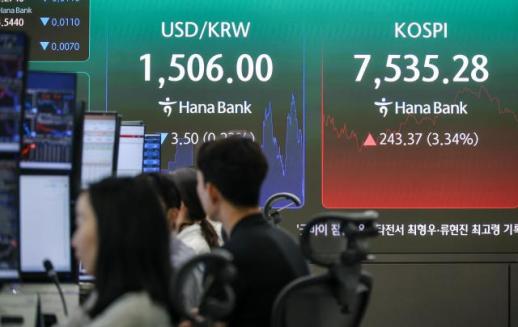 Lee orders swift measures for single-stock leveraged ETFs amid market volatility SEOUL, July 15 (AJP) - President Lee Jae Myung on Wednesday ordered financial authorities and the Korea Exchange to swiftly draw up measures for leveraged exchange-traded funds (ETFs) linked to Samsung Electronics and SK hynix amid concerns over heightened stock-market volatility. The matter is expected to be discussed Thursday at a meeting of South Korea's four main economic and financial authorities, commonly known as the F4, as regulators consider stronger protection for investors. The F4 brings together the Ministry of Economy and Finance, the Bank of Korea, the Financial Services Commission and the Financial Supervisory Service. Lee raised the issue during a joint government policy briefing at Cheong Wa Dae, asking Financial Supervisory Service governor Lee Chan-jin about the controversy involving single-stock leveraged ETFs. The governor admitted the regulator's responsibility as a market supervisor. Lee then turned to Korea Exchange chairman Jeong Eun-bo and asked officials to prepare supplementary measures without delay. "Please swiftly draw up the necessary measures," Lee said, stressing that normalizing and strengthening the capital market remains his key policy priority. Single-stock leveraged ETFs, launched in the domestic market on May 27, amplified the daily price swings of individual stocks including those of the country's two biggest chipmakers. Their launch has sparked debate over whether heavy trading in these funds could make swings in the underlying stocks, related derivatives, and the broader market even bigger. Buy and sell sidecars have been triggered 36 times on the benchmark KOSPI so far this year, with 17 of those activations occurring since the leveraged ETFs were launched, according to news outlet Newsis. Five of the 13 circuit breakers activated across the KOSPI and junior KOSDAQ since 2000 have also occurred since May 27. The figures show that the launch of these products coincided with a period of unusually sharp market moves, but do not by themselves establish that the ETFs directly caused the trading halts. Authorities are expected to examine the funds' trading structure, liquidity management, their interaction with spot and derivatives markets and the risk of losses among individual investors. Kim Yong-beom, Lee's chief policy secretary, said last week that the government would closely review the products' market impact at the next F4 meeting and decide whether additional measures were needed. The FSS chief has previously expressed regret over the products' introduction, saying last month that the regulator should perhaps have taken stronger action before accepting their securities registration statements. The Financial Services Commission also held a closed-door meeting Tuesday with major brokerages and asset management companies to discuss potential safeguards. Financial firms, meanwhile, agreed this week to strengthen risk warnings tailored to investors' ages and portfolios, improve mandatory education for leveraged-product trading and consider raising minimum deposit requirements to curb excessive investment. The government's measures are likely to focus on tighter entry requirements, clearer risk disclosures and stronger liquidity and operational controls, with the broad direction expected to emerge after Thursday's F4 meeting. 2026-07-15 15:52:58
-
 2026 Korea Drone Expo hosts thrilling match INCHEON, July 15 (AJP) - A drone soccer match takes place during the Drone Soccer Grand Prix at the 2026 Korea Drone & UAM Expo at Songdo Convensia in Yeonsu District, Incheon, on July 15, 2026. 2026-07-15 15:50:43
-
 Drone soccer grand prix thrills in Incheon INCHEON, July 15 (AJP) - A Taiwanese player inspects a drone after a match against Hong Kong during the Drone Soccer Grand Prix at the 2026 Korea Drone & UAM Expo at Songdo Convensia in Yeonsu District, Incheon, on July 15, 2026. 2026-07-15 15:48:09
-
 Korea drone expo hosts thrilling match INCHEON, July 15 (AJP) - A Taiwanese player inspects a drone after a match against Hong Kong during the Drone Soccer Grand Prix at the 2026 Korea Drone & UAM Expo at Songdo Convensia in Yeonsu District, Incheon, on July 15, 2026. 2026-07-15 15:46:25
-
 Incheon hosts thrilling drone soccer match INCHEON, July 15 (AJP) - Hong Kong players compete against Taiwan during the Drone Soccer Grand Prix at the 2026 Korea Drone & UAM Expo at Songdo Convensia in Yeonsu District, Incheon, on July 15, 2026. 2026-07-15 15:44:12
-
Why Illegal Waste Dumping Continues: Inadequate Investigations Fuel Waste Crimes Recent evening news reports highlighted the illegal dumping of a massive amount of waste at a factory site in Asan, South Chungcheong Province, known as the '10,000-ton mountain of garbage.' According to criminal court rulings, the illegal dumping organization discharged approximately 11,000 tons of waste at this factory in just 73 days in 2021. They rented the land under the pretense of operating a 'mask factory' and systematically transported and dumped discarded fishing nets, plastic waste, and construction debris from various locations across the country. The operation involved a network of roles, including masterminds, waste producers, brokers, tenants, and transporters, indicating a structured environmental crime.While those involved received guilty verdicts, only the visible perpetrators, such as the tenant and transporters, faced punishment. The investigation failed to adequately identify the sources of the waste, the routes it took, and the key players, including the waste producers and brokers. Consequently, the landowner, who unknowingly leased the property, has suffered significant losses for five years while administrative and civil procedures regarding the responsibility for illegal waste disposal have progressed slowly.This issue is not isolated. A comprehensive survey by the Ministry of Environment in 2019 identified 235 locations across the country with waste mountains totaling approximately 1.2 million tons. Following this, the Waste Management Act was amended to significantly expand the responsibilities for illegal waste disposal. However, by July 2024, the number of identified waste mountains had surged to 493, with a total of 1.845 million tons.Article 48 of the Waste Management Act defines nine categories of individuals subject to corrective action orders, including those who generate improperly managed waste, contractors, waste producers, participants, collaborators, successors of rights and obligations, and landowners. While most parties are held accountable for their actions, landowners, who may have legally leased their property without any involvement in waste generation, can still be subject to corrective action orders. As a result, innocent landowners may face costs for waste disposal that can amount to several times, or even dozens of times, the rental income they received. To address this issue, a prioritization system for corrective action orders was established in 2025 to protect innocent landowners. Under this system, those who generated improperly managed waste are prioritized first, followed by contractors and waste producers, with landowners placed last.However, this prioritization only functions if the primary offenders are clearly identified. If the individuals responsible for generating improperly managed waste, contractors, and waste producers are not properly identified, the first and second priorities become effectively powerless, leaving the burden of responsibility on the third priority—landowners. Therefore, it is crucial to focus investigative and administrative resources on uncovering the full extent of the crime from the outset of illegal dumping incidents.Illegal waste dumping has evolved into a nationwide organized crime involving various cities and jurisdictions, with connections to organized crime groups and brokers. However, the investigative agencies typically handling these cases are usually the local police departments where the waste is discovered. These departments often lack the resources and expertise to conduct thorough investigations across jurisdictions, making it difficult to address the widespread illegal dumping perpetrated by organized groups. As a result, the same criminal organizations are often linked to multiple incidents, but only the individuals caught at the scene are prosecuted, leading to a cycle where the 'tail' is cut off while the 'body' escapes. This structure allows the profits from these crimes to outweigh the risks of punishment, explaining the recurring issue of waste mountains.In a 2016 case in Paju, the Gyeonggi Southern Provincial Police Agency, which has broader investigative authority, simultaneously investigated several illegal waste dumping incidents, uncovering the actions of the same criminal organization and the nationwide routes of waste movement. This resulted in multiple offenders being punished, and the affected landowners were able to recover a significant portion of their losses. In contrast, the Asan case was limited to the local police department's investigation, which only punished those caught on-site. Even similar crimes can have vastly different outcomes based on the jurisdiction and expertise of the investigation.There is potential to develop a nationwide investigative framework for environmental crimes, similar to the joint specialized investigation team established at the Uijeongbu District Prosecutors' Office. Given that illegal waste dumping occurs systematically across the country, a rapid establishment of a nationwide investigative system is essential. Pursuing and punishing criminals to hold them accountable for illegal waste dumping is not only a means of ensuring responsibility but also a way to protect innocent landowners. Connecting scattered incidents to reveal the full scope and profit structure of criminal organizations is necessary to eliminate the economic incentives for illegal dumping. Organized crime that spans the nation must be met with a corresponding nationwide investigative response.* This article has been translated by AI. 2026-07-15 15:44:00
-
Rising Burden of Home Loan Interest Rates as COFIX Increases for Three Consecutive Months The COFIX (Cost of Funds Index), a benchmark for variable interest rates on home loans in South Korea, has risen for three consecutive months, increasing the financial burden on borrowers.According to the Korea Federation of Banks, the COFIX for new loans in June was recorded at 3.05%, up 0.15 percentage points from the previous month’s rate of 2.90%.This marks the first time since January 2022, when it was 3.08%, that the new COFIX has surpassed the 3% threshold. The index has been on the rise since April.The balance-based COFIX increased from 2.89% to 2.94%, while the new balance-based COFIX rose from 2.50% to 2.54%.COFIX represents the weighted average interest rate of funds raised by eight major banks in South Korea. A decrease in COFIX indicates that banks can secure funds at lower interest rates, while an increase suggests the opposite.With the COFIX rising, borrowers, particularly those who have taken out loans under the “영끌족” (young people who borrow heavily), will face higher interest payments. Major banks are expected to reflect the newly announced COFIX rates in their variable interest rates for new home loans starting from the 16th.At KB Kookmin Bank, the variable interest rate for new loans based on the COFIX will increase from a range of 4.06% to 5.46% to a range of 4.07% to 5.47%. Similarly, the interest rate for jeonse loans (long-term lease loans backed by the Korea Housing Finance Corporation) will rise from 3.7% to 5.1% to 3.71% to 5.11%.Woori Bank will also see an increase in its variable interest rates for new loans based on the COFIX, from 4.37% to 5.57% to 4.38% to 5.58%.* This article has been translated by AI. 2026-07-15 15:44:00
-
National Assembly's Legislative Committee Approves Comprehensive Special Prosecutor Bill The National Assembly's Legislative and Judiciary Committee approved a comprehensive special prosecutor bill on July 15, led by the Democratic Party. The bill aims to extend the investigation period for three major special investigations, including those related to insurrection, Kim Geon-hee, and Chae Hae-byeong, and to expand the investigative personnel.Kim Seung-won, a Democratic Party member of the committee, announced during the full committee meeting, "We have prepared an alternative to the 'Partial Amendment to the Law on the Appointment of Special Prosecutors for the Investigation of Insurrection, Foreign Exchange, and State Affairs Manipulation by Yoon Seok-yeol and Kim Geon-hee,' which I co-sponsored with fellow Democratic Party member Kang Deuk-gu."He explained, "We have expanded the number of dispatched public officials from a maximum of 130 to 150, allowing for the investigation period to be extended by up to 30 days twice per session with presidential approval." If the bill passes the National Assembly, the investigation deadline is expected to be updated from July 24 to August 23.Additionally, he noted that the bill allows for the efficient investigation of the comprehensive special prosecutor by providing access to copies of records from the three major special investigations.Meanwhile, there was a heated debate among committee members regarding a proposed amendment to the Criminal Procedure Act that would abolish supplementary investigative powers. Within the ruling coalition, there are differing opinions on completely abolishing these powers while maintaining some exceptions for victim protection.Notably, members of the People Power Party boycotted the meeting in protest of the committee's composition.* This article has been translated by AI. 2026-07-15 15:40:00