


Latest by
-
 Seoul stocks soar as cooling U.S. inflation, chip optimism fuel broad rally SEOUL, July 15 (AJP) — South Korean stocks staged a powerful rebound Wednesday as softer-than-expected U.S. inflation and renewed optimism over the artificial intelligence semiconductor cycle triggered a broad-based buying spree led by SK hynix and Samsung Electronics. As of 9:57 a.m., the benchmark KOSPI surged 6.81 percent to 7,323.60, while the tech-heavy KOSDAQ jumped 5.39 percent to 826.24, recovering sharply after recent market volatility. The rally tracked overnight gains on Wall Street after U.S. inflation eased more than expected, tempering fears of further Federal Reserve rate hikes and reviving appetite for technology stocks. The Nasdaq Composite rose 0.90 percent and the S&P 500 gained 0.38 percent after the U.S. Consumer Price Index increased 3.5 percent in June from a year earlier, slowing from May's 4.2 percent and coming in below economists' expectations of 3.8 percent. Lower Treasury yields boosted risk appetite, particularly for semiconductor shares that continue to benefit from strong artificial intelligence investment. Leading the advance was SK hynix, whose U.S.-listed ADRs soared 27.29 percent overnight. Sentiment received an additional boost after Barclays initiated coverage with an Overweight rating and a $330 price target, arguing investors continue to underestimate the company's earnings potential as high-bandwidth memory prices strengthen and its leadership in AI memory widens. The upbeat outlook lifted semiconductor stocks globally. Nvidia climbed 4.06 percent, Micron Technology gained 4.92 percent, Sandisk advanced 5.01 percent and the Philadelphia Semiconductor Index rose 2.54 percent. The momentum quickly spilled into Seoul. SK hynix jumped 11.19 percent to 2,127,000 won, while Samsung Electronics gained 6.18 percent to 279,250 won. The rally extended throughout the broader SK and Samsung groups. SK Square, SK hynix's largest shareholder, surged 16.72 percent to 1,389,000 won. Samsung Electro-Mechanics climbed 9.37 percent, Samsung Electronics preferred shares rose 6.75 percent, Samsung Life Insurance gained 7.89 percent, Samsung C&T added 4.94 percent and Samsung Biologics advanced 2.92 percent. Cyclical sectors also joined the rally. Hyundai Motor rose 2.47 percent and Kia added 3.22 percent, while LG Energy Solution gained 4.50 percent. HD Hyundai Heavy Industries advanced 2.84 percent and Doosan Enerbility climbed 4.37 percent. Financial stocks posted comparatively modest gains, with KB Financial Group rising 1.00 percent and Shinhan Financial Group adding 2.21 percent. Investor sentiment also improved after U.S. President Donald Trump withdrew a proposal to impose transit fees on commercial vessels passing through the Strait of Hormuz, easing concerns over another escalation in Middle East shipping risks and raising hopes for renewed diplomatic negotiations. Attention is now turning to earnings from Dutch chip equipment maker ASML later Wednesday and Taiwan Semiconductor Manufacturing Co. on Thursday, with investors looking for fresh signals on the sustainability of AI-driven semiconductor demand. Elsewhere in Asia, Japan's Nikkei 225 gained 0.45 percent while Shanghai's Composite Index rose 1.4 percent. The Korean won strengthened sharply to 1,488.6 per U.S. dollar 2026-07-15 10:39:43
-
 South Korean action-packed thriller stays atop Netflix's global non-English TV chart SEOUL, July 15 (AJP) - SBS' latest drama series, "Agent Kim Reactivated," which is also available on Netflix, remained the global streaming giant's most-watched non-English TV show for the second consecutive week. According to the latest chart released by Netflix's rankings website Tudum on Wednesday, the action-packed revenge thriller garnered 9.1 million views for the week ending Sunday, staying at the top of the chart after its first episode aired late last month. "Agent Kim Reactivated," whose first episode aired on June 26, also ranked as the No. 1 show in some 22 countries this week and made the top 10 in 72 countries around the world. The 10-episode series stars So Ji-sub as a seemingly ordinary father who is forced to return to his life as a secret agent after his daughter goes missing, with two special episodes added after it became an instant hit shortly after its release. Another hit South Korean drama, "Teach You a Lesson," remained at No. 2 with 3.6 million views after relinquishing the top spot, which it had held for several weeks. The school-themed drama was followed by the South African telenovela "The Polygamist," the Polish hostage thriller "Human Vapor," and the Mexican mystery thriller "I'm Not Afraid." 2026-07-15 10:39:19
-
 Economic Sector Warns 3.7% Minimum Wage Increase in 2027 Could Hurt Youth Jobs and Small Businesses The economic sector has expressed concerns over the final decision to set the minimum wage for 2027 at 10,700 won per hour.On July 15, the Korea Economic Association stated, "Given the dual challenges of sluggish sales and rising costs faced by small businesses and self-employed individuals due to high exchange rates and inflation, we are disappointed by the decision to set next year's minimum wage at 10,700 won." They added, "It is particularly unfortunate that the differentiated application of minimum wage for sectors like hospitality and food service, which have reached their payment capacity limits, was not realized."The Minimum Wage Commission held its 14th plenary meeting the previous day and decided to raise the minimum wage by 3.7% (380 won) from this year, surpassing last year's increase rate of 2.9%.The Korea Economic Association warned, "This decision is expected to exacerbate the difficulties faced by small businesses and self-employed individuals, and it will negatively impact job opportunities for vulnerable groups such as youth and low-income workers who are directly affected by the minimum wage."They further expressed hope for a more rational minimum wage determination process in the future, advocating for the institutionalization of differentiated applications by industry and prioritizing employers' payment capacity and productivity in the decision-making process.The Korea Employers Federation also pointed out immediately after the minimum wage decision that, considering the challenging management realities and payment capacity limits of small and medium-sized enterprises and small businesses, the wage should have been frozen.They added, "Despite the accumulated minimum wage increases leading to over 30% of certain sectors paying below the minimum wage, we express deep regret that a single minimum wage will be applied across all sectors again next year, given the significantly low acceptance in the field."* This article has been translated by AI. 2026-07-15 10:36:00
-
Hanmi Semiconductor Surges 26% After Strong Q2 Earnings Driven by HBM Demand Hanmi Semiconductor's stock surged over 26% in early trading after the company reported second-quarter earnings that exceeded market expectations. The firm achieved its highest quarterly revenue to date, with an operating profit margin surpassing 50% for the first time, boosting investor sentiment.As of 10:29 a.m. on July 15, Hanmi Semiconductor shares were trading at 263,000 won, up 55,500 won (26.75%) from the previous day, according to the Korea Exchange.The company's strong performance, announced the previous day, is credited with driving the stock's rise. Hanmi Semiconductor reported consolidated revenue of 251.1 billion won for the second quarter, a 39.5% increase from the same period last year, marking its highest quarterly performance since its establishment. Operating profit reached 130.3 billion won, a 51.0% increase, surpassing market consensus of 121.0 billion won by about 8%, with an operating profit margin of 51.9%, exceeding 50% for the first time on a quarterly basis.The company attributed its improved performance to increased sales of TC bonders and micro-vision placement (MSVP) equipment for high-bandwidth memory (HBM), driven by expanded investments in artificial intelligence (AI) and ongoing capital expenditures by global semiconductor manufacturers.Additionally, positive sentiment from the U.S. market contributed to the recovery in investor confidence. The U.S. Consumer Price Index (CPI) for June, released on July 14 (local time), came in below market expectations, easing interest rate concerns. This led to increased buying activity in AI and semiconductor-related stocks on the New York Stock Exchange, which in turn boosted sentiment for domestic semiconductor equipment stocks, including Hanmi Semiconductor.* This article has been translated by AI. 2026-07-15 10:36:00
-
Korean National Tax Service Launches 10,000-Strong Delinquency Management Team to Track 130 Trillion Won The National Tax Service (NTS) is mobilizing a 10,000-member delinquency management team to verify the status of 130 trillion won in tax delinquencies. The agency aims to enhance the efficiency of national revenue management by establishing an integrated collection system for non-tax revenue, thereby preventing financial leaks.On July 15, during a departmental report meeting hosted by President Lee Jae-myung at the Blue House, the NTS presented its key initiatives for the second half of the year.The five main initiatives include: integrated collection of non-tax revenue, innovation in delinquency management, establishment of tax justice, inclusive support for livelihoods, and a major transition to artificial intelligence (AI) in tax administration.To evolve from a tax collection agency to an integrated revenue management institution, the NTS is pushing for the consolidation of non-tax revenue delinquency collection systems. Currently, non-tax revenue delinquencies are managed separately by various ministries under over 300 laws. The NTS plans to centralize this management to improve efficiency in revenue oversight.To achieve this, the NTS aims to implement the integrated collection of non-tax revenue by 2027, accelerating the establishment of a solid operational foundation. The agency has signed memorandums of understanding with 17 ministries, including the National Police Agency and the Fair Trade Commission, to build a database of delinquent taxpayers based on the information gathered.An integrated management system will also be launched to link delinquency notifications and information from all ministries in real-time with the tax administration system. The NTS plans to expand dedicated organizations and personnel to consolidate non-tax revenue collection and prevent financial leaks.The delinquency management team will see significant expansion. In addition to the 500 members launched in March, the NTS will hire an additional 9,500 members for the tax and non-tax revenue delinquency management teams, deploying them across 133 tax offices nationwide. This initiative aims to establish a verification system for the 130 trillion won in delinquencies.Through the operation of the delinquency management team, the NTS expects to achieve tax justice, secure finances, create productive jobs, streamline delinquency management, and identify welfare beneficiaries. Among the 5,500 new hires from the first recruitment round, 41.8% are in their 20s and 30s.These personnel will conduct tailored verification based on the type and scale of delinquency, utilizing methods such as phone consultations or on-site checks with tax officials. Malicious high-value delinquents will be referred for investigation, while those facing financial difficulties will be connected to welfare support.The NTS will also strengthen its response to tax evasion to establish tax justice. The agency plans to focus on investigating tax evasion that exacerbates price instability, such as price collusion and hoarding, as well as unfair tax evasion that disrupts capital market order, including stock manipulation and tunneling, and offshore tax evasion that leads to national wealth outflow.Actions will be taken against corporate misuse of funds, such as using corporate-owned luxury homes or supercars as personal assets. The NTS will analyze reports submitted to the real estate tax evasion reporting center to address issues like circumventing loan regulations for property acquisition, irregular transactions following the reintroduction of multi-home taxation, and misuse of business loans.To support livelihoods, the NTS will provide liquidity assistance to struggling businesses and small enterprises affected by high exchange rates and fuel prices, including extending payment deadlines and expediting refunds. Additionally, the suspension of tax audits for small businesses with sales under 1 billion won will be extended until the end of the year.The NTS will expand AI integration across all areas of tax administration. Future plans include developing services where AI can automatically prepare tax returns based on inputs like financial statements and basic corporate information, as well as an AI system to automatically detect tax evasion.Im Kwang-hyun, Commissioner of the NTS, stated, “In the past six months, the changes initiated by removing unfair practices and privileges, starting from the voices of the people, have led to results in various fields. In the second half of the year, we will strive to exceed public expectations and support a leap forward for ‘irreplaceable Korea’ through the NTS.”* This article has been translated by AI. 2026-07-15 10:32:00
-
Iran Attacks Oil Shuttle Vessels, Triggering Supply Chain Alarm The shuttle vessels transporting oil through the Strait of Hormuz have become targets of Iranian attacks, raising alarms in the global oil supply chain.According to the Wall Street Journal (WSJ) on July 14, Iran attacked three supertankers operating in the Strait of Hormuz early that morning. Two of these vessels were identified as part of a shuttle fleet that repeatedly travels between Gulf ports and those outside the strait.The WSJ noted that the attack has undermined trust in shuttle operations, which were previously considered relatively safe compared to long-distance voyages.Shuttle vessels load oil from Gulf-producing countries, pass through the Strait of Hormuz, and then unload at ports outside the strait, such as Fujairah in the UAE or Sohar in Oman. From there, tankers from around the world transport the oil to refineries in countries like China and South Korea.Since Iran restricted access to the Strait of Hormuz, only a few shipowners have been willing to risk entering the strait, making shuttle vessels crucial for oil transportation. Their shorter routes reduce turnaround times and maximize the volume of oil exported outside the strait.According to S&P Global Energy, approximately 3.5 million barrels of oil have been transported outside the Strait of Hormuz daily this month through shuttle operations and ship-to-ship transfers. This accounts for about one-third of the daily oil volume exported through the strait.Shuttle operations, which began on a minimal scale in April, have gradually expanded into a large-scale transportation system, helping to mitigate shocks in the energy market. Many vessels have been escorted by the U.S. Navy, and U.S. fighter jets have responded to threats from fast boats.However, concerns are growing that safety cannot be guaranteed even with U.S. protection. Industry sources reported that anxiety among crew members has significantly increased following the death of an Indian sailor.Among the attacked vessels, the 'Mombasa B' was contracted by the UAE's state-owned oil company, Abu Dhabi National Oil Company (ADNOC), and had completed four shuttle operations. The deceased Indian sailor was also aboard this vessel.The 'Mombasa B' is part of a tanker fleet operated by Sinokor, the English name of the South Korean shipping company, Jangkum Shipping. Last year, Jangkum Shipping acquired dozens of tankers with funding from MSC, a global shipping giant, and has since collaborated with ADNOC for operations in the Gulf region.Sources familiar with the situation indicate that executives from Jangkum Shipping and MSC are concerned that the Iranian Revolutionary Guard may continue to target related vessels to disrupt shuttle operations. Reports suggest that at least two captains have recently refused to transit the Strait of Hormuz.Particularly, the use of cruise missiles, which are faster and more destructive than drones, has heightened the risks associated with operations. Cruise missiles provide crew members with relatively little time to respond.There are also concerns that the scope of Iran's attacks is expanding beyond the vicinity of the Strait of Hormuz. The 'Stolt Magnesium,' one of the attacked vessels, was struck about 500 kilometers from the strait in the waters off Oman while carrying Omani chemical products to Malaysia without passing through the Strait of Hormuz.Richard Matthews, head of research at ship brokerage E.A. Gibson, stated, "Both regular strait transits and shuttle operations are now under threat, which is a very serious issue for both the oil and shipping markets."* This article has been translated by AI. 2026-07-15 10:32:00
-
BNK Financial Group Announces Organizational Restructuring for Second Half of 2026 BNK Financial Group announced on July 15 that it has implemented an organizational restructuring for the second half of 2026.The restructuring focuses on three main areas: strengthening responses to the local economy, localizing environmental, social, and governance (ESG) strategies, and preparing for future finance. The aim is to systematically execute a specialized strategy for the Busan-Ulsan-Gyeongnam (Buul-Gyeong) region and expand productive financial support for key local industries.As part of this effort, the group will establish a 'Buul-Gyeong Economic Research Team' under the BNK Management Research Institute. This team will enhance the group's management strategy by providing in-depth analysis of the region's industrial and economic trends, serving as a think tank.Additionally, a 'Buul-Gyeong ESG Strategy Team' will be created to strengthen the connection between ESG strategies and the local community. The team plans to identify ESG tasks related to local issues and expand ESG activities in collaboration with the community, further solidifying its role as a financial group that promotes regional coexistence.The group will also establish a new system to respond to future finance. An 'AX Task Force' will be created to oversee the implementation of artificial intelligence (AI) initiatives, focusing on AI-driven business innovation and digital transformation. Through a 'Digital Asset Task Force,' the group aims to proactively respond to changes in the financial environment, including payment systems and digital assets, to secure future growth drivers.The bank subsidiaries will also enhance their support for key local industries. Busan Bank and Gyeongnam Bank will each establish an 'Industrial Finance Strategy Team.' This move is significant as it aims to strengthen the financial role in nurturing the local industrial ecosystem beyond simple loan provision. Busan Bank plans to build a financial support system based on regional value chains, focusing on strategic industries such as small modular reactors, defense, aerospace, and eco-friendly shipbuilding.Busan Bank will also create a 'Marine Finance Task Force' to secure specialized personnel in marine finance and expand financing for shipbuilding and marine infrastructure projects. The function of technology evaluation will be transferred to the Innovative Growth Finance Division to enhance investment support for ventures and startups.Gyeongnam Bank will establish a 'Business Succession Support Team' to address the generational transition needs of small and medium-sized enterprises.A BNK Financial Group official stated, "This organizational restructuring aims to concretize the management strategy for the second half of the year and strengthen the core competitiveness of the regional financial group. We will enhance our research capabilities centered on the Buul-Gyeong region, advance our ESG and AX/digital asset response systems, and expand productive finance for regional strategic industries to realize future finance that grows together with the community."* This article has been translated by AI. 2026-07-15 10:32:00
-
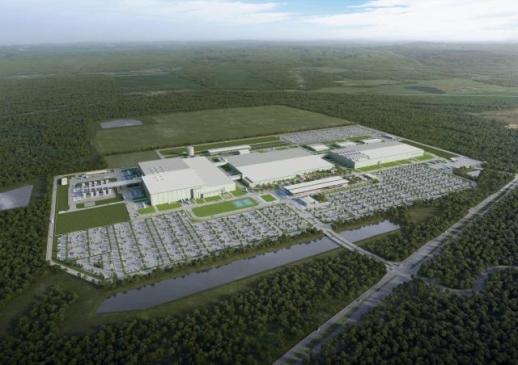 Hyundai-SK battery venture starts output at Georgia plant SEOUL, July 15 (AJP) - SK On and Hyundai Motor Group's battery joint venture has begun production at its northwest Georgia plant and started shipping electric-vehicle batteries to the automaker's flagship U.S. factory, local newspaper The Atlanta Journal-Constitution (AJC) reported on Tuesday (local time). The venture, known as Hyundai-SK Battery Manufacturing America (HSBMA), was established in 2023 with a combined $5 billion investment split evenly between the two companies. The plant in Bartow County is said to have entered mass production last month and has begun supplying cells to Hyundai Motor Group Metaplant America in Savannah. Sprawling across about 3 million square meters, the facility currently employs 3,500 workers and is designed for an annual capacity of 35 gigawatt-hours, enough to power roughly 300,000 electric vehicles a year. "HSBMA is in the early stages of production and plans to gradually scale up operations," a company spokesperson told AJC. Georgia extended $641 million in tax breaks and incentives to lure the project. Cells produced at the plant will be assembled into packs by Hyundai Mobis and supplied exclusively to Hyundai, Kia and Genesis EVs built in the United States, the group said when it unveiled the venture in April 2023. SK On already runs a separate battery plant, SK Battery America, elsewhere in the state. A rival joint venture between Hyundai and LG Energy Solution is also under construction near the Metaplant, though work stalled last year after a sweeping U.S. immigration raid led to the mass detention of Korean workers. 2026-07-15 10:26:47
-
South Korea's Finance Ministry Unveils Economic Growth Strategy for Second Half of 2026 The Ministry of Finance is gearing up to support economic stability, enhance growth momentum, address inequality, and strengthen global competitiveness as it rolls out its economic growth strategy for the second half of 2026. The plan aims to manage inflation within an annual rate of 3% while responding to industrial structural changes driven by artificial intelligence (AI) and green transition (GX), alongside promoting regional balanced development and public finance reforms.During a work report held at the Blue House on July 14, chaired by President Lee Jae-myung, the ministry outlined key initiatives for the second half of the year, including stabilizing the economy, enhancing potential growth rates, addressing inequality, and elevating South Korea's global economic standing. Heo Jang, the Second Vice Minister of Finance, stated, "We will actively support the economic growth strategy for the second half of 2026 to enhance potential growth rates while simultaneously promoting structural innovation and revitalizing the economy for the public."To manage consumer price inflation within 3% for the second half of the year, the government plans to launch the largest-ever discount events for agricultural, livestock, and fishery products, along with emergency imports of fresh eggs and increased supply of seafood to stabilize food prices.Considering international oil prices and supply-demand conditions, the government is also reviewing whether to extend fuel tax reductions and plans to freeze public utility rates, including electricity and gas, for the second half of the year. Additional energy vouchers for low-income households and fuel subsidies for truck drivers and farmers will continue. Furthermore, the government is pushing for amendments to the price stabilization law to introduce penalties for hoarding practices.In the employment sector, the government will develop tailored workforce training and job creation strategies in response to industrial structural changes due to AI transition (AX) and GX. It plans to analyze the causes of employment stagnation in sectors like manufacturing and construction and will sequentially announce sector-specific measures in collaboration with relevant ministries.Policies aimed at enhancing potential growth rates will also be actively pursued. The government will expedite the use of state-owned land and public feasibility studies to support the successful implementation of three mega-projects and will provide regional tax incentives for businesses and workers. Tax benefits for research and development (R&D), investment, and employment will be expanded, particularly in non-capital regions, and tax exemptions will be offered for relocation support payments made by companies to their employees.The nurturing of strategic industries such as AI, quantum technology, and defense will be prioritized. The Ministry of Finance plans to establish a strategic economic advisory group to identify leading projects in these sectors and expand budget and financial support. Initiatives to create an ultra-innovation economy fund, pilot projects for advanced technology insurance, and the establishment of a strategic export finance fund are also in the works to strengthen the commercialization and investment foundation for new industries. A separate green transition strategy will be developed to promote tax incentives and investment in future energy industries, including renewable energy, nuclear power, and next-generation power semiconductors.Policies addressing inequality will focus on supporting youth. The government aims to train over 200,000 AI specialists by 2030 and create more than 300,000 youth jobs and entrepreneurial opportunities through public and private initiatives. Plans also include expanding public rental housing for young people, introducing youth ISAs, and supporting asset formation for young workers in small and medium-sized enterprises. Additionally, the government will work on growth support for small businesses and improve the earned income tax credit (EITC) criteria for low-income working families.Tax, finance, and public sector reforms were also included in the work report. The government plans to reassess all tax expenditures from scratch to streamline inefficient tax relief systems and will establish a treasury management system utilizing AI and blockchain technology. The management of state-owned assets will shift from simple preservation and sale to value-creating operations, and public institutions will enhance functionality, expand AI utilization, and strengthen safety management. The government also intends to reform the innovative procurement system to enhance public procurement's role in generating initial demand for new technologies.Regional growth strategies have been identified as a key focus. The government plans to discover new growth engines in local areas and establish innovative ecosystems tailored to regional industrial characteristics. To this end, it will prepare a support package encompassing finance, taxation, regulation, technology, talent, and infrastructure, while expanding tax incentives for businesses and workers outside the capital region. Improvements will also be made to public procurement and public institution management evaluations to encourage regional economic revitalization and the hiring of local talent.* This article has been translated by AI. 2026-07-15 10:16:00
-
Celltrion Receives Approval for Phase 1 Clinical Trial of Tremfya Biosimilar Celltrion is set to begin a Phase 1 clinical trial for its biosimilar of the autoimmune disease treatment Tremfya (active ingredient: guselkumab). This move is part of the company's strategy to expand its biosimilar development and strengthen its portfolio in autoimmune disease treatments.On July 15, Celltrion announced that it has received approval from the Ministry of Food and Drug Safety for the investigational new drug (IND) application for its Tremfya biosimilar, designated CT-P68.Tremfya is a treatment that selectively inhibits the interleukin (IL)-23 protein involved in inflammation, and it is used for conditions such as plaque psoriasis, psoriatic arthritis, Crohn's disease, and ulcerative colitis.In this clinical trial, Celltrion plans to evaluate the safety and pharmacokinetic equivalence of CT-P68 compared to Tremfya in 258 healthy adults. Last year, global sales of Tremfya were reported to be approximately $5.155 billion (about 7.7 trillion won).Celltrion is also accelerating the expansion of its autoimmune disease treatment portfolio. The biosimilar of Entyvio (active ingredient: vedolizumab), CT-P45, has received approval for Phase 1 clinical trials in both the U.S. and South Korea. This treatment is an integrin inhibitor that selectively suppresses specific immune cells that migrate to the intestinal mucosa.Additionally, this year, Celltrion launched the autoimmune disease treatment Aptozma (active ingredient: tocilizumab) in Japan and has applied for product approval for the biosimilar of Cosentyx (secukinumab), CT-P55, in Canada, further expanding its global market reach. The company is also developing biosimilars for the cancer treatments Keytruda and Darzalex.A Celltrion representative stated, "We will accelerate the development of subsequent biosimilars to secure growth momentum and strengthen our dominance in the global autoimmune disease treatment market."Meanwhile, Celltrion announced on July 3 that it recorded consolidated sales of 1.3 trillion won and an operating profit of 430 billion won for the second quarter of 2026.* This article has been translated by AI. 2026-07-15 10:16:00