


Latest by
-
 Divergence in Land Sale Market Amid Loan Restrictions The land sale market in major reconstruction and redevelopment areas of Seoul is showing significant divergence. With tightened loan regulations making cash mobilization crucial, high-value land parcels in prime locations are being sold for around 4 billion won, while some areas are lowering prices after failing to attract buyers.On July 14, the Seoul city government and the construction industry reported that the Jamsil Jinju Apartment Reconstruction Association announced a re-bidding for one unit of 84 square meters at the Jamsil Raemian I-Park. Bidding will take place until July 24, with the highest bid selected through a competitive auction.Last month, the association offered six units, including two 59-square-meter units and four 84-square-meter units, through a public competitive bidding process. The starting prices were set at 3.08 billion won for the 59-square-meter units and 3.9 billion won for the 84-square-meter units. Despite the 84-square-meter price nearing 4 billion won, five of the six units found buyers in the first round of bidding.The only unit up for re-bidding is the 84-square-meter unit that did not sell. The association has maintained the starting price at 3.9 billion won, likely believing it remains competitive given that similar units are currently listed at prices between 4.3 billion and 4.6 billion won.In contrast, the Susaek 7 Redevelopment Association in Eunpyeong is struggling to sell its land parcels. In early June, the association listed an 84-square-meter parcel with a starting price of 1.5 billion won but failed to attract any bids. On June 24, the price was lowered to 1.45 billion won, but it still went unsold. In the latest announcement this month, the starting price was further reduced to 1.42 billion won, marking an 80 million won decrease in just a month.Land parcels are units that reconstruction and redevelopment associations retain for sale through public competitive bidding rather than general sales. Bidders can participate without a subscription account, and often do not need to meet membership qualifications, distinguishing this market from general sales.However, successful bidders must pay the deposit, interim payments, and final payments within a relatively short timeframe, necessitating strong financial capabilities. With recent loan restrictions and stricter debt service ratio (DSR) management, the importance of cash mobilization has increased, leading to a widening gap in demand based on location and price competitiveness.The recent land sale market has clearly differentiated between popular and less desirable areas. The 'Indeokwon Persville' in Uiwang City reportedly sold all 16 units offered last month. Similarly, 10 out of 12 units at 'Raemian La Grande' in Dongdaemun District were sold, with some 59-square-meter units fetching prices 170 million won above the minimum bid.Conversely, areas with lower location competitiveness or price appeal are experiencing repeated failures to sell, leading to price adjustments. Since land parcels require quicker payment schedules than regular sales, worsening loan conditions are likely to narrow the buyer pool to those with cash reserves.Ko Jong-wan, director of the Korea Asset Management Institute, stated, "The land sale market is more significantly affected by loan regulations due to its shorter financing period compared to regular sales. The recent loan restrictions and DSR enhancements have made it difficult for buyers lacking cash mobilization to enter the market, resulting in polarization based on location."* This article has been translated by AI. 2026-07-14 15:20:00
-
Concerns Grow Over Potential Loan Shutdown Amid Tightening Credit Conditions As the annual household loan targets for banks approach exhaustion, concerns are rising about a potential "loan shutdown" in the second half of the year. Major banks have begun to reduce limits on mortgage loans and have halted the acceptance of loan brokers, leading to fears that new loan applications may be completely closed off. According to the financial sector on July 14, the household loan growth targets set by financial authorities for this year are 0.59% for Kookmin Bank, 0.70% for Shinhan, Hana, and NH Nonghyup Banks, and 0.71% for Woori Bank. Reports indicate that only about 950 billion won remains to meet these annual targets. However, industry experts generally believe that a complete "shutdown" of mortgage and credit loans across all banks is unlikely. As existing loans are repaid, banks will regain capacity to issue new loans, and the remaining limits and growth rates vary by institution and product. This means the remaining target of 950 billion won cannot be simply interpreted as the amount available for new loans. Consequently, banks are managing their total loan volume by adjusting thresholds based on products, limits, and application channels rather than closing all loan windows simultaneously. This approach is referred to as "selective distribution." Kookmin, Shinhan, Hana, and NH Nonghyup Banks have restricted new applications through loan brokers while keeping some in-person and online applications open. Responses to these changes vary by product. Kookmin Bank recently reduced the limit for mortgage loans aimed at home purchases from 600 million won to 300 million won. Woori Bank lowered the new limit for overdraft accounts to 50 million won, while NH Nonghyup Bank restricted it to 50% of annual income. In contrast, Industrial Bank of Korea and some regional banks have maintained their credit loan regulations. This means that even for the same borrower, the availability of loans can differ based on the bank and the product or channel chosen. A concern arises that varying thresholds among banks may lead to a concentration of demand at financial institutions with more lenient policies. If one bank tightens its lending, demand may shift to another bank, which could then also impose stricter limits, creating a chain reaction. In fact, this month, NH Nonghyup Bank has already exhausted its loan broker volume. Some internet banks are experiencing a surge in credit loan applications, leading to "open runs" where applications close within hours. There is also a potential "balloon effect" where demand displaced from banks may shift to the second financial sector. According to the Financial Services Commission, household loans in the second financial sector increased by 700 billion won last month, a significant rise from the previous month's increase of 300 billion won. This trend is likely to continue in the second half of the year. Instead of all banks closing their doors simultaneously, those that reach their targets first and products with rapid growth may raise their thresholds, prompting other banks with high demand to follow suit. 2026-07-14 15:16:00
-
Minister Kim Yoon-deok Promises to Incorporate Public Input on Housing Supply Kim Yoon-deok, the Minister of Land, Infrastructure and Transport, stated that the government will reflect the voices from the field regarding measures to expand housing supply in its real estate policies.During the opening remarks at the 'Listening Session on Housing Supply Expansion' held at the Jeongdong 1928 Art Center in Jung-gu, Seoul, Minister Kim said, "Myself and the officials from the Ministry will listen sincerely to your words without saying anything except for greetings. We will do our best to ensure that the upcoming government announcement on real estate issues truly addresses the housing crisis."He added, "I hope today’s discussion will serve as an important foundation for reflecting the public's concerns about real estate in future policies as time goes on."About 60 participants attended the session, including Minister Kim, academics, housing construction industry representatives, financial sector members, and ordinary citizens. Professor Jin Mi-yun from Myongji University presented on the topic of expanding housing supply, while Honorary Professor Lee Yong-man from Hansung University moderated the discussion.Panelists included Assistant Professor Lee Hu-bin from Kangwon National University, Park Cheon-kyu, head of the Housing and Real Estate Research Division at the Korea Research Institute for Human Settlements, Senior Research Fellow Kim Deok-rye from the Korea Housing Industry Research Institute, Seon Mi-sook, a department head at Yonhap News, Kim Hyo-sun, a senior real estate expert at KB Kookmin Bank, Choi Eun-young, director of the Korea Urban Research Institute, Kim Jin-soo, CEO of JD Construction, Kim Yong-jin, head of the REITs Division at the Korea Land Trust, and activist Choi Ha-eun from the Snail Union. 2026-07-14 15:16:00
-
CJ Olive Networks to Build UHD and AI Broadcast Trucks CJ Olive Networks is set to support the transition to UHD and artificial intelligence (AI) in the domestic sports broadcasting market. Leveraging its years of experience in broadcast media system integration (SI), the company plans to implement a future-oriented sports broadcasting infrastructure model.On July 14, CJ Olive Networks announced that it has secured a project to build next-generation UHD and AI broadcast trucks for sports marketing firm Next Creative, aiming to enhance sports broadcasting infrastructure.CJ Olive Networks will comprehensively handle the entire process, from space-efficient design to broadcast system construction and various permitting tasks. Next Creative, which encompasses the entire sports and entertainment value chain, is responding to market trends that emphasize high-quality broadcasts.Sports broadcast trucks operate with numerous equipment and personnel simultaneously on-site. Therefore, precise system design, optimized workflows, and scalability for various broadcasting environments are crucial. The company plans to implement a system structure that enables smooth operation of multiple UHD cameras and on-site production and transmission.Additionally, the company will gradually introduce an AI-based production system. CJ Olive Networks aims to support a next-generation AI production environment that includes automatic highlight generation, slow-motion and key scene selection, and graphics generation based on game data.Through this initiative, CJ Olive Networks expects to reduce repetitive production tasks, allowing for faster and more precise broadcast operations, ultimately enhancing production competitiveness.Next Creative plans to leverage this broadcast truck construction to enhance its on-site production capabilities and solidify its competitive edge as a sports marketing company. The firm was previously selected as a 'Leading Company in the Sports Industry' by the Korea Sports Promotion Foundation.Shin Bong-ho, head of broadcasting and media at CJ Olive Networks, stated, “Through the construction of the Next Creative broadcast truck, we will create a differentiated sports broadcasting environment that combines UHD ultra-high definition and AI technology, supporting our clients' competitiveness in the rapidly changing broadcasting market.”Meanwhile, CJ Olive Networks is strengthening its market competitiveness in broadcasting and media IT services. The company plans to expand its services to encompass the entire process, including planning, consulting, development, network, and infrastructure construction, as seen in its project to enhance the broadcasting system at the esports venue Roll Park.* This article has been translated by AI. 2026-07-14 15:12:00
-
AI Weather Models Position South Korea as a Global Leader in Meteorology Accurate weather forecasting has long been a human aspiration. However, with the climate crisis leading to record rainfall, heatwaves, powerful typhoons, and extreme weather events, precise weather predictions have become crucial for protecting lives and the national economy. Now, AI is opening new possibilities in weather forecasting. AI, trained on vast amounts of weather data, is ushering in an era where typhoons and heavy rainfall can be analyzed more quickly, and future weather and climate can be predicted. At the forefront of this initiative is Im Mi-sun, the head of the Korea Meteorological Administration (KMA). The question is clear. Can South Korea become a global leader in AI-driven weather forecasting, predicting climate disasters and safeguarding its citizens and industries? AI is transforming weather predictions. People check the weather daily to determine if it will rain, how high temperatures will rise, and the path of approaching typhoons. However, weather forecasts are more than just daily information. Extreme weather events like heavy rainfall, heatwaves, typhoons, and blizzards have a significant impact on public safety and the economy. As the climate crisis intensifies, the importance of accurate weather forecasting grows. Extreme weather phenomena that cannot be explained by past experiences are becoming more frequent. Heavy rain can fall in a short time. Record heatwaves persist. Unexpected areas experience intense rainfall. The role of the KMA must also evolve. It should transition from merely informing the public about the weather to predicting climate disasters and supporting the government and citizens in their responses. Im Mi-sun emphasizes the potential of AI. AI can learn from decades of accumulated weather data and identify patterns that are difficult for humans to detect. It can quickly analyze vast amounts of data from satellites, radars, and ground observation stations. Utilizing AI opens new possibilities for enhancing the speed and accuracy of weather forecasting. The KMA in the AI era should not remain just a weather forecasting agency. It must become a national safety institution that predicts climate disasters and protects the lives and industries of South Korea. Developing a Korean AI weather and climate foundation model. The global AI competition is expanding beyond generative AI into scientific fields. An era is emerging where AI develops new drugs, discovers new materials, and predicts weather and climate. The field of meteorology is one of the areas where AI can develop the fastest. There is a wealth of long-accumulated data, and numerical forecasting technology using supercomputers has also advanced. A key policy being pursued by the KMA is the development of a Korean AI weather and climate foundation model. This model will analyze and predict various weather and climate information, from short-term forecasts to medium-term forecasts and seasonal outlooks. South Korea's weather environment is unique. Surrounded by water on three sides, it has many mountainous areas and significant seasonal variations. The weather characteristics of the metropolitan area, southern regions, east coast, and west coast differ. Simply using global AI weather models will not accurately predict South Korea's complex weather environment. This is why an AI model that learns from Korean weather data and reflects the topography and climate characteristics of the Korean Peninsula is necessary. If the Korean AI weather and climate foundation model succeeds, it can be utilized not only in weather forecasting but also in disaster management, agriculture, energy, and transportation. The goal is to secure independent AI weather forecasting capabilities by combining South Korea's weather data with AI technology. AI and supercomputers will work together to predict the weather. Traditional weather forecasting has developed around numerical forecasting models, which calculate future weather based on the physical laws and mathematical equations governing atmospheric movements. This requires immense computational power, which is why the KMA operates supercomputers. The emergence of AI opens new possibilities. AI can learn from vast historical weather data to quickly predict future weather. However, it is not about completely replacing existing numerical forecasting models with AI. It is essential to combine the strengths of both technologies. Numerical forecasting models excel at calculating physical changes in the atmosphere, while AI is adept at finding patterns in vast datasets and making rapid predictions. By combining AI with numerical forecasting models, both the speed and accuracy of weather predictions can be enhanced. The core of the AI weather revolution that Im Mi-sun must promote lies here: integrating AI technology with decades of accumulated weather forecasting capabilities in South Korea. AI, supercomputers, weather satellites, and radars must be connected into a unified forecasting ecosystem. Can we predict heavy rainfall more quickly? One of the biggest challenges in the climate crisis era is extreme heavy rainfall. When a massive amount of rain falls in a short time, it can lead to urban flooding and landslides. The issue is how quickly we can predict such hazardous weather. Sending warnings after the rain has started is insufficient to protect lives. We need to predict three key factors: when it will rain, where it will concentrate, and how much rain will fall. AI can analyze satellite, radar, and ground observation data in real-time to identify signs of hazardous weather. In situations where it is challenging for humans to analyze vast amounts of data, AI can support forecasters' judgments. AI can identify areas at high risk of heavy rainfall, predict precipitation amounts and movement paths, and relay risk information to local governments and emergency services. Residents can evacuate, and governments and local authorities can prepare for disasters. The ultimate goal of AI weather forecasting is not just to increase accuracy numbers but to provide citizens with more time to respond. AI predicts typhoon paths. Typhoons are a significant weather disaster that causes extensive damage in South Korea. The accuracy of predicting a typhoon's path and intensity can significantly affect the scale of the damage. Typhoons are influenced by numerous variables, including sea temperature, atmospheric flow, pressure, and wind. Even small changes can alter a typhoon's path and intensity. AI can analyze historical typhoon data and current observational information to predict their paths and intensities. It can locate the center of the typhoon, analyze its direction, and predict changes in wind radius and intensity. By utilizing both the results from existing numerical forecasting models and AI analysis, forecasters can make more informed decisions. However, AI should not make all the decisions. There are many uncertainties in weather phenomena, and AI can also make incorrect predictions. AI should support forecasters in making quicker and more accurate judgments, but the final decision and responsibility must remain with humans. This is why collaboration between humans and technology is crucial in the AI era. Transforming South Korea into a national weather data platform. The performance of AI depends on data. The quantity and quality of data available for AI weather forecasting determine its competitiveness. The KMA has accumulated vast amounts of data, including temperature, precipitation, wind, humidity, and various information from satellites, radars, oceans, and the upper atmosphere. This data must be systematically managed to be utilized by AI. The quality of the data must be improved, and different types of information must be interconnected. However, the KMA's data alone is insufficient. It is necessary to connect data from local governments, public institutions, universities, research organizations, and private companies. Weather information can be collected from roads and vehicles. New data can also be obtained from smart factories, agricultural facilities, ships, and aircraft. The goal is to create a massive weather data platform for all of South Korea. Securing good data is as important as developing a good AI model. An AI weather powerhouse begins with a data powerhouse. Weather information enhances industrial competitiveness. Weather information is not only essential for daily life but is also closely linked to industrial competitiveness. Agriculture is significantly affected by weather. Accurate weather information is necessary to determine when to plant seeds and harvest. The aviation and shipping industries face similar challenges. Information about wind, typhoons, fog, and turbulence directly impacts safety and operational efficiency. Construction, distribution, tourism, and insurance industries also require weather information. By utilizing AI, tailored weather services can be provided for different industries. For agriculture, weather information specific to crops can be offered. Airlines can receive information about turbulence and wind. Logistics companies can be alerted to the possibility of heavy snowfall and intense rainfall. Companies can make decisions regarding production, investment, transportation, and safety based on this information. AI weather information can become a new industrial infrastructure. The KMA's role should not end with merely providing weather information. It must evolve into a data platform that enhances the productivity and competitiveness of South Korea's industries. AI weather forecasting boosts the renewable energy sector. As the era of carbon neutrality unfolds, the importance of renewable energy sources like solar and wind power is increasing. However, renewable energy is heavily influenced by weather conditions. The amount of sunlight and wind strength directly affects power generation. If power generation cannot be accurately predicted, it becomes challenging to operate the power grid reliably. This is why AI weather forecasting is crucial. AI analyzes cloud cover, solar radiation, wind speed, and temperature to predict solar and wind power generation. Power agencies can manage supply and demand based on this information, and companies can enhance the operational efficiency of their generation facilities. AI weather information and the energy sector are becoming interconnected. For South Korea to succeed in the AI and energy transition, accurate weather forecasting capabilities are essential. The KMA's AI policies can enhance not only weather accuracy but also the nation's energy security and industrial competitiveness. The KMA itself will also transform with AI. The KMA is not only an institution developing AI weather technology but also an administrative body that must utilize AI itself. It has accumulated vast observational data, forecasting information, research data, and administrative data. AI can analyze this data and enhance productivity in its operations. It can find the information needed by forecasters, analyze extensive observational data, and automate repetitive administrative tasks. AI consultation services can also be provided to help citizens easily find the weather information they need. For example, farmers can inquire about the weather information relevant to their crops, while tourists can check the weather and potential hazards in their travel destinations. Businesses can seek climate information necessary for their industries. The goal is to transition from a digital meteorological agency to an AI-driven meteorological agency. By allowing AI to handle repetitive searches and analyses, forecasters and officials can focus more on professional judgments and public safety. We must cultivate AI talent. Even with excellent AI technology and supercomputers, success in AI innovation is unlikely without individuals who can utilize them. To become a leader in AI weather forecasting, we need talent that understands both meteorology and AI. Meteorologists must learn AI, and AI developers must understand weather and climate. We need interdisciplinary talent that connects both fields. Changes within the KMA are also crucial. Forecasters, researchers, and administrative staff must be able to utilize AI. AI education should be expanded, and collaboration with universities, research institutions, and businesses should be fostered. Opportunities should be provided for young AI talent to challenge themselves in the meteorological field. Opening up weather data can also support startups and developers in creating new services. The AI weather revolution cannot be achieved through technology alone. People and organizations must change together. Regions must also utilize AI weather information. Climate disasters manifest differently in various regions. Coastal areas face significant risks from typhoons and tsunamis, while mountainous regions must prepare for landslides and heavy snowfall. Cities are at risk of heavy rainfall and flooding, while rural areas are heavily affected by droughts, heatwaves, and cold damage. Providing the same weather information nationwide is insufficient. Customized AI weather services that reflect regional characteristics are necessary. AI can analyze local topography, past disaster information, and real-time weather data to predict areas at high risk of flooding or landslides. Local governments can use this information to develop evacuation and disaster response plans. In the AI local era, weather information is a critical infrastructure. If AI weather information is utilized in regional industries, agriculture, tourism, and disaster response, it can enhance both safety and competitiveness. Transitioning from a weather forecasting nation to a future-predicting nation. The KMA's most important role is to provide accurate weather information to the public. However, in the AI era, it must take a step further. Simply informing people that it will rain is not enough. It must also provide information on where and how much rain will fall and the potential for damage. Predicting a typhoon's path is not the end; it must also inform which risks may arise in specific regions and industries and when to respond. This is a shift from weather forecasting to impact forecasting. AI is a crucial technology that enables this transformation. By combining weather data, disaster information, and industrial and regional data, tailored information can be provided to citizens, the government, and businesses. The KMA in the AI era must evolve from merely informing about the weather to predicting future risks. South Korea must transition from a nation responding to climate disasters to one that predicts them. Im Mi-sun's task is not just to improve tomorrow's weather forecasts. It is to transform South Korea's climate disaster response system and industrial competitiveness through AI. The Korean AI weather and climate foundation model, risk weather prediction, utilization of weather data, support for renewable energy, and KMA AX all aim toward a single goal: to make AI South Korea's new weather and climate safety net. In the era of climate crisis, time is of the essence. We must know before heavy rainfall occurs. We must prepare before a typhoon arrives. We must respond before heatwaves and droughts worsen. Providing citizens, the government, and businesses with more time is the most important value of accurate weather forecasting. AI analyzes satellite and radar data. Supercomputers and numerical forecasting models calculate future atmospheric conditions. Forecasters synthesize vast amounts of information to make judgments. Governments and local authorities prepare for disasters, and citizens avoid risks. This is the new national safety system that the AI weather revolution must create. South Korea possesses world-class digital infrastructure, AI technology, and a wealth of accumulated weather data and numerical forecasting capabilities. By adding the Korean AI weather and climate foundation model and excellent talent, new possibilities will emerge. The KMA in the AI era must not remain just an agency that accurately forecasts the weather. It must become an institution that predicts climate disasters more quickly and provides citizens with more time to respond. It must connect weather data to industries, energy, agriculture, and local economies to create new value. From a weather forecasting agency to an AI meteorological agency that predicts future risks. From a South Korea that responds to climate disasters after they occur to one that uses AI to identify and prepare for risks in advance. Protecting citizens' lives and preparing for the future of South Korea's industries through AI. This is the starting point of the AI weather revolution that Im Mi-sun must lead. Im Mi-sun is a meteorological expert with extensive experience in weather forecasting and climate science. She has accumulated expertise across various key positions within the KMA, covering forecasting, observation, climate policy, and meteorological administration. Since taking office, she has been promoting innovations in weather and climate forecasting that combine AI and weather data, as well as enhancing responses to hazardous weather. The development of a Korean AI weather and climate foundation model, AI-based forecasting innovations, and expanding the industrial use of weather information are central to her agenda. The core task assigned to Im Mi-sun is to create a world-leading AI meteorological powerhouse that can predict climate disasters more quickly and protect the lives and industries of South Korea by integrating AI, supercomputers, weather satellites, and vast data.* This article has been translated by AI. 2026-07-14 15:12:00
-
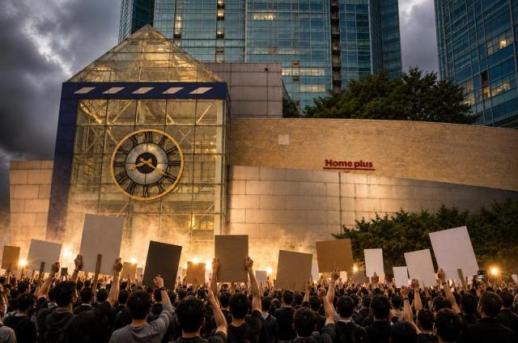 Homeplus goes dark, exposing the cost of Korea's biggest retail buyout SEOUL, July 14 (AJP) - Homeplus, once South Korea's second-largest hypermarket chain and a symbol of the country's modern retail boom, switched off the lights across its remaining stores on Monday after running out of cash, leaving roughly 12,000 employees, hundreds of suppliers and thousands of shopping mall tenants caught in what is becoming Korea's biggest retail collapse in decades. The nationwide shutdown marks the dramatic end of a company that once challenged E-mart for industry leadership and highlights the collision of three powerful forces reshaping the country's economy: the relentless rise of e-commerce, the long shadow cast by debt-fueled private-equity ownership and a bankruptcy system that often leaves workers and small businesses paying the highest price. Homeplus said it had exhausted the funds needed not only to purchase merchandise but also to pay electricity bills and other basic operating expenses, forcing it to suspend operations at its headquarters and all remaining hypermarkets. "Our operating funds are completely depleted, leaving us unable to cover merchandise payments or even the utility costs and other running expenses needed to keep stores open," the company said in a statement. Although tenants operating inside Homeplus shopping malls may continue trading independently if they choose, the closure effectively ends normal retail operations while the company waits to decide whether to appeal a court ruling that terminated its rehabilitation proceedings. The shutdown follows a Seoul court's July 3 decision to end Homeplus' corporate rehabilitation. The court left a narrow path for revival, saying it would reconsider if the retailer secured a 200 billion won ($133.9 million) emergency loan by the July 20 appeal deadline. With neither new financing nor a strategic investor emerging, that prospect has faded rapidly. Only two months ago, Homeplus still operated 67 stores after shutting 37 of its 104 outlets. Over the weekend, desperate clearance sales offering discounts of more than 50 percent drew long checkout lines but failed to generate enough cash to change the company's fortunes. Workers accuse MBK of abandoning the retailer Whatever hope remained disappeared Tuesday morning when MBK Partners abruptly canceled scheduled talks with Homeplus' labor union only hours before the first face-to-face meeting since the shutdown. Union leaders had planned to press MBK Vice Chairman Kim Kwang-il to provide emergency funding and support an appeal against the court's ruling. Instead, workers accused the buyout firm of abandoning both the retailer and its employees. "We still want to see Homeplus put back on its feet, and the best outcome would be a new owner through a fresh merger or acquisition," said Choi Cheol-han, general secretary of the Homeplus branch of the Korea Mart Labor Union. "For that to happen, extending the rehabilitation process beyond next week's deadline is absolutely essential." The union vowed to intensify protests after the canceled meeting. "An arrest warrant for MBK Chairman Kim Byung-ju and Vice Chairman Kim Kwang-il was sought once and dismissed, but we believe prosecutors should seek one again," Choi said. "Most importantly, the government needs to regulate leveraged buyouts more actively so other companies do not suffer the same fate." On Monday, union members rallied outside the former presidential compound in central Seoul, where one union leader attempted to approach the gates before police restrained him. Protesters accused the government of allowing speculative capital to destroy one of the country's largest retailers while standing aside. "The government says it will spend 500 billion won or even 1 trillion won after Homeplus is liquidated," Choi said. "But you should be paying for treatment while the patient is alive, not covering the funeral costs after death." Small merchants fear losing everything Employees are not the only victims. About 100 tenant merchants operating inside Homeplus shopping malls plan to stage their own protest Wednesday, arguing they had no role in decisions made by MBK Partners, Homeplus or creditors but now risk losing businesses built over decades. "We're different from the union. We invested our own money," a spokesperson for the National Association of Homeplus Tenant Merchants told AJP. "We had no say in the decisions made among MBK, Homeplus and Meritz, yet we may lose our livelihoods, which for many of us represent our life's savings." Many tenants said they still hope a new owner emerges rather than liquidation. "The company that exploited loopholes in the law bears responsibility," the spokesperson said. "But those who allowed those loopholes to exist also have responsibility. That's why we're protesting." From Samsung-Tesco success to private-equity casualty Homeplus' collapse began long before this year's cash crisis. The retailer started life in 1997 as Samsung C&T's retail business, opening its first hypermarket in Daegu before forming a joint venture with Britain's Tesco in 1999. The partnership transformed Homeplus into one of Korea's largest discount chains, competing head-to-head with Shinsegae's E-mart during the peak years of the hypermarket boom. At its height, the company operated roughly 140 stores nationwide. Everything changed in 2015. Struggling with financial problems at home, Tesco sold Homeplus to MBK Partners for approximately 7.2 trillion won, then the largest merger-and-acquisition deal in South Korean history. What was once celebrated as a landmark private-equity transaction has increasingly become a cautionary tale. Critics argue the debt used to finance the acquisition forced Homeplus into years of asset disposals just as Korean consumers shifted rapidly toward online shopping. While rivals invested heavily in digital platforms, logistics and store renovations, Homeplus was selling prime properties and using proceeds to reduce debt. By the time e-commerce permanently reshaped Korean retail, the company no longer had sufficient capital to reinvent itself. Who gets paid — and who doesn't If Homeplus ultimately files for bankruptcy rather than reviving rehabilitation, the consequences will extend far beyond employees. Under Korean insolvency law, a court-appointed receiver would liquidate company assets and distribute proceeds according to legal priority. Secured creditors would be repaid first. That hierarchy leaves many suppliers, particularly smaller businesses, facing potentially severe losses. Meritz Financial Group and other lenders hold collateral over many of Homeplus' properties, including roughly 1.3 trillion won in senior secured loans. Industry estimates suggest around 40 percent of Homeplus' roughly 800 suppliers are each owed more than 500 million won, with average exposure approaching 770 million won. Unlike rehabilitation, where unpaid invoices might eventually be recovered through continued business operations, bankruptcy would leave suppliers relying entirely on proceeds from asset sales after secured lenders are paid. Homeplus also owns approximately 62 store properties outright. If they are sold simultaneously, they could significantly increase supply in Korea's already sluggish commercial real estate market. "The unpaid bills owed to tenant businesses will become a very serious issue," said Jung Heung-jun, a professor specializing in labor relations at Seoul National University of Science and Technology. "The situation for employees may not be much easier either. Judging by MBK's conduct so far, I don't expect it to voluntarily assume moral responsibility beyond whatever legal obligations exist." "If roughly 12,000 workers lose their jobs, there is effectively no meaningful safety net beyond unemployment benefits," he added. "The prime properties have already largely been sold. Even if remaining stores are eventually acquired by companies such as E-mart or Lotte Mart, it's doubtful that would fully cover workers' wage claims." "MBK had opportunities to restore Homeplus' health," Jung said. "It is difficult to imagine the firm now accepting responsibility for preserving jobs at its own expense." Why Homeplus matters The collapse of Homeplus represents more than the failure of another retailer. It marks the end of an era for Korea's hypermarket industry while raising broader questions about the limits of leveraged buyouts, the social costs of corporate restructuring and whether existing insolvency rules adequately protect workers and small businesses. Meanwhile, the retail landscape has fundamentally changed. South Korea's online shopping market expanded to roughly 271 trillion won in 2025, with Coupang and Naver dominating grocery delivery and everyday consumer spending. E-mart and Lotte Mart survived by investing in private-label products, experiential retailing, omnichannel strategies and digital integration. Homeplus, burdened by acquisition debt and years of asset sales, lacked both the capital and the time to make the same transformation. The company said it will monitor developments until the July 20 appeal deadline before deciding whether to seek another chance at rehabilitation. Yet with MBK Partners and creditor Meritz Financial Group deadlocked over fresh financing, workers and merchants protesting in the streets, and confidence evaporating among suppliers, few industry observers believe the retailer can be revived in its current form. Even if a new owner eventually emerges, they say, Homeplus is unlikely ever again to become the national retail powerhouse that once stood shoulder to shoulder with E-mart. 2026-07-14 15:08:44
-
Song Young-gil Questions Need for Opposition to Preferred Voting System Song Young-gil, a candidate for the leadership of the Democratic Party of Korea, expressed skepticism about the need to oppose the recently approved preferred voting system. He stated, "President Lee Jae-myung also posted on X (formerly Twitter) that it was his initiative, so I wonder if there was really a need to oppose it."During a press briefing at a party meeting on the same day, Song remarked, "The preferred voting system passed as I argued it would."He added, "If no candidate receives a majority of votes at the party convention on August 17, we will have to vote again a week later in the heat of summer. It won't be easy to secure a time and place for that." He emphasized that if a one-on-one matchup occurs in the runoff, it could lead to intense competition between candidates.Earlier that day, the party's Supreme Council approved the preferred voting system. In response, Lee Seong-yun, a member of the pro-Lee faction, resigned from his position on the Supreme Council.The preferred voting system allows voters to list their top three preferred candidates on a single ballot. If a candidate receives a majority of first-choice votes in the first round, they are declared the winner. However, if no candidate achieves a majority, the votes are tallied for subsequent choices to determine the winner. Some analysts suggest this method may favor the pro-Lee faction.In response, former leader Jung Cheong-rae stated on Facebook that he "accepts it coolly." During the party convention process, Song Young-gil and former Prime Minister Kim Min-seok are seen as working to counter Jung.Meanwhile, the proposal for a youth supreme committee did not pass the Supreme Council. In relation to this, Song stated, "Regardless of the system, if I become party leader, I will appoint two members from the 2030 generation to the Supreme Committee." 2026-07-14 15:08:00
-
President Lee Conducts Real-Time Poll on High-Value Homes During Cabinet Meeting President Lee Jae-myung conducted a real-time public opinion poll on the burden of owning high-value homes during a Cabinet meeting on July 14. The poll utilized the comment feature of a YouTube live stream.He stated that the primary goal of the upcoming real estate tax reform, expected to be announced by the end of this month, is to normalize the tax system.During the meeting at the Blue House, after receiving a report on the 'Public Opinion Collection Plan on Real Estate Policy,' President Lee remarked, "Everyone agrees that those who own a single home for actual residence should not suffer. However, there is controversy over whether it is appropriate to impose the same burden on high-value homes, such as those worth over 10 billion won or the so-called 'one good house.'"He then suggested that viewers of the live stream indicate their opinions by pressing '1' if they believe high-value homes should face greater burdens, and '2' if they disagree.Shortly after, Lim Gi-geun, head of the Office for Government Policy Coordination, reported that "most comments were '1', with about 90% in favor." In response, President Lee noted, "It seems there is general agreement on strengthening the burden on high-value homes, even for those who own a single residence."President Lee also proposed a survey on what amount should classify a home as high-value, asking viewers to press '1' for homes over 1 billion won, '2' for over 2 billion won, and '3' for over 3 billion won.When Lim reported that many viewers indicated 3 billion won as the threshold, President Lee jokingly asked, "Isn't that too harsh? At a market value of 3 billion won, isn't the official price only about 1 billion won?"When Kim Yong-beom, head of the Policy Office, mentioned that many responded with 2 billion won, President Lee laughed again, saying, "If we set it at 2 billion won, we might be in big trouble."Regarding the discussion on real estate tax, President Lee emphasized, "It is not true that we are imposing taxes to control housing prices. The most important thing is equitable taxation, and controlling housing prices is a secondary effect."He added, "The current tax system is significantly distorted, which has led to factors that encourage real estate speculation. Normalizing this is our primary goal."* This article has been translated by AI. 2026-07-14 15:08:00
-
Court Suspends Designation of Kim Beom-seok as Coupang's Owner The court has temporarily suspended the Fair Trade Commission's designation of Kim Beom-seok as the 'owner' of Coupang Inc. The Seoul High Court's Administrative Division 7, led by Judge Kwon Soon-hyung, partially granted Coupang and Kim's request for a stay of the commission's designation on July 14. The court stated that the effect of the commission's designation change from May 1 would be suspended until 30 days after the ruling on the main case. The effect of the commission's request for document submission regarding Chairman Kim, made on April 8, will also be suspended for the same period. The court noted, "There is an urgent need to prevent irreparable harm to Coupang," adding, "There is no evidence to suggest that the suspension would be contrary to the public interest." On April 29, the Fair Trade Commission changed Coupang's designation from a corporate entity to an individual, identifying Chairman Kim as the owner. This decision was based on the involvement of Kim's brother, Kim Yoo-seok, in Coupang's management, which disqualified the company from being designated as a corporate entity under the exception criteria. Coupang argued that "Chairman Kim and his relatives do not hold shares in Korean affiliates, so there is no concern for private gain," and filed a lawsuit against the commission's decision.* This article has been translated by AI. 2026-07-14 15:08:00
-
Public Reaction Divided Over Yoo Ah-in's Appearance at 'Hope' Premiere Actor Yoo Ah-in, whose probation was confirmed following drug use charges, was spotted at the premiere of director Na Hong-jin's new film 'Hope.'On July 13, various social media platforms and online communities shared videos of Yoo attending the film's screening. The footage shows Yoo, wearing a cap pulled low, arriving with director Jang Jae-hyun of the film 'Burial.' Notably, the video captures Yoo greeting attendees in a relaxed manner.This sighting has garnered significant attention as Yoo prepares for his return to acting. Previously, he confirmed his participation in Jang's upcoming film 'Vampire.' Although casting rumors first emerged in December 2022, Jang initially denied them before Yoo's involvement was officially announced.Following the sighting, opinions on Yoo's return have been sharply divided online. Some users expressed disappointment, stating, 'Now I understand why Korean cinema is failing,' and 'There are many talented actors; does it have to be Yoo Ah-in?' Others countered, 'Why is Yoo Ah-in being held to stricter standards than other celebrities involved in drug controversies?' and 'He has been sentenced and punished; shouldn't he be allowed to return?' Yoo was released from Seoul Detention Center on February 2 after a second trial ruling. He faced charges for using propofol 181 times between 2020 and 2022 and illegally obtaining sleeping pills under another person's name 44 times. He is also accused of smoking marijuana in Los Angeles in 2023 and encouraging others to smoke as well.In the first trial, he received a one-year prison sentence and was taken into custody. However, the second trial overturned the original ruling and granted him probation, a decision later upheld by the Supreme Court.The film 'Vampire,' in which Yoo is set to star, is an occult story set against the backdrop of the Russian Orthodox Church, featuring a vampire hunter, a priest, and other intertwined characters. Alongside Yoo, actors Lee Sung-min and Yoon Kyung-ho will also appear. This film marks Jang Jae-hyun's first project since the blockbuster 'Burial' and is expected to serve as Yoo's comeback film.* This article has been translated by AI. 2026-07-14 15:04:00