


Latest by
-
 Portable Fans Evolve Amidst Japan's Heatwave, Cooling Plate Gadgets Gain Popularity Portable fans, once considered a seasonal necessity in South Korea and Japan, are evolving. As consumers face extreme heat, many find that traditional fans alone are insufficient for relief. Products equipped with 'cooling plates' that lower surface temperature upon contact with the skin are rapidly gaining traction. What was once seen as a cheap seasonal item is now competing as a small appliance with cooling capabilities.The Nihon Keizai Shimbun reported that in Japan's cooling goods market, products featuring cooling plates are becoming more popular than traditional portable fans that only blow air. These cooling plates contain a semiconductor known as a 'Peltier device,' which lowers the temperature on one side when an electric current passes through. These plates are attached to the center of the portable fan, the handle, or areas that touch the skin to reduce surface heat.The demand for cooling features among Japanese consumers is clear. With temperatures already exceeding 35 degrees Celsius, the need for effective heat management has become urgent. A 26-year-old office worker in Tokyo stated, "I can't stand this heat with just air blowing on me," explaining her switch to a portable fan with a cooling plate.Electronics companies are responding by launching products with enhanced cooling features. American appliance manufacturer Shark Ninja released a portable fan in May that can lower skin temperature by up to 9 degrees. The cooling temperature of the plate can be adjusted in two levels. Japanese retailer Bic Camera has also incorporated cooling plates into its own brand products this year. The competition is fierce among neck-worn cooling devices as well. Sony subsidiary Sony Thermotech introduced a higher-end model in April that improves cooling performance by 20% compared to previous products. Kenji Ito, president of Sony Thermotech, noted, "In Europe, where heatwaves have struck, we are experiencing stock shortages."Some companies are differentiating their products by enhancing airflow and additional features. Dyson launched a portable fan in early May that produces winds of up to 25 meters per second. Sharp introduced a product that uses its own ion generation technology to reduce sweat odors on clothing.The popularity of cooling plate products is reflected in sales data. E-commerce analytics firm Nint found that over half of the top 300 portable fans sold on major online platforms like Rakuten, Yahoo Shopping, and Amazon last year featured cooling plates. Sales of neck coolers with cooling plates have increased fivefold in 2023.As the variety of products expands, consumer purchasing behavior is also changing. A store manager at Japanese lifestyle retailer Loft remarked, "More customers are buying multiple units to choose from based on the situation."As heatwaves become more common, the competitive standards for portable fans are shifting. The focus is no longer solely on producing strong airflow but on how quickly and effectively a product can lower body heat.* This article has been translated by AI. 2026-07-14 13:44:00
-
Han Sung Corporation and Monami See Surge Amid Patriotic Buying Trend Han Sung Corporation and Monami are experiencing a strong rally as a 'patriotic buying' trend continues amid concerns over potential delisting.According to the Korea Exchange, as of 1:28 PM on July 14, Han Sung Corporation's stock rose by 1,370 won (14.73%) to 10,720 won compared to the previous trading day.At the same time, Monami's stock reached its daily limit, climbing 610 won (29.90%) to 2,650 won.Market analysts attribute the rise in stock prices to individual investors' patriotic buying efforts aimed at supporting the two companies, which have faced delisting concerns due to stricter market capitalization requirements for maintaining listings on the KOSPI.Starting this month, the minimum market capitalization requirement for maintaining a listing on the KOSDAQ has increased from 20 billion won to 30 billion won, raising concerns about the potential delisting of Han Sung Corporation and Monami, which had not met the new threshold.Following this, a movement emerged on social media and online communities encouraging the purchase of products from these companies and their stocks.Han Sung Corporation has gained a patriotic image after it was revealed that it has sponsored a concert for Korean War veterans through the Korea Defense Culture Promotion Association for 25 years. Consumers have been sharing proof of their product purchases, and investors are also confirming their stock purchases.Monami was highlighted as a key 'patriotic stock' during the boycott of Japanese products triggered by Japan's export restrictions on semiconductor materials in 2019. Recently, posts on social media have continued to emerge, showcasing purchases of Monami products and stock, indicating a surge in buying interest from individual investors.* This article has been translated by AI. 2026-07-14 13:44:00
-
New Chief Justice Administrator Noh Kyung-pil Vows to Shield Courts from External Pressures Noh Kyung-pil, the new Chief Justice Administrator (23rd Judicial Research and Training Institute), stated, "External pressures and burdens that make it difficult for judges to conduct independent trials and for court personnel to perform their duties are increasing." He emphasized his commitment to creating an environment where court members can focus on their work. During his inauguration ceremony on July 14 at the Supreme Court's Mugunghwa Hall in Seocho-gu, Seoul, Noh said, "To provide quality judicial services to the public, court personnel must work in a stable and healthy environment." He pledged to be a strong support for all court members to perform their duties with conviction, in accordance with the law and principles. He also highlighted the need to alleviate burdens in challenging positions, stating, "I will expand human and material resources and establish effective support measures to allow personnel to focus on their duties." Referring to the recent tragic death of Judge Shin Jong-oh, who was handling the appeal of the Kim Geon-hee case, Noh expressed his condolences, saying, "It was a heartbreaking event to lose a judge who had diligently performed his duties. I extend my deepest sympathies to all court personnel who have quietly endured these difficulties and pains." Noh expressed his intention to listen to the public's voice regarding judicial reforms, stating, "The significant changes we face in the judicial system should prompt us to reflect on whether we have adequately met the public's interest and expectations." He added, "I will begin my mission by attentively listening to each voice from the public, understanding their intentions, and reflecting them in our work. By upholding the values of the rule of law and the Constitution while communicating closely with the public, we can become a more trusted judiciary." Noh mentioned efforts to improve the management system for long-standing unresolved cases, introduce a system for managing expert procedures, increase trial personnel, and reform administrative distribution, stating, "We will guarantee the basic rights of the public through prompt and fair trials." He also noted that improving the judicial system using artificial intelligence (AI) will enhance the efficiency of trial work and significantly increase public access to justice. He pledged to pursue various improvements to ensure human rights protection and thorough trials within the criminal justice process. Noh took office four months after former Chief Justice Park Young-jae resigned in February in protest against the legislative push for the 'three judicial laws' (laws on distortion of law, judicial review, and increasing the number of Supreme Court justices). Noh was appointed as a judge in 1997 and has served as a research judge at the Supreme Court, a judge at the Seoul High Court, a chief judge at the Gwangju High Court, and a chief presiding judge at the Suwon High Court before being appointed as a Supreme Court Justice in August 2024.* This article has been translated by AI. 2026-07-14 13:36:00
-
 Seoul ups 2026 growth outlook to 3%, nominal growth at 30-yr high SEOUL, July 14 (AJP) -South Korea's economy is expected to expand 3 percent this year - its fastest pace in five years despite the fallout from the Middle East conflict - thanks to an unprecedented semiconductor boom, the government said Tuesday, sharply lifting its growth target from 2 percent. Nominal gross domestic product is projected to jump 12.3 percent this year, matching the strongest growth since 1996, as soaring semiconductor prices sharply improve South Korea's terms of trade and lift export prices, according to the Ministry of Finance and Economy's revised growth target and policy outline for the second half and 2027. The ministry said the improvement would push gross national income per capita close to the psychologically important $40,000 threshold while strengthening government finances. The upgraded forecast marks the strongest real GDP growth since the economy expanded 4.6 percent in 2021 during the post-pandemic recovery. Growth is expected to moderate to 2.2 percent in 2027, remaining slightly above the country's estimated potential growth rate. Korea's current-account surplus is now forecast to reach a record $290 billion this year, more than double last year's $123.1 billion and far above the ministry's previous estimate of $135 billion, reflecting booming semiconductor exports. The surplus is expected to remain robust at around $245 billion next year. Merchandise exports are projected to surge 40 percent this year before returning to a more sustainable 1 percent increase in 2027. The ministry attributed the dramatic upgrade primarily to the AI-led semiconductor cycle, noting that global memory prices have risen far faster than expected, lifting Korea's export deflator and improving national income beyond what real output growth alone would suggest. The headline strength nevertheless masks growing structural imbalances. The ministry warned that growth remains heavily concentrated in semiconductors and other information technology sectors, while non-IT industries and regional manufacturing bases continue to lag. Without broader diffusion of the chip boom, economic polarization between exports and domestic demand, IT and traditional industries, and the capital region and provincial economies could deepen further, it added. It also worried stronger nominal growth could fuel financial market volatility by attracting large foreign capital inflows into Korean equities while pushing up the won, interest rates and asset prices. Those developments could increase borrowing costs for vulnerable households and small businesses despite the stronger overall economy. Inflation is expected to average 2.6 percent this year, up from the ministry's previous estimate of 2.1 percent, as elevated oil prices linked to the Middle East conflict continue to feed into consumer prices before easing to 2.2 percent next year. Employment conditions are forecast to soften despite stronger output, with payrolls expected to increase by 150,000 this year, below last year's 190,000, reflecting delayed recovery in construction and lingering effects of the conflict on hiring. To prevent the semiconductor windfall from becoming a source of new economic imbalances, the government said the second-half policy agenda will focus on three pillars: maintaining macroeconomic stability after the Gulf war, raising the country's potential growth rate and addressing widening structural disparities. The strategy includes strengthening supply-chain resilience and energy security, accelerating three flagship investment projects centered on semiconductors, artificial intelligence data centers and physical AI, promoting regional growth outside the Seoul metropolitan area, and pursuing structural reforms in labor markets, finance and regulation. Additional tax revenue generated by the semiconductor boom will be directed toward younger generations, future growth industries, regional development and talent cultivation through a newly established Future Response Fund. The government also pledged to continue measures to stabilize consumer prices by extending tariff cuts on selected imported food products, expanding agricultural and seafood discount programs, keeping public utility charges broadly unchanged in the second half, and maintaining targeted fuel subsidies if necessary as geopolitical risks persist. 2026-07-14 13:30:04
-
Lee and Oh Highlight Divergent Views on Real Estate at Cabinet Meeting Oh Se-hoon, the Mayor of Seoul, attended a Cabinet meeting on July 14, where he attempted to explain his real estate supply measures but was firmly denied the opportunity to speak.Shortly after his victory in the June 3 mayoral election, Oh suggested a tea meeting with President Lee Jae-myung regarding real estate policy. However, analysis of the atmosphere at the Cabinet meeting indicated that this proposal was effectively rejected. The interactions during the meeting leaned more towards tension than collaboration.During the meeting, Oh requested to speak about his real estate supply measures. However, Prime Minister Han Seung-soo stated, "A national discussion forum is scheduled, and the Ministry of Land, Infrastructure and Transport, the Financial Services Commission, and the Ministry of Economy and Finance have their own agendas," adding, "We will receive your opinions in writing."When Oh requested to speak again, the Prime Minister reiterated, "We will accept it as originally planned," effectively shutting down any discussion.In response, Oh remarked, "It seems I won't be given the opportunity to speak today, so I have submitted a report to the policy chief, the Minister of Land, and the Deputy Prime Minister," stating, "I will rely on that report instead."At the end of the meeting, President Lee added, "When you submit the report, please include an update on how the Seoul reconstruction and redevelopment projects are progressing, and why there is a general perception of supply shortages."On the surface, this was a request for information. However, political circles do not view it merely as an administrative order. A Seoul city official stated that the explanation of policy was firmly blocked.This question can be interpreted as emphasizing accountability for why supply has decreased, rather than the city's claims of expanding supply.Political Message of the Speech BlockThis Cabinet meeting was Oh's third since the inauguration of the Lee Jae-myung administration. The first was the 24th Cabinet meeting held shortly after the President's inauguration, the second was the 37th Cabinet meeting addressing the Eulji training, and this was the 38th meeting.While Oh attended all three meetings as the Mayor of Seoul, it is unusual that he did not even get the chance to explain key issues this time.Real estate policy is an area where cooperation between the Seoul city government and the central government is absolutely necessary.While the Seoul city government is responsible for approving reconstruction and redevelopment, the government holds authority over financial, tax, and lending regulations. It is difficult to stabilize the real estate market if only one side takes action.Nevertheless, the fact that the mayor, who implements the most policies, was denied the opportunity to speak carries significant political symbolism.From 'Tea' to 'Written Submission'Not long ago, Oh publicly suggested to President Lee, "Let's have a cup of tea." At that time, there were expectations that there would be many areas for cooperation, including real estate, the 2027 World Youth Day in Seoul, tourism, and international events.However, the atmosphere at this Cabinet meeting was far from those expectations. The Prime Minister blocked discussion, and the President sent a message indicating he would first check the city's supply performance.This was more a scene of policy verification than policy consultation.Clash of Supply Expansion and Market Management TheoriesIn fact, the philosophies regarding real estate between President Lee and Mayor Oh have long been divergent.Oh believes that the shortage of supply is the main cause of rising housing prices and advocates for easing regulations on reconstruction and redevelopment to increase private supply.In contrast, the Lee Jae-myung administration places greater emphasis on managing speculative demand and stabilizing the market. While acknowledging the need for supply expansion, it argues for strengthening the public role and market management functions.The brief exchange revealed during this Cabinet meeting symbolically illustrates how these philosophical differences clash in actual policy settings.Politics as a Matter of 'Weight'Another interpretation has emerged in political circles. Oh has elevated his political status as a potential presidential candidate following his victory in the recent local elections, marking his fifth term as mayor of Seoul.In this context, if the mayor's remarks were to become lengthy and prominent during the Cabinet meeting, it could broadcast a message contrary to government policy nationwide, which would be a significant burden for President Lee.Conversely, for Oh, the Cabinet meeting represents the most important national stage to explain Seoul's policies directly.This scene leaves room for interpretation beyond disagreements over real estate policy, hinting at a subtle political tension aware of the upcoming political landscape.Oh's proposed 'tea meeting' has yet to materialize. However, the Cabinet meeting demonstrated that the atmosphere of collaboration over a cup of coffee is absent, revealing the current distance marked by differing policy philosophies and political calculations.Political attention has now shifted from the feasibility of the tea meeting to when the Lee Jae-myung administration and Oh Se-hoon will be able to sit at the same table regarding the critical issue of real estate. 2026-07-14 13:28:00
-
Vietnam National Football Team Completes Perfect Training Camp in South Korea The Vietnam national football team concluded its training camp in South Korea with a perfect record, defeating K League 1's Gangwon FC 2-1 in their final friendly match. Coach Kim Sang-sik evaluated the performance of key players and the potential of substitutes, effectively wrapping up the experimental phase ahead of the ASEAN Cup.On July 13, local reports indicated that the Vietnam team secured victory against Gangwon FC in Incheon. Previously, they had also triumphed over K League 3's Siheung FC and K League 2's Yongin FC, finishing the training camp with three consecutive wins.The match against Gangwon FC was particularly noteworthy as it featured a higher caliber of opponent compared to the previous two games. Coach Kim deployed several key players in the starting lineup to assess the squad and refine tactical strategies ahead of the ASEAN Cup. Vietnam started aggressively, with Nguyen Suan Son attempting a shot in the fifth minute after a quick counterattack, though it went over the crossbar. Nguyen Hoang Duc and Do Hoang Hien also aimed for the Gangwon goal with long-range efforts.Vietnam Stays Composed After Early SetbackVietnam conceded a penalty in the 14th minute, allowing Gangwon FC to take a 1-0 lead. However, the team maintained its attacking momentum. In the 21st minute, Nguyen Quang Hai made a skillful shot that hit the crossbar.The equalizer came in the 28th minute when Nguyen Tai Loc delivered an accurate cross, which Nguyen Suan Son finished to level the score. Coach Kim kept most of the starting lineup intact until early in the second half before gradually substituting in the remaining players. Local media noted that this process was not merely a friendly but a crucial final test to conclude the training camp.In the 62nd minute, Nguyen Ngoc Minh attempted a curling shot with his right foot, but it was saved by the Gangwon goalkeeper. Three minutes later, Vietnam scored the winning goal. A breakthrough on the right flank led to a pass to Pham Gia Hung in the penalty area, who finished accurately to secure a 2-1 victory for Vietnam.Transitioning from Experimentation to ASEAN Cup PreparationThroughout the training camp in South Korea, the Vietnam team faced progressively stronger opponents. Coach Kim assessed the players' ability to regain match rhythm after intense training, control the game, and adapt after conceding a goal. Local outlets suggested that while the training camp was a process of finding solutions, the upcoming match against Myanmar would serve as a final check before the main event. Coach Kim reportedly gathered valuable data on positional evaluations and tactical operations during this training period.After returning to Hanoi, the Vietnam team will travel to Thai Nguyen on July 17 to play an international friendly against Myanmar on July 18. The training camp in South Korea achieved dual objectives of results and assessments. The three consecutive victories boosted the players' confidence, and the comeback win against Gangwon FC provided Coach Kim with critical insights for final preparations ahead of the ASEAN Cup.Following the training camp, the Vietnam team will shift from extensive experimentation to enhancing their overall performance. Coach Kim Sang-sik's next challenge will be to finalize preparations to defend their title as Southeast Asian champions in the ASEAN Cup.* This article has been translated by AI. 2026-07-14 13:24:00
-
Trump Resumes Strikes on Iran, Criticized for Lack of Strategy President Donald Trump has resumed airstrikes and maritime blockades against Iran. This escalation has drawn criticism within the U.S. for lacking clear objectives and an exit strategy, with experts arguing that military pressure alone is insufficient to weaken Iran's control over the Strait of Hormuz.Political news outlet The Hill and a commentary from the Council on Foreign Relations (CFR) noted on July 13 that "while President Trump is ramping up his offensive, he has not provided a solution that could change the course of the war."Trump announced the restoration of a U.S.-led maritime blockade against Iran and stated that a 20% fee would be imposed on cargo passing through the Strait of Hormuz. He claims that the U.S. should be compensated for ensuring safe passage as the "guardian of the strait." However, this stance contradicts the U.S.'s previous position emphasizing the importance of free navigation in international waters. Last month, Secretary of State Marco Rubio criticized the possibility of Iran imposing tolls, stating, "No country can charge fees in international waters." Last week, Trump also officially notified Congress of the resumption of military operations against Iran. The administration views this as a restart of a 60-day period during which military actions can continue without congressional approval.Nevertheless, assessments indicate that airstrikes and blockades alone are unlikely to force Iran into submission. Despite suffering significant damage, Iran has maintained its grip on the Strait of Hormuz, which is a crucial leverage point for raising international oil prices and pressuring the U.S. and its Gulf allies.Airstrikes conducted by the U.S. and Israel since late February have not succeeded in toppling the Iranian regime or compelling it to abandon its nuclear and missile programs. A memorandum of understanding (MOU) signed last month has effectively collapsed amid ongoing attacks on Iranian vessels and U.S. retaliatory strikes.The economic burden is also increasing. Renewed clashes have caused international oil prices to surge by over 9% in a single day, leading to declines in the New York stock market. Rising oil prices could adversely affect the Trump administration as it approaches the midterm elections in November.The Hill analyzed that "the Trump administration continues to make tough announcements to project control over the situation, but the actual options are limited." The CFR commentary also pointed out that while airstrikes and blockades may weaken Iran's military capabilities to some extent, they are unlikely to neutralize Iran's ability to use the Strait of Hormuz as a tool to pressure the global economy.* This article has been translated by AI. 2026-07-14 13:16:00
-
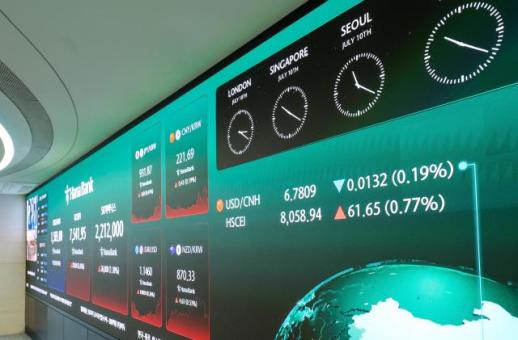 Foreigners pull out record $110 bn from Korean equities H1 SEOUL, July 14 (AJP) - Foreign pulled out $110 billion from Korea's red-hot stock market in the first six months, with nearly $31 billion taken out in June alone, data showed Tuesday. Inflow into the bond market following South Korea’s inclusion in the World Government Bond Index (WGBI) offered a marginal relief to the Korean won, according to the Bank of Korea. Foreign investment in South Korean securities posted a net outflow of $30.72 billion in June. Equity funds recorded a net outflow of $32.37 billion, while bond funds posted a net inflow of $1.65 billion. The equity outflow widened from $31.83 billion in May and marked the largest monthly withdrawal so far this year. The central bank attributed the outflow to weaker investor sentiment amid concerns over global artificial intelligence investment and foreign investors’ rebalancing of their Korean equity holdings following an extended market rally. The benchmark KOSPI fell 11.8 percent to 7,476 on July 10 from 8,476 at the end of May. Foreign funds continued to flow into bonds despite the maturity of government debt, supported by the gradual increase in South Korean bonds’ weighting in the WGBI. The weighting rose to 0.67 percent in June from 0.46 percent in May and 0.22 percent in April, when the country’s phased inclusion began. During the first six months of the year, foreign equity investment posted a cumulative net outflow of $110.21 billion, while bond investment recorded a net inflow of $9.28 billion. Total foreign investment in Korean securities consequently registered a net outflow of $100.93 billion during the period. The heavy equity outflows added downward pressure on the won in June, although the currency rebounded sharply this month. The won closed at 1,549.4 per dollar at the end of June, weakening from 1,507.9 at the end of May, before strengthening to 1,501.4 on July 10. Foreign selling of Korean shares and continued uncertainty in the Middle East drove the exchange rate higher last month, the BOK said. The won began recovering in July as weaker-than-expected U.S. employment indicators reduced the extent of the dollar’s gains. Compared with the end of May, the won had strengthened 0.4 percent against the dollar as of July 10, outperforming most major emerging-market currencies over the same period. Exchange-rate volatility, however, increased in June. The won’s average daily trading range widened to 7.6 won from 6.6 won in May, while its average daily fluctuation rate rose to 0.50 percent from 0.45 percent. In global markets, the dollar and major government bond yields rose as the Federal Reserve’s June policy meeting was interpreted as hawkish, strengthening expectations for further U.S. rate increases this year. The dollar index advanced 2.0 percent to 101.0 on July 10 from 98.9 at the end of May. The yield on the 10-year U.S. Treasury rose 12 basis points to 4.56 percent from 4.44 percent over the same period. South Korea’s 10-year government bond yield climbed 17 basis points to 4.24 percent, while the three-year yield edged up to 3.77 percent from 3.73 percent. The three-year currency swap rate rose 6 basis points to 3.36 percent, tracking the increase in government bond yields. The three-month won-dollar swap rate, meanwhile, fell 7 basis points to minus 0.99 percent as institutional investors’ demand for foreign-currency funding for overseas investment increased. Despite the foreign fund outflows, South Korean banks’ external foreign-currency borrowing conditions remained broadly stable. The premium on medium- and long-term overseas borrowing fell to 37 basis points in June from 44 basis points in May. The five-year credit default swap premium on South Korea’s foreign exchange stabilization bonds also declined to 23 basis points from 25 basis points. 2026-07-14 12:52:01
-
International Standardization of Alternative Testing Methods to Reduce Animal Testing Alternative testing methods that ensure safety and reliability while reducing animal testing are set to be discussed for international standardization. The government and experts will explore research outcomes and policy applications in response to regulatory changes by the Organisation for Economic Co-operation and Development (OECD).The National Institute of Environmental Research, under the Ministry of Climate, Energy and Environment, announced that it will co-host a "Expert Symposium on the Activation of Alternative Testing Methods" with the National Toxicology Research Institute on the morning of July 15 at the Hotel Intercity in Daejeon.Now in its third year, this symposium will focus on the theme of "Development of OECD International Standard Testing Methods and Changes in Global Regulatory Trends." More than 100 participants, including representatives from the OECD Secretariat, the Ministry of Climate, the National Institute of Environmental Research, and experts from academia and industry, are expected to attend.The event will be divided into four parts. The first three parts will feature presentations on the international standardization trends of alternative testing methods, the development of OECD testing guidelines, and policy application strategies. The final session will gather stakeholder opinions to discuss ways to expand the use of alternative testing methods.Since signing a memorandum of understanding to promote alternative testing methods in 2024, the National Institute of Environmental Research and the National Toxicology Research Institute have held annual joint symposiums to share trends in technology development, research outcomes, and the status of international standardization.Recently, the international community has been expanding the development and institutionalization of alternative testing methods that can ensure the reliability and safety of toxicity assessments while reducing animal testing. Consequently, discussions on establishing international standard testing methods and regulatory applications are actively taking place, particularly within the OECD.To respond to changes in international regulations, the National Institute of Environmental Research plans to continuously enhance the scientific validation of alternative testing methods and international cooperation, while also accelerating the establishment of a regulatory framework that allows research outcomes to be applied in safety management policies and industrial practices.Park Yeon-jae, head of the National Institute of Environmental Research, stated, "Alternative testing methods are an important means to enhance scientific reliability and international acceptance while meeting societal demands for animal welfare. I hope this symposium will serve as an opportunity to expand the international standardization of domestic research outcomes and increase policy applications."* This article has been translated by AI. 2026-07-14 12:08:00
-
Increase in Foreign Investment Leads to Rise in Individual Forex Regulation Violations The number of individuals penalized for failing to comply with reporting obligations during overseas investments and real estate transactions has increased for the fourth consecutive year. While the total number of violations of foreign exchange regulations decreased compared to the previous year, individual violations rose.According to the Financial Supervisory Service on July 14, the total number of foreign exchange regulation violations last year was 1,072, down by 65 from 1,137 the previous year. Among these, 629 cases resulted in fines, 350 received warnings, and 93 were reported to investigative agencies.By type of violator, corporations accounted for 631 cases, or 58.9%, while individuals represented 441 cases, or 41.1%. The number of individual violations has increased from 317 in 2022 to 341 in 2023, 386 in 2024, and 441 last year.In terms of transaction types, violations related to overseas direct investment were the most common, totaling 478 cases, or 44.6% of the total. This was followed by 161 cases of monetary loans, 97 cases of overseas real estate transactions, and 88 cases of securities trading.The most common violation was the failure to report new transactions, which accounted for 577 cases, more than half of the total. There were also 372 cases where individuals did not report changes in investment amounts, maturities, or ownership names. Additionally, there were 99 cases of failure to report after-the-fact.The Financial Supervisory Service explained that even if the investment amount is as low as $1 or if retained earnings are converted to capital without actual fund movement, the obligation to report still applies. Changes in the name of the local corporation, investment amount, location, or share transfers also require updated reporting. For overseas real estate, if a property is initially reported as jointly owned but later acquired solely, prior notification of the change is necessary. After selling real estate, a disposal report must be submitted within three months, in principle.* This article has been translated by AI. 2026-07-14 12:08:00