


Latest by
-
 Simmons' N32 Motion Bed Enters South Korea's First 5-Star Hotel Simmons' premium mattress brand N32 announced on July 14 that it has supplied its electric bed, the N32 Motion Bed, to the five-star hotel Banyan Tree Club & Spa Seoul. This marks the first time a motion bed has been officially installed in a major luxury hotel in South Korea, rather than as a temporary feature.The N32 Motion Bed is designed with five segmented plates that allow for precise angle adjustments based on the user's posture and sleep environment. It includes a safety sensor that activates safety mode if any obstruction is detected, and a safety cover to prevent children from accessing the device. Additionally, it features Bluetooth connectivity, A/C charging ports, and a memory function for storing preferred positions.Alongside the N32 Motion Bed, the N32 Foam Mattress and the Queensmiller Organic Vegan Pillow are also available. The N32 Foam Mattress combines breathable materials with natural plant-based fabrics to minimize skin irritation, while its high-elasticity foam provides stable support. The Queensmiller Organic Vegan Pillow offers a comfortable sleep environment with its Sensofill filling, special stitching techniques, and Sanprocare functional processing.Previously, N32 supplied its pet mattress, the N32 Chocomi, to the premium five-star hotel Signiel Busan.A representative from Banyan Tree Seoul stated, "Recent guests are increasingly seeking not just accommodation but also a restful and restorative experience, leading hotels to focus on creating comfortable sleep environments and related programs."* This article has been translated by AI. 2026-07-14 11:32:00
-
Truston Asset Management Calls for Review of Taekwang Industry's Value Enhancement Plan Truston Asset Management, the second-largest shareholder of Taekwang Industry, has sent an open letter to the company's management and independent board, demanding a comprehensive review of its value enhancement plan. The firm is urging an increase in the dividend payout ratio to 40% by 2030 and a stock split of at least 5-for-1. Truston also indicated that it would consider convening an extraordinary general meeting and legal action if its demands are not met.On July 14, Truston Asset Management announced that it had sent the open letter requesting a review of the "2026 Value Enhancement Plan" to Taekwang's management and independent board. The firm has requested written responses within 30 days and plans to determine its next steps based on the replies received.Truston Asset Management first questioned whether the independent board's oversight function had been effectively exercised. It publicly requested clarification on whether the independent board had raised any objections or made adjustments during the drafting process of the value enhancement plan disclosed on June 30, and whether there had been sufficient discussions regarding the management's "debt-free management principle" from a financial leverage perspective."The role of the independent board should not merely be to approve management's proposals," Truston stated, adding that the board must provide written proof that the oversight and monitoring promised during the June 18 board meeting were actually implemented.The firm also directly challenged the dividend policy. Truston argued that the undervaluation of Taekwang Industry is not due to market conditions or profitability, but rather a long-standing low shareholder return policy. It noted that Taekwang's return on equity (ROE) stands at 2.1%, higher than the industry average of 1.8%, yet even during its most profitable year in 2021, the price-to-book ratio (PBR) did not exceed 0.5.Furthermore, Truston pointed out that the average dividend payout ratio of the three listed companies in the Taekwang Group over the past decade is only 1.3%, while the payout ratio for unlisted affiliates owned by the controlling family is as high as 33%, criticizing this as a "double standard." The firm is demanding a roadmap to gradually increase the dividend payout ratio from 10% this year to the KOSPI average of 40% by 2030.Truston also urged a stock split of at least 5-for-1 to improve liquidity. It highlighted that the actual number of circulating shares of Taekwang Industry is about 230,000, which is only 1% of the KOSPI average, and the average daily trading turnover is below 0.2%, just one-fifth of the KOSPI average of 1.15%. Truston asserted that the company's belief that liquidity issues are unrelated to intrinsic value undermines the purpose of being listed and called for a stock split or bonus shares.Truston criticized the company's plan to use its treasury shares (24.4%) as funding for mergers and acquisitions (M&A). It argued that utilizing treasury shares in a situation where the PBR is at 0.22 dilutes the value of existing shareholders' stakes.In particular, Truston pointed out that the company has invested a total of 301.2 billion won in real estate-related projects over the past two years, including the purchase of the Dosan Park building (20 billion won), the headquarters of Heungkuk Life Insurance (51.2 billion won), and the Courtyard Marriott Namdaemun (50 billion won), as well as a loan to a real estate development company owned by the major shareholder's children (180 billion won). Truston criticized the decision to use 250 billion won worth of treasury shares for M&A instead of returning value to shareholders as contradictory.Truston Asset Management stated, "We will decide on our next steps after reviewing the responses from management and the independent board. If the issues are not resolved, we will consider all possible options, including convening an extraordinary general meeting and legal review regarding the fulfillment of directors' duties."* This article has been translated by AI. 2026-07-14 11:28:00
-
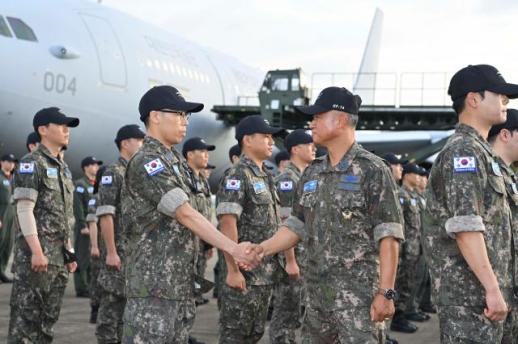 KF-16 fighters to fly nonstop to Australia for Pitch Black exercise SEOUL, July 14 (AJP) - South Korea’s Air Force will take part in Pitch Black 2026, a multinational air combat exercise hosted by the Royal Australian Air Force, at Darwin Air Base from Friday to Aug. 7, the Air Force said Tuesday. The exercise will bring together about 110 aircraft from 16 countries, including F-35A stealth fighters from the United States, Japan and Australia, Rafale fighters from India and Typhoon fighters from Spain and Germany. South Korea will send six KF-16 fighter jets from the 20th and 38th Fighter Wings, along with about 100 personnel, to conduct combined air operations with participating countries. Three KC-330 multirole aerial refueling and transport aircraft and three C-130 transport aircraft will support the deployment of fighter jets, troops and equipment. The KF-16 formation will depart from Seosan Air Base on Wednesday and fly about 5,900 kilometers to Australia over roughly seven and a half hours with aerial refueling support from the KC-330, without making a stopover. During the exercise, South Korean fighters will carry out various combined air operations with participating forces, including air interdiction, defensive counterair missions and aerial refueling. “Training with air forces from various countries will be a valuable opportunity to strengthen our combined operational capabilities and interoperability,” said Col. Ha Jung-mi, commander of the 20th Fighter Wing’s air operations group and head of the South Korean training contingent. 2026-07-14 11:24:08
-
Trump Invests Cryptocurrency Earnings in Stocks and Bonds, Portfolio Quadruples President Donald Trump has invested a significant portion of the earnings from his family's cryptocurrency ventures into traditional financial assets such as stocks and bonds.On July 13, Reuters analyzed recent financial disclosures from Trump, revealing that he earned over $1.4 billion (approximately 2.9 trillion won) from cryptocurrency businesses, including World Liberty Financial and Trump Meme Coin, in the past two years.As cryptocurrency profits have increased, Trump's holdings in stocks and bonds have reportedly quadrupled. By the end of 2024, his stock and bond holdings, previously valued between $225 million and $680 million, surged to between $730 million and $2.6 billion by the end of last year.Nine digital asset experts who reviewed Reuters' analysis believe that Trump does not view cryptocurrency as a primary asset class. Timothy Massad, head of the Digital Asset Policy Project at Harvard University, stated, "While President Trump has claimed he wants to make the U.S. the global capital of cryptocurrency, it appears he has personally profited from meme coins and World Liberty token sales and subsequently invested those earnings into traditional assets like stocks and bonds."Individual investors who backed Trump's cryptocurrency ventures have experienced mixed results. Reuters reported last month that investors in four major cryptocurrency projects sponsored by Trump incurred estimated losses of $2.3 billion by April.However, Trump has not completely divested from his cryptocurrency holdings. As of the end of last year, he retained 15.75 billion governance tokens from World Liberty Financial, with a reported value exceeding $50 million.Companies managing Trump's stakes in World Liberty Financial and Meme Coin held at least $160 million worth of Bitcoin and Ethereum by the end of last year. The value of other cryptocurrencies held by these companies reached up to $6 million, significantly higher than Trump's reported Ethereum holdings of $1 million to $5 million at the end of 2024.A spokesperson for the Trump Group stated that the financial disclosures demonstrate a solid financial position based on valuable assets, ample liquidity, and a conservative financial structure. However, they did not comment on the reasons for investing cryptocurrency earnings into stocks and bonds.* This article has been translated by AI. 2026-07-14 11:24:00
-
Obituaries of Key Figures Highlight Shifts in U.S. and Middle East Politics Last weekend, the deaths of two prominent figures were reported in the Middle East and the United States. One was Sheikh Hamad bin Khalifa Al Thani, the former Emir of Qatar, and the other was Lindsey Graham, a former U.S. Senator. Both individuals had significant ties to recent developments in the Middle East, drawing considerable attention to their obituaries.Sheikh Hamad was instrumental in transforming Qatar into one of the world's leading liquefied natural gas (LNG) powers. His diplomatic approach set Qatar apart from other Middle Eastern nations, as he maintained close security cooperation with the West while managing relationships with Israel and Iran. He also kept open channels of communication with groups like Hamas and the Taliban, focusing on mediating conflicts. Following his diplomatic legacy, Qatar has actively sought to mediate tensions between the U.S. and Iran amid recent military confrontations, earning praise from the international community for its role.However, some critics argue that this neutral stance contributed to the diplomatic crisis in 2017 when several Middle Eastern countries severed ties with Qatar. Nevertheless, Sheikh Hamad's pursuit of peace through diplomacy elevated the small nation of Qatar to a central position in international diplomacy.In contrast, Graham was known as a hawkish figure in U.S. politics, consistently advocating for a strong military deterrent. He pushed for a firm response against authoritarian regimes in Iran, Russia, and North Korea, and was reportedly a proponent of military action against Iran during the Trump administration, believing in peace through strength rather than negotiation.Yet, the current situation in the Middle East has not aligned with the visions held by either figure. Qatar, home to Al Udeid Air Base, the largest U.S. military installation overseas, has faced Iranian retaliation during the ongoing conflict, illustrating that even mediators are not immune to the realities of war.The U.S. is also grappling with the realization that military might alone cannot resolve complex issues. Despite initial optimism that the Iranian regime would collapse quickly, the conflict has persisted for over four months, with the risk of renewed hostilities increasing. Additionally, soaring international oil prices following the outbreak of war are straining the U.S. economy and the Trump administration's standing. This situation underscores that while military power can dominate the battlefield, it does not guarantee a political solution.Ultimately, the lessons from this Middle Eastern conflict suggest that neither the dovish nor hawkish approach holds all the answers. Dialogue and mediation alone cannot prevent aggression, nor can military force alone create lasting peace. What is needed is a pragmatic diplomatic strategy that flexibly combines deterrence and negotiation based on the circumstances.This lesson is particularly relevant for South Korea, especially as hardline regimes in neighboring countries like China, Russia, Japan, and North Korea gain influence. South Korea must maintain a robust security posture based on its advanced industries, particularly in semiconductors, and the U.S.-South Korea alliance, while also expanding diplomatic avenues for conflict resolution and cooperation. In a complex landscape involving U.S.-China competition, Middle Eastern conflicts, North Korean nuclear issues, and supply chain challenges, a balanced strategy centered on national interests is more crucial than ever.The passing of these two influential figures marks a turning point in international politics. However, their enduring legacy may lie not in the triumph of a single approach but in the understanding that navigating a multifaceted crisis requires a blend of strength, dialogue, principles, and flexibility in diplomacy.* This article has been translated by AI. 2026-07-14 11:24:00
-
K-Football Innovation Committee Takes Steps to Reform Governance Structure Efforts to correct the long-standing governance issues in South Korean football and establish a sustainable administrative system have reached a significant turning point. The K-Football Innovation Committee, launched under the Ministry of Culture, Sports and Tourism, achieved a timely and encouraging outcome during its second meeting on July 13 by initiating amendments to the regulations governing member sports organizations, which had been identified as a major obstacle to the upcoming presidential election of the Korea Football Association (KFA). The decision to flexibly revise the current rule stating that a new president must be elected within 60 days of a vacancy is a strong indication of the committee's commitment to breaking the cycle of opaque administration and rushed elections.As Park Ji-sung, co-chair of the K-Football Innovation Committee, noted after the meeting, the existing 60-day election rule is insufficient to fundamentally overhaul the KFA's abnormal governance and electoral system. In a climate of extreme distrust among fans towards the KFA, hastily selecting a leader through outdated methods would merely perpetuate past mistakes rather than foster renewal. The committee's agreement to begin administrative procedures on July 14 to allow for an extension of the election deadline in unavoidable circumstances is a welcome measure not only for football but also for other sports organizations suffering from prolonged vacancies.This move provides the Innovation Committee with valuable time to avoid the risks of a rushed election and to transform the KFA's structure. As Park emphasized, the commitment to not conduct elections in the same manner as before carries significant weight. The KFA presidential elections have faced intense criticism due to a closed electoral body and lack of transparency. Only by electing a proper leader in a lawful and fair environment can the next administration gain the public trust and legitimacy needed to push for bold reforms in football. The committee's cautious yet gradual approach, prioritizing the establishment of a solid institutional foundation over key issues like expanding the electoral body and introducing direct elections, reflects a realistic judgment considering administrative stability.The Innovation Committee's clear stance to focus on its core mission, while drawing a line on the selection process for the next national team coach and the National Assembly hearings, is also a positive development. The appointment of a coach should be resolved independently within the KFA's established systems and procedures, while the hearings aim to clarify past administrative errors of previous administrations, which falls outside the committee's vision for innovation. The committee's commitment to not getting sidetracked by immediate sensational issues and instead concentrating on amending the KFA's charter, improving electoral systems, and developing youth player training programs demonstrates a commendable attitude towards maintaining administrative professionalism and independence.Our expectations for the K-Football Innovation Committee extend beyond a one-time personnel change. For South Korean football to compete confidently on the global stage, a robust system ensuring transparency and fairness in administration must be firmly established. The push for regulatory amendments marks the first step in the KFA's efforts to regain fan trust and transform into a normal organization. The KFA should actively participate in the sports council's initiatives and accelerate the process of charter amendments and reform proposals. We strongly hope that the Innovation Committee will seize this rare opportunity for reform and set a historic milestone in changing the paradigm of football administration in South Korea. 2026-07-14 11:24:00
-
Home & Shopping Unveils New Corporate Identity for 15th Anniversary Home & Shopping announced on July 14 that it will unveil its new corporate identity (CI), titled 'CI Refine,' in celebration of its 15th anniversary.The home shopping network, which specializes in small businesses, officially launched on January 7, 2012, following test broadcasts and product sales in December 2011.According to the company, CI Refine embodies three core values under the theme 'The Answer Found by Scrutiny': starting from the essence of the customer (Essential), connecting with the customer's daily life (Connect), and becoming a source of customer pride (Confidence).The design reflects connectivity between the past and future, originality that enhances brand trust, and flexibility that allows for expansion.The key element, the dual dot (:), symbolizes the company's spirit of coexistence with small businesses and public interest, as well as a strong trust relationship with customers. The simple yet intuitive form aims to serve as a communication bridge that conveys various meanings of the Home & Shopping brand and platform across time.The brand's persona, which has been personified, signifies a commitment to becoming an authentic media commerce platform, characterized by consumers who make value-based decisions grounded in discerning consumption.A representative from Home & Shopping stated, 'CI Refine is the result of our efforts to focus on customer insight and clarify the essence of our business, which is the coexistence of small businesses. We aim to become a trusted platform that adds pride to customers' daily lives based on the values of connection and communication.'* This article has been translated by AI. 2026-07-14 11:20:00
-
Celltrion Receives AAA Certification from Customs for AEO Program Celltrion has been re-certified with the highest grade of 'AAA' in the Customs AEO (Authorized Economic Operator) program. On July 14, Celltrion announced that it received the AAA certification for both export and import sectors during a ceremony held at the Incheon Customs Headquarters. This re-certification ensures that Celltrion will maintain its AAA status until 2030. The AEO certification is awarded by the Customs Service based on a comprehensive review of compliance with regulations, internal control systems, financial soundness, and safety management, in accordance with international standards set by the World Customs Organization (WCO). Among the 773 companies currently certified as AEO, only 20 hold the AAA grade, with Celltrion being the sole company in the pharmaceutical and biopharmaceutical sector. Celltrion was recognized during the re-certification process for continuously enhancing its internal control and safety management systems. The company operates a supply chain management system linked with overseas logistics partners and has established an integrated self-inspection system to pre-check compliance with free trade agreements (FTAs) and customs legality. This system was previously highlighted as a best practice to the UK Customs during the Korea-UK AEO Mutual Recognition Agreement (MRA) collaboration process. Maintaining the AAA grade allows Celltrion to continue benefiting from customs administration advantages, such as exemptions from submitting import and export documentation, logistics inspections, and expedited customs clearance. The company expects to reduce customs clearance times for biopharmaceuticals and continue to enjoy expedited clearance benefits in the U.S., Japan, and the UK, where it has signed AEO mutual recognition agreements. Kang Seong-hwan, Head of Supply Chain Operations at Celltrion, stated, "Maintaining the AAA grade reaffirms our customs process and risk management capabilities. We will strive to operate a stable global supply chain and ensure timely delivery of pharmaceuticals based on our customs competitiveness." In addition, Celltrion recently announced its preliminary earnings, reporting a record quarterly revenue of 1.3 trillion won and an operating profit of 430 billion won for the second quarter of this year. The company attributed this growth to an increased share of high-revenue new biosimilar sales. Building on the profitability secured from its existing biosimilar business, Celltrion aims to expand its next-generation product portfolio while investing in the development of new drugs, including antibody-drug conjugates (ADCs), multi-antibodies, and obesity treatments, to diversify its growth avenues.* This article has been translated by AI. 2026-07-14 11:20:00
-
KOSPI Index Falls Below 7,000, Sparking Panic Among Investors The KOSPI index has fallen below 7,000, sending shockwaves through a market that had recently been discussing a potential rise to 10,000. Investors who had engaged in margin trading, often referred to as 'debt investing,' are now caught in a vicious cycle of forced selling. While stock markets naturally experience fluctuations, the current decline is alarming as it undermines market confidence itself.The immediate cause of the stock market drop is attributed to external factors. Concerns over prolonged monetary tightening in the U.S., debates over a slowdown in the AI investment cycle, and fears of a downturn in the semiconductor industry have all contributed. Additionally, instability in the Middle East has further chilled global investor sentiment. Foreign capital is quickly exiting the market, and major stocks are plummeting, exacerbating the index's decline.However, it is difficult to attribute the recent sharp drop solely to external shocks. The real issue lies in the excessive leverage accumulated during the bull market. While margin trading amplifies gains in a rising market, the opposite effect occurs when a downturn begins. When stock prices fall below a certain level, brokerage firms initiate forced sales due to insufficient collateral. This leads to a cascade of forced selling, further driving down stock prices and triggering additional forced sales. This is the phenomenon currently unfolding in the market.Individual investors are also facing mounting losses. Many believed that even large-cap stocks like Samsung Electronics and SK Hynix were safe investments and utilized margin trading. However, as these stocks have faltered, the scale of losses has far exceeded expectations. This serves as a stark reminder of how dangerous the optimism of 'borrowing to invest will ultimately pay off' can be.A more significant concern is market psychology. When trust in the stock market erodes, recovery takes much longer than when numbers alone decline. Investors, uncertain of when further declines may occur, are hoarding cash, while companies struggle to secure funding. The IPO market has frozen, and capital that should flow to venture and innovative companies is being stifled. The instability in financial markets could ultimately lead to a contraction in the real economy.The government and financial authorities must respond with a level-headed approach. Artificially propping up the market with stimulus measures could exacerbate distortions. However, inaction is not an option. Authorities need to monitor excessive forced selling to ensure it does not distort the market and reassess the credit management systems of brokerage firms. In particular, the phenomenon of excessive credit concentration in specific stocks and the risks associated with leveraged products should be re-evaluated. Achieving a balance between investor protection and market stability is essential.Investors must also learn from this situation. Strategies aimed at boosting returns through debt may seem appealing in a bull market but can be deadly in a bear market. Stock investment is about investing in corporate growth, not betting on leverage. Margin trading should only be used sparingly and within manageable limits.The collapse below the 7,000 mark should not be seen as just a numerical milestone. It should serve as a warning against excessive leverage, short-term speculation, and concentrated investments. The market will eventually recover, but that recovery can only occur on the foundation of transparent systems, a sound investment culture, and unwavering market trust. What is needed now is neither blind optimism nor excessive fear, but a rational prescription to restore the market's strength. 2026-07-14 11:20:00
-
Ruling Party Pressures Opposition to Form Committees Amid Boycott The Democratic Party is intensifying pressure on the People Power Party, which has declared a boycott over the formation of committees. This pressure has escalated beyond party leadership to include calls from committee members for cooperation in forming the committees.On July 14, members of the Democratic Party's Industry and Small Business Committee held a press conference at the National Assembly, stating, "The Democratic Party has made a significant decision to yield the chairmanship of the Industry Committee solely to revive the economy and ensure smooth National Assembly operations, yet the People Power Party continues its indiscriminate boycott."They added, "This is an irresponsible dereliction of duty. The future food sources and livelihood issues that the Industry Committee must address cannot be the subject of political strife."They emphasized, "The patience of the public has already reached its limit. If the irresponsible obstruction continues, the People Power Party will face severe historical condemnation as a party that abandons the people's livelihood."Members of the Welfare Committee also remarked, "We have been in a state of limbo without a chairperson until now. The People Power Party prioritizes party interests over the lives and livelihoods of the people, blocking legislative efforts while only focusing on political calculations."On the previous day, members of the Public Administration Committee argued that the investigation into the Jang Yun-ki incident should be conducted in the National Assembly. They stated, "Livelihood and security issues should not be subjects of political strife. As lawmakers, our minimum responsibility is not to halt the National Assembly but to resolve issues through it."Members of the Media Committee also criticized the People Power Party, saying, "We cannot delay the growth of South Korea. Do not hold the National Assembly hostage any longer."Meanwhile, Han Byeong-do, the acting party leader and floor leader of the Democratic Party, warned during a floor strategy meeting, "The People Power Party has decided to continue its National Assembly strike in the general meeting. This is the worst dereliction of duty regarding the people's livelihood in our constitutional history. If the baseless boycott of livelihood issues continues, we will demand the Speaker of the National Assembly, Jeong Seok, to convene a plenary session and take action to create a functioning National Assembly." 2026-07-14 11:16:00