


Latest by
-
 Woori Bank Reappointed as Foreign Currency Custodian for National Pension Service Woori Bank has successfully been reappointed as the foreign currency custodian for the National Pension Service (NPS), reaffirming its competitiveness in the domestic foreign exchange market.On July 14, Woori Bank announced that it signed a 'Foreign Currency Custodian Service Agreement and Service Level Agreement (SLA)' with the NPS. This contract was finalized after Woori Bank was selected as the final contractor in the foreign currency custodian bidding conducted by the NPS in March.Woori Bank was initially appointed as the foreign currency custodian in August 2021 and has maintained its partnership with the NPS through this reappointment.Under this contract, Woori Bank will handle key foreign currency custodian tasks for the NPS from August until July 2029, including foreign currency disbursement, foreign currency account management, foreign exchange transaction support, fund settlement, and foreign currency fund management. Following performance evaluations, the contract may be extended for up to two additional years on an annual basis.As of the end of April this year, the NPS's fund reserves amounted to approximately 1,670 trillion won, with 55.7% of that invested overseas. Woori Bank aims to enhance the NPS's overseas investment competitiveness through its extensive foreign exchange experience and global network.Woori Bank CEO Jeong Jin-wan stated, "This is a meaningful outcome based on the long-standing trust and cooperation between the NPS and Woori Bank. We will serve as a reliable financial partner supporting the NPS's global asset management, ensuring the safety and growth of the public's valuable retirement funds."* This article has been translated by AI. 2026-07-14 16:36:00
-
Reconstruction Projects in Seoul Solidify Major Construction Firms' Dominance In the second half of the year, the selection of construction companies for key reconstruction projects in Seoul's Apyeomokseong area (Apgujeong, Yeouido, Mokdong, Seongsu) is gaining momentum. Major construction firms are beginning to reveal their bidding strategies as significant projects like the Seongsu 2 District, Yeouido Shibum Apartments, and Mokdong 12 and 14 complexes enter the bidding process.According to the construction industry on the 14th, recent single bids for major projects such as the Yeouido Gwangjang Apartments 38-1 reconstruction (Hyundai Engineering & Construction), Mokhwa Apartments reconstruction (Samsung C&T), Mokdong 6 complex reconstruction (DL E&C), and Seongsu 3 District redevelopment (Samsung C&T) have resulted in repeated failures.With instances of only one major construction firm participating in the bidding process leading to negotiated contracts on the rise, industry experts suggest that leading construction companies are effectively establishing their dominance in specific project sites.In Yeouido, Samsung C&T and Hyundai Engineering & Construction are essentially dividing the key projects between them. Samsung C&T secured the construction rights for the Daegyo Apartments reconstruction, while Hyundai Engineering & Construction won the contract for the Hanyang Apartments.Currently, the Yeouido Gwangjang Apartments 38-1 reconstruction is expected to be automatically rejected as Hyundai Engineering & Construction is the only firm attending the second site briefing. The association plans to convert to a negotiated contract and select Hyundai Engineering & Construction as the preferred bidder, with a general meeting for construction company selection scheduled for September.Conversely, the Mokhwa Apartments faced a failed bid on the 9th, with only Samsung C&T participating. There are discussions about a potential re-bid leading to a negotiated contract.At the largest project site in Yeouido, the Shibum Apartments, both Samsung C&T and Hyundai Engineering & Construction are reportedly the most actively considering the project, solidifying a competitive landscape between the two companies.In the Seongsu Strategic Maintenance Zone, more than half of the outcomes have been determined. GS Engineering & Construction has been selected as the contractor for District 1, adopting the 'Xi' brand, while Lotte Engineering & Construction secured the construction rights for District 4 after competing with Daewoo Engineering & Construction, applying the 'Leel' brand.The remaining project sites are Districts 2 and 3. District 3 is currently undergoing re-bid procedures after Samsung C&T participated alone in the first bid. The only real competition appears to be in District 2, where DL E&C and IPARK Hyundai Industrial Development are expected to compete. DL E&C has expressed a strong willingness to secure contracts, and IPARK Hyundai Industrial Development is also reportedly evaluating the project's viability.In Mokdong, while the pace varies by complex, the competitive landscape among construction firms is gradually becoming clearer. Earlier, DL E&C secured the construction rights for Mokdong 6 complex in June, marking its entry as the first contractor in Mokdong.GS Engineering & Construction is considered the most likely candidate for Mokdong 12 complex, which will hold a site briefing on the 15th. It is highly probable that this will lead to a negotiated contract following a single bid.Mokdong 14 complex is one of the few sites where competition between DL E&C and Daewoo Engineering & Construction is anticipated. Additionally, Samsung C&T is reportedly continuing discussions with the association regarding Mokdong 13 complex.Among the major project sites in Apyeomokseong, the only areas expected to see actual competition are Seongsu 2 District and Mokdong 14 complex. The remaining projects have either been effectively resolved with single candidates or are dominated by specific construction firms. Industry experts suggest that as major construction firms establish their foothold first, it becomes increasingly difficult for latecomers to enter, leading to a restructuring of the bidding landscape centered around top-tier construction companies.Song Seung-hyun, CEO of Urban and Economic Research, stated, "A selective bidding strategy focused on high-profit core projects is being strengthened." He added, "Whereas previously, the competition involved ten major construction firms, it is now effectively being restructured around five or even three leading firms, reducing opportunities for other construction companies to participate."However, he noted that not only brand competitiveness but also trust with the association plays a crucial role in determining the success of bids. Song emphasized, "In maintenance projects, construction firms that have built long-term trust with association members and executives are likely to have an advantage. Firms that have consistently established relationships from the early stages of the project often gain a strategic edge in bidding competitions." 2026-07-14 16:36:00
-
Masayoshi Son: Fusion Energy Will Power AI Data Centers in 15 Years Masayoshi Son, chairman of SoftBank Group, proposed fusion energy as a long-term solution to meet the growing power demands of artificial intelligence (AI) data centers.On July 14, during the annual SoftBank World event in Tokyo, Son stated, "Fusion will become a primary source of new energy that is cheaper, cleaner, and safer on Earth." He questioned the sustainability of continued reliance on gas power, predicting that fusion would replace gas generation within 15 years.Son projected that by 2040, the global power capacity required for data centers could reach 3 terawatts (TW). To put this in perspective, 1 TW equals 1,000 gigawatts (GW), while the largest data centers currently operate at about 1 GW.He estimated that building a 1 TW data center would require approximately $5 trillion (about 7,479 trillion won), anticipating a significant increase in computing demand over the next decade due to the expansion of AI.Son expressed confidence that the revenue generated from AI services would sufficiently cover the costs of building data center infrastructure, dismissing market concerns about whether the hundreds of billions invested in AI hardware would translate into actual profits. He remarked, "Asking if AI is a bubble is a very foolish question posed by those who do not understand or properly utilize AI."Currently, Son believes that a substantial portion of data center power demand will still be met by natural gas, which accounts for over one-fifth of global electricity generation and emits less carbon than oil or coal, though it still produces greenhouse gases during combustion.Fusion technology harnesses the principles of energy production found in the sun and stars. Theoretically, it produces less carbon emissions and generates less long-lived radioactive waste compared to traditional nuclear fission methods. It is also considered to have a lower risk of accidents due to chain reactions.However, experts note that significant technical and financial challenges remain before fusion can become a commercially viable energy source. Bloomberg New Energy Finance (NEF) points out that only a few countries have successfully implemented the fundamental technologies required for fusion.* This article has been translated by AI. 2026-07-14 16:32:00
-
 South Korea launches AI network to power industrial robots SEOUL, July 14 (AJP) - South Korea has begun building a next-generation communication network designed to run physical artificial intelligence on factory and shipyard floors. The Ministry of Science and ICT and the National Information Society Agency (NIA) held a kickoff meeting for the "Hyper-AI Network" project on Tuesday, which fuses standalone 5G with an AI-based radio access network, known as AI-RAN. The pilot network aims to prove out physical AI services such as welding, painting and patrol robots in industrial settings, with the government planning to widen the scope to humanoids from 2027. The state will pour about 17.2 billion won ($11.4 million) into the effort, selecting two consortia led by SK Telecom and KT as lead operators. SK Telecom's consortium will build an AI-RAN pilot network at SK Incheon Petrochem and KG Mobility sites, testing services including a four-legged patrol robot, unmanned autonomous transport and a low-power mode for humanoids. The project adopts a multi-vendor approach, simultaneously deploying AI-RAN equipment from Samsung Electronics, Ericsson, Nokia and HFR to gauge performance gains against conventional networks. KT's consortium will develop an "AI core orchestrator" that analyses network data in real time and fixes faults automatically, verifying a stable communication environment for swarms of robots at shipyards. Working with HD Hyundai Samho, KT will trial three services — AI welding robots, AI painting robots and autonomous robots that run telecom facilities — to measure gains in productivity and safety. "For physical AI to be realised safely and reliably at industrial sites, a hyper-AI network supporting ultra-low-latency, high-reliability communication and high-capacity uplink is essential," NIA President Kim Hyung-chul said. 2026-07-14 16:28:41
-
Homeplus Suspends Operations, Card Issuers Respond Differently Homeplus has temporarily closed all its stores, prompting varied responses from the card issuers associated with its affinity cards. KB Kookmin Card has halted new issuances, while Shinhan Card has restricted online applications. In contrast, Samsung Card continues to operate without any special measures. According to the card industry on July 14, the companies managing Homeplus affinity cards include KB Kookmin Card, Shinhan Card, and Samsung Card. KB Kookmin Card suspended the issuance of new, additional, and replacement Homeplus affinity cards, as well as family card applications, last week. However, existing members can still renew their cards and request replacements for lost or damaged cards. Shinhan Card has not fully suspended operations but has deactivated the online application feature. Product information remains available on its website, and customers can still apply through phone channels. A Shinhan Card representative stated, "This measure is to prevent customers from applying for cards without knowing they cannot utilize Homeplus benefits. We are keeping the product available to reopen online applications based on court decisions and business conditions." Samsung Card is maintaining normal operations for card applications and usage. A Samsung Card representative noted, "No decision has been made regarding a suspension of issuance. Currently, all applications and usage are possible, and we will wait for the court's final judgment." However, since the primary benefits of Homeplus affinity cards are discounts and rewards associated with shopping at large stores, questions arise about the appropriateness of continuing new applications while all stores are temporarily closed. If consumers join without fully understanding the current operational status and potential limitations on benefits, it could lead to complaints regarding annual fees or service provision in the future. An industry insider remarked, "Halting new issuances is not the only solution, but it would be a more proactive response in terms of consumer protection to clearly inform new customers about the current situation and limit applications if necessary, regardless of waiting for the court's decision." Addressing the situation for existing members remains a challenge. While card companies maintain the usage and agreed-upon benefits, the closure of Homeplus stores significantly limits the scope of discounts and rewards. Currently, there are no separate measures for annual fee refunds or additional compensation, and if a card is canceled, the remaining annual fee will be refunded based on relevant criteria. Accumulated Homeplus points can be used at the still-operating Homeplus Express stores. On July 3, the Seoul Rehabilitation Court decided to terminate the rehabilitation process for Homeplus. If the company fails to secure necessary operating funds or a new buyer by July 20, it faces a high likelihood of entering bankruptcy proceedings. Should bankruptcy occur, card issuers will need to prepare follow-up measures regarding alternative benefits and the handling of existing points. 2026-07-14 16:24:00
-
Netmarble MNB Expands 'Kongya Restaurants' IP into New Territories Netmarble MNB's intellectual property (IP) character 'Kongya Restaurants' is demonstrating its potential for expansion into various business areas. After focusing on digital content and merchandise sales to build brand recognition, the company is now venturing into offline festivals, local government marketing, and global markets. The fanbase for Kongya Restaurants has grown to 160,000, largely through social media meme content.According to industry sources, Kongya Restaurants is recently broadening its offline activities in venues such as baseball stadiums and convenience stores. Last month, it held a collaborative pop-up event with the Doosan Bears at Jamsil Baseball Stadium and subsequently launched a Doosan Bears-themed convenience meal in partnership with CU.Netmarble MNB anticipates that the success achieved by Kongya Restaurants online will translate into successful offline expansion. The company reported that a pop-up store held in Yeongdeungpo last May, titled '2025 Vegetable Star Athletics Championship,' attracted a cumulative total of 150,000 visitors during the event. Merchandise sold out quickly, and messenger emojis reached the top spot in popularity among the 20-30 age group.In the second half of the year, the brand plans to engage in offline activities at university festivals and outdoor rock festivals, aiming to enhance brand affinity by interacting directly with audiences in these settings.Netmarble MNB is also pursuing brand partnerships and public projects. Recently, Kongya Restaurants was appointed as a promotional ambassador for the 'Promotion of Our Agricultural Products' campaign by the National Agricultural Cooperative Federation. The marketing strategy, which leverages the character's vegetable motif, has received positive feedback. Additionally, the company plans to conduct relay collaborations with industries such as beauty and dining in the latter half of the year.Furthermore, the company is developing public (B2G) marketing solutions in collaboration with local governments. Since last year, Kongya Restaurants has participated in local festivals in cities such as Gumi, Busan, and Gyeongju.Netmarble MNB is accelerating its plans for Kongya Restaurants' entry into international markets. Last month, Kongya Restaurants participated in 'Content Tokyo 2026,' the largest expo in Japan, as a representative of K-content selected by the Korea Creative Content Agency. The company expects the character's unique B-grade sensibility and relatability to resonate positively in overseas markets, particularly in Japan, known for its strong character culture.A Netmarble MNB representative stated, 'We are revitalizing local promotions by utilizing a character that is familiar and witty to the public, establishing ourselves as a versatile partner sought by both businesses and public institutions. We will continue to maintain business momentum through activities tailored to each brand's characteristics and limited-edition merchandise.'* This article has been translated by AI. 2026-07-14 16:24:00
-
Housing Supply Discussion: Jin Mi-yun Calls for Addressing Bottlenecks in Implementation The government held a listening discussion on expanding housing supply, where experts emphasized the need to identify the reasons for slow housing supply and enhance implementation.Jin Mi-yun, a professor at Myongji University, presented on the topic of expanding housing supply at the 'Listening Discussion on Housing Supply Expansion for National Housing Stability' held at the Jeongdong 1928 Art Center in Jung-gu, Seoul.Her presentation focused on what bottlenecks need to be addressed to connect the government's already proposed supply targets to actual construction and occupancy.She noted, "The process should flow in a cycle from permits to construction to sales to occupancy, but we are currently experiencing significant bottlenecks in the construction phase."As of May this year, the number of housing permits in the metropolitan area stood at 57,765, a decrease of about 14% compared to the recent five-year average of 67,100. Concerns have been raised that a slowdown in the supply flow from the permitting stage could lead to future shortages in construction and occupancy.Jin emphasized, "Financial and tax support is crucial for restoring the pipeline, and we need to carefully consider how to design this to avoid distorting excessive market expectations."The recovery of private redevelopment projects and housing supply has emerged as a key issue in supply measures. While redevelopment and reconstruction are major means to increase housing supply in urban areas, the pace of these projects has slowed due to regulations on relocation loans, rising construction costs, and decreased project viability.Additionally, the third new towns and public land supply are also under scrutiny. The third new towns, announced in 2018, have faced criticism for not meeting expectations in construction speed due to delays in land compensation, infrastructure development, and administrative procedures. Projects utilizing urban idle land, such as the Seoripul District, Taereung Country Club, Gwacheon Racecourse, and Yongsan International Business District, are also progressing slowly due to opposition from local governments and residents, as well as relocation issues.To stabilize the rental market, there are calls to discuss the roles of non-apartment housing and registered rental businesses. Villas, officetels, and urban-type housing can be supplied more quickly than apartments and can absorb rental demand from young and low-income households. However, the supply base has been significantly weakened due to the aftermath of rental fraud and financial and tax regulations.Jin stated, "The issue of supply is not just a problem for the construction industry; we need to diversify the housing supply ecosystem. In particular, more than half of the houses in our country are over 20 years old, making the revitalization of redevelopment projects necessary."Meanwhile, the government plans to continue public discussions on real estate-related topics, including housing finance and taxation, starting with this discussion. 2026-07-14 16:24:00
-
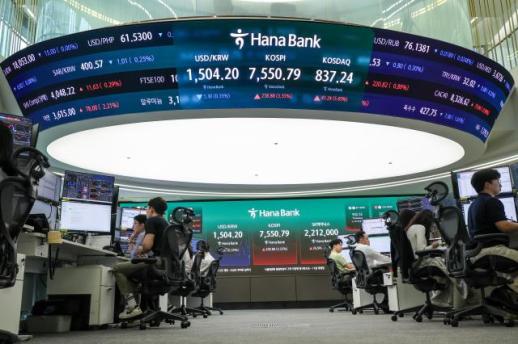 Tycoons' stock wealth falls 6 trln won without Samsung, SK chiefs SEOUL, July 14 (AJP) - The combined stock wealth of South Korea’s major business group chiefs jumped by more than 29 trillion won ($19.6 billion) in the second quarter, but the headline increase masked losses across most of the group as gains were overwhelmingly concentrated in Samsung Electronics Chairman Lee Jae-yong and SK Group Chairman Chey Tae-won. Excluding Lee and Chey, the value of shares held by the remaining 44 group leaders fell by 5.97 trillion won, or 8.6 percent, between the end of March and the end of June, according to corporate tracker Korea CXO Institute. Twenty-eight of the 46 business leaders surveyed, or 60.9 percent, saw their stock wealth decline during the quarter. Including Lee and Chey, the group’s combined stock holdings rose 28 percent to 133.62 trillion won at the end of June from 104.43 trillion won three months earlier. The two chairmen recorded a combined increase of 35.16 trillion won, more than offsetting the losses posted by the other group chiefs. Lee accounted for most of the overall gain, with the value of his stock holdings surging by 28.25 trillion won to 59.19 trillion won from 30.94 trillion won. His stock wealth alone represented more than 44 percent of the combined holdings of all 46 business leaders at the end of June. The value of Lee’s Samsung Electronics shares nearly doubled to 32.54 trillion won from 16.29 trillion won, while his Samsung C&T holdings rose to 16.72 trillion won from 9.05 trillion won. His total stock wealth crossed 60 trillion won for the first time in early June and reached 64.33 trillion won on June 25 before retreating by the end of the month. Chey posted the fastest growth rate, with his holdings soaring 176.9 percent to 10.83 trillion won from 3.91 trillion won. Chey does not directly hold shares in chipmaker SK hynix but owns about 12.98 million common shares in SK Inc., the group’s holding company. SK Inc. shares climbed to 834,000 won at the end of June from 301,000 won at the end of March, driving the sharp increase in Chey’s stock wealth. Other group leaders posted comparatively modest gains. Hyosung Group Chairman Cho Hyun-joon saw his holdings increase by 971.3 billion won, followed by LG Group Chairman Koo Kwang-mo with a gain of 386.2 billion won and Doosan Group Chairman Park Jeong-won with 279.9 billion won. Hyundai Department Store Group Chairman Chung Ji-sun and Hyundai Motor Group Executive Chair Euisun Chung recorded increases of 260.1 billion won and 235 billion won, respectively. By contrast, Celltrion Group Chairman Seo Jung-jin suffered the largest decline in absolute terms, with the value of his holdings falling by 1.64 trillion won. HYBE Chairman Bang Si-hyuk recorded the steepest percentage drop, losing 35.8 percent of his stock wealth as the value of his holdings declined to 2.53 trillion won from 3.93 trillion won. Kakao founder Kim Beom-su’s holdings also fell by 1.19 trillion won to 3.64 trillion won. As of the end of June, 16 group leaders held shares valued at more than 1 trillion won. Lee topped the ranking with 59.19 trillion won, followed by Seo with 11.89 trillion won, Chey with 10.83 trillion won and Euisun Chung with 7.76 trillion won. The survey covered leaders of large business groups designated by the Fair Trade Commission whose stock holdings were worth at least 100 billion won as of the end of June. The valuations were based on closing prices on March 31 and June 30 and included both directly owned listed shares and indirect stakes held through majority-owned unlisted companies. Korea CXO Institute said roughly two-thirds of about 150 stocks held by the business leaders declined during the second quarter, underscoring the narrow concentration behind the increase in their combined wealth. The institute warned that volatility could intensify in the third quarter as investors take profits from stocks that have risen faster than their earnings, while interest rates, exchange rates and geopolitical developments remain key risks. 2026-07-14 16:18:42
-
 Korea's dog meat restaurants face their final summer before ban SEOUL, July 14 (AJP) - The alley of dog meat restaurants in Jongno-gu, Seoul, was quiet on Tuesday lunchtime, one day before Chobok — the first of the three hottest days in the traditional Korean lunar calendar. A few years ago, the street would have been packed with diners around this time of year. This is the last summer South Koreans can legally eat dog meat. Under the Act on the Ending of Dog Meat Consumption, the breeding, distribution, and sale of dogs for food will be fully prohibited from February 7 next year. More than 80 percent of dog farms have already closed, causing wholesale prices to spike and pushing the price of a single bowl up by roughly double in just six months, according to restaurant owners. Some establishments are converting to black goat restaurants or other alternatives, but many remaining traders say the impending ban poses a serious threat to their livelihoods. The summer dish, once sought out by some as a seasonal health tonic, is on course to disappear from Korean tables for good. 2026-07-14 16:17:30
-
2025 Education Budget Report: Local Leaders Choose 'Anchor' While Education Ministry Defines 'Glocal' As student enrollment continues to decline, the education budget is paradoxically increasing, raising concerns. In this context, where is South Korea's education finance headed? The National Assembly Budget Office's report on the '2025 Fiscal Year Settlement Analysis by Committee (Education and Culture, Sports and Tourism)' reveals the contradictions in the current education finance structure. The structural limitations of local education finance grants, which expand in line with domestic tax revenue despite a decrease in the school-age population, and the disarray in the budget for free high school education, along with the misalignment in higher education innovation financing represented by the Anchor (formerly RISE) and Glocal universities, create a complex web of issues. Aju Business Daily aims to diagnose the crisis in early childhood, primary, secondary, and higher education finance through a three-part series and seek reasonable alternatives for sustainable future education. <Editor’s Note>Regional universities' key funding has undergone a significant change in just one year, with the 'Regional Innovation Center University Support System (RISE)' being completely transformed into the 'Regional Growth Talent Development System (ANCHOR)' starting in 2026. This shift aims to resolve the misalignment in higher education finance caused by conflicts between central and local authorities.2025 Higher Education Budget Structure 'Deformed'Beginning in 2025, the RISE program will be fully implemented across 17 cities and provinces, linking local development strategies with the delegation of financial authority for university support to local governments. The Ministry of Education plans to execute 99.6% of the 1.941 trillion won budget, amounting to 1.933 trillion won, through grants to local governments. Each city and province will have a joint committee led by the local governor and the president of regional universities to select supported universities through a bottom-up model. A total of 327 universities will receive support under this system.In contrast, the Glocal university program is a top-down initiative where the Minister of Education directly designates universities that aim to innovate by breaking down barriers both inside and outside the institution, providing up to 100 billion won in support over five years. Designations began in 2023, with a total of 27 universities selected by 2025. The fundamental differences in purpose and authority between the two programs are evident.The issue arose when the Ministry of Education abolished the Regional Innovation System (RIS) project and forced the Glocal university budget into the RISE program starting in the 2025 fiscal year. A new provision was added to the RISE program's grant conditions stating, 'The amount received by the designated Glocal university must be fully granted.' This effectively turned a significant portion of the 1.6396 trillion won in local government grants into a channel for transferring funds to specific universities designated by the central government.Budget Office Calls It 'Structurally Inappropriate'... Education Ministry's Conflicting Explanations and Policy Reversal After One YearThe National Assembly Budget Office criticized this structure, stating, 'While the RISE program's beneficiaries are selected by local governors, the Glocal universities are designated by the Ministry of Education, making the inclusion of the Glocal university program within RISE structurally inappropriate.' The analysis suggests that centralizing decision-making authority while routing budget distribution through local governments undermines the original intent of 'local-led university innovation' in the RISE program.In response to the Budget Office's review process, the Ministry of Education explained, 'Glocal universities refer to an innovation model rather than specific institutions, and they are obligated to generate results as models leading regional and university innovation within the RISE framework.' The Ministry also claimed that local governments included Glocal university content in the RISE basic plan, asserting that there is no systematic contradiction.However, the Ministry's explanation was overturned just one year later. In the 2026 budget proposal, funding for Glocal universities among national universities was once again separated into the 'National University Development Project.' This marks a return to the previous method of direct funding from the Korea Research Foundation (NRF), bypassing local governments, as was done in the 2023 and 2024 fiscal years.The Ministry of Education acknowledged some of the Budget Office's criticisms. In its response to the settlement analysis, the Ministry stated, 'The Glocal university program is a centrally led initiative where the Ministry directly designates and manages performance, so the local government grant method is not suitable, and we are in discussions to change it to a direct funding model,' effectively accepting the Budget Office's critique.Launch of the 'Anchor' System in 2026... Legal Framework to Untangle the Complex Web of Local AuthorityTo rectify the confusion in financial execution, the government has renamed the existing 'RISE' to 'ANCHOR' and established a legal foundation. The amendments to the 'Higher Education Act Enforcement Decree' and the 'Local University Development Act Enforcement Decree' passed in the Cabinet meeting on July 14 are central to this change.The new Anchor system focuses on overcoming the inherent limitations of the previous RISE program. First, the authority to establish local university support plans has been completely shifted from the Minister of Education to local governors. The establishment of a 'Regional Innovation University Support Committee' in each province and the legal procedures for forming a 'Super-Regional Collaboration Support Committee' for projects crossing provincial boundaries have also been enacted.Notably, the revised enforcement decree clearly defines a feedback system to prevent the 'blanket budget allocation' controversy that arose under the 2025 RISE framework. The amended decree establishes a cyclical structure leading to 'evaluation-results disclosure-budget differential allocation' for Anchor projects pursued by universities and local governments.The central government’s share of Glocal university funding (for national universities) has been separated to enhance efficiency, while the Anchor budget allocated to local governments will be strictly distributed under the evaluation and responsibility of local governors.After the Cabinet meeting, Minister of Education Lee Kyo-jin stated, 'With this amendment to the enforcement decree, we will begin to operate a collaborative system where universities, local governments, and the central government jointly design the future of the region.'Education finance officials pointed out that behind this legal restructuring lies the reality of a hasty financial design that has partially reverted to the past in just one year. The Budget Office criticized, 'Ultimately, since the project was launched in 2023, the 2025 fiscal year was the only time the entire Glocal university project budget was included within the RISE program, overlooking the structural differences between the two initiatives.'* This article has been translated by AI. 2026-07-14 16:16:00