


Latest by
-
 Trump Resumes Strikes on Iran, Criticized for Lack of Strategy President Donald Trump has resumed airstrikes and maritime blockades against Iran. This escalation has drawn criticism within the U.S. for lacking clear objectives and an exit strategy, with experts arguing that military pressure alone is insufficient to weaken Iran's control over the Strait of Hormuz.Political news outlet The Hill and a commentary from the Council on Foreign Relations (CFR) noted on July 13 that "while President Trump is ramping up his offensive, he has not provided a solution that could change the course of the war."Trump announced the restoration of a U.S.-led maritime blockade against Iran and stated that a 20% fee would be imposed on cargo passing through the Strait of Hormuz. He claims that the U.S. should be compensated for ensuring safe passage as the "guardian of the strait." However, this stance contradicts the U.S.'s previous position emphasizing the importance of free navigation in international waters. Last month, Secretary of State Marco Rubio criticized the possibility of Iran imposing tolls, stating, "No country can charge fees in international waters." Last week, Trump also officially notified Congress of the resumption of military operations against Iran. The administration views this as a restart of a 60-day period during which military actions can continue without congressional approval.Nevertheless, assessments indicate that airstrikes and blockades alone are unlikely to force Iran into submission. Despite suffering significant damage, Iran has maintained its grip on the Strait of Hormuz, which is a crucial leverage point for raising international oil prices and pressuring the U.S. and its Gulf allies.Airstrikes conducted by the U.S. and Israel since late February have not succeeded in toppling the Iranian regime or compelling it to abandon its nuclear and missile programs. A memorandum of understanding (MOU) signed last month has effectively collapsed amid ongoing attacks on Iranian vessels and U.S. retaliatory strikes.The economic burden is also increasing. Renewed clashes have caused international oil prices to surge by over 9% in a single day, leading to declines in the New York stock market. Rising oil prices could adversely affect the Trump administration as it approaches the midterm elections in November.The Hill analyzed that "the Trump administration continues to make tough announcements to project control over the situation, but the actual options are limited." The CFR commentary also pointed out that while airstrikes and blockades may weaken Iran's military capabilities to some extent, they are unlikely to neutralize Iran's ability to use the Strait of Hormuz as a tool to pressure the global economy.* This article has been translated by AI. 2026-07-14 13:16:00
-
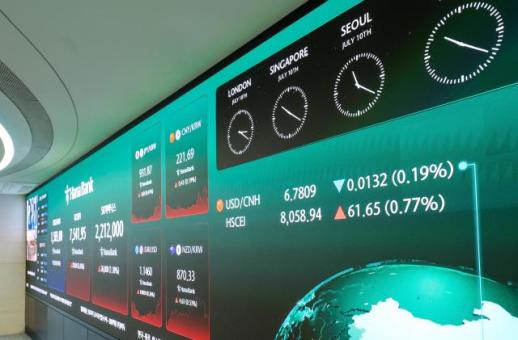 Foreigners pull out record $110 bn from Korean equities H1 SEOUL, July 14 (AJP) - Foreign pulled out $110 billion from Korea's red-hot stock market in the first six months, with nearly $31 billion taken out in June alone, data showed Tuesday. Inflow into the bond market following South Korea’s inclusion in the World Government Bond Index (WGBI) offered a marginal relief to the Korean won, according to the Bank of Korea. Foreign investment in South Korean securities posted a net outflow of $30.72 billion in June. Equity funds recorded a net outflow of $32.37 billion, while bond funds posted a net inflow of $1.65 billion. The equity outflow widened from $31.83 billion in May and marked the largest monthly withdrawal so far this year. The central bank attributed the outflow to weaker investor sentiment amid concerns over global artificial intelligence investment and foreign investors’ rebalancing of their Korean equity holdings following an extended market rally. The benchmark KOSPI fell 11.8 percent to 7,476 on July 10 from 8,476 at the end of May. Foreign funds continued to flow into bonds despite the maturity of government debt, supported by the gradual increase in South Korean bonds’ weighting in the WGBI. The weighting rose to 0.67 percent in June from 0.46 percent in May and 0.22 percent in April, when the country’s phased inclusion began. During the first six months of the year, foreign equity investment posted a cumulative net outflow of $110.21 billion, while bond investment recorded a net inflow of $9.28 billion. Total foreign investment in Korean securities consequently registered a net outflow of $100.93 billion during the period. The heavy equity outflows added downward pressure on the won in June, although the currency rebounded sharply this month. The won closed at 1,549.4 per dollar at the end of June, weakening from 1,507.9 at the end of May, before strengthening to 1,501.4 on July 10. Foreign selling of Korean shares and continued uncertainty in the Middle East drove the exchange rate higher last month, the BOK said. The won began recovering in July as weaker-than-expected U.S. employment indicators reduced the extent of the dollar’s gains. Compared with the end of May, the won had strengthened 0.4 percent against the dollar as of July 10, outperforming most major emerging-market currencies over the same period. Exchange-rate volatility, however, increased in June. The won’s average daily trading range widened to 7.6 won from 6.6 won in May, while its average daily fluctuation rate rose to 0.50 percent from 0.45 percent. In global markets, the dollar and major government bond yields rose as the Federal Reserve’s June policy meeting was interpreted as hawkish, strengthening expectations for further U.S. rate increases this year. The dollar index advanced 2.0 percent to 101.0 on July 10 from 98.9 at the end of May. The yield on the 10-year U.S. Treasury rose 12 basis points to 4.56 percent from 4.44 percent over the same period. South Korea’s 10-year government bond yield climbed 17 basis points to 4.24 percent, while the three-year yield edged up to 3.77 percent from 3.73 percent. The three-year currency swap rate rose 6 basis points to 3.36 percent, tracking the increase in government bond yields. The three-month won-dollar swap rate, meanwhile, fell 7 basis points to minus 0.99 percent as institutional investors’ demand for foreign-currency funding for overseas investment increased. Despite the foreign fund outflows, South Korean banks’ external foreign-currency borrowing conditions remained broadly stable. The premium on medium- and long-term overseas borrowing fell to 37 basis points in June from 44 basis points in May. The five-year credit default swap premium on South Korea’s foreign exchange stabilization bonds also declined to 23 basis points from 25 basis points. 2026-07-14 12:52:01
-
International Standardization of Alternative Testing Methods to Reduce Animal Testing Alternative testing methods that ensure safety and reliability while reducing animal testing are set to be discussed for international standardization. The government and experts will explore research outcomes and policy applications in response to regulatory changes by the Organisation for Economic Co-operation and Development (OECD).The National Institute of Environmental Research, under the Ministry of Climate, Energy and Environment, announced that it will co-host a "Expert Symposium on the Activation of Alternative Testing Methods" with the National Toxicology Research Institute on the morning of July 15 at the Hotel Intercity in Daejeon.Now in its third year, this symposium will focus on the theme of "Development of OECD International Standard Testing Methods and Changes in Global Regulatory Trends." More than 100 participants, including representatives from the OECD Secretariat, the Ministry of Climate, the National Institute of Environmental Research, and experts from academia and industry, are expected to attend.The event will be divided into four parts. The first three parts will feature presentations on the international standardization trends of alternative testing methods, the development of OECD testing guidelines, and policy application strategies. The final session will gather stakeholder opinions to discuss ways to expand the use of alternative testing methods.Since signing a memorandum of understanding to promote alternative testing methods in 2024, the National Institute of Environmental Research and the National Toxicology Research Institute have held annual joint symposiums to share trends in technology development, research outcomes, and the status of international standardization.Recently, the international community has been expanding the development and institutionalization of alternative testing methods that can ensure the reliability and safety of toxicity assessments while reducing animal testing. Consequently, discussions on establishing international standard testing methods and regulatory applications are actively taking place, particularly within the OECD.To respond to changes in international regulations, the National Institute of Environmental Research plans to continuously enhance the scientific validation of alternative testing methods and international cooperation, while also accelerating the establishment of a regulatory framework that allows research outcomes to be applied in safety management policies and industrial practices.Park Yeon-jae, head of the National Institute of Environmental Research, stated, "Alternative testing methods are an important means to enhance scientific reliability and international acceptance while meeting societal demands for animal welfare. I hope this symposium will serve as an opportunity to expand the international standardization of domestic research outcomes and increase policy applications."* This article has been translated by AI. 2026-07-14 12:08:00
-
Increase in Foreign Investment Leads to Rise in Individual Forex Regulation Violations The number of individuals penalized for failing to comply with reporting obligations during overseas investments and real estate transactions has increased for the fourth consecutive year. While the total number of violations of foreign exchange regulations decreased compared to the previous year, individual violations rose.According to the Financial Supervisory Service on July 14, the total number of foreign exchange regulation violations last year was 1,072, down by 65 from 1,137 the previous year. Among these, 629 cases resulted in fines, 350 received warnings, and 93 were reported to investigative agencies.By type of violator, corporations accounted for 631 cases, or 58.9%, while individuals represented 441 cases, or 41.1%. The number of individual violations has increased from 317 in 2022 to 341 in 2023, 386 in 2024, and 441 last year.In terms of transaction types, violations related to overseas direct investment were the most common, totaling 478 cases, or 44.6% of the total. This was followed by 161 cases of monetary loans, 97 cases of overseas real estate transactions, and 88 cases of securities trading.The most common violation was the failure to report new transactions, which accounted for 577 cases, more than half of the total. There were also 372 cases where individuals did not report changes in investment amounts, maturities, or ownership names. Additionally, there were 99 cases of failure to report after-the-fact.The Financial Supervisory Service explained that even if the investment amount is as low as $1 or if retained earnings are converted to capital without actual fund movement, the obligation to report still applies. Changes in the name of the local corporation, investment amount, location, or share transfers also require updated reporting. For overseas real estate, if a property is initially reported as jointly owned but later acquired solely, prior notification of the change is necessary. After selling real estate, a disposal report must be submitted within three months, in principle.* This article has been translated by AI. 2026-07-14 12:08:00
-
Large Corporations Paid 89.1 Trillion Won in Subcontracting Fees Last Year, Cash Payment Ratio Declines 지난해 하반기 공시대상기업집단(대기업집단)이 협력업체에 지급한 하도급대금이 89조1000억원으로 1년 전보다 소폭 감소했다. 현금결제 비율 역시 하락했다.공정거래위원회는 14일 이같은 내용을 담은 '2025년 하반기 하도급대금 결제조건 공시에 대한 이행점검' 결과를 발표했다. 공정거래법상 대기업집단 소속 회사로 원사업자에 해당하는 기업은 하도급대금 지급액과 수단, 관련 분쟁 조정기구 등을 반기별로 전자공시시스템(DART)에 공시해야 한다.지난해 하반기 92개 대기업집단 소속 1417개 사업자의 하도대금 지급금액은 89조1000억원으로 전년 동기(91조6000억원) 대비 2조5000억원 줄었다. 지난해 상반기(89조2000억원)보다도 1000억원 감소했다. 대기업집단별로는 현대자동차(11조2000억원)의 하급대금 지급이 가장 많았고 삼성(8조9500억원), HD현대(5조5800억원), 한화(5조3700억원), LG(4조7700억원) 등 순으로 집계됐다. 현금, 수표, 만기 1일 이하 어음대체결제수단 등 현금결제비율은 84.71%로 전년 동분기(86.19%)보다 하락했다. 만기 60일 이하 어음대체결제수단 및 상생결제까지 포함한 현금성 결제비율도 98.35%로 전년 동분기(98.58%)보다 떨어졌다. 한국지엠과 한진, BS, 네이버 등 전체 기업집단의 약 31%에 해당하는 29개 집단의 현금결제비율은 100%에 달했다. 반면 KG(24.51%), 하이트진로(26.37%), LS(34.36%), 두산(39.59%) 등은 현금 결제 비율이 낮았다.하도급대금을 15일 내에 지급한 비율은 66.82%, 30일 내에 지급한 비율은 86.41%다. 대부분 대금 지급이 법정 지급기간(60일)의 절반 이하 기간인 30일 내로 이뤄졌다는 평가다. 특히 유코카캐리어스(100%), 파라다이스(100%), LG(80.96%), HDC(78.78%), GS(73.93%), 호반건설(71.98%), 삼성(71.11%), DN(70.40%) 등 8개 집단은 10일 내 지급한 대금 비율이 70% 이상으로 파악됐다.반면 전체 하도급대금의 0.16%인 1389억원은 하도급법이 정한 지급 기간인 60일을 초과해 지급된 것으로 조사됐다. 60일을 초과해 대금을 지급한 비율이 높은 집단은 이랜드(14.02%), 대방건설(10.11%), SM(5.4%), 교보생명보험(2.94%), KG(2.51%) 순이다. 분쟁조정기구를 운영하는 공시대상 원사업자의 비율은 소폭 증가했다. 총 43개 집단 내 144개 사업자(10.2%)가 하도급대금 분쟁조정기구를 설치·운영해 전년 동기(129개 사업자, 9.3%)보다 늘었다. 집단별로 삼성이 15개로 가장 많고 현대자동차(12개), 아모레퍼시픽(11개), 현대백화점(9개) 순이다. 한편, 공정위는 공시기간 내에 하도급대금을 공시하지 않은 보이스루(카카오), 스튜디오원픽(카카오), 원폴(SK)등 3개 사업자에게 400만원의 과태료를 부과했다. 또 단순 누락·오기가 발견된 31개 사업자에 대해서는 정정 공시 명령을 내렸다. 공정위 관계자는 "이번 공시에서 60일을 초과해 지급한 하도급대금 금액이 많은 것으로 나타난 공시대상기업집단 소속회사를 중심으로 추가 점검 등 감시를 강화하겠다"고 밝혔다. * This article has been translated by AI. 2026-07-14 12:08:00
-
Foreign Investors Continue Selling Korean Stocks for Six Months, Offloading $32.3 Billion in June Last month, foreign investors sold a record amount of stocks in the South Korean securities market, marking six consecutive months of net outflows from foreign stock investments.According to the Bank of Korea's report on financial and foreign exchange market trends released on July 14, foreign securities (stocks and bonds) recorded a net outflow of $30.72 billion in June. This indicates that the amount of foreign investment funds leaving the South Korean stock and bond markets exceeded the funds entering. The net outflow in June was the second largest on record, following March's figure of -$36.55 billion.Specifically, stock investments saw a net outflow of $32.37 billion. Following a record outflow in May, June also experienced significant capital flight. This trend is attributed to heightened caution among investors regarding global artificial intelligence (AI) investments, leading to a decline in investment sentiment and a rebalancing of portfolios due to rising stock prices.In contrast, bond investments saw a net inflow of $1.65 billion, supported by the maturity of government bonds and an increase in the weighting of the World Government Bond Index (WGBI).From the beginning of the year through June, the total net outflow reached $100.93 billion, with stock investments accounting for $110.21 billion of that amount.The won-dollar exchange rate rose significantly in June, reaching 1,549.4 won, influenced by foreign net selling of Korean stocks and uncertainties in the Middle East. The exchange rate fluctuated by 7.6 won, with a change rate of 0.50%.The credit default swap (CDS) premium for South Korean government bonds (based on five-year foreign exchange stabilization fund bonds) averaged 23 basis points last month, down 2 basis points from the previous month’s 25 basis points.This improvement is interpreted in light of the recent announcement of a memorandum of understanding (MOU) between the United States and Iran regarding a ceasefire.* This article has been translated by AI. 2026-07-14 12:08:00
-
New Emission Standards for Medium and Heavy-Duty Vehicles by 2030 To achieve its 2030 national greenhouse gas reduction target, the South Korean government is significantly tightening greenhouse gas and fuel efficiency standards for automobile manufacturers. Medium and heavy-duty commercial vehicles, previously subject to voluntary reductions, will now face mandatory regulations, while emissions standards for small cars will be raised to align with international benchmarks such as those set by the European Union.The Ministry of Climate, Energy, and Environment announced on July 14 that it will issue a 60-day administrative notice regarding amendments to the guidelines on average energy consumption efficiency and greenhouse gas standards for medium and heavy-duty vehicles, as well as the average energy consumption efficiency and allowable greenhouse gas emissions standards for automobiles.These amendments are in line with the national goal of reducing greenhouse gas emissions in the transportation sector to 61 million tons by 2030, as mandated by the Basic Act on Carbon Neutrality and Green Growth. The regulations will apply to both domestic and imported vehicle manufacturers.Medium and heavy-duty vehicles, which have been operating under a voluntary reduction scheme, will be required to reduce emissions in three phases starting in 2027, based on vehicle classification. The first phase will begin next year with large freight trucks and tractors, followed by the second phase in 2028 for medium and heavy-duty buses, and the third phase in 2030 for medium-sized trucks and dump trucks. The goal is to reduce greenhouse gas emissions by 30% compared to the average emissions from 2021 to 2022.Starting next year, manufacturers that fail to meet the mandatory standards will face fines. However, to allow manufacturers time to prepare, initial fines will be set at a lower level, with plans to gradually increase them after full implementation in 2031. These fines will be included in amendments to the Enforcement Decree of the Air Quality Conservation Act.Incentives for the expansion of electric and hydrogen vehicles will also be strengthened. Additional benefits for sales of electric and hydrogen vehicles (super credits) will be extended, and new benefits for hydrogen internal combustion vehicles will be introduced.Standards for small cars will vary based on size. For passenger cars (up to 10 seats), the current standard of 70g/km will be reduced to 54g/km by 2030, while small trucks and buses with 11 to 15 seats will see a significant reduction from 146g/km to 98g/km.Measures will also be implemented to support manufacturers in meeting these standards. The classification of manufacturers will be refined from three tiers to four, adding a new category for medium-sized manufacturers. Additionally, indirect reduction methods, such as the use of renewable energy, will be piloted. The sunset clause for super credits for electric and hydrogen vehicles will be extended to 2029 to support the industry's transition to electrification.The Ministry of Climate will finalize the amendments after gathering feedback from industry, academia, and civil society during the administrative notice period, which ends on September 14.Kim Jin-sik, Director of the Air Quality Division at the Ministry of Climate, stated, "The greenhouse gas and fuel efficiency management system for automobiles is central to the decarbonization of the transportation sector. Through this revision, we will ensure that our automotive industry secures future competitiveness in the global market while responding to the climate crisis with effective communication and support."* This article has been translated by AI. 2026-07-14 12:04:00
-
224 Companies Participate in Labor Ministry's 4.5-Day Workweek Support Program, Exceeding Goals The 'Work-Life Balance 4.5 Project,' which supports companies reducing actual working hours without decreasing wages, has achieved its goal ahead of schedule in the first half of the year.As of the end of June, the Ministry of Employment and Labor reported that a total of 224 companies participated in the Work-Life Balance + 4.5 Project, surpassing the annual target of 220 companies. The achievement rate stands at 101.8%, with small businesses employing fewer than 50 workers making up 67.9% of the participants.The Work-Life Balance + 4.5 Project supports companies that operate a 4.5-day workweek or similar arrangements through labor-management agreements, allowing for reduced working hours without wage cuts. Various models are being implemented, including a 4.5-day workweek with Fridays off, biweekly specific day off, voluntary four-hour reductions twice a month, and a 35-hour workweek with daily one-hour reductions.The ministry explained that reducing working hours is not just about cutting hours but also leads to increased productivity and talent acquisition. For instance, fintech company WireBarley adopted a 38-hour workweek to attract top talent. By minimizing unnecessary reports and meetings and focusing on concentrated work hours, the company saw a 75% reduction in turnover and a 200% increase in new hires compared to the previous year. The reduction of two hours in standard working hours without wage cuts also resulted in a 5% increase in hourly wages.Eco World Farm, located in a regional industrial complex, implemented a 4.5-day workweek with Friday afternoons off to secure and retain staff. They addressed work gaps through process improvements and tailored AI applications for different departments. Since adopting the 4.5-day workweek, they have hired one new employee and are in the process of hiring three more. Notably, the total weekly working hours for 18 office staff decreased from 673 hours to 648 hours, a reduction of 25 hours.This initiative demonstrates that discussions about reducing working hours can extend beyond large corporations and office jobs to address labor shortages in small and medium-sized enterprises. For companies in regional industrial complexes or those struggling to attract young talent, balancing working hours and work-life balance can be as crucial as wage increases in enhancing recruitment competitiveness.The government plans to support the sustainability of reduced working hours in the workplace by enhancing productivity. A public-private joint productivity improvement support team, launched in May, will focus on supporting technological innovations such as AI adoption, redesigning work processes, and providing vocational training.Minister of Employment and Labor Kim Young-hoon stated, "Reducing working hours is not a one-size-fits-all approach; there are various methods that can suit each company's circumstances. It has been confirmed in the field that labor-management dialogue can lead to tailored systems that yield results, and we will actively support small and medium-sized enterprises in reducing working hours."* This article has been translated by AI. 2026-07-14 12:04:00
-
Exemption from Operating Record Keeping for IoT-Equipped Facilities; Ozone Advisory Standards Revised Facilities equipped with Internet of Things (IoT) measuring devices will no longer be required to maintain separate operating records. The government has also revised the standards for lifting ozone advisories to reduce the frequency of repeated advisories and enhance administrative efficiency.The Ministry of Climate, Energy and Environment announced on the 14th that a partial amendment to the 'Air Quality Conservation Act Enforcement Rules' will be announced and implemented on the 15th.The amendment allows facilities that automatically transmit measurement data to a control center via IoT devices to recognize these transmission records as their operating records. As a result, these facilities are expected to experience a reduction in the burden of maintaining daily operating records.IoT measuring devices monitor and manage real-time information such as current, pressure, pH levels, and temperature of emission and prevention facilities, automatically sending the measurement results to the control center.The standards for ozone advisories will also be improved. Previously, both the issuance and lifting criteria were set at an hourly average ozone concentration of 0.12 ppm, leading to repeated advisories and cancellations when concentrations fluctuated around this threshold.The revised enforcement rules adjust the criteria so that advisories issued at ozone concentrations above 0.12 ppm can be lifted when levels drop below 0.1 ppm. This change is expected to reduce unnecessary administrative waste and confusion on-site.Additionally, for reports on the installation and operation of fugitive emission facilities, reports on fugitive dust generation, and reports on volatile organic compound emission facilities, if the reporter is a corporation, they can list their title instead of the representative's name. This means that if the representative changes, there will be no need to file a change report as long as only the title is listed.Furthermore, reflecting the amendments made to the 'Air Quality Conservation Act' in March, the basis for administrative penalties related to fugitive dust generation has been updated, and some terms that caused confusion on-site have been clarified.This amendment is seen as a measure to reduce the administrative burden on facilities using automatic measurement systems and to rationalize the operational standards for ozone advisories, minimizing confusion in the field.Kim Jin-sik, Director of the Air Quality Division at the Ministry of Climate, stated, "We will continue our efforts to improve air quality by reducing fine dust and ozone, while actively reflecting reasonable demands for system improvements from the field to enhance regulations."* This article has been translated by AI. 2026-07-14 12:04:00
-
LG Electronics Supports AI Skill Development for Disabled Youth LG Electronics is taking steps to enhance the AI skills and career opportunities for disabled youth.From July 15 to 16, LG Electronics will host the 2026 Global IT Challenge for Youth with Disabilities (GITC) in Daejeon at the Ramada by Wyndham Daejeon. The event is co-hosted by LG and the Ministry of Health and Welfare, with LG Electronics and the Korea Disabled People’s Rehabilitation Association serving as co-organizers.This year’s competition will incorporate generative AI skills into the evaluation categories, further emphasizing AI education.The GITC, which began in 2011, aims to improve IT skills and support social integration for disabled youth. To date, over 5,000 participants from 41 countries have taken part. Last year, the event garnered international attention as a side event of the APEC Leaders' Meeting.Sixty disabled youth selected from 17 regions across the country will participate in this year’s Korean competition. Participants will compete in four categories: 'e-Combination,' which assesses AI-based information retrieval and document creation skills; 'e-Creative,' focused on autonomous vehicle programming; 'e-Content,' which evaluates video production skills; and 'e-Interactive,' which involves creating interactive games using AI.The top four participants will represent Korea at the world competition in Da Nang, Vietnam, from October 27 to 29.Prior to the competition, LG Electronics provided all participants with online and offline training on generative AI usage, video production, and block coding. Additional advanced training for the world competition representatives is planned for September.The competition has also led to tangible outcomes in education and employment. Shin Gi-hoon, the winner of the 2011 Vietnam competition, is currently pursuing a Ph.D. in embedded systems at Pusan National University, focusing on AI implementation in smart devices.Yoon Dae-sik, Executive Vice President of LG Electronics’ External Cooperation Division, stated, "Through GITC, we will actively support youth with dreams and talents in the IT field to grow into future talents equipped with AI skills, overcoming their disabilities."* This article has been translated by AI. 2026-07-14 12:04:00