


Latest by
-
 Surge in Transformer Demand as AI Data Centers Expand The competition in artificial intelligence (AI) is shifting from semiconductors to power infrastructure. As AI data centers grow to gigawatt (GW) scale, the speed at which companies can secure transformers and switchgear is becoming a critical factor in business operations, surpassing the need for GPU acquisition.According to the power equipment and semiconductor industries, major global tech companies are prioritizing the procurement of high-voltage transformers and power distribution equipment alongside GPUs and servers for their AI data center projects. Since AI data centers consume significantly more power than traditional data centers, delays in establishing power infrastructure could postpone the completion of these facilities.Microsoft, Amazon Web Services (AWS), Meta, and Google are expanding their investments in AI data centers across the United States, focusing on securing long-term power purchase agreements (PPAs) and early delivery schedules for transformers. The 'Stargate' project, led by OpenAI and SoftBank, also emphasizes the importance of securing power infrastructure alongside data center construction.Industry analysts suggest that the bottleneck in the AI data center supply chain is shifting from GPUs to power equipment. While GPU supply, primarily from Nvidia, is gradually increasing, the production capacity for transformers and high-voltage switchgear is difficult to ramp up quickly, often resulting in delivery times extending to several years.For instance, reports indicate that delivery times for high-voltage transformers in the U.S. power industry have stretched to 2 to 4 years. The International Energy Agency (IEA) has warned that without concurrent investments in power infrastructure like transmission networks and transformers, the growth of the AI industry could be constrained due to the surge in data center power consumption.The scale of AI data centers is also rapidly increasing. Nvidia projected at this year's GTC that future AI factories will exceed 1 GW in power usage. This marks a significant shift from the past, where data centers operated at several megawatts, now consuming power equivalent to that of an entire city.This transformation presents new opportunities for domestic power equipment manufacturers. LS Electric is expanding its supply of high-voltage distribution equipment and power management solutions for data centers, while HD Hyundai Electric and Hyosung Heavy Industries are seeing a significant increase in transformer orders, particularly in North America. Analysts predict that if investments in AI data centers continue to grow, the surge in orders for power equipment manufacturers will also persist for an extended period.The government's initiative to establish a national AI computing center and private AI data center projects also highlight the critical need for securing power infrastructure. Industry experts believe that the competition to attract AI data centers will ultimately hinge on how quickly transmission networks and substations can be developed.As interest in the AI industry shifts from GPU performance to the construction of AI factories, the strategic value of power equipment is increasing. Even if semiconductors and servers are secured, delays in power supply could prevent data centers, which require investments in the trillions of won, from becoming operational.An industry insider stated, "In the past, the key competitive factor was how many Nvidia GPUs could be secured, but now it is about how quickly transformers and power networks can be obtained that will determine the completion timeline of AI data centers. The core of the AI supply chain is expanding from semiconductors to power infrastructure."* This article has been translated by AI. 2026-07-13 18:04:00
-
Samsung Unveils Major Redesign of Galaxy Foldable Phones Samsung Electronics is set to target the premium smartphone market in the second half of the year with its next-generation foldable phones, which feature a new aspect ratio and improved folding structure. The company aims to minimize the central crease often criticized in foldable devices while introducing a wider form factor to boost sales of its Galaxy Fold series.According to industry sources, Samsung will hold its 'Galaxy Unpacked' event in London on July 22, where it will unveil the Galaxy Z Fold8 (wide), Fold8 Ultra, and Galaxy Z Flip8. The invitation for the event hinted at a new form factor with the message 'A new shape unfolds,' suggesting a departure from traditional foldable phone designs. The model with the wider aspect ratio will retain the name 'Galaxy Z Fold8,' while the vertically elongated version will be branded as 'Galaxy Z Fold8 Ultra' to emphasize its high performance.The most significant change is in the crease of the Fold8 Ultra. A video leaked on July 12 by the tech news outlet Android Headlines shows the device being opened and tilted at various angles. Under bright lighting, some crease marks are visible at certain angles, but in typical usage conditions, the central crease is nearly imperceptible, indicating substantial improvements.This enhancement is likely due to a new hinge structure and upgraded foldable OLED panel. While the crease has not been entirely eliminated, the depth and curvature at the folding point have been reduced, minimizing visual and tactile discrepancies. Although slight crease marks may be visible under strong lighting, they are reportedly not noticeable in everyday use. As Chinese competitors have been focusing on thinner designs and crease improvements, Samsung's advancements aim to enhance its market competitiveness as the leading foldable phone manufacturer.The introduction of a 'wide fold' form factor, which reduces the vertical length and increases the horizontal width, is also anticipated. Industry experts expect the new model to feature a 7.6-inch QHD+ display with an aspect ratio shift from the previous 10:9 to 4:3. This change aims to provide a more tablet-like experience for viewing videos, webtoons, and documents. Samsung's official teaser also hints at a shorter and wider foldable design.Camera performance, often seen as a limitation in foldable devices, is also set to improve. The Fold8 (wide) and Fold8 Ultra are expected to include a 50-megapixel ultra-wide camera, comparable to that of the Galaxy S26 Ultra, a significant upgrade from the 12-megapixel ultra-wide camera in the previous Fold7 model. The lower camera resolution had been a noted weakness for Samsung's premium foldable phones.However, due to changes in form factor and rising memory costs, a price increase is anticipated. The 256GB model of the Fold8 Ultra is projected to be priced around $2,099, while the same capacity for the Fold8 may be set at approximately $1,899. If these projections hold true, the Fold8 Ultra will be the first of Samsung's flagship foldable phones to exceed a $2,000 retail price.* This article has been translated by AI. 2026-07-13 18:04:00
-
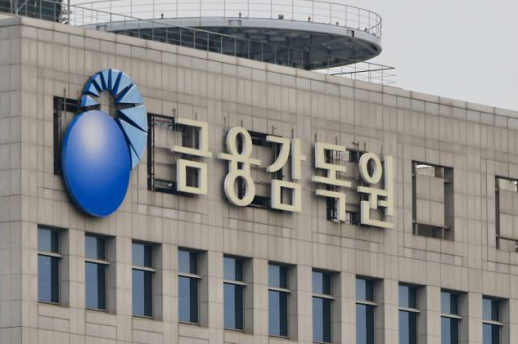 Financial watchdog urges asset managers to improve transparency SEOUL, July 13 (AJP) - Financial watchdog Financial Supervisory Service (FSS) on Monday urged asset managers to improve disclosure practices by providing clearer information on voting rights and strengthening internal controls. It also called for an end to misleading or exaggerated advertisements for exchange-traded fund (ETF) to better protect investors. In a meeting with the head of the Korea Financial Investment Association and CEOs of 20 asset management firms, FSS chief Lee Chan-jin stressed the need for greater transparency in how fund managers vote on corporate matters including board appointments, executive pay, mergers and dividend policies on behalf of investors. The meeting followed an FSS review, which found that many firms still used formulaic disclosures, giving investors little insight into how key company decisions were actually made. The review showed that asset managers have become more active in exercising shareholder voting rights. The voting rate for public and private funds has improved from 79.6 percent in 2024 to 91.6 percent in 2025 and 91.8 percent this year. The proportion of votes cast against management proposals also increased to 8.2 percent from 5.2 percent over the same period. Despite the improvement, the regulator said the quality of disclosures remained weak. Of the 285 asset managers reviewed this year, 121, or 42.4 percent, relied on generic explanations such as "little impact on shareholder interests" and "no harm to shareholder rights" instead of explaining the reasons behind their votes, making it difficult for investors to understand the basis for those decisions. Asset managers need to improve these voting procedures and provide clearer disclosures so investors can properly assess whether voting decisions are appropriate," Lee said. He also warned against misleading or exaggerated advertising in the country's fast-growing ETF market, saying investors often rely heavily on promotional materials when selecting products. Lee urged firms to ensure the accuracy of information through an internal review process, while working with liquidity providers to keep ETF market prices closely aligned with their net asset values. Industry participants also raised concerns over excessive product competition, saying the industry should voluntarily limit the launch of ETFs that closely replicate competitors’ products to create a healthier market. Lee also called on asset managers to channel more capital into promising companies and emerging industries, creating a cycle in which investment supports business growth and generates returns for investors. The FSS said it plans to hold workshops in July and August for asset managers responsible for related disclosures to share information and provide examples of practices. Meanwhile, Samsung Asset Management, NH-Amundi Asset Management and VIP Asset Management, three of the country's leading fund managers, were cited as examples of best practice in this year's review. 2026-07-13 18:00:31
-
Iran Halts MOU Obligations, Citing U.S. Violations Iran has announced it will suspend its obligations under a memorandum of understanding (MOU) with the United States, citing U.S. violations of the agreement. However, diplomatic efforts by intermediary countries are ongoing, leaving the door open for negotiations.On July 13, Esmail Baghaei, spokesperson for the Iranian Foreign Ministry, told reporters that the MOU with the U.S. is in a crisis, but insisted that Iran did not violate the agreement first.Baghaei stated that the U.S. breached several provisions of the agreement, which consists of 14 clauses, before the one-month deadline for Iran's obligations regarding the Strait of Hormuz had passed. He said, "As long as the other party complies with its obligations, we will also fulfill ours, but we will not adhere to our obligations regarding the violations."Despite the ongoing tensions, diplomatic mediation continues. Baghaei noted that intermediary countries are still working to find a diplomatic solution between Iran and the U.S.Regarding the Strait of Hormuz issue, he mentioned that Iran is pursuing a joint response framework with Oman, but claimed that U.S. pressure on the Omani government is causing disruptions in related discussions.* This article has been translated by AI. 2026-07-13 18:00:00
-
Outline of Tax Reform: Is It a Crackdown or Normalization? The real estate market is difficult to read, and so are government policies.The outline of the tax reform plan to be announced at the end of this month is becoming clearer. Currently, three directions are being discussed. The property tax will increase through a higher fair market value ratio for the comprehensive real estate tax, while the capital gains tax will be restructured to focus on actual residence for long-term ownership special deductions. The emphasis on taxation will shift towards high-value, non-resident, and multi-homeowners. The trend is moving from a focus on the number of homes to considering both home prices and actual residency. Although the plan is not finalized, statements from the president and the Blue House policy chief have clarified the direction.A battle of words has begun. The government calls it 'normalization,' while the opposition labels it a 'tax increase' and accuses it of trying to control housing prices through taxation. Kim Yong-beom, the Blue House policy chief, wrote on Facebook on June 20, "We need to normalize real estate taxation. It is necessary and correct to rationally adjust property and capital gains taxes," to which the People Power Party responded, "The essence is merely a preview of a tax increase aimed at the people's wallets" (Choi Bo-yun, chief spokesperson). On July 23, the president will engage in a public debate on real estate with citizens, turning this battle into a nationwide broadcast. The word battle will soon translate into a bill battle. In such times, calculators are essential. Let's break it down one by one. The claim that property taxes are low is debatable.President Yoon Suk-yeol stated during a press conference marking his first anniversary in office on June 8, "Property taxes in our country are generally low. Therefore, there is not much burden even if one accumulates a lot of properties." Is this statement accurate?The answer changes depending on what denominator is used. When looking at property taxes as a percentage of real estate market value, or effective tax rate, South Korea's rate is 0.15%. This is half the OECD average of 0.33% and ranks 20th among 30 surveyed countries (Land and Freedom Research Institute, 2022-2023). By this standard, the president's statement holds true. However, when considering property taxes as a percentage of gross domestic product (GDP), the rate is 1.0%, which is similar to the OECD average of 0.95%, and as a percentage of total taxes, it stands at 3.48%, exceeding the average of 2.85%. By this measure, it is above average.This discrepancy arises because the value of real estate assets is large compared to the economy, while the overall tax burden is relatively low. Even if the effective tax rate is low, the share of property taxes in total tax revenue is not insignificant. Ultimately, the government points to the low effective tax rate, while the opposition highlights the high share of tax revenue.On July 2, the OECD released a report on the South Korean economy, providing another scorecard. Overall, real estate-related taxes account for 3.0% of GDP, nearly double the OECD average of 1.6%, with property taxes making up 29.4%, which is half the OECD average of 56.0%. In contrast, transaction taxes such as acquisition and capital gains taxes account for 50.4%. In summary, South Korea's real estate taxes are not low; they are simply mismanaged.Importantly, property tax increases should not be viewed in isolation. The OECD recommends changing the structure to tax heavily during transactions and relatively lightly during ownership. If property taxes are raised while leaving acquisition and capital gains tax burdens unchanged, it results in adding another layer rather than shifting the tax burden. If the government wants to call this 'normalization,' it must also include a reduction in transaction taxes in the same calculation. There is a clear aspect of 'restoration' in the reform.Let's examine the fair market value ratio for the comprehensive real estate tax, which is considered a key tool in this reform. This ratio, which determines the taxable standard by multiplying the publicly announced price, was originally set at 80%. The Moon Jae-in administration raised it to 95%, and the Yoon Suk-yeol administration lowered it to 60% in 2022, where it has remained. The proposed '80% increase' is closer to returning to the original baseline of the system.However, returning to the system's baseline does not mean that taxpayers' burdens will revert to their original levels. The publicly announced prices, home values, tax rates, and deduction conditions have changed since then. Even with the same 80%, if the publicly announced price multiplied by the taxable standard increases, the actual tax amount could be higher than in the past. For the government, it may be 'restoration,' but for those receiving the tax bill, it is undoubtedly an increase. This is where normalization and tax increases can coexist.It is also true that taxpayers have experienced a rollercoaster of changes. The property tax for an 84-square-meter unit in the Mapo Raemian Prugio, valued at around 2.5 billion won, dropped from about 5 million won in 2021 to around 2 million won between 2023 and 2025, before rising again to the mid-4 million won range this year. As tax rates and ratios have changed with different administrations, the tax on the same property has fluctuated by more than double over five years. The debate over what constitutes 'normal' is precisely why this is contentious. The calculation and the tax bill are not the same.Before delving into calculations, let's first consider who pays this tax. The comprehensive real estate tax applies to homes with a publicly announced price exceeding 1.2 billion won for a single household. Last year, the number of individuals subject to the comprehensive real estate tax was 481,000. As of the end of 2024, there are approximately 15.976 million individuals owning homes, meaning roughly 3 out of every 100 homeowners are affected. The number of people directly receiving tax bills is a small fraction of homeowners. Therefore, this tax cannot be labeled a 'nationwide tax bomb.'So, how much will those three individuals pay? According to estimates from the National Assembly Budget Office, the comprehensive real estate tax for this year is expected to increase from 1.4763 trillion won to 2.8425 trillion won, nearly doubling, while the total property tax, including property tax, will rise from 8.6995 trillion won to 10.658 trillion won. In Seoul alone, this represents a 21.1% increase. On the surface, these numbers could justify the term 'bomb.'However, the calculation does not directly translate to the tax bill due to the tax burden cap. The current comprehensive real estate tax law stipulates that the total property tax and comprehensive real estate tax combined cannot exceed 150% of the previous year's total tax amount. A simulation conducted by Woo Byung-tak, a specialist at Shinhan Bank, on ten major high-value single homes in Seoul showed that even with the ratio raised to 80%, all were capped. For example, the tax before applying the cap for a 84-square-meter unit in Banpo Xi was 24.26 million won, but the actual tax bill was reduced to 18.43 million won.If the cap remains unchanged, the entire calculated tax amount will not appear on the first year's tax bill. However, this does not mean there will be no shock. The tax can increase by a maximum of 50% compared to the previous year's total tax amount. The excess over the cap does not carry over to the following year, but since the cap is recalculated annually, if the taxable standard and system remain, future tax bills could approach the calculated tax amount. Therefore, it is crucial to observe whether the cap will be adjusted and, if so, by how much. During the Moon Jae-in administration, the cap was open to 300% for multiple homeowners. How will actual residence be determined?There are also indications that a full tax increase is unlikely. The direction being discussed both inside and outside the government is to maintain or reduce the burden on mid-to-low-priced, owner-occupied homes while concentrating taxation on high-value, non-resident, and multi-homeowners. The president also stated in January of this year, "I will avoid using taxes to control housing prices as much as possible," and added, "If I have lived there for a long time, I should be protected." In June, he remarked, "Owning multiple homes is not a problem. However, corresponding burdens should be imposed." While interpretations of these statements may vary, it is clear that the policy's focus is shifting towards protecting actual residents and increasing burdens on non-residents and multi-homeowners.The reform of the long-term ownership special deduction aligns with this direction. The president described this system on X (formerly Twitter) as a program that "significantly reduces capital gains tax solely based on long-term ownership, regardless of residency." This indicates a shift in the benefits previously given for ownership towards residency.The challenge lies in determining what constitutes actual residence. It must be decided whether to consider only the registered address or the actual duration of residence. Issues such as relocation for work, long-term business trips, family care, and periods when homeowners cannot occupy their homes due to redevelopment or rental disputes must also be addressed. Cases like weekend couples, where spouses work in different regions, complicate the distinction between registered addresses and actual living locations.If the criteria are too narrow, unavoidable non-residency may be grouped with speculative demand, while broad exceptions may make it difficult to prevent deceptive residency claims and formal address changes. While the principle of protecting actual residents seems straightforward, it becomes complex when applied as a tax criterion. The criteria for protection, as well as the methods of proof and exceptions, must be clearly defined. Both a crackdown and normalization are partially accurate.Thus, the assessment is as follows. The government's terminology of 'normalization' is only partially correct. It is true that the restoration of what the Yoon Suk-yeol administration implemented overlaps with the OECD's recommendation to shift the tax burden from transaction taxes to property taxes. However, Douglas Sutherland, head of the OECD's Country Analysis Division, noted that such a transition should occur "over a considerable period and in stages." If the reduction of transaction taxes is omitted, the structural transition could devolve into an overall tax increase.The opposition's characterization of a 'crackdown' is also only partially accurate. As long as the tax burden cap and differential design remain in place, the entire calculated tax amount will not be reflected in the first year's tax bill. If the burden on mid-to-low-priced, owner-occupied homes is protected while concentrating on high-value, non-resident, and multi-homeowners, it cannot be viewed as a uniform tax increase targeting all homeowners. However, if the fair market value ratio is raised along with an increase in the tax burden cap, or if property taxes are raised without reducing transaction taxes and if the exceptions for actual residence are narrowly defined, then the rhetoric will become reality.Ultimately, what needs to be confirmed in the announcement is not just the tax rate figures but the three design elements. Will the tax burden cap remain unchanged? Will property taxes be increased while transaction taxes are lowered? What criteria will be used to determine actual residence among registered addresses, actual residence duration, and unavoidable non-residency? Until these three elements are clarified, both 'crackdown' and 'normalization' remain mere terms used by opposing sides. 2026-07-13 17:52:00
-
Imported Fresh Eggs to be Sold at Discounted Price of 4,980 Won The government has announced that imported fresh eggs will be sold for 4,980 won per tray. The use of agricultural discount vouchers will be expanded to include not only traditional markets but also general retail stores, enhancing consumer convenience.On July 13, the Ministry of Agriculture, Food and Rural Affairs held the 'Third Summer Agricultural and Livestock Supply Stabilization Task Force Meeting' at the Government Sejong City Hall, in collaboration with the Rural Development Administration, National Agricultural Cooperative Federation, and Korea Agro-Fisheries & Food Trade Corporation (aT).The ministry plans to prioritize the supply of 10 million of the 200 million imported fresh eggs to retailers such as E-Mart, Lotte Mart, and the Bakery Association this week, with a plan to supply an additional 20 million eggs weekly thereafter. The price for a tray of imported fresh eggs (30 large eggs) will be reduced from 5,890 won to 4,980 won.To further alleviate consumer prices, discount support will be implemented. Agricultural discount vouchers, sold at a 30% discount, will be issued starting July 20 at a scale of 20 billion won per month. From July 20 to 26, these vouchers will be available for seniors aged 65 and older, and from July 27 to August 2, they will be available to the general public. A discount event for all agricultural and livestock products will also be held in collaboration with major retailers until September 2.During the meeting, the impact of the rainy season on agricultural products was also assessed. So far, damage to crop yields from the rainy season has been minimal. However, the ministry expressed concerns about potential pest outbreaks and will enhance growth management through the provision of nutrients and pesticides. Continuous monitoring of production areas will be conducted to respond proactively to any unusual occurrences.The meeting also reviewed livestock prices. Despite high prices due to livestock infectious diseases, supply conditions for various products are gradually improving. The increase in wholesale market shipments of pork, driven by expanded shipment incentives, is expected to lead to a decrease in wholesale prices, which will eventually be reflected in retail prices. Chicken prices have also dropped compared to the previous week due to improved supply conditions from the import of broiler eggs.Kim Jong-gu, Deputy Minister of Agriculture, Food and Rural Affairs, stated, "During the summer, the supply and demand situation for agricultural and livestock products can change rapidly due to weather conditions such as heavy rain and heat waves. We will closely monitor production trends and respond proactively. We will also ensure the smooth implementation of measures to stabilize prices through the expansion of fresh egg supply and large-scale discount events."* This article has been translated by AI. 2026-07-13 17:52:00
-
Renewed Tensions in the Middle East Disrupt Exports for Small Businesses As the fragile ceasefire agreement between the United States and Iran falters, anxiety is rising among small businesses in South Korea. The Strait of Hormuz, a critical passage for global oil and shipping, has been blocked again, leading to export disruptions and increased logistics costs, which are rapidly affecting small enterprises.According to foreign reports on July 13, Iran re-blocked the Strait of Hormuz on July 12 local time. The Iranian Revolutionary Guard announced in a statement that "attempts to pass through the strait via illegal routes are recurring," and declared the strait would be closed again. They warned that vessels attempting to use unauthorized routes would face warning shots and stated that the blockade would continue until U.S. intervention ceases.In response, the U.S. conducted airstrikes on over 140 military facilities in Iran, including missile and drone bases, air defense systems, and communication networks, citing violations of the ceasefire agreement. This marked the third military action in a week. Previously, on July 7, after Iran attacked a civilian oil tanker passing through the strait, the U.S. retaliated by striking Iranian military facilities over two days.With both nations returning to military conflict, the ceasefire agreement signed last month has effectively unraveled in less than a month. The U.S. and Iran had signed a memorandum of understanding on June 14 to ensure safe navigation in the Strait of Hormuz, but President Donald Trump notified Iran of the ceasefire's termination earlier this month due to repeated military provocations.The collapse of the ceasefire has deepened concerns for small businesses in South Korea. The Strait of Hormuz is a strategic chokepoint through which approximately 20% of the world's oil maritime traffic passes. With the strait blocked again, disruptions to both oil and container shipping are inevitable, likely leading to a rise in global logistics costs.Small businesses have been grappling with logistics disruptions and export uncertainties since the outbreak of the U.S.-Iran conflict nearly six months ago. According to the Ministry of SMEs and Startups, there have been a total of 997 reports of damage and management difficulties related to the Middle East conflict from February 2 to July 10. The most common issues reported were transportation disruptions and rising logistics costs, each accounting for 296 cases, followed by 242 cases of contract cancellations or delays. Industry insiders expect that damage reports will exceed 1,000 this week.Export companies, particularly those heavily reliant on the Middle Eastern market, are feeling the pressure. The prolonged conflict has exacerbated their financial difficulties, and hopes for improved export conditions following the ceasefire have been dashed. A representative from a small export company stated, "Since the outbreak of the Middle East war, orders from major buyers in Iraq have ceased, and we are currently waiting to resume transactions," adding that "exports to Iraq have dropped by over 70% compared to before the war." The Ministry of SMEs and Startups plans to maintain its emergency response system and is considering measures to address the situation. The ministry is monitoring the status of damages related to the Middle East conflict in real-time through 15 export support centers nationwide and an online damage reporting portal. They plan to provide support measures in areas such as logistics and export financing, led by a task force established immediately after the outbreak of the war.A ministry official stated, "We believe that the burden of logistics costs and other business difficulties will continue for the time being, even after the ceasefire agreement. We have been providing support through logistics vouchers and emergency management stabilization funds for affected businesses," adding, "We will closely monitor the situation while maintaining our existing response system and prepare necessary measures." * This article has been translated by AI. 2026-07-13 17:52:00
-
Yoo Jae-hoon Appointed as Next Head of the Korea Insurance Development Institute 차기 보험개발원장에 유재훈 전 금융위원회 국장이 단독 후보로 내정됐다.13일 보험업계에 따르면 보험개발원 원장후보추천위원회(원추위)는 이날 유 전 국장을 단수 후보로 추천했다.앞서 차기 보험개발원 원장 후보 공모에는 유 전 국장을 비롯해 신현준 전 신용정보원장, 안철경 전 보험연구원장, 박상욱·설인배 전 금융감독원 부원장보 등이 이름을 올린 바 있다.이후 원추위는 지난주 유 전 국장과 신 전 원장, 안 전 원장 3인을 최종 후보군(숏리스트)으로 압축했고, 이날 최종 면접을 거쳐 유 전 원장을 최종 선정했다.1968년생인 유 내정자는 서울 성남고와 성균관대 경제학과를 졸업한 뒤 제39회 행정고시에 합격해 공직에 입문했다. 금융위에서는 혁신기획재정담당관, 자본시장조사단장, 기획조정관 등을 역임해 금융 정책과 금융소비자보호 업무 등에 이해도가 높은 전문가로 평가받는다.유 내정자는 향후 공직자 재취업 심사를 거칠 예정이다. 보험개발원은 심사 결과에 따라 총회를 거쳐 유 내정자의 선임 여부를 확정할 예정이다. 공식 취임은 다음 달 이뤄질 전망이다.* This article has been translated by AI. 2026-07-13 17:48:00
-
Law Firm Ji-eum Welcomes Labor and Criminal Law Expert Seo Hyo-jung as Partner Law Firm Ji-eum, led by attorneys Kim Seol-i, Kim Hyun-jong, and Lee Ho-young, announced on July 13 that Seo Hyo-jung has joined as a partner attorney as of July 1.Seo graduated from Seoul National University with a degree in Korean Language and Literature and completed her legal studies at Hanyang University. She previously worked as an attorney at Law Firm Seojeong and served as the managing attorney at Law Office Yulbut before joining Law Firm Ji-eum.Currently, Seo serves as a public member of the Gyeonggi Provincial Labor Relations Commission, providing advice and handling cases related to labor disputes, personnel matters, disciplinary actions, wrongful termination, and overall labor relations.Additionally, she has worked as a court-appointed defense attorney for criminal cases at the Suwon District Court and has served as a family mediation committee member, handling various family law cases such as divorce and inheritance, thereby building her expertise in labor, family, and criminal law.A representative from Law Firm Ji-eum stated, "Seo is an attorney with expertise and extensive practical experience across labor, family, criminal, and public institution advisory fields. We expect her to enhance Ji-eum's professionalism by providing high-quality legal services to corporations, public institutions, and individual clients alike."Seo also expressed her commitment, stating, "I will do my best to provide trusted legal services at Law Firm Ji-eum based on my experience and expertise."Law Firm Ji-eum specializes in fair trade and corporate advisory services, having recruited experts from the Fair Trade Commission and providing legal support for companies entering the Middle East. The firm is currently located in Sinsa-dong, Gangnam-gu, Seoul.* This article has been translated by AI. 2026-07-13 17:48:00
-
Selection Process Begins for Mokdong and Seongsu Redevelopment Projects The Mokdong 12 Complex in Yangcheon District and the Seongsu 2 District in Seongdong District, both key redevelopment sites in Seoul, have begun the process of selecting construction firms. The competition among major construction companies for urban redevelopment contracts is expected to intensify in the second half of the year.According to the construction industry on July 13, the Mokdong 12 Complex reconstruction association and the Seongsu 2 redevelopment association issued a bid announcement on July 7. The two associations will hold a site briefing on July 15 and plan to close bid submissions by August 31.Located in the Shinjung-dong area of Yangcheon District, the Mokdong 12 Complex is set to transform into a large-scale development with 2,810 units across 43 floors above ground and four floors below. The estimated construction cost is 1.7888 trillion won, with a cost of approximately 9.8 million won per 3.3 square meters. The bid deposit is set at 80 billion won.The Mokdong 12 Complex is strategically located near Yangcheon-gu Office Station on Subway Line 2. Industry insiders suggest that GS Engineering & Construction is actively pursuing the project, raising the possibility of a sole bid. GS is reportedly focusing on Mokdong 2, 4, 7, 9, and 12 complexes as key targets and plans to establish a 'Xi Lounge' near Mokdong Station to enhance engagement with association members.Other reconstruction projects in the Mokdong area are also accelerating their construction firm selection processes. The largest reconstruction project in Mokdong, the 14 Complex, is expected to issue a bid announcement in September. This project is anticipated to consist of 5,123 units, with construction costs exceeding 3 trillion won. Major firms such as Hyundai Engineering & Construction, Daewoo Engineering & Construction, Lotte Engineering & Construction, DL E&C, and POSCO E&C are reportedly considering participation.The Mokdong 13 Complex is also moving forward with its project. The project implementer, Daeshin Asset Trust, held a site briefing last month for construction firm selection, attracting interest from Samsung C&T, Daewoo E&C, DL E&C, IPARK Hyundai Industrial Development, and Jeil Construction.The Seongsu 2 District has also resumed its construction firm selection process. This redevelopment project aims to build a total of 2,381 units across a maximum of 65 floors in the Seongsu-dong 2 area of Seongdong District. The total project cost is estimated at 2.0137 trillion won, making it the largest among the four districts in the Seongsu strategic redevelopment area. The bid deposit is set at 100 billion won.Last year, the bidding for Seongsu 2 District was canceled due to internal conflicts within the association and a lack of bids from construction firms. Following the establishment of a new executive board, the project has resumed. Industry analysts believe that DL E&C and IPARK Hyundai Industrial Development are likely to form a competitive landscape in this bidding round.Despite ongoing concerns about construction cost burdens and selective bidding trends, prime locations like Mokdong and Seongsu are expected to attract significant brand competition among major construction firms.An industry insider stated, “Seongsu and Mokdong are representative redevelopment sites in Seoul, combining both location and project viability. They will be key indicators of the urban redevelopment bidding market's atmosphere in the second half of the year.”* This article has been translated by AI. 2026-07-13 17:44:00