


Latest by
-
 Rising Middle East Tensions Increase Price Pressures in Food Industry As military tensions between the United States and Iran escalate, the food industry faces urgent cost management challenges. With raw material prices already inadequately reflected in product pricing, uncertainties surrounding international oil prices and shipping costs are expected to heighten price increase pressures in the second half of the year.According to industry sources, the conflict between the U.S. and Iran has intensified, raising tensions in the Hormuz Strait, a critical route for global oil transport. On July 12, the Iranian Revolutionary Guard Corps (IRGC) declared a blockade of the Strait, while the U.S. resumed airstrikes on Iranian military facilities, further deteriorating the situation in the Middle East.The Hormuz Strait is a strategic chokepoint through which approximately 27% of the world's maritime oil trade passes. Oil and liquefied natural gas (LNG) from major Middle Eastern producers such as Saudi Arabia, the United Arab Emirates, and Kuwait are transported through this route to Asia and Europe. Industry experts warn that if the blockade becomes a reality or military tensions persist, international oil prices and shipping costs could face renewed upward pressure.These variables are likely to exacerbate already accumulated cost burdens. According to the Ministry of Agriculture, Food and Rural Affairs and the Korea Agro-Fisheries & Food Trade Corporation (aT), the raw material purchase price index rose to 133.9 in the second quarter of 2026, up 13.4 points from the previous quarter's 120.5. In contrast, the shipping price index only increased by 2.5 points to 103.8 during the same period, indicating that companies are absorbing a significant portion of the rising raw material costs.Industry analysts believe that worsening international conditions could further increase these burdens. In the same survey, 63.9% of respondents cited 'fluctuations in international economy such as prices, interest rates, and exchange rates' as the primary factor for rising raw material prices, while 32.2% identified 'economic instability due to deteriorating international conditions' as a key factor affecting economic downturn.The food manufacturing sector is particularly sensitive to oil price fluctuations. Packaging materials such as PET bottles and food packaging films are produced from naphtha, a petrochemical raw material, and energy costs for manufacturing processes and product transportation are closely linked to international oil prices. When oil prices rise, costs for packaging materials, logistics, and factory operations increase simultaneously.Different sectors are facing significant pressures. The beverage industry is monitoring fluctuations in packaging material prices, while the ramen sector is keeping an eye on potential increases in the prices of imported palm oil and soybean oil, as well as packaging costs. The supply of packaging raw materials has not yet fully normalized. According to the Korea Food Industry Association, naphtha supply, which had dropped to 70% of normal levels due to the Middle East conflict, has recently recovered to about 90%. However, if the current situation persists, there are concerns that the recovery trend may slow down again.Some companies have already begun to reflect cost burdens in their prices. Lotte Chilsung Beverage raised the average shipping prices of 44 items across 12 brands, including Chilsung Cider and Pepsi, by 5.3% starting June 26. Ottogi also plans to increase the shipping prices of 29 items, including curry, glass noodles, ketchup, and pepper, starting July 16, with increases of 6.1% for curry and ketchup, 10% for glass noodles, and 17% for pepper.Industry insiders note that since oil prices and exchange rates typically take time to be reflected in manufacturing costs, if the Middle East risks persist, the burden may continue into the second half of this year and even into next year. A food industry representative stated, "While there are no immediate supply disruptions, if oil prices and shipping costs rise again due to international conditions, the costs for packaging materials, logistics, and imported raw materials could be affected in a chain reaction. Companies with accumulated cost burdens will find it increasingly difficult to respond to these challenges."* This article has been translated by AI. 2026-07-13 18:20:00
-
Global Auto Industry Faces Restructuring Amidst Challenges, South Korea Stands Firm on Strikes Global automotive companies are undergoing significant restructuring due to a combination of factors including domestic market slowdown, protective tariffs, electrification transitions, and the ongoing conflict in the Middle East. These companies are cutting jobs, closing factories, and reducing non-core operations to free up cash for investments in future mobility, such as electrification and software-defined vehicles (SDVs). In contrast, South Korea is criticized for ignoring industrial structural changes and being mired in collective self-interest, focusing instead on outdated demands like extending retirement age and reinstating laid-off workers.According to industry sources, the global automotive sector is in the midst of extensive restructuring. The Volkswagen Group recently held a board meeting and decided to cut over 100,000 jobs, which represents 15% of its global workforce of 657,000. This marks the largest job reduction in automotive history, surpassing General Motors' 74,000 job cuts in 1991. Volkswagen also announced plans to close four factories in Germany and reduce its entire vehicle model lineup by up to 50%.Honda, one of Japan's three major automotive groups, is also tightening its restructuring efforts. After reporting a loss of approximately 690 billion yen (about $6.4 billion) last year, Honda announced its withdrawal from the South Korean automotive market as part of its business reorganization. The company plans to close one factory operated jointly with Guangzhou Automobile Group (GAC) within the year and is expected to halt operations at its joint venture with Dongfeng Motor Group next year.Other companies like Volvo, Mercedes-Benz, and Audi are also facing job cuts. Volvo has reduced its workforce by about 3,000, or 7% of its total 43,800 employees, and has implemented additional cuts at its factories in Virginia and Pennsylvania. Mercedes-Benz aims to reduce costs by about 20% through workforce reductions and relocating production sites by 2027, while Audi plans to cut approximately 7,500 jobs by 2029.In South Korea, a different scenario is unfolding as the summer strike season begins. This year's wage and collective bargaining negotiations have intensified labor disputes, focusing on demands for retirement age extensions, wage increases, and opposition to AI humanoids. This contrasts sharply with the fierce competition among global automakers to transition to electrification, SDVs, and AI integration. There are concerns that the rising risk of strikes could severely impact South Korea's strategic value amid the ongoing global restructuring of automotive supply chains.Indeed, companies like Hyundai, GM Korea, and Renault Korea have responded to increasing strike intensity by reallocating new vehicle production to overseas plants. An industry insider noted, "The strong labor unions in Korea create a significant risk that compels companies to consider building factories abroad, even at a higher cost, which undermines the advantages of Just-In-Time production and the 'anti-China' block strategy."* This article has been translated by AI. 2026-07-13 18:16:00
-
Nexspace Launches 700 Games in Three Weeks, Expands MapleStory IP Nexon is expanding the MapleStory ecosystem through its subsidiary Nexspace, which has opened official assets and AI development tools to users. As a result, 435 games created during the Vibe Camp have passed review and are now in service. This initiative aims to broaden the use of intellectual property (IP) and create new genres and content, potentially extending the IP's lifespan.According to the gaming industry on July 13, Nexspace, Nexon's blockchain subsidiary, held the 'MapleStory Vibe Camp' last month, allowing anyone to create games.As a result, 693 games were developed based on the MapleStory Universe IP, with 435 passing review for service. The company applied criteria such as user retention, in-game engagement, and total play counts. A variety of genres were created, including real-time strategy (RTS), trading card games (TCG), idle role-playing games (RPG), and tycoon simulations.The MapleStory Vibe Camp was conducted in collaboration with the AI-based game development platform Burst Eight, in a dedicated space called the 'MapleStory Universe (MSU) Space.' Nexspace allowed users to freely utilize official assets such as characters, monsters, items, and backgrounds from the MSU. Notably, users could create games using natural language prompts.Nexspace reported that 29,015 users from 114 countries played a total of 88,037 games. The most successful title saw a user return rate increase from 35% to 70%.This Vibe Camp is seen as a confirmation of the expansion potential for the MapleStory IP. With over 20 years of service, the longevity of existing game IPs has become a challenge, and Nexon has been exploring ways to extend the IP's lifespan through user-generated content and genre expansion.The games created reinterpret the original IP assets, including monsters, skills, maps, non-playable characters (NPCs), and sounds, in new ways. Various genres were developed, including RTS, TCG, idle RPG, visual novels, auto-battlers, dungeon exploration, tycoon simulations, and story-driven adventures. Nexspace emphasized that diverse genres of games were created, which MapleStory had not attempted in its 23-year history.The company anticipates that the MSU ecosystem will continue to thrive even after the camp concludes. Nexspace noted that after the camp's prize distribution, 1,250 builders are currently working on approximately 3,000 projects, keeping the MSU Space active.To support this, Nexspace plans to maintain an on-chain economic system for the MapleStory Universe, where revenue generated from game play is returned to creators. The prizes from the Vibe Camp were distributed in NXPC.Nexspace stated, 'For 23 years, MapleStory content has followed a one-way flow, produced by one company and played by millions. However, during this camp, thousands of users expanded the MapleStory IP on other platforms. This marks the beginning of a change.'* This article has been translated by AI. 2026-07-13 18:16:00
-
South Korean Automakers Face Strikes Amidst Industry Restructuring South Korean automakers are undergoing significant restructuring due to a complex interplay of factors, including competition from Chinese electric vehicle (EV) manufacturers, sluggish domestic demand in emerging markets due to conflicts in the Middle East, and changes in employment structures driven by the adoption of artificial intelligence (AI) and software-defined vehicles (SDVs). This restructuring is viewed not merely as a cost-cutting measure but as a survival strategy through the reorganization of existing business structures.On July 13, a representative from a global automaker stated, "The shrinking presence of major global automakers like Volkswagen and GM in the Chinese market, which was once a cash cow, has prompted these restructuring efforts. The slowdown in sales in emerging markets, the absence of alternative markets, tariff challenges, and the collapse of global supply chains have all acted as catalysts for change."Indeed, Volkswagen Group, a symbol of German manufacturing, is facing a restructuring that involves cutting 15% of its workforce due to poor performance in China. Volkswagen's sales in China dropped from 4.2 million units in 2018 to an estimated 2.92 million in 2024, and further declined to 2.69 million last year. Sales in the first quarter of this year are estimated to have plummeted by 36% year-on-year to 425,000 units.Honda has also struggled to adapt to the shift toward electrification, losing market leadership. The company, which entered the electrification race later than Tesla and local Chinese brands, invested heavily to regain its footing but faced challenges such as a temporary demand stagnation for electric vehicles, U.S. tariffs, and a global sales slowdown. Policy confusion surrounding its traditional internal combustion engine vehicles further complicated its position.Long-term stagnation in the North American market has led to the cancellation of several electric vehicle projects, including the "Honda 0 SUV," "Honda 0 Saloon," and "Acura RSX." Plans for a large battery factory in Canada have also been scrapped. Additionally, the decision to withdraw from the South Korean market was made amid the global supply chain restructuring. A Honda representative stated, "We will end our automobile sales operations in South Korea by the end of 2026, maintaining only our motorcycle business, as part of a global decision to strengthen our long-term competitiveness."While automakers globally are restructuring, the atmosphere in South Korea is markedly different. The Hyundai Motor Company union has initiated partial strikes starting today, demanding a monthly wage increase of 149,600 won (excluding seniority raises), a 30% performance bonus based on last year's net profit, a 4.5-day workweek, reinstatement of members dismissed for illegal activities, and an extension of the retirement age. Industry insiders are concerned that the union's actions could be recorded as a case of declining competitiveness amid the transition to AI and SDVs.Labor disputes are also intensifying at Korea GM and Renault Korea. The Korea GM union is demanding a monthly wage increase of 149,600 won, a performance bonus of approximately 30 million won, allocation of new models to domestic plants, and mandatory prior consultation with the union in cases of mergers or outsourcing. The Renault Korea union has declared a breakdown in negotiations after 12 rounds of talks since starting negotiations in April.The issue is that there have been few tangible results from strikes following the breakdown of negotiations. After extreme labor disputes, Korea GM relocated the production base for the "Cruze," which was manufactured for export to Europe, from its Gunsan plant to Mexico. Renault, which conducted 60 strikes in 2018-2019, managed to secure its demands in negotiations but saw the cancellation of new allocations for the "Nissan Rogue" produced for export to North America the following year. Hyundai, which has faced severe labor disputes annually, has diversified its supply chain to countries like China, India, and the U.S. since the 2010s. A global automaker representative expressed concern, stating, "In the face of global layoffs, strikes in South Korea could lead to reduced production volumes."* This article has been translated by AI. 2026-07-13 18:08:00
-
Korean Auto Industry Faces $200 Million Loss Amid Ongoing Strikes The ongoing strikes in the automotive industry are raising concerns about significant losses for parts suppliers. As factories halt production, first to third-tier suppliers must adjust their delivery schedules, leading to immediate impacts on revenue and cash flow for smaller firms lacking financial resilience. With the transition to electrification already straining their foundational strength, the added risk of strikes poses a serious challenge.According to industry sources, the recent strikes by automakers have heightened tensions within the parts sector. On July 13, the Hyundai Motor Company union began partial strikes, halting production for up to four hours a day, while the Korean GM union refused overtime and weekend work.Hyundai's partial strikes are expected to stop production lines for a total of 12 hours over three days, with day and night shifts leaving work two hours early until July 15. The anticipated production shortfall is around 5,000 vehicles, which, at an average revenue of approximately 42.65 million won per vehicle, could result in losses exceeding 200 billion won.Suppliers are also facing inevitable cascading losses. When assembly plants cease operations, the delivery volumes to suppliers are immediately adjusted, affecting not only first-tier suppliers but also second and third-tier companies.Given the nature of the automotive industry, where many suppliers are interconnected, the impact of strikes can be substantial. As of the end of last year, Hyundai had 1,494 first-tier suppliers, with 347 located domestically. When production plans change, orders naturally decrease for both first and lower-tier suppliers.The parts industry has been under pressure for years due to the transition to electrification and a decline in new vehicle projects. While demand for components related to internal combustion engines, such as engines and transmissions, is decreasing, investment in electric vehicle parts is increasing. Additionally, competition from low-cost Chinese parts is further weakening the industry.Suppliers that rely heavily on specific automakers face greater burdens. Delays in new vehicle development and securing production volumes can lead to lost opportunities for new orders. Korean GM has not received new vehicle development projects since the launch of the Chevrolet Trailblazer in 2020, limiting its role to an export production base.This has made growth difficult for parts suppliers. Earlier this year, GM Technical Center Korea (GMTCK), the research and development arm of Korean GM, was reported to be working on new vehicle development, but details regarding specific models, domestic launch plans, and mass production schedules have not been disclosed. As delays in new vehicle development and securing production volumes continue, first-tier suppliers and other parts manufacturers are increasingly concerned.Small parts suppliers may find themselves facing existential threats. Reduced deliveries and production disruptions directly lead to revenue shortfalls, cash flow issues, and inventory burdens, which many cannot afford. Diversifying clients is challenging, and even as parts demand decreases, fixed costs such as inventory storage, logistics, and labor remain.The key issue is whether the strikes will be prolonged. Short-term or partial strikes may allow for recovery of parts demand through overtime or weekend work, but if the strikes extend, the shock to the parts industry could snowball.Lee Taek-sung, director of the Korea Automotive Industry Cooperative, stated, "In a situation where many difficulties and challenges are piling up both domestically and internationally, I hope that everyone can come together with wisdom and unity to negotiate amicably to avoid imposing a significant burden or impact on the automotive industry and related parts suppliers."* This article has been translated by AI. 2026-07-13 18:08:00
-
SK Hynix Accelerates Recruitment of AI Semiconductor Talent Following Nasdaq Listing SK Hynix is launching a comprehensive recruitment process to enhance its artificial intelligence (AI) semiconductor technology following its listing on the Nasdaq. The company aims to attract top talent by offering competitive compensation packages comparable to those of major tech firms like Nvidia, AMD, and Intel.According to industry sources on July 13, SK Hynix has begun restructuring its hiring system through its U.S. subsidiary, SK Hynix America, to recruit global talent. The company plans to offer stock options and performance-based restricted stock units (RSUs) as key incentives to attract skilled engineers from Silicon Valley.SK Group Chairman Chey Tae-won expressed his commitment to talent acquisition shortly after the listing on July 10, stating, "Compensation based on Nasdaq-listed stock will be the most intuitive and powerful incentive for global tech talent."Ahead of the planned launch of its advanced packaging production facility in Indiana by 2028, SK Hynix is prioritizing the establishment of a skilled workforce. The company is focusing on recruiting experts in next-generation high-bandwidth memory (HBM) design and AI-based manufacturing systems to internalize core technologies before mass production. These experts will collaborate closely with domestic research and development (R&D) teams to drive global technological synergy.In addition to individual hiring, SK Hynix may also employ an "acquihire" strategy, absorbing entire research teams from local tech companies. This proven method allows the company to secure both essential technologies and key personnel from Silicon Valley firms.Analysts suggest that SK Hynix's listing has provided a financial and institutional foundation for pursuing significant deals. Domestic semiconductor companies have faced challenges in attracting top talent in the U.S. due to liquidity constraints on stock-based compensation. Local talent often finds KOSPI-listed stocks less attractive due to tax implications and accessibility. In contrast, SK Hynix's Nasdaq listing enables immediate stock-based compensation in dollars, leveling the playing field with local big tech firms in the talent acquisition process.To solidify its "AI triad alliance" with Nvidia and TSMC, SK Hynix is expected to focus on recruiting logic semiconductor design engineers and advanced packaging specialists with master's and doctoral degrees, which are essential for customized memory design beyond the sixth generation of HBM (HBM4). Recently, Nvidia has rapidly absorbed key design personnel through high stock incentives linked to its rising stock price, while TSMC has significantly increased base salaries and expanded performance-based stock compensation for global engineers.An industry insider noted, "Korean companies have often missed out on key talent despite having the necessary technology because they couldn't meet the unique compensation standards of Silicon Valley. With the advantage of Nasdaq-listed stock, SK Hynix is poised to change the rules of the game in the talent acquisition competition against big tech."* This article has been translated by AI. 2026-07-13 18:08:00
-
The Electric Industry's Transformation: A Call for Unity On June 29, the government announced the "Three Major Megaprojects for South Korea's Great Leap Forward," focusing on semiconductors, physical AI, and AI data centers. Notably, the scale of investment from semiconductor companies, amounting to trillions of won, was not the only point of interest. Electricity was also highlighted as a crucial element necessary to drive this massive initiative. Whether for semiconductor fabs or AI data centers, the amount of power required is equivalent to that generated by dozens of nuclear power plants. Regardless of how grand the investment plans are, without a stable and timely supply of electricity, they will remain mere blueprints. The government has prioritized the expansion of power infrastructure as a key support task alongside the announcement of these megaprojects.The surge in electricity demand is not limited to megaprojects. The electrification of various industries is causing national power demand to grow at an unprecedented rate. The government has stated its intention to achieve 100 GW of renewable energy by 2030, utilize nuclear power and small modular reactors (SMRs), expand energy storage systems (ESS), and proactively establish power grids.The direction towards decarbonization and local consumption of electricity is correct. However, having the right direction does not guarantee automatic execution. The electric industry still faces numerous challenges, including ensuring the stability of energy supply, building large-scale transmission networks, and training skilled personnel to meet the rapidly increasing power demand.Electricity has transitioned from being merely an infrastructure supporting industries to a core asset that influences national competitiveness and economic growth. The electric industry refers to this era as "eleconomy," where electricity and economy are intertwined. This is the reality we face today.In such times, a platform that allows the entire electric industry to speak with one voice is essential, as is a focal point that can bridge the gap between policy and practice. Even if the government proposes policy directions, the effectiveness of these policies will diminish if the voices from the industry are not gathered in a timely manner. Companies seek systems that can reduce investment uncertainties, while power generation companies and equipment and construction sectors need applicable standards and support systems. Academia and research institutions must prepare for future technologies, and the government should consider the overall power supply and industrial competitiveness of the nation. The electric industry operates through the interplay of various stakeholders' interests and roles. Merely voicing individual opinions will make it difficult to keep pace with the speed of transformation. Thus, a central axis that can consolidate industry opinions, gather field challenges, and connect them to policy is necessary.The establishment of the Korea Electric Industry Association is a response to this urgent need. The association, which has a 60-year history, has restructured itself based on the newly enacted "Basic Law for Electric Industry Development" and launched with a significantly revamped system and role in April 2026. This is not just a name change; it is a reorganization to serve as the representative platform for the electric industry in line with the changing times.The role of the association is clear. It aims to unify the voices of the industry, which were previously scattered across various sectors such as power generation, transmission and distribution, electrical equipment, and construction, and propose them as policy tasks to the government, while also supporting system improvements and the discovery of support projects. The foundational work of the Korea Electric Association, including the operation of electrical equipment technical standards and power industry technical standards (KEPIC), policy research, and professional workforce training, will continue.Furthermore, the association will strengthen its role as a communication platform where companies, power generation firms, academia, and research institutions can discuss the future together, acting as a bridge between the government and the industry. This will create a virtuous cycle where policy directions are accurately conveyed to the field, and the realities of the field are reflected in policies. This is the vision that our electric industry aims to realize.South Korea currently stands at the center of international competition over AI supremacy. The three major megaprojects reaffirm that the practical foundation of this competition ultimately lies in electricity. If timely electricity supply is a prerequisite for the nation's leap forward, then the electric industry must steadfastly fulfill its role as the starting point.As the importance of the industry grows, so too does the weight of the collaborative systems and policy platforms that support it. What is needed now is an environment where the entire electric industry can look in the same direction and grow together, beyond the competitiveness of individual companies and sectors. The Korea Electric Industry Association will take responsibility as the focal point and coordinator of the industry in this historic task. We will steadfastly maintain our position alongside the field and the public, ensuring that electricity can illuminate the future of South Korea.* This article has been translated by AI. 2026-07-13 18:04:00
-
Surge in Transformer Demand as AI Data Centers Expand The competition in artificial intelligence (AI) is shifting from semiconductors to power infrastructure. As AI data centers grow to gigawatt (GW) scale, the speed at which companies can secure transformers and switchgear is becoming a critical factor in business operations, surpassing the need for GPU acquisition.According to the power equipment and semiconductor industries, major global tech companies are prioritizing the procurement of high-voltage transformers and power distribution equipment alongside GPUs and servers for their AI data center projects. Since AI data centers consume significantly more power than traditional data centers, delays in establishing power infrastructure could postpone the completion of these facilities.Microsoft, Amazon Web Services (AWS), Meta, and Google are expanding their investments in AI data centers across the United States, focusing on securing long-term power purchase agreements (PPAs) and early delivery schedules for transformers. The 'Stargate' project, led by OpenAI and SoftBank, also emphasizes the importance of securing power infrastructure alongside data center construction.Industry analysts suggest that the bottleneck in the AI data center supply chain is shifting from GPUs to power equipment. While GPU supply, primarily from Nvidia, is gradually increasing, the production capacity for transformers and high-voltage switchgear is difficult to ramp up quickly, often resulting in delivery times extending to several years.For instance, reports indicate that delivery times for high-voltage transformers in the U.S. power industry have stretched to 2 to 4 years. The International Energy Agency (IEA) has warned that without concurrent investments in power infrastructure like transmission networks and transformers, the growth of the AI industry could be constrained due to the surge in data center power consumption.The scale of AI data centers is also rapidly increasing. Nvidia projected at this year's GTC that future AI factories will exceed 1 GW in power usage. This marks a significant shift from the past, where data centers operated at several megawatts, now consuming power equivalent to that of an entire city.This transformation presents new opportunities for domestic power equipment manufacturers. LS Electric is expanding its supply of high-voltage distribution equipment and power management solutions for data centers, while HD Hyundai Electric and Hyosung Heavy Industries are seeing a significant increase in transformer orders, particularly in North America. Analysts predict that if investments in AI data centers continue to grow, the surge in orders for power equipment manufacturers will also persist for an extended period.The government's initiative to establish a national AI computing center and private AI data center projects also highlight the critical need for securing power infrastructure. Industry experts believe that the competition to attract AI data centers will ultimately hinge on how quickly transmission networks and substations can be developed.As interest in the AI industry shifts from GPU performance to the construction of AI factories, the strategic value of power equipment is increasing. Even if semiconductors and servers are secured, delays in power supply could prevent data centers, which require investments in the trillions of won, from becoming operational.An industry insider stated, "In the past, the key competitive factor was how many Nvidia GPUs could be secured, but now it is about how quickly transformers and power networks can be obtained that will determine the completion timeline of AI data centers. The core of the AI supply chain is expanding from semiconductors to power infrastructure."* This article has been translated by AI. 2026-07-13 18:04:00
-
Samsung Unveils Major Redesign of Galaxy Foldable Phones Samsung Electronics is set to target the premium smartphone market in the second half of the year with its next-generation foldable phones, which feature a new aspect ratio and improved folding structure. The company aims to minimize the central crease often criticized in foldable devices while introducing a wider form factor to boost sales of its Galaxy Fold series.According to industry sources, Samsung will hold its 'Galaxy Unpacked' event in London on July 22, where it will unveil the Galaxy Z Fold8 (wide), Fold8 Ultra, and Galaxy Z Flip8. The invitation for the event hinted at a new form factor with the message 'A new shape unfolds,' suggesting a departure from traditional foldable phone designs. The model with the wider aspect ratio will retain the name 'Galaxy Z Fold8,' while the vertically elongated version will be branded as 'Galaxy Z Fold8 Ultra' to emphasize its high performance.The most significant change is in the crease of the Fold8 Ultra. A video leaked on July 12 by the tech news outlet Android Headlines shows the device being opened and tilted at various angles. Under bright lighting, some crease marks are visible at certain angles, but in typical usage conditions, the central crease is nearly imperceptible, indicating substantial improvements.This enhancement is likely due to a new hinge structure and upgraded foldable OLED panel. While the crease has not been entirely eliminated, the depth and curvature at the folding point have been reduced, minimizing visual and tactile discrepancies. Although slight crease marks may be visible under strong lighting, they are reportedly not noticeable in everyday use. As Chinese competitors have been focusing on thinner designs and crease improvements, Samsung's advancements aim to enhance its market competitiveness as the leading foldable phone manufacturer.The introduction of a 'wide fold' form factor, which reduces the vertical length and increases the horizontal width, is also anticipated. Industry experts expect the new model to feature a 7.6-inch QHD+ display with an aspect ratio shift from the previous 10:9 to 4:3. This change aims to provide a more tablet-like experience for viewing videos, webtoons, and documents. Samsung's official teaser also hints at a shorter and wider foldable design.Camera performance, often seen as a limitation in foldable devices, is also set to improve. The Fold8 (wide) and Fold8 Ultra are expected to include a 50-megapixel ultra-wide camera, comparable to that of the Galaxy S26 Ultra, a significant upgrade from the 12-megapixel ultra-wide camera in the previous Fold7 model. The lower camera resolution had been a noted weakness for Samsung's premium foldable phones.However, due to changes in form factor and rising memory costs, a price increase is anticipated. The 256GB model of the Fold8 Ultra is projected to be priced around $2,099, while the same capacity for the Fold8 may be set at approximately $1,899. If these projections hold true, the Fold8 Ultra will be the first of Samsung's flagship foldable phones to exceed a $2,000 retail price.* This article has been translated by AI. 2026-07-13 18:04:00
-
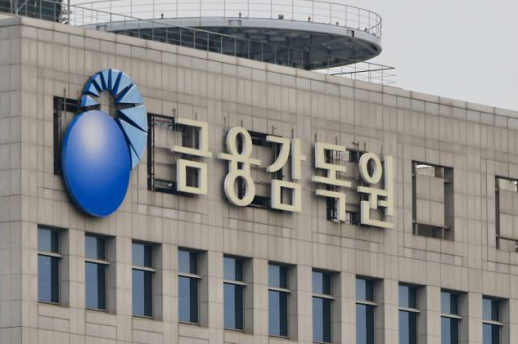 Financial watchdog urges asset managers to improve transparency SEOUL, July 13 (AJP) - Financial watchdog Financial Supervisory Service (FSS) on Monday urged asset managers to improve disclosure practices by providing clearer information on voting rights and strengthening internal controls. It also called for an end to misleading or exaggerated advertisements for exchange-traded fund (ETF) to better protect investors. In a meeting with the head of the Korea Financial Investment Association and CEOs of 20 asset management firms, FSS chief Lee Chan-jin stressed the need for greater transparency in how fund managers vote on corporate matters including board appointments, executive pay, mergers and dividend policies on behalf of investors. The meeting followed an FSS review, which found that many firms still used formulaic disclosures, giving investors little insight into how key company decisions were actually made. The review showed that asset managers have become more active in exercising shareholder voting rights. The voting rate for public and private funds has improved from 79.6 percent in 2024 to 91.6 percent in 2025 and 91.8 percent this year. The proportion of votes cast against management proposals also increased to 8.2 percent from 5.2 percent over the same period. Despite the improvement, the regulator said the quality of disclosures remained weak. Of the 285 asset managers reviewed this year, 121, or 42.4 percent, relied on generic explanations such as "little impact on shareholder interests" and "no harm to shareholder rights" instead of explaining the reasons behind their votes, making it difficult for investors to understand the basis for those decisions. Asset managers need to improve these voting procedures and provide clearer disclosures so investors can properly assess whether voting decisions are appropriate," Lee said. He also warned against misleading or exaggerated advertising in the country's fast-growing ETF market, saying investors often rely heavily on promotional materials when selecting products. Lee urged firms to ensure the accuracy of information through an internal review process, while working with liquidity providers to keep ETF market prices closely aligned with their net asset values. Industry participants also raised concerns over excessive product competition, saying the industry should voluntarily limit the launch of ETFs that closely replicate competitors’ products to create a healthier market. Lee also called on asset managers to channel more capital into promising companies and emerging industries, creating a cycle in which investment supports business growth and generates returns for investors. The FSS said it plans to hold workshops in July and August for asset managers responsible for related disclosures to share information and provide examples of practices. Meanwhile, Samsung Asset Management, NH-Amundi Asset Management and VIP Asset Management, three of the country's leading fund managers, were cited as examples of best practice in this year's review. 2026-07-13 18:00:31