


Latest by
-
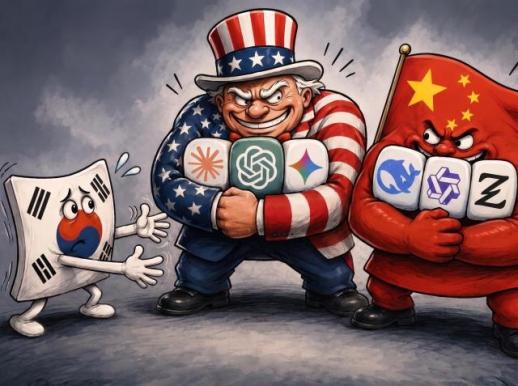 The missing ingredient in Korea's AI cake: a foundation model SEOUL, July 08 (AJP) - "Seize this opportunity," Nvidia CEO Jensen Huang exclaimed during his visit to South Korea last month, calling the country one of the few capable of owning the entire AI stack — from energy and memory to data-center infrastructure, AI models and applications. Huang may have overrated Korea. By almost every measure, South Korea is among the world's most enthusiastic adopters of artificial intelligence. Yet one crucial ingredient remains missing: a homegrown flagship foundation model. Generative AI reached 37.1 percent of Korea's working-age population in the first quarter of 2026, up from 25.9 percent in June last year, according to Microsoft's AI Economy Institute. The 43.2 percent increase was the largest among the countries surveyed over the period, far outpacing the roughly 19 percent rise in the United States. The institute said Asia is emerging as a major growth engine, with South Korea and several other economies recording rapid gains as AI tools become more useful in local languages and everyday workflows. "AI adoption continued to accelerate in Q1 2026, but the benefits are spreading unevenly. The Global North is pulling further ahead of the Global South, underscoring the need to address foundational gaps in electricity, connectivity, digital skills and local-language access," the institute said in its latest report. Korea's dependence on foreign frontier models became painfully tangible on June 12, when the U.S. Commerce Department abruptly blocked overseas access to Anthropic's newest models, Mythos 5 and Fable 5, citing national security concerns. Korean companies that had begun integrating the models into AI agents were forced to redraw development plans almost overnight. Although Washington restored access to vetted institutions on July 1, the episode served as a stark reminder that even a treaty ally can lose access to critical AI technology with little warning. For advocates of "sovereign AI" — the drive to build advanced models using domestic computing power, language and data — the incident transformed an industrial ambition into a strategic necessity. The government has since moved with unusual urgency. The Ministry of Science and ICT is reportedly discussing with the presidential office and fiscal authorities a plan to invest about 5 trillion won ($3.29 billion) from a semiconductor-driven tax windfall to secure roughly 10,000 of Nvidia's latest Vera Rubin GPU modules while launching an aggressive effort to bring leading Korean AI researchers back from overseas. The ministry has stressed that no final decision has been made. The proposal would mark a sharp departure from Seoul's current sovereign AI foundation-model program, which distributes only a few hundred GPUs to each of four teams — SK Telecom, LG AI Research, Upstage and Motif Technologies. Critics argue that spreading scarce computing resources so thinly leaves every participant too small to compete against frontier laboratories deploying tens of thousands of GPUs. Instead, the new proposal would concentrate all 10,000 GPUs on a single elite team capable of building a globally competitive model. "GPU is increasingly needed on a massive scale, but isn't the pace of securing it too slow?" President Lee Jae Myung said on June 26, urging lawmakers to lock related funding into the supplementary budget. South Korea is far from alone in its concerns. More than 60 countries have now published national AI strategies, while an increasing number — including France, India, the United Arab Emirates, Saudi Arabia, Japan and South Korea — have backed those strategies with dedicated computing infrastructure and state-supported foundation-model programs. France's Mistral AI, the UAE's Falcon, Saudi Arabia's HUMAIN and India's BharatGen each represent different approaches to the same objective: reducing dependence on foreign frontier models. Pressure is also mounting from China. Developers such as DeepSeek and Zhipu AI, themselves shut out of parts of the U.S. market, have been rapidly releasing increasingly capable open-weight models to capture global demand. The strategy weakens the case for relying exclusively on American AI while creating a different form of technological dependence. Underlying the race for chips and models is an even larger contest over infrastructure. Deputy Prime Minister and Science Minister Bae Kyung-hoon said on June 29 that countries worldwide plan to invest about $5.5 trillion, or roughly 8,400 trillion won, in AI data centers over the next five years. "Korea will invest 550 trillion won to build 8.4 gigawatts of AI data-center capacity by 2029 and attract more than 1,000 trillion won in total investment by 2035," Bae said. The infrastructure push dovetails with the country's biggest industrial gamble yet. Under the government's "three mega-projects" initiative, Samsung Electronics and SK hynix have pledged a combined 800 trillion won to build four next-generation memory fabs in the Honam region, shifting the center of gravity of Korea's power- and water-intensive semiconductor industry away from the Seoul metropolitan area. SK Group envisions building up to 15-gigawatt AI factories across the nation. James Ryu, president of SK AI Committee in an AI forum sponsored by the American Chamber of Commerce in Korea on July 2 argued Korea must evolve from a chip exporter to an AI token exporter to become an AI powerhouse. "We are selling the world's best memory chips while letting other countries build the token factories," he said. "In effect, we export components but import the finished AI product." He preached Korea must pursue five priorities to become a global AI token exporter: building gigawatt-scale AI factories, developing sovereign Korean foundation models, attracting global AI companies to operate AI factories in Korea, expanding domestic AI demand across healthcare, education, manufacturing and defense, and strengthening enabling technologies including power systems, cooling, HBM, CXL memory and advanced semiconductor packaging. Samsung SDS under Samsung Group also pursues the same vision with the plan to build a large AI data center at Solaseado in Haenam, South Jeolla Province, with construction scheduled to begin in the second half of this year. Officials acknowledge that securing sufficient electricity and industrial water will determine whether those ambitions become reality. The Honam semiconductor complex alone is expected to require roughly 650,000 tons of industrial water a day, while rebuilding Korea's AI talent pipeline remains an equally urgent challenge. Time, industry executives warn, is not on Korea's side. Frontier AI laboratories now release increasingly capable models at a breathtaking pace, narrowing the window for newcomers to catch up. Huang could be right that South Korea possesses many of the ingredients of an AI superpower. But it is yet to deliver the final layer where the greatest value is created: a globally competitive foundation model. Producing the world's best chips is no longer enough. The next race is to build the intelligence that runs on them. 2026-07-08 14:49:52
-
 NATO Defense Spending Expected to Exceed $1.8 Trillion This Year NATO's defense spending is projected to increase by 11% this year, reaching approximately $1.8 trillion (about 2,714 trillion won).According to a report cited by Turkey's state-run Anadolu Agency on July 7, the core defense expenditure of NATO's 32 member countries is expected to total around $1.809 trillion, up from an estimated $1.629 trillion last year, marking an 11.1% increase. Based on 2021 exchange rates, this year's core defense spending is anticipated to be $1.484 trillion, a 5.6% rise from last year's estimate of $1.404 trillion.Core defense spending refers to costs directly related to military needs, distinguishing it from indirect security expenditures such as investments in defense-related infrastructure.By country, the United States is expected to account for about $1.033 trillion (57%) of NATO's total defense spending, representing more than half of the alliance's overall expenditure. Following the U.S. are Germany ($147 billion), the United Kingdom ($110 billion), France ($80 billion), Italy ($57 billion), Poland ($53 billion), Canada ($52 billion), and Turkey ($48 billion).This year, NATO's average core defense spending as a percentage of GDP is projected to be 2.86%, an increase of 0.11 percentage points from last year's estimate of 2.75%. Lithuania (5.33%), Estonia (5.10%), Latvia (4.92%), Poland (4.68%), and Greece (3.65%) are expected to exceed NATO's target of 3.5% of GDP for core defense spending. The U.S. is projected at 3.17%, while major Western nations like Germany (2.69%), the United Kingdom (2.56%), France (2.22%), Italy (2.10%), and Canada (2.13%) are expected to fall short of the NATO average, remaining in the 2% range.At last year's NATO summit in The Hague, member countries agreed to increase defense spending to 5% of GDP by 2035 (with core defense spending at 3.5% and indirect security costs at 1.5%) amid pressure from U.S. President Donald Trump.Additionally, NATO Secretary General Jens Stoltenberg announced at the ongoing NATO summit in Turkey that billions of dollars in defense contracts are expected to be signed. On the same day, Swedish aerospace company Saab signed a contract to supply up to 10 'GlobalEye' early warning aircraft to a consortium of 10 countries, while representatives from 15 nations finalized a deal with European aerospace company Airbus for the purchase of aerial refueling aircraft. 2026-07-08 14:44:00
-
 S.Korea's digital industry sales top $913 billion in 2024 SEOUL, July 08 (AJP) - South Korea's digital industry generated 1,378 trillion won ($913.6 billion) in sales in 2024, up 9.3 percent from a year earlier, as the rapid embrace of artificial intelligence reshaped the country's industrial landscape. According to figures released by the Ministry of Science and ICT on Wednesday, digital industry sales accounted for 15.2 percent of all industry sales of 9,038 trillion won and exceeded half of the country's total manufacturing revenue. Digital foundation industries, spanning telecom and information and communication technology equipment, led the way with 615.8 trillion won, a 15.6 percent jump driven by swelling global AI investment and buoyant semiconductor exports. Digital platform providers logged 152.4 trillion won, up 15.2 percent, with e-commerce, portals and content services proving the busiest fields. Firms relying on brokerage platforms earned 214.1 trillion won, though about 60 percent flagged the mounting cost of listing across multiple platforms as their biggest headache. Automation, however, remains nascent: while kiosk ordering has spread through lodging and restaurants, robot serving reached just 0.4 percent of businesses surveyed. "The fact that digital industry sales keep climbing by more than 100 trillion won every year shows that digital transformation is spreading vigorously across our industries," said Lee Do-gyu, the ministry's director-general for information and communication policy. "We expect this trend to accelerate further with the AI transition." The survey, conducted by the ministry and the Korea Information Society Development Institute, polled about 10,323 businesses nationwide over four months from September to December last year through online, telephone and in-person interviews. 2026-07-08 14:43:49
-
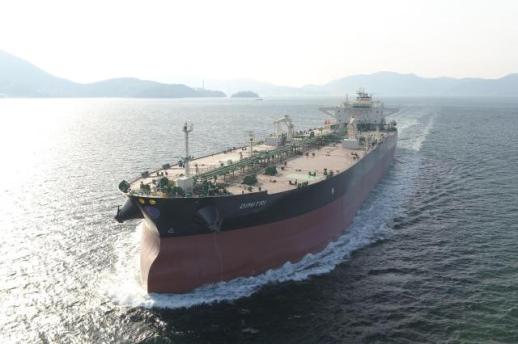 Samsung Heavy Industries tops $10 billion in orders with new tanker deal SEOUL, July 8 (AJP) - Samsung Heavy Industries has secured an order for two additional crude oil tankers, bringing its cumulative orders this year above US$10 billion, the shipbuilder said on Wednesday. The order, placed by a Bermuda-based shipowner, is worth about 284.9 billion won and is scheduled for delivery by May 2029, according to the shipbuilder. With the latest deal, Samsung Heavy Industries' cumulative orders for this year reached $10 billion, including 32 merchant ships and two floating liquefied natural gas (FLNG) units, achieving 72 percent of its annual target of $13.9 billion. It is the first time in five years that its annual orders have topped $10 billion, after a surge in global merchant-ship orders in 2021. Samsung Heavy Industries attributed the rebound to strong orders in both its shipbuilding and offshore businesses, as it has continued to secure orders for high-value vessels, including LNG carriers, floating storage and regasification units (FSRUs) and crude oil tankers. In offshore, FLNG projects led the recovery as it secured the first FLNG for the U.S.' Delfin LNG project and a separate FLNG main contract in Africa last month. The shipbuilder said it has won orders for seven of the world's 11 FLNG units ordered so far this year including Shell's Prelude, the world's largest FLNG. 2026-07-08 14:41:35
-
Controversy Erupts Over 'Musupno' Expression, Says Roh Moo-hyun Foundation Director The controversy surrounding the use of the expression 'Musupno' by Woni, a member of the group Lissenne, continues as Jo Soo-jin, a director of the Roh Moo-hyun Foundation, stated that it is indeed an 'Ilbe-style expression.' This has sparked renewed debate online.On July 7, a video titled 'Ilbe-style expression? Gyeongsang dialect? The Ilbe debate sparked by 'Musupno' (featuring Park Joo-min and Jo Soo-jin)' was posted on the YouTube channel 'Jang Yoon-sun's Reporting Convenience Store.'During the broadcast, Jo Soo-jin, a lawyer and director of the Roh Moo-hyun Foundation, discussed the issue with Democratic Party lawmaker Park Joo-min.Host Jang Yoon-sun asked Jo about the expression, noting that 'Musupno' is a Gyeongsang dialect and that the singer is also from Gyeongsang. She inquired about the ongoing debate over whether it is an 'Ilbe-style expression.'Jo responded, 'I believe it is an Ilbe-style expression. I am also from Gyeongsang, and I have seen many other expressions from the singer, but my judgment remains unchanged.' She added, 'This is not just an individual issue; it is a structural problem,' asserting that Ilbe-style expressions have become widespread among youth.She continued, 'While it may be problematic to excessively hold individuals accountable or target them, we have reached a point where we cannot ignore these issues.' Jo referenced past incidents, such as the influx of Ilbe users at the memorial service for President Roh Moo-hyun and the cases involving Baejae High School and Starbucks, stating that a culture that was once underground is now becoming more visible. 'The current situation is a result of not addressing these issues properly in the past,' she argued.Jo emphasized, 'It is now time to fundamentally change our perception and to socially inform people about how horrific the origins of these expressions are.'Following the release of the video, various opinions regarding Jo's comments emerged on online communities.One user pointed out, 'Is the proud spirit of Roh Moo-hyun about nitpicking the dialect of a young friend?' Another user remarked, 'The logic is no different from saying we should change the design of the Taegeukgi just because the Taegeukgi Brigade uses it.'Other reactions included, 'It seems like people think they will die if they apologize,' 'Isn't this essentially denying the dialect itself?' 'A person from Gyeongsang used their hometown dialect, and to label it as an Ilbe expression is excessive,' 'Didn’t former President Roh naturally use Gyeongsang dialect during his life?' and 'Are all Gyeongsang people being treated as Ilbe members?'This controversy began when Woni, a member of Lissenne from Geoje, used the expression 'Musupno' in a YouTube content, prompting a Gyeongnam MBC PD from Busan to publicly raise the issue. Subsequently, past explanations from the Korean Language Culture Institute at Dong-A University were revisited, arguing that '-no' is a sentence-ending particle used in Gyeongsang dialect for both questions and exclamations. The debate has since expanded into the political arena, with former Justice Minister Cho Kuk and Reform Party leader Lee Jun-seok expressing opposing views on social media. 2026-07-08 14:40:00
-
U.S. Lifts Restrictions on OpenAI's Latest Model GPT-5.6 The U.S. Department of Commerce has lifted restrictions on the release of OpenAI's latest artificial intelligence (AI) model, GPT-5.6.Axios reported on July 7, citing sources familiar with the matter, that the Department of Commerce has approved a full public release of OpenAI's GPT-5.6 model for general users.OpenAI is expected to unveil GPT-5.6 this Thursday, which will include the main model 'Sol' and its sub-models 'Terra' and 'Luna.'This approval followed additional safety testing and consultations with government officials. According to sources, the safety evaluation was conducted by the AI Standards and Innovation Center under the Department of Commerce. OpenAI has reportedly sent technical experts to Washington, D.C., to respond to the government's technical inquiries.Last month, the Trump administration required OpenAI to gradually release GPT-5.6 for security reasons, limiting initial access to approved institutions. OpenAI stated at the time that a phased release was not its preferred approach. However, it explained that it was cooperating with the government while specific model release criteria mandated by the latest AI executive order from President Trump had not yet been finalized.Recently, Anthropic faced similar regulations during the release of its latest AI models. The Department of Commerce prohibited access to Anthropic's Mythos and Fable models from abroad for security reasons last month, effectively withdrawing the two models from the market. However, the Department lifted restrictions on the Fable model last week, allowing Anthropic to resume customer service the following day.Axios noted that this action demonstrates how the U.S. government and advanced AI companies are coordinating in real-time on the scope and timing of the release of the most powerful AI models.* This article has been translated by AI. 2026-07-08 14:32:00
-
Air Conditioning Becomes a Political Issue in France Amid Record Heatwave France is facing a record heatwave that has turned air conditioning into a political battleground.Just a few years ago, air conditioning was viewed in France as a "noisy, unsightly, and American" appliance. However, the current heatwave has shifted public perception, leading to a political clash over solutions.According to CNN, air conditioning has become more than just a household appliance in France; it is now a political issue ahead of the 2027 presidential election.In Paris, demand for portable air conditioners surged, causing chaos at Lidl stores as customers rushed to buy them, leading to broken doors and scuffles. The air conditioning penetration rate in French households has increased to about 24%, up from 18% two years ago, but it still lags behind Italy's rate of approximately 50%.Only 7% of schools have air conditioning, resulting in thousands of school closures during the heatwave. The June heatwave led to over 2,000 excess deaths over six days, shaking the anti-air conditioning sentiment in French society, CNN reported.The debate has quickly moved into the political arena.Marine Le Pen of the far-right National Rally (RN) has labeled air conditioning a "public health issue" and has pledged a nationwide distribution plan. She stated that if elected president, she would push for large-scale cooling systems in schools, hospitals, and millions of households.In contrast, prominent figures from the radical left party La France Insoumise (LFI), including Jean-Luc Mélenchon and Manuel Bompard, argue that "installing air conditioning everywhere only exacerbates the problem." They contend that while air conditioning is necessary in hospitals and care facilities for vulnerable populations, indiscriminate distribution would worsen urban heat island effects and increase greenhouse gas emissions, ultimately worsening the climate crisis.The Green Party has also softened its previous strong opposition. Marine Tondelier, the party's leader, acknowledged that "air conditioning is no longer a taboo subject, but it is not the solution to all problems," admitting that there are now places where it is impossible to endure without air conditioning.The government is seeking a middle ground. Matthieu Lefebvre, Deputy Minister for Ecological Transition, stated that in France, which has a low-carbon nuclear power grid, there is no need to prohibit air conditioning outright. However, he emphasized the need for fundamental adaptation policies, such as improving insulation and increasing urban greenery. Meanwhile, the opposition has continued to criticize the government for failing to adequately prepare for the heatwave, submitting a motion of no confidence.French parliamentary channel LCP highlighted that the core of the debate is not simply about being for or against air conditioning, but rather whether to implement widespread distribution. Experts and centrist politicians agree that while cooling should be expanded to protect vulnerable populations, merely installing air conditioning in poorly insulated buildings will not provide a fundamental solution.The French media outlet La Dépêche criticized the current debate as a "false debate," arguing that while air conditioning can save lives, it also increases power consumption and refrigerant use, creating another climate burden. They stressed that the issue is not whether to install air conditioning or renovate buildings, but rather that both approaches must be pursued together.Long-term strategies, such as urban greening, building insulation, and improved construction methods, should be combined with expanding high-efficiency cooling systems in essential facilities like hospitals and schools. Ultimately, the air conditioning debate in France has evolved beyond a simple conflict over cooling devices; it has become a societal choice about how to adapt to the climate crisis and who will bear the costs.As heatwaves become a regular occurrence, French politics finds itself at the center of a new political controversy surrounding climate adaptation strategies.* This article has been translated by AI. 2026-07-08 14:32:00
-
 C/A data explains the mystery behind the stubbornly weak won SEOUL, July 08 (AJP) - The foreign-exchange formula used to be simple for South Korea. The current-account surplus set the tone for the Korean won against the U.S. dollar in the export-reliant economy. Strong exports bolstered the won, while a weaker won made Korean goods more competitive overseas. For foreign-exchange watchers, trade data mattered most. Not anymore. The Korean won has hovered around 1,500 per U.S. dollar since late last year. The dollar ended June at 1,549.4 won, compared with 1,439 won at the end of 2025 and 1,472.5 won at the end of 2024. In the first five months, it averaged at 1,476.99. The weak currency sits uneasily with the broader economy. Exports reached a record $496.71 billion in the first half and the economy grew 3.8 percent from a year earlier in the first quarter — among the fastest in the OECD —while the benchmark KOSPI ended June at 8,476, roughly double its level six months earlier. By the old formula, the won should have been one of Asia's strongest currencies. Instead, it has remained near its weakest level since the 1997-98 Asian financial crisis. The mystery is explained by South Korea's latest balance-of-payments data. From January to May, Korea posted a current-account surplus of $141.28 billion, while foreign investors sold a net $74.67 billion worth of Korean equities and Korean residents bought $41.03 billion of overseas stocks. Together, the two equity-related flows reached $115.70 billion, or more than 80 percent of the cumulative current account surplus. Much of the foreign selling centered on Samsung Electronics and SK hynix, the KOSPI's two largest companies, whose shares have surged five- to six-fold over the past year. Foreign investors still own roughly half of both chipmakers, allowing them to realize substantial gains from the AI-driven semiconductor rally. Semiconductors accounted for roughly half of Korea’s customs-cleared exports in May, underscoring how heavily the record current-account surplus depended on the AI-driven chip cycle. Yoo Sung-wook, head of the Bank of Korea's Financial Statistics Department, said foreign investors continued to show a tendency to sell Korean stocks in June and that it would take more time to determine when rebalancing-driven selling would come to an end. The government's assessment echoed that view. Following an interagency market-monitoring meeting Wednesday, officials said financial and foreign-exchange markets continued to face elevated volatility despite record exports and current-account surpluses because of persistent foreign fund outflows and expectations of higher global interest rates. The figures point to a structural shift in the way the won is being priced. While exports continue to generate record foreign-exchange earnings, capital flows are increasingly determining whether those dollars remain in Korea or leave the country, limiting the traditional support that trade surpluses once provided to the currency. The government said it would strengthen its 24-hour monitoring system after Korea began round-the-clock foreign exchange trading earlier this week. It also plans to announce a roadmap this month to promote the international use of the won in current and capital account transactions. 2026-07-08 14:31:29
-
Actor Lee Jung-hyun Announces Upcoming Marriage Actor Lee Jung-hyun is set to join the ranks of married individuals.According to her agency, Iple Entertainment, Lee will marry her non-celebrity partner in December at a private location in Seoul. The couple has been in a relationship for over a year, having started dating last year.The wedding will be a private affair, attended only by close family and friends. Details about the bride-to-be remain undisclosed due to her non-celebrity status.Born in 1990, Lee Jung-hyun debuted in the entertainment industry in 2014 through a commercial. She gained recognition for her role as Japanese soldier Tsuji in the 2018 tvN drama 'Mr. Sunshine,' where her Japanese language skills and character portrayal left a strong impression.Since then, Lee has built her filmography with appearances in Netflix's 'Sweet Home,' the dramas 'Snowdrop,' 'Revival of the Seven,' Wavve's 'Reverse,' and the film 'Shark: The Beginning.'Recently, she starred as Corporal Kang Chan-seok in the ENA drama series 'New Recruit.' Lee is also set to appear in 'New Recruit 4: Sabotage,' which will be released in August, along with the upcoming film 'New Recruit: The Movie.'* This article has been translated by AI. 2026-07-08 14:28:00
-
Beware of Smishing Texts Related to Payments and Deposits, Says KakaoBank KakaoBank reported on July 8 that it analyzed 10,024 suspected smishing texts received through its 'AI Smishing Text Verification' service from January to June this year, finding that 33% were related to financial transactions.The 'AI Smishing Text Verification' service allows users to copy and paste suspicious messages, which are then classified by AI into four categories: high-risk smishing, safe messages, simple spam, and messages that are difficult to assess.Among the categories, financial transaction-related smishing made up the largest share at 33%. This was followed by authentication and personal information verification at 28%, public institution notifications at 13%, delivery-related messages at 11%, personal contacts and events at 5%, and other types at 10%.Financial transaction-related smishing often involves tactics such as prompting users to visit phishing sites or install malicious apps under the guise of payment approvals, deposits, refunds, or account verifications. The authentication and personal information verification category typically exploits users' anxiety by masquerading as security checks or personal information confirmations.Smishing messages related to public institutions, deliveries, and personal contacts often use familiar topics like traffic violation notices, delivery tracking, and invitations or obituaries to entice users to click on links.The Korea Internet & Security Agency advises users to avoid clicking on links from unverified sources. It also emphasizes the importance of verifying website addresses before entering personal information such as phone numbers, passwords, or authentication codes on trusted sites.A KakaoBank representative stated, "Smishing tactics are rapidly evolving, reflecting social issues and users' daily lives. If you receive a suspicious message, we encourage you to verify it using the AI Smishing Text Verification service before clicking any links."* This article has been translated by AI. 2026-07-08 14:28:00