


Latest by
-
 LG Electronics deploys industrial heat pump system at Korean paper mill SEOUL, July 08 (AJP) - LG Electronics said Wednesday it has completed the installation of a large-scale industrial heat pump system at a paper mill in South Korea, marking the commercial deployment of a high-temperature heat pump developed under a government-backed carbon neutrality project. The company said the system was supplied to paper manufacturer Ajin P&P in Daegu and entered commercial operation earlier this month. The project forms part of a national research and development program launched in 2023 by South Korea's Ministry of Trade, Industry and Energy, involving LG Electronics and 14 other industry and academic participants. According to LG Electronics, the industrial heat pump delivers outlet temperatures of 108 degrees Celsius, with a maximum of 118 degrees, compared with about 90 degrees for conventional industrial heat pumps. The system also provides cooling capacity of up to 1,040 refrigeration tons (RT). The company said the system is designed for industrial processes requiring high-temperature heat, including paper drying, food sterilization, and applications in the chemical and refining industries. Instead of burning fossil fuels, the heat pump uses electricity and recovered waste heat to generate thermal energy. LG Electronics said the system incorporates its oil-free magnetic bearing technology and uses R-1233zd refrigerant, which has a global warming potential (GWP) of 1. The company said it is expanding its industrial heat pump business in overseas markets. It previously supplied an industrial water-source heat pump to Seoul's COEX convention center and district heating heat pumps to Danish energy company Ørsted, while pursuing additional projects in North America and Europe. 2026-07-08 10:38:56
-
 ESTsoft launches AI shopping assistant with CJ Olive Young SEOUL, July 08 (AJP) - ESTsoft, a South Korean AI service developer, announced it has launched a kiosk-based "AI Shopping Assistant" jointly with CJ Olive Young, one of the country's leading K-beauty retailers. The service will debut first at three Seoul stores popular with foreign tourists: the Dongdaemun History & Culture Park Station, Apgujeong Jungang and Ewha Jungang branches. The assistant is built on ESTsoft's real-time conversational AI avatar platform, Perso Interactive, and has been tailored specifically for K-beauty retail. It primarily targets foreign shoppers in their 20s and 30s, engaging customers through an AI avatar that communicates in eight languages. Key functions include language-barrier-free avatar service in eight languages, AI-driven product recommendations, barcode-based multilingual product information, automated handling of routine inquiries such as tax refunds, and a data dashboard tracking dwell time and customer behavior. For the recommendations, ESTsoft paired its in-house engine, AURA, with tens of thousands of Olive Young product listings to match customers by skin concerns, texture preference and intended use. Multilingual support emerged as the most requested feature in an internal survey of Olive Young staff, in which about 69.4 percent reported facing language barriers with customers and 54.8 percent said interpretation support was necessary. "This is meaningful because it allows us to resolve the language barrier issues that global retail stores face with overseas customers, while also contributing to improved store performance," said Chung Sang-won, chief executive of ESTsoft. An ESTsoft official told AJP that the company could not yet disclose any further expansion plans, citing confidentiality. 2026-07-08 10:38:15
-
 Park Chung-kwon: If Lee Wants True Cooperation, He Should Form a Joint Committee Park Chung-kwon, a member of the People Power Party, stated on July 8 that "if President Lee Jae-myung truly desires cooperation, he should propose forming a joint committee regarding supplementary investigation rights instead of suggesting golf meetings with opposition lawmakers." The People Power Party has publicly proposed holding a joint committee to reassess the overhaul of the criminal investigation system.During his appearance on KBS Radio's 'Current Affairs', Park emphasized that the issue of supplementary investigation rights should not be politicized for the Democratic Party's convention but should be decided solely based on public welfare.He referenced allegations of collusion between the father of Jang Yoon-gi, a victim in the Gwangju high school girl murder case, and the police investigation team, suggesting that "without the supplementary investigation by the prosecution, these matters would have remained undisclosed and buried."Park also expressed disappointment that discussions on supplementary investigation rights are becoming intertwined with the Democratic Party's internal power struggles rather than focusing on public welfare and national development. He remarked, "Supplementary investigation rights are directly related to people's livelihoods," and lamented that the strong support from the Democratic Party's base has coalesced around the idea of 'complete abolition.' He questioned, "What does a legitimacy battle have to do with public welfare?"Regarding the controversy over former Prime Minister Kim Min-seok's absence during the vote on a resolution to lift the state of emergency during the December 3 emergency declaration, Park described it as "disappointing."In addition, concerning the special investigation into the voting paper shortage, Park argued that appointing a special prosecutor through recommendations from third parties like the Korean Bar Association may have limitations, asserting that "the most reliable option is a special prosecutor recommended by the opposition party."* This article has been translated by AI. 2026-07-08 10:36:00
-
Han Byeong-do: The Public Demands a Functional National Assembly to Address Pending Legislation Han Byeong-do, the acting leader of the Democratic Party, stated, "The public's command is for a working National Assembly. The Democratic Party will process all pending bills in the upcoming session," reiterating the call for a National Assembly meeting on July 9.During a Supreme Council meeting on the morning of July 8, Han emphasized, "There should be no stagnation in the National Assembly when it comes to the people's livelihood. On July 7, the party's leadership conveyed the public's concerns and inconveniences regarding the prolonged delay in bill processing to National Assembly Speaker Jo Jeong-sik and requested the session on July 9. Regardless of differences between the ruling and opposition parties, it is the National Assembly's duty and obligation to vote on the bills presented in the session," he said.Han pointed out that many of the bills pending in the National Assembly have already passed through relevant committees and should be processed as soon as possible. He noted, "Among the 59 bills on the agenda, most have been reviewed without significant issues by the committees and the Legislation and Judiciary Committee. All of these bills are essential for the stability and livelihood of the public and the economy," he stressed.He also directed his remarks at the People Power Party, asking, "Can you explain to the public why you are obstructing the bills? No matter how much the People Power Party tries to hinder, the clock of the National Assembly will not stop. The public's command is for a working National Assembly. The Democratic Party will not repeat the vicious cycle of meaningless filibusters that plagued the first half of the National Assembly. We will approach this with a sense of urgency to ensure all pending bills are processed."Additionally, Han expressed concern over the escalating factional conflicts within the party ahead of the convention scheduled for August.He remarked, "The convention to elect a new leadership should be a festival that embodies the values of dignified competition and unity, and it should be a healthy competition based on policies and visions. I urge candidates and party members to engage in dignified competition to ensure the convention instills pride among party members."* This article has been translated by AI. 2026-07-08 10:36:00
-
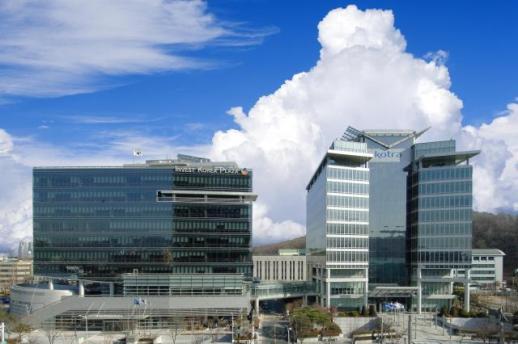 KOTRA sees UAE defense openings for Korean firms after Middle East war SEOUL, July 08 (AJP) - The Korea Trade-Investment Promotion Agency has published a new guide for Korean defense companies seeking to enter the United Arab Emirates market, as demand in the Middle East shifts from arms purchases to broader defense-industrial cooperation. The report, titled “From Arms Exports to Full-Cycle Cooperation: Strategy for Entering the UAE Defense Market,” is aimed at helping Korean firms expand in the UAE after the recent U.S.-Iran war. The UAE is the world’s 15th-largest defense spender, and its defense spending is expected to account for 5.5 percent of gross domestic product in 2026, according to KOTRA, citing Fitch Solutions. KOTRA said the war has highlighted the UAE’s need for additional troops and interceptor missiles, likely increasing defense demand further. The UAE’s defense procurement system is centered on three main players: the Ministry of Defense; Tawazun Council, which oversees procurement and offset programs; and EDGE Group, the state-owned defense conglomerate. EDGE, ranked 37th among global arms-producing and military services companies, has 35 subsidiaries in six areas, including drones, missiles and electronic warfare. Its 2025 revenue reached about $5 billion, according to the report. The group has also pursued joint ventures with foreign defense firms such as Anduril of the United States, Leonardo of Italy and Indra of Spain. The report said drones became a major threat during the war, driving demand for drone detection and counter-drone systems in the UAE. In air defense, KOTRA said the UAE’s multilayered defense system had been tested in combat, creating demand for additional interceptors, early delivery of the remaining seven Cheongung-II batteries and a possible package involving South Korea’s L-SAM long-range interceptor system. The report also said aerospace and naval cooperation could focus on the KF-21 project and partnerships in combat systems, sensors and propulsion equipment. KOTRA said defense cooperation between South Korea and the UAE has gained momentum, citing a memorandum of understanding signed by the two countries in February, the combat-proven performance of Cheongung-II interceptors and cooperation agreements between EDGE and Korean companies such as Korea Aerospace Industries and Hanwha Aerospace. “UAE defense demand is shifting from finished weapons sales to building a defense ecosystem with local firms,” said Kim Joon-kyu, head of KOTRA’s Middle East regional headquarters. “KOTRA will support Korean companies in responding to urgent demand and entering the region’s defense supply chain through local investment and technology cooperation.” 2026-07-08 10:32:53
-
KOSPI Rebounds as Foreign and Institutional Investors Buy In, Recovering Above 7700 The KOSPI index rebounded after a sharp decline in early trading, supported by simultaneous buying from foreign and institutional investors. Despite starting over 2% lower due to weakness in U.S. semiconductor stocks and geopolitical risks in the Middle East, the index managed to recover above the 7700 mark as bargain hunters entered the market.As of 10:03 a.m. on July 8, the KOSPI was up 66.34 points (0.87%) at 7722.65, recovering from an initial drop of 203.83 points (2.66%) to 7452.48. After starting weakly, the index turned around thanks to the buying momentum from foreign and institutional investors.In the securities market, foreign and institutional investors recorded net purchases of 90.2 billion won and 917.4 billion won, respectively, while individual investors sold off a net 1.023 trillion won.Among the top market capitalization stocks, SK Hynix rose by 5.54%, Samsung Electronics by 1.10%, SK Square by 1.25%, Samsung Electro-Mechanics by 0.30%, and Hyundai Motor by 0.83%. Conversely, LG Energy Solution fell by 1.96%, Samsung Life Insurance by 2.67%, Samsung C&T by 1.06%, and Samsung Biologics by 1.20%.At the same time, the KOSDAQ index recorded a decline of 10.87 points (1.31%), standing at 830.36. It opened at 816.39, down 14.84 points (1.79%), but narrowed its losses.In the KOSDAQ market, individual and institutional investors made net purchases of 25.3 billion won and 35.9 billion won, respectively, while foreign investors sold off a net 62.7 billion won.Among the top KOSDAQ stocks, most showed declines, with the exception of JUSUNG Engineering, which rose by 1.03%. Alteogen fell by 4.00%, EcoPro BM by 1.25%, EcoPro by 1.54%, Rainbow Robotics by 1.85%, Kolon TissueGene by 2.65%, and HLB by 1.16%.* This article has been translated by AI. 2026-07-08 10:32:00
-
To Control Housing Prices, Tax Policies Must Be Precise Finance Minister and Deputy Prime Minister Ku Yun-cheol announced plans to unveil a reform proposal for the real estate tax system by the end of July. He indicated that both holding taxes and transaction taxes would be examined. This approach is appropriate, as the current real estate market cannot be stabilized with piecemeal solutions. Despite tightening loans, discussing supply, and increasing regulations, housing prices in key areas of Seoul and the surrounding metropolitan region remain stubbornly high. In fact, some areas continue to see record-high transactions, exacerbating market anxiety.Since the new government took office, various real estate measures have been introduced. However, the market has not responded as the government intended. Genuine homebuyers have become more anxious, while multiple homeowners and investors have exploited loopholes in the policies. Although regulations have increased, prices have risen, and while the tax burden has grown, speculative sentiment has not been sufficiently curbed. This is the dilemma facing current real estate policy.The real estate tax system is not merely about increasing tax revenue. It should not penalize homeowners indiscriminately, nor should it freeze the market by hindering transactions. The key is the direction of the tax. If excessive burdens are placed on genuine single-homeowners while failing to address speculative demand seeking short-term profits, the policy will fail. Conversely, if holding burdens are increased while maintaining high transaction taxes, inventory will be locked up, further distorting the market.Therefore, both holding taxes and transaction taxes must be adjusted together. Relief measures should be established for long-term single-homeowners and those with limited income, while clear tax burdens should be imposed on those holding multiple high-value properties or seeking short-term gains. Transaction taxes should be lowered to allow sellers to enter the market, while a reasonable holding cost structure should be established for those expecting capital gains merely from holding properties.In particular, the tax system for multiple homeowners needs to be more refined. Treating all multiple homeowners as speculative forces will only provoke backlash from the market. Long-term holders who contribute to rental supply should be distinguished from those seeking short-term profits. The tax system must reflect this difference. Depending on whether the goal is to encourage properties to be listed on the market, maintain rental supply, or curb speculative holding, the tax rates, deductions, and exemptions should vary.The capital gains tax follows the same principle. Excessively high capital gains taxes can lock up inventory. If taxes are raised to control housing prices, a paradox may arise where reduced inventory leads to further price increases. Therefore, it is necessary to provide temporary incentives for sales over a certain period, followed by increased burdens on speculative holdings. A tax system that does not open up avenues for market movement will ultimately make the market more rigid.The objectives of real estate taxation must be clear. Homes should be places to live, not speculative instruments for generating windfall profits. However, realizing this principle requires careful design rather than mere slogans. Genuine demand must be protected, speculative demand must be blocked, and inventory must be made available in the market. This is why holding taxes, transaction taxes, capital gains taxes, and deduction systems need to be designed as a cohesive package.The real estate market is driven by sentiment. If the government sends unclear signals, the market will respond immediately. The fear of a tax bomb is problematic, but the expectation that policies will ultimately fizzle out is also concerning. The government must present clear principles and detailed criteria in the tax reform at the end of July. Real estate taxation should be strong but not harsh. It must be precise to endure over time.Controlling housing prices is not a one-time solution. Supply, finance, taxation, and regional balance policies must work in tandem. Among these, taxation is a key tool for changing market expectations. If this reform becomes just another temporary measure, the market will no longer fear the government. What is needed now is not a showy tax increase, but a precise tax reform that changes market behavior.* This article has been translated by AI. 2026-07-08 10:32:00
-
Yoon Ho-jung Issues Urgent Directives Ahead of Heavy Rainfall As heavy monsoon rains are forecasted nationwide, Yoon Ho-jung, the Minister of the Interior and Safety, directed on July 8 the dispatch of situation managers to seven provinces and cities to proactively control flood-prone areas.Considering the weakened ground conditions due to preceding rainfall, Minister Yoon ordered the deployment of senior-level situation managers to Gyeonggi, South Chungcheong, North Jeolla, and North Gyeongsang provinces, among others.The dispatched situation managers are tasked with checking the operation of local government evacuation support systems and ensuring that precautionary measures against risks are in place. They are also instructed to maintain thorough on-site responses until the heavy rain subsides.With strong rainfall expected during the night and early morning hours, Yoon urged relevant agencies to take measures to prevent loss of life and property due to the impending heavy rains.He emphasized the need to strengthen emergency response systems in collaboration with local governments and to closely monitor weather conditions.Particularly, he called for thorough preemptive inspections in areas vulnerable to landslides and steep slopes, and urged the proactive closure of areas at risk of flooding, such as underground tunnels.Additionally, he requested real-time sharing of risk information among relevant agencies and swift evacuation of residents in the event of dangerous situations.* This article has been translated by AI. 2026-07-08 10:32:00
-
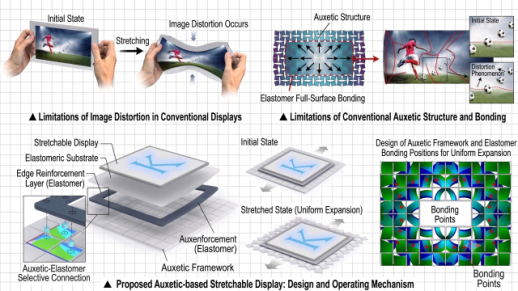 KAIST builds stretchable display that expands without image distortion SEOUL, July 08 (AJP) - South Korean researchers have developed a stretchable display platform that expands evenly in every direction when pulled, keeping text and images in their original proportions instead of squashing them, a problem that has held back screens designed to stretch like rubber. The Korea Advanced Institute of Science and Technology (KAIST) said Wednesday that a team led by Yoo Seung-hyup, a professor in its School of Electrical Engineering, developed the platform jointly with Moon Han-ul's team at Dong-A University in Busan. The work was published in the journal Nature Communications on June 10. Display makers have already moved screens from flat panels to foldable and rollable forms, and stretchable displays are widely seen as the next step. Samsung Display and LG Display have both shown stretchable prototypes in recent years. The obstacle is physical. The rubbery substrates that give a screen its stretch behave like any elastic sheet, narrowing in one direction when pulled in the other, so a stretched map or photograph ends up flattened and distorted. Engineers have tried to fix this with auxetic structures, mechanical frameworks that do the opposite of ordinary materials by growing wider as they are pulled longer. But bonding an auxetic frame across the entire surface of an elastic substrate created a new problem. The frame's individual cells rotate as they expand, and that twisting is transferred directly into the substrate, so while the screen's overall proportions are held, the letters and pictures inside it still warp. KAIST and Dong-A team's answer was to stop gluing the two layers together everywhere. Instead, the researchers calculated the specific points where the auxetic frame should connect to the substrate and bonded only there. With the connection sites chosen correctly, every region of the screen moves outward evenly from its own position, so the display expands uniformly from the smallest patch of pixels to the full panel. The team also introduced a way to measure the problem it was solving. Stretchable displays have typically been judged on how far they stretch and whether their circuits survive, not on how faithfully the image holds its shape. The researchers defined a statistical metric, the isotropic expansion factor, that scores how closely a stretched screen matches ideal uniform expansion, and used it to compare designs and find the least distorting configuration. To test the platform, the researchers printed text and images on substrates and stretched them repeatedly in both directions. Patterns on conventional substrates deformed in places, while those on the new platform held their shape. The team then built a working display by mounting an array of LEDs on the platform. The screen stretched 15 percent in each direction while current kept flowing and brightness held steady, and after repeated stretching cycles, brightness dropped by less than 2 percent. "For stretchable displays to be used as actual information display devices, they must not only stretch well but also preserve on-screen information accurately during stretching," Yoo said. "This platform enables uniform expansion from small areas of the screen to the entire display, and will serve as a key foundational technology for accelerating the commercialization of high-quality stretchable displays." The researchers said the design could eventually reach wearable devices, electronic skin, medical biosensor patches, soft robots and curved displays for cars and aircraft, applications where a screen must deform without garbling the information it shows. Commercialization will depend less on the display elements themselves than on manufacturing, they said, including processes for producing large auxetic frames uniformly, aligning and bonding them precisely to elastic substrates, and proving the connection points survive repeated pulling and touching. KAIST researchers Kim Su-bon and Kim Jun-ho led the study as co-first authors, with Yoo and Moon serving as co-corresponding authors. (Reference Information) Journal/Source: Nature Communications Title: Hybrid auxetic metamaterial platforms enabling multiscale isotropic expansion for distortion-free stretchable displays Link/DOI: https://bit.ly/4pbo4jB 2026-07-08 10:31:56
-
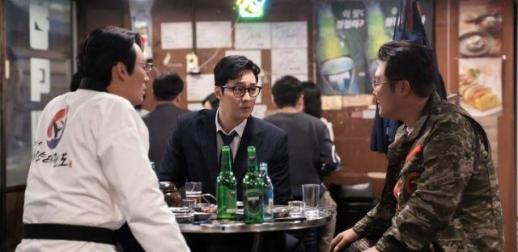 Korean titles crowd Netflix charts as 'Agent Kim Reactivated' joins SEOUL, July 08 (AJP) - Korean titles filled several top spots on Netflix's global charts last week, led by action drama "Mr. Kim," which climbed to No. 1 on the platform's non-English TV chart in its second week of release. "Agent Kim Reactivated" logged 10.5 million views for the week of June 29 to July 5, according to Netflix's official Top 10 data. Netflix calculates views by dividing total viewing hours by a title's running time. The series, which premiered June 26, debuted at No. 3 before moving to the top spot the following week. It ranked No. 1 in 11 countries, including South Korea, Singapore, Thailand and Peru, and reached the Top 10 in 79 countries. Starring So Ji-sub and based on a webtoon of the same name, "Agent Kim Reactivated (Manajer Kim)" follows a former special agent who has spent years hiding his past, only to reveal his skills after his daughter disappears. The show airs first on SBS before streaming on Netflix. Its domestic ratings have climbed as well, reaching 21.6 percent by its fourth episode. That is the highest rating for any Korean drama aired this year and the third-highest rating for an SBS Friday-Saturday drama, after "The Penthouse 2" and "The Fiery Priest." "Agent Kim Reactivated" rise pushed "Teach You a Lesson," the previous four-week No. 1 title on the non-English TV chart, down to No. 2. The Kim Moo-yul-led series still drew 4.7 million views and entered the Top 10 in 54 countries. Two other titles also placed high on the same chart. "Notes from the Last Row," starring Choi Min-sik and Choi Hyun-wook, climbed from No. 8 to No. 5 with 2.6 million views. The series entered the Top 10 in 21 countries. Adapted from a Spanish play, the drama follows a failed writer turned literature professor who becomes fixated on a student's writing talent after discovering it in the back row of his classroom. "Human Vapor," a Japanese Netflix original written and executive-produced by "Train to Busan" director Yeon Sang-ho, ranked No. 7 with 2 million views. The series expands Ishiro Honda's 1960 tokusatsu film "The Human Vapor" into a story about a man who can turn his body into gas to commit crimes and the people chasing him. Korean films also had a strong week. "Husbands in Action," starring Gong Myoung and Jin Sun-kyu, ranked No. 2 on the non-English film chart with 1.7 million views and reached the Top 10 in 10 countries. Meanwhile, "K-Pop Demon Hunters" remained in the Top 10 on the English-language film chart for a 55th week, ranking No. 6 with 3.5 million views. 2026-07-08 10:31:16