


Latest by
-
 Dongin Law Firm Receives Seoul City Council Chair Award for Social Contributions Dongin Law Firm announced that it has received the Seoul City Council Chair Award for its contributions to the promotion of community sharing culture and social welfare.The award was presented during the '2026 Seoul Welfare Conference' held on September 10 at the Seoul Women's Plaza International Conference Hall in Daebang-dong, Seoul, in celebration of the 27th Social Welfare Day.Dongin received this honor based on a recommendation from the Seoul Women's Protection Center, which it has supported since 2017. The firm has been donating funds annually to assist in the protection and empowerment of marginalized women. Attorneys Oh Se-bin and Kim Kwang-hoon from Dongin participate as members of the center's human rights guardianship team, providing legal advice and support to enhance the rights and welfare of residents in the facility.Park Bo-young, chair of Dongin's Public Interest Committee, expressed her joy at the recognition, stating, "I am pleased that our small acts of sharing for neighbors in need have led to this meaningful award. We will continue to fulfill our social responsibilities and engage in activities that provide tangible help to marginalized communities."* This article has been translated by AI. 2026-09-11 17:24:00
 -
Government Questions Spark Debate Over Expansionary Fiscal Policy On September 11, lawmakers clashed during a government questioning session in the National Assembly over the Lee Jae-myung administration's second cabinet reshuffle and its expansionary fiscal policy. The Democratic Party emphasized the necessity of the government's three major mega projects, while the People Power Party criticized the rising national debt. People Power Party lawmaker Song Eon-seok stated, "The South Korean economy is facing a crisis of accelerated aging. The growth rate continues to decline, and the ladder to independence for young people has collapsed," adding, "While our economy is aging, the government is rapidly expanding." He pointed out that the projected nominal growth rate for next year is 4.6%, while government spending is set to increase by 12.8%. "Government spending is growing three times faster than economic growth," he said, stressing the need for an environment that fosters private investment and innovation rather than government expansion. Song also raised concerns about the declining youth employment rate, questioning Prime Minister Han Seung-soo about government measures. Han expressed regret over the low youth employment rate, attributing it to changes brought about by artificial intelligence and a corporate environment that prioritizes hiring experienced workers. In response, Song argued that government regulations and high taxes are stifling investment and job creation. He stated, "While AI has had an impact, we need to encourage companies to increase their investments," and called for policies that create structures for more entry-level hiring. Song further criticized the rising national debt, noting that government spending has increased by 100 trillion won in just one year. He projected that under the Lee Jae-myung administration, national debt is expected to rise to 429.6 trillion won and questioned why the government is incurring debt for its future response fund. In reply, Han stated, "Tax revenues are increasing, and the national debt ratio is decreasing," highlighting improvements in exports across various sectors, including AI, semiconductors, shipbuilding, and K-beauty. He acknowledged the need to address the disparity in living conditions and mentioned that the government is working with companies to create opportunities for youth employment through the K-New Deal. Regarding the future response fund, Han explained, "Companies sometimes take out loans even when they have cash reserves because they need to invest in critical industries and prepare for the future," assuring that measures related to debt will be established while maintaining fiscal soundness. Song also pressed Han on allegations against Kim Seung-won, the nominee for Minister of Justice, regarding stock price manipulation. He asked, "Is the government taking action against Kim's serious allegations of stock manipulation, especially after the President stated that those involved in such actions would face dire consequences?" Han responded, "As you mentioned, there are many allegations regarding the nominee. The nominee will clarify these issues during the confirmation hearing, and necessary procedures will follow afterward." Meanwhile, the ruling party attacked independent lawmaker Han Dong-hoon, who has raised concerns about Kim. Democratic Party lawmaker Jeong Jin-wook criticized the opposition for focusing on controversies rather than evaluating the candidates' policy capabilities and expertise. He specifically pointed out that Han Dong-hoon has been using illegal investigative information to attack Kim. When Jeong inquired about Han's claim of being surveilled by the Prime Minister's Office, Han expressed regret but questioned whether the term "surveillance" was appropriate in this context. He assured that measures are being put in place to prevent such incidents from happening again. Jeong also raised concerns about the prosecution's search of a new drug development company's founder, Professor Kang, and a broker identified as Yang, noting that the name of President Lee Jae-myung appeared in forensic search terms. He suggested that there was an attempt to involve the President in a fabricated indictment. He argued, "This is a political investigation and manipulation aimed at wrongfully linking the President, and a thorough investigation is necessary." Jeong also advocated for tax incentives not only for companies involved in the three mega projects but also for workers in strategic industries within mega special zones. In response, Han emphasized the importance of companies relocating to these areas, stating, "Previously, companies were less inclined to move, resulting in limited effects. This time, the relocation of companies is crucial, and we are considering the living conditions for those moving to these areas as part of a comprehensive project." He added that preparations are underway for the introduction of the mega special zone system, although he could not provide definitive details on the extent of corporate benefits. * This article has been translated by AI. 2026-09-11 17:20:00
-
 Bank of Korea's AI rate-setters keep choosing not to decide SEOUL, September 11 (AJP) — Artificial intelligence can help analyze economic data, but it cannot be relied upon for policymaking because of its susceptibility to bias, a Bank of Korea study showed. The finding emerged from a joint forum the BOK hosted with the Korean Statistical Society on Friday, where researchers described AI systems that could interpret macroeconomic data and simulate rate decisions with fluent, plausible-looking reasoning — but whose errors kept skewing in the same direction no matter how the experiment was adjusted. Kim So-jung of the BOK's Statistical Research Team said building an AI agent system has become relatively straightforward. The harder question, she told the forum, is how much analysts can trust the output as such agents are handed greater autonomy — a question the central bank tested directly on its most consequential decision: where to set interest rates. In the experiment, large language models were fed macroeconomic data and summaries of the U.S. Federal Reserve's Beige Book, then asked to choose whether to raise, hold or cut rates. Their errors were not random, but skewed toward inaction in what researchers called a "hold bias" even when the data pointed elsewhere. BOK researchers then tried out handing different agents different roles and letting them argue it out. Again, it didn't work. The hold bias persisted through role-assigned, multi-agent debate, and in some runs grew stronger. Stretching the discussion from five rounds to 10 or 15 produced no consistent gain in accuracy either. The implication reaches beyond Seoul. A common assumption in multi-agent AI design is that pooling several models, or several instances of one, and letting them check each other will cancel out individual mistakes. The BOK results suggest otherwise when the agents share a foundation model as their errors can be correlated rather than independent so that debate multiplies the same blind spot instead of correcting it. A second BOK project produced a parallel warning. The bank built a system that routes news articles to five specialist AI agents — covering macroeconomics, finance, policy, corporate affairs and geopolitics — before combining their assessments into indicators of economic uncertainty. Tested on roughly 2,800 articles, the system scored F1 accuracy of about 0.75 to 0.81, a respectable but imperfect mark. Kim questioned whether agents drawn from the same underlying model can really be treated as independent experts merely because they were assigned different roles. None of this means the BOK is stepping back from AI. The bank already runs an agent system in production, using it in weekly analysis of its News Sentiment Index to flag what's driving changes in the gauge and cross-check those signals against market data — with analysts reviewing every output and feeding their judgment back into the system's memory. Human-supervised, narrow use case is a long way from letting AI agents debate their way to a rate decision, and Kim said closing that gap will require statistical tools that can identify, explain and control the specific biases AI systems carry — not just measure how often they happen to be right. Other presenters described the same caution from different angles. Song Kyung-ho of Yonsei University warned that AI models used in economic analysis can lose reliability once conditions shift away from what they were trained on, and proposed adaptive agents that detect such shifts and update their own methods in response. Park Se-ho of Hongik University argued that gaps between household survey data and national accounts often reflect real differences in what each dataset captures rather than errors to be smoothed away, and called for diagnosing those "distribution shifts" before adjusting survey weights. Park Mingue of Korea University said transfer learning can help fill gaps in recent data, but only where older and newer data behave similarly enough, and stressed that any new method needs rigorous validation before use. The throughline, as Kim put it, is that the question for policymakers is no longer whether AI can produce an economic judgment — it already can, fluently. It's whether researchers can pin down why that judgment is biased before they let it anywhere near an actual decision. AJP Takeaways - The Bank of Korea found AI's "hold bias" on interest rates persisted, and sometimes grew stronger, even when multiple AI agents debated the decision in different assigned roles. - Adding discussion rounds, from five up to 15, did not consistently improve the AI's rate-decision accuracy. - Researchers attribute the bias to agents sharing a common foundation model, so debate can amplify shared blind spots rather than cancel them out — a caution for any institution building multi-agent AI systems, not just central banks. 2026-09-11 17:10:36
 -
 Seoul issues new dress code for govt job interviews: come casual SEOUL, September 11 (AJP) - South Korea's government agency in charge of managing the civil service has drawn attention after announcing that applicants who show up for government job interviews wearing neckties will be told to take them off. The Ministry of Personnel Management said Thursday that it will begin strongly discouraging suits at national civil service interviews from October, instead urging applicants to come in casual clothing including jackets, shirts, knitwear, slacks, jeans and sneakers. Under the new guidance, both male and female applicants are advised to avoid suits, while neckties and formal dress shoes are prohibited. Applicants who arrive wearing a tie will be asked to remove it, while those wearing dress shoes will have shoe covers placed over them. The ministry said the unusual measures were necessary because previous efforts to encourage more relaxed interview attire had largely failed. "The Ministry of Personnel Management has recommended 'simple clothing that does not interfere with one's ability to demonstrate one's capabilities, such as everyday clothes and no tie' as interview attire," the ministry said in its notice. "However, despite the recommendation, most applicants continue to attend interviews in suits, creating an unnatural interview atmosphere, while noise from dress shoes has also disrupted the operation of the examinations." The ministry said it was reiterating its call for casual attire to reduce the burden on applicants and allow them to take part in interviews in a more comfortable and natural atmosphere. Its examples of appropriate clothing include jumpers, shirts, knit tops, slacks, cotton pants, jeans, flats and sneakers. Hiking clothes, tracksuits, shorts, sleeveless tops, high heels and slippers are among the items candidates are advised to avoid. The ministry also released AI-generated images showing examples of acceptable interview outfits, including a white T-shirt paired with jeans and a knit top worn with beige trousers. The guidelines will apply to interviews administered by the ministry beginning in October. The Ministry of Personnel Management is South Korea's central government agency responsible for personnel policy for national civil servants. Its responsibilities include recruitment, pay, human resource development, welfare and pensions, as well as ethics and disciplinary policies. It also administers the country's major open competitive examinations for Grade 5, Grade 7 and Grade 9 national civil service positions. Competition for government jobs remains intense in South Korea. This year's Grade 9 national civil service examination drew 108,718 applicants for 3,802 planned openings, producing a competition rate of 28.6 applicants per position. The number of applicants rose 3.4 percent from a year earlier. The Grade 7 examination attracted 25,650 applicants for 668 positions, or 38.4 applicants per opening. The new dress guidelines will first affect some of the country's most competitive government recruitment interviews. A combined 11,903 people applied this year for 381 positions in the Grade 5 civil service examination and the diplomatic candidate selection examination, a competition rate of 31.2 to 1. Their final interviews are scheduled to begin in October. AJP Takeaways - South Korea will discourage suits, neckties and dress shoes at national civil service interviews starting in October. - The Ministry of Personnel Management says most applicants still wear formal attire despite earlier recommendations for casual clothing. - More than 108,000 people applied for this year’s Grade 9 national civil service exam, underscoring the scale of Korea’s government recruitment system. 2026-09-11 17:09:22
 -
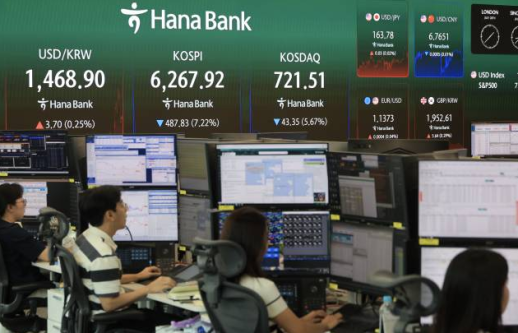 KOSPI closes below 7,000 as foreign selloff outweighs chip exports SEOUL, September 11 (AJP) - South Korean stocks fell nearly 2 percent on Friday as concerns over oil prices and interest rates led to heavy foreign selling, outweighing strong semiconductor exports. The benchmark KOSPI closed at 6,909.91, down 1.76 percent from the previous session. The index opened 3.29 percent lower at 6,802.50 before recovering part of its losses in afternoon trading. Foreign investors sold a net 2.29 trillion won (US$1.70 billion) of KOSPI shares, while institutions unloaded 1.23 trillion won. Retail investors bought a net 1.87 trillion won, helping the index recover from a drop of more than 3 percent at the open. The KOSPI nevertheless recovered more than 100 points from its opening level as bargain hunting strengthened and oil prices eased from their overnight surge during Asian trading. Brent crude and West Texas Intermediate both pulled back after surging more than 6 percent overnight, though both remained above $100 a barrel. Brent fell about 1.9 percent to $105.62, while WTI slipped 1.4 percent to $101.10. Reports that Middle Eastern officials were seeking a temporary arrangement with Iran over shipping through the Strait of Hormuz helped prices retreat from earlier highs. Easing oil prices took some of the pressure off equities, but concerns over inflation and interest rates remained. The U.S. 10-year Treasury yield hovered near 5 percent, while the 30-year yield reached its highest level in nearly two decades. Investors also remained cautious ahead of the U.S. August consumer price index report due later in the day, with markets pricing in about a 70 percent chance of a quarter-point Federal Reserve rate increase next week. The pressure carried into Seoul's chip sector, though losses narrowed later in the session. Samsung Electronics and SK hynix remained under pressure but recovered from steeper morning losses. Fresh trade data released during the session showed a sharp increase in semiconductor exports, offering some support to chip shares. Samsung Electronics closed down 3.35 percent to 260,000 won, while SK hynix fell 2.05 percent to 1,815,000 won. Semiconductor exports reached $16.48 billion in the first 10 days of September, up 270.1 percent from a year earlier and accounting for 47.1 percent of the country's total exports during the period, according to data released Friday by the Korea Customs Service. Other major KOSPI stocks were broadly lower. SK Square dropped 4.14 percent to 1,088,000 won, and Samsung C&T fell 3.29 percent to 367,000 won. Hyundai Motor lost 1.80 percent to 382,000 won and LG Energy Solution declined 1.64 percent to 359,000 won. Samsung Biologics fell 1.05 percent to 1,408,000 won, while Samsung Life Insurance dropped 1.29 percent to 305,500 won. Samsung Electro-Mechanics edged down 0.29 percent to 1,396,000 won. KB Financial bucked the broader decline, rising 2.02 percent to 176,900 won. Losses also extended to the junior KOSDAQ, which closed at 820.64, down 1.95 percent. Retail investors bought a net 511.8 billion won, while foreign investors sold 312.0 billion won and institutions unloaded 216.0 billion won. The stocks were broadly lower at the close. Biotech company Alteogen, which develops drug-delivery and biosimilar technologies, fell 3.61 percent to 267,000 won. Battery materials holding company EcoPro dropped 3.11 percent to 84,200 won, while its cathode-materials affiliate EcoPro BM slid 6.99 percent to 110,400 won. Robotics shares also weakened. Rainbow Robotics, which develops humanoid, collaborative and mobile robots, fell 2.78 percent to 436,500 won. ROBOTIS, a maker of smart robot actuators and humanoid platforms, finished unchanged at 323,500 won. Semiconductor equipment and component makers were mostly lower. EO Technics, which makes laser equipment used in semiconductor and electronics manufacturing, declined 2.09 percent to 445,500 won. LEENO Industrial, a semiconductor test-component maker, fell 3.46 percent to 66,900 won. Simmtech, which produces printed circuit boards and package substrates for semiconductors, lost 1.72 percent to 131,600 won. ISC, which produces semiconductor test sockets and related testing solutions, edged down 0.26 percent to 190,100 won. Biopharmaceutical company HLB fell 0.79 percent to 31,400 won. The broader risk-off move was not confined to Seoul. Asian stocks also retreated as higher oil prices and rising bond yields kept investors cautious. Japan's Nikkei 225 was down 1.93 percent at 64,011.34. The Shanghai Composite fell 1.18 percent to 3,888.11 at the close, while Hong Kong's Hang Seng Index was down 0.67 percent at 24,787.90. Japanese shares were among the hardest hit, with higher global yields weighing on technology stocks while expectations for tighter Bank of Japan policy added pressure after wholesale inflation accelerated 7.6 percent from a year earlier. Chinese and Hong Kong shares also weakened as investors remained cautious over the global inflation outlook and the risk that elevated energy costs could keep monetary policy tighter for longer. Investors are now awaiting the U.S. August CPI report, which could affect expectations for a Fed rate increase next week. AJP Takeaways - South Korea's KOSPI closed down 1.76 percent at 6,909.91 on Sept. 11, falling back below 7,000 as foreign and institutional investors sold heavily. - Samsung Electronics and SK hynix both fell on Sept. 11, although the two chipmakers narrowed steeper morning losses as South Korea's semiconductor exports showed a sharp year-on-year increase in the first 10 days of September. - Oil prices above $100 and the U.S. 10-year Treasury yield near 5 percent heightened inflation and rate concerns ahead of the U.S. August CPI report and next week's Federal Reserve meeting. 2026-09-11 17:05:47
 -
LG AI Research Institute Partners with National Pension Service to Develop AI for Fund Management LG AI Research Institute is collaborating with the National Pension Service to develop artificial intelligence (AI) specialized for pension fund management.On September 11, LG AI Research Institute announced that it signed a memorandum of understanding (MOU) with the National Pension Service at its headquarters in Magok, Seoul, to jointly develop AI for pension fund management.The two parties plan to combine LG AI Research Institute's AI technology with the investment expertise of the National Pension Service to establish AI services tailored for fund management.The first collaborative project will be the development of an 'AI-based Exchange Rate Analysis Service.' LG AI Research Institute will utilize its financial AI agent, 'ExaOne BI,' to analyze macroeconomic indicators, news, research data, and the National Pension Service's data, creating AI-based predictive and analytical models specialized for pension fund management.The National Pension Service aims to enhance the professionalism of investment decisions and operational efficiency by incorporating AI into its investment research and decision-making processes, ultimately seeking to improve long-term investment returns. After validating the applicability of the exchange rate analysis service, they plan to gradually expand the use of AI in various areas of fund management.Both parties are committed to establishing reliable and secure AI services as a key value, aiming to create stable use cases for AI in the field of fund management.Lee Hwa-young, head of the business development division at LG AI Research Institute, stated, “The financial AI technology of LG AI Research Institute has already been recognized by numerous global investors. We will create a model case for leading the use of AI in the public sector.”* This article has been translated by AI. 2026-09-11 17:00:20
-
GM Korea Research Union to Hold Partial Strike on September 15 General Motors' (GM) Korea research and development organization, GM Technical Center Korea (GMTCK), is set to initiate a partial strike. The strike by the research team responsible for new vehicle development raises concerns about potential impacts on ongoing domestic production programs.According to industry sources, the GMTCK union held a strategy meeting on September 11 and decided to proceed with a partial strike on September 15. The strike will involve all union members participating for four hours, from 1 p.m. to 5 p.m.The GMTCK union applied for dispute mediation with the Incheon Regional Labor Relations Commission on August 20 and subsequently voted in favor of the strike with an 83% approval rate during a member referendum held on August 27. Following a decision by the commission to cease mediation, the union secured the legal right to strike.The primary demand is to address the wage disparity with Korea GM, which recently concluded its wage and collective bargaining agreement. The union asserts, "We demand wages equivalent to those offered by Korea GM," emphasizing the need for appropriate compensation for research and development personnel. The two sides remain at an impasse, with Korea GM proposing a 5% increase in base salary, while GMTCK has suggested a 2.71% increase.Previously, the production-focused Korea GM union finalized its wage negotiations for the year, agreeing to a base salary increase of 92,000 won, along with bonuses and performance incentives totaling approximately 15 million won. In contrast, wage negotiations for GMTCK, the research and development entity, have yet to reach a consensus.The partial strike by research and development personnel is expected to affect the ongoing development of the next-generation vehicle program, known as '9BXX-2.' This vehicle, a small sports utility vehicle (SUV) similar to the current Trailblazer, began full-scale development in April. The goal is to allocate production for the vehicle in the third quarter of next year, with mass production anticipated around 2030.Industry observers warn that prolonged labor disputes could disrupt research and development schedules, potentially impacting future domestic production volumes.One industry insider noted, "Research personnel do not cause immediate production disruptions compared to assembly line workers, which often relegates their compensation discussions to a lower priority. However, as the role of research and development staff becomes increasingly critical, discussions regarding appropriate compensation are necessary." 2026-09-11 17:00:10
-
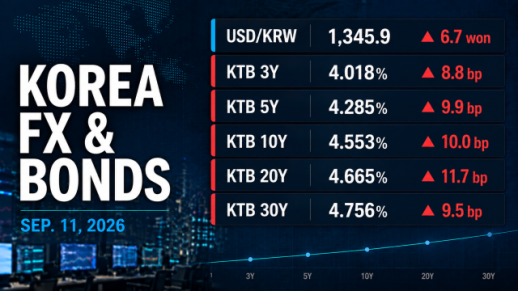 Korean 3-yr yield tops 4% for first time since 2023 SEOUL, September 11 (AJP) — South Korea's three-year government bond yield closed above 4 percent Friday for the first time in nearly three years, while the won weakened as oil-driven inflation fears sent global yields sharply higher. The three-year Korean government bond yield jumped 8.8 basis points to 4.018 percent, crossing the 4 percent threshold for the first time since Nov. 1, 2023. The yield had last closed above the level at 4.071 percent on Nov. 1, 2023, before falling to 3.979 percent the following day. Selling pressure was broad across the Korean government bond market. The benchmark 10-year yield climbed 10.0 basis points to 4.553 percent, while the 20-year yield rose 11.7 basis points to 4.665 percent, the largest increase among the key maturities tracked Friday. The 10-year yield also reached its highest level since October 2022 as Korean bonds followed a sharp global selloff. The South Korean won closed at 1,345.9 per U.S. dollar, weakening 6.7 won from the previous session. Global bond yields surged as another jump in oil prices intensified concerns that inflation could remain elevated for longer and force central banks to tighten policy further. Brent crude approached $110 a barrel Friday and was on course for an 11 percent weekly gain as escalating Middle East tensions threatened key energy shipping routes. The oil shock pushed the U.S. 10-year Treasury yield as high as 4.979 percent, close to the psychologically important 5 percent level, while longer-dated yields also climbed to multi-year highs. Higher U.S. yields fed directly into the Korean bond market, with the three-year yield particularly sensitive to expectations for the domestic policy-rate path. Inflation concerns had already intensified after U.S. producer prices rose 0.4 percent in August from the previous month and 5.4 percent from a year earlier. Several components feeding into the Federal Reserve's preferred Personal Consumption Expenditures price gauge also came in firm, pushing market expectations for a 25-basis-point Fed hike at next week's meeting to about 70 percent. The European Central Bank added to the global repricing after raising its deposit rate by 25 basis points Thursday, while investors also remained concerned about heavy sovereign-debt supply and fiscal pressures across major economies. Domestic monetary policy expectations offered little relief. The Bank of Korea said in its September Monetary Policy Report Thursday that inflation was expected to remain above its 2 percent target for a prolonged period and that it would determine the timing and pace of further rate increases while monitoring inflation, growth and financial stability. The BOK has raised its Base Rate at two consecutive meetings to 3.00 percent. The combination of higher global yields and expectations for further domestic tightening drove the three-year yield sharply above 4 percent after it had ended Thursday at 3.930 percent. Thursday's close itself was already 2.0 basis points higher than the previous session. The won came under pressure from the same combination of higher U.S. yields and oil prices. A stronger dollar followed the rise in Treasury yields, while higher crude prices worsened the outlook for South Korea's import bill as an economy heavily dependent on imported energy. Markets will next turn to U.S. consumer inflation data due Friday night in Korea, the final major inflation reading before the Federal Open Market Committee's Sept. 15-16 meeting. A stronger-than-expected core reading could reinforce expectations for a Fed hike and keep upward pressure on both U.S. and Korean yields, while a softer reading could offer some relief after Friday's sharp selloff. AJP Takeaways - South Korea's three-year government bond yield jumped 8.8 basis points to 4.018 percent, closing above 4 percent for the first time since Nov. 1, 2023. - The 10-year and 20-year yields also surged as oil prices near $110, higher U.S. Treasury yields and stronger global rate-hike expectations triggered broad bond selling. - The South Korean won weakened 6.7 won to 1,345.9 per dollar, with markets now focused on U.S. CPI ahead of next week's Federal Reserve meeting. 2026-09-11 16:58:41
 -
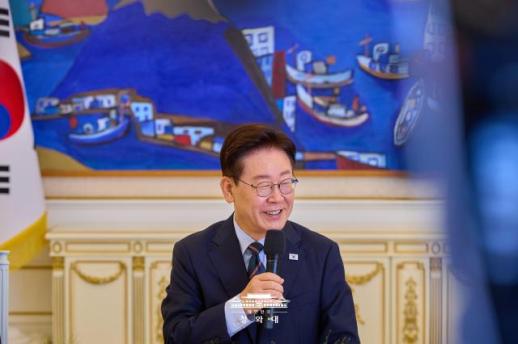 Lee pushes to expand food aid for underprivileged SEOUL, September 11 (AJP) - President Lee Jae Myung on Friday welcomed the nationwide expansion of a government program that provides food and daily necessities to people struggling to make ends meet without requiring them to first prove their eligibility. Lee said on X that the "Geunyang Dream" program, first launched in Gyeonggi Province, would now be available across the country. The program's Korean name, "Geunyang Dream," literally means "just giving," reflecting its principle of providing food and daily necessities first without requiring recipients to prove their eligibility. "A society where an elderly person steals bread makes all of us guilty," Lee wrote, saying the sentiment had stayed with him and inspired the initiative. The program provides food and basic necessities immediately to people facing financial hardship before connecting those who need further help with welfare services. The Ministry of Health and Welfare said the program will expand this month from 175 cities and counties to all local governments nationwide including Ulleungdo, an Island located near the easternmost Dokdo islets. About 210,000 people have used the service since its pilot launch at 57 locations last December. Of them, 44,712 received welfare consultations and 4,437 were connected to programs including basic livelihood assistance and emergency welfare support. The figures suggest that some households in South Korea still struggle to get enough food. A recent survey found that 98.3 percent of households had enough food in 2024, while about 1.7 percent did not have enough to meet their basic needs. Among the lowest-income households, 94.8 percent had enough food in 2024, although the government does not provide a nationwide figure for the number of people who struggle to get enough food. AJP Takeaways - President Lee Jae Myung backed the nationwide expansion of the "Geunyang Dream" program, which provides food and basic necessities to people in financial distress without requiring proof of eligibility first. - About 210,000 people have used the service since its pilot launch, with thousands later connected to welfare programs and emergency assistance. - Food insecurity remains a concern in South Korea, where 1.7 percent of households failed to meet the government’s food-security benchmark in 2024. 2026-09-11 16:55:19
 -
KDRT Second Team Arrives in Nepal for Flood Relief Efforts The second team of the Korea Disaster Relief Team (KDRT) arrived in Nepal on September 11 to assist with recovery efforts following severe flooding. Yoon Joo-seok, the designated relief leader and a diplomat at the South Korean Embassy in the United States, is expected to arrive on September 12.The Ministry of Foreign Affairs stated that until Yoon's arrival, Lee Gyu-ho, the Director of the Development Cooperation Bureau, will serve as the acting relief leader. Lee previously led the first KDRT team, which completed its mission on September 2. According to officials, the second team consists of two members each from the Ministry of Foreign Affairs, the National Fire Agency, the Korea International Cooperation Agency (KOICA), and a medical team.The ministry added that as the Nepalese government transitions from search and rescue to reconstruction and recovery, the KDRT second team will coordinate with Nepalese military authorities to conduct search and rescue operations as needed.Furthermore, the ministry emphasized plans to conduct preliminary investigations related to reconstruction and recovery in collaboration with the Nepalese government and international organizations to outline the South Korean government's contributions to Nepal's rebuilding efforts.Meanwhile, the first KDRT team is scheduled to return to South Korea on a flight from Nepal, arriving early on September 12.* This article has been translated by AI. 2026-09-11 16:52:20