


Latest by
-
 Chuseok Box Office Showdown: Min-sik Choi, Hae-jin Yoo, and Yo-han Byun Face Off As foreign films like 'Odyssey,' which surpassed 10 million viewers, and the long-running 'Spider-Man: Brand New Day' dominate the box office, three major Korean films are set to compete this Chuseok holiday. These films, ranging from a family-friendly K-office human drama to a heavy historical mystery thriller and the final chapter of a 20-year crime franchise, are poised to create a fierce three-way battle.The first film to hit theaters on September 16 is 'Intern.' This movie is a perfect reinterpretation of a Hollywood classic through a Korean lens. It tells the story of 'Sun-woo' (played by Han So-hee), a workaholic CEO who hires 'Gi-ho' (played by Min-sik Choi), a silver intern with 37 years of experience, leading to a generational clash in the office.The fresh pairing of legendary actor Min-sik Choi and MZ icon Han So-hee is a highlight. Despite their contrasting personalities, they share experiences that create a delightful synergy. The cast also includes strong performances from Kim Jun-han, Ryu Hye-young, and Kim Geum-soon, who portray relatable K-office workers. Director Kim Do-young, known for his ability to resonate with audiences in films like 'Kim Ji-young: Born 1982' and 'If We,' maintains the original's warm healing message while cleverly incorporating Korean workplace culture and the language of the MZ generation. The film is expected to be a heartwarming holiday movie suitable for the whole family.Following that, on September 23, a heavy historical drama and a flashy entertainment film will be released simultaneously. The film 'Assassins' is a high-density mystery thriller that investigates the shocking assassination attempt on the First Lady on August 15, 1974, and the suspicions surrounding it.Starring top Korean actor Hae-jin Yoo, along with Park Hae-il and Lee Min-ho, the film promises an overwhelming ensemble performance. They portray characters in different roles—'Cheol-gu,' a detective in charge of on-site security; 'Jae-hwan,' the head of the social department at a newspaper; and 'Young-il,' a rookie reporter—each pursuing the truth of the incident from their unique perspectives. The cast is further strengthened by the addition of Bae Sung-woo, Uhm Ji-won, Park Ji-hwan, and special appearances by Oh Jung-se and Jung Woo-sung, creating a solid lineup.The production team is equally impressive. Highb Media Corp, known for 'Seoul's Spring,' collaborates with director Heo Jin-ho, along with top-notch staff like cinematographer Imo-gae and art director Kim Byeong-han. They have meticulously recreated the atmosphere of the 1970s by using actual locations from that era and ensuring accurate props, even checking the number of digits in phone numbers. The film has been officially invited to the Gala section of the 51st Toronto International Film Festival, recognizing its artistic merit.Also releasing on the same day (September 23) is the highly anticipated 'Tazza' series, which celebrates its 20th anniversary with a grand finale. 'Tazza: Song of Belphegor' follows friends Jang Tae-young (played by Byun Yo-han) and Park Tae-young (played by Noh Jae-won) as they reunite in the global gambling scene, entangled in an online casino business, leading to a fierce revenge plot.This film, based on the fourth installment 'Song of Belphegor,' which fans consider the best, marks the series' first global shoot across Korea, Japan, and Vietnam. The film expands its scale by moving between urban and rural areas in Ho Chi Minh City, Vietnam, and has been meticulously designed to maximize realism, with all gambling scenes crafted to be plausible 'hold'em' games, following thorough checks by professional poker players. The rivalry between Byun Yo-han and Noh Jae-won is central to the story, complemented by a talented cast including Ayaka Miyoshi, Tsuyoshi Ihara, and trusted actors like Jo Woo-jin and Yoon Kyung-ho. Directed by Choi Kook-hee, known for 'The Day of the National Bankruptcy,' the film delves deeply into the characters' desires and natures, marking a spectacular conclusion to a 20-year journey.As three major Korean films prepare to enter the domestic box office, which has been dominated by foreign films, all eyes are on who will claim the top spot this Chuseok holiday.* This article has been translated by AI. 2026-09-09 14:24:00
 -
Fitch Ratings Positively Assesses South Korea's 2027 Budget Proposal Fitch Ratings has projected that South Korea's fiscal performance under the 2027 budget proposal will significantly improve compared to previous forecasts. The agency assessed that both the fiscal balance and national debt ratio will show a more stable trend, emphasizing the importance of investments in strategic industries such as AI and semiconductors to enhance productivity and growth potential.On September 9, the Ministry of Economy and Finance reported that Fitch's analysis indicated a stronger fiscal performance for South Korea's 2027 government budget than previously expected. The agency noted a substantial improvement in the fiscal balance and a more stable trajectory for national debt.Fitch forecasts that the managed fiscal balance will improve from a 3.9% deficit of GDP in 2026 to a 0.1% deficit in 2027. The consolidated fiscal balance is expected to record a 1.9% surplus relative to GDP. The national debt ratio for 2027 is projected at 48.3%, lower than Fitch's earlier estimate of 51.7%.The agency evaluated that the Future Response Fund could help mitigate the volatility of fiscal revenues due to economic fluctuations. It also mentioned that investments in strategic industries like AI and semiconductors could enhance productivity and growth potential, alleviating medium-term growth constraints stemming from an aging population and low birth rates.However, Fitch cautioned that the recent increase in tax revenue relies heavily on the semiconductor boom, suggesting that if the semiconductor market normalizes, fiscal deficits could gradually widen. Therefore, it is crucial to connect temporary tax revenue increases to improvements in productivity and potential growth.Previously, Moody's also positively assessed the 2027 budget proposal in a report released on September 3, noting that it seeks to balance fiscal soundness while enhancing future growth drivers.Moody's projected that the increase in demand for AI-driven semiconductors and the resulting tax revenue expansion would improve fiscal conditions. The agency viewed the plan to use part of the Future Response Fund to reduce net issuance of government bonds as a positive factor for credit ratings, as it would help restrain government leverage.Nonetheless, it emphasized the importance of adjusting expanded expenditures as planned and ensuring that investments in strategic industries lead to productivity and economic growth.The government stated, "It is unusual for international credit rating agencies like Fitch and Moody's to positively evaluate our country's fiscal soundness and future growth investment direction in the upcoming budget proposal," adding, "We plan to actively explain our fiscal policies and long-term growth strategies to major credit rating agencies and global investors going forward."* This article has been translated by AI. 2026-09-09 14:20:10
-
KAMCO Appoints Kim Kyung-jae as New Executive Director KAMCO (Korea Asset Management Corporation) announced the appointment of Kim Kyung-jae as its new executive director on September 9. Kim will oversee the public development sector. Born in 1975, Kim has built a career in real estate finance and project financing, having worked at both banks and securities firms. He joined Shinhan Bank in 2002 and has held positions at Mirae Asset Securities' project finance division, as well as serving as the head of the real estate finance and investment asset management departments at Shinhan Investment Corp. Given his extensive practical experience in real estate, project finance, and finance, Kim is expected to contribute significantly to KAMCO's public development projects and financial support for housing supply. KAMCO expressed confidence that Kim, as a private sector expert well-versed in real estate and project finance, will help expand financial support for government policies aimed at promoting housing supply.* This article has been translated by AI. 2026-09-09 14:20:00
-
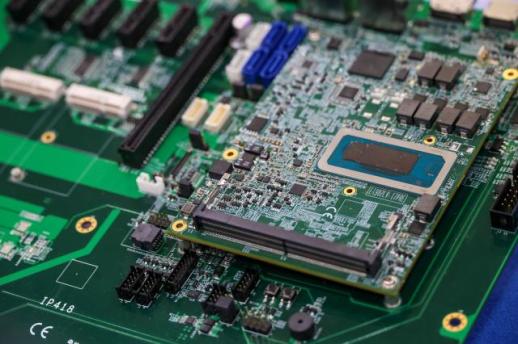 Korean Inc. bottom and top lines at 11-year high Q2 on chip boom SEOUL, September 09 (AJP) - Sales at South Korea's externally audited companies grew at their fastest pace since 2015 in the second quarter as a semiconductor boom bolstered both top and bottom lines of manufacturers. Sales rose 26.7 percent from a year earlier in the April-June period, accelerating from 13.5 percent growth in the first quarter, according to data released Wednesday by the Bank of Korea (BOK). The reading was the highest since the first quarter of 2015. Externally audited companies are firms that meet statutory thresholds, including asset-size requirements, and are required under South Korean law to undergo an external audit. The BOK estimated the figures from a sample of 4,260 companies out of 26,509 eligible firms as of the end of 2025. Manufacturers led the acceleration, with sales growth jumping to 39.6 percent from 21.1 percent in the previous quarter. Sales in the machinery and electrical and electronics sector rose 88.5 percent from a year earlier, compared with 52.1 percent growth in the first quarter. The increase was heavily concentrated in electronic, video and communications equipment, a category that includes semiconductors. Sales in the sector surged 119.7 percent from a year earlier, up from 75.7 percent growth in the previous quarter. Excluding the sector, manufacturing sales growth would have been 14.0 percent instead of 39.6 percent, the BOK said. Sales growth among non-manufacturers also rose 9.7 percent from 3.7 percent. Transportation sales rose 13.6 percent, up from 8.1 percent, as the Middle East war pushed up tanker and bulk-shipping rates and increased demand for air cargo. Wholesale and retail sales growth accelerated to 13.7 percent from 7.1 percent, helped by stronger business at semiconductor distributors and department stores. Construction sales rose 0.3 percent from a year earlier, returning to growth for the first time in eight quarters as work on semiconductor plants increased. Total assets increased 6.8 percent from the end of the previous quarter, compared with a 0.2 percent increase in the same period a year earlier. Profitability improved even more sharply. The operating profit-to-sales ratio rose to 16.9 percent from 5.1 percent a year earlier. The pretax profit-to-sales ratio climbed to 23.1 percent from 5.3 percent. Both were the highest readings since the first quarter of 2015. Manufacturers' operating margin surged to 24.0 percent from 5.1 percent a year earlier. The machinery and electrical and electronics sector posted an operating margin of 43.0 percent, up from 7.4 percent. The BOK said profits rose faster than sales because chipmakers have a high share of fixed costs, magnifying the impact of stronger revenue on earnings. The petroleum and chemical sector also benefited from wider refining margins amid the Middle East war, lifting its operating margin to 9.5 percent from 2.5 percent. Profitability outside manufacturing was weaker, with the operating margin for non-manufacturers edging down to 5.0 percent from 5.1 percent a year earlier. The transportation sector's operating margin fell to 4.8 percent from 7.0 percent as higher oil prices and longer alternative routes raised costs despite stronger sales. The improvement was also much stronger among large companies. Sales growth at large firms accelerated to 30.5 percent from 16.0 percent in the first quarter. Growth at small and midsized companies rose to 10.2 percent from 2.4 percent. Large companies' operating margin jumped to 19.1 percent from 5.1 percent a year earlier. The margin for small and midsized firms edged up to 5.3 percent from 5.0 percent. Corporate balance sheets improved overall. The debt-to-equity ratio fell to 84.5 percent from 87.0 percent in the first quarter. Borrowings and corporate bonds as a share of total assets declined to 22.8 percent from 23.9 percent. Smaller firms moved in the opposite direction. Their debt-to-equity ratio rose to 112.1 percent from 103.0 percent. Borrowings and corporate bonds as a share of assets increased to 31.1 percent from 30.7 percent. AJP Takeaways - Bank of Korea data showed corporate sales growth reached its strongest pace since 2015 as the semiconductor boom lifted manufacturing revenue and profits. - South Korean manufacturers accounted for much of the improvement, with gains heavily concentrated in electronic, video and communications equipment. - Middle East disruptions boosted transportation sales, while higher oil prices and longer alternative routes weighed on the sector's profitability. 2026-09-09 14:13:47
 -
Korea Maritime Promotion Corporation Raises $300 Million in Taiwan for U.S. Logistics Infrastructure The Korea Maritime Promotion Corporation has issued $300 million in foreign currency bonds in the Taiwanese financial market. The funds will be used to support investments in U.S. maritime and logistics infrastructure and to secure vessels for national shipping companies transporting essential goods.On September 9, the corporation announced the completion of a $300 million Formosa bond issuance with a five-year maturity aimed at global investors.Formosa bonds are issued in foreign currency by overseas institutions in the Taiwanese financial market. This marks the fourth issuance of Formosa bonds by the corporation since its first issuance in 2023.The interest rate for this issuance is 3 basis points (0.03 percentage points) lower than last year. The corporation explained that regular bond issuances have expanded its investor base, resulting in reduced funding costs and achieving the lowest interest rate among Formosa bonds issued by public institutions.The raised funds will support the overseas expansion of domestic maritime companies and key transportation projects for national shipping companies. Plans include investments in maritime and logistics infrastructure projects such as floating liquefied natural gas (LNG) export terminals and logistics centers in New Jersey.Additionally, the funds will assist in securing vessels for national shipping companies that transport essential goods, including energy and petrochemical products. In light of increasing uncertainties in major maritime transport routes, including the Strait of Hormuz, the corporation aims to secure stable transport capabilities and strengthen the national maritime supply chain.CEO Ahn Byeong-gil stated, “Stable foreign currency procurement is a crucial foundation for the overseas expansion of our maritime companies and the national maritime supply chain. We will continue to diversify our funding market and investor base to support the international expansion of our maritime companies and the stability of the national maritime supply chain, fulfilling our role in policy finance to enhance the competitiveness of the maritime industry.”* This article has been translated by AI. 2026-09-09 14:12:10
-
Choi Seung-ho Faces Controversy Over 370 Million Won Deal with Family Business Choi Seung-ho, chairman of the Samsung Group's Choi Seung-ho Union at Samsung Electronics, is embroiled in a moral controversy following revelations of a multi-million won transaction with a company owned by his father-in-law. Choi defended the deal as a decision based on legitimate comparative estimates, but the Jeon Samsung Union, another labor group within Samsung Electronics, quickly refuted his claims, escalating tensions between the unions.According to industry sources, during preparations for a general strike in March and April, the Choi Seung-ho Union purchased various items for rallies and events, including vests, raincoats, and amplifiers, from Company A, operated by Choi's father-in-law. The total transaction amount, excluding duplicate orders, reached approximately 370 million won, with over 140 million won spent solely on vests.In response to allegations of favoritism and improper profit acquisition, Choi addressed union members through group chat platforms. He acknowledged that the company is his father-in-law's but emphasized that the contract was not intended for personal gain or kickbacks. He stated that multiple vendors were evaluated based on price, quality, and delivery timelines, and the most favorable conditions were selected. Choi claimed this was the best decision for reducing union costs and ensuring prompt supply, asserting that the agreement had the backing of the joint struggle headquarters and was known to other unions.However, the Jeon Samsung Union immediately challenged Choi's explanation. The union's central executive committee stated, "We were not informed or aware of this transaction beforehand," dismissing Choi's assertion that the Jeon Samsung Union was aware as a blatant falsehood.A representative from the Jeon Samsung Union criticized Choi, stating, "The organization responsible for the purchases at that time was a separately operated joint struggle headquarters, and most of the key personnel who led those decisions have since moved to the Choi Seung-ho Union," accusing Choi of attempting to evade responsibility by mentioning another union.Choi has previously been under investigation by police for alleged violations of the Personal Information Protection Act related to the creation of a union blacklist.* This article has been translated by AI. 2026-09-09 14:12:10
-
 Korea picks 32 startups for cross-ministry finals SEOUL, September 09 (AJP) - South Korea's startup ministry named 32 early-stage companies to advance to the cross-ministry finals of its flagship entrepreneurship contest. The Ministry of SMEs and Startups announced Tuesday that 32 firms emerged from its two preliminary leagues, 10 from the artificial intelligence league and 22 from the innovation startup league. The firms were drawn from about 344 and 630 applicants respectively. This year nine ministries including the science and education ministries, each run a specialized league while funneling their top performers into a combined final field of 130 teams. An AI firm called Intellicia, which offers market-research solutions built on synthetic data generated to spare clients the time and cost of conventional surveys, won the AI league. Finalists gather for a kickoff event on Sept. 22, after which 20 teams will reach a grand championship offering up to 500 million won and preferential treatment in follow-up support programs. "We will create many opportunities and offer active support so that these early-stage founders keep pushing ahead with innovation and bold challenges," said Mok Seung-hwan, head of the ministry's startup and venture innovation office. The program runs under the same ministry that oversaw Startup for All, the separate tournament-style audition that drew a record 62,944 applicants earlier this year before the exposure of 5,000 finalists' personal data triggered a public apology. AJP Takeaways - Seoul's marquee startup contest returns with a tighter, nine-ministry structure after this summer's data-leak fallout, signaling the government wants continuity without another trust crisis. - The winners point to where Korean early-stage capital is flowing: synthetic-data market research and semiconductor-process safety, both AI-adjacent industrial plays. - With nine ministries now funneling talent into one final and up to 500 million won on the line, the contest has become the government's single largest gateway for early-stage founders. 2026-09-09 14:11:31
 -
National Assembly and Business Sector Launch Economic Leap Committee Choi Tae-won, chairman of the Korea Chamber of Commerce and Industry and SK Group, emphasized the need for the legislative body to minimize uncertainties in response to changing international circumstances. He stated, "To implement planned investments, businesses must know what is possible and when."On September 9, the National Assembly and the business sector held the launch ceremony for the 'National Assembly Economic Leap Committee' at the National Assembly's Sarangjae.The committee aims to relay the voices of businesses to the legislature, facilitating legislative and institutional improvements to secure South Korea's future growth drivers. This initiative follows a proposal made by National Assembly Speaker Cho Jung-sik to Choi Tae-won during the Jeju Forum in July, aimed at establishing a permanent cooperative framework between the National Assembly and the business sector. The committee formalizes a 'permanent channel' for direct communication between businesses and the National Assembly, leading to tangible legislative and institutional changes.During the launch, Cho stated, "As we face a transformative era in artificial intelligence, it is crucial for collaboration between businesses, the government, and the National Assembly to be robust for the future and advancement of our national economy." He emphasized that the committee should serve as a bipartisan national strategy platform to shape the future landscape of the Korean economy and its new industrial ecosystem.Choi also noted, "Balancing the pace of corporate innovation with legislative speed is essential. It would be greatly beneficial if lawmakers could visit industrial sites and act as playing coaches."Cho Jung-sik and Choi Tae-won will serve as co-chairs of the committee. It will consist of three subcommittees aligned with the relevant standing committees, with the respective committee chairs leading discussions on legislative and institutional improvements.The first subcommittee (Industry) will be led by Kim Sung-won, chair of the Industry, Trade, and Small and Medium Enterprises Committee; the second subcommittee (Tax and Finance) by Cho Seung-rae, chair of the Finance and Economy Planning Committee; and the third subcommittee (Fair Trade and Capital Markets) by Yoo Dong-soo, chair of the Political Affairs Committee.CEOs from major companies, including Samsung, SK, Hyundai Motor, LG, Hanwha, Lotte, POSCO, GS, E-Mart, CJ, Korean Air, HD Hyundai, Doosan, and HS Hyosung, will participate as advisory members.The practical discussions will be supported by a working group co-led by Yoon Sang-eun, senior policy secretary to the National Assembly Speaker, and Kim Jung-il, executive vice president of the Korea Chamber of Commerce and Industry.With the committee's launch, the Korea Chamber of Commerce and Industry proposed 'strengthening strategic industry competitiveness and enhancing corporate vitality' as its first agenda item. In light of intensifying global technological competition, it called for regulatory innovations in advanced industries, the establishment of systems to incentivize corporate growth, and measures to prevent the outflow of advanced industry technologies.The second agenda item proposed was 'expanding future growth drivers and enhancing economic security responses,' requesting support for the cultivation of advanced industries such as AI, strengthening economic security, and ensuring supply chain stability, along with tax incentives to support corporate growth.Lastly, under the agenda of 'activating businesses and improving financial market systems,' it suggested modernizing fair trade systems to improve the business environment and rationalizing systems to invigorate capital markets.Kim Jung-il, executive vice president of the Korea Chamber of Commerce and Industry, stated, "To create new growth opportunities for our economy, laws and systems must evolve rapidly in line with the pace of corporate innovation. We will closely cooperate with the National Assembly to ensure that the business sector's proposals do not remain mere documents in a drawer but lead to actual legislative and institutional improvements." 2026-09-09 14:08:20
-
Daishin Securities Offers Up to 60,000 Won for New Creon Customers Daishin Securities is providing investment support funds for new customers of Creon.On September 9, Daishin Securities announced that it will hold an investment support fund event for first-time customers who open a non-face-to-face account with Creon by the 20th.This event aims to support new customers in investing in domestic stocks. Customers who open a non-face-to-face account during the event period and apply for the investment support fund within 15 days will receive 30,000 won immediately. The investment support fund must be used for purchasing domestic stocks and is valid for 15 days from the date of issuance.Additionally, customers who trade more than 1 million won in domestic stocks within 15 days after receiving the investment support fund will receive an additional 30,000 won. The trading amount is calculated by combining the amounts of domestic stock purchases and sales.Jo Tae-won, head of the Customer Solutions Department at Daishin Securities, stated, "We designed the benefits not just to stop at account opening but to allow customers to experience actual stock trading. We hope to lower the investment burden and broaden investment experiences through Creon." More details about the event can be found on the Daishin Securities Creon (HTS·MTS) and the company’s website.* This article has been translated by AI. 2026-09-09 14:08:20
-
Rising AI Power Demand Calls for Expanded Role of LNG Generation As demand for electricity surges due to the expansion of artificial intelligence (AI), semiconductors, and data centers, experts are advocating for an increased role of liquefied natural gas (LNG) generation to ensure stable power supply. They argue that extending the lifespan of existing LNG power plants and securing new facilities are necessary to complement the intermittency of renewable energy and transmission network constraints.Jeon Woo-young, a professor at Seoul National University of Science and Technology, stated on September 9 at the 12th LNG Forum held at the Oakwood Premier Coex in Seoul, "The power demand from AI data centers and the semiconductor and advanced industries supporting AI is becoming significant."According to Professor Jeon, the government's upcoming 12th Basic Plan for Power Supply and Demand forecasts that domestic electricity consumption will increase by 52.6% from approximately 550 TWh in 2024 to 847.3 TWh by 2040. In an upward scenario, this could rise to 886.1 TWh. Notably, new demand is expected to add a total of 35.7 GW, with 24.6 GW from advanced industries and 11.1 GW from data centers.He emphasized that the role of LNG generation is essential in responding to the rapidly increasing power demand. Even as renewable energy generation grows quickly, its variability due to weather necessitates a reliable backup source for stable power supply."In the next 10 to 15 years, a fierce competition for AI supremacy will unfold, and realistically, LNG is the only resource that can back up the intermittency of renewable energy during this period," Professor Jeon said. He added that even as the industry transitions to hydrogen in the long term, LNG must serve as a bridge.There were also calls to maximize the use of existing LNG power facilities. The construction of new power plants requires significant time, and the global shortage of gas turbine supplies complicates the acquisition of new generation facilities."We should not shut down LNG power plants just because they are 30 years old," Professor Jeon remarked. "Given the rising costs and supply challenges of building new alternatives, extending the lifespan of LNG power plants beyond 30 years is a way to secure existing infrastructure and prevent gaps in power supply during the AI era."Professor Son Yang-hoon from Incheon University also assessed that utilizing existing power facilities is crucial to meet the surging power demand. He emphasized that, especially with high interest rates increasing project financing costs, it is practical to maximize the use of existing coal, LNG, and nuclear power facilities.Additionally, there were calls for a stable fuel procurement strategy alongside the expansion of LNG generation. Kim Tae-sik, a researcher at the Korea Energy Economics Institute, presented on the topic of "Global LNG Supply and Demand Changes and Implications for the Domestic LNG Industry," highlighting the need to prepare for uncertainties in the international LNG market.As domestic LNG import contracts are expected to see a rapid increase in expirations starting in the mid-2030s, he explained the importance of securing flexibility to respond to changes in demand while appropriately utilizing long-term contracts and spot imports to manage price and supply risks.Kim emphasized the need to establish a contract portfolio that reflects both upward and downward fluctuations in demand rather than relying solely on a single demand forecast. He stated, "It is necessary to secure quantities and review contract terms considering the potential for demand increases and international price volatility, ensuring both supply stability and economic viability through diversification of price indices and quantity pathways."Meanwhile, the LNG Forum, hosted by the Private LNG Industry Association, is regarded as a key platform for policy discussions in the domestic LNG industry. The association plans to continue holding LNG forums to discuss policy directions for stable energy supply.* This article has been translated by AI. 2026-09-09 14:08:10