


Latest by
-
 Household Loan Growth Slows in August, Mortgage Loans Rise by 4 Trillion Won Last month, the growth of household loans from banks slowed. However, mortgage loans saw an increase due to a rise in housing transactions in the metropolitan area.According to the Bank of Korea's financial market trends report released on September 9, the balance of household loans from deposit banks, including policy mortgage loans, stood at 1,198.3 trillion won at the end of August, an increase of 3.4 trillion won from the end of the previous month.The household loan balance surged by 7.6 trillion won in June, marking the largest increase in 22 months since August 2024 (+9.2 trillion won), but the growth rate has slowed for two consecutive months following increases of 5.5 trillion won in July.Lee Seung-yeop, head of the Bank of Korea's market management team, stated, "While the overall increase in household loans has diminished, mortgage loans continue to show a solid upward trend. We need to monitor the impact of the government's real estate measures in August."By loan type, the balance of mortgage loans rose by 4 trillion won to 952.5 trillion won, a larger increase than the previous month (3.5 trillion won). This growth occurred amid a continued decline in demand for jeonse (long-term rental deposits), influenced by increased housing transactions and supply in the metropolitan area since May.The balance of other loans decreased by 6 trillion won to 244.9 trillion won, reversing the previous month's increase of 2 trillion won due to a slowdown in individual stock investments and stricter management of credit loans by banks.As of the end of August, the balance of corporate loans from banks reached 1,430.8 trillion won, an increase of 9.7 trillion won from the end of July. This marks an expansion in growth compared to July (7.7 trillion won).The increase in corporate loans was driven by major banks strengthening their lending operations and the funding needs of companies for bond repayments, with large corporations borrowing an additional 4.9 trillion won. Loans to small and medium-sized enterprises increased by 4.8 trillion won, supported by financial assistance from some banks.After a decrease of 30 trillion won in July, bank deposits turned around to show an increase of 100 billion won in August.Demand deposits fell by 14 trillion won due to corporate withdrawals for tax payments, despite inflows from local government financial execution funds. Following a record drop of 80.8 trillion won in July, the decline has moderated.Time deposits increased by 20 trillion won due to inflows from household funds and temporary deposits from local governments.Asset management companies saw an increase of 23.5 trillion won in deposits, primarily in equity funds.Equity funds rebounded with an increase of 15.5 trillion won in August, following a decline of 56.2 trillion won in July due to rising stock prices. Conversely, bond funds decreased by 3 trillion won due to rising interest rates.Money market funds (MMFs) increased, primarily driven by corporate funds, but only rose by 5.6 trillion won due to seasonal effects from the previous month.* This article has been translated by AI. 2026-09-09 12:04:00
 -
Ruling Party's Election Reform Task Force Proposes Constitutional Changes for Election Commission The Democratic Party's "Central Election Commission Reform Task Force (TF) for the Protection of Citizens' Voting Rights" announced plans to amend the constitution to change the name and structure of the Election Commission in response to the ballot shortage that occurred during the June 3 local elections.On the morning of September 9, the TF reported its findings at the National Assembly, outlining proposed improvements and constitutional tasks.Task Force leader Song Gi-heon stated that the group carefully reviewed reform measures under the principle that the Election Commission must ensure citizens' voting rights while maintaining accountability and transparency. He noted that the TF has established a direction for constitutional amendments after several deliberative processes.Song handed the TF's report to Kim Tae-nyeon, the party's head of constitutional amendment efforts, saying, "The proposal prepared by the TF is not the final conclusion. I hope that Kim and the task force will review and familiarize themselves with it." He expressed hope that discussions on necessary constitutional amendments regarding the name, structure, and audit system of the Election Commission would advance reforms and lead to a broader discussion on guaranteeing citizens' voting rights.He added, "We have changed the current structure of the Election Commission and the method of selecting the chairperson. The TF believes that the appointment process for election commissioners should be changed to include candidate recommendations, selection procedures, National Assembly approval, and presidential appointment. We also discussed including Election Commission officials in the audit process. Although it is a preliminary proposal, we have decided on the name 'Citizens' Voting Rights Commission.'"Kim, upon receiving the report from Song, praised the efforts of the TF members, stating, "We will continue the achievements and tasks that the TF has built up so far."He emphasized, "The Election Commission is an institution guaranteed independence by the constitution. However, the well-managed election system has faced significant disappointment and criticism from the public," indicating that the task force would address the constitutional amendments concerning the Election Commission as a key issue.Additionally, he called for cooperation from the opposition party, the People Power Party, which has expressed resistance to the constitutional amendments.Kim noted, "When I spoke with individual members of the People Power Party, they all acknowledged the necessity of constitutional amendments," urging Jang Dong-hyuk, the party leader who opposed amendments based on concerns over President Lee Jae-myung's potential re-election, and Jeong Jeom-sik, the floor leader, to collaborate constructively.* This article has been translated by AI. 2026-09-09 12:00:00
-
BBQ Donates 17,000 Chickens to Local Communities Through August BBQ announced on September 9 that it has delivered approximately 17,000 chickens to local communities through various social contribution programs, including 'Chicken University Good Donation,' 'Chicken Relay with Families,' and 'Visiting Chicken Relay' over the past eight months.The 'Chicken University Good Donation' program, now in its 27th year, involves franchise owners (families) and employees who prepare chicken to share with neighbors. BBQ has consistently provided chicken to elderly individuals living alone, children's welfare facilities, and residential facilities for people with severe disabilities in collaboration with the Korean Red Cross Gyeonggi Province branch. In recognition of these efforts, BBQ Chicken University was inducted into the 'Hall of Fame' by the Korean Red Cross Gyeonggi Province branch in March.BBQ continues its on-site support activities. Recently, the company visited the Jincheon National Training Center in North Chungcheong Province, where it delivered 500 servings of chicken to national athletes and staff. Additionally, the 'Chicken Relay with Families' program, which involves franchise owners and the headquarters working together to deliver chicken to the community, is also in operation.A BBQ representative stated, "Through the sharing efforts of families and employees, we were able to convey warm feelings to various parts of the community in August. We will continue to carefully monitor our neighbors in need and sustain BBQ's diverse social contribution activities."Currently, BBQ operates over 2,300 stores in South Korea and more than 800 stores in 57 countries worldwide.* This article has been translated by AI. 2026-09-09 12:00:00
-
Central Group Bond Victims File Criminal Complaint Against 20 Individuals, Including Hong Seok-hyun Individual investors who suffered significant financial losses after investing in corporate bonds issued by JTBC and Central Group have filed a collective criminal complaint against the group's owners and the financial companies involved in the issuance and sale of these bonds.On September 9, the joint legal team representing the victims held a press conference at the Seoul Bar Association in Seocho-dong, announcing that they had filed a complaint with the Seoul Southern District Prosecutors' Office the previous day against a total of 20 individuals, including the owners of Central Group and affiliated companies, for violations of the Capital Markets Act.The complaint includes 319 individual investors who invested in the public corporate bonds of JTBC and Central Daily, as well as electronic short-term bonds issued based on these assets. The objectively verified amount of losses from transaction records is at least 32.5 billion won.Among the defendants are Hong Seok-hyun, chairman of Central Holdings; Hong Jeong-do, vice chairman of Central Group; and Hong Jeong-in, CEO of Contentree Central, along with three members of the owner family. The complaint also includes corporate entities such as Central Holdings, JTBC, and Central Daily, as well as current and former CEOs. Additionally, Shinhan Investment Corp., Hanyang Securities, Kiwoom Securities, and JNS Investment Advisory, which were responsible for securities issuance, distribution, sales, and asset management, are also accused of fraudulent trading.The legal team pointed out that Central Group inflated its financial statements structurally by engaging in fund recycling among its affiliates using hybrid capital securities and failing to account for losses on uncollectible bonds.Central Group allegedly expanded its apparent capital by having one affiliate acquire hybrid capital securities from another affiliate at risk of capital erosion on the books, subsequently raising funds from individual investors in the market. However, the funds raised did not remain with the issuing company but were diverted to other affiliates, and losses on uncollectible bonds were concealed by not setting up provisions for bad debts, according to the legal team.As a representative example, the legal team presented evidence that in 2024, Central Holdings and Dabo Central acquired 74 billion won worth of hybrid capital securities issued by JTBC. This allowed JTBC to artificially inflate its capital on the books and appear financially sound, but the funds were not used for JTBC's operations and were instead invested in or loaned to other affiliates, such as Studio Aye Central and Phoenix Sports. Consequently, JTBC was left with only interest and repayment burdens while the actual funds flowed out to other affiliates.Serious issues regarding accounting evaluations were also highlighted. As of the end of 2025, major affiliates of Central Group reflected approximately 61% of the 1.068 trillion won invested in affiliates as losses, totaling 615 billion won.In contrast, no provisions for bad debts were set for loans and bonds amounting to 740.5 billion won lent to the same affiliates. While the stock values of these affiliates were assessed to have declined, the bonds were misrepresented as fully recoverable.Based on these distorted financial statements, JTBC issued a total of 320 billion won in public corporate bonds across four tranches, of which 245 billion won in principal remains in a state of default.Lee Bok-hyun, a former chairman of the Financial Supervisory Service, also attended the press conference, emphasizing that this complaint is not merely a result of individual companies' financial difficulties but is executed under a coordinated plan at the group level.He explained, "Looking at the overall cash flow of the group, there is a series of transactions where funds from the owner family are injected into the holding company and then flow into support and recovery processes for affiliates. In the rapidly deteriorating funding environment since 2023, decisions to support funds across individual affiliate lines cannot occur without the involvement of the ultimate decision-makers, such as the owner family and the group's CFO."When asked about the jurisdiction and investigative authority regarding the case, he expressed regret that victims must form their own accounting analysis teams to uncover the facts, despite this being a large-scale capital market crime with multiple victims. He requested that if direct investigation by the Seoul Southern District Prosecutors' Office is difficult due to the current judicial system, the case should be swiftly transferred to the Financial Supervisory Service's special judicial police, which has expertise in capital market crime investigations, to exercise investigative authority.He particularly emphasized the necessity of the Financial Supervisory Service's special judicial police's involvement for effective investigations within the year, as there is a risk of delays exceeding one year if the case is handled by the police or transferred to the Serious Crimes Investigation Unit.The legal team also stated that the financial companies involved bear culpability due to their negligent intent. They noted that the lead underwriters and distributors have been deeply communicating with the group's management while conducting bond issuance and investment banking activities for years, and they directly created and sold short-term liquidity products based on hybrid capital securities.He asserted, "Financial investment businesses should act as 'gatekeepers' to resolve information asymmetry in the market, yet they repeatedly drafted investment prospectuses indicating that repayment risks were manageable while earning substantial fees without disclosing the risks."The legal team and victim representatives clarified that the ultimate goal of the criminal prosecution against the defendants is not merely punitive but to achieve substantial recovery of losses through accurate fact-finding and to urge responsible behavior from the management. They strongly requested prompt compulsory investigations, including tracking the flow of funds between affiliates and securing internal documents through swift searches and seizures.Earlier in June, JTBC declared a default of approximately 20 billion won, which triggered a ripple effect throughout the group. Subsequently, all affiliates of Central Group, including Central Daily, Central Holdings, and Megabox Central, applied for court rehabilitation procedures, marking the beginning of a financial crisis for Central Group.Creditors have initiated legal actions against Central Group, its management, and the owner family, and the Seoul Rehabilitation Court has decided to commence legal rehabilitation procedures for five companies within Central Group. Notably, JTBC has been ordered to submit a detailed rehabilitation plan by January 29 of next year. 2026-09-09 12:00:00
-
Kolon Industries Expands mPPO Production Line for AI and Semiconductor Applications Kolon Industries has enhanced its production capacity for mPPO (modified polyphenylene oxide), a low-dielectric material that reduces electrical signal loss in semiconductor circuit boards, in response to the growth of the artificial intelligence (AI) and semiconductor industries.On September 8, Kolon Industries announced the successful completion of the mPPO production line expansion at its Gyeongbuk Gimcheon Plant 2, holding a ceremony to mark the occasion.Circuit boards (PCBs) are essential components that transmit electrical signals between semiconductors and other parts. Copper-clad laminates (CCLs) play a crucial role in reducing signal loss, which can lead to slower speeds and heat generation. This is particularly important for products that process large amounts of data quickly, such as AI accelerators and 6G communication devices. mPPO exhibits dielectric performance that is approximately three to five times better than epoxy resins used for the same purpose, making it suitable for high-performance CCL production.After completing the new facilities in the second quarter of this year, Kolon Industries began production in the second half following the necessary hazardous material permits and trial operations. The company plans to gradually increase production volume by year-end while ensuring product quality and process stability, and it is already supplying the entire production volume to global CCL companies.Heo Seong, CEO of Kolon Industries, stated, "This expansion marks a turning point for the mPPO business as it enters a full growth phase. We will cultivate next-generation electronic materials as a new growth driver based on our differentiated technology and quality competitiveness."Meanwhile, Kolon Industries is also accelerating its efforts to commercialize eco-friendly POM (polyacetal) products, targeting the low-carbon engineering plastics market for medical applications.* This article has been translated by AI. 2026-09-09 11:48:20
-
Controversy Surrounds Kim Seung-won's Ministerial Hearing Amid New Drug Lobby Investigation The police investigation into allegations of lobbying for a COVID-19 drug involving Kim Seung-won, the nominee for Minister of Justice, is expected to focus on distinguishing between public interest complaints and private lobbying.According to legal sources on September 9, the Seoul Metropolitan Police Agency assigned the case involving allegations of abuse of power, violation of the Anti-Corruption Law, and dereliction of duty against Kim and former Food and Drug Safety Minister Kim Kang-rip to the Yeongdeungpo Police Station.Kim is accused of requesting expedited processing of a clinical trial plan for the COVID-19 treatment developed by the pharmaceutical company Genensel at the behest of a friend, identified as Yang, while he was a member of the National Assembly in 2021.Yang, who was asked by Genensel's founder, Kang Se-chan, sent Kim development materials for the new drug, requesting, "Please mention this to the Minister." Kim reportedly responded with an "Okay" and subsequently asked Kim Kang-rip for swift processing of the application, which was approved later that month.Kang later attempted to send Kim a donation of 5 million won, but was unable to do so due to donation limits. The Seoul Western District Prosecutors' Office decided not to indict Kim, while charging Yang and Kang.In its non-indictment decision, the prosecution acknowledged the allegations against Kim but concluded that it was difficult to classify his request for expedited processing as an illegal solicitation. They noted that he did not receive any donations and found no evidence of his involvement in any further wrongdoing by Yang and Kang.The police are expected to investigate whether Kim's request constituted private lobbying for a specific company and whether he solicited or agreed to receive the 5 million won donation. Analysts suggest that new evidence proving a quid pro quo between the solicitation and the donation would be necessary for a different conclusion than the previous decision.Kang denied the allegations during a CBS radio interview, claiming that a transcript released by independent lawmaker Han Dong-hoon was edited and asserting, "I have never thought about or discussed any quid pro quo regarding the donation." Kang has been indicted for manipulating data during the clinical trial approval process and was sentenced to three years in prison, with a five-year suspended sentence.The renewed investigation has also raised concerns regarding the safety of the whistleblower. Lawmaker Park Jeong-hoon from the People Power Party revealed that the whistleblower, identified as Cho, received a threat from Yang, stating, "I will kill you without anyone knowing." Cho submitted related recordings to the Anti-Corruption and Civil Rights Commission, which has reportedly requested police protection for him.Additionally, a separate controversy has emerged regarding salary increases at the Korea Child Development Social Cooperative, where Kim's family members are employed. Kim's spouse's salary rose from 3.82 million won in 2024 to 5.16 million won this year, an increase of about 35%. Their eldest son's salary also increased from 2.66 million won to 3.71 million won, a rise of approximately 39.4% during the same period.Lawmaker Joo Jin-woo from the People Power Party claimed that while Kim was active in the National Assembly's Budget Special Committee, the cooperative received 880 million won in tax support and failed to properly accumulate legal reserves.Kim's hearing preparation team refuted these claims, stating that the salary increases were due to increased responsibilities. They emphasized that the salaries are comparable to those of other teachers in the facility and were approved through discussions with cooperative members, who are parents of children with developmental disabilities. They called for an end to baseless smear campaigns.As he arrived at the hearing preparation office in Jongno, Seoul, Kim stated regarding the ongoing allegations, "I will thoroughly understand the details and explain them step by step during the hearing preparation."* This article has been translated by AI. 2026-09-09 11:44:00
-
Suwon Hosts 24th Korea-China-Japan PD Forum to Discuss Future of AI Content The 24th Korea-China-Japan PD Forum is taking place in Suwon, where broadcasting and content industry professionals from the three countries are discussing the future of the content industry.According to the city of Suwon, the forum, themed "The Future of East Asian Content in the Age of Artificial Intelligence (AI)," began on September 8 at the Suwon Convention Center and will run until September 11 at the convention center and the surrounding Hwaseong Fortress area.During the opening ceremony on September 8, Suwon Mayor Lee Jae-jun stated, "While the media environment is rapidly changing alongside AI, the essence of content, which embodies the creator's intense contemplation and philosophy, remains unchanged. I hope this forum will be a meaningful time to explore new horizons for East Asian content at this significant turning point of AI."This event is hosted by the city of Suwon and the Suwon Convention Center, with over 200 participants, including PDs, producers, and media professionals from Korea, China, and Japan.On September 8, a forum session was held on the topic of "How Good Formats Are Born." On September 9, the main session featured selected documentaries, entertainment, and drama works from each country, along with insights from the directors on their production techniques.Before the main session, Professor Hong Kyung-soo from Ajou University delivered a keynote speech on "The Current Status and Challenges of the Content Industry." On September 10, a "Global Pitching Session" will take place, allowing creators to present their ideas and seek collaboration and co-production opportunities with domestic and international partners.On September 11, participants will tour the Suwon Cultural Tourism sites, including Paldalmun Gate, Hwaseong Haenggung, the Traditional Culture Center, Haenggung-dong, Hwaseomun Gate, and Janganmun Gate, visiting drama filming locations.A city official remarked, "We hope this forum will uncover and expand Suwon's history and culture into new content, and we will strive to promote the charm of Suwon as a global cultural tourism city both domestically and internationally."Participants include directors from the China TV Artists Association, Shanghai Media Group, Kyoto Broadcasting, and MBS. Notable online video services from China, such as iQIYI and Bilibili, as well as Hai Shi Media and cultural tourism holding companies, are also represented, along with executives from Japan's AXon TelePAC and Telecom Staff.* This article has been translated by AI. 2026-09-09 11:44:00
-
Hyundai Motor Group Partners with African Development Bank for Sustainable Development Hyundai Motor Group is partnering with the African Development Bank to promote clean energy transition and transportation infrastructure in Africa.On September 8, Hyundai Motor Group announced that it signed a letter of intent (LOI) with the African Development Bank at its headquarters in Yangjae, Seoul.As part of the collaboration, Hyundai Motor Group will enhance its technological capabilities in mobility, energy, infrastructure, and industrialization in Africa. The partnership aims to identify new business opportunities by leveraging the African Development Bank's development and investment capabilities.Specifically, the collaboration will focus on six areas: transitioning to clean energy such as green hydrogen, establishing sustainable mobility solutions, developing transportation and logistics infrastructure including roads, railways, and ports, creating an electric vehicle value chain utilizing key mineral resources, strengthening industrialization and manufacturing capabilities, and training talent for future mobility and energy industries.Following the signing of the agreement, the African Development Bank delegation discussed the development finance environment and key industrial challenges in Africa with Hyundai Motor Group, as well as long-term cooperation strategies. They also explored future mobility technologies, including delivery and security robots, at the Yangjae headquarters.Jang Jae-hoon, Vice Chairman of Hyundai Motor Group, stated, "This collaboration marks the beginning of a long-term partnership aimed at enhancing energy transition and industrial competitiveness in Africa. We will continue to expand our cooperation with the African Development Bank."Kevin Chika Urama, Vice President of the African Development Bank, remarked, "The experience, technology, and future vision that Hyundai Motor Group has accumulated closely align with the African Development Bank's vision to transform Africa's potential into prosperity."Meanwhile, Hyundai Motor Group is expanding its operations in Africa. On September 4, Hyundai Motor launched the 'Hyundai-KOICA NextGen' project in Ghana in collaboration with the Korea International Cooperation Agency (KOICA) to train automotive professionals. The initiative will invest a total of 5 billion won by 2030 to establish an automotive training center and support education for 405 local teachers and students.* This article has been translated by AI. 2026-09-09 11:40:00
-
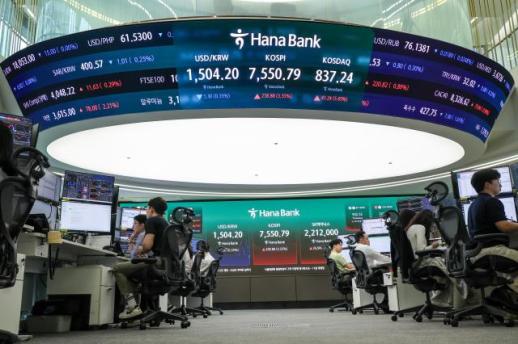 Chip stocks pull KOSPI above 7,000 SEOUL, September 09 (AJP) - South Korean stocks rebounded Wednesday morning, with the KOSPI climbing back above 7,000 as gains in chip heavyweights Samsung Electronics and SK hynix outweighed lingering pressure from higher oil prices and Middle East tensions. The benchmark stood at 7,039.16 as of 10:54 a.m., up 1.22 percent from the previous session. The KOSPI opened 0.26 percent higher at 6,972.87 and briefly slipped to 6,968.06 before turning higher as buying strengthened in semiconductor and other heavyweight shares. The rebound came a day after the index climbed as high as 7,171.52 before reversing sharply to close at 6,954.52, as rising international oil prices and geopolitical concerns in the Middle East erased an earlier chip-led rally. Major U.S. indexes fell for a second straight session overnight as escalating Middle East tensions pushed up oil prices and Treasury yields. The Dow Jones Industrial Average dropped 1.18 percent, the S&P 500 lost 0.58 percent and the Nasdaq Composite fell 0.32 percent. West Texas Intermediate crude rose to $94.20 a barrel as concerns over oil supplies intensified following U.S.-Iran military tensions and attacks on Saudi energy facilities. The U.S. 10-year Treasury yield climbed to 4.79 percent, adding pressure on risk assets. Chip shares, however, bucked the broader decline on Wall Street. The Philadelphia Semiconductor Index gained 1.30 percent as expectations for continued artificial intelligence investment supported the sector. Investors focused on signs that AI demand is broadening beyond accelerators into inference, central processing units and networking equipment. Intel surged 9.05 percent and AMD jumped 5.90 percent, while Nvidia fell 2.01 percent and Micron Technology lost 1.61 percent. In Seoul, Samsung Electronics rose 0.93 percent to 272,000 won and SK hynix gained 2.96 percent to 1,846,000 won. Samsung Electronics preferred shares edged up 0.10 percent to 198,600 won. Other semiconductor-related large caps also advanced. Samsung Electro-Mechanics gained 2.92 percent to 1,410,000 won, while SK Square rose 0.53 percent to 1,137,000 won. Power and defense shares also gained on expectations for overseas orders. Doosan Enerbility climbed 3.24 percent to 92,400 won, extending gains from the previous session amid expectations tied to South Korea's planned nuclear and power investments in the United States. Hanwha Aerospace rose 1.66 percent to 1,044,000 won as expectations persisted for additional overseas defense orders. The company is showcasing its K9A2 self-propelled howitzer at the MSPO 2026 defense exhibition in Poland, running from Sept. 8 to 11, as it pursues a third K9 execution contract with the country. Elsewhere, LG Energy Solution gained 0.72 percent to 351,000 won, Kia rose 0.64 percent to 126,200 won and Samsung Biologics edged up 0.14 percent to 1,442,000 won. Samsung C&T added 0.13 percent to 382,500 won, while Hyundai Motor was unchanged at 385,000 won. Financial shares were weaker. Shinhan Financial Group dropped 2.74 percent to 110,100 won, KB Financial fell 1.04 percent to 171,900 won and Samsung Life declined 0.81 percent to 305,500 won. The KOSPI's rebound was driven largely by local institutions, which bought a net 304.2 billion won ($226 million) as of 10:54 a.m. Retail investors sold a net 638.6 billion won, while foreign investors offloaded 201.3 billion won. Despite the rise in the benchmark, gains were not broad-based. A total of 401 KOSPI-listed stocks advanced, while 465 declined and 44 were unchanged, underscoring that the rebound was concentrated in heavyweight shares. The junior KOSDAQ rose even faster, gaining 1.86 percent, or 15.09 points, to 826.97 as semiconductor equipment and component shares extended early gains. In the currency market, the Korean won strengthened to 1,339.20 per dollar from 1,345.60 a day earlier. AJP Takeaways - South Korea's benchmark KOSPI rose 1.22 percent to 7,039.16 as of 10:54 a.m. on September 9, 2026, reclaiming the 7,000 level as Samsung Electronics and SK hynix led a rebound in heavyweight semiconductor shares. - Samsung Electronics gained 0.93 percent to 272,000 won and SK hynix rose 2.96 percent to 1,846,000 won on September 9, 2026, supported by strength in U.S. semiconductor shares even as higher oil prices and Treasury yields pressured broader global markets. - Institutional investors bought a net 304.2 billion won of KOSPI shares as of 10:54 a.m. on September 9, 2026, while retail and foreign investors were net sellers, with investors also awaiting the U.S. August producer price index on September 10 and consumer price index on September 11. 2026-09-09 11:32:12
 -
Samsung Electronics Expands Health Ecosystem with Galaxy Watch Samsung Electronics has unveiled advanced healthcare technology that goes beyond blood pressure and electrocardiogram (ECG) measurements to provide a comprehensive heart health score using the Galaxy Watch and Samsung Health app. Choi Jong-min, Senior Vice President of Samsung Electronics' MX Business Digital Health Team, expressed a strong commitment to realizing non-invasive continuous glucose monitoring (CGM) technology during a briefing at the company's press room on September 9. He aims to develop technology that allows real-time blood sugar monitoring on the wrist without the need for blood draws, enhancing Samsung Health into a truly comprehensive healthcare platform. On this day, Samsung presented its vision for smart healthcare, which monitors subtle physical changes 24/7 to detect and prevent serious illnesses early. In anticipation of 'World Heart Day' on September 29, the company emphasized a smart health management ecosystem that enables continuous monitoring to recognize warning signs and take immediate action. The 'Heart Health Score' feature, available on the Galaxy Watch Ultra 2 and Watch 9, analyzes sleep, activity levels, vascular stress, and body composition to provide intuitive scores and actionable guidance. For instance, if vascular stress is high, it recommends a low-sodium diet and meals rich in whole grains. The 'Vital Signs' feature tracks five key indicators—heart rate, heart rate variability, and respiratory rate—during sleep, sending immediate alerts when significant deviations from normal values are detected. Choi stated, "The key is not just measuring indicators but proactively detecting subtle anomalies through artificial intelligence (AI) and sensor technology. We have refined the algorithms to help users intuitively understand their physical condition and improve their lifestyle habits." The recently upgraded Samsung Health version 7.0 supports 'Connected Care,' allowing families to share health information. With user consent, key biometric data can be shared among family members, enabling children to monitor their parents' irregular health metrics and respond proactively to any concerning changes. Choi noted, "Connected Care, which allows children to check and respond to their parents' health status in real-time from a distance, is one of the true values that smart healthcare should pursue. The accumulated data can also serve as valuable reference material during hospital visits, significantly lowering communication barriers with healthcare professionals." Since introducing optical heart rate (PPG) sensors in 2014, Samsung has continuously advanced its monitoring technology. In 2020, it obtained medical device approval for its blood pressure and ECG measurement apps, and in 2021, the Galaxy Watch 4 integrated PPG, ECG, and bioelectrical impedance analysis (BIA) sensors into a single 'BioActive Sensor,' setting a new standard for wrist-based healthcare. In 2023, the company received approvals from the U.S. FDA and South Korea's Ministry of Food and Drug Safety for its irregular heart rhythm notification (IHRN) feature, contributing to the early prevention of serious conditions like atrial fibrillation. There have been successful cases of early detection and treatment of atherosclerosis and myocardial infarction through irregular rhythm notifications and ECG assessments in both domestic and international settings. Regarding global regulatory approvals and future specifications, Choi remarked, "Gaining approvals from various countries' food and drug administrations and the FDA is a challenging task that requires rigorous clinical data and safety validation. However, since it directly relates to users' lives, we will prioritize trustworthiness in our verification process. We will continue to introduce preventive-focused smart healthcare services in the future."* This article has been translated by AI. 2026-09-09 11:32:10