


Latest by
-
 At Kiaf and Frieze, Seoul's art crowds come before the buyers SEOUL, September 03 (AJP) - Kiaf Seoul, Korea's flagship art fair, has plenty to celebrate in its 25th edition. On Thursday morning, its audience looked ready for the occasion. Minutes before the 11 a.m. opening, VIP guests were already gathered inside COEX. The dress was polished rather than extravagant: neat jackets, muted colors, the practiced restraint of an art-fair crowd. Then the doors opened and the phones came out. Visitors paused before paintings, stepped back for photographs and handed phones to companions for another shot. Couples drifted between booths. Foreign groups followed guided tours. Empty aisles disappeared quickly under the traffic. Children were scarce. Spectators were not. Buyers were harder to spot. "People come to see the works, but it doesn't really lead to purchases," said a representative of one Kiaf gallery who asked not to be identified. That gap between attention and transaction hangs over Seoul Art Week this year. Kiaf is marking its 25th edition with 175 galleries from 18 countries and territories. Frieze Seoul, held upstairs in the same COEX complex, is in its fifth edition with 133 galleries from 30 countries and regions. Together they have made early September one of the busiest dates on Seoul's cultural calendar. They have also brought the international art trade — and its prices — visibly into the city. There was serious money changing hands at Frieze. On Wednesday's opening day, Thaddaeus Ropac sold Adrian Ghenie's Figure with Funerary Stele for 1.1 million euros ($1.28 million). Antony Gormley's HOLD sold for 750,000 pounds, while White Cube reported selling Gerhard Richter's Fuji for 625,000 euros. Such deals, however, sit at the top end of a market that has yet to regain the momentum of the pandemic-era art boom. South Korea recorded 638.2 billion won ($448 million) in art transactions in 2025, up 3.8 percent from a year earlier, according to the Ministry of Culture, Sports and Tourism and the Korea Arts Management Service. That was still 20.9 percent below the market's 2022 peak, while the number of works traded declined 3.1 percent. Downstairs at Kiaf, few visitors appeared preoccupied with those figures. Conor Pace, a 42-year-old Australian living in Japan, came with his wife during a monthlong stay in Seoul. His wife had studied art, and what struck him was the sheer range available under one roof. He enjoyed watching her move through the fair and seeing works of markedly different styles placed within a few steps of one another. Upstairs at Frieze, the presence of blue-chip names created a different sort of traffic. Owen Lui, a 35-year-old Chinese American from Chicago, was traveling through Asia when he realized Frieze Seoul coincided with his stay in Korea. Already impressed by Seoul's exhibition scene, he came to see what might catch his eye. A traditional Korean vase did. "I find them very beautiful," Lui said. "I think the Korean vase represents the heritage and elegance of one's culture." He also encountered familiar names including Pablo Picasso, Keith Haring and Chinese contemporary artist Yue Minjun. Around the most recognizable works, phones again became part of the viewing experience. "I have actually seen a lot of people taking selfies and photos with their friends in front of the Picasso painting," Lui said. "But I don't judge them. It's hard to get to see something this famous this close." For Lee Yu-jin and Lee Seong-a, two office workers in their mid-20s from Gyeonggi Province, buying was never the objective. They had received invitations and came because Kiaf and Frieze were famous enough that they wanted to see the fairs for themselves. What surprised them was first the size of the crowd and then the informality inside. Visitors sat on bleacher-style seating between booths, talking and resting before disappearing back into the aisles. The prices were less inviting. Some works looked expensive enough that the two said they would not even dare ask the price. During their visit, neither recalled seeing anyone buy a work or negotiate with a dealer. They nevertheless wanted to return. The attraction was discovery: artists they did not know, styles they had not encountered and the sense that the fairs offered more than could comfortably be absorbed in a single visit. That audience matters increasingly to Korea's art market. A recent study of 408 people who had bought art within the previous five years found that 31.3 percent were in their 20s and 30s. Nearly 62 percent had been collecting for less than five years. It points to one of the more important shifts taking place around Seoul's fairs. The city has become adept at drawing people into the orbit of contemporary art, even when attendance does not immediately become acquisition. By late Thursday morning, camera shutters were still clicking across COEX. Elsewhere in the building, works priced in the hundreds of thousands — and occasionally above $1 million — were finding buyers. But in most aisles, the transaction was more modest: a few minutes before a work, a photograph, perhaps a conversation, and then on to the next booth. 2026-09-03 18:02:39
 -
 Seoul joins global arms race with record defense spending SEOUL, September 03 (AJP) - South Korea is joining a global rearmament push by packaging the largest military spending increase in nearly two decades against widening geopolitical conflict, changing warfare and U.S. pressure on allies to shoulder more of their own defense The government has proposed a record 73.28 trillion won ($54.0 billion) defense budget for 2027, up 8.2 percent from this year, with much of the additional money directed toward missile defense, drones, artificial intelligence and capabilities needed for greater military autonomy. The increase outpaces China's 7 percent rise in central government defense spending for 2026. Beijing allocated 1.91 trillion yuan this year and has yet to announce its 2027 budget. Japan, meanwhile, is seeking a record 8.9 trillion yen defense budget for fiscal 2027 as it continues a five-year military buildup centered increasingly on drones, missiles and other unmanned systems. South Korea's headline record comes with an accounting caveat. Starting in 2027, the government will include force operations, defense capability improvement and military manpower administration under a single defense-expenditure measure, making direct comparisons with previously reported totals less straightforward. The broader direction, however, is unmistakable. Global military expenditure rose 2.9 percent to $2.89 trillion in 2025, marking an 11th consecutive annual increase, according to the Stockholm International Peace Research Institute. Spending in Europe alone jumped 14 percent as Russia's war in Ukraine continued to drive rearmament across the continent. Recent conflicts are also changing what militaries are spending their money on. During the war with Iran, U.S. Admiral Brad Cooper told Congress that the United States and its allies had intercepted more than 1,500 missiles and 6,000 drones, putting heavy pressure on stocks of costly air-defense interceptors. The Pentagon has since moved to expand production of key missile defenses including Patriot PAC-3 and THAAD interceptors. Ukraine has demonstrated the challenge on an even larger scale. Russia launched nearly 1,500 drones at Ukraine over just four days in late August, more than half of them jet-powered, according to Ukrainian President Volodymyr Zelenskyy. Ukraine itself is on track to produce between 6 million and 7 million small first-person-view attack drones this year, or roughly 500,000 a month. The scale of drone warfare has created a two-sided problem for militaries: they need large quantities of inexpensive unmanned systems for surveillance and attack while developing cheaper ways to stop enemy drones without exhausting far more expensive missile inventories. South Korea's 2027 spending plan is built increasingly around those pressures while addressing threats specific to the Korean Peninsula. Spending on force operations will rise 5.9 percent to 50.04 trillion won, while the defense capability improvement budget, used largely to acquire and develop weapons, will jump 13.8 percent to 22.71 trillion won. The latter will increase by about 2.8 trillion won, the largest annual gain on record. Particularly striking is the increase tied to South Korea's push for greater military autonomy and the transfer of wartime operational control, or OPCON, from the United States. Funding designated for OPCON transition and self-reliant defense will surge 34.9 percent from 9.02 trillion won this year to 12.17 trillion won in 2027. The government plans to accelerate deployment of medium-altitude reconnaissance drones and the L-SAM long-range missile defense system, expand production of the KF-21 fighter jet and begin work on a nuclear-powered submarine program. The budget also incorporates lessons from drone-heavy conflicts. Funding for artificial intelligence and manned-unmanned teaming systems will increase 55.5 percent, while spending on drone and counter-drone capabilities will rise 18.8 percent. The military plans to develop swarm and loitering attack drones while expanding laser-based and other counter-drone defenses, reflecting the growing need to counter large numbers of relatively inexpensive aerial threats without relying exclusively on costly interceptors. The buildup comes at an important moment for the future of the South Korea-U.S. alliance. President Lee Jae Myung recently nominated Kang Shin-chul, a former deputy commander of the South Korea-U.S. Combined Forces Command, as defense minister. Kang said Thursday that Seoul should pursue OPCON transition in a way that strengthens the alliance. The allies are in the second stage of a three-stage conditions-based transition process, and Seoul aims to complete the full operational capability assessment this year. The Lee administration wants to regain wartime operational control before Lee's term ends in 2030 and is seeking to establish a target year during the allies' annual Security Consultative Meeting this fall. The accelerating military buildup is unfolding alongside Lee's push to ease tensions with North Korea. Lee said Wednesday that conditions should be created for renewed dialogue between Washington and Pyongyang and called for the Korean Peninsula's decades-old armistice system eventually to be replaced by a permanent peace framework based on cooperation and prosperity. South Korean intelligence authorities have also detected signs that both North Korea and the United States may be interested in returning to dialogue, although no specific contacts have been confirmed. Beyond external threats, however, South Korea faces another defense challenge that additional spending alone cannot solve: a rapidly shrinking pool of military-age personnel. The 2027 proposal seeks to nearly double the number of full-time reservists from 3,700 to 7,000, expand the use of civilians for noncombat duties and invest more heavily in AI and unmanned systems to reduce reliance on manpower. That demographic pressure has also become central to Seoul's wider debate over military reform. The Defense Ministry is pushing to create a unified Armed Forces Academy by integrating the Army, Navy and Air Force academies. At a recent public hearing, Kim Hong-chul, director general for defense policy at the ministry, said South Korea's pool of available military manpower is projected to shrink from about 349,000 to roughly 204,000 by 2040, forcing the military to reduce its standing force of about 500,000 to somewhere between 350,000 and 400,000. The prospect has intensified debate over whether a smaller military should focus as heavily on improving the quality and specialization of individual personnel as on replacing manpower with technology. Kim Se-jin, secretary-general of defense policy group Mirae Saenggak, argued that population decline makes the capabilities of individual officers more, rather than less, important. "As our population declines, the capabilities of each individual officer become more important in future warfare," he said, arguing for greater specialization in military education rather than consolidation. AJP Takeaways • Korea joins global rearmament: Seoul's proposed 2027 defense budget rises 8.2 percent to a record 73.28 trillion won as China, Japan and European countries also raise military spending. • Drones reshape the spending race: Wars in Ukraine and Iran have exposed the need for both mass-produced attack drones and cheaper defenses against them, pushing Seoul toward drones, lasers and AI-enabled systems. • OPCON drives military investment: Spending tied to wartime operational control transition and self-reliant defense will jump 34.9 percent as South Korea accelerates missile defense, KF-21 production and a nuclear-powered submarine program. • Demographics become a security constraint: A shrinking military-age population is forcing Seoul to rely more heavily on reservists, civilians, AI and unmanned weapons while reopening debate over how the armed forces train future officers. 2026-09-03 18:02:06
 -
 First Company Faces Delisting Under New Rules: Coiz Following the tightening of delisting regulations for penny stocks and companies with insufficient market capitalization in July, Coiz has become the first company to face delisting. The KOSDAQ-listed firm entered an orderly trading phase on September 3 due to its failure to meet market capitalization requirements.On the first day of the orderly trading period, Coiz's stock fell 34.72% to 329 won. The company will continue this trading phase for seven days until September 11, before being officially delisted on September 14.In July, financial authorities strengthened regulations, stating that companies listed on the KOSPI with a market capitalization below 30 billion won and those on the KOSDAQ below 20 billion won for 30 consecutive trading days would be designated as management category stocks. Additionally, new delisting criteria for penny stocks were implemented, which state that if a stock trades below 1,000 won for 30 consecutive trading days, it will also be classified as a management category stock. If a company fails to exceed the market capitalization threshold or maintain a stock price above 1,000 won for at least 45 out of 90 trading days after being designated, it will face delisting procedures.With Coiz's delisting, more companies are expected to follow suit. Potential candidates for delisting include Wonpung Mulsan, Silla SG, KM Pharmaceutical, Susung Webtoon, and Gold & S.Wonpung Mulsan has been under management category designation since July 3 due to insufficient market capitalization and has remained below the threshold for 41 trading days. If this situation continues, it is expected to face delisting on September 8. Silla SG and KM Pharmaceutical received notices regarding delisting concerns due to insufficient market capitalization after the market closed on August 31, while Susung Webtoon and Gold & S also received similar announcements after the market closed on September 2.These companies have yet to resolve their delisting issues. Silla SG and KM Pharmaceutical are expected to face delisting concerns on September 14, while Susung Webtoon and Gold & S are projected to do so on September 16.As concerns over delisting grow, these stocks experienced significant declines on the same day. Wonpung Mulsan fell 7.99%, while Silla SG dropped 15.27%, KM Pharmaceutical decreased by 18.15%, Susung Webtoon plummeted 28.70%, and Gold & S fell 27.12%.By the end of the year, the number of companies facing delisting is expected to increase. According to the Korea Exchange, as of today, there are 84 listed companies designated as management category stocks due to insufficient market capitalization and trading below 1,000 won.Previously, before the strengthened delisting regulations were applied in July, a case of delisting due to insufficient market capitalization occurred in the securities market. Yeojeong Industrial was delisted at the end of June, marking the first instance of delisting for this reason in the securities market.* This article has been translated by AI. 2026-09-03 18:00:10
 -
Director Lee Joon-ik Experiments with Vertical Short Film 'Father's Home Cooking' Movie director Lee Joon-ik, known for films like 'The King’s Man' and 'The Book of Fish,' is engaging audiences with a vertical short drama. This marks the first time vertical content designed for smartphones is being showcased on a theater screen. As the director takes a bold step into the short-form market with a simple family story, attention is focused on how this format experiment will resonate in cinemas.On September 3, a press screening and media conference for the film 'Father's Home Cooking' (directed by Lee Joon-ik) took place at Lotte Cinema World Tower in Songpa-gu, Seoul. The event featured director Lee Joon-ik along with actors Jung Jin-young and Lee Jung-eun.'Father's Home Cooking' tells the story of a father, Ha-eung (played by Jung Jin-young), who has relied on home-cooked meals for 40 years. When his wife, Soon-ae (played by Lee Jung-eun), suffers from a cooking block, he steps into the kitchen for the first time. Based on a webtoon of the same name by author Go Ri-ta, the film was initially planned as a short drama for the mobile platform Lezhin Snacks but is now being screened as a 'vertical cinema' feature through Lotte Cinema.Director Lee stated, "I was able to capture the warm and humorous essence of the original work in the film. Watching it on screen today made me realize that the format—whether horizontal or vertical—is not what matters most. Even when viewing paintings from hundreds of years ago, horizontal ones depict landscapes while vertical ones portray figures and portraits. The vertical format allows for an intimate and profound glimpse into each character's inner world."The director's decision to break away from traditional commercial filmmaking to explore short-form directing stems from the current stagnation in the film industry and a desire to support younger filmmakers.Lee explained, "The barriers in the film industry have become so high that I wanted to encourage my juniors to express their creativity, even through short-form works. After receiving some light-hearted teasing about whether I was dismissing short-form just because I make commercial films, I decided to take on this direction. Ultimately, I feel it was a good decision to embrace this new challenge."He added, "I was concerned about whether I could make this short-form film enjoyable, given that my films are less sensational and not violent. However, I realized that even a simple family story could be engaging if we leverage the short-form's concise structure effectively."'Father's Home Cooking' features a talented cast, including Jung Jin-young, Lee Jung-eun, and Byun Yo-han, who plays the eldest son, Myung-bok. The actors create a strong dynamic within the somewhat unfamiliar short-form format, filling the screen with their performances.Jung Jin-young described the film as a "tear-jerking comedy," stating, "I thought it was important not to exaggerate my comedic performance. Approaching it with sincerity feels like the true essence of comedy. I even asked AI about 'short-form acting techniques,' and it turns out there are distinct methods for film and short-form acting. However, as an actor, I focused on the basics without making a distinction."He also noted, "What was interesting was that the staff were not far away but close, allowing me to feel their energy and warmth while acting."Lee Jung-eun, who plays Soon-ae, the wife who suddenly hands over the rice cooker to her husband, shared her personal connection to the character. "My mother recently said, 'I really don’t want to cook anymore; I’m tired of it,' and my father only eats home-cooked meals. I found it fascinating and enjoyable to portray a character that prompts reflection on the everyday lives of parents, especially for those who take home-cooked meals for granted," she said.The actors expressed positive expectations regarding the unusual attempt to showcase a mobile-targeted 'vertical short drama' on a large theater screen.Jung Jin-young joked, "The director was pushed into directing, and I feel like I’m being pushed into the release as well." He added, "During the screening at the Bucheon International Fantastic Film Festival, I noticed that the audience was completely engaged and no one left. While the original goal was to provide a short-form drama, we thought there might be viewers who want to experience it on a big screen, so we decided to reach out to them directly."He continued, "If a feature film is a panoramic view, then OTT dramas are like a large window in a small apartment, while this is more like a small ventilation window or a peephole. Even if you look through it, the beautiful scenery outside is worth seeing. Senior Lee Kyung-kyu also mentioned that it doesn’t matter whether it’s horizontal or vertical. I hope viewers enjoy it, even in this strange and unique environment."Lee Jung-eun added, "My mother watched it on her laptop and said she wanted to see it on a big screen. I appreciate that we have a venue that can attract audiences who find it difficult to watch on their phones. I believe it’s a great attempt to bring a good story to various audiences, regardless of the space."Finally, Director Lee reflected on a previous screening for the general public, saying, "I was surprised to see the theater filled with older individuals when I entered towards the end. I think the film’s charm lies in the shared experience of watching a movie that resonates with one’s age. I hope not only older viewers but also granddaughters, daughters-in-law, and families can come together to enjoy a glimpse into our lives."Jung Jin-young expressed, "I don’t expect this film to achieve huge box office success, but I hope it provides a happy viewing experience where audiences can say, 'This is fun.'" Lee Jung-eun also noted, "Since it doesn’t have the sensational themes typical of most short dramas, I believe it will appeal to a wide range of age groups. As viewers follow the story, their focus will increase, making the small screen feel larger."Meanwhile, 'Father's Home Cooking' is set to be released in Lotte Cinema on September 9.* This article has been translated by AI. 2026-09-03 18:00:00
-
Jangheung County Mayor Apologizes for Animal Shelter Management Issues Jangheung County Mayor Sa Soon-moon has officially apologized regarding the management issues at the Jangheung County Animal Shelter, which have been reported recently. He expressed his commitment to ensuring the safety of protected animals and normalizing the shelter's operations.In his apology, Mayor Sa stated, “I deeply apologize for causing great concern and shock to the public regarding the management of the Jangheung County Animal Shelter.”He added, “I take this matter very seriously, as it involves animals that should be safely protected at the shelter. I fully acknowledge my responsibility for failing to ensure their safety, regardless of the circumstances.”Mayor Sa reiterated his apologies to the public and citizens who care about animal protection, emphasizing the need for accountability.He also announced plans to focus administrative efforts on normalizing the overall operation of the animal shelter in light of this incident.“I promise to do my utmost to quickly normalize the operations of the animal shelter and to create an environment where protected animals can be safely cared for,” he stressed.Following this apology, Jangheung County plans to prioritize the safety of protected animals during the shelter's operations and will conduct a thorough review of its facilities and management systems to restore public trust.Mayor Sa Soon-moon stated, “Once again, I sincerely apologize to everyone who has been concerned by this incident, and I will respond with a responsible attitude to create a safe environment for protected animals.”* This article has been translated by AI. 2026-09-03 17:56:00
-
Foreign Executives Leaving Japan Surge 3.9 Times Amid Stricter Residency Rules Foreign executives operating businesses or restaurants in Japan left the country at nearly four times the rate in the first half of this year compared to the same period last year. This increase is attributed to the Japanese government's efforts to prevent the improper acquisition of residency status through paper companies, which led to significant tightening of eligibility criteria and assessments starting last fall. While the intention is to eliminate unviable businesses, concerns have arisen that the departure of small foreign operators may impact Japanese companies that have been trading with them. The Nikkei reported on September 3, based on statistics from the Japanese Immigration Services Agency, that 953 holders of 'management and administration' residency status left Japan without going through re-entry procedures in the first half of this year, a 3.9-fold increase from the same period last year. The number of departures, which had been in the dozens per month until last fall, rose to 114 in December and has remained between 100 and 200 each month from January to June this year. The surge in departures began immediately after the Japanese government tightened residency requirements for foreign executives. In October of last year, the Immigration Services Agency revised regulations, raising the corporate capital requirement from 5 million yen to 30 million yen (approximately $280,000). Additionally, it mandated at least three years of management experience or a master's degree, as well as the employment of full-time staff and a certain level of Japanese language proficiency. Existing residents are allowed to renew their residency until October 2028 even if they do not meet the new criteria, provided they are expected to comply in the future. Despite this grace period, the number of departures has increased since the implementation of the new rules. Some have noted that assessments of management practices have also become stricter than before, independent of the new criteria. The number of foreign residents holding 'management and administration' status has rapidly increased, with 46,781 such residents in Japan at the end of last year, a 1.7-fold increase from five years ago. However, the tightening of requirements has led to a near halt in new applications, with the number of applications dropping by approximately 96% in the five months following the regulatory changes compared to the previous five months. The challenge is that even foreign entrepreneurs running legitimate small businesses find it difficult to meet the new criteria. According to Tokyo Shoko Research, among the 143,367 new corporations established in Japan in 2024, only 1,491 had capital exceeding 30 million yen, accounting for just 1% of the total. This means that foreign executives are being asked to meet capital requirements that 99% of new Japanese corporations do not fulfill. The impact of the new criteria may extend beyond foreign entrepreneurs. Kenji Goto, an information department manager at Tokyo Shoko Research, pointed out, "It is difficult for small businesses to meet the new standards, and if foreign entrepreneurs close their businesses, it will also affect Japanese companies that supply raw materials or lease commercial properties to them." The Takaiichi government has tightened residency requirements for foreign executives and is also tightening overall eligibility assessments. In January of this year, new Japanese language proficiency requirements were added for permanent residency applications, and since April, the assessment for 'intra-company transferee' residency status for foreign employees relocating from overseas to Japanese branches has also been strengthened. This includes new requirements for submitting corporate registration and tax status from overseas offices, as well as local social insurance enrollment records and documentation from Japanese offices. If tax evasion is confirmed, residency renewal will generally not be permitted. The Japanese government aims to close loopholes in residency qualifications that have relatively lenient requirements while actively welcoming highly skilled professionals who meet stringent criteria such as education and salary. However, the number of 'highly skilled professionals' the government seeks to attract is only about 30,000, which is less than 1% of the total foreign residents. The Nikkei noted that if the tightening of assessments complicates procedures, it could deter foreign companies and talent from entering Japan.* This article has been translated by AI. 2026-09-03 17:48:20
-
Damyang's 'Daesupmalkun Damyang Rice' Recognized as Top Quality Brand Rice in Jeonnam Gwangju Damyang's 'Daesupmalkun Damyang Rice' has been selected as the representative high-quality brand rice for Jeonnam Gwangju this year.The Jeonnam Gwangju Integrated Special City held the '2026 Top 10 High-Quality Brand Rice Awards' on September 3 at the Muan Government Complex, recognizing a total of 10 outstanding brand rice products, including Damyang's 'Daesupmalkun Damyang Rice'.The award ceremony was attended by over 70 people, including Yoo Deok-kyu, head of the Agricultural and Marine Products Bureau of Jeonnam Gwangju Integrated Special City, Lee Kwang-il, head of the Jeonnam Gwangju Integrated Headquarters of the National Agricultural Cooperative Federation, and representatives from the winning rice processing complexes (RPCs).In this year's evaluation, Damyang's 'Daesupmalkun Damyang Rice' received the top honor, while Haenam's 'Ttangkkeut Haetsal' was awarded the Grand Prize.Three brands received Excellence Awards: Naju's 'Wanggeoni Tamna Rice', Boseong's 'Green Tea Beauty Boseong Rice', and Jangheung's 'Armi Rice'.Five brands received Encouragement Awards: Yeonggwang's 'Four Seasons House', Yeongam's 'Dalmaji Rice', Goheung's 'Guardian Angel Healthy Rice', Muan's 'Hwangtorang Rice', and Jindo's 'Bobaejinmi Rice'.The Jeonnam Gwangju Integrated Special City plans to provide a total of 150 million won in incentives to the rice processing complexes of the 10 selected brands to support rice quality improvement and marketing efforts based on the evaluation results.Yoo Deok-kyu, head of the Agricultural and Marine Products Bureau, stated, "As rice consumption changes, it is important to create high-quality brand rice that consumers trust and return to. We will continue to enhance quality management and brand competitiveness to increase consumer confidence in Jeonnam Gwangju rice."Since 2003, the selection of the 'Top 10 High-Quality Brand Rice' has been promoted to improve the quality and brand competitiveness of regional representative rice. Professional organizations evaluate brand rice, which undergoes contract cultivation and processing and distribution management, through blind assessments of variety mixing rates and taste to select outstanding brands each year.* This article has been translated by AI. 2026-09-03 17:44:00
-
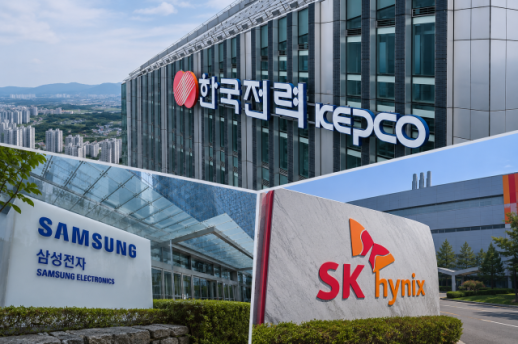 Korea weighs asking chipmakers to prepay power for AI build-out SEOUL, September 03 (AJP) - South Korean memory makers envisioning an expansive build-out under government's ambitious push to turn the country into a chip republic involves more than billions of dollars for construction and purchases of land and equipment as chip facilities rely on seamless power and water supplies to keep the fab running 24/7. Under unprecedented government eagerness to the chip expansion to add chip facilities in Yongin as well as Honam region, southern part of the country, the country's state utility monopoly is proposing an unusual arrangement – a lump-sum power deal that can possibly save Samsung Electronics and SK hynix unpredictable disturbances and the state utility an one-off windfall to erase its deficit. Korea Electric Power Corp. (KEPCO) has proposed an advance-payment scheme to major electricity consumers including Samsung Electronics and SK hynix as the state-run utility searches for new ways to finance transmission infrastructure needed for rapidly expanding chip production and AI data centers. The logic appears straightforward. KEPCO gets money upfront to build the grid, while semiconductor companies gain greater certainty that the enormous amounts of electricity required by their future fabs will be available when production begins. But whether that bargain works for both sides is more complicated. KEPCO confirmed that discussions with large electricity consumers are underway but stressed that the proposal remains at an early stage. "Discussions are underway, but details including the amount and period have not been decided," a KEPCO official told AJP. The utility also pushed back against reports that Samsung Electronics and SK hynix had been asked to prepay a combined 25 trillion won ($18 billion), saying no such figure had been set. Participation, interest rates, payment amounts and payment periods have yet to be finalized. A 72.8 trillion won grid bill Behind the proposal is the sheer scale of investment required to connect South Korea's next generation of semiconductor factories and other power-intensive industries to the grid. KEPCO's latest long-term transmission and substation plan calls for 72.8 trillion won in grid investment through 2038, up 16.3 trillion won from its previous plan. The Yongin semiconductor cluster alone is eventually expected to require more than 10 gigawatts of electricity, underscoring the infrastructure demands behind South Korea's attempt to build one of the world's largest semiconductor manufacturing hubs. The issue carries wider significance as Samsung and SK hynix expand capacity to meet surging global demand for memory used in artificial intelligence. Unlike ordinary industrial facilities, semiconductor fabs require huge volumes of stable electricity around the clock. Building the fab itself therefore solves only part of the problem. Transmission lines, substations and other infrastructure must also be ready when production starts. Such project creates a timing mismatch for KEPCO as enormous sums must be invested in the grid before the factories consuming the electricity are fully operational and paying their bills. The proposed advance-payment system seeks to close part of that gap by bringing future electricity revenue forward. Large consumers would prepay a portion of their future electricity charges, with KEPCO using the funds to finance grid infrastructure. KEPCO said the scheme could provide an alternative to bond issuance while offering participating companies returns above government bond yields. Why KEPCO wants cash upfront The proposal also reflects the financing constraints facing the utility as its investment burden rises. KEPCO has traditionally relied heavily on bond issuance alongside electricity revenue to finance investment. But heavy issuance by the highly rated state utility can reverberate across South Korea's credit market. In 2022, KEPCO issued 31.8 trillion won worth of bonds as soaring energy costs strained its finances, raising concerns that utility debt was soaking up investor demand that might otherwise have gone into corporate bonds. KEPCO argues advance payments could reduce its dependence on such borrowing. The utility said securing investment funds through a channel other than bonds could leave more capital available in the domestic bond market for private companies, including small and midsized businesses. For KEPCO, the math is simple. Revenue that would normally arrive years later becomes available today to finance infrastructure that must be built before demand materializes. For Samsung Electronics and SK hynix, however, the calculation is different. What's in it for Samsung and SK hynix? Paying electricity bills before consuming the power means tying up capital that could otherwise be deployed elsewhere. Two memory giants are pouring enormous sums into fabs, advanced manufacturing equipment and research and development to compete in the global AI chip race – partly on and against their will. KEPCO is considering returns above government bond yields to make participation financially attractive. Those returns could potentially be provided through deductions from future electricity bills rather than cash payments. But a return above government bonds does not by itself establish that prepaying electricity is the best use of corporate capital. Yang Jun-mo, an economics professor at Yonsei University, questioned whether private companies should be asked to bring forward future electricity payments to help finance infrastructure investment by a financially constrained public utility. "If a public corporation is facing financial difficulties, the government should provide support where those difficulties stem from government policy, or it should raise funds by issuing bonds," Yang said. He also questioned the economic rationale for requiring companies to pay electricity charges before consuming the power, saying corporate capital should ultimately remain available for productive investment. The issue comes down partly to opportunity cost. Money committed to advance electricity payments cannot simultaneously be invested in semiconductor production capacity, equipment or technology. The return offered by KEPCO therefore represents only one part of the calculation for chipmakers. The other — and potentially more important — consideration is whether paying upfront can help ensure that power infrastructure is ready when their new factories need it. A semiconductor fab represents an enormous capital investment, but it cannot generate returns if sufficient electricity is unavailable when production is scheduled to begin. For chipmakers competing globally to bring new capacity online as quickly as possible, a grid delay can become a manufacturing delay. If advance payments materially accelerate construction of transmission lines and substations, the value of avoiding delays at multibillion-dollar fabs could outweigh the opportunity cost of committing cash early. But financing is only one obstacle to expanding the grid. Large transmission projects can also face lengthy permitting procedures, land acquisition difficulties and opposition from communities along proposed routes. More money does not automatically mean electricity can be delivered sooner. If capital is the principal bottleneck, bringing future electricity revenue forward could help KEPCO build infrastructure faster while giving semiconductor companies a tangible reason to participate. If the larger obstacles are permitting, transmission routes and local acceptance, the case for tying up billions of dollars in advance becomes harder to make. Who should pay for Korea's chip-era grid? The debate ultimately goes beyond how KEPCO raises money. South Korea's semiconductor and AI ambitions are creating electricity demand on a scale that requires enormous infrastructure investment, raising a broader question over how the cost should be divided among the state, the utility and the companies driving that demand. There is an economic argument for asking major beneficiaries of new infrastructure to shoulder some of the cost. Semiconductor companies require vast amounts of new transmission capacity, and delays in delivering electricity could directly constrain their expansion at a time when Korea is competing with the United States, Taiwan, Japan and China to secure the next wave of semiconductor investment. At the same time, the national power grid is public infrastructure serving far more than individual companies or industries. For now, the arrangement remains a proposal. KEPCO said no decision has been made on how much companies would prepay, for how long, what return they would receive or whether individual companies would participate. Those details will determine whether advance electricity payments become a new way to finance South Korea's chip-era power grid. For Samsung Electronics and SK hynix, the more fundamental question is what they receive for committing capital years early: whether doing so can actually deliver electricity where and when their next generation of fabs needs it. AJP Takeaways • Korea's chip build-out is running into a grid challenge — New semiconductor fabs require not only billions in factories and equipment but massive transmission and substation investment, with the Yongin cluster eventually expected to demand more than 10 gigawatts. • KEPCO wants future power revenue upfront — The utility is considering advance electricity payments from major users including Samsung Electronics and SK hynix as it faces 72.8 trillion won in grid investment through 2038. • Chipmakers face a capital-allocation trade-off — Prepaying power bills could improve certainty over future electricity supply but tie up money otherwise available for fabs, equipment and R&D in the global AI chip race. • The real test is whether prepayment speeds delivery — The proposal becomes more compelling if upfront cash accelerates grid construction, but permitting, land acquisition and local opposition could remain bottlenecks regardless of financing. 2026-09-03 17:43:39
 -
Korean Athletes Commit to Success at Asian Games, Targeting 40 Golds and Third Place Korean athletes participating in the 2026 Aichi-Nagoya Summer Asian Games pledged to perform well during a ceremony held on September 3.The Ministry of Culture, Sports and Tourism, in collaboration with the Korean Sports Council, hosted the '2026 Aichi-Nagoya Summer Asian Games Korean Team Ceremony' at the National Training Center Velodrome in Jincheon, North Chungcheong Province, at 3 p.m.Attendees included Minister of Culture, Sports and Tourism Park Hwi-young, Korean Sports Council President Yoo Seung-min, Team Leader Lee Sang-hyun, and over 800 athletes, including representatives Oh Sang-wook (fencing) and Yeo Seo-jeong (gymnastics), who expressed their determination to excel.The Asian Games, held in Japan for the first time in 32 years, will kick off with an opening ceremony at the Paloma Mizuho Stadium in Nagoya on September 19 and run for 16 days until October 4. A total of 469 gold medals will be contested across 43 sports and 71 events.South Korea will send a delegation of 1,052 members (athletes and officials) to compete in 41 sports, excluding cricket and padel. This marks the largest number of sports in which South Korea has participated in Asian Games history. Athletes will showcase their skills in newly recognized events such as esports and virtual taekwondo, as well as various recreational sports like squash and mountain biking.The team's goal is to secure between 40 and 45 gold medals and maintain a third-place overall finish. They aim to close the gap with host nation Japan, which has achieved second place in the overall standings at the 2018 Jakarta-Palembang and 2023 Hangzhou Games.Comprehensive support is being implemented to ensure a safe and successful event. The Ministry has formed a joint preparation team led by Deputy Minister Kim Dae-hyun, collaborating with the Ministry of Foreign Affairs, the Anti-Terrorism Center, the Ministry of Unification, and the Korea Disease Control and Prevention Agency.Given that the athletes' village will be operated across various locations, including containers, cruise ships, and hotels, the Ministry and the Sports Council will establish five regional situation rooms on-site for close support. They have also prepared crisis response manuals and provided training on competition regulations for each sport. Immediately after the ceremony, education on doping prevention and safety management was conducted for the athletes.Additionally, tailored management for performance enhancement is underway. Since January, the 'Team Korea Care' initiative has supported training equipment and overseas training for 31 sports. The Jincheon Training Center's Medical Center has introduced a 'Return to Injury Protocol' to assist recovery from key injuries, such as hamstring strains, based on sports science.Minister Park stated, "If the national team athletes inspire the public to think, 'I want to try that too,' through their diverse challenges, it will be another valuable legacy of the Asian Games."Athletes will depart for Japan according to their respective schedules. The main team will leave on the 17th and return on the 5th of next month after completing all events.* This article has been translated by AI. 2026-09-03 17:40:10
-
New Savings Program Attracts 22,000 Sign-Ups Amid Low Birth Rates The Saemaul Geumgo Central Association announced on September 3 that over 22,000 people have signed up for its social contribution financial product, the MG Hope Sharing Step Savings Account, aimed at combating low birth rates.The Step Savings Account offers an annual interest rate of up to 12% for children born in 2026, with a one-year maturity. Parents can deposit up to 300,000 won per month, with interest rates of 10% for the first child, 11% for the second, and 12% for the third child and beyond. For children born in areas experiencing population decline, a flat 12% interest rate is available regardless of the number of children.Launched in April with a limit of 50,000 accounts, the Step Savings Account has seen approximately 44% of its total capacity utilized within about five months.Since 2023, Saemaul Geumgo has introduced high-interest savings products annually for families with newborns.A representative from the Saemaul Geumgo Central Association stated, "We aim to provide practical financial benefits to families with newborns and contribute to overcoming low birth rates by introducing new products each year. We will continue to expand various support projects and social contribution activities in partnership with local communities."* This article has been translated by AI. 2026-09-03 17:40:10