


Latest by
-
 2027 Budget Proposal: Record Increase of 12.8% Focused on AI and Youth The government has proposed a budget of 820.9 trillion won for next year, marking an increase of 93 trillion won from this year's main budget, with a record growth rate of 12.8%. The plan focuses on investing the increased tax revenue from the semiconductor boom into artificial intelligence (AI), youth initiatives, and regional development.On September 1, President Lee Jae-myung chaired a Cabinet meeting at the Blue House, where the '2027 Budget Proposal' was approved. This budget represents the first main budget overseen entirely by the Lee Jae-myung administration.The 12.8% increase in total expenditures surpasses the 10.6% recorded during the global financial crisis in 2009. The previous highest increase was 10.6% in 2009, followed by 9.5% in 2019, 9.1% in 2020, and 8.9% in both 2021 and 2022.Park Hong-keun, Minister of the Planning and Budget Office, explained in a pre-briefing that the budget aims to strategically invest the valuable tax revenue from the semiconductor boom into a comprehensive economic and social system overhaul, moving beyond existing frameworks.The significant increase in tax revenue from the thriving semiconductor industry is cited as the basis for next year's fiscal expansion. Total revenue is projected to reach 880.8 trillion won, an increase of 205.6 trillion won (30.4%) from this year. National tax revenue is expected to rise from 390.2 trillion won to 584.4 trillion won, an increase of 194.2 trillion won, driven by higher corporate and income taxes due to improved semiconductor market conditions.The government plans to expand its budget for three major projects—semiconductors, physical AI, and AI data centers—from 10.8 trillion won to 21.3 trillion won, a 97.2% increase. Investment in semiconductors will rise from 1.3 trillion won to 3.4 trillion won, and a special account of 2.6 trillion won will be established to enhance the competitiveness of the semiconductor industry.To develop frontier-level AI models, the government will secure 10,000 high-performance graphics processing units (GPUs) and introduce over 2,000 domestic AI robots in defense, police, firefighting, caregiving, and agriculture sectors. Additionally, 2.1 trillion won will be allocated to expand related infrastructure, including power, water, and industrial land.Support for youth at various stages of growth will increase from 28.2 trillion won to 43.3 trillion won, a 53.5% rise. The plan includes support for 720,000 job training and work experience opportunities and the provision of 106,000 preferred housing units for young people. The income requirements for the Youth Future Savings program will be eliminated to allow all young people to participate, and 20,000 public rental housing units will be newly supplied in transit-oriented areas.To bolster future growth engines, 62.8 trillion won will be allocated for investments in advanced strategic industries, energy transition, startups, small and medium-sized enterprises, and cultural industries. The budget for addressing 'K-shaped polarization' to support regions, small businesses, farmers, and vulnerable groups will increase from 85.7 trillion won to 117.1 trillion won.The government plans to save part of the additional tax revenue in a future response fund rather than spending it all in one year. The fund's operational scale for next year is set at 162.3 trillion won, with 45.4 trillion won earmarked for projects in youth, growth drivers, local development, education, and talent. Of the total, 104.4 trillion won will be managed as reserve funds to prepare for future tax fluctuations and fiscal needs, while 12.5 trillion won will be used to reduce new national bond issuance.Despite this expansionary fiscal policy, the government anticipates improvements in fiscal indicators. The fiscal deficit is expected to shrink significantly from 3.9% of GDP this year to 0.1% next year, with the deficit amount decreasing from 107.8 trillion won to 3.1 trillion won.National debt is projected to rise from 1,413.8 trillion won to 1,519.8 trillion won, an increase of 106 trillion won, but the national debt-to-GDP ratio is expected to decrease from 51.6% to 48.3%, a drop of 3.3 percentage points.Alongside expenditure increases, the government will also implement structural adjustments. It plans to cut discretionary spending by a record 38.6 trillion won and eliminate over 2,100 projects, which account for more than 10% of all fiscal projects. Mandatory expenditures, including education grants, local grants, and unemployment benefits, will also see a reduction of 69 trillion won.Minister Park stated, “Through today’s bold fiscal investment, we will pave the way for growth, establishing a virtuous cycle of 'active fiscal policy and economic growth' that strengthens our fiscal foundation.”* This article has been translated by AI. 2026-09-01 11:52:00
 -
2027 Budget Proposal: 43.3 Trillion Won for Youth Support, 20,000 Rental Units to be Supplied Starting next year, 160,000 young people without job experience will receive a monthly job promotion allowance of 650,000 won. Youth aged 19 to 34 will receive an annual cultural arts pass, and couples who register their marriage will receive 1 million won, expanding support for youth from employment to asset formation, housing, marriage, and childbirth.The government approved the '2027 budget proposal' during a Cabinet meeting chaired by President Lee Jae-myung at the Blue House on September 1.The budget for youth support will increase from 28.2 trillion won this year to 43.3 trillion won next year, a 53.5% increase.Funding for job creation and entrepreneurship will rise from 36 trillion won to 51 trillion won. The number of beneficiaries for job experience and vocational training will expand from 560,000 this year to 720,000 next year.The K-New Deal Academy, operated by large corporations, and AI-specialized K-Digital Training will be expanded, increasing the number of trainees in advanced and preferred fields from 60,000 to 120,000. Additionally, 60,000 university students will have the opportunity to gain work experience through internships that count for academic credit before graduation.A new 'First Job Support Program' for youth without job experience will be established, providing job diagnostics and career counseling for 160,000 individuals, while the job promotion allowance will be raised from 600,000 won to 650,000 won.The budget for asset formation support will increase from 29 trillion won to 42 trillion won. The budget for the Youth Future Savings program will rise from 7 trillion won to 17 trillion won, and the income requirement for participation, previously set at 75 million won, will be eliminated, allowing all youth to enroll.The government contribution rate will remain at 6% for the standard plan, while the preferential plan will increase from 12% to 15%. A new preferential track will be established for youth working in small and medium-sized enterprises outside the capital region, with a contribution rate of 25%.However, concerns have been raised that the elimination of income requirements will allow high-income youth earning over 100 million won to receive government support. Park Chang-hwan, head of the Budget Division at the Ministry of Strategy and Finance, stated, "Only 0.7% of all youth earn over 100 million won, and we determined that creating new criteria to differentiate them was not advisable."The housing support budget will nearly double, increasing from 96 trillion won to 185 trillion won. The number of public rental housing units for youth will expand to 106,000, an increase of 35,000 units from this year.In areas with convenient transportation, 20,000 units of universal public rental housing with a size of 50-84 square meters will be supplied. Additionally, 10,000 units of youth support housing will be newly provided outside the capital region, and the income criteria for youth monthly rent support will be relaxed from 60% to 100% of the median income.The Youth Cultural Arts Pass will be restructured to provide 100,000 to 150,000 won annually to youth aged 19 to 34, instead of the previous one-time payment for those aged 19-20. Eligible expenses will now include performances, exhibitions, movies, books, and sports activities.The budget for marriage, childbirth, and childcare support will increase from 53 trillion won to 61 trillion won. The marriage tax deduction will be converted into a cash marriage support grant, providing 1 million won to couples who register their marriage, effective from the second half of next year, with retroactive application for couples who register after January.Childbirth and adoption tax deductions, first meeting vouchers, and parental benefits will be consolidated into childbirth support funds. The support amounts will be 10 million won for the first child, 12 million won for the second, and 15 million won for the third and subsequent children. Households residing in local areas will receive 15 million won for the first child, 17 million won for the second, and 20 million won for the third and subsequent children, distributed over four payments within a year.The existing child allowance will be expanded and restructured into a basic child allowance for children aged 0-12. The basic payment will be 200,000 won per month, with 300,000 won for children residing in local areas. An additional 300,000 won will be provided for families raising children aged 0-1 at home.* This article has been translated by AI. 2026-09-01 11:52:00
-
2027 Budget Plan: National Spending to Reach 1,005 Trillion Won by 2030 The government plans to increase total spending by 12.8% next year and then reduce the growth rate to around 5% by 2030. This strategy focuses on investing in growth drivers during the early part of the administration and managing fiscal balance by slowing spending growth thereafter.On September 1, the government approved the "2026-2030 National Fiscal Management Plan" during a Cabinet meeting chaired by President Lee Jae-myung.According to the fiscal management plan, total spending will rise from 727.9 trillion won this year to 1,005.2 trillion won by 2030, with an average annual growth rate of 8.4%.Next year's total spending is set at 820.9 trillion won, a 12.8% increase from this year. Spending will further increase to 894.6 trillion won in 2028 and 957.4 trillion won in 2029, surpassing 1,000 trillion won for the first time in 2030. The total increase in spending from this year to 2030 will amount to 277.3 trillion won.The annual spending growth rate will decrease from 12.8% next year to 9% in 2028, 7% in 2029, and 5% in 2030. The government cites the declining trend in potential growth rates and the insufficient distribution of growth benefits to vulnerable groups as reasons for the significant increase in next year's spending.The plan aims to utilize fiscal resources as early investors and initial demanders in future industries such as artificial intelligence and semiconductors to boost potential growth rates. After solidifying economic recovery, the government intends to reinvest increased tax revenues from growth back into growth drivers, creating a virtuous cycle of fiscal management.The decision to lower the spending growth rate starting in 2028 stems from uncertainty about the sustainability of tax revenue increases from the semiconductor boom. Jo Yong-beom, Vice Minister of the Ministry of Economy and Finance, stated, "We cannot assume that semiconductor tax revenues will continue," adding that national tax revenue growth is projected to be around 3% starting in 2028.This medium-term fiscal plan is based on an expected real economic growth rate of 2% through 2030. The government aims to keep the fiscal deficit within 3% of GDP during the president's term and maintain the national debt ratio below 50%.Mandatory spending is projected to grow from 387.7 trillion won this year to 537.9 trillion won by 2030, with an average annual increase of 8.5%. Discretionary spending is expected to rise from 340.2 trillion won to 467.3 trillion won during the same period, averaging an 8.3% increase.The growth rate of mandatory spending has increased from the 6.3% projected in last year's medium-term fiscal plan. Park Chang-hwan, Director of Budget Coordination at the Ministry of Economy and Finance, explained that this is due to demographic changes caused by low birth rates and an aging population, leading to increased demand for basic pensions and child allowances.As social welfare systems expand, the structure where mandatory spending surpasses discretionary spending is becoming more entrenched. Since 2022, mandatory spending has exceeded discretionary spending, with the current ratio being approximately 52 to 48. 2026-09-01 11:52:00
-
Jeju Police Officer Arrested for Falsifying Missing Person Reports A Jeju police officer has been arrested for allegedly falsifying the closure of missing person reports due to increased workload and the burden of case handovers.On September 1, the Jeju Police Agency transferred Officer A from the Jeju Western Police Station to prosecutors on charges of dereliction of duty and other offenses.According to police, Officer A is accused of misleading the family of a missing woman in her 30s by claiming to have confirmed her safety without actually contacting her. This incident occurred after he received the missing person report on May 30. He is also suspected of similarly falsifying the closure of a missing person case involving a man in his 60s reported in July.In police questioning, Officer A stated, "I thought the missing person was a typical adult and was complacent. I falsified the closure due to the burden of many tasks that needed to be managed if the case remained open."Specifically, Officer A entered the missing woman’s information into the missing person profiling system as a 'traffic accident victim' and the man as 'location found,' effectively removing them from the management list. Other officers, accepting these false records as fact, sent family members of the missing individuals away when they attempted to file additional reports, resulting in further tragedy. The two missing persons were found dead 104 days and 51 days after their respective reports were filed.An analysis by five psychological analysts indicated that the primary motive for Officer A's actions stemmed from accumulated work pressure and a sense of increased responsibility leading to negligence. A police official explained, "The suspect's avoidance behavior and irresponsible attitude likely contributed to the decision to falsify the case closures."Initially, Officer A denied the allegations or refused to provide statements, but he acknowledged all charges once police presented objective evidence, including call records.The police are also conducting a comprehensive review of 298 cases handled by Officer A in the missing persons unit from March 2022 to July 2023. Among these, 63 cases were found to have either not been entered into the missing person profiling system or were deleted from the management list. The National Police Agency is currently conducting separate inspections of the supervisors and fellow officers who were responsible at that time.* This article has been translated by AI. 2026-09-01 11:40:10
-
People Power Party Criticizes Kim Yong-beom's Resignation as a Cover-Up The People Power Party criticized the resignation of Kim Yong-beom, the chief policy officer at the Blue House, on September 1, calling it a "cover-up." They argued that due to significant investor losses from single-stock leveraged exchange-traded funds (ETFs), a national investigation and special prosecutor should follow.Party leader Jang Dong-hyuk emphasized on his Facebook that "cutting off the tail does not eliminate the body," noting that the losses to the public amount to 54 trillion won. He stated, "Resignation does not erase responsibility."Jang pointed out, "The stock market has become a gambling den, citizens' accounts are being drained, and only securities firms are profiting, while Kim Yong-beom's son works at a securities firm. Isn't this a clear target for investigation?"After a meeting, Jeong Jeom-sik, the party's floor leader, told reporters that he views Kim's resignation as a "tail-cutting measure" and speculated that it might be a desperate attempt to distract from negative public opinion regarding the upcoming cabinet reshuffle. He remarked that this indicates an acknowledgment of failure in the reshuffle.Jeong insisted that the changes in the economic leadership of the Blue House and the cabinet should not be mere token gestures but should lead to substantial policy shifts. He added that regardless of Kim's resignation, a national investigation and special prosecutor are essential to clarify the hasty introduction of single-stock leveraged ETFs, and he called for the dismissal of Financial Services Commission Chairman Lee Ok-keun and Financial Supervisory Service Chairman Lee Chan-jin.Other senior party members echoed that Kim's resignation is not the end of the matter. Lawmaker Na Kyung-won stated on her Facebook that "this is not a light penalty that can be covered up with a single resignation" and called for an investigation into the higher-ups behind the rushed launch of leveraged ETFs, as well as verifying any economic benefits gained by Kim and Lee's children from this situation.Lawmaker Ahn Cheol-soo also criticized the single-stock leveraged ETFs, describing them as a hasty failure that turned the South Korean stock market into a "rollercoaster" and insisted that Lee and Lee should also be held accountable.Lee Seong-gwon, a member of the party's youth faction "Alternatives and Future," urged that Kim's resignation should prompt a change in national governance, warning that a decisive action is needed to dispel suspicions surrounding President Lee Jae-myung's attempts to "erase crimes." He cautioned that without addressing these doubts, President Lee's governance cannot proceed smoothly.* This article has been translated by AI. 2026-09-01 11:32:00
-
Trump Raises Falkland Islands in Pressure on UK Defense Spending President Donald Trump has brought up the issue of the Falkland Islands as a means to pressure the United Kingdom to increase its defense spending. This suggests a potential shift in U.S. policy, which has maintained a neutral stance on the sovereignty of the islands for over 40 years, using the UK's defense budget as leverage.On August 31, during a press briefing in the Oval Office, Trump responded to a question about the sovereignty of the Falkland Islands, stating, "I always review all positions. This is just one of them." However, he did not specify whether this review could lead to a change in the U.S. stance.Despite supporting the UK during the 1982 Falklands War against Argentina, the U.S. has officially remained neutral on the sovereignty issue, recognizing British control while acknowledging Argentina's claims. This neutrality has been a fundamental principle of U.S. foreign policy.Trump's comments follow indications that the new UK cabinet, led by Andy Burnham, may reconsider plans to increase defense spending. Reports suggest that UK Chancellor of the Exchequer John Healy is preparing to withdraw the previous government's commitment to raise defense spending to 3% of GDP by 2030 in his upcoming budget announcement on October 28.Last week, The Telegraph reported that an anonymous U.S. official indicated that if the UK fails to uphold its defense spending commitments, the U.S. might reconsider its position on the Falkland Islands. Trump has long criticized what he calls 'defense freeloading' and has pressured key allies to increase their defense budgets. NATO leaders agreed last year to raise defense spending to 5% of GDP by 2035 (3.5% for core defense and 1.5% for security indirect costs).Additionally, leaked emails from the U.S. Department of Defense in April revealed that Trump expressed dissatisfaction over the UK's lack of support during the Iran conflict, suggesting a review of the UK's claims to the Falkland Islands.As Trump uses this issue as leverage against the UK, it remains uncertain whether this will lead to actual policy changes. However, his remarks could disrupt the U.S.'s longstanding neutral stance, prompting both the UK and Argentina to closely monitor Washington's actions.* This article has been translated by AI. 2026-09-01 11:20:00
-
Coway Launches 'Cafe Ice Water Purifier' for Capsule and Drip Coffee Coway has introduced a new product, the 'Cafe Ice Water Purifier,' which integrates coffee extraction capabilities with water and ice. This innovation aims to alleviate the inconvenience consumers faced with needing multiple devices for different coffee brewing methods.According to Coway, the new model features a replaceable container structure that significantly expands coffee options. It offers three types of dedicated containers compatible with Nespresso capsules, Dolce Gusto capsules, and custom capsules for ground coffee. With the addition of a specialized brewing faucet, users can also brew drip coffee.The product incorporates professional brewing technology to enhance coffee flavor. It utilizes 'pre-infusion' technology to moisten the coffee grounds before extraction and a 'bypass' function that adds water after espresso extraction to enhance flavor.In collaboration with the Korean Coffee Association, Coway has developed optimal recipes that automatically adjust water temperature, quantity, and time based on the roasting level and amount of coffee beans. Users can also customize settings for more precise control.The ice-making performance and hygiene management features have been significantly improved. The dual rapid ice-making system can produce up to approximately 5.1 kg (about 580 pieces) of ice per day, with two adjustable ice sizes.Key components, from ice production to the dispensing faucet, are equipped with a six-stage UV sterilization system and automatic high-temperature sterilization technology, achieving 99.9% sterilization management. A 7-inch touch LCD on the front maximizes user convenience, automatically recognizing and guiding users when containers or faucets are attached.A Coway representative stated, "The Cafe Ice Water Purifier combines the inherent convenience of a water purifier with a wide range of coffee extraction solutions, reflecting the home cafe culture. We will continue to release innovative home appliances tailored to consumer lifestyles based on our unique technological capabilities."* This article has been translated by AI. 2026-09-01 11:20:00
-
All Officials at Mokpo National University Resign Over Medical School Selection Process Mokpo National University President Song Ha-cheol has resigned in response to the selection results for the new National Medical University in Jeonnam, prompting all university officials to announce their resignations and raise concerns about the evaluation process.On September 1, university officials held a press conference stating, "The selection of candidate universities for the establishment of a national medical school, a long-standing local aspiration for 36 years, must be verified to ensure it underwent sufficient review and professional assessment." They demanded scrutiny of the evaluation process and criteria.They particularly highlighted that the final evaluation score difference between Mokpo University and Suncheon University was only 1.3 points, questioning whether the submitted plans for establishing the medical school and accreditation requirements were adequately reviewed.The officials stated, "Mokpo National University prepared a plan in accordance with the schedule and accreditation conditions for establishing a medical school, based on consultations with medical professionals and infrastructure institutions. Nevertheless, the final result was a 1.3-point loss."They also raised concerns about the composition of the evaluation committee and the evaluation time.According to their findings, the selection of committee members occurred just before the evaluation, and the assessment was conducted after reviewing the plans from both universities, followed by presentations and Q&A sessions. They argued, "It raises doubts whether sufficient review was conducted to determine the establishment of a medical school, a 36-year local aspiration."However, claims regarding the committee selection process and specific evaluation times require confirmation through explanations and related materials from the evaluation organization.The university officials identified securing a site for the medical school as a key issue among the evaluation criteria.They argued that while Mokpo University secured state-owned land for the medical school, Suncheon University proposed using land owned by Suncheon City, and they called for transparency on how the site acquisition levels of both universities were reflected in the evaluation.They stated, "If the certainty of the site was evaluated, it is essential to closely examine whether the establishment of the medical school and future infrastructure development are genuinely feasible, and the evaluation criteria and scoring basis for the site acquisition plans presented by each university must be clearly disclosed."The evaluation of securing faculty for the medical school was also raised as a contentious issue.Mokpo University explained that it included a phased plan to acquire a general hospital for use as a temporary teaching hospital and to build a new teaching hospital in the future, along with plans to collaborate with large hospitals and medical universities in the Gwangju area and the Seoul metropolitan area to secure faculty members.They emphasized that they submitted analysis data on qualified faculty members among specialists working at the target hospital and questioned whether the feasibility of their faculty acquisition plan was adequately reflected in the evaluation process.The officials stated, "To accept the results, it is necessary to premise that a thorough evaluation with fairness and professionalism was conducted, and the university administration should not simply demand that the local community, which has waited 36 years, accept the results."Regarding President Song Ha-cheol's resignation, they explained that he had prepared the plan based on various consulting results and accreditation-related materials during the preparation process for the medical school establishment.They emphasized, "While we may concede other university projects, we must clarify the evaluation process and criteria regarding the national medical school issue, which is directly related to the right to life of the local community."They added, "In the future, the members and alumni of Mokpo University, along with the local community, will respond to the national medical school issue together, and the university will fulfill its responsibilities and roles to the community."Following President Song's resignation, the collective resignations of key officials are expected to escalate the controversy surrounding the selection results for candidate universities for the establishment of the national medical school, focusing on evaluation criteria, detailed scoring, committee composition, and the transparency of the evaluation process. 2026-09-01 11:20:00
-
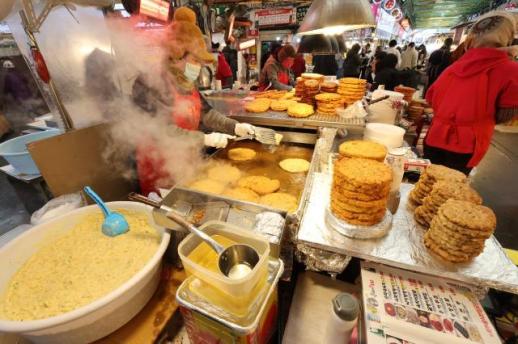 Seoul toughens crackdown on overcharging eateries SEOUL, September 01 (AJP) - South Korea will suspend restaurants and other food businesses on their first overcharging offense, moving to curb the price-gouging scandals that have battered the reputation of traditional markets such as Seoul's Gwangjang Market. The Ministry of Food and Drug Safety said Tuesday it had revised and promulgated the enforcement decree of the Food Sanitation Act, replacing a corrective order for a first violation with a five-day suspension effective immediately. Under the revised rules, an establishment that fails to post a price list or charges more than the displayed price will face a five-day suspension on first detection, 10 days on a second and 20 days on a third. The previous decree imposed suspensions of seven and 15 days for repeat offenders and let first-time violators off with a warning. "Existing administrative sanctions stopped at corrective orders, which had limits in preventing consumer harm," a ministry official said. The measure is a follow-up to the anti-price-gouging package that nine ministries unveiled jointly on Feb. 25 at a presidential tourism strategy meeting. The revision also streamlines administrative procedures for food business operators, scrapping the requirement to attach original documents when changing licensing or registration details and removing the obligation to retain a business registration certificate. Special facility standards allowing producer groups to sell food made from domestic farm produce were extended to fisheries groups. Fish products, vinegar and starch were added to the list of foods that instant-sale processors may sell by the portion, while the ministry clarified fee-reduction criteria for electronic civil applications and standards for temporary business filings. The revision follows viral videos and news reports of traditional markets, including Gwangjang Market, mired with vendors padding orders, urging authorities to take measures against overcharging. AJP Takeaways • South Korea's Ministry of Food and Drug Safety revised the Food Sanitation Act enforcement decree on Sept. 1, imposing a business suspension on the first instance of restaurant overcharging, replacing the previous corrective order. • First-time violators who fail to post prices or charge above the displayed amount now face a five-day suspension, rising to 10 days for a second offense and 20 days for a third, up from seven and 15 days previously. • The revision follows the anti-price-gouging package nine ministries announced on Feb. 25 and a series of overcharging scandals at Seoul's Gwangjang Market that damaged the reputation of traditional markets. 2026-09-01 11:16:40
 -
Seoul Unveils 100 Wellness Tourism Destinations Seoul is developing urban relaxation and recovery spots as part of its 'Seoul Wellness Tourism 100' initiative. The plan aims to connect the city's strengths in healthcare, traditional medicine, beauty, gastronomy, and cultural arts with the tourism industry to attract high-value tourism demand. On September 1, the city announced that it selected the 'Seoul Wellness Tourism 100' from 217 candidates through public recruitment and recommendations from experts and citizens, following written evaluations and on-site inspections. This year's initiative, now in its second year, is divided into three categories: 'Relaxation, Cuisine, and Culture.' The relaxation category includes 52 locations focused on healing, meditation, natural healing, healthcare, and accommodations. The cuisine category features 17 places where visitors can experience healthy dining, while the culture category includes 31 beauty, spa, and cultural arts venues. The initiative is notable for not just introducing places for relaxation or health management, but for bundling experiences that allow tourists to engage directly with Seoul's natural environment, traditional culture, medical technology, food, and beauty industry. The selection process involved 14 experts from various fields, including global hotel development, tourism, and cultural arts. The committee conducted two rounds of written evaluations and on-site inspections to comprehensively assess the competitiveness of facilities, experiential content, and potential for developing tourism products. Han Ik-kyung, CEO of Polaris Advisors and a global hotel development expert, served as the selection chair for the second consecutive year. This year's theme is 'Seoul Defines the Next Wellness,' reflecting the city's unique blend of tradition and modernity, as well as its coexistence of nature and a high-density urban environment. It aims to present a differentiated 'urban wellness' model compared to traditional wellness tourism focused on resort areas. Han Ik-kyung stated, "New wellness tourism sites have been discovered that have developed both qualitatively and quantitatively compared to last year. Seoul, where everyday life can become a journey, has the potential to set a new global standard for wellness tourism." The selected locations will be officially introduced to domestic and international tourists during the '2026 Seoul Wellness Travel Week,' which begins on October 29. Bongeunsa Temple, representing the relaxation category, will offer a nighttime meditation program that allows participants to experience the tranquility of a thousand-year-old temple alongside the night view of Gangnam. Pilgyeongjae, featured in the cuisine category, will serve royal court cuisine and traditional meals in a 500-year-old hanok, along with a special exhibition of traditional Korean paper during the event. The Boston Chamber Salon, selected in the culture category, will host a Korean music busking performance, providing a cultural arts wellness program that blends Eastern and Western music in a classical performance space. This year's event will actively reflect the local characteristics of Gangnam, with An Kang-eun, CEO of Ine Art Management and an international exhibition planning expert, participating as the regional director to discover and plan programs that highlight Gangnam's medical, beauty, and cultural arts resources. Seoul's push for wellness tourism comes as demand for health and quality of life-focused travel is rapidly expanding. The global wellness market is projected to grow from approximately $6.7 trillion in 2024 to about $10 trillion by 2029. Wellness tourists spend an average of $1,601 per person, about 35% more than the average spending of general tourists, which is $1,185. This indicates significant potential for growth in high-value tourism, not only in increasing the number of tourists but also in extending their stay and spending. Seoul sees its concentration of world-class medical services, traditional medicine, beauty, food, and cultural arts as a competitive advantage. The city believes that linking recovery, relaxation, healthy eating, and cultural experiences with medical tourism can enhance both the duration of tourist stays and their spending. Moving forward, the city plans to connect the selected locations with tourism products and experiential programs while strengthening domestic and international promotion and marketing. The goal is to create a Seoul-style wellness tourism ecosystem that encompasses healthcare, beauty, traditional medicine, gastronomy, and cultural arts, establishing Seoul as a leading urban wellness tourism city. Cho Seong-ho, head of the Seoul Tourism and Sports Bureau, remarked, "Seoul possesses unique tourism resources that allow visitors to enjoy both the vibrant city and serene relaxation. We will actively support the Wellness Tourism 100 and Seoul Wellness Travel Week as a stepping stone for Seoul to become a key city leading the global wellness tourism market." The complete list of the 100 selected locations and detailed programs for the Seoul Wellness Travel Week can be found on the official website. 2026-09-01 11:16:10