


Latest by
-
 Lee Emphasizes 'Productive Finance' Amid Budget Discussions President Lee Jae-myung stated that now is not the time to be overly focused on immediate financial figures regarding next year's budget. He called for a shift towards 'productive finance' that prioritizes investments in artificial intelligence (AI) and advanced industries.The ruling Democratic Party and the government plan to incorporate five key areas into the proposed budget, which is expected to exceed 800 trillion won, the largest in history. These areas include expanding future growth engines, supporting youth, promoting local-led growth, addressing K-shaped polarization, and ensuring public safety.During a Cabinet meeting at the Blue House, President Lee remarked, "With the AI revolution, advanced industries like semiconductors are rapidly growing, presenting our economy with unprecedented conditions. We must seize the opportunities created by this industrial transformation to significantly improve the lives of our citizens."He emphasized the need to utilize increased financial resources as seeds for future growth, stating, "We must wisely invest precious future resources in efficient and productive areas to grow today’s 10,000 won into 100,000 won tomorrow and beyond."President Lee particularly stressed the importance of optimizing fiscal spending. He instructed that unnecessary budgets should be decisively adjusted to ensure sound financial management, focusing on promoting super-gap growth, alleviating K-shaped polarization, achieving balanced development, nurturing talent, and building a future ladder for youth.Prior to the Cabinet meeting, the ruling party and government held discussions in the National Assembly to establish a special account for the semiconductor industry to provide comprehensive support. They also agreed to back the development of physical AI solutions utilizing tacit knowledge from manufacturing sites and to develop frontier-level AI models. Plans include supplying 10,000 GPUs for AI computations and securing power and water resources through investments from Korea Electric Power Corporation and Korea Water Resources Corporation.In the area of future growth, investments will focus on the so-called 'Next 10' strategic technologies. This includes expanding research and development for lunar landing by 2030, increasing pilot projects for autonomous vehicles, and raising electric vehicle subsidies to the highest level ever. Additionally, loans to support the growth of startups and venture companies will be significantly increased.For youth initiatives, a 'University Internship Semester' will be introduced, allowing students to earn credits for working at companies for one semester. A new 'Our Child Independence Fund' will provide up to 1.2 million won annually for children up to 18 years old, and support for marriage and childbirth will shift from tax deductions to grants and subsidies. Child allowances will be expanded and restructured into a basic child allowance.Special grants to support facility investments by anchor companies relocating to local areas and future growth support funds for regions will also be established. Full tuition support for local national universities and the creation of a special account for essential medical services in regions are planned, along with a significant increase in the supply of rental housing for youth in transit areas.President Lee emphasized the need for a practical and effective approach to policy implementation, stating, "When reforms are pursued, raising voices and setting clear goals can earn praise, but it can also lead to significant resistance and backlash. We need to approach this in a practical and effective manner."Following the budget proposal, President Lee urged the National Assembly and the public to consider reasonable alternatives with an open mind, asking for collective efforts to ensure that next year's budget serves as a catalyst for growth for all.* This article has been translated by AI. 2026-08-25 16:04:10
 -
Lee Chang-dong's 'Possible Love' Selected as South Korea's Entry for 99th Academy Awards Director Lee Chang-dong's latest film, 'Possible Love,' has been selected as South Korea's entry for the International Feature Film category at the 99th Academy Awards.The Korean Film Council announced that 'Possible Love' will represent South Korea in this category. Each year, the council selects one Korean film to submit to the Academy of Motion Picture Arts and Sciences.'Possible Love' tells the story of two couples—a laid-off worker and his wife, and a documentary filmmaker and her husband—who confront their different lives and hidden desires while working on a documentary.This film marks Lee Chang-dong's first release in eight years since 'Burning.' It features actors Jeon Do-yeon, Seol Kyung-gu, Jo In-sung, and Jung Yu-mi, and has been officially invited to compete at the 83rd Venice International Film Festival and to be presented at the 51st Toronto International Film Festival.The selection process this year followed revised guidelines for the Academy Awards' International Feature Film submissions. According to the new rules, the selection committee consists of at least ten members and primarily conducts evaluations through written assessments, with in-person meetings held as necessary.The evaluation criteria were refined to focus on the film's quality, distribution potential in North America, and the recognition of the director and the submitted film. The assessment method was also changed to award points based on individual evaluations, selecting the film with the highest score.The selection committee included 15 members, led by chairperson Jeong Sung-il, a film critic. The committee praised 'Possible Love' for its artistic quality, clear directorial message, and exceptional mise-en-scène.They also highlighted Lee Chang-dong's unique humanism, delicate direction, and the film's rich portrayal of complex characters and relationships. The interest from North American media and the fact that Lee's previous film, 'Burning,' was the first Korean film to reach the preliminary round for the Academy's Best International Feature Film award were viewed positively.The 99th Academy Awards ceremony is scheduled for March 2027, with the announcement of 'Possible Love's' preliminary nomination status expected by the end of this year.* This article has been translated by AI. 2026-08-25 16:04:00
-
Partial Opening of Busan-Masan Double Track Railway Set for April 2027 The Busan-Masan double track railway, connecting Busan and Masan in South Gyeongsang Province, is set to partially open on April 1, 2027. Following delays caused by the Nakdong 1 Tunnel accident, the Ministry of Land, Infrastructure and Transport plans to open completed sections first to alleviate transportation inconveniences for local residents.On August 25, the ministry announced that it will prioritize the opening of completed sections of the Busan-Masan double track railway, a key rail network in the southeastern region.The initial sections to be opened include the Busan Station to Sasang Station segment and the Gangseo Geumho Station to Jinrye Signal Station segment. The Busan-Sasang segment will connect to Cheongnyangni and Dongdaegu via the Central Line and Donghae Line, while the Gangseo Geumho Station to Jinrye Signal Station segment will operate to Masan in conjunction with the existing Gyeongjeon Line.To minimize inconvenience for passengers, shuttle buses will be utilized for the uncompleted section between Sasang Station and Gangseo Geumho Station.The Busan-Masan double track railway is considered a vital project for the regional transportation network. Once fully operational, travel time between Busan Station and Masan Station is expected to decrease from approximately 1 hour and 30 minutes to about 30 minutes.However, the project has faced delays since a collapse occurred in the Nakdong 1 Tunnel during construction in 2020. The ministry has established a construction accident investigation committee to determine the cause of the incident and review plans for full operation. The final investigation results are expected to be announced in the second half of this year.This partial opening is a measure to utilize sections that are ready for normal operation ahead of the complete opening. The ministry has coordinated with relevant agencies, including Smart Rail, the Korea National Railway Corporation, and Korea Railroad Corporation, to select the completed sections.The 3.3 km segment between Sasang and Gangseo Geumho, which is under additional review due to the accident, will not be included in this initial opening. The ministry aims to reflect the investigation results in the construction of the remaining sections and conduct comprehensive test operations, targeting full opening by the end of 2028.As a regional railway that connects the living areas of Busan, Gimhae, and Changwon, the partial opening is expected to ease commuting and educational demands in the southeastern region.Minister of Land, Infrastructure and Transport Kim Yoon-deok expressed gratitude to the residents of Busan and Gyeongnam for their patience during the delays, stating, "We decided to prioritize the opening of completed sections to provide residents with more convenient transportation services as soon as possible." He emphasized that safety is a non-negotiable value, stating, "We will ensure a flawless railway by reflecting the results of the construction accident investigation committee, which will be announced in the second half of the year."* This article has been translated by AI. 2026-08-25 16:04:00
-
AI to Handle Interest Rate Reductions and Debt Adjustments for Consumers In the near future, financial consumers will be able to have artificial intelligence (AI) submit requests for interest rate reductions, debt adjustments, and assistance for victims of voice phishing, provided they give prior consent. The my data service, previously limited to individuals, will now be expanded to include individual business owners and small enterprises.The Financial Services Commission (FSC) announced these developments during the second meeting of the 'Personal Credit Information Consent System Reform Legal Advisory Group' on August 25, unveiling the 'My Data Development Plan for the AI Era.'The FSC plans to broaden the my data service's functionality from merely retrieving and analyzing financial information to executing actual tasks. Tasks that my data service providers may handle include requests for interest rate reductions, debt adjustment requests, assistance for voice phishing victims, applications for policy funds and refinancing loans, and claims for unclaimed insurance benefits.Since being designated as an innovative financial service in December of last year, approximately 4.07 million people have applied for the interest rate reduction request service by July of this year. Among them, 162,000 individuals reduced their total interest burden by 100.3 billion won, averaging 610,000 won per person.To ensure that AI can process consumer-friendly tasks in a timely manner, a pre-aggregated consent specifying the purpose, scope, method, and deadline will be permitted. However, broad consent that lacks clarity, such as 'overall service provision,' will be prohibited.The my data service will now also include individual business owners and small enterprises, allowing for the management of scattered financial, transaction, and public information from multiple institutions in one place. The information provided will also include virtual assets and policy finance.* This article has been translated by AI. 2026-08-25 16:04:00
-
Record Number of Repeat Test Takers and Social Studies Focus in September Mock Exam The September mock exam for the 2027 College Scholastic Ability Test will take place amid an unprecedented influx of repeat test takers and a notable trend of science students opting for social studies. Education experts emphasize that given the numerous variables this year, students should approach their mock exam scores conservatively when determining their eligibility for early admissions.The Korea Institute for Curriculum and Evaluation announced on August 25 that the September mock exam will be conducted simultaneously at 2,162 high schools and 574 designated academies nationwide on September 2. According to the institute, a total of 500,128 students have registered for the exam, with 388,203 current students (77.6%) and 111,925 graduates (22.4%).A key feature of this mock exam is the overwhelming proportion of repeat test takers. Jongno Academy reported that the number of graduates registered for the September mock exam is 111,925 (22.4%), marking the highest figures in both number and percentage since statistics began being published in 2011.Im Seong-ho, head of Jongno Academy, noted, "With the full-scale reform of the college entrance exam and internal assessments set for next year, many graduates view the 2027 academic year as their last opportunity and are actively reapplying. The introduction of a regional medical system has also contributed to the influx of top-tier repeat test takers." He cautioned that current third-year students should adopt a conservative approach to predicting their exam scores, as a strong presence of repeat test takers is expected in 2027.Students are feeling significant pressure. Woo Yeon-cheol, head of the Jinhaksa Admissions Strategy Research Institute, cited a survey indicating that 52.6% of students identified the increased competition due to the rise in repeat test takers as their most concerning factor in early admissions strategies. He advised that rather than lowering their application levels solely due to the increased number of repeat test takers, students should consider their competitive edge and the potential for regular admissions comprehensively.The trend of science students switching to social studies, known as 'social studies focus,' is a critical variable that could impact both early and regular admissions. The proportion of students registering for social studies in the September mock exam is 68.3%, an increase from 66.9% in the June mock exam and significantly higher than 61.3% in the previous September mock exam.Woo emphasized that with the number of social studies examinees reaching an all-time high, the environment surrounding minimum score requirements for both humanities and science students is likely to differ from last year. He stressed the importance of conservatively assessing the likelihood of meeting minimum score requirements for target universities.He added that science students who choose social studies should not overestimate their chances of regular admissions based solely on improved social studies scores and should carefully consider factors such as additional points for science subjects when deciding on early admissions.Kim Byeong-jin, head of the Etoos Education Evaluation Research Institute, also noted that the September mock exam occurs just before early application submissions, urging students to base their early admissions applications on their mock exam results. He cautioned against relying on vague expectations or fears and recommended that students verify their understanding of each question to accurately predict their competitive standing.In terms of difficulty, students should remain vigilant. Lee Man-ki, head of the Yuwai Education Evaluation Research Institute, pointed out that the adjustment of difficulty levels by the evaluation institute between last year's easier Korean and English exams and this year's June mock exam will be a key point of observation. He warned that, given the ease of the June Korean exam, there is a possibility that the difficulty will be increased in September, and it would be risky to assume that English will also be easier.Most importantly, early application submissions will begin on September 7, just after the September mock exam, but official score reports will not be available until September 29. This places students in a situation where they must rely on their preliminary scoring results for their applications.Lee Man-ki cautioned against making significant changes to early application choices based solely on the September mock exam score, stating, "The September mock exam should not be viewed as a final evaluation but rather as a diagnostic tool to identify what needs to be improved in the remaining 11 weeks to achieve the best possible results on the actual exam."* This article has been translated by AI. 2026-08-25 16:00:00
-
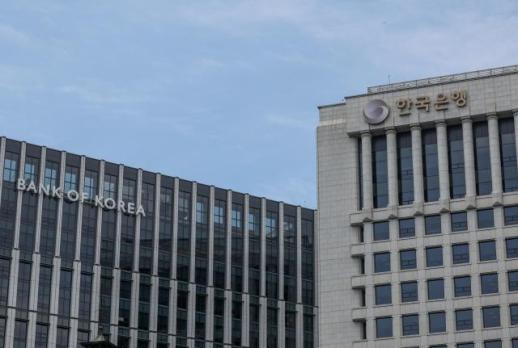 KOFIA survey shows bond market shifts toward BOK hold SEOUL, August 25 (AJP) - Nearly eight in 10 bond-market professionals expect the Bank of Korea (BOK) to hold its policy rate Thursday, marking a sharp shift from the last poll ahead of the July rate-setting meeting, a survey showed Tuesday. The Korea Financial Investment Association (KOFIA) said 79 percent of 100 bond-market professionals it surveyed expected the BOK to keep its base Rate at 2.75 percent. Twenty percent forecast another increase. KOFIA said stronger economic growth, persistent inflation pressure and rising household debt continued to support the case for another rate hike. A firmer won and higher market interest rates, however, strengthened expectations for a pause. The latest results mark a reversal from the run-up to the BOK's July meeting, when 66 percent of respondents expected a rate increase and 34 percent forecast a hold. The BOK last month bumped up the benchmark rate 25 basis points to 2.75 percent in its first increase since January 2023. A separate survey by AJP and Aju Business Daily showed economists were considerably more divided over Thursday's decision. Five of nine economists forecast a hold, while four expected another 25-basis-point increase. The shift in bond-market expectations comes as the BOK weighs stronger economic growth and financial-stability risks against easing inflation pressure and a firmer won. South Korea's economy expanded 0.6 percent from the previous quarter in the second quarter. Consumer inflation slowed to 2.8 percent in July from 3.2 percent in June, reducing some of the urgency for another immediate rate increase. KOFIA's Base Rate Bond Market Survey Index (BMSI) jumped 47 points from the previous month to 81.0, reflecting the sharp increase in expectations for unchanged policy. The broader composite BMSI for September rose to 89.5 from 86.2, though it remained below the neutral level of 100. The interest-rate outlook BMSI climbed 15 points to 99.0. Sixty-nine percent of respondents expected market interest rates to remain broadly unchanged, up 13 percentage points from the previous month. The share expecting rates to rise fell 14 percentage points to 16 percent. The BOK will announce its rate decision Thursday alongside updated forecasts for economic growth and inflation. AJP Takeaways • Nearly 80 percent of bond-market professionals expect the BOK to hold its Base Rate at 2.75 percent Thursday, according to a KOFIA survey. • Bond-market expectations have reversed sharply since July, when two-thirds of respondents anticipated the rate increase that the BOK ultimately delivered. • The BOK must balance stronger growth and household-debt risks against easing inflation, a firmer won and higher market interest rates. 2026-08-25 15:58:17
 -
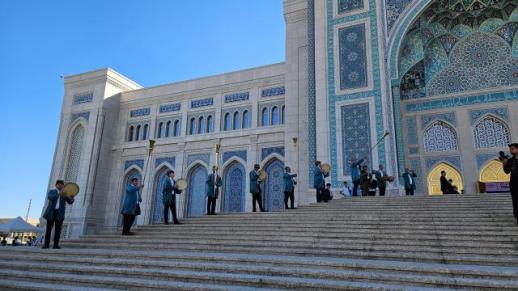 Uzbekistan marks independence through Islamic heritage SEOUL, August 25 (AJP) -Uzbekistan is marking the 35th anniversary of its independence by looking deeper into its Islamic heritage, bringing journalists, scholars and media executives from around the world to Tashkent for an international conference on the country's civilizational roots and their place in the modern world. The International Media Forum, titled “Islamic Civilization: A New Perspective — New Discoveries,” opened its main program Tuesday at the Center for Islamic Civilization in Uzbekistan, a major cultural and research complex in the capital. Held a week before Uzbekistan celebrates Independence Day on Sept. 1, the forum reflects a broader effort by the Central Asian nation to reconnect its post-Soviet national identity with the Islamic scholarship, culture and history that flourished in the region for centuries. The country declared independence from the Soviet Union in 1991, and the government has organized nationwide events this year under the theme marking three and a half decades of statehood. Uzbek presidential press secretary Sherzod Asadov, delivering remarks at the opening ceremony, tied the country's independence to its efforts to reclaim and present its history and cultural heritage to the outside world. He said the media now operate in an era in which traditional information boundaries have largely disappeared, while fake news, cyberattacks and information warfare have become global challenges. Artificial intelligence will not replace journalists, Asadov said, but will broaden the possibilities available to them. He stressed transparency, openness and human dignity as principles for the media at a time when freedom of speech faces growing pressures around the world. The media, he said, should carry the voices of ordinary people to policymakers and make communication a bridge between societies rather than reinforcing stereotypes. The forum comes as Uzbekistan increasingly uses its historical and Islamic heritage as a platform for international cultural diplomacy. The Center for Islamic Civilization, which took about nine years to complete, was officially inaugurated by President Shavkat Mirziyoyev on March 17. The complex, built near Tashkent's historic Hazrati Imam area, combines museum collections, manuscripts, scientific research and digital technology. Uzbek authorities describe it as both a research institution and an international cultural and educational platform. The project traces its roots to Mirziyoyev's address to the U.N. General Assembly in September 2017, when he said Islam calls for goodness and peace, the preservation of human values, and the pursuit of knowledge and enlightenment, rejecting attempts to associate the religion with violence. Firdavs Abdukhalikov, director of the Center for Islamic Civilization, said the institution was designed not simply as a museum but as an arena for science, national memory and international dialogue. “Islam is a religion of peace, goodness, tolerance and humility,” he said, arguing that misconceptions about Islam remain widespread in today's complex information environment. “The best weapon against ignorance is knowledge,” Abdukhalikov said. He said independence gave Uzbekistan an opportunity to restore its national memory, study its cultural and scientific heritage and present that history to the world “with our own voice.” More than 200 participants from 46 countries were attending the gathering. Organizers had earlier said the broader forum would draw about 300 media representatives and experts from nearly 50 countries, including executives from television networks, news agencies and digital platforms as well as filmmakers, producers, researchers and artificial intelligence specialists. Among the most prominent international speakers was Klaus Strunz, CEO and Editor-in-Chief of Euronews, who described the center as a “lighthouse” linking Central Asia more closely with Europe and the rest of the world. Strunz recalled that when he was growing up in Western Europe in the 1980s, Central Asia barely featured in classrooms, universities or television news. That has changed, he said, as Western media increasingly cover the Silk Road, the region's cultures and its rapidly changing societies. “Hello, West. This is Tashkent,” Strunz said, describing the message that the new center sends to audiences beyond the region. With that growing visibility comes responsibility for journalists, he said, including the obligation to report what is actually happening and to confront disinformation. Forums such as the gathering in Tashkent could help build bridges between Central Asia and Europe, Strunz said. The broader forum is examining documentary filmmaking, historical memory, publishing, artificial intelligence and digital approaches to cultural heritage. It also includes debates on how journalists can counter stereotypes, Islamophobia and misinformation. 2026-08-25 15:57:41
 -
Industrial Areas in Yeongdeungpo and Guro Targeted for Housing Development The industrial zones in Yeongdeungpo, Guro, and Geumcheon are gaining attention as potential housing supply areas following the housing supply measures announced on August 13. The Seoul city government has increased the maximum floor area ratio to 400%, while the national government has reduced the mandatory industrial facility ratio to 30%, enhancing the incentives for development. However, challenges such as relocating existing factories and tenants, as well as addressing transportation and infrastructure issues, remain significant hurdles.As of now, the industrial zones in Seoul cover a total area of 19.97 square kilometers, accounting for 3.3% of the city's total area, with over 80% concentrated in the southwestern regions, including Yeongdeungpo, Guro, and Geumcheon. These zones are designated to accommodate industrial functions alongside residential, commercial, and office uses.Historically, these industrial areas have been considered for housing supply. The Seoul city government proposed comprehensive development plans in 2009 and revitalization strategies in 2015, but faced difficulties due to the mixed-use of industrial and residential facilities and complex land ownership issues.In 2024, the city plans to establish a district unit plan for the construction of multi-family housing, raising the maximum floor area ratio in industrial zones from the previous 250% to 400%. Currently, approximately 27,000 housing units are being planned through urban development projects in 32 industrial zones across Seoul.The August 13 measures also revised regulations on industrial facilities. The government has lowered the minimum required ratio of industrial facilities in innovation zones from 50% to 30%, aiming to reduce the burden of industrial facilities and increase the viability of residential and commercial developments.Additionally, the government is pursuing a plan to acquire idle land and public properties within industrial zones for direct development. There are 21 sites in Seoul that could qualify as innovation zones, each over 10,000 square meters, including the former Daeseong Flour Mill site in Mullae-dong, which spans approximately 19,000 square meters.However, easing regulations does not guarantee an immediate increase in housing supply. Many operational factories and industrial facilities remain, necessitating solutions for the relocation and compensation of landowners, factory owners, and tenants.Maintaining industrial functions is also a concern. Lowering the ratio of industrial facilities to facilitate housing supply could weaken job opportunities and the industrial base if these zones are effectively converted into residential areas.Professor Ma Gang-rae from Chung-Ang University’s Department of Urban Planning and Real Estate stated, “To achieve urban mixed-use development, it is necessary to incorporate knowledge industry centers that provide job functions,” but noted that the current economic downturn poses challenges for such centers.Transportation and infrastructure issues also persist. The introduction of large-scale housing developments could exacerbate existing traffic burdens in the southwestern region. Ultimately, while the regulations on floor area ratio and industrial facility ratios have been relaxed, achieving actual housing supply will require balancing stakeholder interests, maintaining industrial functions, and enhancing infrastructure.Song Seung-hyun, head of the Urban and Economy Institute, remarked, “The southwestern region has lower land prices compared to other areas, and there is a pressing need to develop aging industrial zones, which could lead to significant housing supply. However, since there are people who rely on these businesses, compensation agreements are necessary, and given the existing traffic congestion, a clear plan for mixed-use development that combines residential, commercial, and industrial spaces, along with infrastructure improvements, is essential.”* This article has been translated by AI. 2026-08-25 15:56:00
-
September Mock Exam for 2027 College Entrance Exam Set for September 2 The final official mock exam for the 2027 College Scholastic Ability Test (CSAT), which will take place on November 19, is scheduled for September 2 across the country. Although the number of current high school seniors has significantly decreased due to a declining school-age population, the number of graduates and other repeat test-takers (N students) has increased, indicating fierce competition ahead.The Korea Institute for Curriculum and Evaluation (KICE), led by Kim Moon-hee, announced on the 25th that the September mock exam will be conducted simultaneously at 2,162 high schools and 574 designated academies starting at 8:40 a.m. on September 2.A total of 501,128 students have registered for this mock exam. Among them, 388,203 (77.6%) are current students, while 111,925 (22.4%) are graduates and others.Compared to last year's September mock exam, the total number of applicants has decreased by 15,772. While the number of current students has dropped by 22,007, the number of graduates and other test-takers has increased by 6,235, highlighting a contrasting trend. Compared to the previous exam in June, the number of current students has decreased by 3,209, while graduates and others have increased by 14,994, showing a significant influx of N students ahead of the main exam.This September mock exam is designed to provide students with an opportunity to assess their preparation for the CSAT, including diagnosis and supplementary measures, as well as to adapt to the question types and levels. The nature of the exam, the subjects tested, and the number of questions will be the same as those for the 2027 CSAT scheduled for November 19.KICE plans to identify areas for improvement in the mock exam's question setting and grading process to reflect in the actual 2027 CSAT. Grading will be conducted using image scanners, similar to the CSAT, and results will be communicated to students by September 29.A KICE official stated, "Since image scanners will be used for grading, test-takers must use only black ballpoint pens when filling out their answers. If there are any marks left by pencils or mechanical pencils, they may be graded as multiple answers, resulting in penalties, so they should be completely erased with correction tape." Additionally, students who do not take the Korean history section will have their entire scores invalidated, and no score report will be provided, so caution is advised.* This article has been translated by AI. 2026-08-25 15:48:00
-
IBK Industrial Bank to Forgive 120 Billion Won in Long-Term Debt to Support Vulnerable Groups IBK Industrial Bank will forgive 120 billion won in long-term debt to assist vulnerable groups struggling with prolonged delinquency. The bank announced on August 25 that it plans to forgive a total of 120 billion won in long-term delinquent debts by the end of the year. This debt forgiveness aims to alleviate the financial burden on vulnerable groups suffering from extended collection efforts and to support their return to normal economic activities. Initially, by September, the bank will forgive 67.5 billion won in debts held by approximately 3,600 individuals. The eligible debts include those with a special inclusion period exceeding five years and a balance of less than 5 million won, as well as those with an inclusion period exceeding seven years and a balance of less than 100 million won. Additionally, by December of this year, the bank plans to forgive another 52.5 billion won in debts held by around 1,400 individuals. This will target debts with a special inclusion period exceeding five years and a balance of less than 100 million won. An IBK official stated, "We decided to forgive debts to help vulnerable groups break free from the cycle of long-term debt. We will continue to support financially vulnerable individuals through proactive inclusive finance initiatives."* This article has been translated by AI. 2026-08-25 15:44:00