


Latest by
-
 Homeplus Appeals to Creditors for Agreement on Public Bond Repayment Homeplus is requesting public bondholders to agree to a repayment plan ahead of the approval of its rehabilitation plan on September 4. The company is making a concerted effort to secure this agreement, as the rate of consent from public bondholders is a critical indicator of the plan's feasibility.On August 24, Homeplus stated that if the agreement rate among public bondholders is low, the rehabilitation court may determine that the plan's feasibility is compromised due to financial burdens, potentially leading to a rejection of the rehabilitation plan. If the plan is not approved, the rehabilitation process could end, resulting in bankruptcy proceedings, which would lower the repayment rate and delay payment timelines for public bondholders.Wage claims are also included in the public bonds, prompting Homeplus to seek consent from current and former employees regarding severance pay and delayed wages. Reports indicate that the employee agreement rate has surpassed 75%.The employee representative body, Hanmaeum Council, has also begun efforts to persuade partner companies. In a letter sent to partners, the council expressed, "After reopening, employees have gained hope that rehabilitation is possible. For this hope to be realized, the rehabilitation plan must be approved, and we sincerely apologize, but we need the agreement of our partners on the public bond repayment plan."Meanwhile, from August 13 to 17, the first five days of Homeplus's reopening, sales totaled 43.7 billion won. This marks a 191% increase compared to sales of 15 billion won during the same weekday period from July 2 to 6, prior to the temporary suspension of operations.* This article has been translated by AI. 2026-08-24 14:32:00
 -
Seoul City Rejects Transfer of Authority for Redevelopment Projects Under 500 Units Seoul City has strongly opposed the proposal to transfer the authority for designating maintenance areas for redevelopment and reconstruction projects involving fewer than 500 units, calling it an ineffective measure.Kim Dong-gu, acting director of the Seoul City Architecture Planning Division, held a briefing on the transfer of authority for projects under 500 units at Seoul City Hall on August 24. He stated, "Transferring authority to local districts will not significantly increase housing supply or shorten project timelines. Seoul functions as an organic living area, necessitating a comprehensive review of urban infrastructure such as water supply, roads, and parks."Seoul City is particularly concerned about the potential for differing standards for maintenance projects across districts. If the authority to designate areas is transferred, urban planning criteria may vary based on local conditions and judgments, leading to issues such as favoritism and real estate speculation.Kim explained, "If standards differ by district, it could lead to favoritism and real estate speculation, as well as serious conflicts among residents."Seoul City also expressed concern that the threshold of 500 units could artificially fragment maintenance areas. Kim noted, "Areas that were progressing smoothly could be divided into smaller projects of under 500 units, which may hinder the expansion of community facilities for residents."Dividing maintenance areas could make it difficult to secure sufficient community amenities such as daycare centers, senior centers, recreational facilities, and small libraries. Seoul City is also worried that residents may attempt to voluntarily divide areas to enhance project viability or expedite procedures.Kim stated, "It does not appear that urban management policies will be reviewed uniformly across districts. There is a possibility that separate criteria will be applied based on the benefits and judgments of district heads, raising concerns about uncontrolled development."Seoul City emphasized that most maintenance projects involving fewer than 500 units are already undergoing local approval processes. According to the city, there are currently 472 small-scale maintenance projects underway in Seoul, totaling approximately 484,000 units. Kim noted, "Of these, 193 projects involve fewer than 500 units, with 31 currently in the area designation stage," adding that the city is responsible for only about 16% of the area designation procedures.Seoul City also refuted claims that it serves as a bottleneck in the area designation process. The city explained that it integrates reviews across nine fields, with an average processing time of 32 days and an approval rate of 97%.Instead, Seoul City identified factors such as restrictions on relocation loans and limitations on the transfer of membership rights as obstacles hindering redevelopment projects. Kim emphasized, "Ultimately, accelerating redevelopment projects depends on practical support rather than the location of authority."Concerns were also raised about whether local districts have sufficient administrative capacity if authority is transferred. Kim pointed out that there are not many personnel with experience in directly handling integrated reviews across nine fields in local districts, raising doubts about their ability to comprehensively review and make swift decisions. 2026-08-24 14:32:00
-
Foreign Tourists Boost Tourism Surplus for First Time in 26 Years The number of foreign tourists visiting South Korea has surged to record levels, and per capita spending has also increased, shifting the long-standing deficit in the tourism balance. As foreign tourist numbers and tourism revenue rise, domestic spending on overseas travel has decreased, increasing the likelihood of an annual surplus for the first time in 26 years.According to the Bank of Korea and other sources, the monthly tourism balance recorded a surplus of $260 million in March, marking the first surplus since November 2014. This was followed by surpluses of $160 million in April, $220 million in May, and $600 million in June, resulting in four consecutive months of profit.Despite a cumulative tourism deficit of $12.6 billion in the first half of the year, this is a significant improvement compared to a deficit of $54.3 billion during the same period last year, a reduction of $41.7 billion. If the monthly average surplus exceeds $210 million in the second half, it could lead to an annual surplus for the first time since 2000. Given that the average monthly surplus from March to June was $310 million, this scenario is considered feasible.The improvement in the tourism balance is attributed to the simultaneous increase in the number of visitors and per capita tourism revenue. In the first half of this year, 10.71 million foreign tourists visited South Korea, a 21.3% increase compared to the same period last year, marking the highest number for any first half. In June alone, 1.99 million people visited the country.Per capita tourism revenue for foreign visitors also rose to $1,270.4 in the first half, a 12.4% increase from the previous year and 3.7% higher than the same period in 2019, before the COVID-19 pandemic. This indicates that not only has the number of visitors increased, but individual tourists are also spending more during their stay.Consequently, tourism revenue for the first half reached $13.61 billion, a 36.4% increase compared to the same period last year. In contrast, domestic spending on overseas travel decreased by 3.5% to $14.87 billion. Although the number of outbound travelers increased by 2.7%, per capita spending on overseas tourism fell by 6.0%.The expansion of high-value consumption in areas such as medical and beauty services has also contributed to the rise in per capita tourism revenue. In the first half of this year, foreign medical spending reached approximately 1.193 trillion won, a 59.1% increase from the previous year. Additionally, foreign credit card spending for tourism amounted to 10.389 trillion won, a 50.8% increase, surpassing 10 trillion won for the first time in the first half of the year.There are signs that foreign tourism demand is beginning to spread beyond Seoul. The rate of foreign visitors to regional areas increased from 31.4% in the second quarter of last year to 34.2% in the second quarter of this year. In the first half of the year, the number of foreign arrivals at regional airports reached 1.963 million, a 42.2% increase compared to the same period in 2019, while arrivals at regional ports increased by 63.8% to 1.016 million.However, there are still variables that could affect the transition to an annual surplus. An increase in the value of the won could raise travel costs for foreigners, or a recovery in domestic demand for overseas travel could reduce the surplus. Connecting the increased number of visitors to high-value consumption and regional tourism is seen as a key challenge for structurally improving the tourism balance. 2026-08-24 14:28:20
-
Samsung Electronics Union Demands Restoration of NowTalk Posts on Intranet Homepage Samsung Electronics' largest labor union, the Samsung Group's Super Union, is demanding the restoration of posts from the NowTalk bulletin board on the company's intranet homepage. The union argues that the removal of these posts limits the union's promotional activities, which are guaranteed under collective agreements.On August 24, the Super Union sent a formal request regarding the NowTalk changes to Yeong-hyeon Jeon, head of Samsung Electronics' Device Solutions (DS) division, and Myung-gu Yeo, head of the People Team.NowTalk is an intranet bulletin board used by Samsung Electronics employees. The company revamped NowTalk on August 14, citing the implementation of revised telecommunications laws. The changes included transitioning from an anonymous posting system to a real-name system and preventing NowTalk posts from being directly displayed on the intranet homepage.The Super Union has expressed no disagreement with the shift to a real-name system. They support the company's intention to protect employees from slander and the dissemination of unverified information while fostering a culture of mutual respect in communication.However, the union pointed out that the decision to exclude NowTalk posts from the homepage is a separate issue from the real-name system change. They argue that the revised telecommunications law, which addresses the distribution of false and manipulated information and related liability, is not directly related to the visibility or accessibility of intranet posts.The Super Union stated, "Unlike the real-name system change, the decision to exclude the bulletin board from the homepage is a business judgment by the company, not a legal obligation."The union also cited the collective agreement that guarantees promotional activities for the union. Article 9, Section 1 of the Samsung Electronics labor-management collective agreement allows for the posting of union promotional materials on the NowTalk intranet.The Super Union emphasized, "Even if the right to post is formally maintained, if the content does not reach union members, it is difficult to ensure the substance of the promotional activities guaranteed by the agreement." They argue that reduced accessibility to the bulletin board could diminish the effectiveness of the union's announcements and promotional materials reaching employees.In response to the company's indication that this issue could be discussed in the 2027 collective bargaining agenda, the Super Union is calling for prompt negotiations. They believe the issue should be resolved through discussions between labor and management rather than waiting for the next collective bargaining session.The Super Union has officially requested that the company restore the NowTalk posts to the intranet homepage in their original format. They have also asked for a response from the company regarding their demands by August 28.* This article has been translated by AI. 2026-08-24 14:28:00
-
Clean Country Establishes Paper Resource Recycling Joint Venture 'KNT' Clean Country announced on August 24 that its joint venture KNT, established in collaboration with paper resource distributor Taesori Recycling and resource recycling startup Ugly Lab, officially began operations following a completion ceremony on August 21.KNT aims to expand the supply chain of waste paper and create a sustainable resource recycling ecosystem.A representative from Clean Country stated, "KNT is a win-win cooperation model that combines the expertise and trading networks of existing paper resource businesses with the capabilities of participating companies to enhance supply chain competitiveness."KNT will focus on reliably supplying high-quality paper resources by sorting, compressing, and managing raw materials secured from sources according to quality standards. The company will systematically manage quantity, quality, and transaction history from the intake stage to improve the uniformity of raw material quality and establish a stable supply base.Initially, KNT will build its business foundation in the Seoul metropolitan area and Chungcheong region before expanding into the Yeongnam and Honam regions.The high-quality paper resources supplied by KNT will be used in Clean Country's paper production processes. Clean Country plans to reduce raw material quality variance to enhance production yield and efficiency, thereby strengthening product quality and raw material supply stability to improve manufacturing competitiveness.A Clean Country representative remarked, "By supporting KNT's growth through equity investment and providing a stable demand base, we will continue to strengthen relationships with existing partners to establish a stable and efficient paper resource supply system."* This article has been translated by AI. 2026-08-24 14:20:00
-
China-Korea Relations at 34: Economic and Technological Security Challenges On the 34th anniversary of diplomatic relations between China and South Korea, trade and people-to-people exchanges are showing signs of recovery. However, analysts indicate that the strategic competition between the U.S. and China, along with the security focus on economic and technological issues, is preventing a full restoration of relations to previous levels.China's Observer Network published an article titled "Why is There a 'Temperature Difference' in China-Korea Relations After 34 Years of Diplomatic Ties?" which assessed the current state of bilateral relations.The report noted that the nature of the China-Korea economic relationship has changed significantly. While the overall trade volume remains stable, there are clear shifts in industrial structure.Specifically, the relationship is evolving from a vertical division of labor to a new model where industrial networks move in both upstream and downstream directions. Zhang Debin, director of the Korea Research Institute at Shanghai University of International Business and Economics, stated, "A balanced economic relationship is beneficial for both countries, but this change is constrained by political factors and other structural limitations."The most significant external factor constraining China-Korea relations is the United States. Zhang noted, "The U.S.-China strategic competition is putting significant pressure on South Korea," adding that South Korea is generally leaning toward the U.S. in security, economic, and technological policy choices, a trend evident across both liberal and conservative administrations. He argued that this situation limits South Korea's ability to improve relations with China.He specifically pointed to the 'securitization' of economic and technological issues as a problem. "In the past, China and South Korea had a vertical division of labor, but now we are transitioning to horizontal cooperation, with the biggest obstacle being the excessive securitization of economic and technological matters," he said. Zhang claimed that U.S. pressure is restricting cooperation between the two countries in advanced technology fields such as semiconductors and artificial intelligence.The article regarded President Lee Jae-myung's visit to China in January as an important signal for the recovery of China-Korea relations. However, it emphasized that this improvement does not equate to complete normalization.Zhang assessed that "political trust, economic cooperation, and people-to-people and cultural exchanges have not returned to their previous normal levels."While people-to-people exchanges between the two countries are recovering rapidly, this has not led to improved perceptions of each other, particularly in South Korea's view of China, according to Zhang.Nevertheless, he highlighted the potential for further development in bilateral relations during the Asia-Pacific Economic Cooperation (APEC) summit in Shenzhen in November.The Observer Network predicted that the upcoming China-Korea summit at the APEC meeting could serve as both an opportunity and a test for the two countries. It emphasized the importance of whether they can find new areas for economic cooperation, restore mutual political trust, and narrow the perception gap between their peoples.Meanwhile, other Chinese media have noted that economic and people-to-people exchanges between China and South Korea are expanding into new areas. The China Securities Journal recently reported that the economic and trade relationship is extending beyond semiconductors and manufacturing to include aviation, tourism, and cultural heritage.Despite ongoing U.S.-China strategic competition and supply chain restructuring, there is an analysis suggesting that the interdependence of the two countries' industries is deepening. Wang Lingyi, a researcher at the Shanghai International Economic Exchange Center, stated, "The interdependence of the China-Korea supply chain, centered on semiconductors and manufacturing, is expanding into aviation, tourism, and cultural exchanges, further deepening the integration of the two countries' economic relations."On the same day, the state-run China Daily published an interview with Shin Jung-seung, the former South Korean ambassador to China, who played a key role in the negotiations for establishing diplomatic relations. Shin expressed hope that the upcoming APEC summit in Shenzhen would provide a boost to China-Korea relations and contribute to peace and prosperity in the Asia-Pacific region through close cooperation between the two countries. 2026-08-24 14:20:00
-
Kakao Games Strengthens Shareholder Returns with Stock Buyback Kakao Games is enhancing its shareholder return policy through a stock buyback by its executives, following a recent share cancellation.On August 24, Kakao Games announced that it held an extraordinary general meeting at the Kakao AI Campus, where it approved key agenda items including the 'Plan for Holding and Disposing of Treasury Shares' and the 'Transfer of Retained Earnings to Capital Reserves.'This move is part of a medium- to long-term shareholder return strategy that follows the cancellation of 500,000 treasury shares in July.After the share cancellation, Kakao Games plans to use approximately 350,000 of its remaining treasury shares to fund its employee stock-based compensation program (RSU). The RSU is designed to link employee compensation to long-term business performance, corporate value, and shareholder value.Kakao Games intends to finalize the specific operational details of the RSU through its board of directors in the future.Additionally, the company will reduce its capital reserves by about 1.54 trillion won and transfer this amount to retained earnings. This is aimed at securing resources for future medium- to long-term shareholder return initiatives.Executives have also engaged in stock buybacks, with co-CEOs Kim Tae-hwan and Lee Si-woo, along with Chief Financial Officer Shin Kwon-ho, purchasing a total of approximately 500 million won worth of Kakao Games shares as of that day. The company plans to continue its shareholder-focused management approach through these executive stock purchases.* This article has been translated by AI. 2026-08-24 14:16:10
-
Kim Se-young Finishes Third at LPGA CPKC Women's Open; Yamashita Takes Title Kim Se-young secured third place at the LPGA Tour's CPKC Women's Open, which featured a total purse of $2.75 million.On August 24, during the final round at the Royal Mayfair Golf Club in Edmonton, Alberta, Kim recorded one eagle and three birdies against two bogeys, finishing with a score of 3-under 67.With a total score of 13-under 267, Kim improved her position from a tie for sixth to a solo third place by the end of the tournament.Kim, a 13-time LPGA Tour winner, marked her sixth top-10 finish of the season. Her best result this year was a runner-up finish at the JM Eagle LA Championship in April.The tournament was won by Japan's Miyu Yamashita, who finished with a total score of 23-under 257, defeating second-place Yurika Yoshida, also from Japan, by nine strokes. Yamashita led the tournament wire-to-wire, earning a prize of $412,500 (approximately 570 million won).Yamashita, who was named LPGA Rookie of the Year after winning two events last year, celebrated her second victory of the season following her win at the Meyer LPGA Classic in June. This victory brings her total LPGA Tour wins to four.Choi Hye-jin and Lee Dong-eun finished tied for 17th with a total score of 6-under 274, while Ahn Na-rin and Lee So-mi tied for 23rd at 5-under 275. Yang Hee-young and Kim Hyo-joo ended up tied for 31st with a score of 4-under 276.* This article has been translated by AI. 2026-08-24 14:16:00
-
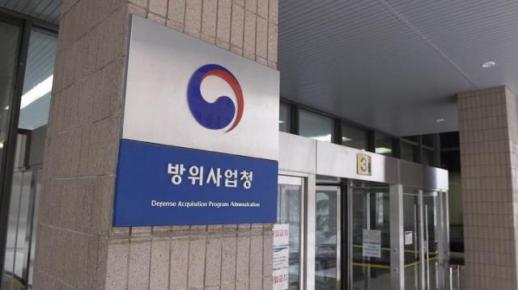 DAPA sets guidelines for access to NATO standards SEOUL, August 24 (AJP) - South Korea’s Defense Acquisition Program Administration said Monday it has introduced its first formal guidelines for providing and managing NATO standards, a move aimed at helping domestic defense companies enter European and other NATO markets. The new rules establish procedures and security requirements for South Korean companies, research institutes and government agencies seeking access to standards used by the North Atlantic Treaty Organization. NATO standards are important for ensuring interoperability with weapons systems operated by alliance members and for conducting certification and testing. They can also play a key role in defense exports to NATO countries and participation in multinational research and development projects. Demand for access to such standards has increased as South Korean defense exports to NATO members and joint R&D cooperation have expanded, particularly following recent summit-level engagement between South Korea and the alliance. Until now, however, there had been no clearly defined domestic process for requesting, providing and managing NATO standards. Requests were often handled on a case-by-case basis, creating difficulties for companies seeking the documents and for DAPA in supporting them. “Exports to Europe have increased since the war in Ukraine,” a DAPA official said. “As European countries accelerate rearmament, the need for local production and joint research and development has also grown in order to enter those markets.” DAPA said the guidelines were drawn up based on NATO security policies, a security administrative arrangement between South Korea and NATO, and domestic security regulations. A Defense Ministry spokesperson also confirmed the move at a regular briefing Monday. “DAPA has established guidelines for the provision and management of NATO standards, setting out procedures for providing them to domestic companies and institutions as well as security management requirements,” the spokesperson said. The agency said the move is significant because it creates, for the first time, a framework through which Korean companies and institutions can obtain NATO standards more quickly and systematically. Under the guidelines, NATO standards will be categorized according to their disclosure status and security classification, with separate requirements and procedures governing how each type can be requested, obtained and provided. For non-public standards, DAPA will obtain the documents through NATO’s online database and provide them to qualified applicants. Classified standards will require NATO approval before they can be obtained and distributed. The guidelines also establish post-access security requirements, including procedures for returning or destroying documents, facility security measures and reporting requirements in the event of a security breach. DAPA said it is difficult to quantify how much the new system will increase defense exports, but expects it to help Korean companies demonstrate the performance and compatibility of their products when pursuing new projects in Europe. The agency cited Hanwha Systems’ cooperation with a British company in the satellite sector as an example of the growing number of international R&D projects that could benefit from smoother access to NATO standards. AJP Takeaways · South Korea’s DAPA has introduced its first formal guidelines for providing and managing NATO standards, giving Korean defense companies clearer access to technical requirements needed for NATO-market exports and joint R&D. · The new framework sets procedures for obtaining non-public and classified NATO standards while establishing security rules for handling, returning and destroying sensitive documents. · DAPA expects easier access to NATO standards to help Korean defense firms prove interoperability and performance in Europe, supporting exports, local production and international defense cooperation. 2026-08-24 14:06:43
 -
President Lee: Laws Must Guide Society Amid AI and Digital Transformation President Lee Jae-myung stated on August 24 that during this transformative period of rapid advancements in artificial intelligence (AI) and digital technology, laws must not only guide the direction of society but also uphold universal principles that must be steadfastly maintained.President Lee made these remarks in a written address at the 34th Korean Bar Association Conference held at The Grand Lotte Seoul in Jung-gu, Seoul. The address was delivered on his behalf by Chief of Staff Han Chan-sik under the theme 'Ensuring Citizens' Fundamental Rights Amid Judicial System Changes.'He expressed his appreciation for the timely theme, saying, "The topic of 'Ensuring Citizens' Fundamental Rights Amid Judicial System Changes' is truly welcome and timely. As the President of the Republic of Korea and as a legal professional, I find it particularly meaningful."He noted that as AI and digital technologies rapidly evolve and social structures change in various ways, disputes and conflicts that cannot be resolved by existing orders and systems are increasingly on the rise."In such times, laws must fulfill their function and responsibility as universal principles that guide the direction of society while being unwaveringly upheld," he emphasized.President Lee also urged the Korean Bar Association to play a significant role in responding to these societal changes.He remarked, "The role of the Korean Bar Association, which has long been at the forefront of protecting the rule of law and citizens' fundamental rights in South Korea, is all the more crucial. I believe that you will continue to strive to ensure that no citizen suffers injustice or unfairness and that everyone can access fair legal services."Additionally, he extended his heartfelt respect and gratitude to the lawyers who are working hard to protect the freedoms and rights of the people and to represent the voices of the vulnerable in difficult situations.* This article has been translated by AI. 2026-08-24 14:04:10